If you are researching Shopline cost, chances are you are not just looking for the cheapest ecommerce platform. You want clarity. You want to know what you will actually pay month after month, what is included, and what quietly sits behind the paywall. At MediaOne, we often see businesses underestimate ecommerce platform costs because pricing pages rarely tell the full story. This guide exists to fix that.
Shopline is widely used across Asia, especially by SMEs and growing brands in Singapore, because it is built with local payment methods, logistics, and omnichannel selling in mind. While the platform markets itself as simple, the actual Shopline cost depends on more than the base plan price.
In this article, we break down Shopline plans, add-ons, transaction costs, and hidden considerations so you can understand what you will actually pay. No sales pitch.
Key Takeaways
- Shopline costs extend beyond the monthly subscription and often include add-ons, payment processing fees, and feature upgrades that affect your total spend.
- The plan you choose should be based on business complexity and growth plans, not just the number of products you sell.
- Add-ons such as POS, automation tools, and advanced analytics can significantly increase monthly costs if not planned properly.
- Payment gateway fees and transaction charges are often overlooked but can materially affect profitability for high-volume stores.
- Businesses that plan their Shopline setup strategically from the start avoid costly rebuilds and platform switching later.
Understanding Shopline Pricing in Singapore
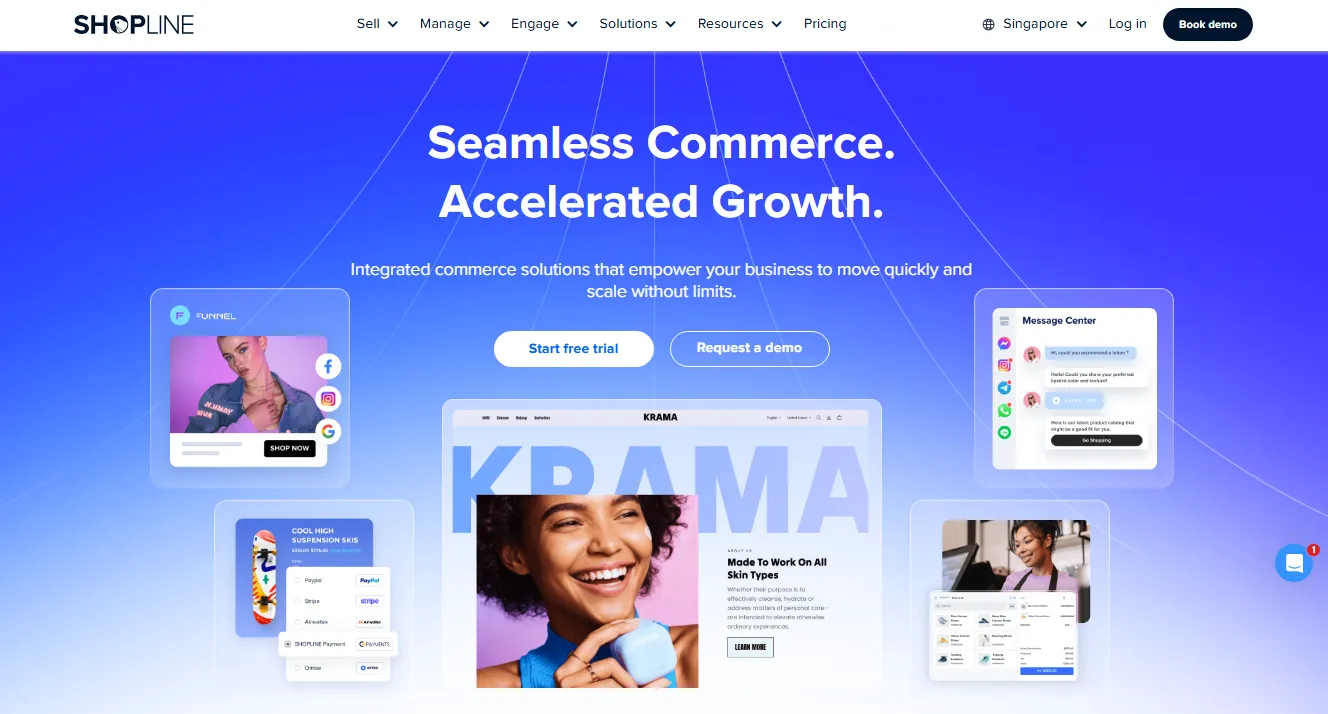
Shopline pricing is often presented as a simple tiered structure, but in practice, it behaves more like a usage-based framework. The plan you choose sets the foundation, but your actual Shopline cost is shaped by how you run your store, how many channels you sell through, and how much operational support you need from the platform.
Two businesses on the same Shopline plan can end up paying very different amounts over time. That difference usually has less to do with product count and more to do with day-to-day workflows and growth direction.
Several underlying factors influence how Shopline pricing plays out beyond the headline monthly fee:
- How central Shopline is to your operations: For some businesses, Shopline functions purely as an online storefront. For others, it becomes the core system for managing orders, customers, inventory, and sales across multiple channels. The more responsibilities you assign to the platform, the more likely you are to encounter feature limits that affect cost.
- The pace and direction of growth: Shopline plans are structured to accommodate growth, but not all growth looks the same. Scaling product volume, expanding into new channels, or introducing complex promotions can each trigger different pricing considerations, even without a formal plan upgrade.
- Dependence on built-in tools versus external solutions: Businesses that rely heavily on Shopline’s native tools for marketing, reporting, and automation often see costs rise differently from those using third-party systems. This trade-off is not always obvious at the plan comparison stage.
Before reviewing plan pricing or add-on lists, it helps to define what success will look like for your store in six to twelve months. Understanding how Shopline pricing responds to operational decisions gives far more clarity than comparing monthly fees in isolation.
Shopline Plans Explained
Before diving into numbers, it helps to understand how Shopline structures its plans and what each tier is actually designed to support.
Starter Plan: Built for Launch
The Starter plan is designed for businesses taking their first steps into ecommerce. It provides everything needed to list products, process orders, and accept payments, making it a practical option for launching a new store, testing demand, or running a smaller catalogue without operational complexity.
What this Shopline plan does particularly well is keep setup and management straightforward. Its structure reflects a focus on ease of use and accessibility rather than advanced workflows:
- Transaction fees are higher, which keeps the monthly subscription cost lower for businesses with modest sales volume
- Feature depth is streamlined to reduce setup friction and learning curve
- Workflows are optimised for simple store operations and smaller teams
For early-stage businesses, this balance is often an advantage rather than a limitation. Many stores can launch quickly, operate efficiently, and validate their business model without committing to higher monthly fees upfront.
As sales volume grows and operations become more complex, some businesses choose to move to a higher plan primarily to improve cost efficiency at scale. In this context, the Starter plan works exactly as intended, offering a low barrier to entry and a clear upgrade path when growth justifies it.
Essential Plan: The First Real Scaling Threshold
The Essential plan is where Shopline begins to assume you are running a serious ecommerce operation. The lower transaction fee alone can materially change cost dynamics for stores processing regular orders.
This plan is typically suited for businesses that:
- Have consistent monthly sales rather than sporadic transactions
- Need smoother operational workflows to support marketing and promotions
- Are starting to pay attention to efficiency and conversion performance
As subscription costs rise, many businesses find that the overall Shopline cost becomes more predictable at this level, especially once transaction fees are factored in. This is often the point at which Shopline becomes commercially viable rather than purely accessible.
Premium Plan: Designed for Operational Scale
The Premium plan reflects a shift in how Shopline expects your business to function. At this tier, the platform is no longer just supporting sales; it enables coordination across teams, channels, and markets.
From a cost perspective, this plan introduces a different value equation:
- Significantly lower transaction fees, which matter at higher volumes
- Expanded staff access, signalling multi-team operations
- Infrastructure designed to support scale rather than experimentation
For high-volume businesses, the higher monthly fee is often offset by improved margin control and reduced friction. In many cases, paying more upfront reduces long-term operational costs tied to inefficiency or platform constraints.
Enterprise Plan: Custom Pricing for Complex Businesses
The Enterprise plan is not defined by a price point, but by flexibility. It is designed for businesses with advanced requirements that do not fit neatly into predefined plans.
This tier typically applies to organisations that:
- Operate across multiple regions or brands
- Require custom workflows, integrations, or governance structures
- Need pricing that reflects transaction volume rather than standard tiers
Because pricing is customised, the Enterprise Shopline cost can vary widely. What remains consistent is that this plan is intended for businesses where ecommerce is deeply embedded into broader commercial operations rather than functioning as a standalone channel.
How to Read Shopline Plans Strategically
Rather than viewing Shopline plans as linear upgrades, it is more accurate to see them as cost models aligned to business maturity. Each tier shifts where costs sit, whether in subscription fees, transaction percentages, or operational flexibility.
Understanding this relationship makes it easier to choose a plan based on long-term viability rather than short-term affordability.
What Is Included vs What Costs Extra
Most confusion about Shopline costs does not come from missing features, but from understanding which capabilities are bundled with plans and which incur additional charges as your business scales. Shopline includes a broad set of native tools across all plans, but certain functions only become available at higher tiers or are priced separately based on usage or business model.
The distinction is less about free versus paid features and more about baseline functionality versus scalable capability.
What Is Included Across Shopline Plans
Even at entry-level tiers, Shopline provides a comprehensive foundation to support store launch and early growth without requiring immediate reliance on third-party tools.
Commonly included features across most plans include:
- Online store essentials: Free theme templates, SSL certification, product management, and standard checkout functionality are available from the Starter plan onwards, enabling businesses to launch without additional setup costs.
- Built-in marketing and recovery tools: Abandoned checkout recovery, email marketing integrations, Facebook CAPI support, and marketing calendars are natively available, allowing businesses to run basic acquisition and retention campaigns without paid extensions.
- Core analytics and reporting: Multi-level analytics provide visibility into sales performance and store activity across plans, supporting everyday decision-making even at lower tiers.
- Social and global selling foundations: Support for social commerce, multiple languages, multiple currencies, and international domains is built into the platform, making cross-border selling possible without separate plugins.
At this stage, Shopline pricing often feels generous, particularly for businesses focused on straightforward ecommerce operations.
What Typically Costs Extra or Scales with Use
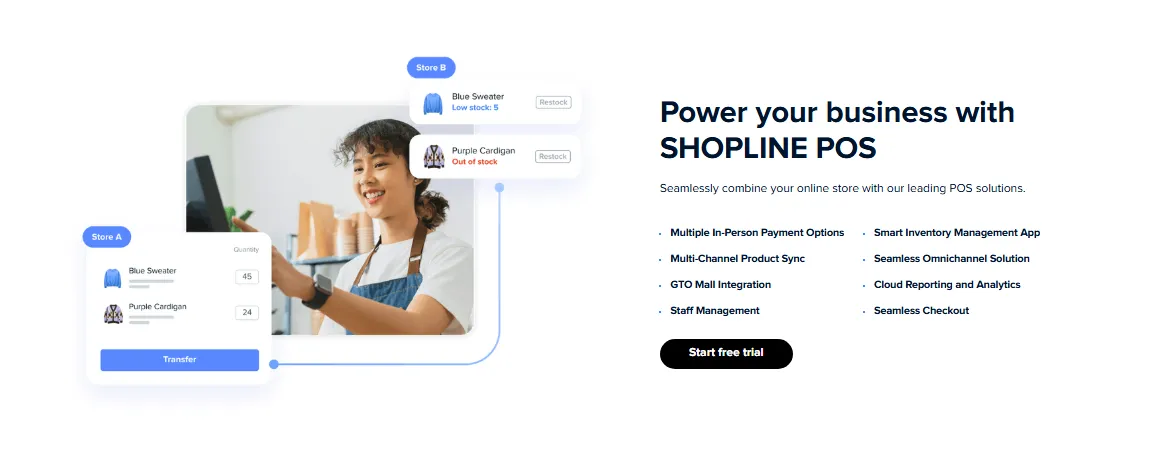
Where Shopline cost begins to increase is not through basic features, but through scale, complexity, and specialised use cases. Based on Shopline’s published pricing and feature comparison, additional costs most commonly arise in the following areas:
- Higher transaction efficiency: While all plans include payment processing, transaction fees decrease as you move up tiers. Businesses processing higher order volumes often upgrade plans primarily to reduce transaction percentage rather than unlock new features.
- POS and omnichannel retail: SHOPLINE POS Pro is priced per location. For retailers with physical stores, this becomes a recurring operational cost independent of the subscription tier.
- Advanced organisational and multi-store control: Capabilities such as organisation management, advanced role permissions, higher API priority, and large-scale multi-store operations are reserved for Premium and Enterprise plans and require a plan upgrade, not an add-on purchase.
- B2B and wholesale selling models: While Shopline supports B2B selling natively, certain wholesale features, such as RFQ workflows and tiered pricing, may incur additional monthly costs on lower plans, while being bundled at higher tiers.
- Enterprise-level customisation and infrastructure: Enterprise plans offer custom pricing tied to advanced requirements, such as priority APIs, complex integrations, and large-scale operational structures, rather than fixed feature lists.
What Shopline Actually Costs at Different Business Stages
Shopline pricing looks straightforward on paper, but the total monthly cost varies significantly depending on your sales volume, channels, and operational complexity
| Cost Component | Small Store (Starter) | Growing Brand (Essential) | Omnichannel Retailer (Premium) |
| Base Shopline Plan |
|
|
|
| Transaction Fees |
|
|
|
| Payment Processing Fees |
|
|
|
| POS (per location) |
|
|
|
| Additional Modules |
|
|
|
| Estimated Total Monthly Cost |
|
|
|
Practical Considerations That Affect Total Shopline Cost
Shopline pricing is transparent, but the total cost can change as a business grows. These changes are not caused by hidden fees. They usually reflect how the platform scales to support more complex operations and selling models.
In practice, Shopline cost tends to shift in a few predictable ways:
- Plan upgrades driven by operational scale: Advanced capabilities such as organisation management, higher API priority, expanded staff access, and multi-store control are available on higher plan tiers. As teams and workflows grow, upgrading becomes a practical step to maintain efficiency rather than a response to missing features.
- Use of external tools for specialised needs: Shopline includes many native tools, but some businesses choose external services for advanced automation, custom analytics, or headless setups. These costs are optional and reflect strategic choices rather than platform requirements.
- Expansion into more advanced selling models: Shopline supports B2B, wholesale, and multi-region selling. As businesses adopt these models, costs may increase due to plan upgrades or specialised modules that support more complex operations.
Shopline Cost Planning for Long-Term Growth
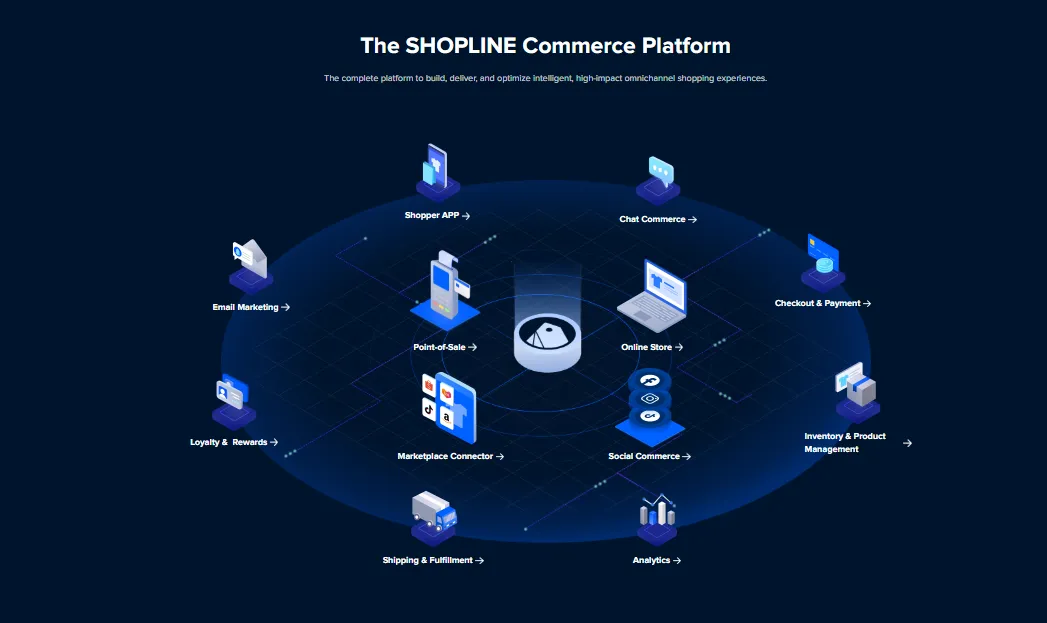
When evaluating Shopline cost, the goal is not to find the lowest monthly fee, but to choose a pricing structure that remains stable and predictable as the business evolves. Shopline is designed to support growth in stages, and costs tend to increase in clear, logical steps rather than through unexpected charges.
Businesses that derive the most value from Shopline typically approach cost planning with a longer horizon.
A few practical ways businesses plan effectively for long-term Shopline use include:
- Selecting a plan based on future workflows, not just current needs: Many stores launch with simple requirements but quickly adopt more advanced marketing, reporting, or team structures. Choosing a plan that can comfortably support the next phase of growth often leads to smoother operations and fewer reactive upgrades later.
- Using transaction fees as a planning lever: Because transaction fees decrease at higher tiers, businesses with clear sales targets can estimate when a plan upgrade becomes cost-efficient. This turns pricing into a strategic decision rather than a reactive one.
- Aligning platform costs with operational complexity: As teams expand, selling channels multiply, or business models become more specialised, higher-tier plans often improve efficiency and coordination. In these cases, a higher subscription fee can support smoother operations and better margin control.
- Viewing specialised capabilities as growth enablers: Features such as B2B selling, POS integration, and multi-store management are designed to support expansion. Planning for these capabilities early enables businesses to adopt them intentionally once they deliver clear commercial value.
When approached this way, Shopline pricing becomes a framework for sustainable growth rather than a constraint. Clear planning helps businesses match platform costs to performance, making each upgrade feel purposeful and justified.
Aligning Shopline Cost with Sustainable Growth
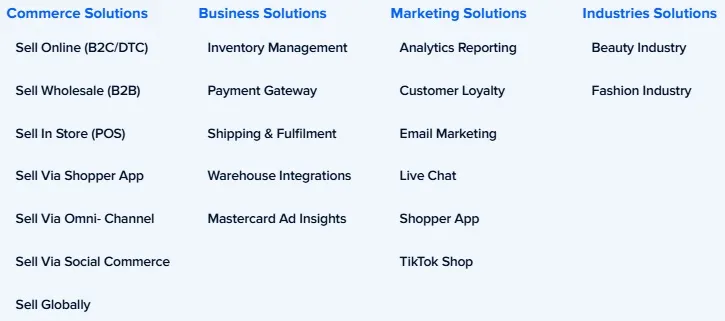
Understanding Shopline cost goes beyond budgeting. It plays a role in how marketing, operations, and growth strategies work together over time. When the ecommerce platform and growth strategy are aligned from the start, costs are easier to manage, and investments are more intentional.
As a Shopline partner, MediaOne works closely with businesses to ensure their ecommerce setup supports both performance and scalability. Shopline provides the infrastructure to build and scale online stores efficiently, while MediaOne focuses on driving the right traffic, improving conversion quality, and supporting long-term growth through data-driven marketing strategies.
Together, this approach helps businesses move from store setup to sustained performance with clearer cost planning and fewer operational adjustments along the way.
Contact us today for an assessment of your expected Shopline costs and how plan, add-ons, and transaction fees will impact long-term growth.
Frequently Asked Questions
How does Shopline cost compare to Shopify?
Shopline and Shopify differ in ecosystem focus. Shopline is built with Asian markets in mind, supporting local payment methods and logistics more natively, while Shopify relies more heavily on third-party apps. Total cost depends on the number of add-ons and integrations your business requires.
Can Shopline costs increase without upgrading to a plan?
Yes. Activating add-ons, increasing transaction volume, or adding POS functionality can increase your monthly cost even if you remain on the same base plan.
Is Shopline suitable for service-based businesses?
Shopline is primarily designed for product-based ecommerce. Service businesses may find limitations unless they use workarounds such as productised services or booking integrations.
Does Shopline support multi-currency pricing?
Multi-currency support is available but may depend on your plan and payment gateway configuration. This can affect transaction fees and overall cost.
What should businesses evaluate before committing to Shopline?
Businesses should evaluate growth plans, required features, expected transaction volume, and internal technical resources before committing. This ensures the Shopline cost aligns with long-term objectives rather than short-term savings.