Understanding how customers interact with your brand is key to building lasting relationships and long‑term growth. In fact, 81% of consumers say they need to trust a brand before making a purchase, and 94% tend to stay loyal to brands they feel emotionally connected to. This shows just how much audience perception matters throughout the buying journey.
The 5E Brand Funnel offers companies a strategic way to nurture relationships, deliver value at every touchpoint, and turn satisfied customers into loyal ambassadors. Rather than focusing solely on one stage of the journey, this model helps brands align their marketing efforts with how real people discover, learn about, and eventually champion a brand.
In this blog, we’ll walk through each stage of the funnel, explain why it matters, and show how to measure success effectively.
Whether you’re a startup aiming to build awareness or an established brand looking to deepen customer loyalty, the 5E Brand Funnel can reshape how you connect with your audience and strengthen your digital branding strategy. Let’s dive in and explore how to make it work for your business.
Key Takeaways
- The 5E Brand Funnel has five stages: Engage, Educate, Evaluate, Employ, and Evangelise. These represent the customer journey from awareness to advocacy.
- This model guides customers to become loyal brand advocates by creating a seamless experience through each stage.
- The 5E Brand Funnel is essential for aligning marketing, content, and social media strategies to improve customer acquisition by creating consistent messaging across channels and boosting retention by fostering ongoing engagement and loyalty.
- Businesses can measure funnel effectiveness by tracking key metrics at each stage and refining strategies based on performance.
What is the 5E Brand Funnel?
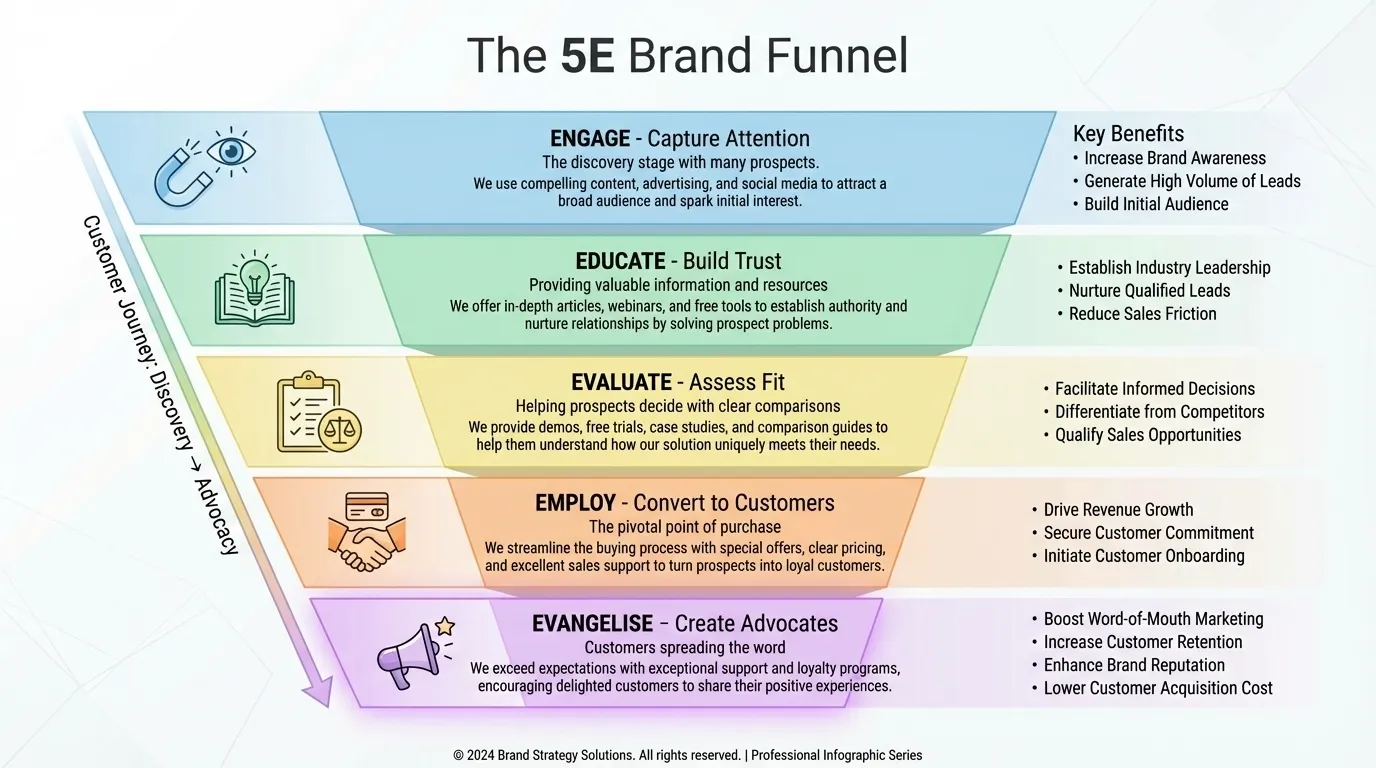
The 5E Brand Funnel outlines the stages a customer follows from discovery to advocacy. It creates a customer-centric branding approach by guiding brand engagement at each journey stage.
Each funnel stage addresses a customer need, helping businesses guide prospects toward purchase and encourage positive experience sharing, often through a branding agency.
- Engage: Capture potential customers’ attention.
- Educate: Provide valuable information to build trust.
- Evaluate: Help prospects assess whether your solution fits their needs.
- Employ: Convert prospects into loyal customers.
- Evangelise: Turn customers into advocates who spread the word.
This model encourages brands to nurture customer relationships and build long-term loyalty and advocacy.
Why is the 5E Brand Funnel Important?
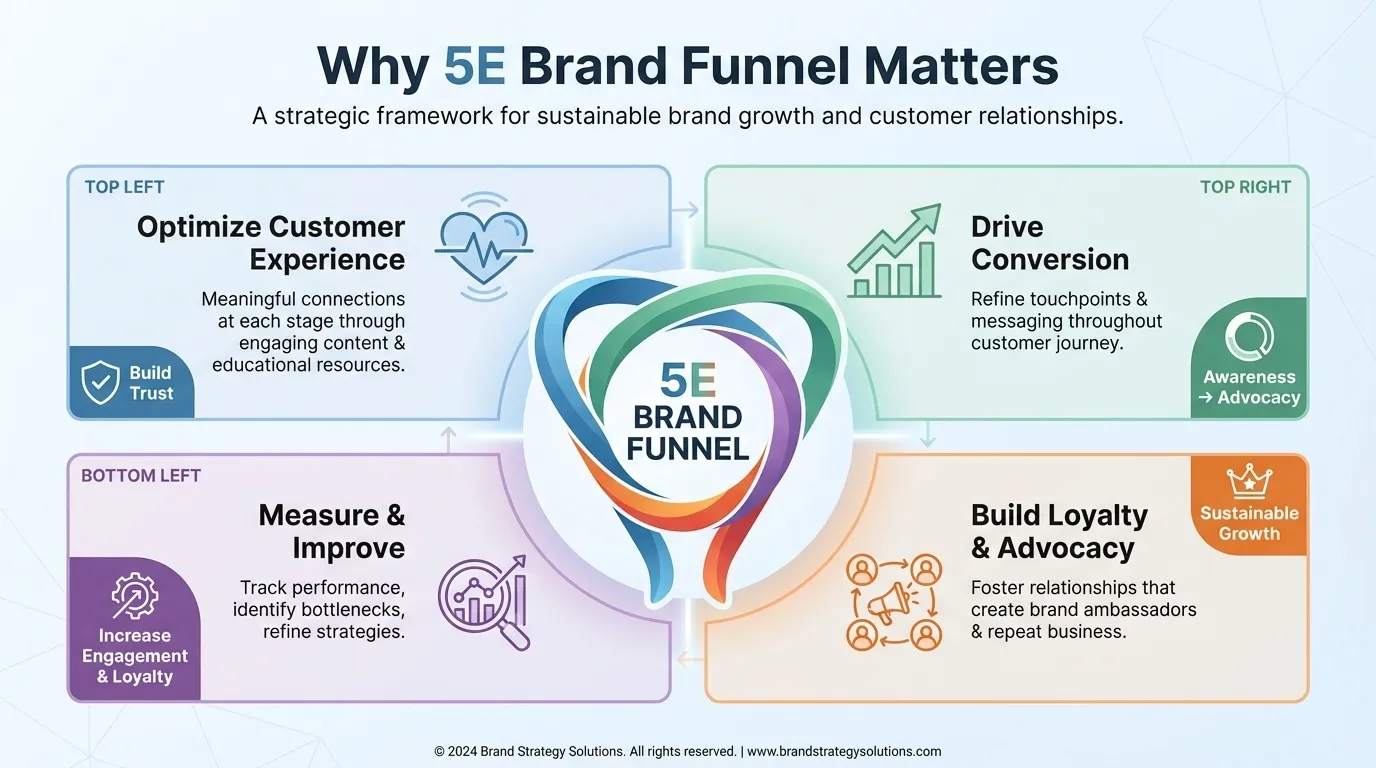
The 5E Brand Funnel aligns marketing with how customers decide. It aims to:
- Optimise Customer Experience: Each stage offers a unique opportunity to connect with your audience in meaningful ways, whether through engaging content or educational resources that build trust.
- Drive Conversion: Understanding the customer journey helps brands refine touchpoints and messaging to boost conversions from awareness to advocacy.
- Measure & Improve: The funnel tracks each stage’s performance, identifies bottlenecks, and refines strategies to increase engagement and loyalty.
- Build Loyalty & Advocacy: It’s not just about making a sale; it’s about fostering relationships that turn customers into lifelong advocates. By focusing on the Evangelise stage, businesses can amplify their brand’s reach through organic word of mouth and social sharing.
By applying the 5E Brand Funnel, brands can create a unified, targeted strategy that strengthens long-term relationships, increases trust, and drives lasting brand loyalty.
The 5 Stages of the Brand Funnel
Each stage of the 5E Brand Funnel serves a specific purpose in guiding customers toward brand advocacy. Here’s how each stage works:
1. Engage: Capturing Attention
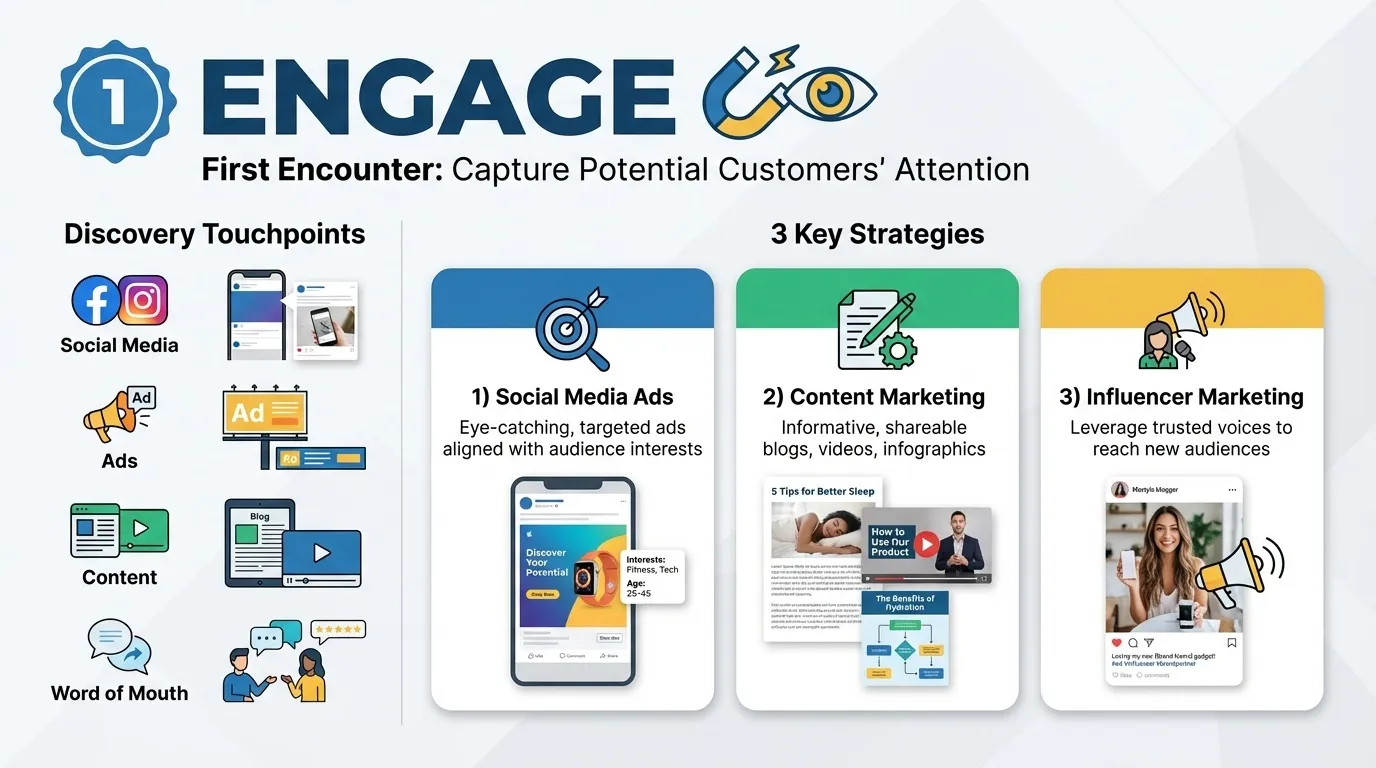
At the Engage stage, your goal is to capture potential customers’ attention. This is when prospects first encounter your brand, whether through ads, social media, content, or word of mouth.
Strategies for engaging your audience:
- Social Media Ads: Use eye-catching, targeted ads that align with your audience’s interests.
- Content Marketing: Create informative, shareable blogs, videos, and infographics.
- Influencer Marketing: Partner with influencers to amplify your reach and credibility.
By standing out in a crowded marketplace, you begin to nurture curiosity and interest in your brand.
2. Educate: Building Trust and Knowledge
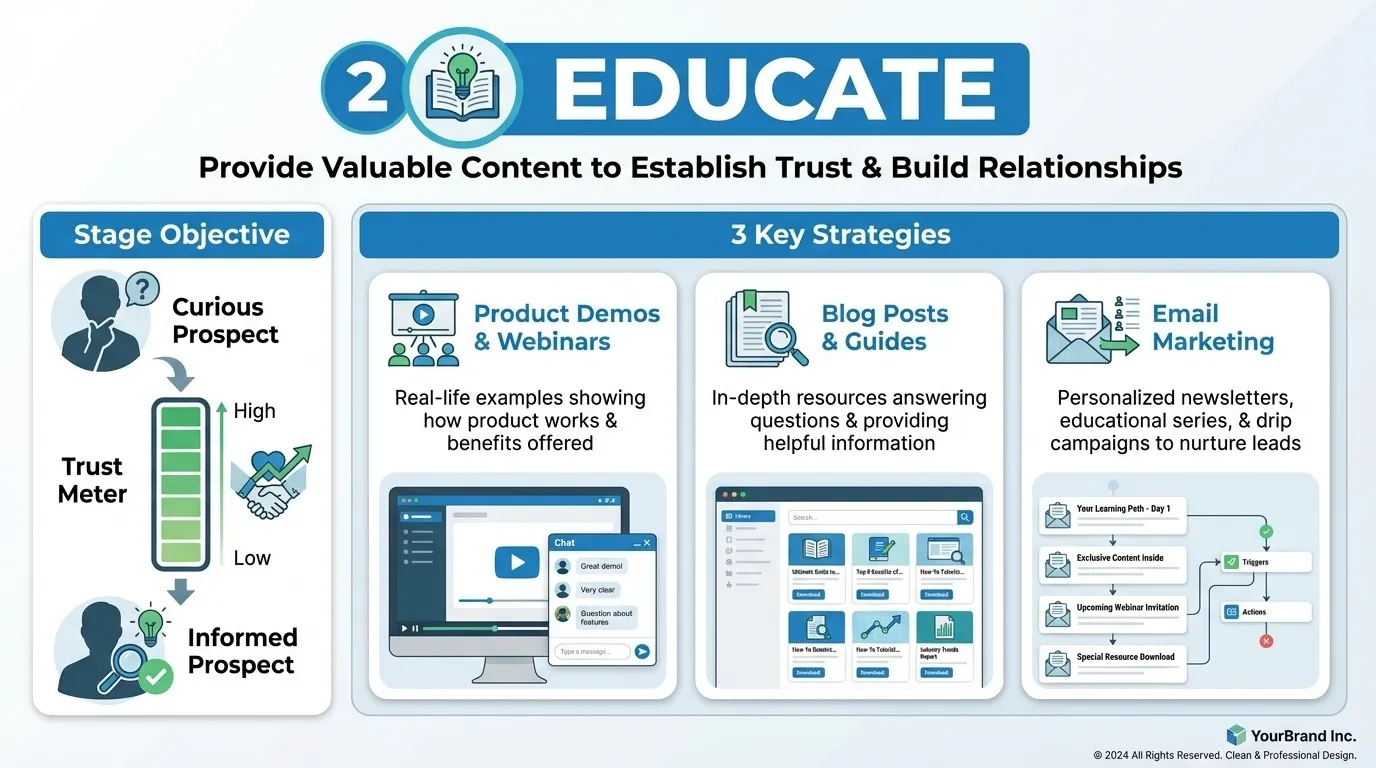
The Educate stage is where you provide valuable, insightful content that educates your audience about your brand and its offerings. This helps to establish trust and build a relationship with your audience.
Strategies for educating your audience:
- Product Demos & Webinars: Provide real-life examples of how your product works and the benefits it offers.
- Blog Posts & Guides: Offer in-depth resources that answer questions and provide helpful information.
- Email Marketing: Use email newsletters to nurture leads with relevant, educational content.
Educating your audience makes them feel more informed and confident in their decision-making process.
3. Evaluate: Helping Customers Make Informed Decisions
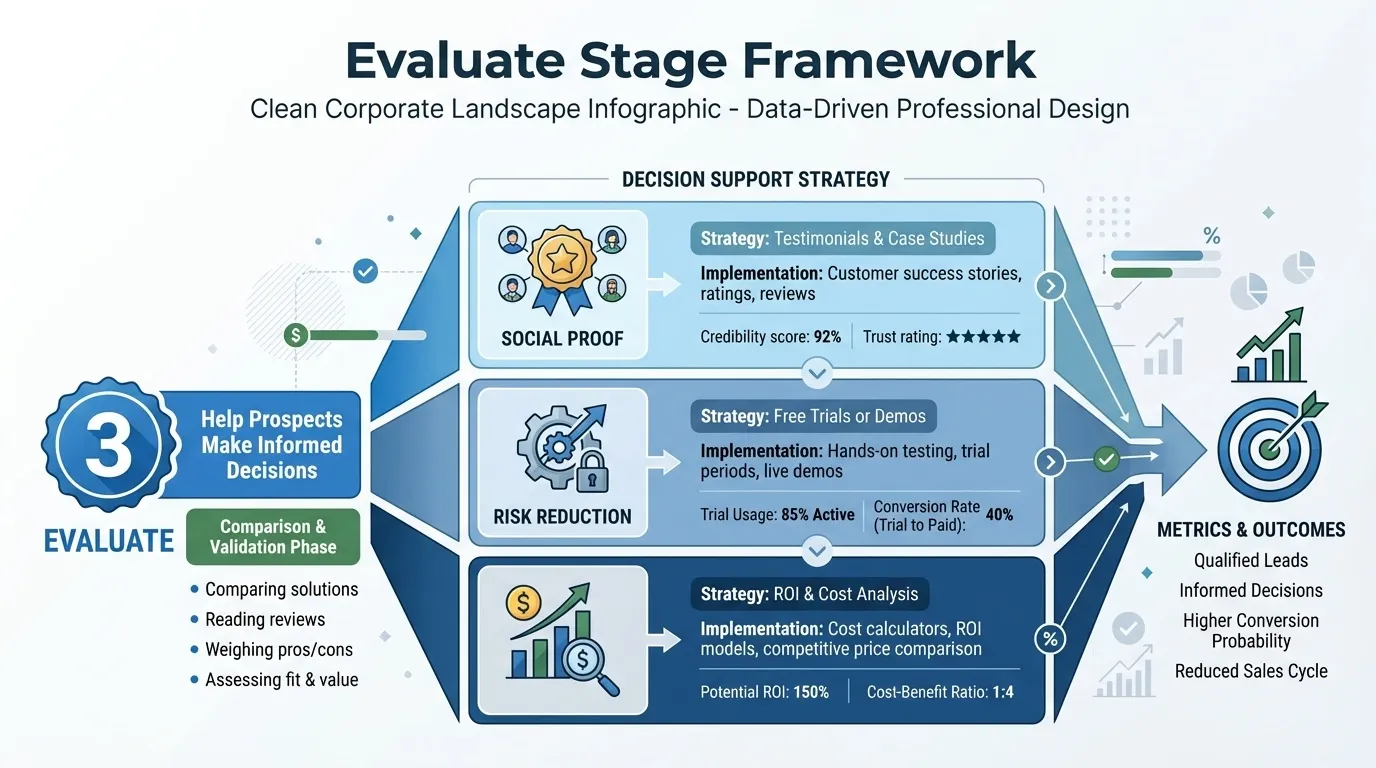
At the Evaluate stage, prospects are comparing your product or service with others. They are weighing the pros and cons, seeking reviews and testimonials, and determining if your offering fits their needs.
Strategies for evaluation:
- Testimonials & Case Studies: Share success stories from real customers to build credibility.
- Free Trials or Demos: Allow prospects to test your product or service to see if it meets their needs.
- Comparison Charts: Highlight how your solution is better or more affordable than competitors’.
This stage is about removing any doubts and providing all the information customers need to feel confident in their purchase decision.
4. Employ: Converting Prospects Into Customers
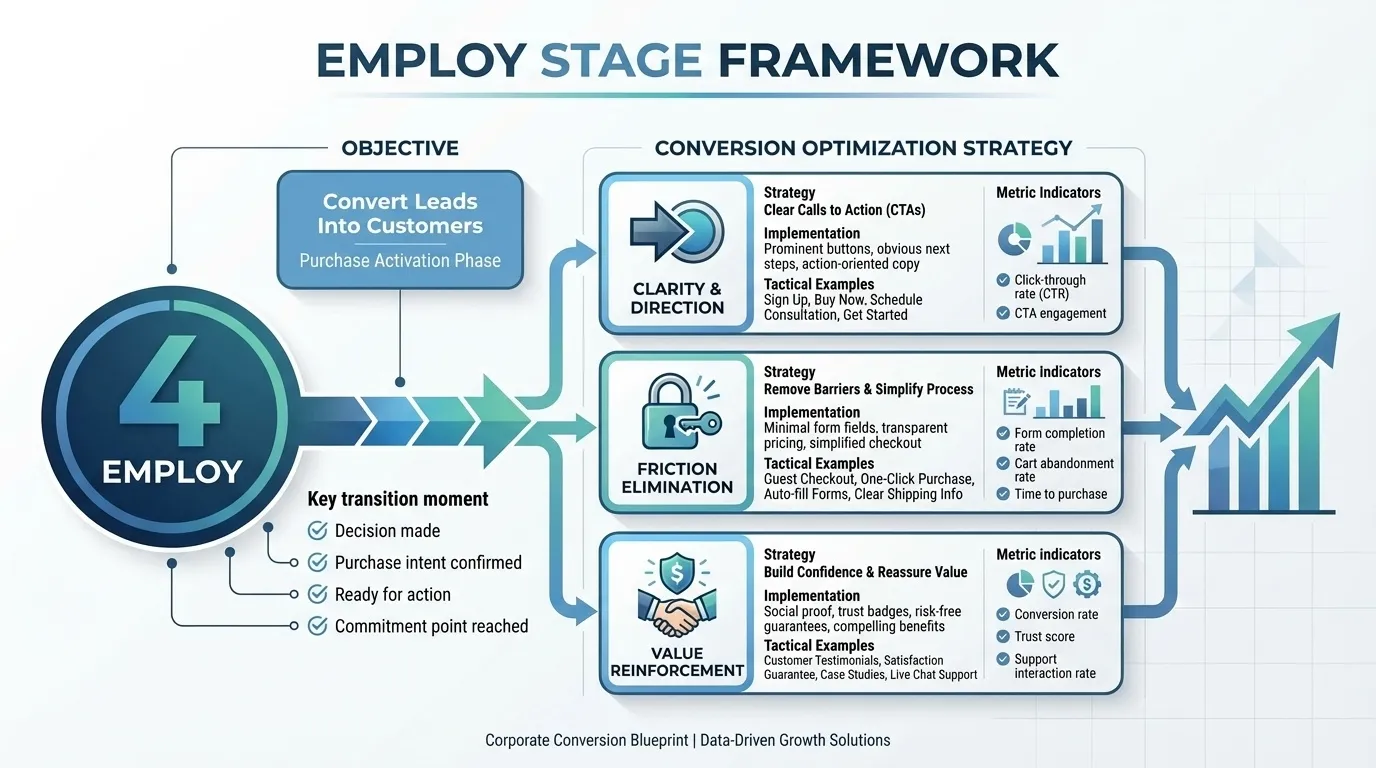
In the Employ stage, your goal is to convert leads into customers. This is the point where prospects are ready to make a decision and purchase from you.
Strategies for conversion:
- Clear Calls to Action (CTAs): Make it easy for prospects to take the next step, whether it’s signing up, buying, or scheduling a consultation.
- Simplified Checkout Process: Ensure the purchasing process is easy and seamless to reduce friction.
- Limited-Time Offers: Create urgency through special promotions or discounts.
By creating a smooth and enticing transition from evaluation to purchase, you increase your chances of closing the deal.
5. Evangelise: Turning Customers into Brand Advocates
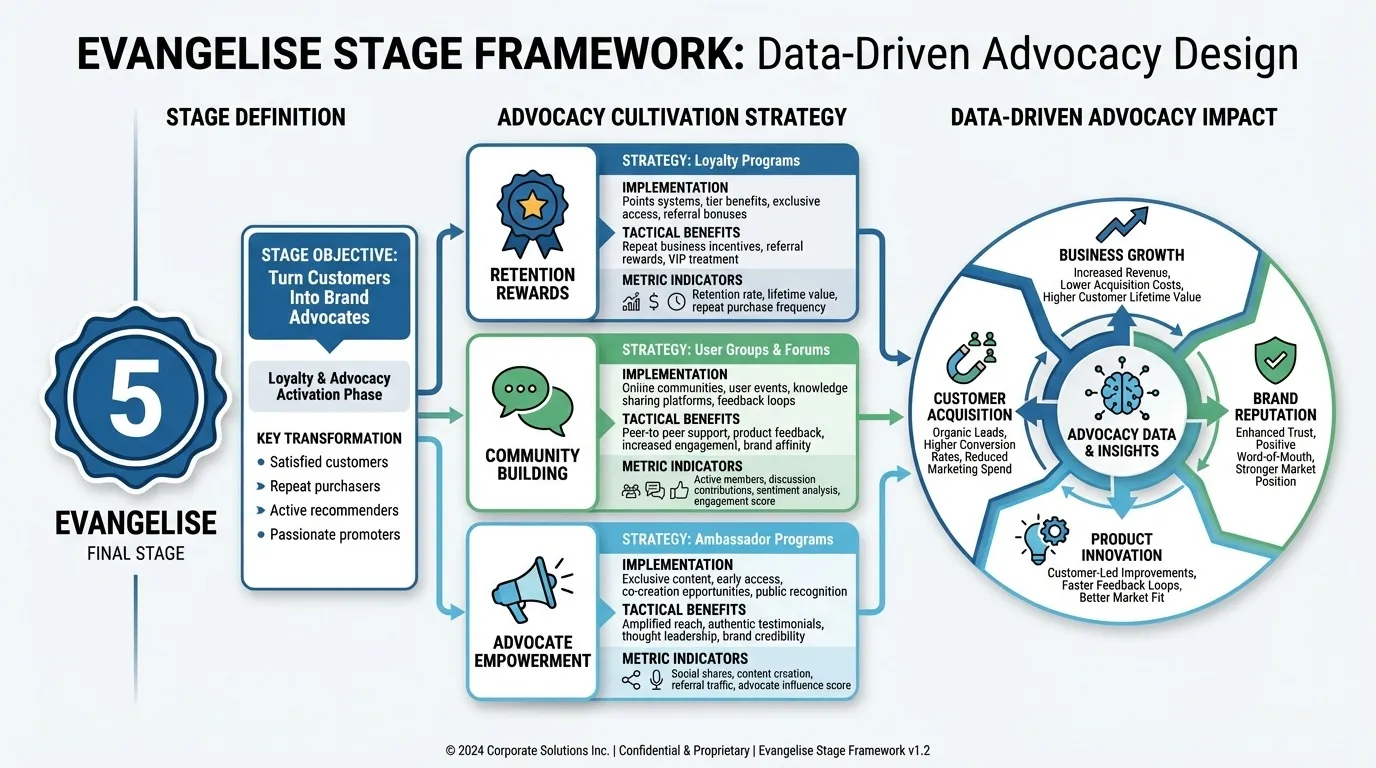
The Evangelise stage focuses on turning satisfied customers into loyal brand advocates. These customers will not only make repeat purchases but will also recommend your brand to others, creating organic word-of-mouth marketing.
Strategies to encourage evangelism:
- Loyalty Programs: Reward customers for repeat business and referrals.
- Referral Incentives: Encourage customers to share your brand with their network in exchange for discounts or gifts.
- User-Generated Content: Feature customers on your social media pages to increase engagement and trust.
By encouraging customers to become passionate supporters of your brand, you create an army of loyal advocates who will continue to promote your business.
How to Apply the 5E Brand Funnel to Your Strategy
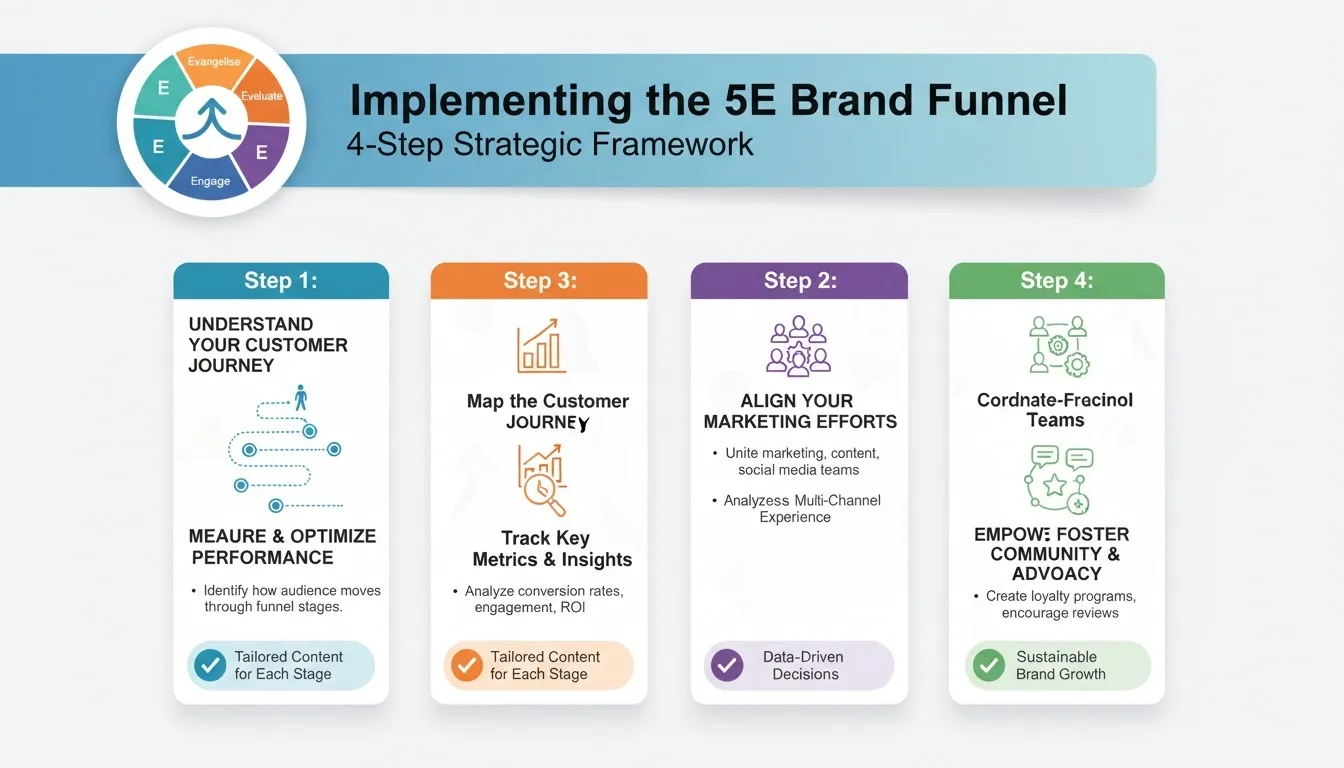
To effectively implement the 5E Brand Funnel, follow these key steps:
- Understand Your Customer Journey: Map it to see how your audience moves through the funnel. Tailor your content and strategies for each stage to create a smooth path from engagement to advocacy.
- Align Your Marketing Efforts: Ensure your marketing, content, and social media teams are working together to support the funnel stages. A seamless approach across channels will enhance the customer experience.
- Use Automation Tools: Leverage CRM and marketing automation tools to manage and optimise customer interactions at each stage of the funnel. Tools like HubSpot or Mailchimp can help streamline the process and improve customer engagement.
- Refine Based on Data: Continuously monitor your funnel’s performance using analytics tools. Assess which stages need more attention and refine your strategies based on what works best.
By strategically applying the 5E Brand Funnel, you ensure that your marketing efforts are customer-centric, targeted, and effective in building long-lasting relationships.
Measuring Success in the 5E Brand Funnel
To evaluate the effectiveness of your 5E Brand Funnel, it’s crucial to track key performance metrics at each funnel stage. These metrics provide insight into how well your brand is moving customers through the funnel and help identify areas that need improvement.
1. Engage: Tracking Initial Brand Interaction
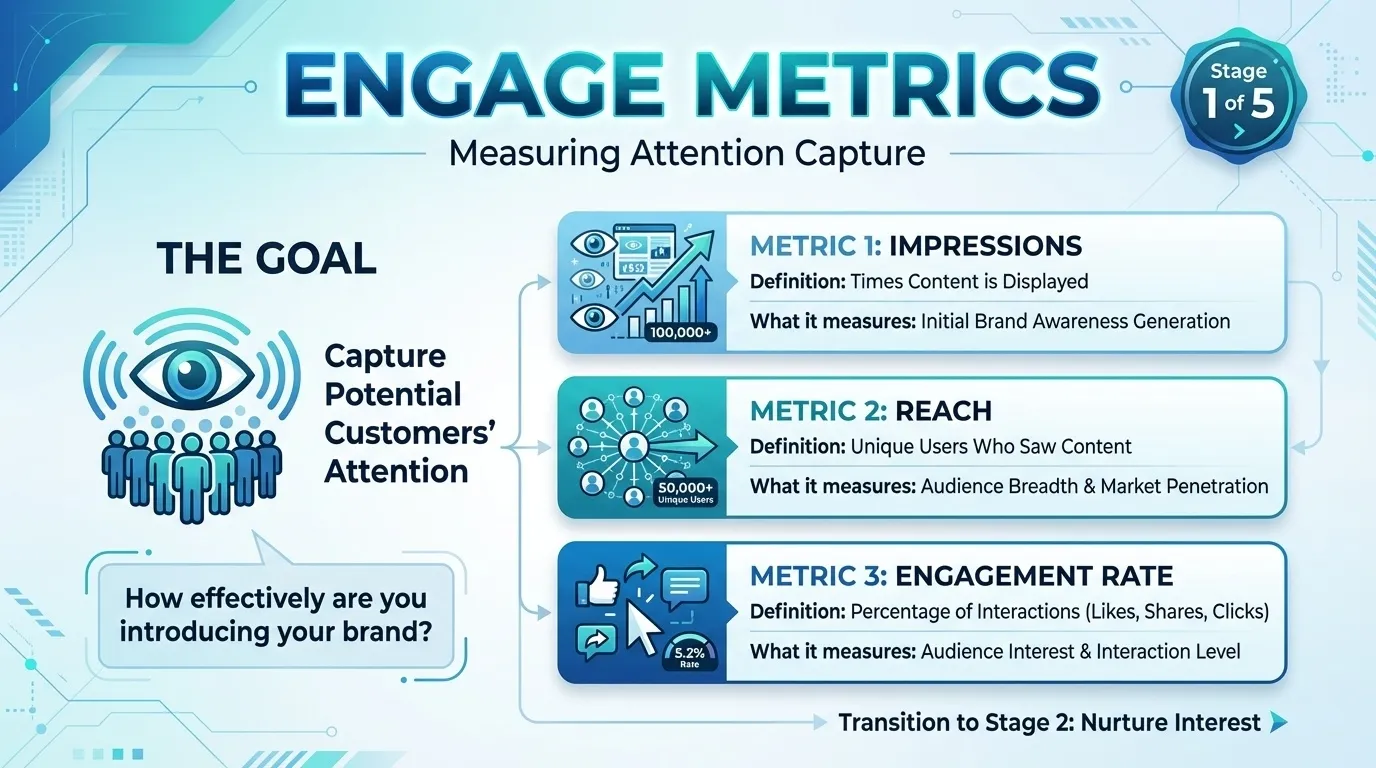
At the Engage stage, your goal is to capture potential customers’ attention. Metrics at this stage help determine how effectively you’re introducing your brand to your audience.
- Impressions: Measure how many times your content is displayed to users, giving you an idea of the initial awareness your brand is generating.
- Reach: Track how many unique users have seen your content. This is a good indicator of the breadth of your engagement efforts and the extent to which your brand’s message is spreading.
- Click-Through Rate (CTR): CTR measures how many people clicked on your ad or content relative to how many saw it. A higher CTR indicates that your content is engaging and relevant to your audience, which is crucial for moving them to the next stage of the funnel.
deep impressions and reach with a strong CTR signal that your content is capturing attention and driving initial interest, which is essential for moving customers deeper into the funnel.
2. Educate: Building Trust and Providing Value
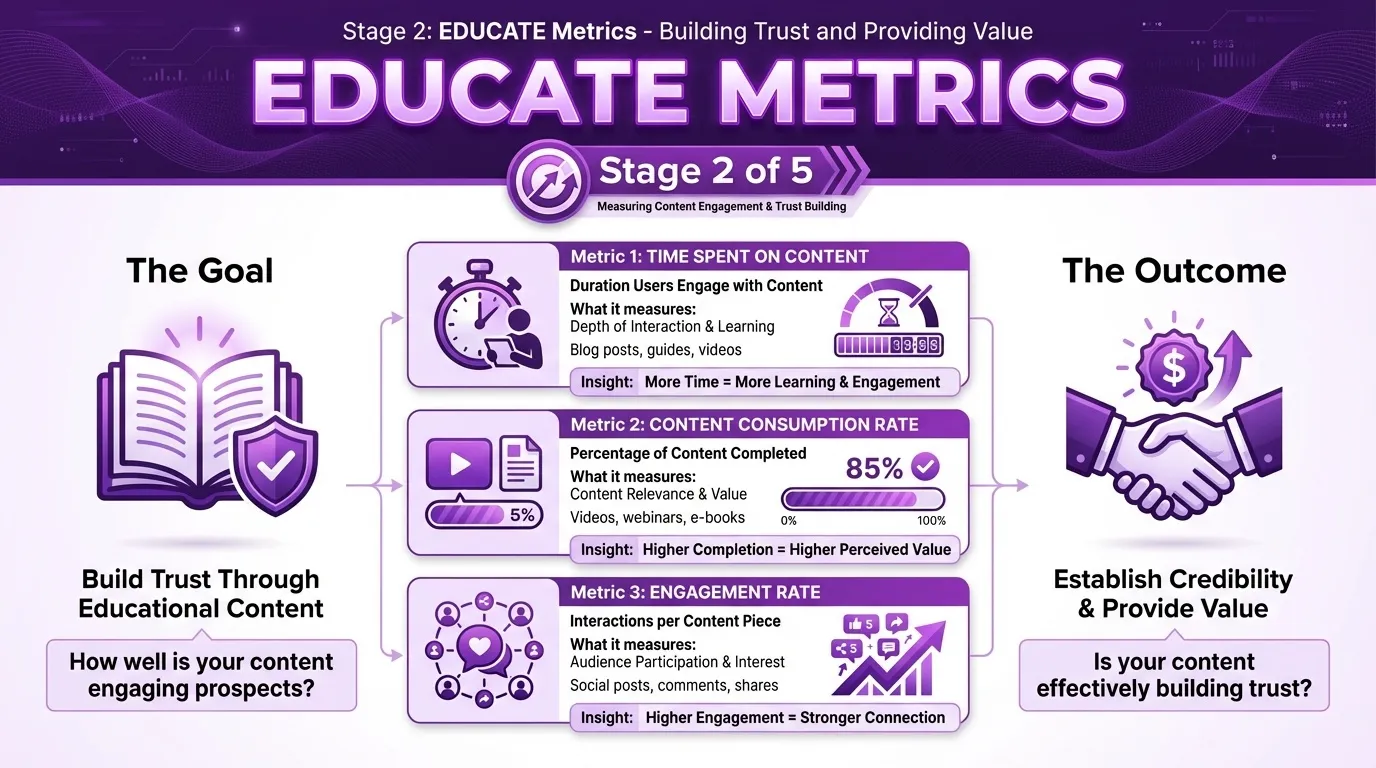
The Educate stage is where you provide information that builds trust and helps prospects learn more about your brand and offerings. Success here is measured by how well your content engages potential customers.
- Time Spent on Content: This is a key indicator of how deeply users are interacting with your educational content (e.g., blog posts, guides, videos). The more time they spend, the more likely they are to be learning and engaging with your message.
- Video Views: If you’re using video content (such as tutorials, webinars, or product demonstrations), tracking views is a valuable metric to assess how well your educational content is performing.
- Downloads: For educational materials like eBooks, whitepapers, or case studies, tracking download counts shows that your content is resonating with your audience and providing value.
A high level of engagement in this stage indicates that you’re successfully building trust and educating potential customers, making it easier for them to evaluate your offering later in the funnel.
3. Evaluate: Helping Customers Make Informed Decisions
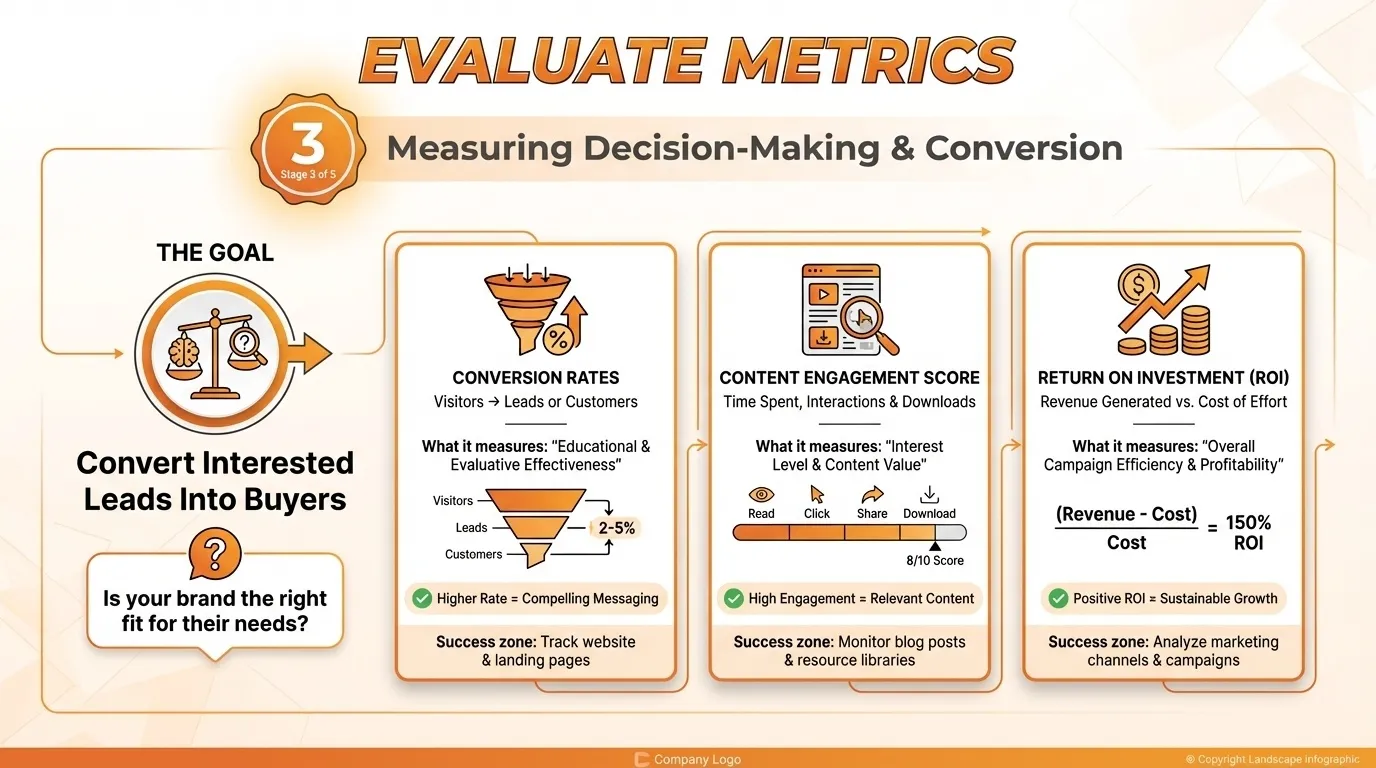
In the Evaluate stage, prospects are considering whether your brand is the right fit for their needs. At this point, your focus should be on converting interested leads into buyers.
- Conversion Rates: Track how many visitors to your website or landing pages actually convert into leads or customers. Higher conversion rates at this stage indicate that your educational and evaluative efforts are compelling.
- Lead Quality: Not all leads are created equal. Track lead-scoring metrics to evaluate the quality of leads entering your system. High-quality leads are more likely to convert into paying customers.
- Customer Feedback: Collecting feedback through surveys or reviews can help you understand how prospects perceive your brand during the evaluation process. Positive feedback means you are addressing their concerns effectively, while negative feedback may reveal gaps in your messaging.
Monitoring conversion rates and lead quality ensures you’re nurturing high-potential prospects, while customer feedback provides insights into the effectiveness of your messaging at this stage.
4. Employ: Converting Leads into Loyal Customers
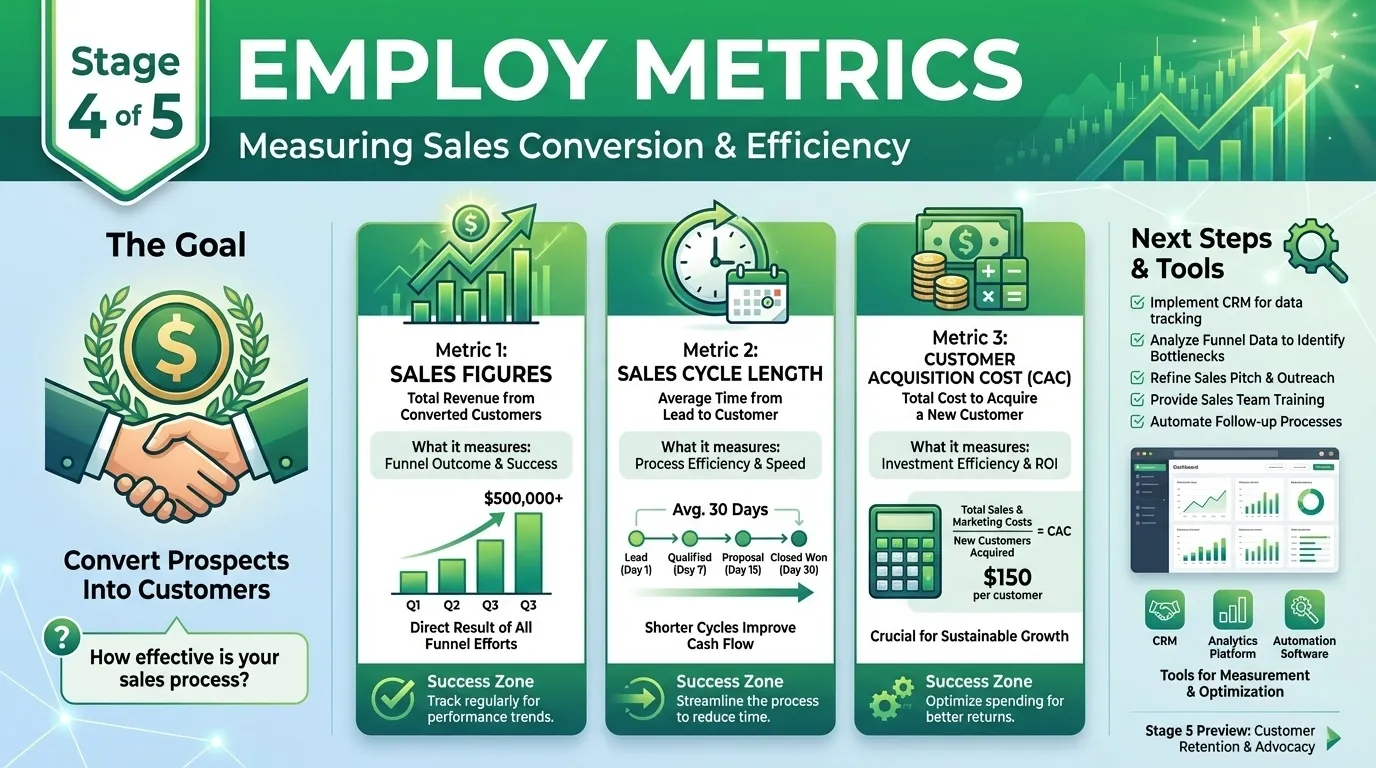
At the Employ stage, the objective is to convert prospects into customers. You’ll need to track how well your sales process is working and identify areas to streamline the conversion.
- Sales Figures: This is the most direct metric for tracking success in this stage. Sales numbers reflect the outcome of your funnel efforts, so it’s essential to track them regularly.
- Customer Acquisition Cost (CAC): CAC measures the cost to acquire a new customer, including marketing, sales, and operational expenses. A lower CAC means you’re efficiently converting prospects into paying customers.
- Cart Abandonment Rate: If you’re running an e-commerce business, tracking how many people add products to their cart but don’t complete the purchase can highlight friction points in the buying process, such as complicated checkouts or unexpected fees.
Optimising this stage for sales and reducing CAC are key to improving your ROI and ensuring that your efforts to convert prospects are cost-effective.
5. Evangelise: Turning Customers Into Brand Advocates
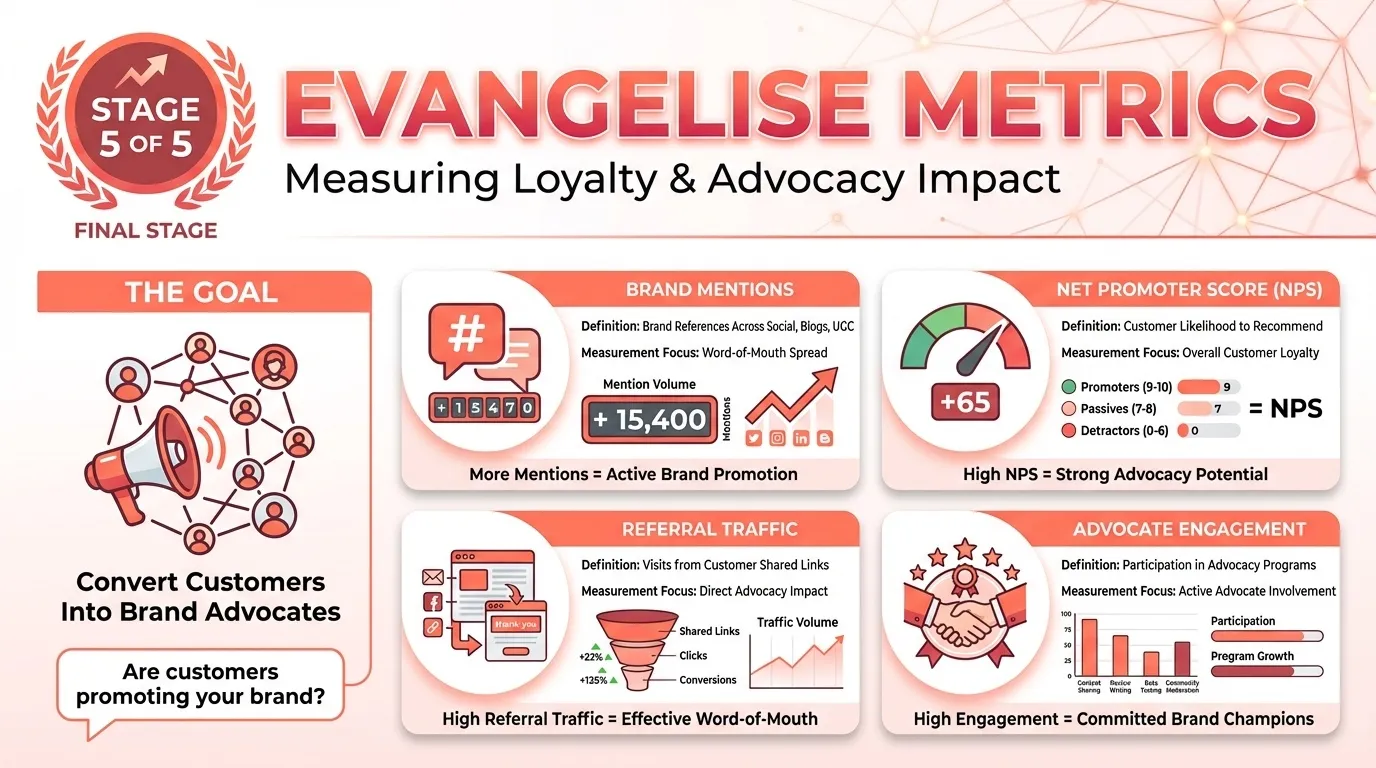
In the Evangelise stage, the goal is to convert customers into loyal advocates who will promote your brand to others. Success here means not just retaining customers, but turning them into enthusiastic brand supporters.
- Brand Mentions: Track how often your brand is mentioned across social media, blogs, and other user-generated content. More mentions indicate that your customers are spreading the word about your brand.
- Referral Traffic: Monitor traffic to your website from referrals, whether via links shared by users or through affiliate or referral programs. Higher referral traffic indicates that your customers trust and value your brand enough to share it with others.
- Customer Lifetime Value (CLV): CLV measures the total revenue a customer is expected to bring to your brand over the duration of their relationship. A higher CLV indicates that your customers are engaged and likely to make repeat purchases or remain loyal to your brand.
- Net Promoter Score (NPS): NPS measures customer satisfaction and their likelihood of recommending your brand to others. A high NPS indicates that customers are highly satisfied and willing to advocate for your brand.
High brand mentions, referral traffic, CLV, and NPS suggest that you’re successfully fostering customer loyalty and turning them into long-term advocates, which fuels organic growth and reduces the need for costly marketing efforts.
Unlock the Full Potential of the 5E Brand Funnel
The 5E Brand Funnel is more than just a marketing model; it’s a strategic framework that helps businesses create meaningful, lasting relationships with their customers.
Guiding your audience through the Engage, Educate, Evaluate, Employ, and Evangelise stages helps you not only convert leads into customers but also build brand loyalty and advocacy that fuel long-term growth.
As you apply the funnel to your business, remember that success is built on continuous measurement and refinement. Tracking key metrics at each stage helps you spot areas for improvement and ensures your strategies align with customer needs.
Whether you want to boost engagement, increase conversions, or turn customers into passionate advocates, the 5E Brand Funnel gives you a clear roadmap to achieve your goals.
Embrace the power of this funnel in your digital branding strategy, and watch your brand grow stronger, more connected, and more successful at building loyal customer relationships.
MediaOne can help you implement the 5E Brand Funnel and craft a customised digital branding strategy that delivers measurable results. Get in touch now.
Frequently Asked Questions
How long does it take for customers to move through the 5E Brand Funnel?
The time it takes for customers to move through the 5E Brand Funnel varies by industry, product complexity, and individual customer. For some products or services, the process may take days or weeks, while for others, especially B2B offerings, it may span months or longer. It’s essential to monitor your audience’s behaviour at each stage and adjust your strategy accordingly.
How do I know which stage of the funnel my customer is in?
Understanding where your customers are in the funnel involves closely tracking their actions and interactions with your brand. You can use analytics tools to track website activity, content engagement, and lead nurturing.

For example, if a customer has interacted with educational content (like webinars or guides), they may be in the Educate stage. If they’re considering a purchase or evaluating a demo, they’re likely in the Evaluate stage.
Can I skip stages in the 5E Brand Funnel if my product is simple or inexpensive?
While the 5E Brand Funnel is comprehensive, you can adjust it based on your product type. If you’re selling a simple or inexpensive product, customers may skip over certain stages (like deep education or long evaluations). However, it’s still important to engage with them and provide quick, easy-to-access information to guide their decision-making process, even if it’s brief.
How do I personalise the 5E Brand Funnel for different customer segments?
Personalisation is key to making the 5E Brand Funnel work for your audience. To tailor it to different customer segments, develop personas that represent your target audiences.
For example, you might have one funnel strategy for high-value enterprise clients (longer Evaluate and Employ stages) and another for fast-moving consumers (quicker Engage and Employ stages).
Use customer data and behaviour insights to modify content and messaging at each stage for a more personalised experience.
What are the benefits of using the 5E Brand Funnel for my digital branding?
The 5E Brand Funnel provides a clear, structured approach to guiding customers from awareness to advocacy. It helps you align your marketing, content, and social media strategies, ensuring that each touchpoint enhances the customer experience. By focusing on long-term engagement and loyalty, the funnel encourages sustained relationships, turning customers into brand advocates who actively promote your business.