


A staggering 81% of consumers research products online before making any purchase, whether in-store or online, proving that digital branding is a critical business asset.
As consumers become more reliant on search engines, social media, and websites to inform their buying decisions, the way your brand presents itself online can significantly impact customer trust and loyalty.
In fact, a poorly executed digital brand can lead to confusion, missed opportunities, or even customer loss.
Your brand’s online presence is more than just a logo or website. Optimising content for search, building trust via engaging social media, and delivering valuable, resonant content all combine to create a lasting impression.
To help you navigate these interconnected elements, this blog will explore how a branding agency can create a unified, compelling digital brand system that drives growth, engagement, and loyalty.
Key Takeaways
- Digital branding means establishing your brand’s recognisable identity online, ensuring clear, reliable messaging across platforms.
- There are three essential elements of a successful digital brand: SEO, content strategy, and social media.
- Achieving consistency between SEO, content, and social media helps your brand be easily found, builds trust, and sustains engagement.
- To succeed, measure performance continuously, optimise regularly, and ensure different teams work together seamlessly.
What Is Digital Branding?

Digital branding is the practice of promoting your brand online, ensuring its presence across digital channels, and building recognition, trust, and loyalty among customers. Unlike traditional branding, digital branding focuses on online touchpoints such as websites, social media, content, and search engines.
It involves more than just designing a logo or choosing a colour scheme; it’s about creating a compelling narrative and delivering value across multiple platforms. Digital branding is how you communicate your company’s mission, values, and personality to your audience to build lasting relationships.
The Three Pillars of Digital Branding
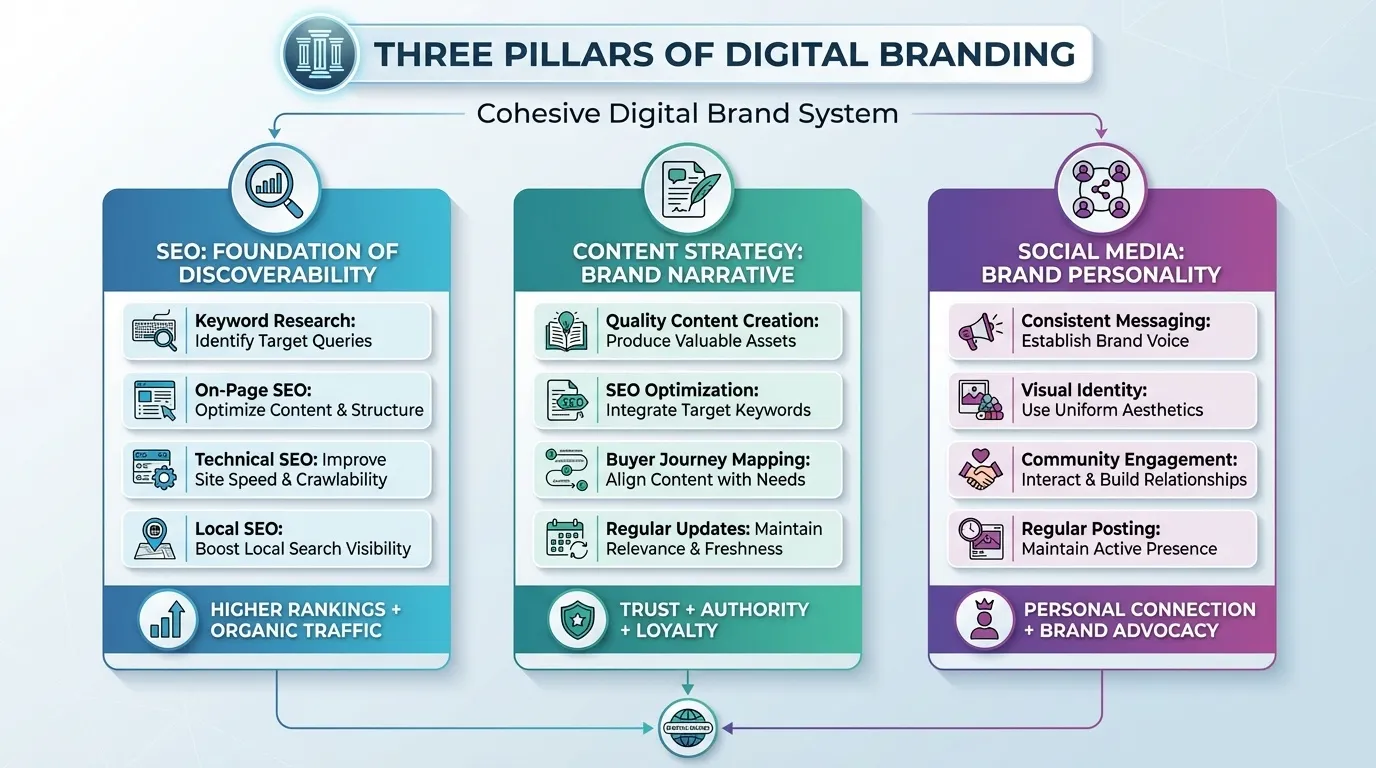
A cohesive digital brand system relies on three pillars: SEO, content strategy, and social media. These elements work together to amplify your brand’s visibility, trustworthiness, and engagement.
1. SEO: The Foundation of Brand Discoverability
SEO (Search Engine Optimisation) helps ensure that your brand is easily discoverable online. By optimising your website and content for search engines, you make it easier for potential customers to find you when searching for relevant keywords.
Key tactics include:
- Keyword research and implementation
- On‑page SEO (titles, meta descriptions, headers)
- Technical SEO (site speed, mobile responsiveness)
- Local SEO for geo‑targeted visibility
With SEO, your brand gains higher rankings on search engine results pages (SERPs), resulting in more organic traffic and greater exposure.
2. Content Strategy: Shaping Your Brand’s Narrative
Content strategy defines how your brand tells its story. It involves creating valuable, engaging, and informative content that resonates with your target audience. Effective content helps build trust, establishes authority, and nurtures customer loyalty.
Key elements of content strategy:
- Creating high‑quality blogs, videos, podcasts, and guides
- Optimising content for SEO
- Mapping content to the buyer’s journey (TOFU, MOFU, BOFU)
- Regularly updating and refreshing content.
A well‑executed content strategy turns your brand into a reliable information resource, keeping customers engaged and coming back for more.
3. Social Media: Amplifying Your Brand Personality
Social media showcases your brand’s personality, values, and culture, sparking engagement and nurturing loyalty in real time.
Key strategies for social media branding:
- Consistent messaging across platforms (Facebook, Instagram, LinkedIn, etc.)
- Visual identity and brand tone consistency
- Community engagement and active response to comments
- Regular content posting and interaction
Social media lets your audience connect personally with your brand, building loyal advocates.
When SEO, content, and social media are integrated, they create a seamless, unified brand experience for growth and engagement.
SEO Informs Content Strategy
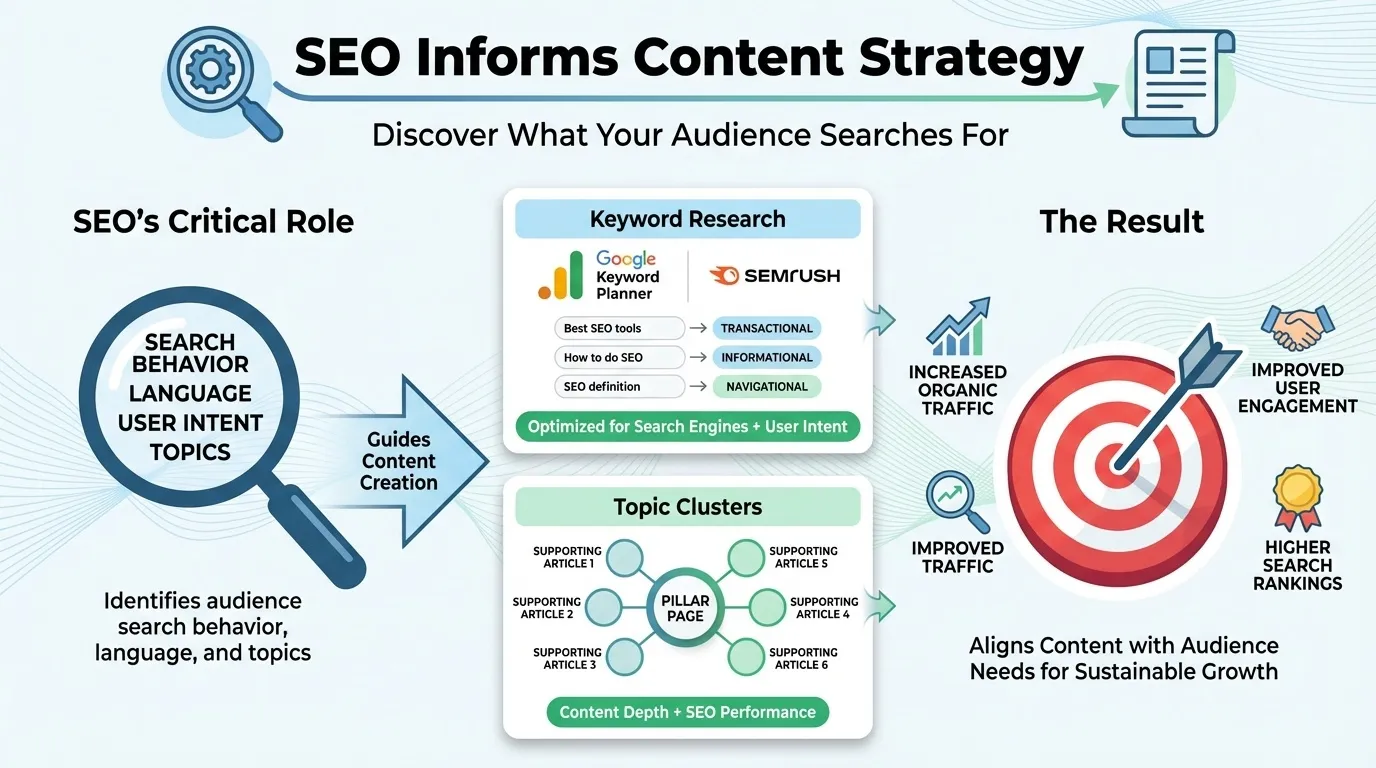
SEO plays a critical role in guiding content strategy by identifying what your audience is searching for online. By conducting thorough keyword research, an experienced SEO agency can help you understand the language, intent, and topics that resonate most with your target audience, ensuring your content aligns with real search demand and drives measurable results.
This insight allows you to create content that directly addresses their pain points, needs, and interests, making your brand more discoverable and relevant.
- Keyword Research: SEO tools like Google Keyword Planner and SEMrush reveal the keywords your audience uses. These keywords can guide your content creation, ensuring it’s optimised for search engines and user intent.
- Topic Clusters: SEO also highlights relevant topics to explore in your content. This can help structure your content strategy by creating pillar pages and supporting articles, which improves both content depth and SEO performance.
By optimising your content for the right keywords and search intent, you ensure it gets discovered by the right people at the right time.
Content Strategy Drives Social Media
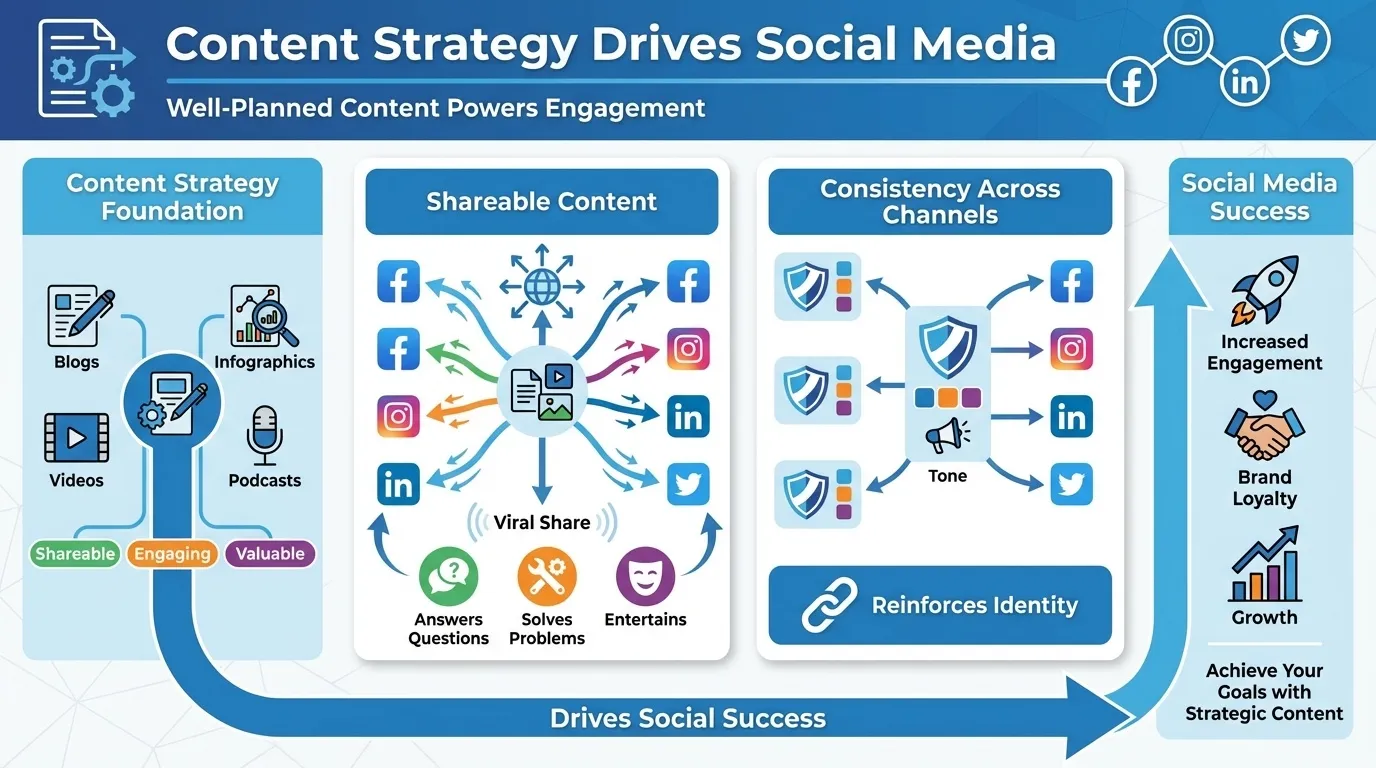
Content strategy and social media go hand in hand, with well-planned content driving social media engagement. Shareable, engaging content keeps your audience interested, encourages them to interact with your posts, and helps them share your content with their networks, increasing your brand’s reach.
- Shareable Content: Blog posts, infographics, videos, and podcasts are excellent social media content types because they are easy to share. By creating content that answers questions, solves problems, or entertains, you ensure your content will be shared and discussed on social platforms.
- Consistency Across Channels: A strong content strategy ensures that your messaging and visuals remain consistent across social media platforms. This uniformity helps reinforce your brand’s identity, making it more memorable and easier for followers to recognise.
By regularly publishing relevant, valuable content on social media, you increase engagement and build relationships with your audience, ultimately strengthening your brand presence.
Social Media Boosts SEO
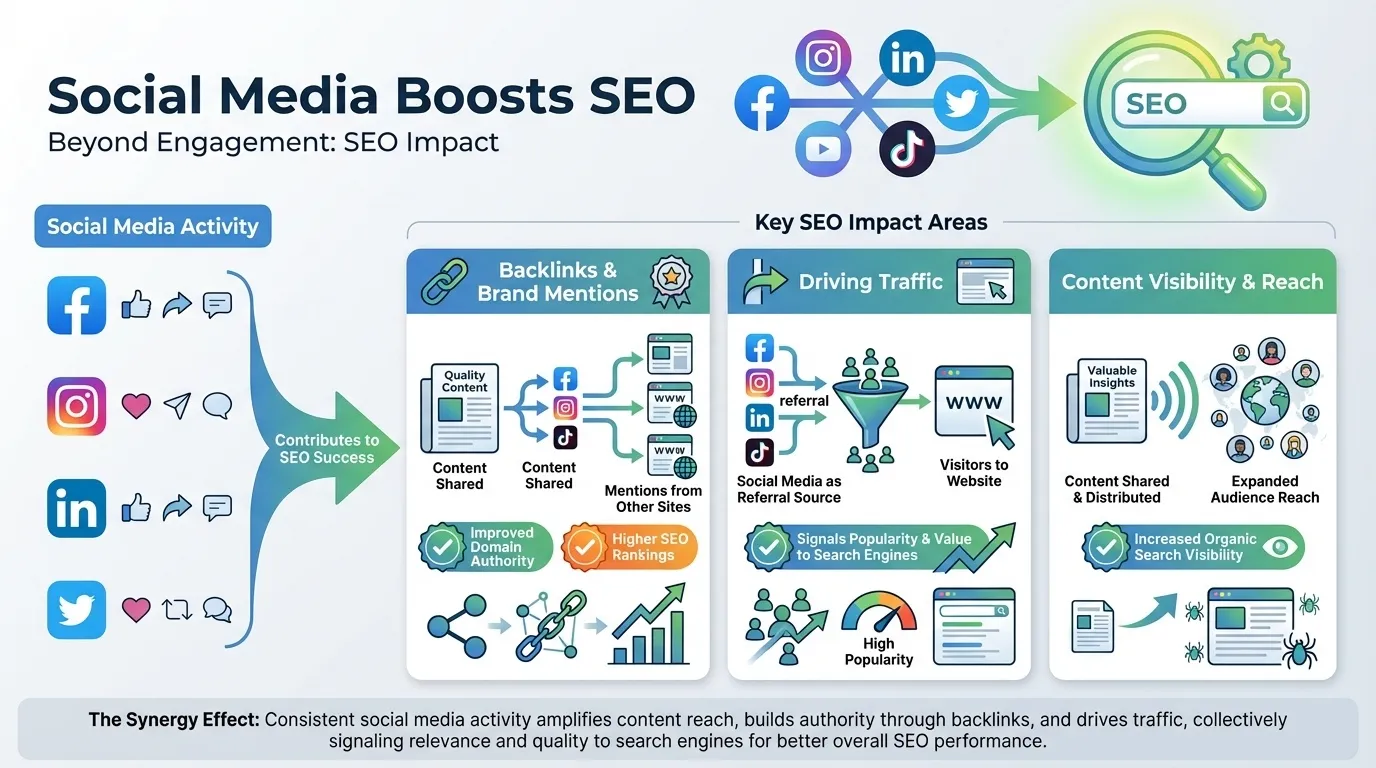
Social media does more than just engage your audience; it also positively impacts your SEO efforts. While social media signals may not directly influence search engine rankings, they contribute to SEO success in various ways.
- Backlinks and Brand Mentions: Sharing content on social media encourages backlinks and brand mentions from other websites, which helps improve domain authority and SEO rankings. The more your content is shared or linked to, the more search engines see your brand as a trusted source of information.
- Driving Traffic: Social media acts as a referral traffic source, driving visitors to your website. This increases the likelihood of higher search rankings, as social media traffic signals to search engines that your content is popular and valuable.
Social media interactions indirectly boost your brand’s visibility and perceived trustworthiness in search results.
Creating a Holistic Branding System
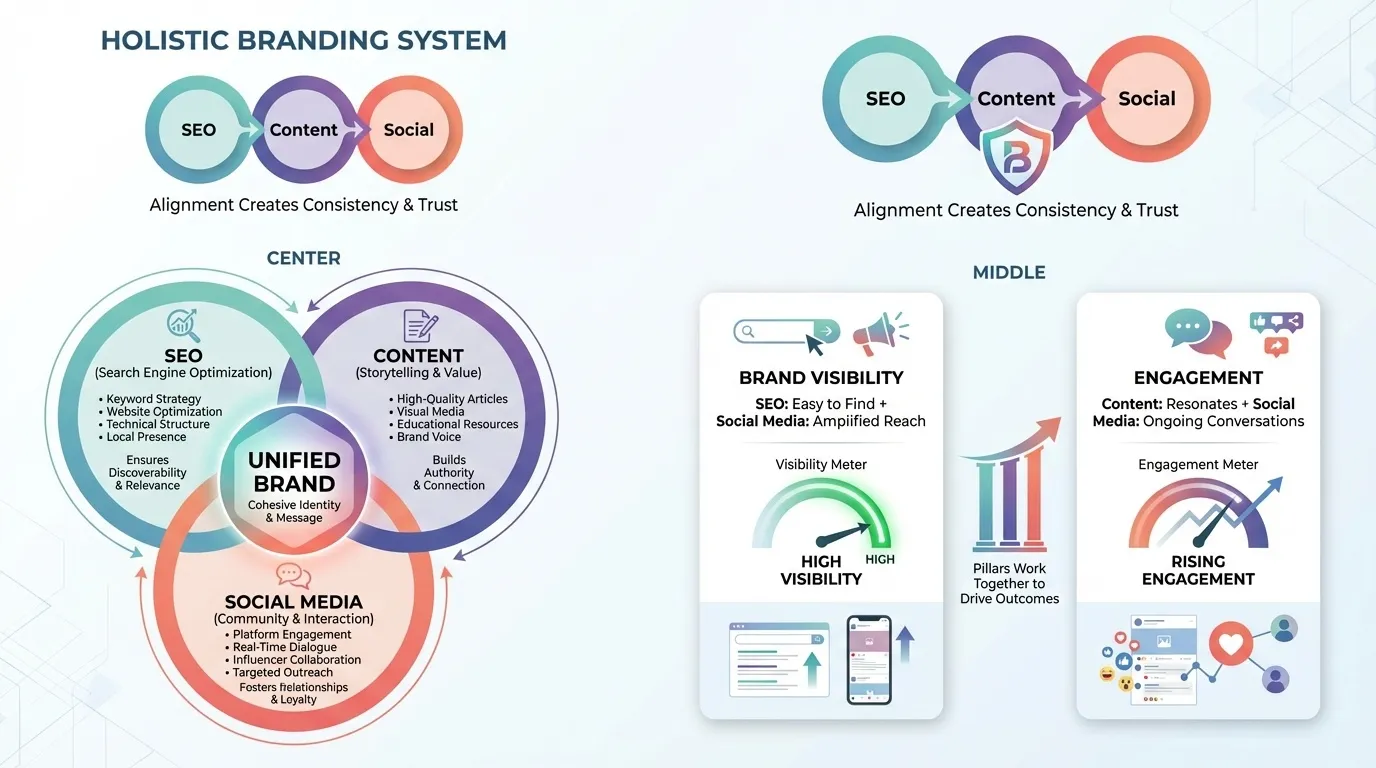
When SEO, content, and social align, your brand stays consistent and trusted across all digital channels, deepening audience connection and loyalty.
A strong digital branding system supports:
- Brand Visibility: SEO ensures your brand is easy to find on search engines, while social media amplifies your reach.
- Engagement: Content that resonates with your audience keeps them engaged, while social media facilitates ongoing conversations and interactions.
By consistently delivering valuable, relevant content and engaging with your audience, you build trust and credibility in your brand. Start implementing these digital branding pillars today to elevate your brand’s presence and drive long-term growth.
Case Studies: Digital Branding in Action
Let’s take a look at how some well-known companies have successfully implemented integrated digital branding strategies:
1. Glossier’s Social Media-Driven Brand Growth
Glossier, a beauty brand, has mastered digital branding through its highly engaging social media presence.
The brand built its identity around user-generated content (UGC), empowering its customers to share their experiences with Glossier products and tag the brand in their posts. Glossier encourages real, relatable beauty rather than a polished, unattainable ideal.
- How it ties into digital branding: Glossier’s digital branding strategy revolves around building a community of brand advocates. The brand leveraged Instagram to share user-generated content and engage directly with its followers, creating a sense of intimacy and connection.
- Viral impact: As customers shared their own experiences, Glossier’s brand identity became synonymous with authenticity and inclusivity. The more customers posted, the more others wanted to join the conversation. This helped Glossier grow rapidly without relying heavily on traditional advertising.
Authenticity, combined with strategic social media engagement, can be a powerful tool for digital branding. Brands that build trust through direct engagement and user participation often see stronger connections and organic growth.
2. Adidas’ “Impossible Is Nothing” Campaign

Adidas’ “Impossible Is Nothing” campaign is a stellar example of how digital branding can amplify a brand’s narrative and resonate with audiences across multiple channels. The campaign focused on empowering athletes and was built around overcoming challenges, which Adidas conveyed through inspiring content and storytelling.
- How it ties into digital branding: Adidas effectively used social media, videos, and influencer partnerships to create a unified, empowering brand message. The campaign featured well-known athletes like Lionel Messi and Katy Perry, sharing their personal stories of overcoming adversity. Adidas amplified this digital branding effort with compelling content that resonated with its global audience.
- Viral impact: The campaign went viral thanks to its motivational, inclusive content. Adidas strategically encouraged audiences to share their own stories of overcoming challenges, further extending the campaign’s reach on social media platforms, creating a viral loop of shared experiences.
Storytelling, when tied to brand values like empowerment and authenticity, can transform a digital campaign into a global viral phenomenon. When combined with user participation and social media engagement, storytelling helps create a more emotional connection with the audience, driving both brand awareness and loyalty.
3. Spotify Wrapped: A Viral Digital Branding Phenomenon

One of the most powerful examples of digital branding in recent years is Spotify Wrapped, an annual campaign that has grown into a cultural event and a masterclass in integrated branding. Spotify releases a personalised recap of each user’s listening habits at the end of the year, packaged with shareable visuals and insights designed specifically for social sharing.
- Integration of pillars: SEO ensures pages related to Spotify Wrapped rank highly for end‑of‑year music trends; content strategy provides personalised data visuals that are highly engaging; social media drives massive user‑generated sharing.
- Viral impact: Wrapped prompts millions of social posts each year, turning Spotify users into brand advocates as they share their charts on Instagram, TikTok and Twitter.
- Brand engagement: The campaign taps into personal identity and social behaviour, encouraging virality through peer-to-peer sharing, boosting brand awareness and reinforcing Spotify’s relevance globally.
- Cultural relevance: Wrapped has become a cultural moment, with media outlets, influencers and users discussing and reposting Wrapped content annually.
By making its users part of the storytelling and encouraging organic social activity, Spotify has transformed a simple recap into a powerful brand asset.
Tools & Best Practices for Digital Branding
Here’s a table of tools you can use to optimise your digital branding efforts, along with best practices to follow:
| Category | Tools | Best Practices |
| SEO | Ahrefs, SEMrush, Moz, Google Analytics | Conduct regular keyword research, optimise on‑page elements, and monitor rankings. |
| Content Strategy | HubSpot, WordPress, CoSchedule, Grammarly | Plan content around customer needs, optimise for SEO, and update regularly. |
| Social Media | Buffer, Hootsuite, Sprout Social, Canva | Post consistently, engage with followers, and track performance across platforms. |
| Design & Branding | Adobe Creative Suite, Canva, Figma | Maintain visual consistency, update your brand guidelines regularly. |
Stay committed to regularly monitoring your metrics, refining your strategy, and adapting to new trends in digital marketing. With the right tools and a strategic approach, your digital branding efforts will continue to evolve and drive long-term results.
Common Digital Branding Mistakes to Avoid
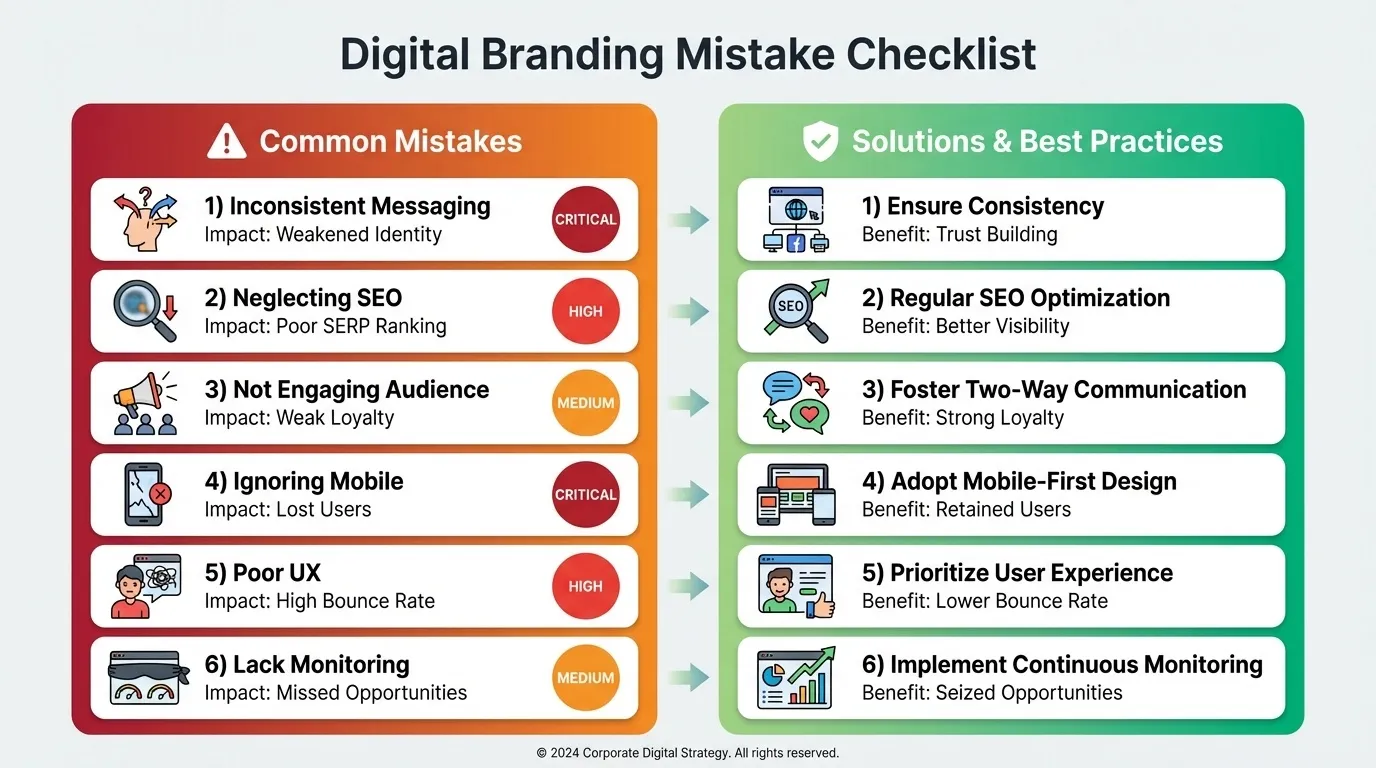
To ensure your digital branding strategy is successful, avoid these common pitfalls that can undermine your brand’s effectiveness:
- Inconsistent Messaging: Mixing up your tone, visuals, or messaging across different platforms can confuse your audience and weaken your brand identity. Ensure consistency in your messaging, design, and tone across your website, social media, and content to build trust and recognition.
- Neglecting SEO: Failing to optimise your content for search engines can result in poor visibility. Regularly optimise your website and content for relevant keywords to ensure your brand is discoverable and ranks higher on search engine results pages (SERPs), driving organic traffic.
- Not Engaging with Your Audience: Social media is not just for posting content; it’s about building relationships. Engage with your followers by responding to comments, joining conversations, and sharing user-generated content. This creates a sense of community and strengthens brand loyalty.
- Ignoring Mobile Optimisation: With more users browsing on mobile devices, ensure your website is mobile-friendly. Test your site’s performance across various screen sizes, optimise for fast loading, and ensure easy navigation to enhance the user experience and accessibility.
- Overlooking User Experience (UX): Poor website design or slow load times can drive users away. Focus on creating an intuitive, easy-to-navigate website with fast loading speeds and clear calls to action (CTAs) to improve engagement and reduce bounce rates.
- Lack of Regular Monitoring and Optimisation: Digital branding requires continuous monitoring and adjustment. Regularly track your performance through tools like Google Analytics and social media insights, and optimise your strategies based on data to stay ahead of the competition.
By avoiding these mistakes and consistently refining your strategy, you’ll create a strong, cohesive digital brand that resonates with your audience and drives long-term growth.
Actionable Digital Branding Checklist
This checklist outlines key steps to help you develop, optimise, and maintain a powerful digital brand presence. Follow these steps to ensure your branding strategy is aligned, effective, and continuously evolving to meet your audience’s needs.
Research & Define Your Brand Identity
- Define your brand’s mission, vision, and values.
- Develop a consistent voice and tone that aligns with your target audience.
- Create brand guidelines to ensure uniformity across all platforms (logo, colours, fonts, etc.).
Conduct Keyword Research for SEO
- Use SEO tools (e.g., Google Keyword Planner, SEMrush, Ahrefs) to find relevant keywords for your brand.
- Prioritise long-tail keywords that match user intent.
- Incorporate primary and secondary keywords into key areas such as page titles, headers, and meta descriptions.
Develop a Content Calendar
- Plan content topics aligned with your target audience’s needs.
- Set deadlines and ensure a consistent publishing schedule (weekly, bi-weekly, etc.).
- Include a mix of content types: blog posts, videos, social media updates, infographics, etc.
- Integrate seasonal or trending topics to keep content timely and relevant.
Optimise Content for SEO & Social Sharing
- Ensure each piece of content is optimised for on-page SEO (title tags, meta descriptions, alt text for images).
- Implement internal linking to guide users to other relevant content on your website.
- Optimise content for social sharing with compelling headlines, engaging visuals, and appropriate hashtags.
- Include share buttons on blog posts and landing pages to encourage user engagement.
Design a Social Media Strategy
- Choose the right platforms based on your target audience (e.g., Instagram for younger audiences, LinkedIn for professionals).
- Maintain consistency in your brand’s visual style and messaging across all social media platforms.
- Plan social media campaigns around key events, product launches, or promotions.
- Engage with your audience by responding to comments, reposting user-generated content, and using interactive features like polls and stories.
Ensure Brand Consistency Across All Platforms
- Align your messaging and visuals across your website, social media profiles, and other digital touchpoints.
- Keep your tone, language, and overall voice consistent in all content, whether it’s blog posts, social media updates, or email newsletters.
- Ensure that all customer-facing content (from customer service responses to marketing materials) reflects your brand identity.
Track, Measure, and Optimise Your Digital Branding

- Set up tracking tools (e.g., Google Analytics, social media insights) to measure website traffic, social media engagement, and conversions.
- Regularly assess your SEO rankings for target keywords and make adjustments based on performance.
- Monitor social media analytics to identify the best-performing content and areas for improvement.
- A/B test different types of content, headlines, and social media posts to see what resonates most with your audience.
Engage with Your Audience
- Actively engage with followers on social media by responding to comments and messages.
- Start conversations by asking questions, sharing polls, or encouraging user-generated content.
- Create a community feel by reposting user content or featuring customer testimonials.
Ensure Mobile Optimisation
- Ensure your website is mobile-friendly, as a significant portion of users access the web via mobile devices.
- Test your content, landing pages, and forms on mobile devices to ensure a smooth user experience.
- Prioritise fast load times, as slow websites lead to higher bounce rates.
Maintain Regular Brand Audits
- Conduct regular audits of your digital brand presence to ensure it is aligned with current trends and user preferences.
- Review your SEO performance, content effectiveness, and social media impact at least quarterly.
- Update your brand guidelines and messaging in response to market shifts, feedback, and changes in consumer behaviour.
Note: This checklist can be tailored to suit your specific brand needs and digital branding strategy. Adjust the steps and frequency based on your goals and industry trends.
Building a Strong, Cohesive Digital Brand
In today’s digital world, building a cohesive and integrated digital brand is essential for sustained success. By aligning SEO, content strategy, and social media, you create a unified brand system that enhances visibility, engages your audience, and builds long-term trust.
SEO ensures your brand is discoverable, content strategy shapes your brand narrative, and social media amplifies your voice across platforms. Together, these pillars form a seamless ecosystem that drives brand growth and fosters deeper connections with your audience.
To achieve lasting success, it’s important to continuously monitor, measure, and refine your digital branding efforts. By staying consistent with your messaging, being responsive to your audience, and optimising for both SEO and social sharing, your brand will remain relevant, engaging, and trusted in the ever-evolving digital landscape.
Start integrating these strategies today to build a powerful digital brand that stands out, resonates with your audience, and drives results.
Need help creating a cohesive digital brand strategy? MediaOne can help you craft and execute a tailored digital branding strategy that drives measurable growth and success. Get in touch today.
Frequently Asked Questions
How do I measure the success of my digital branding efforts?
The success of digital branding can be measured using several metrics, including organic website traffic, social media engagement (likes, shares, comments), brand mentions, conversions (e.g., sales, sign-ups), and SEO rankings for targeted keywords. Tools like Google Analytics, social media insights, and SEO platforms can provide valuable data to track your performance and areas for improvement.
Can I run a successful digital branding campaign without a large budget?
Yes, it’s possible to run a successful digital branding campaign without a large budget. Focus on creating high-quality, shareable content that resonates with your audience, leveraging free or low-cost social media platforms, and optimising your content for SEO. Consistency and engagement with your audience will be key to maximising the impact of your digital branding efforts on a budget.
How often should I update my digital branding strategy?
Digital branding strategies should be reviewed and updated regularly, at least once every 6 months. However, it’s important to continuously monitor performance and adjust your approach based on metrics, trends, and shifts in your business goals or target audience. Regular audits help keep your branding relevant and aligned with changing market conditions.
What are some common challenges businesses face with digital branding?
Common challenges include maintaining consistency across multiple platforms, keeping up with SEO algorithm updates, creating engaging content that resonates with the target audience, and measuring the effectiveness of digital branding efforts. It can also be difficult to balance long-term brand-building strategies with short-term results, especially for businesses with limited resources.
How can I ensure my digital branding appeals to my target audience?
To ensure your digital branding appeals to your target audience, it’s crucial to define your ideal customer personas and tailor your messaging, content, and tone to their needs, preferences, and pain points. Regularly gather feedback from your audience, track engagement, and adjust your strategy to better meet their expectations. Personalisation and authenticity are key to connecting with your audience effectively.