One of the biggest digital marketing challenges that businesses face today is turning website clicks into paying customers. True, traffic numbers look impressive on reports, ad dashboards show steady impressions, and your rankings may improve. But if sales remain flat, there is a disconnect between visibility and revenue.
Digital marketing challenges are no longer limited to getting found online. The real issue lies in what happens after someone clicks. Does the message align with their intent? Does the page build trust? Is there a clear next step?
In many cases, small gaps across targeting, messaging, user experience, and follow-up quietly reduce conversion rates. This guide breaks down the most common digital marketing challenges that prevent clicks from becoming customers, and what to do about them.
If you are looking for expert support in resolving these gaps, our agency offers strategic digital marketing services designed to align traffic, messaging, and conversion into a measurable growth system.
Key Takeaways
- Understanding user intent helps you target the right traffic at the right time.
- Mapping intent to your content and conversion paths boosts relevance and revenue.
- Audience segmentation and first-party data usage reduce wasted spend and raise conversion quality.
- Conversion rate optimisation rooted in behaviour tracking delivers measurable improvements over guesswork.
- Trust-building elements like testimonials and case studies shorten decision cycles and increase confidence.
Understanding the Core Digital Marketing Challenges in 2026

Before you tackle specific tactics, you must understand the landscape. What worked even two years ago isn’t enough today. Markets have shifted, platforms have evolved, and your customers expect more than a click.
In this section, we’ll identify the common misconceptions that today’s business owners face:
Why Traffic Alone Is a Vanity Metric
Traffic used to be the benchmark of success. Today, it can be misleading. A page might attract thousands of visitors through broad informational keywords, yet produce very few qualified leads.
Traffic vs Engagement vs Conversion
- Traffic shows numbers visiting your pages.
- Engagement shows whether they interact with your content.
- Conversion shows action taken that matters to revenue.
You need a funnel that moves people through these steps. Without it, you’re paying for clicks that never become customers.
To make this real with a local example: Singapore firms report this frustration as well. A HubSpot survey found that while more than 80 per cent of Singapore companies use digital marketing to advertise products and services, only 17 per cent strongly agreed that their strategy was clearly linked to increased revenue.
This gap between activity and outcome is one of the central digital marketing challenges in converting clicks into customers here in Singapore.
The Modern Customer Journey Is No Longer Linear
Your customer’s path isn’t a straight line from search to sale anymore. They might:
- Search on mobile in the morning.
- Browse on desktop at work.
- Interact on social media at lunch.
- Re-visit via email later that evening.
This creates multiple touchpoints, and your campaigns must reflect that complexity. If messaging isn’t consistent across touchpoints, most prospects drop off before converting.
How Digital Marketing Challenges Have Evolved
SEO isn’t about keywords alone anymore. It’s about understanding what your buyers want and mapping their intent from interest to purchase.
Privacy changes in browsers (such as limiting third-party cookies) constrain your ability to track user behaviour across sites unless you focus on first-party data and consent-based tracking. If you’re not tracking what matters, you can’t optimise for what matters.
Several shifts have changed the landscape:
- Privacy regulations limit tracking accuracy
- AI-generated search summaries reduce direct clicks
- Competition increases across both organic and paid channels
- Consumers expect personalization
These changes mean that driving traffic is only step one. Building trust and guiding action are now equally important.
Digital Marketing Challenge #1: Audience Targeting
If you are struggling to convert clicks into customers, audience targeting is often where the breakdown begins.
You may see impressions rising in your reports and assume your campaigns are gaining traction. On paper, that looks like progress. But in reality, impressions only tell you that your content or ads are being shown. They say nothing about whether the right people are seeing them. Relevance drives revenue. Visibility alone does not.
When targeting is weak, every other part of your funnel suffers. You optimise landing pages, refine ad copy, and improve design, yet conversions stay flat because the wrong people are entering the funnel in the first place. Let’s break this down properly:
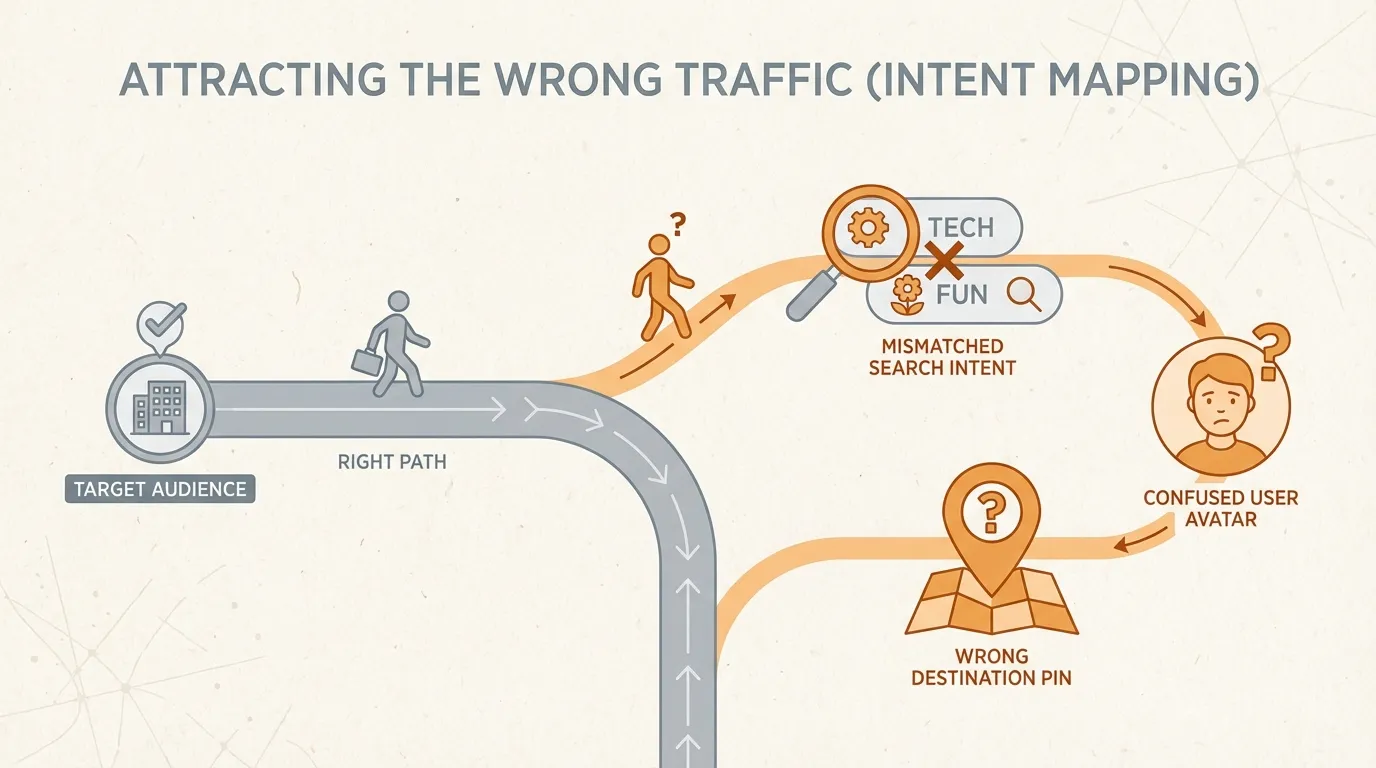
Attracting the Wrong Traffic
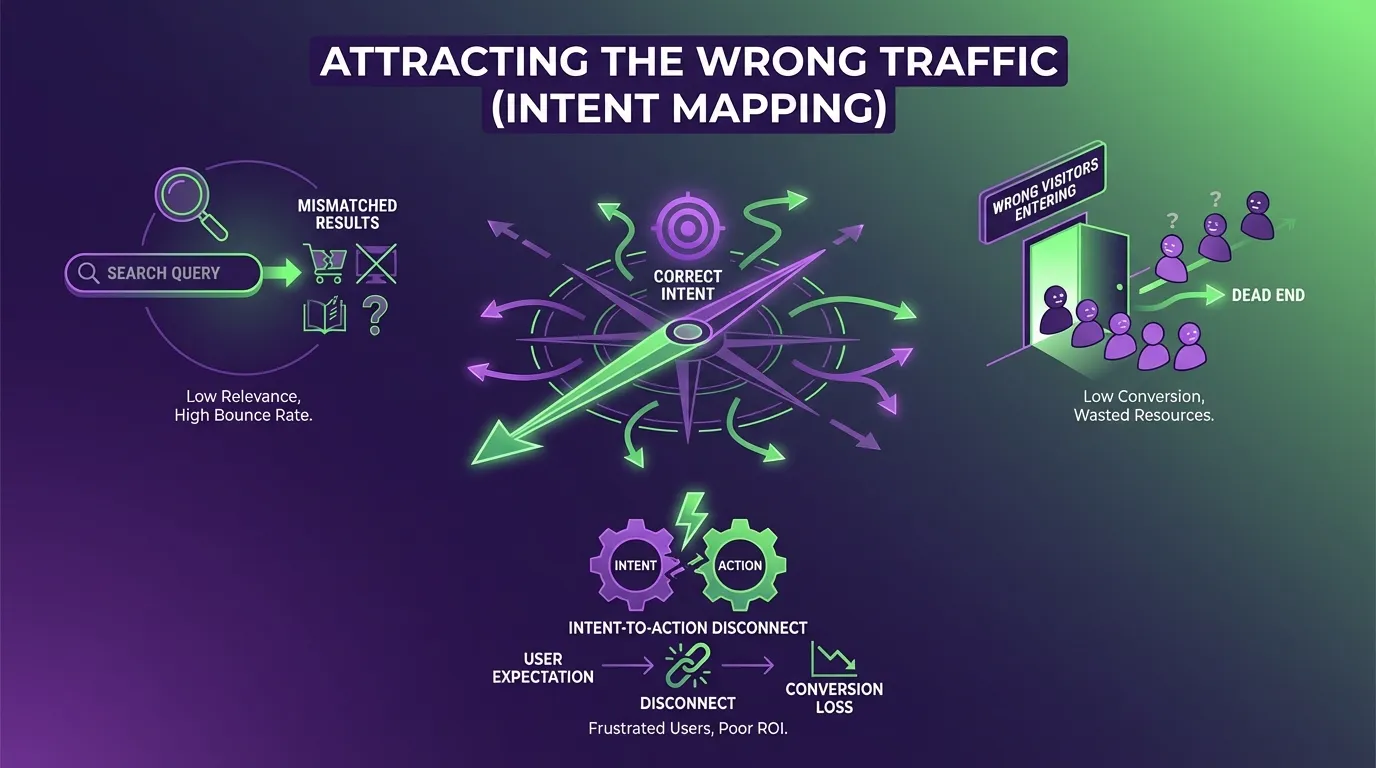
High-volume keywords feel attractive. They promise scale. They look impressive in reporting dashboards. But scale without intent is expensive noise.
Search for “digital marketing trends Singapore.” The searcher is researching. They are exploring ideas. They are not actively looking to hire an agency. If you build campaigns around terms like this without mapping them to the correct funnel stage, you pay for curiosity instead of commitment.
Intent mapping is not optional. It is foundational. Here is a simplified way to classify keywords by intent:
- Informational intent
- The user is learning. They want insights, definitions, comparisons, or frameworks.
- Example: “What is performance marketing?”
- Commercial investigation intent
- The user is comparing options.
- Example: “Best digital marketing agency in Singapore”
- Transactional intent
- The user is ready to take action.
- Example: “Hire digital marketing agency Singapore”
If you treat all three categories the same, you dilute your conversion rate. Informational searches require nurturing. Transactional searches require clear offers and direct calls to action.
This is where many businesses encounter one of the most overlooked digital marketing challenges. They optimise for traffic volume instead of buyer readiness. As a result, they fill the top of the funnel and starve the bottom.
You need alignment between keyword intent and the landing page objective. When those two elements match, conversions rise without increasing traffic.
Weak Audience Segmentation
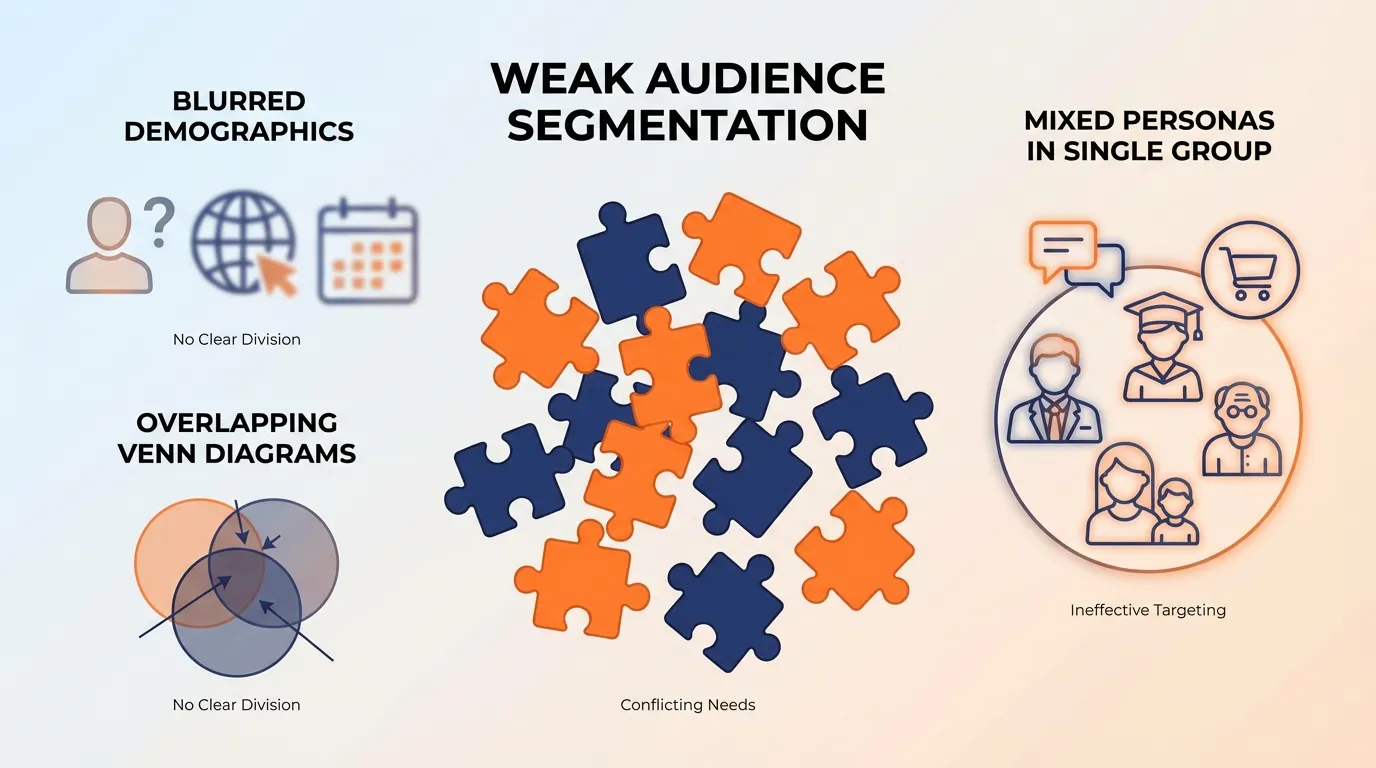
Broad targeting feels efficient. It is easier to launch one campaign than five segmented ones. It may feel scalable, but is rarely profitable.
When your messaging tries to speak to everyone, it resonates with no one in particular. Specificity drives attention because people respond to language that mirrors their reality.
Consider this comparison:
| Broad Targeting | Specific Targeting |
| “Small business owners” | “eCommerce founders generating over SGD 50,000 per month” |
| “Healthcare providers” | “Aesthetic clinic owners in Orchard Road expanding into injectables” |
| “Retail brands” | “Direct-to-consumer fashion brands selling on Shopify in Southeast Asia” |
The second column converts better because it feels personal. It signals understanding. It reduces psychological distance.
Segmentation should happen across multiple layers:
- Demographics
- Industry vertical
- Revenue band
- Behavioural signals
- Funnel stage
If someone downloaded a pricing guide, they should not receive the same messaging as someone who only read a blog article. Behaviour tells you intent. Intent tells you how to communicate.
Segmentation is not about complexity for its own sake. It is about relevance. Relevance reduces friction. Reduced friction increases conversion probability.
Poor Use of First-Party Data
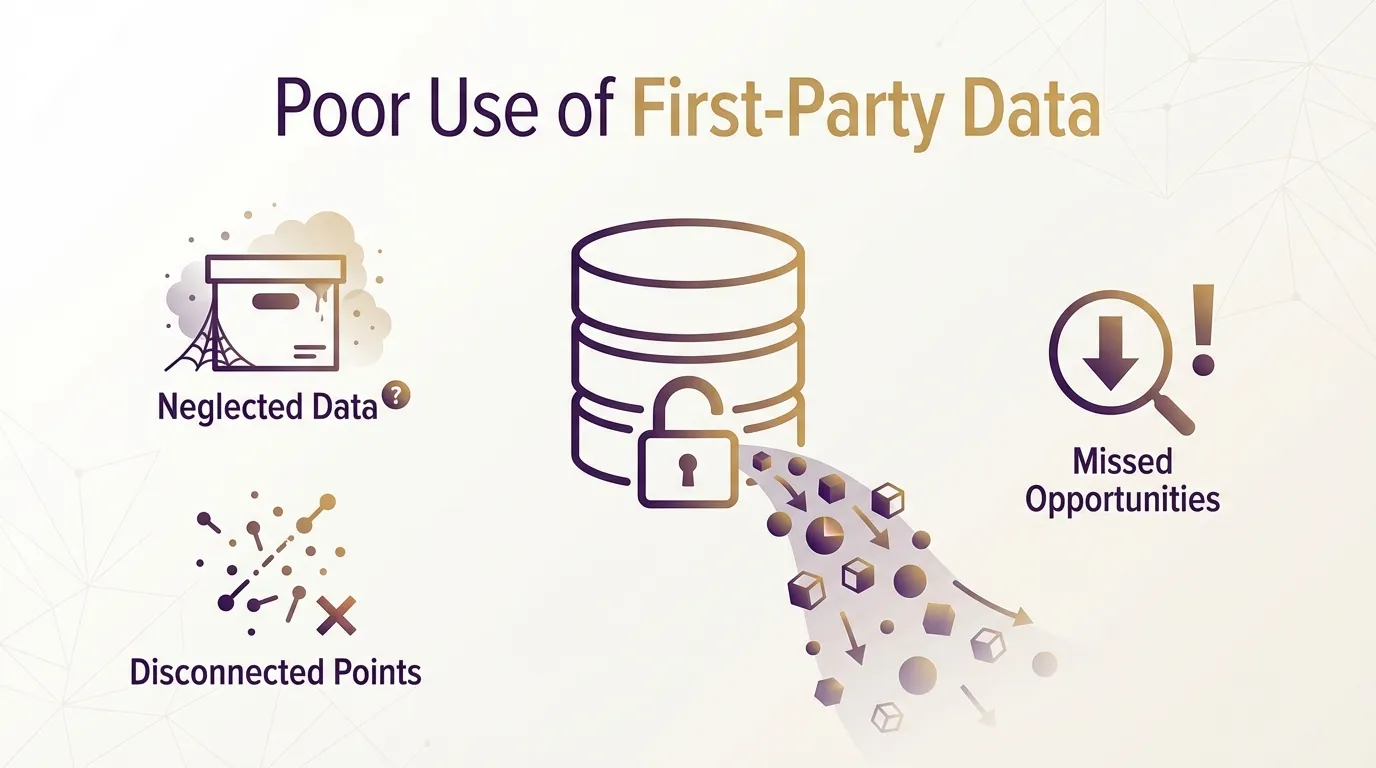
This is where many businesses leave money on the table. You already own valuable data. Your CRM holds purchase history. Your email platform records opens and clicks. Your website analytics reveal behaviour patterns. Yet many organisations treat this data as storage, not strategy.
First-party data is powerful because it reflects real interaction with your brand. It is not inferred interest. It is demonstrated engagement.
Here are the missed opportunities I see most often:
- No behaviour-based segmentation
- No cart abandonment or enquiry abandonment flows
- No personalised remarketing based on visited pages
- No dynamic content tailored to past interactions
Imagine a visitor who checks your service pricing page twice within three days. That signal alone suggests elevated intent. If you fail to retarget them with a tailored message or follow-up offer, you allow momentum to fade.
Compare that to a structured approach:
- Visitor reads a case study.
- Visitor downloads a checklist.
- Visitor visits the pricing page.
- Visitor receives a follow-up email with relevant proof and a consultation offer.
That sequence respects behaviour and accelerates trust.
Cold audiences often require multiple touchpoints before conversion. Warm audiences already know you. Retargeting campaigns built on first-party signals routinely outperform cold acquisition campaigns because the awareness stage has already been completed.
You already own the data. Use it strategically.
How to Audit Your Audience Targeting
If you want to diagnose whether targeting is your core issue, ask yourself these questions:
- Are your highest-traffic pages also your highest-converting pages?
- Do your ads differentiate messaging by audience segment?
- Are you running separate campaigns for informational and transactional intent?
- Are your remarketing audiences built around behaviour, not just site visits?
- Can you clearly explain who your ideal customer is in one sentence?
If the answer to several of these is no, then audience targeting is likely the root cause of your conversion gap.
Audience targeting is not a media buying problem alone. It is a strategic clarity problem.
You need:
- A defined ideal customer profile
- Clear intent mapping for keywords
- Behaviour-based segmentation
- First-party data activation
- Personalised messaging aligned to the funnel stage
When you get targeting right, everything else becomes easier. Landing pages convert better. Cost per acquisition drops. Sales conversations improve because leads arrive pre-qualified.
Clicks are not the goal. Qualified intent is. If you refine who enters your funnel, you do not need more traffic. You need better traffic. That distinction changes how you invest, optimise, and scale.
Digital Marketing Challenge #2: Content Strategy and Messaging
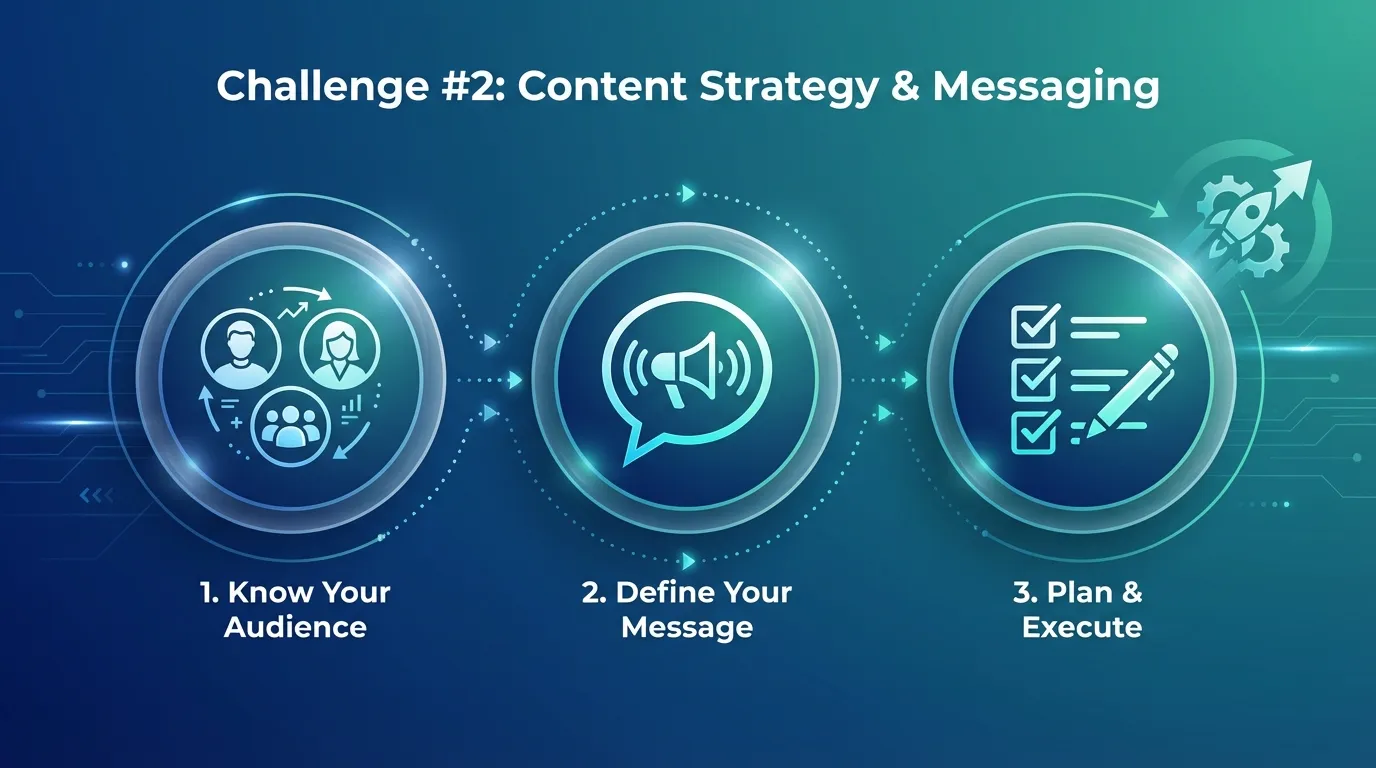
If your traffic looks healthy but revenue does not reflect it, your content strategy is likely the weak link. Content is not simply a visibility tool. It is a persuasion system. When that system is built solely for ranking, conversions suffer.
Strong content performs two jobs at once. It satisfies search intent, so you can be discovered. Then it guides the reader toward a clear next step. Most businesses only accomplish the first part.
Let’s break down where this typically goes wrong and how to correct it.
Content That Ranks but Does Not Convert
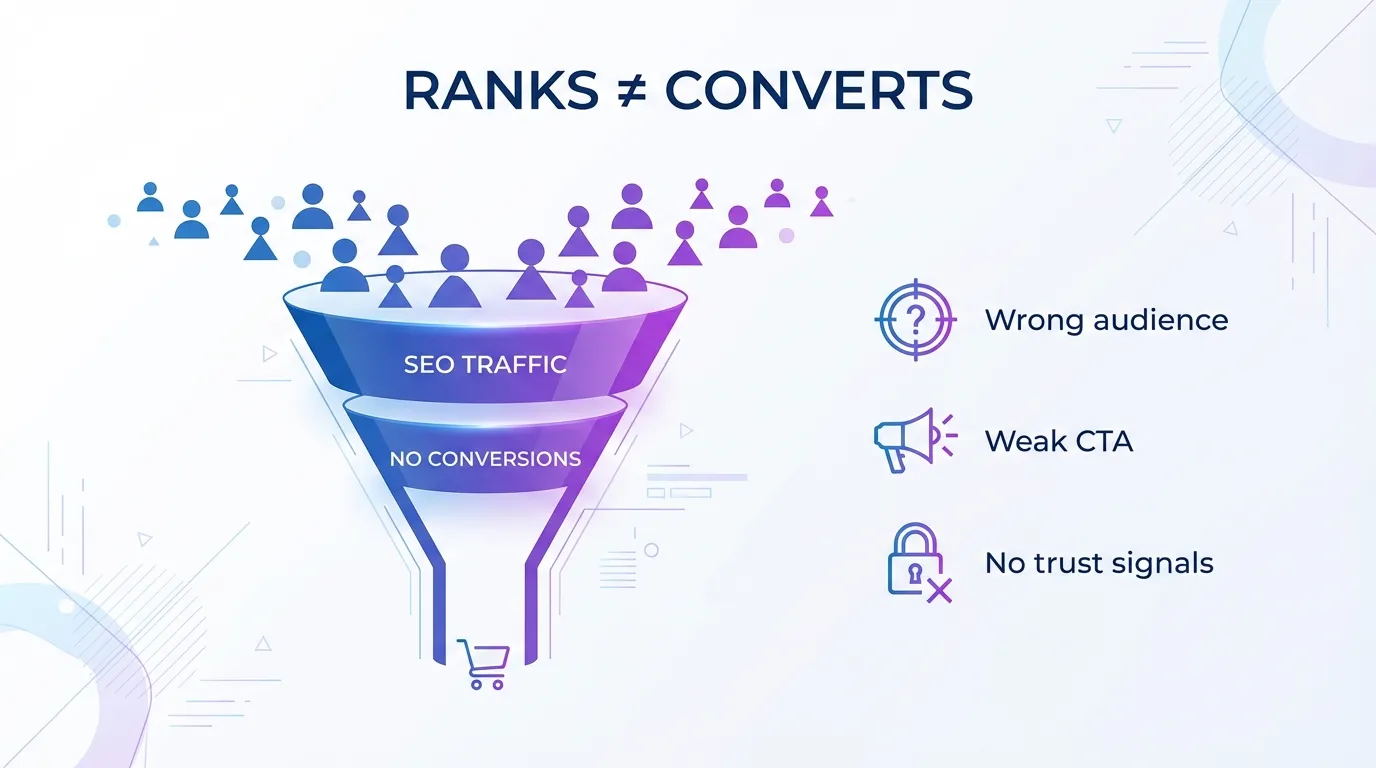
It is entirely possible to rank on page one and still lose money. Search engines reward relevance and structure. They do not measure whether your page drives enquiries, booked calls, or completed purchases. That responsibility falls on you.
When content informs but does not guide, the reader consumes the information and leaves. There is no friction, but there is also no momentum. You will usually find these issues behind underperforming content:
- No clear call to action. Readers finish the article and have no idea what to do next.
- Weak internal linking. Educational articles fail to connect to service or product pages that solve the problem discussed.
- Overemphasis on traffic. Keywords are prioritised, but persuasive messaging is not.
- No transition from insight to solution. The content explains the problem, but does not position your business as the logical next step.
Here is a simple comparison that clarifies the difference:
| SEO-Only Content | Conversion-Driven Content |
| Focuses on keywords | Focuses on user intent and next action |
| Educates broadly | Educates, then narrows toward a solution |
| Ends without direction | Ends with a strong, relevant CTA |
| Optimised for clicks | Optimised for qualified leads |
If your content answers “what” and “why” but never addresses “how you can help,” you are leaving revenue on the table.
To correct this, structure your content deliberately:
- Address the reader’s pain clearly.
- Demonstrate authority with credible insights.
- Introduce your solution naturally within the context.
- Provide a specific and relevant next step.
Search intent and business intent must align. Ranking is the doorway. Conversion is the destination.
Misaligned Value Propositions
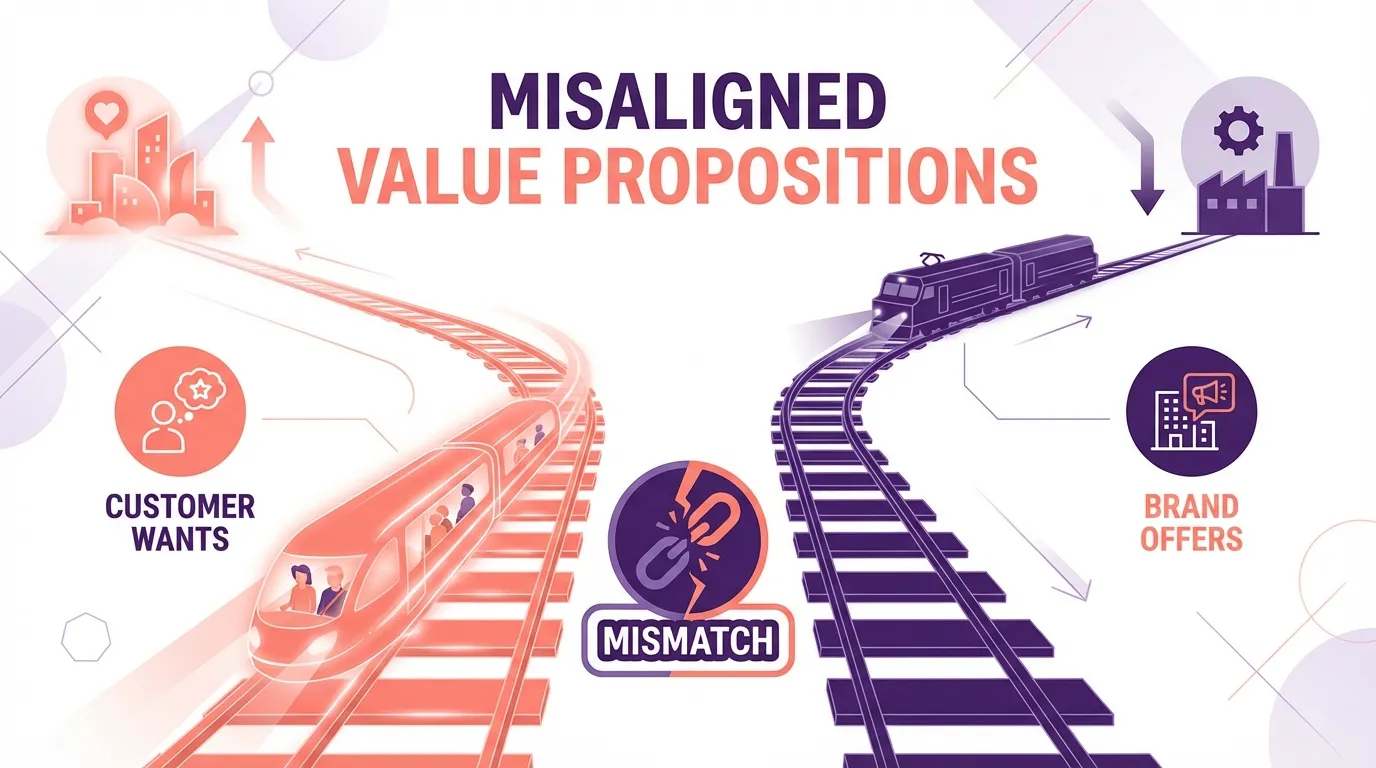
Many websites describe capabilities instead of outcomes. That distinction is subtle, but it changes everything.
Consider this example:
“We use advanced analytics tools.”
This statement may sound impressive internally. To your prospect, it is vague. It does not explain why they should care.
Now compare it with:
“We use advanced analytics to reduce your cost per acquisition and identify the campaigns that generate the highest lifetime value.”
The second version translates features into results. It connects your capability to the client’s commercial objective.
Clear value propositions answer three questions:
- What problem do you solve?
- What measurable result can I expect?
- Why are you better or different from alternatives?
If your messaging focuses on internal processes, technology stacks, or generic quality claims, you risk blending in with competitors. Specific outcomes create clarity. Clarity builds confidence. Confidence drives conversion.
Here is a practical exercise: Review your core service pages and highlight any statement that describes what you do. Then rewrite each statement to describe the result your client achieves. This single shift often improves conversion rates without increasing traffic.
Generic AI-Generated Content Without Strategy
AI tools can accelerate production. They cannot replace positioning, insight, or strategic framing.
When AI-generated content is used without editorial direction, it often displays common patterns:
- Repetitive phrasing.
- Surface-level explanations.
- Broad generalisations.
- Lack of local or industry context.
- Minimal differentiation from competitors.
Readers recognise this. They may not articulate it, but they feel it. The content reads smoothly yet says nothing memorable. Trust erodes quietly.
Trust is a conversion multiplier. When trust declines, even strong offers underperform.
This does not mean you should avoid AI. It means you should lead it. Strategy must come first. AI should support research, ideation, and drafting. It should not define your positioning.
To prevent generic output, anchor every piece of content to:
- A clearly defined audience segment.
- A distinct point of view.
- Real examples, data, or case insights.
- Local or industry-specific context where relevant.
- A conversion objective.
For example, if you are targeting Singapore SMEs in competitive sectors such as tuition centres in Tampines or aesthetic clinics in Orchard, generic advice about “improving digital presence” is not enough. Specific challenges, such as rising ad costs in SGD, limited in-house marketing resources, and regulatory considerations, need to be addressed directly.
That level of specificity differentiates you from competitors relying on templated content.
Bringing It Together: Strategy Before Volume
Content volume does not equal authority. Authority emerges from relevance, clarity, and consistency.
When evaluating your current strategy, ask yourself:
- Does each article have a defined commercial objective?
- Is there a logical path from blog content to service engagement?
- Do value propositions emphasise measurable business outcomes?
- Is your tone distinct enough to be recognisable?
- Are your calls to action specific and context-driven?
If you cannot answer these questions confidently, your content strategy is likely contributing to your conversion gap. Search visibility opens the conversation. Messaging closes the deal.
The businesses that win do not just publish more. They publish with intention. They design content ecosystems that educate, build trust, and move readers step by step toward a decision.
That is how you transform content from a cost centre into a revenue driver.
Digital Marketing Challenge #3: User Experience and Website Optimisation
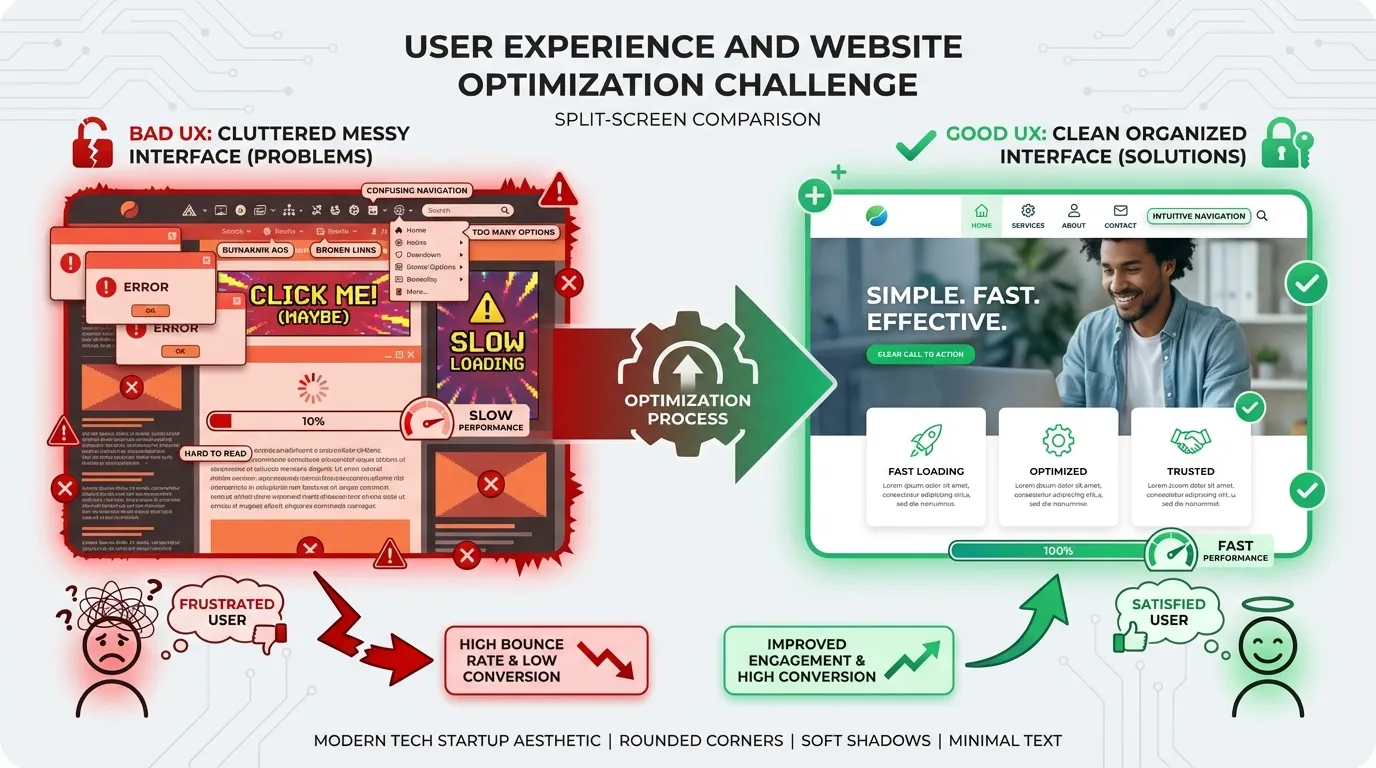
You can run the most sophisticated campaigns in Singapore. You can rank for competitive keywords. You can invest five figures in paid ads every month. But if your website experience creates friction, you are quietly leaking revenue.
User experience is not just a design concern. It is a revenue concern. Every delay, every confusing step, every missing trust element affects whether someone moves forward or walks away. When you analyse most conversion gaps, the issue often sits inside the website itself.
Let’s break down the three biggest areas where user experience quietly sabotages results:
Slow Website Speed and Technical Issues
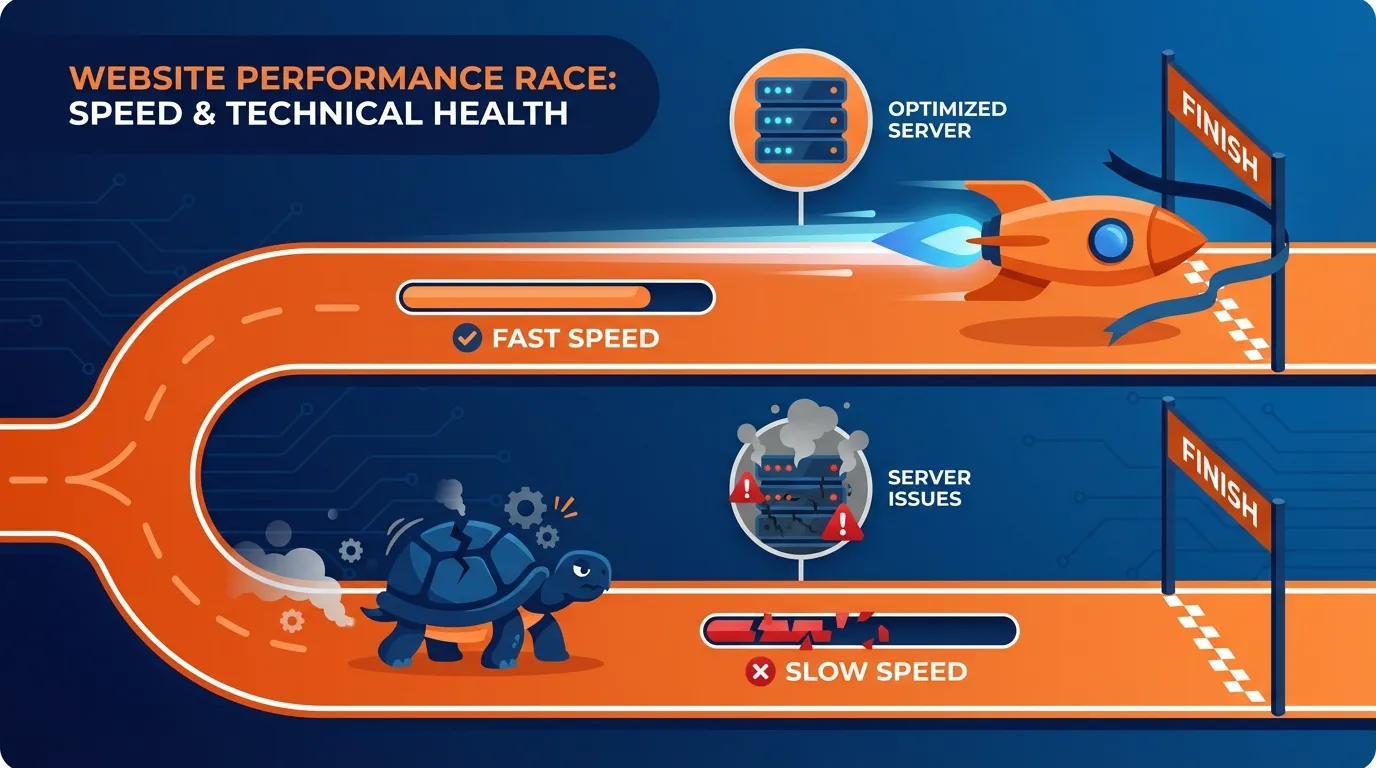
Speed is not cosmetic. It directly influences behaviour. Google’s research shows that when page load time increases from 1 to 3 seconds, the bounce rate increases by 32 per cent. When it goes from one second to five seconds, the bounce probability increases by 90 per cent.
That is not a small difference. That is lost revenue.
Here is the uncomfortable truth: Internal teams rarely notice these issues because they are used to the site. They know where everything is. They understand how the navigation works. They are not encountering the site for the first time. Your prospect is.
If your site takes too long to load on a 4G connection in Jurong or Tampines, they will not wait. If images are oversized. If scripts are bloated. If hosting is underpowered. They leave.
Mobile optimisation adds another layer. Singapore has one of the highest smartphone penetration rates in the world. According to DataReportal’s Singapore Digital 2024 report, mobile connections exceed the total population, and internet penetration is above 95 per cent. That means most of your prospects are discovering you on mobile first.
If your forms require zooming. If the buttons are too small. If pop-ups block the screen. If the checkout layout breaks on smaller screens. Conversions drop.
Here is what strong mobile optimisation looks like:
- Fast loading under three seconds on mobile networks
- Forms with large, tappable fields
- Clear, thumb-friendly buttons
- No intrusive pop-ups blocking key actions
- Compressed images without quality loss
You are not optimising for aesthetics. You are optimising for momentum.
Complicated Checkout or Lead Forms
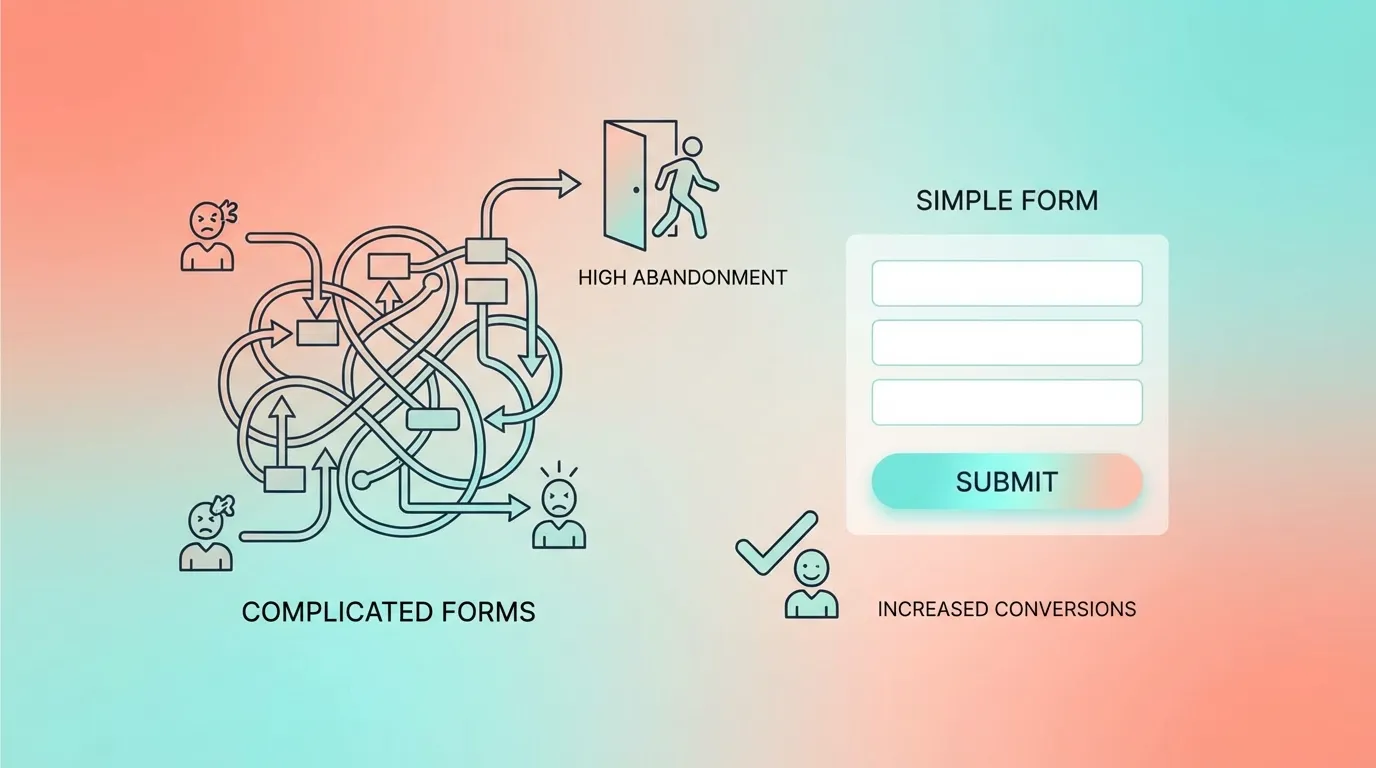
Every additional step in your funnel introduces friction. Friction reduces completion rates. Baymard Institute’s large-scale usability studies consistently show that complicated checkouts contribute significantly to cart abandonment.
In fact, their research indicates that 18 per cent of US online shoppers have abandoned a cart due to a checkout process that was too long or complicated. While this statistic is US-based, the behavioural principle is universal. People abandon processes that feel burdensome.
If you are generating B2B leads in Singapore and your contact form asks for:
- Full name
- Company name
- Designation
- Company size
- Budget range
- Timeline
- Phone number
- Industry
- Referral source
before you even start a conversation, you are creating resistance.
Ask yourself a harder question: Do you really need all that information before the first discussion?
Often, reducing a form to essential fields increases submissions. You can collect additional data during follow-up or qualification calls. The goal of the form is not to gather everything. It is to start the conversation.
For eCommerce, the same logic applies. Remove unnecessary account creation barriers. Offer guest checkout where possible. Make payment options clear. In Singapore, where digital wallets and card payments are common, clarity and simplicity matter.
If the process feels heavy, people will delay. When they delay, they often disappear.
Lack of Trust Signals
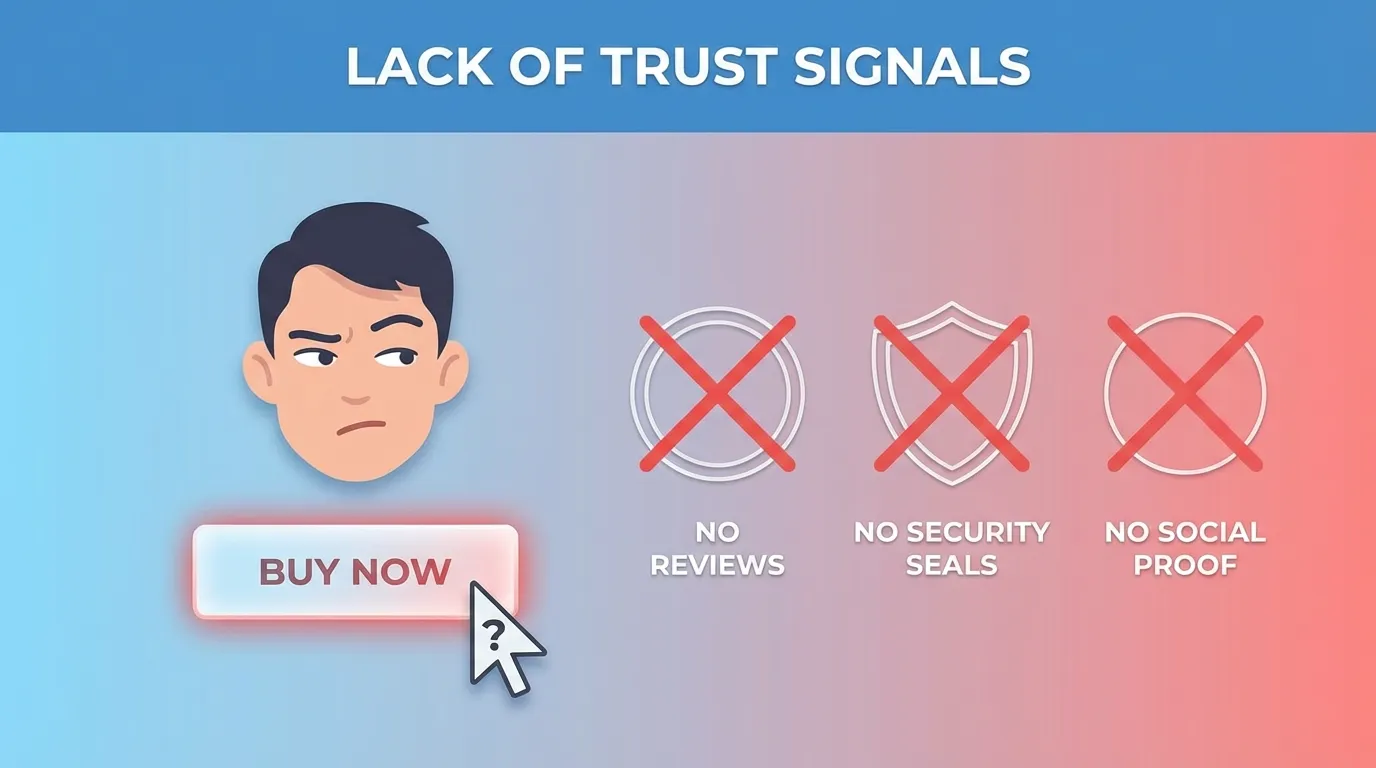
In Singapore’s competitive market, credibility is currency. Consumers here are digitally savvy. They compare. They verify. They cross-check. If your site does not provide signals that you are legitimate and competent, hesitation increases. Trust is built visually and structurally.
Here are common trust elements that directly influence conversion:
- Genuine testimonials with names and photos
- Detailed case studies showing real outcomes
- Google Reviews or third-party review integrations
- Clear business address and contact details
- Transparent pricing or at least pricing ranges
- Certifications, awards, or recognised partnerships
According to Edelman’s 2023 Trust Barometer Special Report on Brand Trust, 63% of consumers are more likely to purchase new products when they trust the brand, and 67% are more likely to stay loyal to and advocate for a brand they trust. The report also found that 79% of Gen Z say it’s more important than ever to trust the brands they buy.
When a visitor lands on your site and cannot quickly verify who you are, where you operate, and whether others have succeeded with you, they hesitate. That hesitation kills momentum.
Consider the difference between the two service pages:
One page says, “We are experts in digital marketing.”
Another says, “We helped a Singapore F&B brand increase online reservations by 42 per cent within six months through SEO and paid search optimisation.”
Which feels safer to invest SGD 5,000 or SGD 10,000 in?
Specificity builds confidence. Proof reduces perceived risk.
How to Audit Your Website for Conversion Gaps
If you want a practical way forward, start with this structured audit approach.
Step 1: Test Speed on Mobile
Use Google PageSpeed Insights. Focus on mobile scores. Identify large scripts, image sizes, and server response times.
Step 2: Complete Your Own Form as a Prospect
How long does it take? Notice where friction appears. Remove anything that does not directly contribute to initial qualification.
Step 3: Review Your Trust Signals Above the Fold
Within the first screen, can a visitor see proof? If not, add it.
Step 4: Analyse Behaviour Data
Use tools like heatmaps to identify drop-off points. If users scroll but do not click, your calls to action may not be compelling enough.
User experience and website optimisation are not technical checkboxes. They are conversion multipliers. You can double your ad budget and see modest gains. Or you can remove friction and often unlock stronger results from the same traffic.
When your site loads quickly. When your forms feel effortless. When your credibility is visible without effort. Something subtle happens.
Visitors stop evaluating whether to trust you. They start evaluating how soon they can work with you. That is the shift that turns clicks into customers.
Digital Marketing Challenge #4: Paid Advertising Performance
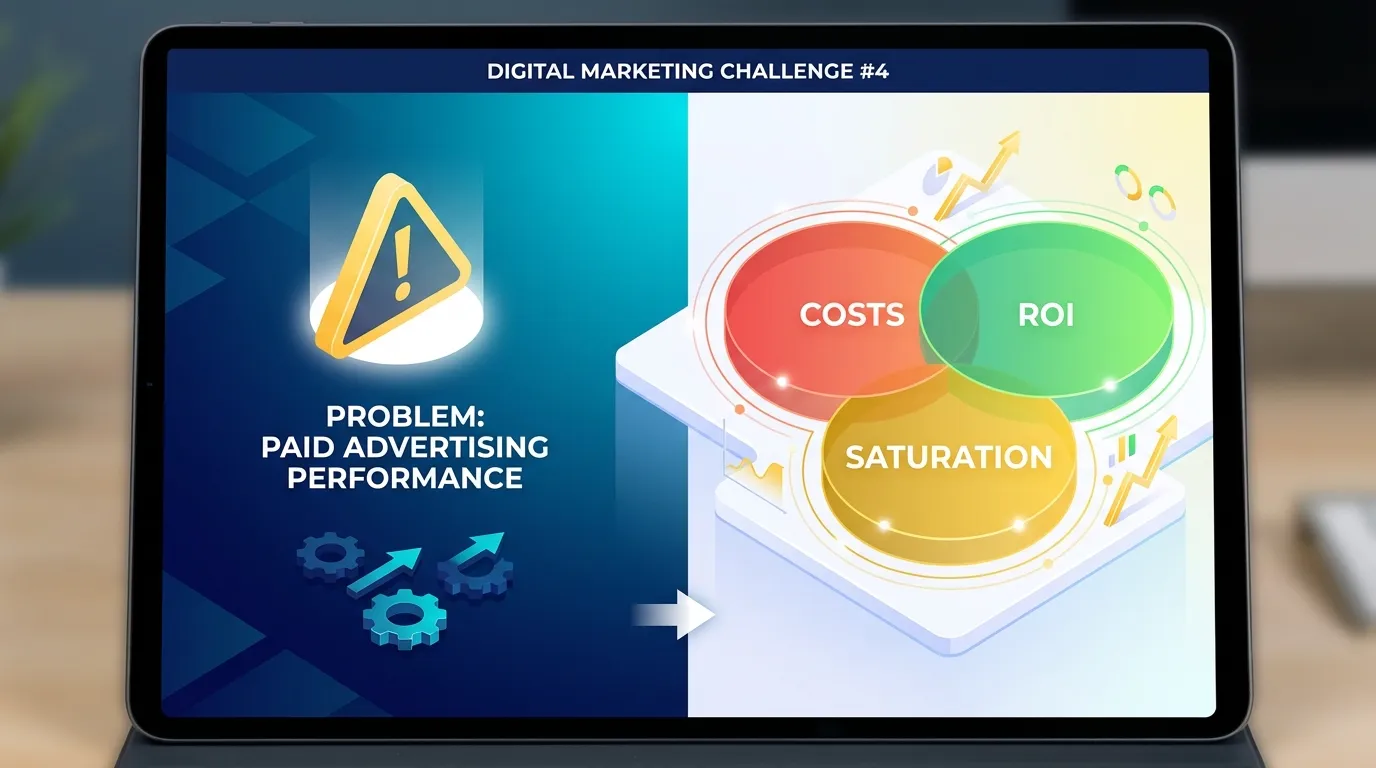
Paid media can scale fast, but it can also burn cash just as quickly. If you are investing in Google Ads, Meta, LinkedIn, or programmatic campaigns and not seeing proportional revenue growth, the issue is rarely the platform itself. The issue is the system behind it.
This is where many businesses underestimate the complexity. Paid ads are not simply traffic generators. They are precision tools. When targeting, messaging, landing pages, and tracking are misaligned, performance deteriorates even if impressions and clicks appear healthy on the surface.
Here’s where it goes wrong and how to approach it strategically:
Rising Cost Per Click With Lower ROI
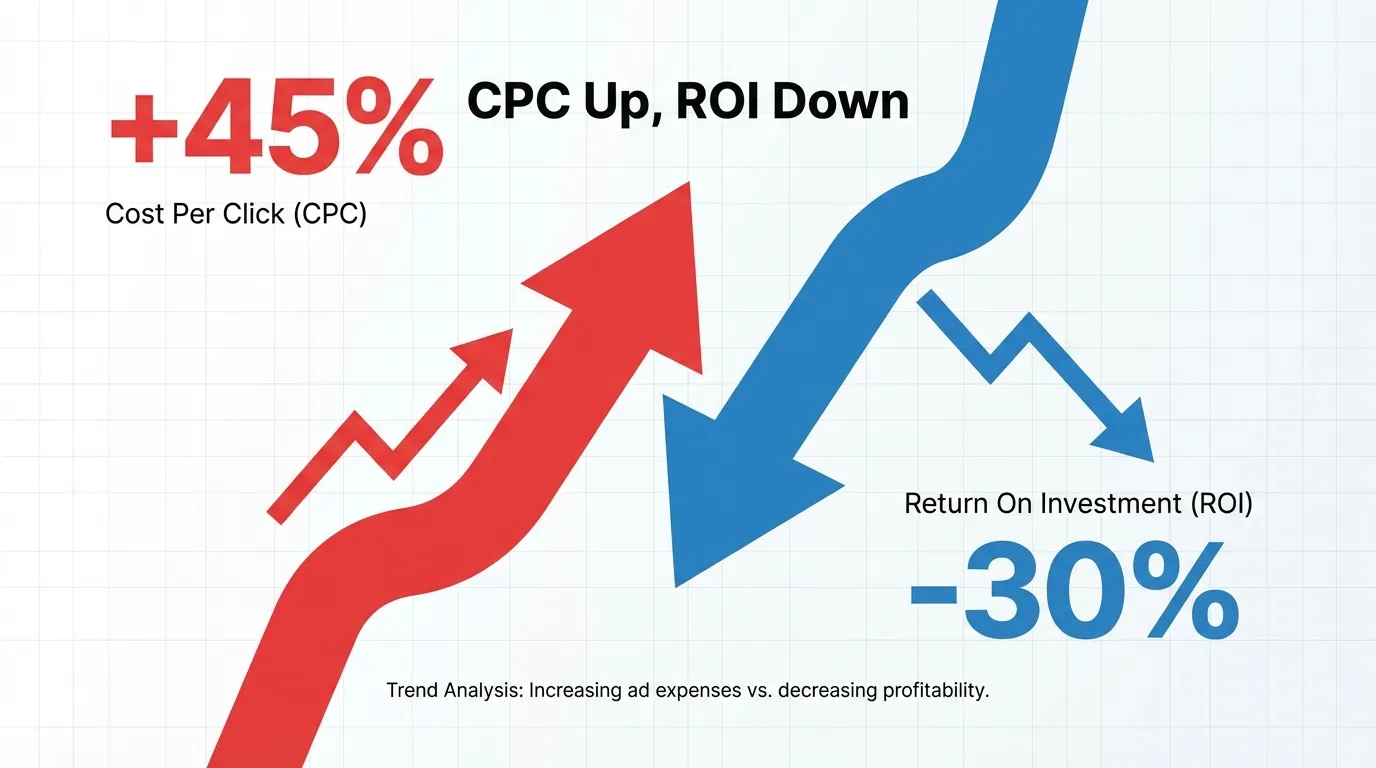
Competition across major platforms continues to intensify. More brands are bidding for the same commercial keywords and audiences. As demand increases, cost per click rises accordingly.
Google has openly stated that ad rank and pricing are influenced by auction dynamics, competition, and quality signals, not just your bid. When more advertisers compete for high-intent keywords, CPC naturally increases.
Higher CPC is not automatically a problem. The real issue is declining return on investment. If your cost per acquisition increases while conversion rates remain flat or drop, your margin shrinks.
This usually happens for three reasons:
- You are targeting broad, high-volume keywords without strong purchase intent
- Your Quality Score or relevance score is low, increasing costs
- Your landing page experience does not convert efficiently
Paid advertising amplifies weaknesses. If your funnel is not built to convert, scaling traffic simply scales inefficiency. To protect ROI, you need to look at paid media as a system, not a traffic switch.
Weak Landing Page Alignment

A paid click is a promise. Your ad copy makes a commitment. Your landing page must fulfil it immediately.
If your ad offers a “free consultation”, the landing page should reinforce that exact value within seconds. If, instead, it pushes a premium package or buries the offer below the fold, friction arises. Users feel misled, even if unintentionally.
Alignment must exist across three layers:
1. Message Match
- Headline mirrors the ad promise
- Keywords and value proposition are consistent
- Tone matches the intent of the audience
2. Intent Match
- Transactional ads lead to action-focused pages
- Informational ads lead to education-first pages
- High-ticket services provide proof and reassurance before asking for commitment
3. Experience Match
- Fast load speed
- Mobile-optimised layout
- Clear next step with minimal friction
Think of it this way: The ad gets the click, the landing page earns the conversion. When alignment is strong, even modest traffic can outperform high-volume campaigns with poor continuity.
Poor Conversion Tracking and Attribution
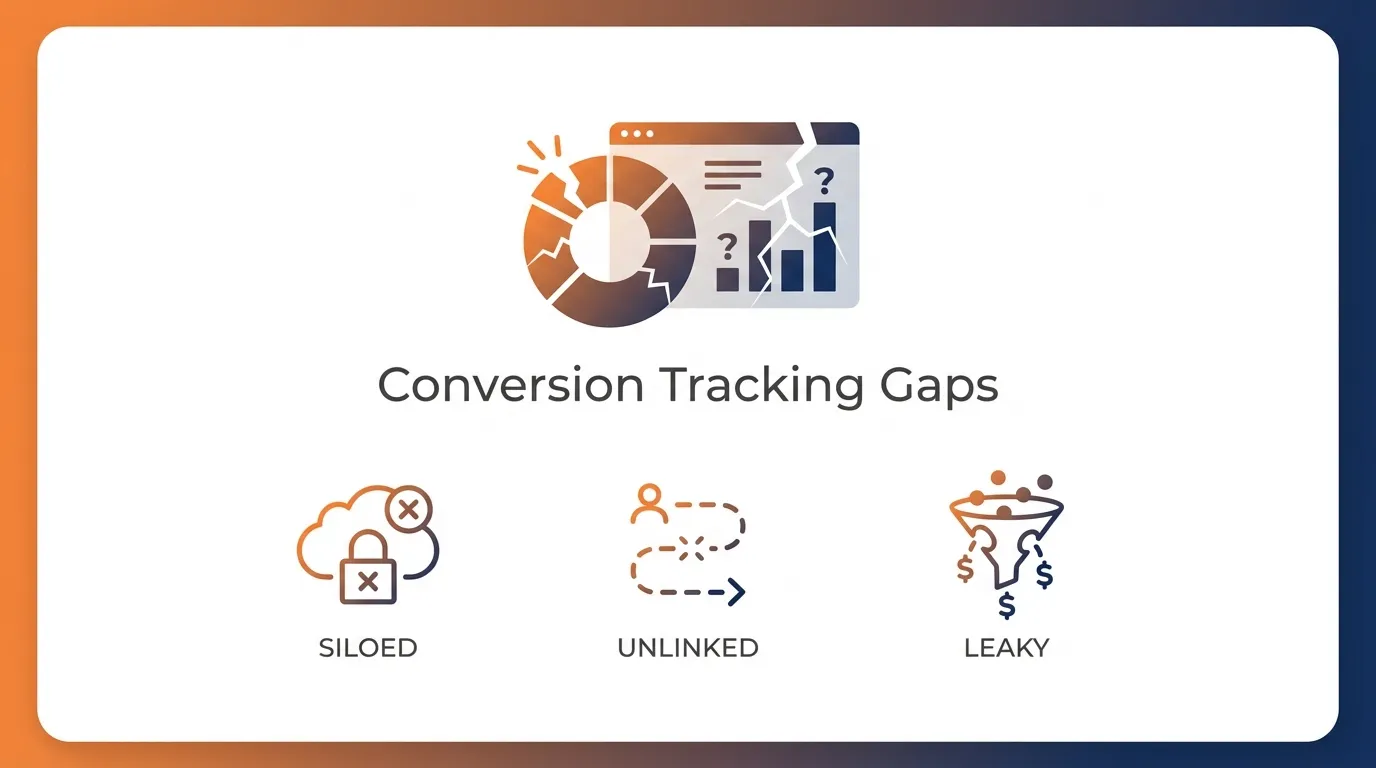
This is one of the most persistent digital marketing challenges because decisions rely on incomplete data. When attribution is unclear, optimisation becomes guesswork.
Tracking today is more complex than it was five years ago. Browser privacy updates limit third-party cookies. Cross-device journeys make it harder to connect the first interaction to the final purchase. Social platforms operate within closed ecosystems. The result is fragmented data.
You might see:
- Conversions attributed to “direct” traffic
- Paid campaigns showing low last-click conversions
- Organic traffic appears stronger than it actually is
Without structured tracking, budgets often shift toward channels that appear good in surface-level reports rather than those that influence real buying behaviour.
To address this, you need three layers of clarity:
Foundational Tracking Setup
- Proper event tracking for key actions
- CRM integration, where possible
- Consistent UTM structure across campaigns
Attribution Awareness
- Understand the difference between first-click, last-click, and data-driven attribution
- Review assisted conversions, not just final interactions
Business-Level Metrics
- Revenue per channel
- Customer acquisition cost per campaign
- Lifetime value by traffic source
If you do not connect advertising data to revenue data, optimisation remains incomplete.
What This Means for You
Paid advertising is not failing you. In most cases, your system is leaking value. When CPC rises, your margin becomes sensitive to inefficiencies. When landing pages lack alignment, trust erodes. When tracking is unclear, you optimise in the dark.
To regain control, focus on:
- Precision targeting over volume
- Tight message and intent alignment
- Full-funnel tracking that connects spend to revenue
Paid media rewards discipline. It exposes gaps quickly. When structured correctly, it becomes one of the most scalable growth channels available. When misaligned, it becomes one of the most expensive digital marketing challenges to sustain.
The difference lies in whether you treat ads as isolated campaigns or as part of an integrated conversion system.
Digital Marketing Challenge #5: Lead Nurturing and Follow-Up
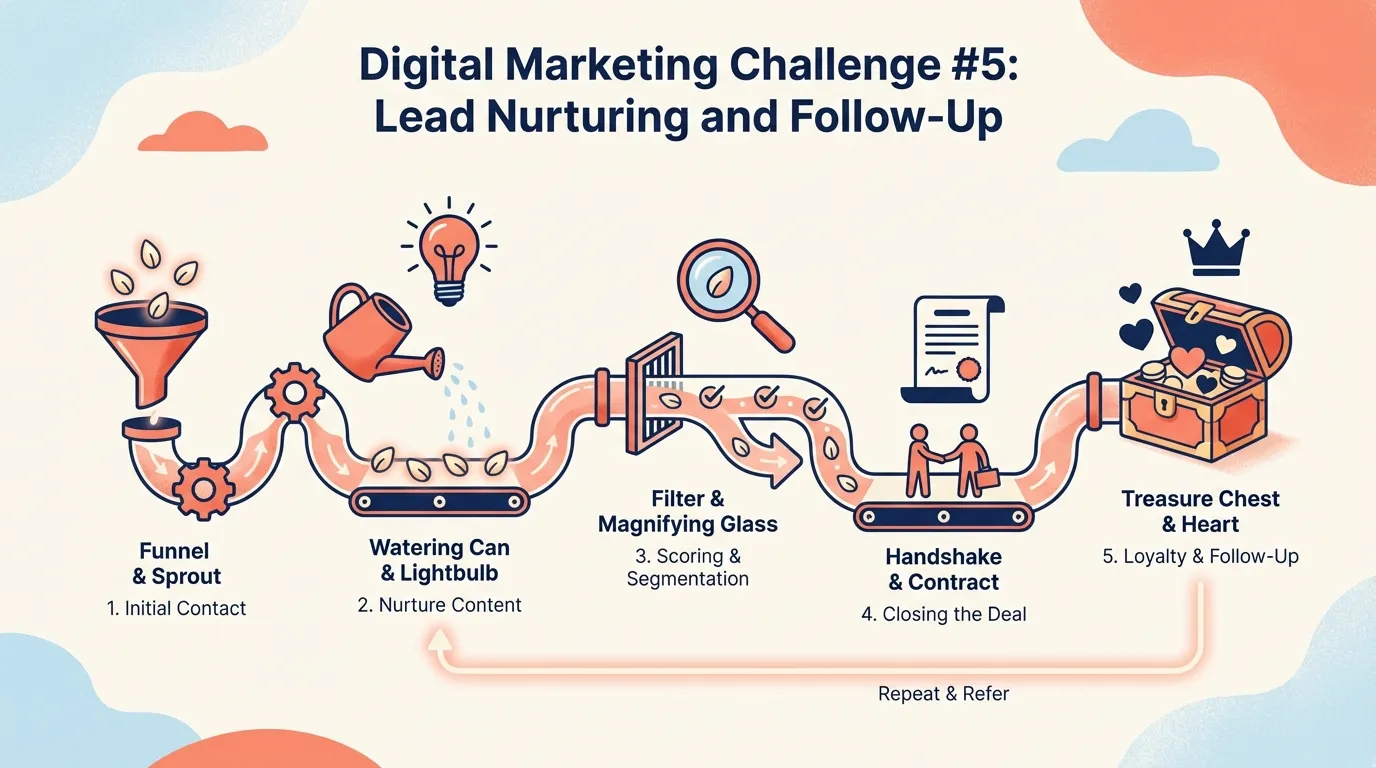
You worked hard to earn that click. You paid for the ad, optimised the SEO page, refined the targeting, and finally captured the lead. Then what?
This is where many businesses quietly lose revenue. Not because the traffic was wrong. Not because the offer was weak. But there was no structured system to turn interest into commitment.
Lead nurturing and follow-up is where momentum either compounds or collapses. If you treat a new enquiry as a finished transaction rather than the start of a relationship, conversions stall. Here’s where this usually fails and what you can do about it:
No Structured Email Nurture Funnel
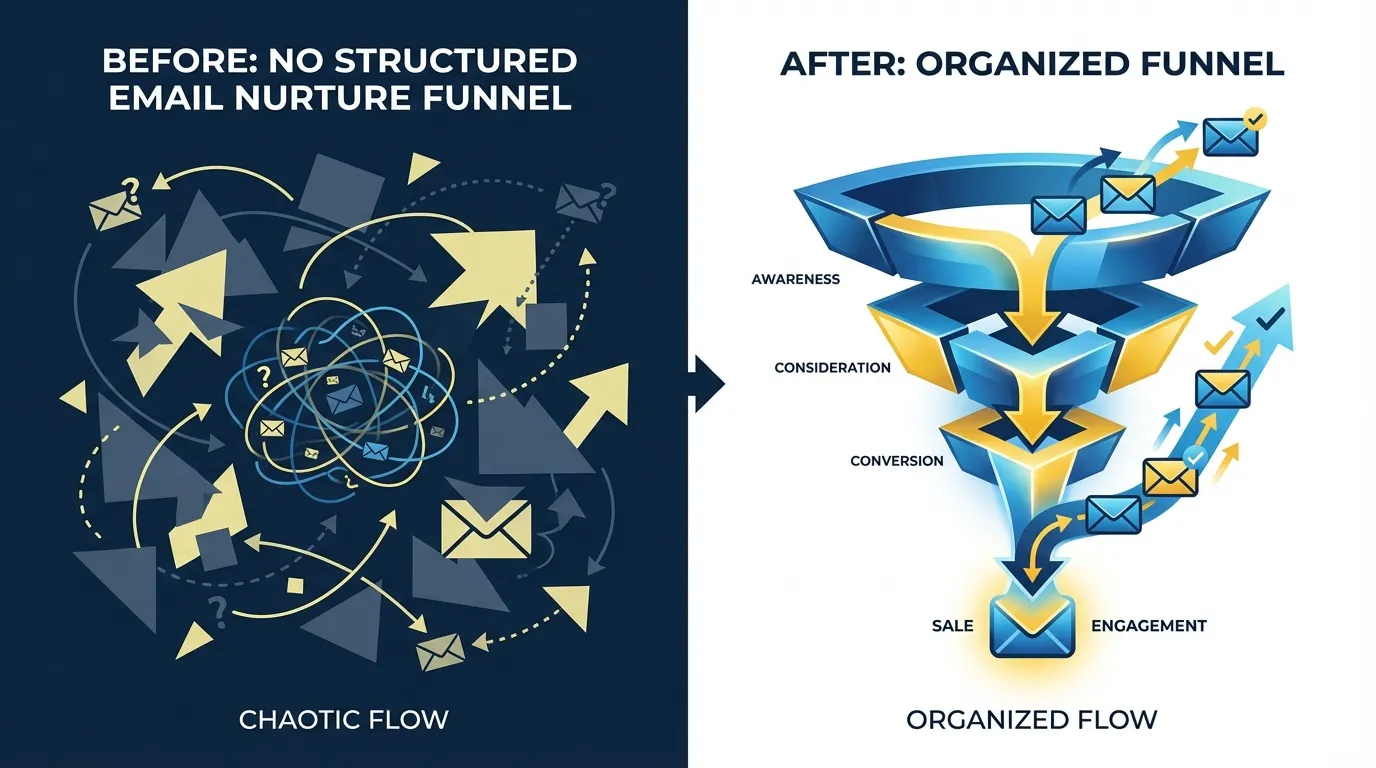
Capturing a lead is not the win. It is the opening handshake. Without a clear sequence that builds trust and reduces hesitation, leads go cold faster than most businesses realise. People submit a form while motivated. That motivation fades quickly if you disappear.
A proper nurture funnel is not a random set of emails sent “when there’s time”. It is a deliberate progression designed to answer questions before they are asked. It anticipates objections. It reinforces authority. It moves the prospect closer to action.
A well-structured nurture funnel typically includes:
- Welcome email: Immediate acknowledgement. Set expectations. Reinforce the value of what they just signed up for.
- Educational content: Practical insights that solve real problems. This positions you as a trusted advisor rather than a vendor.
- Case studies or proof points: Demonstrate real outcomes. Specific examples outperform vague claims every time.
- Objection-handling content: Address common concerns, including pricing, timelines, and implementation complexity.
- Time-sensitive offers or next-step prompts: Encourage action while interest is still high.
The key is sequencing. Each email should logically build on the previous one. If your nurture flow feels random, your prospects feel uncertain. Uncertainty kills conversions.
Delayed Sales Follow-Up
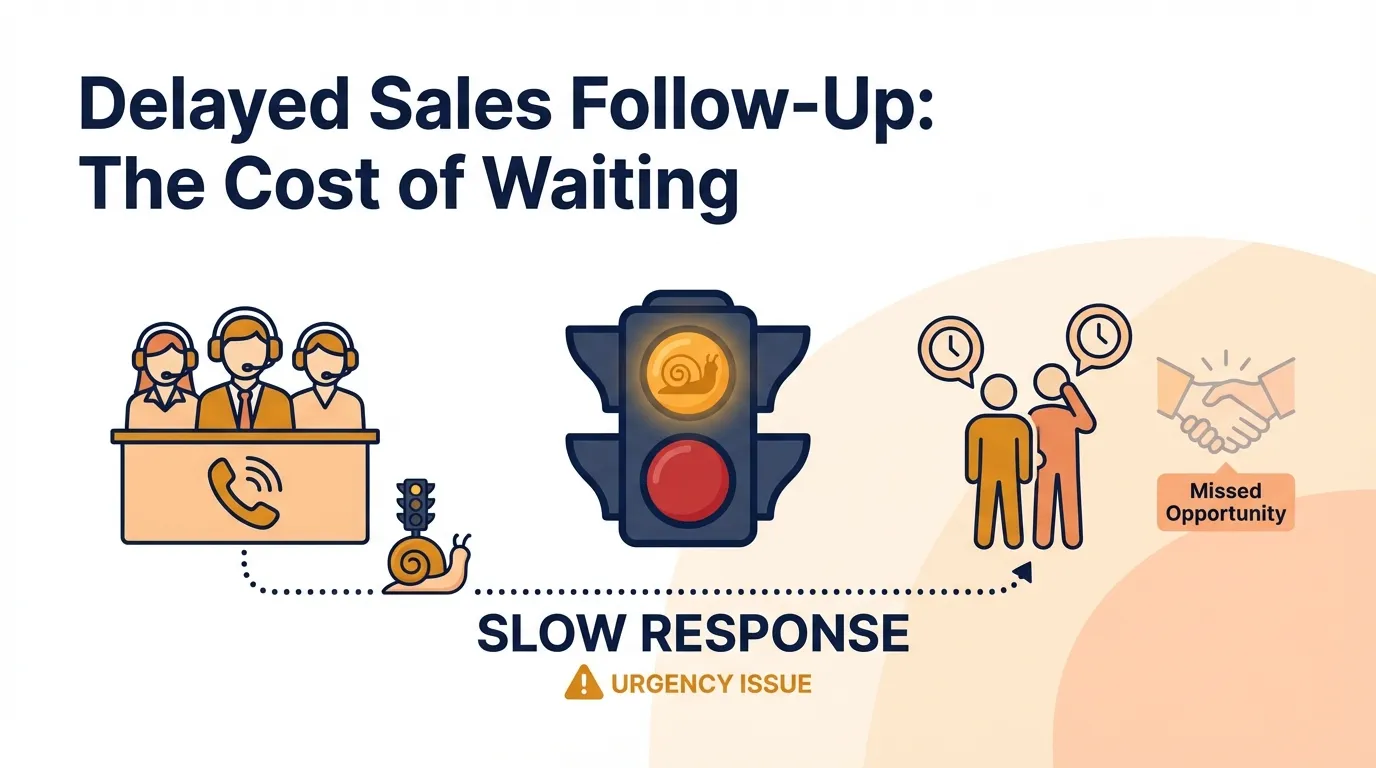
Speed matters more than most teams admit. When someone fills out a form or requests a quote, they are at peak intent. That window does not stay open for long. If your follow-up happens days later, you are competing against fading urgency and possibly faster competitors.
Response time directly influences conversion probability because it preserves buying momentum. The longer you wait, the more doubt creeps in.
Strong follow-up systems include:
- Automated instant confirmation emails
- Clear next-step messaging
- Defined internal response time standards
- CRM alerts for high-intent actions
- Personalised outreach within hours, not days
This is not about being aggressive. It is about being present when your prospect is ready to decide.
Many businesses assume interest remains constant. It does not. Buying intent fluctuates quickly. If you do not act while it is high, someone else will.
Weak Remarketing Strategy
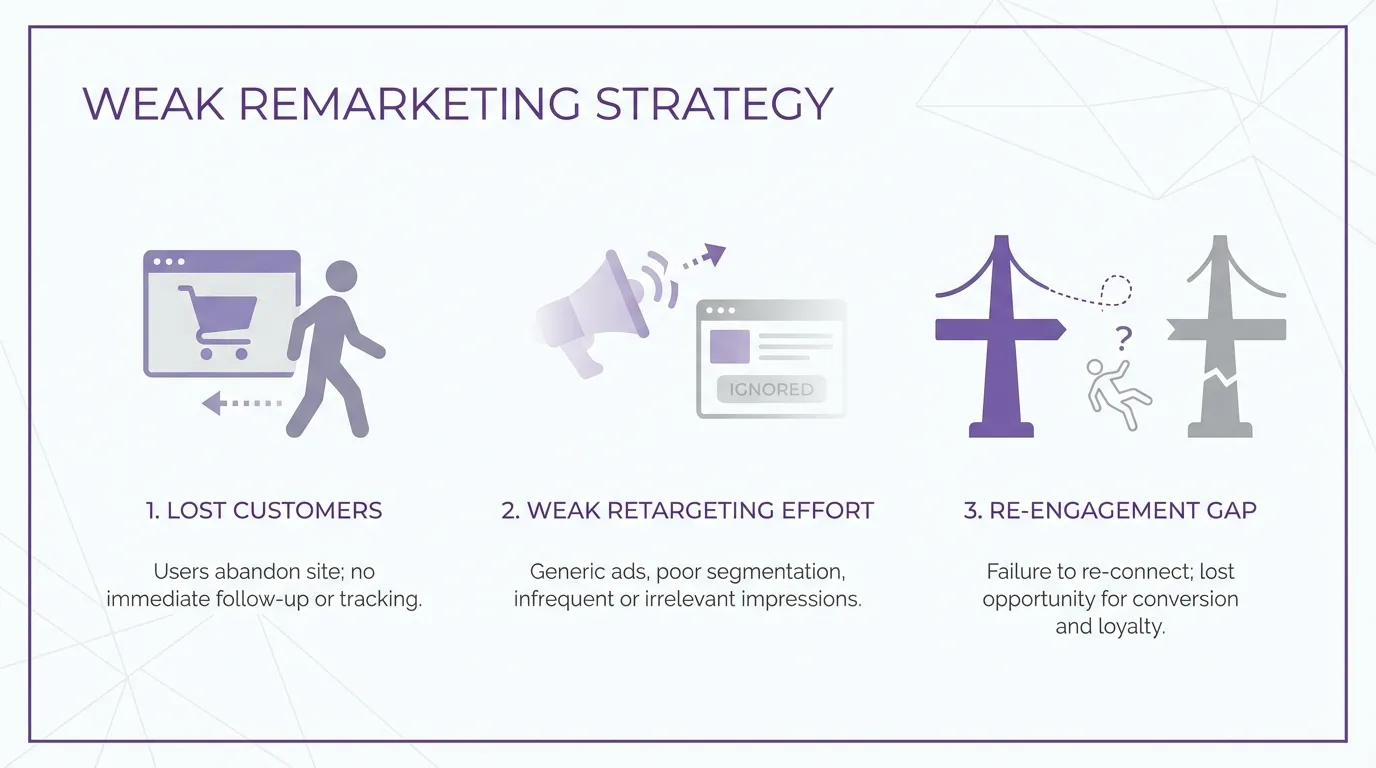
Even the best landing pages do not convert everyone on the first visit. That is normal. High-intent visitors often leave for reasons unrelated to your offer. They might be comparing vendors. They might be distracted. They might need internal approval.
If you do not have a remarketing strategy, those warm prospects disappear. Effective remarketing does not simply repeat the same message. It adapts based on behaviour.
For example:
- Visitors who viewed pricing pages should see messaging focused on value and ROI.
- Visitors who downloaded a guide should receive deeper educational follow-ups.
- Cart abandoners should see reminder ads or receive email prompts that reduce friction.
Remarketing should feel relevant, not repetitive. Strategic retargeting ads and automated email reminders bring prospects back into your ecosystem. Done correctly, remarketing reinforces authority and shortens the sales cycle. Done poorly, it feels like noise.
How to Strengthen Your Lead Nurturing System
If you suspect this is your conversion bottleneck, start with structure. Ask yourself:
- Do we know exactly what happens after a lead is captured?
- Is there a documented sequence, or is it improvised?
- How quickly does our team respond to high-intent enquiries?
- Are we segmenting remarketing audiences based on behaviour?
If you cannot answer those questions clearly, your follow-up process likely needs refinement. A high-performing lead nurturing system combines:
- Automation for speed
- Personalisation for relevance
- Data tracking for optimisation
It is not enough to send emails. You must measure open rates, click behaviour, reply rates, and conversion outcomes. That feedback loop allows you to refine your messaging over time.
Why This Challenge Matters More Than You Think
Traffic generation is visible. You see clicks, impressions, and dashboards. Lead nurturing is less glamorous. It happens behind the scenes. But this is where profit lives.

You can double traffic and still struggle with revenue if follow-up is weak. Alternatively, you can maintain traffic levels and dramatically increase revenue simply by improving how you nurture and re-engage leads.
This is often the most overlooked digital marketing challenge because it does not feel like marketing. It feels operational. In reality, it is both.
When your nurturing system works, you build trust at scale. You stay top of mind without being intrusive. You guide prospects toward confident decisions rather than hoping they return on their own. And that is how clicks turn into customers.
How to Overcome Digital Marketing Challenges and Improve Conversion Rates
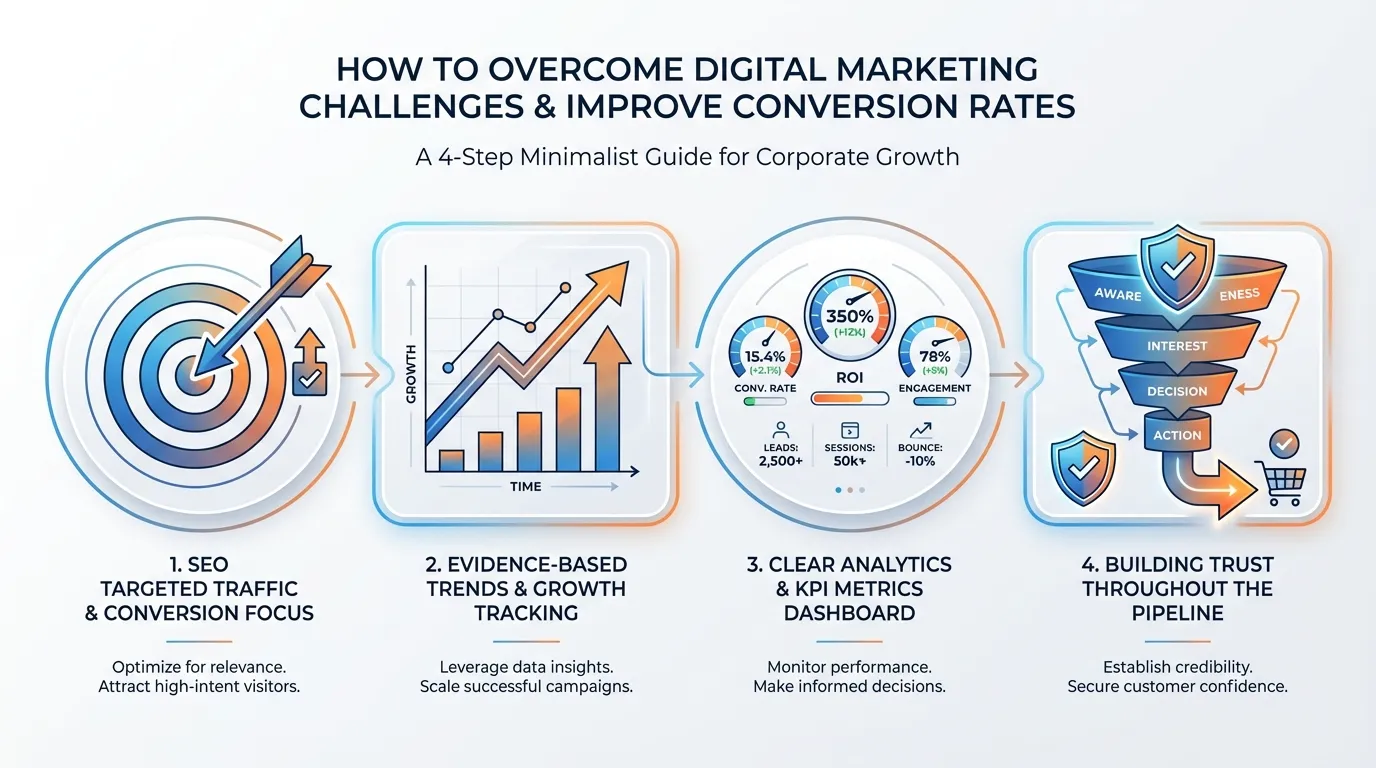
You do not fix conversion problems by working harder. You fix them by working more precisely.
If clicks are coming in but revenue is not following, your issue is rarely visibility. It is alignment. Alignment between intent and content. Between the message and the landing page. Between the traffic source and the offer.
Here is how you address that systematically:
Step 1: Align SEO With Conversion Strategy
SEO without a conversion strategy is publishing for traffic. SEO with a conversion strategy is publishing for revenue. There is a difference.
Start with intent mapping. Every keyword sits somewhere along a spectrum:
- Early-stage research
- Consideration and comparison
- Transactional or service-ready
If you rank for “what is CRM integration”, you are attracting researchers. If you rank for “CRM integration services Singapore”, you are attracting buyers.
Map your keyword list accordingly. Then structure your site so that informational pages logically lead to commercial pages.
This is where content clusters become powerful. A strong cluster looks like this:
- Pillar page targeting a commercial keyword
- Supporting blogs answering related questions
- Internal links guiding readers to the next relevant step
For example:
| Content Type | Purpose | Next Step |
| Informational blog | Educates and builds trust | Links to service explainer |
| Comparison article | Addresses objections | Links to the consultation page |
| Case study | Proves credibility | Links to the contact form |
Every article should answer one core question and naturally introduce the next action. Not aggressively. Not prematurely. Logically. If your content does not guide users forward, it leaves them where they started.
Step 2: Improve Conversion Rate Optimisation With Evidence
Most businesses redesign based on opinion. High-performing teams test based on data. Conversion rate optimisation works best when you understand how users actually behave on your site, not how you think they behave.
Start with behaviour tracking tools that show friction points:
- Heatmaps to identify where users click or ignore
- Scroll tracking to see how far they read
- Session recordings to uncover hesitation or confusion
- A/B testing to validate changes before full rollout
You do not need dramatic redesigns to improve conversion rates. Often, marginal improvements compound. Test elements such as:
- Headlines that clarify outcomes instead of features
- Button placement above and below the fold
- Call-to-action wording that emphasises value over action
- Form length and required fields
For example, compare:
- “Submit”
- “Get My Free Proposal”
The second option communicates benefit. That subtle shift can measurably lift conversions. The key is disciplined experimentation. Change one variable at a time. Measure. Iterate.
Conversion rate optimisation is not a one-time project. It is an ongoing performance practice.
Step 3: Strengthen Data and Analytics With Clear KPIs
If you cannot see the problem clearly, you cannot solve it. Too many businesses track surface-level metrics such as page views and impressions while ignoring indicators that directly tie to revenue. Define a focused set of key performance indicators and align your reporting to them.
At minimum, track:
- Conversion rate
- Cost per acquisition
- Lead-to-sale ratio
- Customer lifetime value
- Revenue per channel
Here is why each matters:
| KPI | Strategic Insight |
| Conversion rate | Measures how efficiently traffic turns into action |
| Cost per acquisition | Determines campaign profitability |
| Lead-to-sale ratio | Reveals lead quality, not just volume |
| Lifetime value | Informs how much you can spend to acquire a customer |
| Channel revenue | Shows which sources truly drive income |
Review these metrics monthly, not reactively after campaigns fail. More importantly, connect data across platforms. Your SEO, paid ads, email marketing, and CRM data should not live in isolation. Attribution gaps create blind spots. Blind spots create wasted spend.
When you see the full funnel clearly, you make sharper decisions.
Step 4: Build Trust Throughout the Funnel
Trust is rarely built in a single interaction. It compounds through consistency and transparency. If your traffic is not converting, ask yourself whether visitors have enough proof to move forward.
Effective trust builders include:
- Detailed case studies that show measurable results
- Specific client testimonials that mention outcomes
- Transparent explanations of your process
- Clear breakdowns of services and deliverables
- Pricing frameworks, or at least budget ranges
When prospects understand what happens next, uncertainty decreases. Uncertainty is one of the biggest hidden barriers to conversion.
Let us consider the difference between the two service pages:
| Vague Page | Trust-Centred Page |
| Lists generic services | Explains process step-by-step |
| No proof of outcomes | Shows quantified results |
| No timeline clarity | Sets realistic expectations |
| No client quotes | Includes testimonials with context |
The second version removes hesitation. It answers questions before they are asked. That is what builds momentum toward action.
Solving conversion problems is not about driving more traffic. It is about improving what happens after the click.
When you:
- Align SEO with purchase intent
- Test user experience systematically
- Track metrics tied directly to revenue
- Reinforce trust at every stage
You create a funnel that works as a system rather than a collection of disconnected tactics.
Digital marketing performance improves when strategy, psychology, and data move together. If your campaigns are producing attention but not outcomes, do not assume the solution is more spending. The real solution is sharper alignment, stronger positioning, and disciplined optimisation.
That is how you overcome digital marketing challenges and turn clicks into customers consistently.
Turning Digital Marketing Challenges Into Revenue Opportunities
You do not solve conversion issues by increasing spend or publishing more content. You solve them by identifying where momentum breaks and rebuilding the path from first click to final decision.
The difference between brands that struggle and brands that scale is not traffic volume. It is clarity in intent, targeting, and measurement. When your SEO aligns with buyer intent, when your landing pages reduce friction, and when your tracking connects marketing activity to revenue, performance becomes predictable rather than accidental.
This is where strategic execution matters. You need integrated search, paid media, content, data, and optimisation working together as one system. That requires experience, technical depth, and commercial understanding.
If you are evaluating digital marketing services, approach it as an investment decision, not a vendor comparison. Ask how your funnel will be engineered to convert. Ask how attribution will be structured. Ask how performance will be measured against revenue, not vanity metrics.
If you want a clearer roadmap, speak with MediaOne. A focused consultation can help you identify where your funnel is leaking and how to correct it with precision. The goal is not more clicks. The goal is to resolve your most pressing digital marketing challenges so your traffic becomes measurable revenue.
Frequently Asked Questions
How do digital marketing challenges affect post-click experiences?
Digital marketing challenges often appear after the click, not before it. A strong click-through rate means little if the landing page fails to deliver relevance, clarity, or trust. When messaging between the ad and the page is inconsistent, users disengage quickly.
Addressing these digital marketing challenges requires aligning user expectations with the on-page experience to maintain momentum toward conversion.
Why are digital marketing challenges closely linked to weak demand generation?
Digital marketing challenges often stem from focusing only on short-term conversions rather than building demand. Without consistent brand education and authority building, prospects may click but hesitate to commit. Strong demand generation nurtures trust and familiarity before a sales offer is presented. When this foundation is missing, conversion rates typically suffer.
Can personalisation solve common digital marketing challenges in conversion?
Personalisation helps address digital marketing challenges by delivering content that reflects user behaviour and intent. When messaging feels tailored rather than generic, engagement improves. Behaviour-based segmentation, dynamic content, and triggered follow-ups increase perceived relevance. Greater relevance often leads to higher conversion performance.
How do digital marketing challenges impact funnel performance?
Digital marketing challenges frequently arise when funnels are poorly structured or disconnected. If content, ads, and landing pages are not mapped to clear funnel stages, prospects stall. A defined funnel guides users logically from awareness to decision. Without this structure, even strong traffic volumes fail to convert consistently.
Targeted advertising can mitigate digital marketing challenges by narrowing focus to high-intent audiences. When campaigns rely on broad targeting, irrelevant clicks increase, and budgets dilute. Precision targeting based on behavioural data improves efficiency. Better audience alignment typically results in stronger conversion outcomes and reduced acquisition costs.