By 2026, generative AI will be an integral part of marketing operations worldwide, driving modern strategies.

Recent data indicates that 88% of digital marketers currently leverage AI tools in their daily operations, while 92% of businesses intend to invest in generative AI technologies within the next three years, underscoring the swift evolution of AI from a niche initiative to a strategic imperative.
This rapid adoption is reshaping not just content creation, but search visibility, performance optimisation, and customer personalisation.
As AI-generated answers and conversational interfaces increasingly influence how users discover brands, businesses must rethink traditional SEO approaches.
Many are now turning to a specialised GEO agency to ensure their content is structured for generative engine optimisation and AI-driven discoverability.
In this guide, we break down what generative AI marketing truly means in 2026, how leading brands are applying it in real campaigns, which tools are driving results, how to implement it effectively, and what risks organisations must manage to unlock sustainable, measurable growth.
Key Takeaways
- Generative AI marketing is now a strategic infrastructure. By 2026, AI will be embedded into search, advertising, and personalisation systems, making it essential rather than optional for competitive brands.
- Speed and iteration drive market advantage. Generative AI accelerates content creation, ad testing, and optimisation cycles, allowing businesses to gather insights and refine performance faster than competitors.
- AI augments, but does not replace, strategic judgement. While automation enhances efficiency and scalability, ongoing human oversight and structured frameworks remain critical to achieving sustainable results.
What Is Generative AI Marketing?

Generative AI marketing refers to the use of artificial intelligence models that automatically generate new content, insights, and campaign assets from data inputs.
While traditional automation tools execute tasks according to fixed rules, generative AI systems can independently generate original text, visuals, code, predictive insights, and strategic recommendations, demonstrating a higher level of creativity and adaptability than rule-based automation.
In a marketing context, generative AI marketing includes AI-assisted content creation, dynamic ad variations, automated customer personalisation, predictive campaign optimisation, and even AI-generated search visibility enhancements.
It operates across the entire funnel, from awareness to conversion, by accelerating production while improving targeting precision.
The distinguishing factor is that generative AI transcends mere task automation. It produces assets and insights that previously required manual creative and analytical contributions. When deployed competently, it serves as a performance multiplier rather than a basic productivity tool.
Why Generative AI Marketing Matters in 2026
By 2026, generative AI marketing is no longer experimental. It has become a structural advantage for brands competing in data-driven, AI-shaped digital ecosystems. The shift is not just technological; it is behavioural, operational, and economic.
Three major forces make generative AI marketing essential in 2026: AI-first search environments, escalating competition, and performance accountability.
1. AI-First Search Is Reshaping Visibility
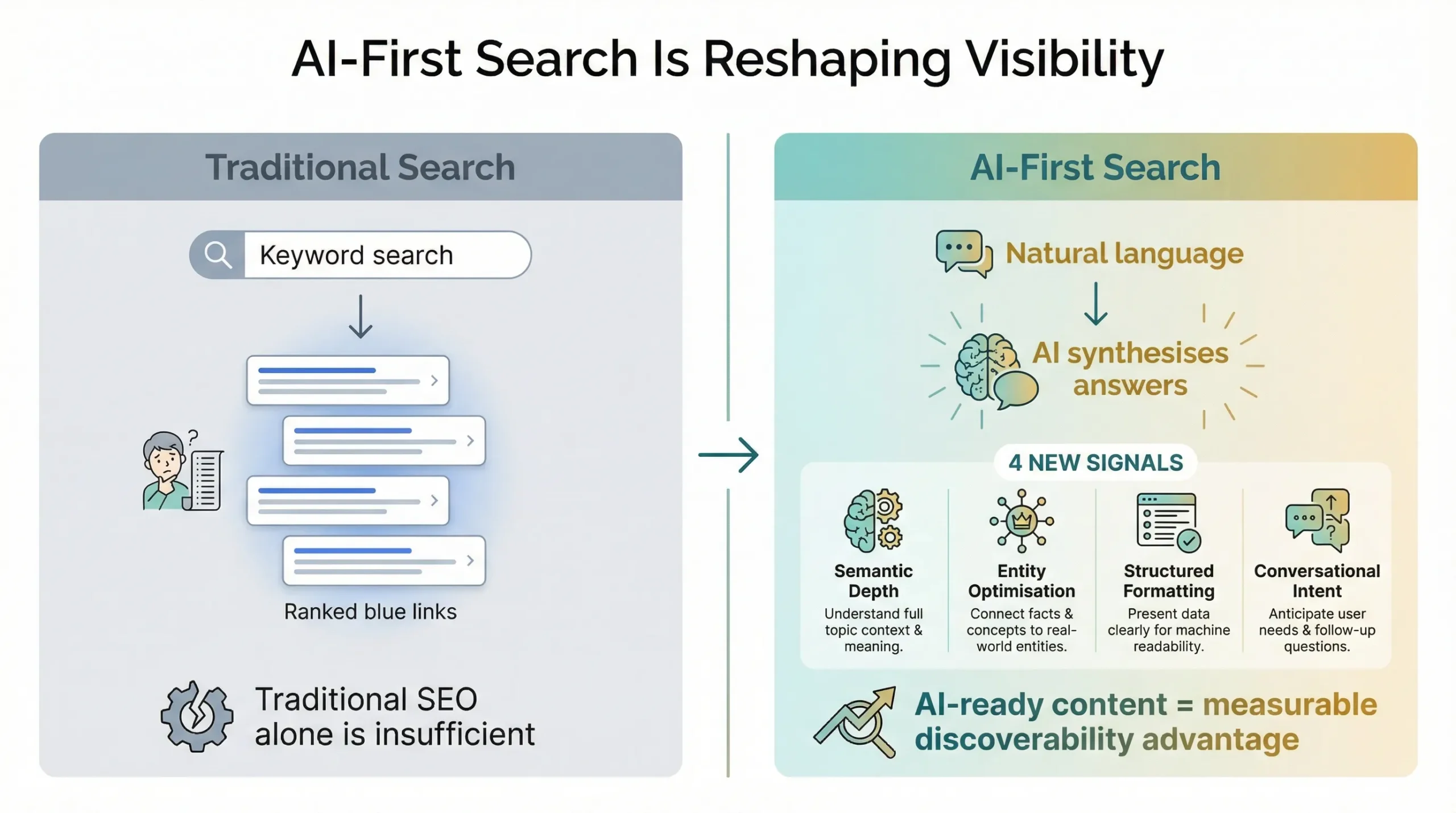
Search engines are increasingly integrating AI-generated summaries, conversational responses, and entity-based ranking systems. Users are moving from keyword-based searches to natural language queries, and AI systems are synthesising answers rather than simply listing links.
This changes how brands must structure content. Traditional SEO tactics alone are no longer sufficient. Generative AI marketing supports semantic depth, structured content formatting, entity optimisation, and alignment with conversational intent.
Businesses that understand how AI models interpret and surface content gain a measurable advantage in discoverability.
2. Content Velocity Is Now a Competitive Variable

In many industries, speed determines visibility. Brands that produce content, creative variations, and performance tests faster than competitors gather data earlier and optimise sooner.
Generative AI enables rapid iteration:
- Multiple ad variations can be created in minutes.
- Blog drafts can be structured quickly for optimisation.
- Email sequences can be dynamically personalised.
This acceleration does not eliminate strategy, but it compresses production timelines. In competitive markets, that speed translates into market share.
3. Performance Marketing Requires Smarter Optimisation
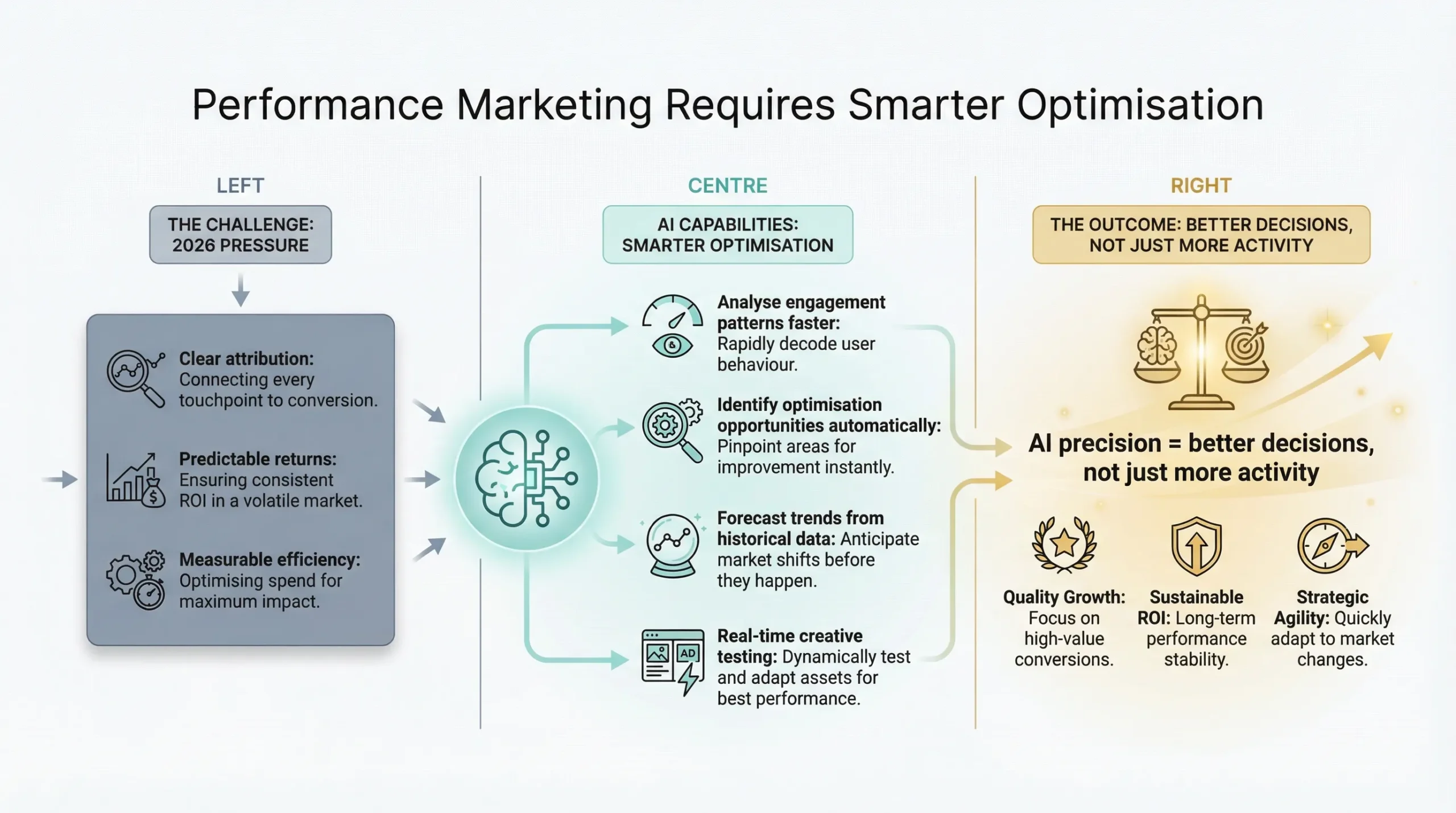
Marketing budgets in 2026 are under greater scrutiny than ever. Leadership teams expect clear attribution, predictable returns, and measurable efficiency improvements.
Generative AI marketing enhances performance by:
- Analysing engagement patterns faster
- Identifying optimisation opportunities automatically
- Forecasting trends based on historical data
- Supporting real-time creative testing
Rather than relying solely on manual adjustments, teams can use AI to enhance decision-making precision.
4. Personalisation Has Become an Expectation
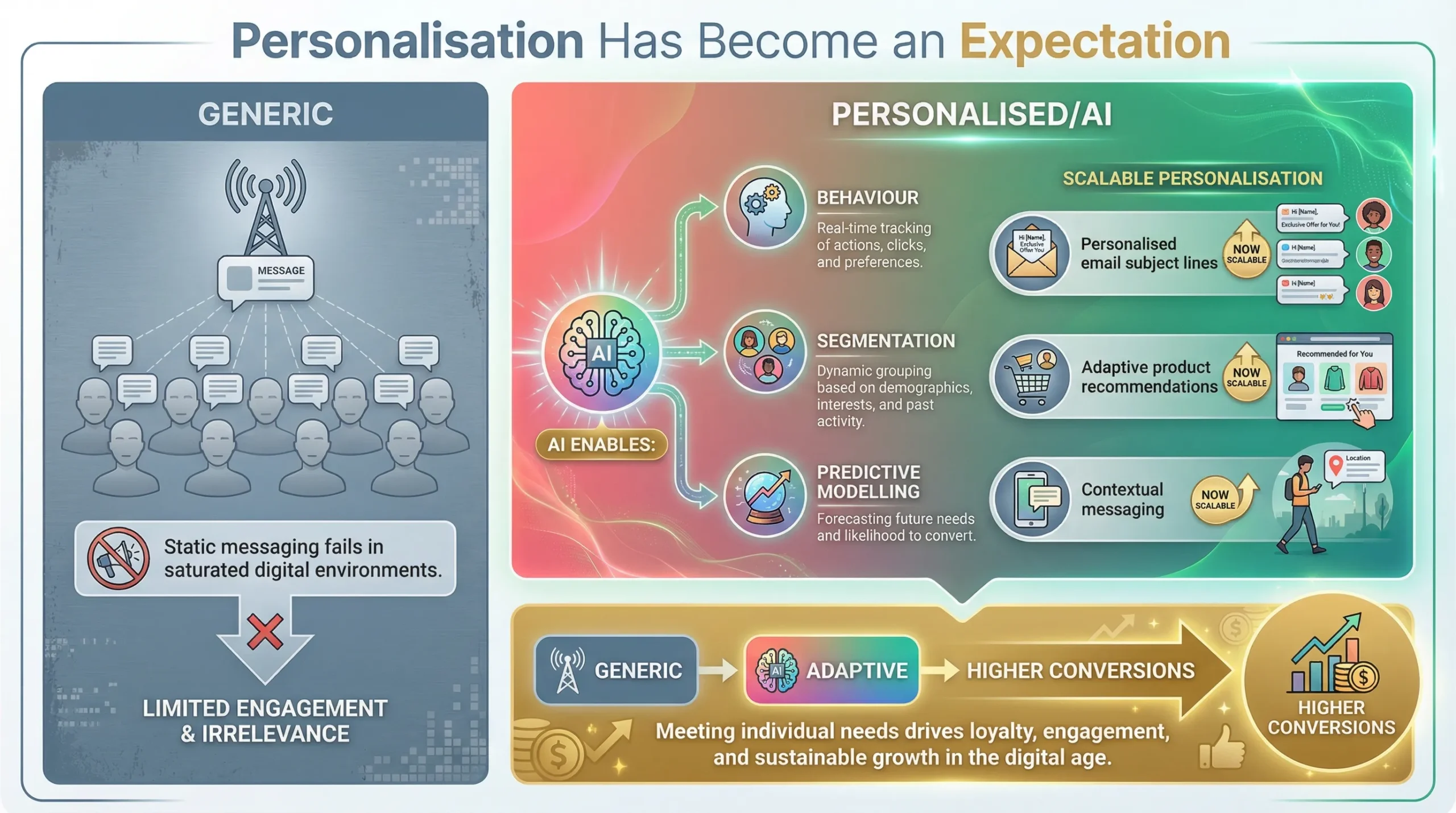
Consumers increasingly expect tailored experiences across channels. Static messaging struggles to maintain engagement in saturated digital environments.
Generative AI supports dynamic content generation based on user behaviour, segmentation, and predictive modelling. Personalised email subject lines, adaptive product recommendations, and contextual messaging are now scalable rather than resource-intensive.
This shift from generic to adaptive marketing significantly improves conversion potential.
5. Operational Efficiency Impacts Profitability
Marketing teams face growing complexity across platforms, regions, and campaign formats. Generative AI reduces repetitive manual workload, from drafting and reporting to testing and optimisation.
The result is operational leverage. Teams can reallocate time from administrative tasks to strategic planning, experimentation, and growth initiatives.
Efficiency gains compound over time, particularly in organisations managing multi-channel ecosystems.
Real-World Use Cases of Generative AI Marketing
Major global brands are already integrating generative AI into their core marketing strategies, producing campaigns and experiences that scale creativity, personalise engagement, and deliver measurable results.
Coca-Cola: AI-Driven Personalised Content & Global Campaigns

Coca-Cola has used generative AI to create personalised content and large-scale creative campaigns across major global events. For example, during the FIFA World Cup, the brand generated over 120,000 unique fan videos using AI tools that blended consumer names and images with Coca-Cola branding, significantly boosting engagement and social sharing.
This approach exemplifies how generative AI can personalise media at scale while driving global brand visibility.
More recently, Coca-Cola has expanded its use of generative AI through AI-enhanced holiday ads and has encouraged creative agencies to adopt AI collaboration, reinforcing its role in high-impact campaigns.
Nike: Creative Personalisation & Real-Time Optimisation

Nike has incorporated AI into its marketing campaigns to generate personalised experiences, automate creative production, and enable dynamic content testing.
According to industry sources, brands like Nike are using AI to tailor creative content, enhance storytelling, and deliver ads that resonate with specific audience segments, from personalised video content to dynamic ad variations. This strategy not only increases relevance but also improves conversion performance across digital channels.
Nike’s use of AI-assisted tooling allows campaign teams to quickly iterate on visuals and copy, shortening production cycles and enabling real-time optimisation, advantages that traditional creative workflows struggle to match.
Duolingo & Atlassian: AI-Enhanced Engagement Tools

Leading tech brands such as Duolingo and Atlassian have embedded generative AI directly into user experiences to both engage audiences and streamline operations.
Duolingo has introduced AI-powered practice partners within its language app that tailor feedback and conversational practice to individual learners, blending marketing engagement with product utility.
Atlassian, meanwhile, uses an AI virtual assistant to support collaboration workflows, helping position its brand as a productivity leader and indirectly strengthening its market positioning through AI-enabled customer interactions.
These examples show that generative AI marketing isn’t limited to niche tests. From global consumer brands to SaaS leaders, generative AI is proving its value by enabling brands to scale storytelling, improve performance measurement, and create memorable engagements that resonate with modern audiences.
Top Generative AI Marketing Tools in 2026
1. ChatGPT

Website: https://openai.com/chatgpt
Updated NAP: OpenAI, 3180 18th St, San Francisco, CA 94110, US
Best For: Core generative language model for marketing copy, brainstorming, strategy prompts, and personalised content generation.
ChatGPT remains a foundational AI tool for marketers, capable of creating blog drafts, ad copy, email sequences, SEO outlines, audience personas, and more in natural language. Its flexibility makes it a Swiss Army knife for generative AI marketing workflows.
2. Jasper
Website: https://www.jasper.a
Updated NAP: Jasper AI Inc., San Mateo, CA, US
Best For: Brand-aligned AI content creation and large-scale copy production.
Jasper specialises in generating high-quality, on-brand content, from long-form articles and product descriptions to ad headlines and social captions, while learning your unique voice over time.
3. Semrush (ContentShake AI)
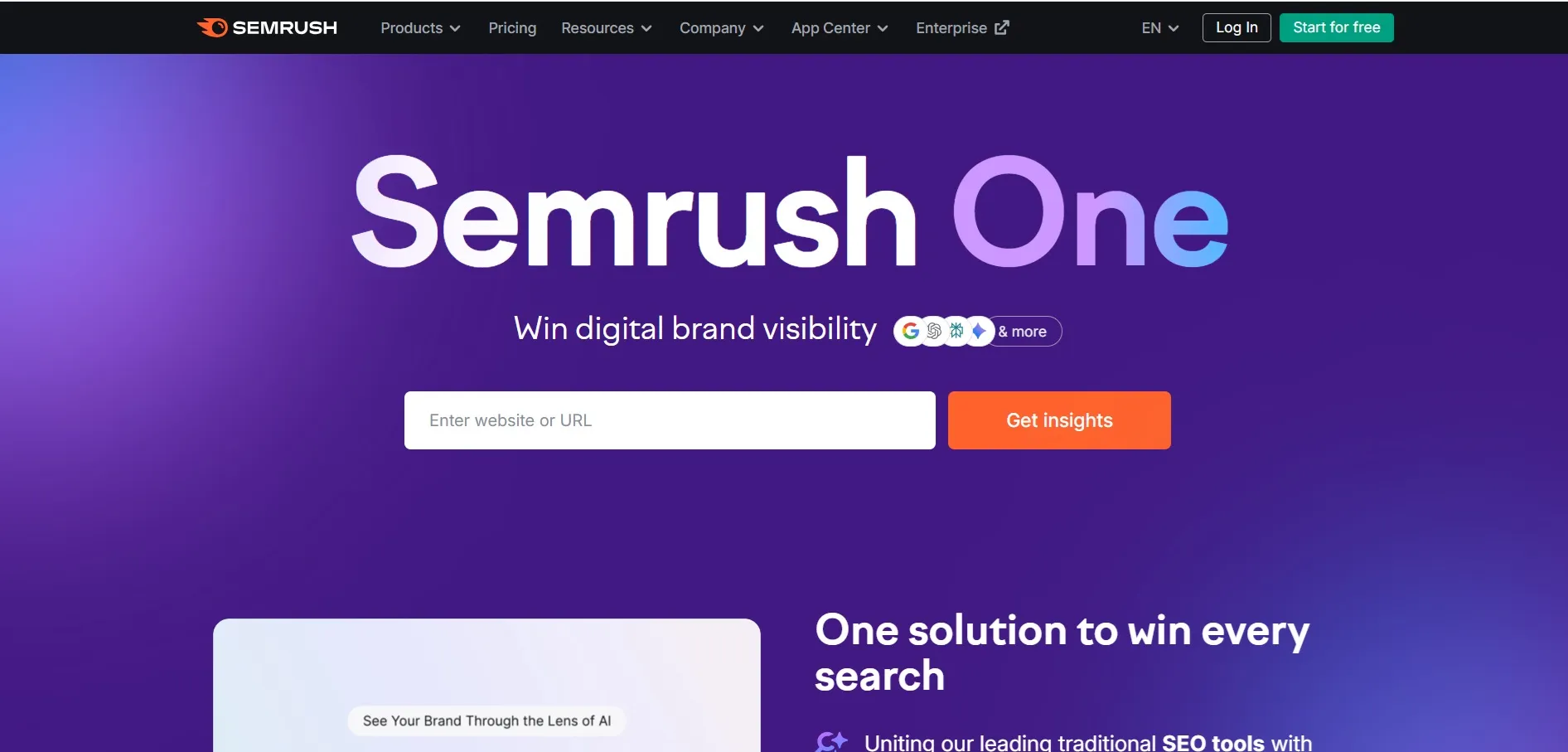
Website: https://www.semrush.com
Updated NAP: Semrush Inc., Boston, MA, US
Best For: SEO-integrated AI content generation and optimisation.
Semrush’s ContentShake AI combines SEO data and generative AI to produce search-optimised articles and briefs, leveraging real ranking insights alongside AI-generated drafts.
4. MarketMuse
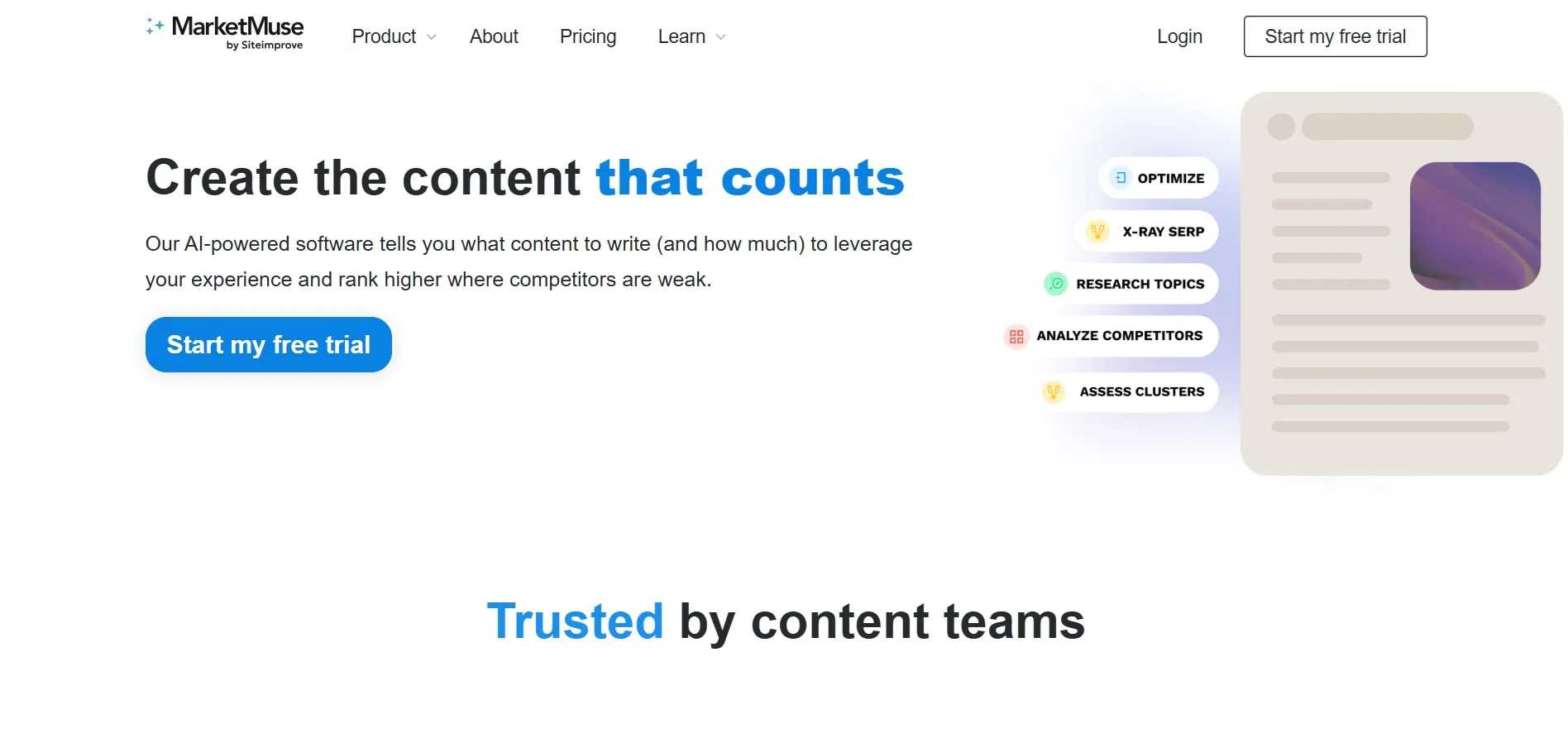
Website: https://marketmuse.com
Updated NAP: MarketMuse, Denver, CO, US
Best For: AI-driven content strategy and topic modelling.
This tool uses proprietary AI to analyse content gaps, generate semantic topic clusters, and guide strategy with priority recommendations, ideal for deep SEO planning.
5. Clearscope

Website: https://www.clearscope.io
Updated NAP: Clearscope, Inc., New York, NY, US
Best For: AI SEO content optimisation and real-time grading.
Clearscope provides real-time content scoring, keyword suggestions, and readability optimisation to align content with leading ranking signals across AI-assisted search results.
6. Brevo (Aura AI)
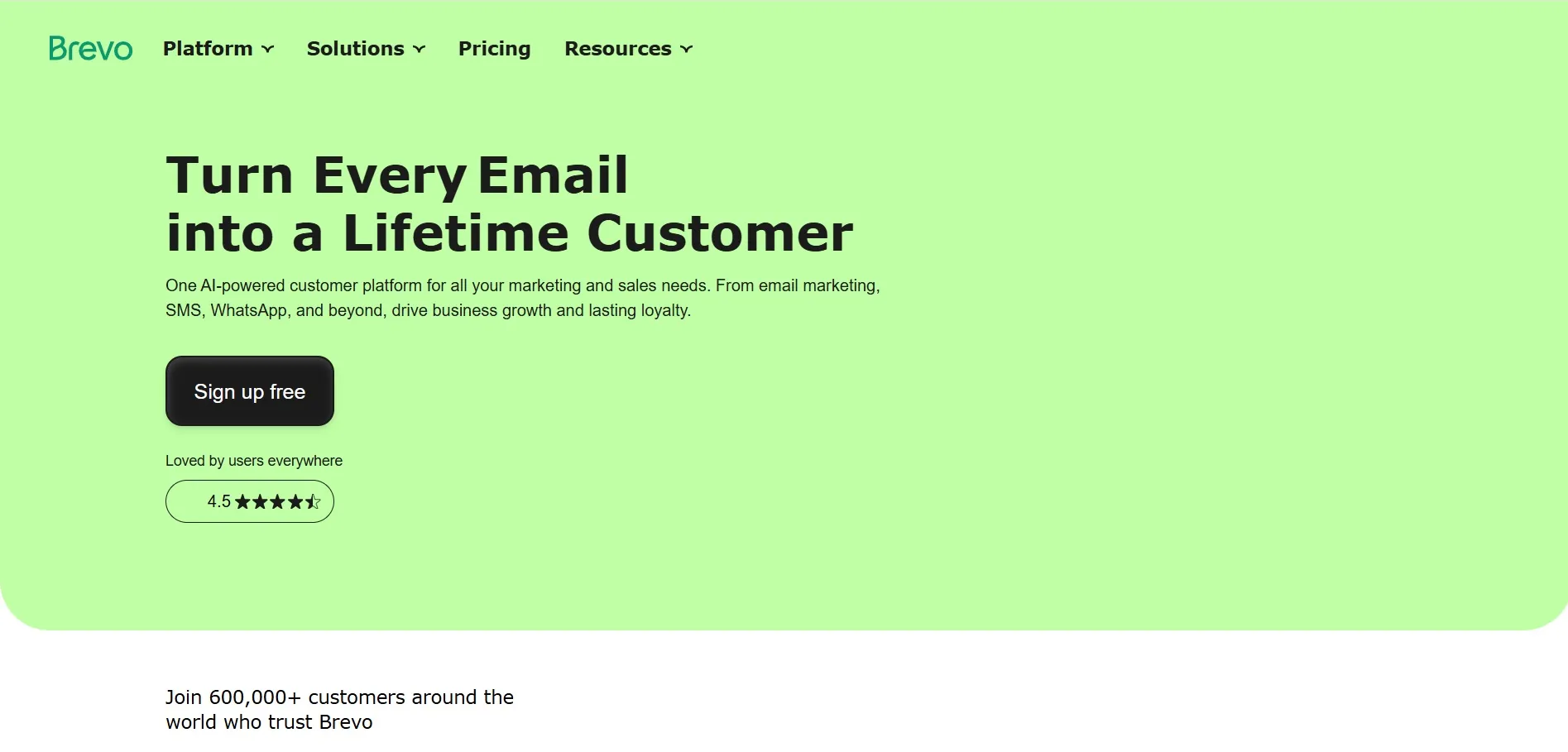
Website: https://www.brevo.com
Updated NAP: Brevo (formerly Sendinblue), Paris, FR & NY, US
Best For: AI-enhanced email marketing and automation.
Brevo’s Aura AI and predictive send-time tools help generate campaign copy, segment audiences, and automate personalised email journeys.
7. Adobe Generative AI (Adobe Sensei)
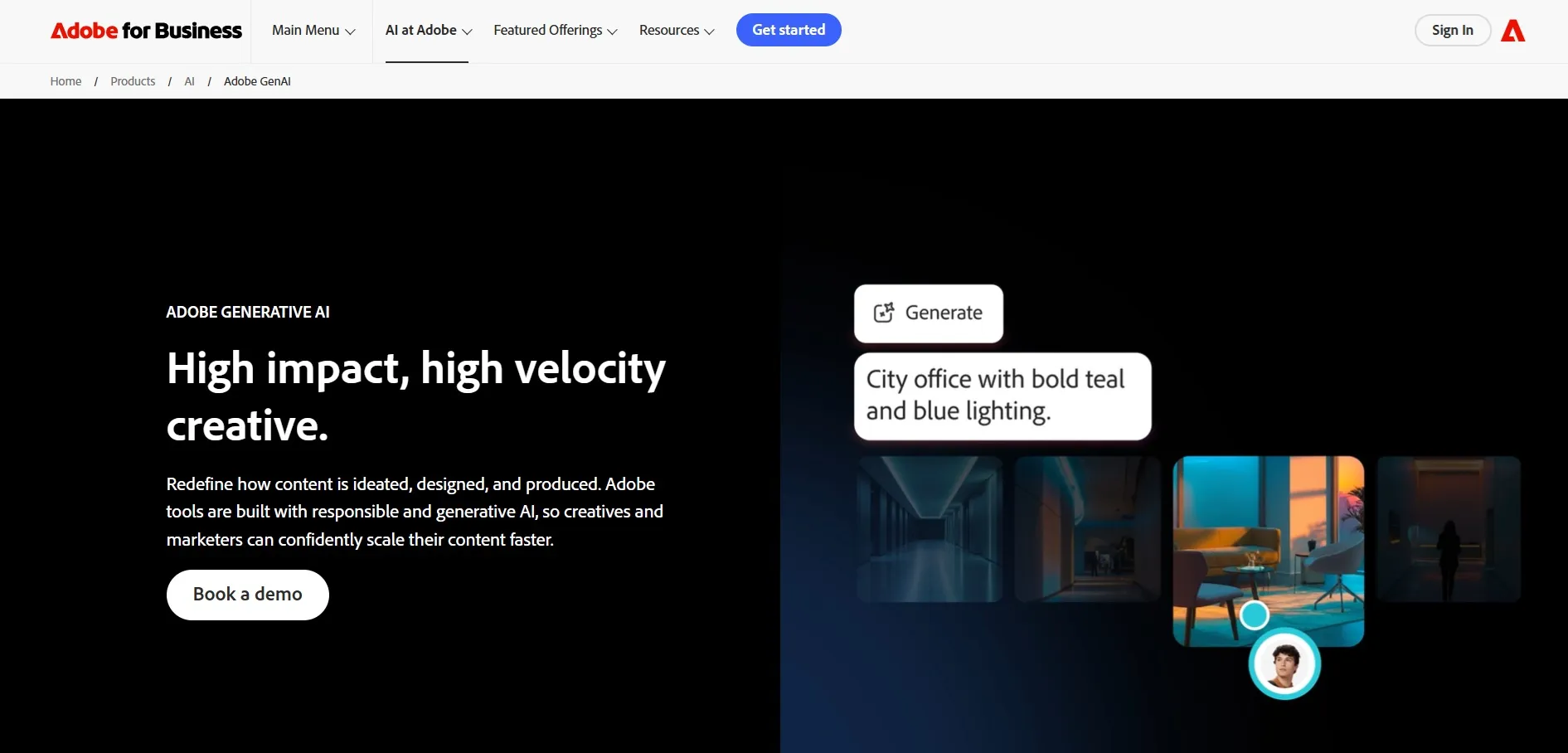
Website: https://business.adobe.com/ai/adobe-genai.html
Updated NAP: Adobe Inc., San Jose, CA, US
Best For: Creative and brand-consistent generative assets.
Adobe’s suite enables teams to produce on-brand content (text, visuals, and design variants) and extract insights from data, useful for larger enterprise creative pipelines.
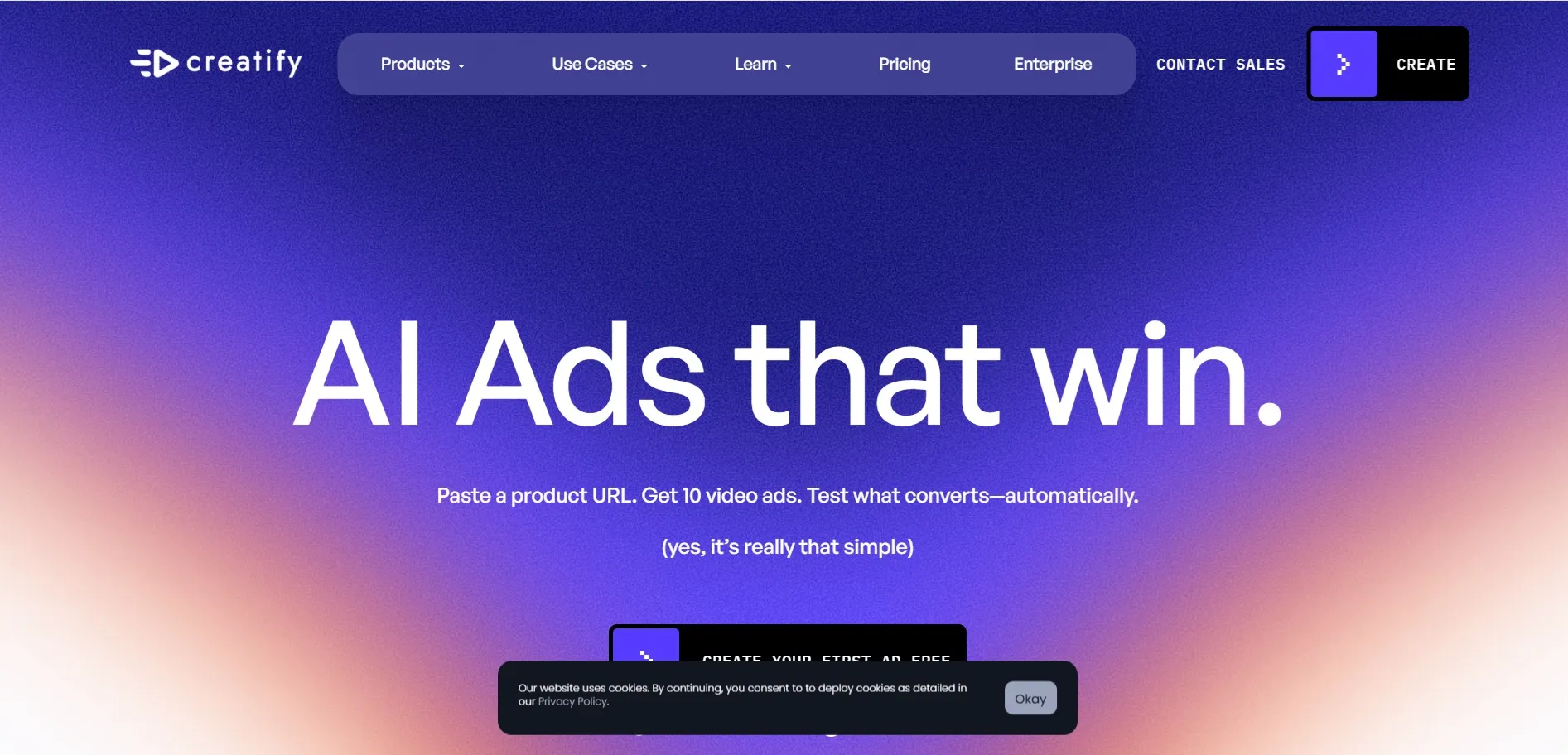
8. Creatify AI
Website: https://creatify.ai
Updated NAP: Creatify AI, US (headquarters info on official site)
Best For: AI-generated ad visuals and video creative.
Creatify specialises in transforming URLs and assets into engaging image and video ad variations that can be tested across paid channels.
9. Canva Magic Studio
Website: https://www.canva.com
Updated NAP: Canva Pty Ltd., Sydney, AU & San Francisco, US
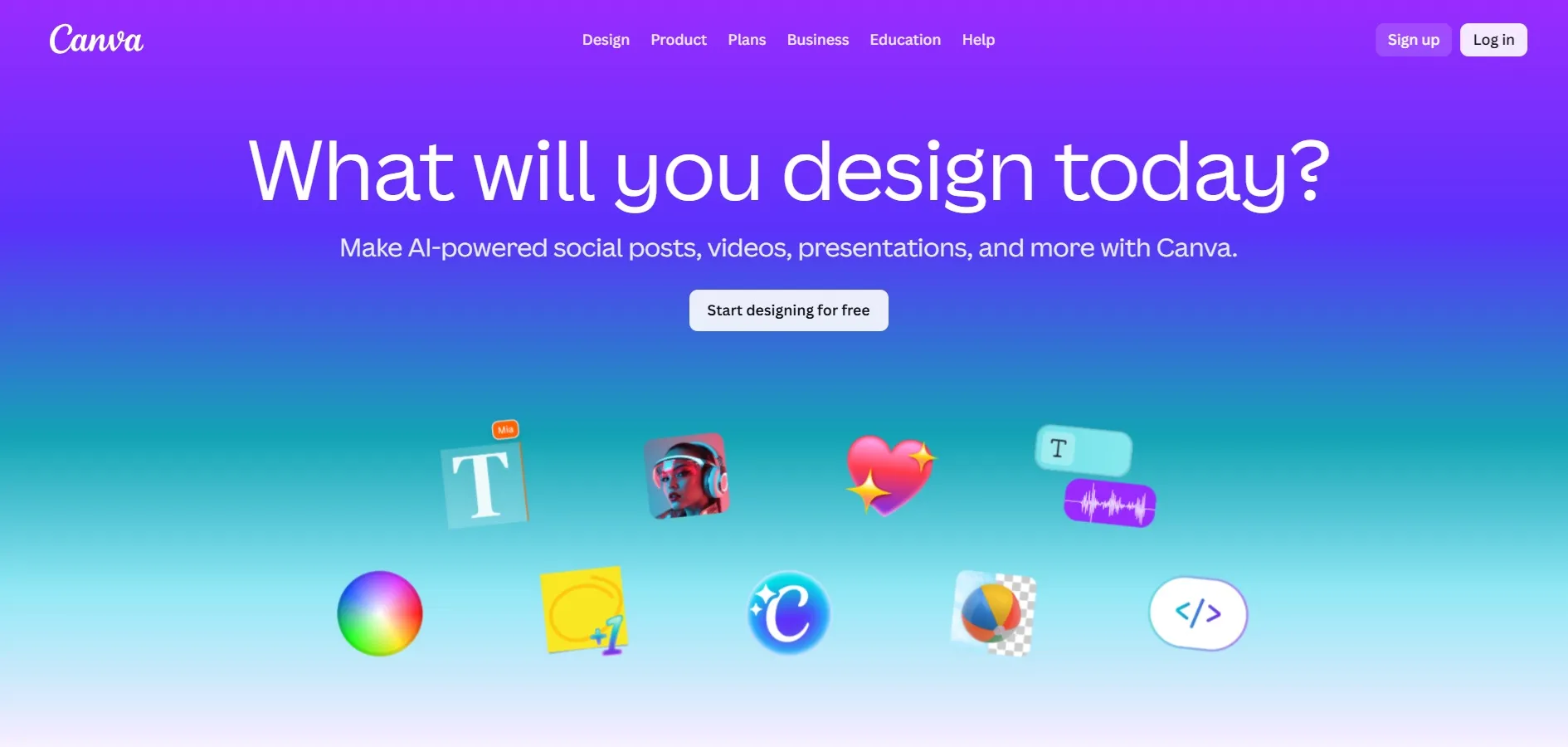
Best For: AI-driven graphic and video creation for marketing collateral.
Magic Studio simplifies creative asset production with tools like Magic Media (video from text), Magic Switch, and automated design suggestions, great for social and brand content.
10. Gumloop
Website: https://gumloop.com
Updated NAP: Gumloop, remote/US (check official site)
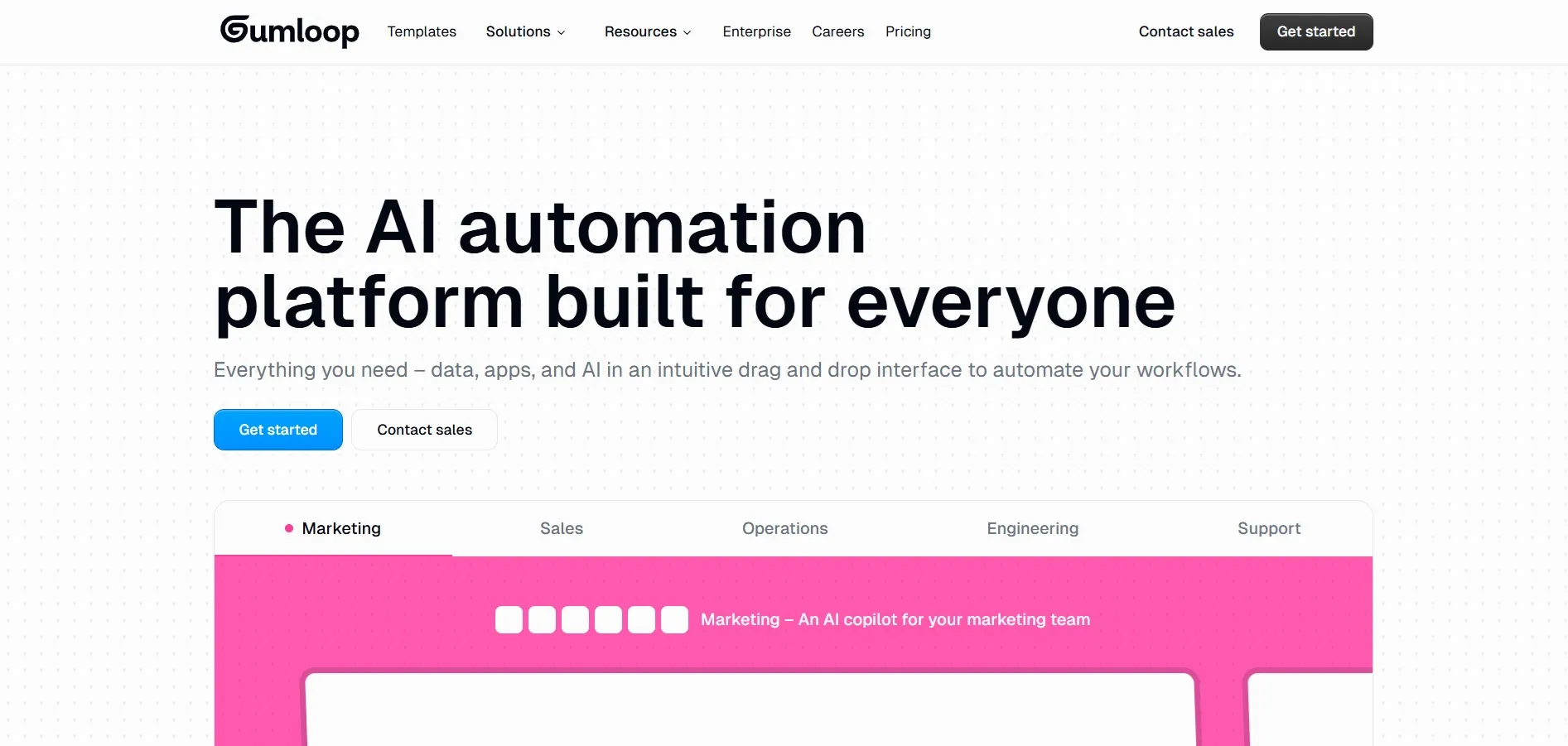
Best For: AI workflow automation and intelligence orchestration.
Gumloop pushes generative AI beyond creation into automation, allowing you to connect insights, competitor tracking, and data summaries into integrated workflows.
Here is a table for quick comparison of each tool:
| Tool | Best For | Pricing Tier | Ideal For |
| ChatGPT (OpenAI) | Core text generation, prompts, strategy ideation | Free – Paid (ChatGPT Plus / Enterprise) | All-around use; small to large teams |
| Jasper | Brand-aligned AI content creation | Paid (Mid) | Agencies & content teams |
| Semrush ContentShake AI | SEO-integrated content creation | Paid (Mid – Enterprise) | SEO-focused teams |
| MarketMuse | Content strategy & topic modelling | Paid (Mid – Enterprise) | Strategic planners & SEO teams |
| Clearscope | Content optimisation & grading | Paid (Mid – Enterprise) | SEO content optimisation |
| Brevo (Aura AI) | AI email & automation | Free – Paid (Low – Mid) | Email marketing teams |
| Adobe Generative AI (Sensei) | Visual & creative asset generation | Paid (Enterprise) | Large creative teams |
| Creatify AI | AI-generated ad visuals & video | Paid (Mid) | Performance & ad teams |
| Canva Magic Studio | AI graphic/video creation | Free – Paid (Low – Mid) | Small biz & social teams |
| Gumloop | Workflow automation & generative orchestration | Paid (Mid – Enterprise) | Teams needing automation integration |
Tip: These tools are most powerful when used together as part of a strategic stack, for example, AI content generation (ChatGPT, Jasper) paired with SEO optimisation (Semrush, Clearscope) and creative automation (Canva AI, Creatify) enhances both efficiency and performance.
Implementation Guide for Generative AI Marketing
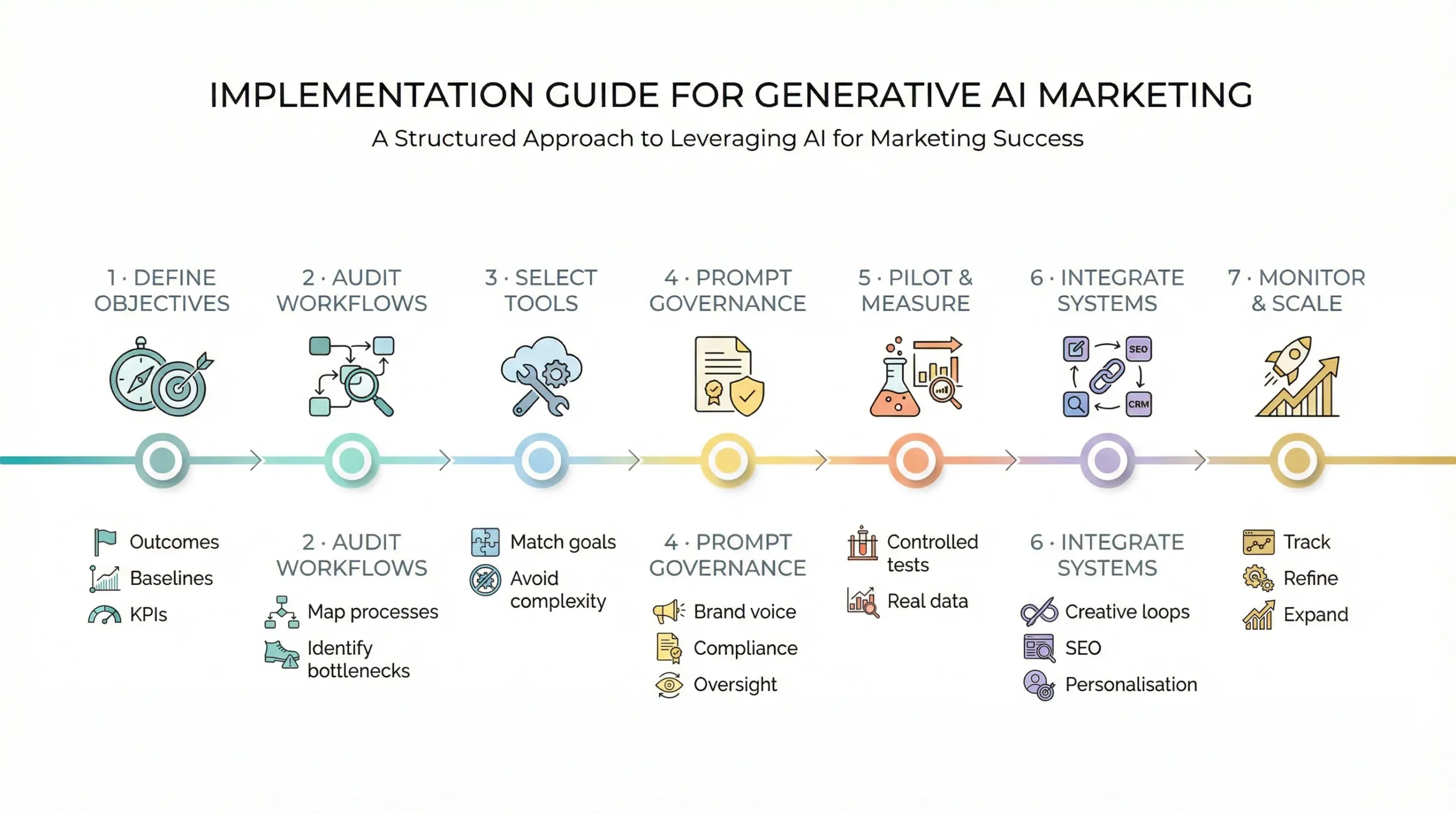
Successfully implementing generative AI marketing requires more than just subscribing to tools. It demands a structured framework that aligns AI capabilities with business objectives, operational workflows, and measurable performance indicators.
Below is a practical, step-by-step roadmap businesses can follow to move from experimentation to scalable integration.
Step 1: Define Clear Business Objectives
Start with outcomes, not tools. Determine whether your goal is to increase organic visibility, reduce paid acquisition costs, accelerate content production, improve conversion rates, or enhance personalisation.
Generative AI should solve a defined business problem. Without clarity on revenue targets, cost reduction goals, or engagement benchmarks, AI implementation risks becoming scattered and inefficient.
Action Tip: Establish baseline performance metrics before introducing AI to accurately measure improvements.
Step 2: Audit Existing Marketing Workflows
Before layering AI into your operations, map your current workflows. Identify repetitive, time-intensive tasks such as:
- Blog drafting and optimisation
- Ad variation testing
- Email segmentation
- Reporting and analytics summaries
- Customer support messaging
These areas often produce the highest return when automated or enhanced with generative AI. Focus on bottlenecks first.
Step 3: Select the Right Tools Strategically
Avoid adopting multiple tools simultaneously. Instead, match tools to objectives:
- Content scale → AI copy and SEO optimisation platforms
- Paid performance → AI creative generation and bidding tools
- CRM and retention → AI segmentation and predictive automation
Tool stacking should improve efficiency without increasing complexity. Integration compatibility with your CMS, CRM, and analytics systems is critical.
Step 4: Develop Prompt Frameworks & Governance
The quality of generative AI output depends heavily on prompt structure. Create internal frameworks that define:
- Brand voice guidelines
- Content tone and messaging parameters
- Data usage policies
- Compliance and legal checks
AI should operate within guardrails. Establish approval workflows that keep human oversight central, especially for customer-facing messaging.
Step 5: Pilot Small, Measure Fast
Instead of deploying AI across all channels at once, start with controlled pilot campaigns. For example:
- Generate multiple ad variations for a single campaign.
- Use AI to draft and optimise one content cluster.
- Automate segmentation in one email workflow
Measure improvements in conversion rates, engagement, time savings, and cost per acquisition. Use real data to justify expansion.
Step 6: Integrate AI Into Performance Marketing Systems
Once validated, integrate AI into core performance loops:
- Continuous ad creative testing
- Ongoing SEO optimisation cycles
- Predictive content planning
- Dynamic personalisation engines
The goal is to create a feedback loop in which AI continuously learns from campaign data to improve its outputs.
Step 7: Monitor, Refine & Scale
Generative AI marketing is not a one-time deployment. Performance must be monitored continuously. Track:
- Conversion rate uplift
- Content production efficiency
- Cost reduction in creative development
- Customer lifetime value improvements
As algorithms evolve and search environments shift toward AI-driven results, optimisation must remain ongoing.
Risks & Pitfalls of Generative AI Marketing
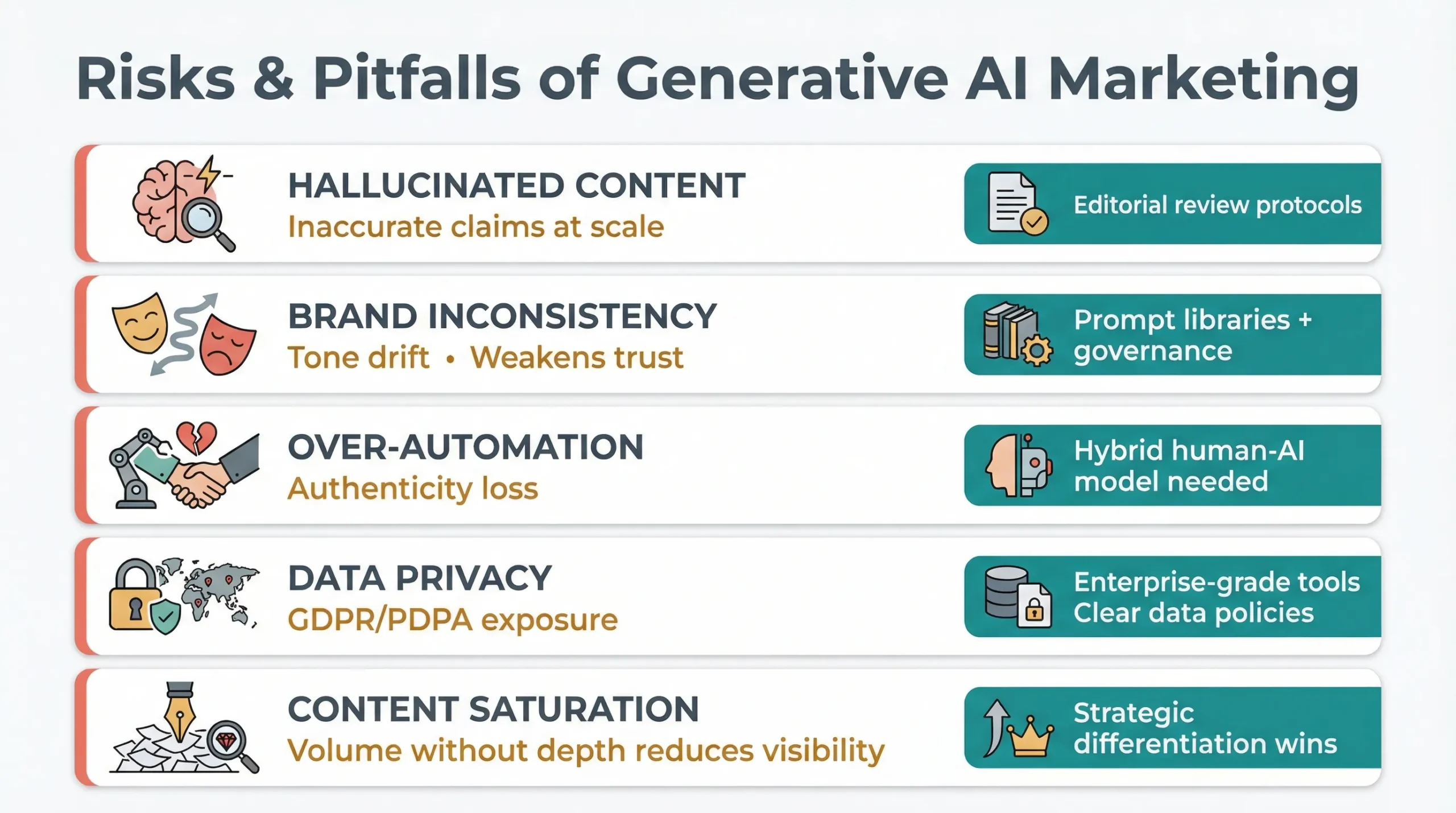
While generative AI marketing offers powerful advantages, it is not without risk. Businesses that implement AI without governance, quality control, or strategic alignment may experience performance setbacks, compliance issues, or brand damage. Understanding these pitfalls allows organisations to adopt AI responsibly and sustainably.
- Inaccurate or “Hallucinated” Content: Generative AI models can produce content that appears authoritative but contains factual inaccuracies. In marketing, this can lead to misleading claims, incorrect data references, or outdated information being published at scale. For brands operating in regulated industries such as finance, healthcare, or legal services, this risk is particularly significant. Without human verification, AI-generated content may expose the organisation to reputational or legal consequences. Implement strict editorial review workflows and fact-checking protocols before publication.
- Brand Voice Inconsistency: AI systems generate outputs based on prompts and training data, rather than on an intrinsic understanding of the brand. Without clearly defined voice guidelines and structured prompts, content may vary in tone, positioning, or messaging. Over time, inconsistent messaging weakens brand identity and reduces trust. Customers notice subtle shifts in tone, especially across multiple channels. Develop internal prompt libraries and brand governance documentation to standardise outputs.
- Over-Automation & Loss of Authenticity: Audiences increasingly value authenticity and transparency. If marketing communications feel overly templated or impersonal, engagement can decline. AI-generated messaging, when not refined by human oversight, may lack emotional nuance or contextual sensitivity. Over-reliance on automation can dilute creative originality. Maintain a hybrid model in which AI accelerates production while humans guide storytelling and strategic messaging.
- Data Privacy & Compliance Risks: Generative AI tools often require data inputs to personalise outputs. Mishandling customer information or feeding sensitive data into third-party systems can create compliance risks under regulations such as GDPR or PDPA. Additionally, some AI tools may store prompts and outputs, raising concerns around intellectual property and confidentiality. Establish clear data handling policies and use enterprise-grade tools with transparent privacy standards.
- Content Saturation & Competitive Noise: As more brands adopt generative AI marketing, content velocity increases across industries. The result is higher competition for attention and diminishing differentiation if AI outputs are not strategically enhanced. Publishing high volumes of similar AI-generated content without strategic depth may reduce organic visibility rather than improve it. Focus on strategic differentiation, unique insights, and entity-driven optimisation rather than pure volume.
Generative AI marketing is powerful, but unmanaged implementation amplifies risks as quickly as it amplifies productivity. The difference between strategic advantage and operational vulnerability lies in governance, measurement, and disciplined execution.
When Businesses Should Invest in Generative AI Marketing
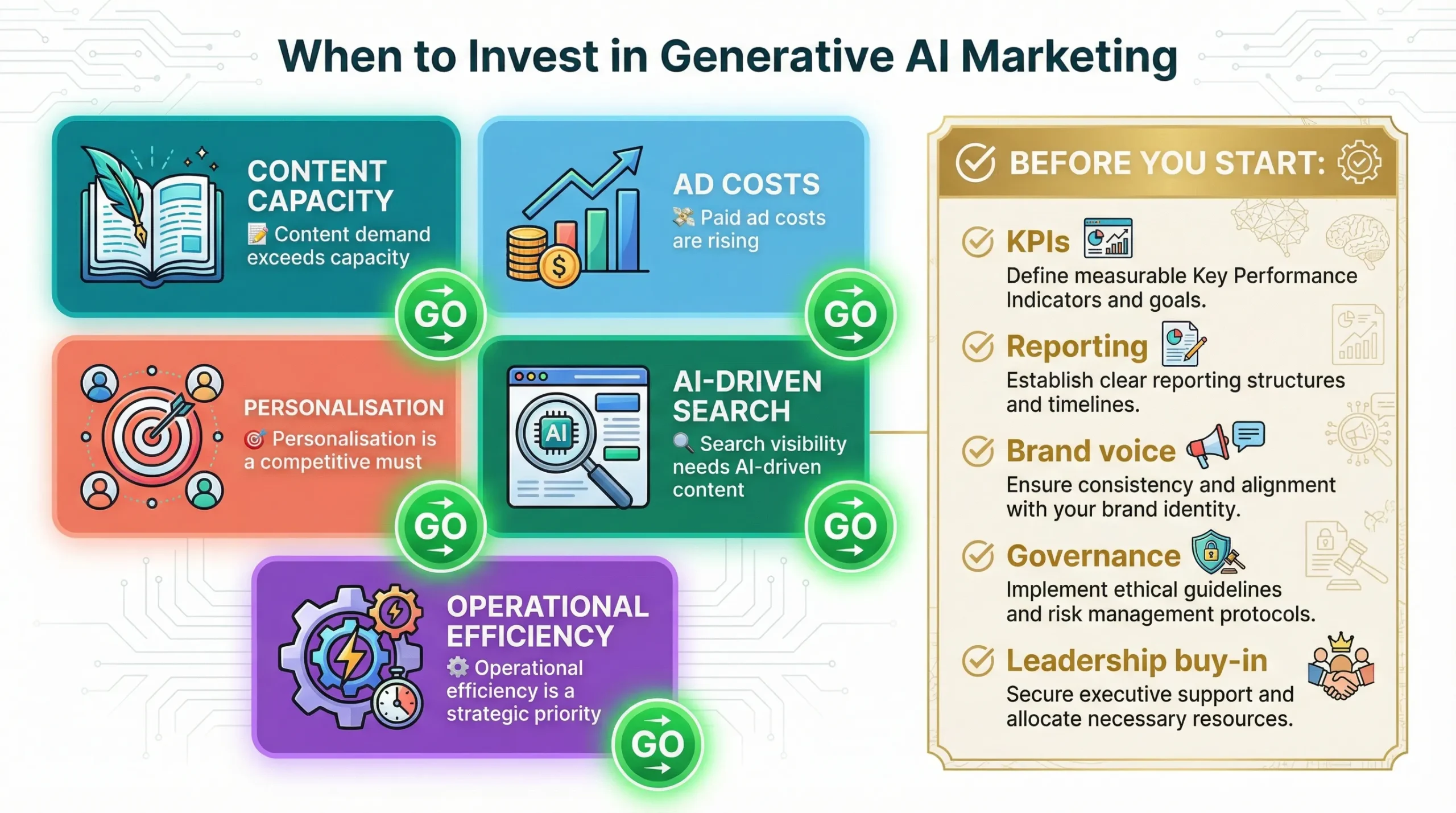
Not every organisation needs to implement generative AI marketing immediately. The decision should be driven by operational readiness, growth objectives, and measurable bottlenecks — not hype. Below are clear signals that indicate the right time to invest.
- When Content Demand Exceeds Internal Capacity: If your team struggles to keep up with blog production, landing page optimisation, ad variations, or email campaigns, generative AI can relieve production pressure. Instead of hiring additional headcount immediately, AI enables faster drafting, testing, and iteration. This is especially relevant for businesses operating in competitive industries where content velocity influences visibility and performance.
- When Paid Advertising Costs Are Rising: Escalating cost-per-click and acquisition costs often signal the need for better optimisation rather than higher budgets. Generative AI tools can rapidly generate ad variations, test messaging angles, and refine audience targeting. If performance marketing efficiency is declining, AI-driven testing frameworks can restore margin control.
- When Personalisation Becomes a Competitive Requirement: Modern consumers expect tailored messaging. Static campaigns are no longer sufficient. Generative AI enables dynamic email subject lines, product recommendations, behavioural segmentation, and predictive retention strategies. If customer engagement is plateauing, AI-powered personalisation can reintroduce relevance at scale.
- When Search Visibility Depends on AI-Driven Results: With AI-powered search interfaces and conversational engines shaping discoverability, businesses must adapt their content structures accordingly. Generative AI assists in semantic optimisation, entity mapping, and intent-based content clustering. Organisations seeking structured visibility improvements, particularly in AI-enhanced search environments, often benefit from working alongside a specialised geo agency to ensure alignment with generative engine optimisation standards.
- When Operational Efficiency Is a Strategic Priority: If your marketing team spends excessive time on repetitive workflows such as reporting, data summarisation, campaign adjustments, or content drafting, generative AI can significantly reduce manual overhead. Automation at this level allows teams to shift focus from execution-heavy tasks to strategic growth planning.
Before committing resources, assess whether your organisation has:
- Clearly defined marketing KPIs
- Structured reporting systems
- Brand voice guidelines
- Governance policies for AI usage
- Leadership alignment on ROI expectations
Generative AI marketing produces the strongest results when integrated into structured performance systems. Businesses that combine strategic clarity with disciplined execution are best positioned to realise long-term competitive advantage.
Turn Generative AI Marketing Into Measurable Growth
Generative AI marketing is a foundational shift in how brands create, optimise, and scale growth across digital channels. In 2026, organisations that integrate AI thoughtfully into their strategy, operations, and measurement systems gain speed, efficiency, and deeper customer relevance.
But AI is not a substitute for strategic direction. Its value is unlocked only when paired with clear objectives, disciplined governance, and human oversight. The brands that treat AI as an augmentation of their capability, rather than a replacement, are the ones driving measurable outcomes.
If you’re ready to translate generative AI principles into real-world performance, explore how MediaOne’s digital marketing services combine expert strategy, cutting-edge tools, and real execution frameworks.
From AI-infused search visibility to performance-driven campaign optimisation, MediaOne helps brands turn innovation into measurable growth, not just automation. Contact us today!
Frequently Asked Questions
How much budget should a company allocate to generative AI marketing tools?
There is no fixed benchmark, as investment depends on company size and campaign complexity. Many SMEs start with S$100–S$500 per month for core tools, while larger teams may allocate S$2,000–S$10,000+ monthly for integrated enterprise solutions.
Do generative AI marketing tools require technical expertise to operate?
Most modern platforms are user-friendly and designed for marketers rather than engineers. However, achieving advanced results often requires understanding prompt engineering, data interpretation, and performance optimisation principles.
Can generative AI marketing improve ROI immediately?

In most cases, improvements are incremental rather than instant. Early gains often appear in production efficiency and testing speed, while sustained ROI improvements emerge after structured optimisation cycles.
Is generative AI marketing suitable for regulated industries?
Yes, but with strict oversight. Industries such as finance, healthcare, and legal services must implement rigorous review processes to ensure compliance, factual accuracy, and regulatory alignment.
How do businesses measure the success of generative AI marketing?
Success should be measured against clear KPIs such as conversion rate uplift, reduced content production time, improved cost per acquisition, increased engagement rates, and enhanced search visibility metrics. AI performance should always be benchmarked against pre-implementation baselines.