
You’ve probably asked your team at least once this year. “What’s the ROI of content marketing services on our bottom line?” If that question feels harder to answer than expected, you’re not alone. Content saturation is now widespread, while AI-assisted search is increasingly reducing direct website clicks.
AI-assisted search means buyers find answers without ever clicking your homepage. Buying cycles stretch as prospects educate themselves before making a purchase. Simply counting likes isn’t enough anymore.
In 2026, you need to connect content to revenue, not just traffic. That’s the return your CFO cares about. This guide will show you how to measure ROI with clarity, align attribution with real outcomes, and focus on metrics that signal business impact rather than vanity metrics.
Key Takeaways
- Content ROI in 2026 must be measured by contribution to revenue, lead quality, buyer progression, and cost efficiency rather than traffic or engagement alone.
- Traditional metrics like pageviews and likes lack business context unless they are connected to intent, funnel stage, and downstream outcomes.
- Accurate ROI measurement requires recognising assisted conversions and treating content as a long-term asset that compounds over time.
- The most reliable indicators of performance combine revenue-linked metrics, lead-quality signals, meaningful engagement behaviour, and cost-efficiency comparisons.
- Working with a specialised agency helps align strategy, execution, attribution, and reporting so content becomes a measurable and defensible growth driver.
What ROI Means for Content Marketing Today
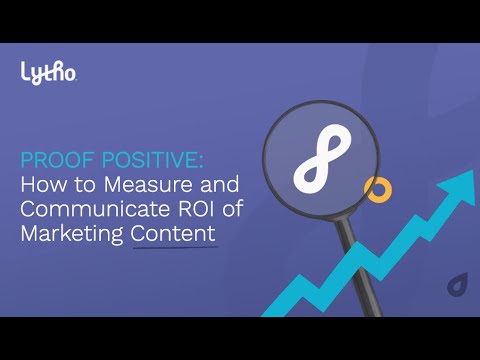
When you talk about ROI in its most traditional sense, the formula is straightforward. You take the revenue generated, subtract the cost, and divide that number by the cost. This model works well for channels designed to produce immediate outcomes, such as paid search or social advertising, where the path from click to conversion is short and measurable.
Content marketing does not operate in the same way, and that distinction matters if you want to know how to measure the ROI of content marketing services accurately. Unlike a paid ad that stops performing the moment you turn off the budget, content continues to work long after it is published:
- A well-optimised article can attract search traffic for months or even years.
- A guide shared through email can resurface at multiple points in the buying journey.
- Educational content can influence decisions even when it is not the final touchpoint before a sale.
Content should be treated as a long-term business asset rather than a short-term campaign expense. This shift in mindset changes how ROI should be measured. You are not only looking at direct revenue generated from a single page or post. You also need to account for assisted conversions.
How Content Generates Value Beyond Direct Revenue
Content is often judged by what it converts to today. That view misses most of its real impact. Strong content works across the entire buyer journey, shaping trust, reducing friction, and influencing decisions long before a sale is tracked.
Below are the key ways content creates value beyond direct revenue, explained clearly and practically:
- Reduces sales friction before first contact: High-quality content answers common objections and questions early. When prospects reach your sales team already informed, conversations move faster and close with less resistance because expectations are already set.
- Builds trust at scale: Consistent, well-researched content demonstrates expertise without requiring one-to-one interaction. Over time, this positions your brand as a reliable authority rather than just another service provider.
- Improves brand recall and consideration: Content creates familiarity. Even when readers do not convert immediately, they remember your perspective, making your brand easier to recall when they are ready to make a decision.
- Strengthens performance across other marketing channels: Content improves the effectiveness of email campaigns, paid ads, social media, and sales outreach by giving each channel something valuable to amplify, rather than relying solely on promotional messaging.
- Creates compounding search value: Well-structured content builds topical authority over time. Older pages continue to attract traffic while new pages rank faster because they sit within an established, credible ecosystem.
- Shapes market perception and positioning: Content allows you to define the problem and frame the solution on your terms. This influences how prospects compare you to competitors and reduces price-driven decision-making.
- Supports long-term business flexibility: A strong content foundation makes it easier to launch new services, enter new markets, support partnerships, and adapt to platform or algorithm changes without having to start from scratch.
- Delivers measurable value beyond last-click revenue: Indicators such as assisted conversions, shorter sales cycles, increased branded search, and higher close rates reveal how content contributes to growth even when it is not the final touchpoint.
Content is not just a traffic or lead-generation tool. It is a strategic infrastructure that compounds over time. When you invest in content with this broader lens, its value becomes more durable, more defensible, and far more impactful than direct revenue metrics alone suggest.
The Limits of Old Content Marketing Metrics

You’ve likely seen dashboards full of pageviews, impressions, bounce rates, time on page and likes. These are important signals, but they don’t map directly to business outcomes.
- Pageviews and impressions show visibility, not value. A viral article can get millions of views without generating a single sale.
- Social likes and shares are easy to report. But they don’t prove that prospects moved closer to purchase or chose your brand over a competitor.
- Bounce rate and time on page can mislead. A short time spent on the page might mean the visitor found what they needed quickly, or it might mean they lost interest.
The common issue with legacy content metrics is not that they are wrong, but that they are incomplete. They describe what happened at the surface level without explaining why it mattered to the business. When used in isolation, they encourage teams to chase volume and attention rather than relevance, progress, and revenue impact.
To understand real performance, these metrics must be connected to intent, funnel stage, and outcomes further down the line. Without that connection, old content metrics can distract more than they inform, especially when stakeholders are looking for clear answers about growth, efficiency, and return on investment.
Content Marketing Metrics that Drive ROI
Metrics only matter when they help you make better decisions. If a number does not tell you where to invest more, what to fix, or what to stop doing, it is noise. In 2026, content performance is no longer evaluated solely on visibility. It is evaluated on contribution. Specifically, contribution to revenue, lead quality, buyer progression, and cost efficiency.
The goal is not to track everything. The goal is to track the metrics that clearly connect content activity to business outcomes. Here’s what you should be tracking in content marketing:
Revenue-Linked Metrics

Revenue-linked metrics answer one critical question. Did your content help generate money, even if it was not the final touchpoint before purchase?
Most content does not close deals on its own. It introduces the problem, shapes the solution, and builds trust long before a sales conversation happens. That influence needs to be measured properly.
Key revenue-linked metrics to track include:
- Assisted conversions, which show when content played a role in a conversion, even if it was not the last interaction. This helps you understand which articles, guides, or resources consistently appear in successful buyer journeys.
- Revenueis influenced by content touchpoints, typically tracked through CRM attribution. This connects content consumption to actual deal value rather than surface-level engagement.
- Average deal size for content-engaged leads, compared to leads that did not interact with content. This metric helps you assess whether content attracts more informed and higher-value buyers.
When you look at these metrics together, you start to see content as part of a revenue system rather than a publishing exercise.
Lead Quality Metrics

High lead volume means little if sales teams cannot convert them. Lead quality metrics focus on whether your content attracts the right people and prepares them for meaningful conversations.
Instead of asking how many leads content generates, you should ask how good those leads are. The most useful lead quality metrics include:
- Marketing qualified leads generated from content, especially from gated assets such as guides, reports, or webinars. These indicate intent, not just curiosity.
- Conversion rate from content interactions to leads, which shows how effectively your content turns attention into action.
- Sales acceptance rate for content-generated leads, which measures how often sales teams consider those leads worth pursuing.
If your content generates fewer leads but a higher sales acceptance rate, that is often a stronger ROI signal than high volume with low conversion.
Engagement Signals With Business Meaning

Not all engagement is equal. In 2026, engagement metrics only matter when they indicate progress toward a buying decision.
Surface engagement, such as clicks or time on page, can be misleading when viewed in isolation. Behavioural engagement tells a much clearer story. Focus on engagement signals that demonstrate intent and momentum:
- Scroll depth and content completion rates, which show whether readers actually consume your content rather than skim and leave.
- Return visitors to strategic content pages, particularly comparison guides, solution explainers, or industry insights. Repeat visits often signal active evaluation.
- Internal link click-through rates to commercial pages, such as service pages or contact forms. This shows whether content successfully moves readers closer to conversion.
These metrics help you identify which content assets function as bridges between education and purchase.
Cost Efficiency Metrics

ROI is incomplete without cost context. Even high-performing content can underperform financially if production and distribution costs are not controlled. Cost-efficiency metrics help you compare content performance with other marketing channels and justify budget allocation.
The most relevant efficiency metrics include:
- Cost per lead from content, calculated by dividing total content investment by the number of qualified leads generated.
- Cost per conversion compared to paid channels, which highlights where content delivers better long-term value.
- Content production costs versus lifetime value are influenced by looking beyond first-touch revenue to consider the downstream impact.
These metrics are especially important when content is positioned as a scalable alternative to rising paid media costs
Multi-Touch Attribution Models for Content Marketing
Content rarely works in a straight line. A buyer might read a guide today, see a comparison page next week, open an email a month later, and convert only then. This is why multi-touch attribution matters. It helps you understand how content contributes across the full journey, not just at the final click.
Below are the most common attribution models used in content marketing, what each one shows, and where it falls short:
- Last-click attribution: This model assigns 100 percent of the credit to the final touchpoint before conversion. It is simple and widely used, especially in basic analytics setups, but it undervalues content that educates or builds trust earlier in the journey. Blog posts, guides, and thought leadership often look ineffective under this model, even when they played a critical role.
- First-click attribution: First-click attribution gives full credit to the first interaction that introduced the prospect to your brand. This is useful for understanding which content drives initial awareness, such as SEO articles or social posts. However, it ignores everything that happens after that first touch, including the content that actually convinces someone to convert.
- Linear attribution: Linear attribution spreads credit evenly across all touchpoints in the buyer journey. If a prospect interacts with five pieces of content, each one receives equal weight. This model is more balanced and better reflects how content works over time, but it assumes all interactions are equally influential, which is rarely true in practice.
- Data-driven attribution: Data-driven models use historical data and machine learning to assign credit to each touchpoint based on how much it actually influenced conversions. This approach adapts to real user behaviour and provides the most accurate picture of content impact, but it requires sufficient data volume and more advanced tools to work properly.
In practice, these models are implemented through platforms such as HubSpot, Google Analytics 4, or CRM-based attribution systems that connect content engagement with pipeline and revenue. Each tool has different strengths, and the right choice depends on your sales cycle length, deal size, and data maturity.
The key is not choosing a single perfect model, but understanding what each model reveals and what it hides. When you look at content performance through multiple attribution lenses, you stop asking whether content converts and start seeing how it supports conversion. That shift leads to better decisions, smarter investments, and more realistic expectations of what content is designed to do.
Common Content Marketing ROI Measurement Mistakes to Avoid

When ROI reporting falls apart, it is rarely because content “does not work.” More often, the issue lies in how performance is measured, interpreted, and communicated. These mistakes quietly erode confidence in content marketing and make it harder to defend budgets, even when the strategy itself is sound.
Below are the most common errors to watch for, along with context on why they undermine decision-making:
Measuring ROI Too Early in the Content Lifecycle
Content needs time to compound. Organic visibility, audience trust, and assisted conversions do not materialise the moment an article goes live. Measuring ROI weeks after publication often leads to false negatives, where content is labelled ineffective before it has had a fair chance to perform.
In most cases, meaningful trends only emerge once content has accumulated enough impressions, engagement signals, and downstream interactions to reveal its true impact.
Ignoring the Assisted Contribution of Content
Content rarely closes the sale on its own. More often, it introduces the brand, answers early questions, or supports evaluation long before a prospect converts. When measurement focuses only on last-click conversions, these earlier touchpoints disappear from the report, even though they played a critical role in influencing the decision.
This skews ROI calculations and systematically undervalues content that supports longer buying journeys.
Treating All Content as if it Serves the Same Purpose
Not every piece of content is designed to drive conversions, and treating them as if they were would lead to misleading conclusions. Awareness content, consideration assets, and conversion-supporting pages each serve different roles within the funnel.
When all content is judged by the same KPIs, high-performing assets may appear weak simply because they were never intended to generate direct leads.
Reporting Metrics that Impress But Do Not Inform
High traffic numbers, engagement spikes, or social reach can look good in a slide deck, but they offer little value if they do not guide action. Metrics should help you decide what to double down on, what to optimise, and what to stop producing.
When reporting prioritises surface-level success over decision-driving insight, stakeholders may feel reassured in the short term but remain unconvinced when budgets come under scrutiny.
Avoiding these mistakes does not require more tools or more data. It requires clearer expectations, better alignment between content goals and measurement, and a commitment to reporting what actually moves the business forward.
How a Content Marketing Agency Maximises ROI in 2026

Measuring performance is only half the equation. Execution is where most ROI is won or lost. Working with an experienced content marketing agency ensures every piece of content is created, distributed, and measured with clear commercial impact.
A strong agency does more than produce content. It builds a system that aligns strategy, production, distribution, and measurement so each asset has a defined role in driving results.
Here’s how:
- Define Success Upfront
- Set revenue-aligned goals for content campaigns.
- Choose the right attribution model to track contributions accurately.
- Identify which metrics matter at each stage of the buyer funnel.
- Plan Content Strategically
- Select topics based on search demand, buyer readiness, and market insights, not guesswork or fleeting trends.
- Map content to different stages of the customer journey to maximise influence on purchasing decisions.
- Measure Holistically
- Integrate analytics, CRM data, and sales outcomes to track which assets influence deals.
- Identify formats and topics that consistently attract qualified leads and drive revenue.
- Enable data-driven budget allocation to focus on content that delivers measurable ROI.
- Use Local Market Expertise
- Apply insights from the Singapore market to optimise targeting and messaging.
- Understand competitive dynamics to position content for maximum impact.
Working with MediaOne ensures your content marketing efforts are structured, measurable, and aligned with real business outcomes. You are not relying on fragmented internal assumptions. Every campaign, article, and asset is part of a system designed to generate results.
Ready to maximise your content marketing ROI? Contact us today to see how MediaOne can help your business grow.
Frequently Asked Questions
How soon can I start measuring the ROI of content marketing services?
ROI usually takes 3–6 months for content to gain traction, depending on your industry, sales cycle, and channels. Early signals, such as engagement and lead quality, can be monitored sooner to adjust strategy.
Do social likes or shares impact content ROI?
They primarily indicate awareness and reach. Likes and shares alone rarely drive conversions, but they can signal which topics resonate and help guide future content decisions.
How can an agency help improve content ROI?
Agencies align strategy, production, distribution, and measurement. They define revenue-aligned goals, implement tracking and attribution, and optimise content to attract qualified leads and influence conversions across the funnel.
What’s the difference between content ROI and traditional marketing ROI?
Traditional ROI often measures the immediate revenue from a campaign, such as a paid ad campaign. Content ROI considers long-term value, including brand awareness, lead nurturing, assisted conversions, and influence on higher-value deals.