

| AI Summary
Content creation turns a question your audience has into written, visual or audio material that helps them take a next step. A business can start with one question, choose a format that answers it, then check whether the piece achieved its goal. |
Content creation begins with two decisions: what your business wants to achieve and what your audience needs to know. Together, those answers guide what you make, where you publish it and how you judge the result.
For example, customers who struggle to choose a product size may need a size guide. Once they’ve bought the product, a short setup video may answer their next question. Starting with the question helps each piece earn its place.
Key Takeaways
- Sales calls, support tickets and site searches can reveal questions your team already knows how to answer.
- An existing page may need a better example, an updated answer or more visibility before you create something new.
- A production brief gives the writer, reviewer and publisher one reference for the promise, evidence and next step.
- Campaign analytics show where visits and actions came from. Sales records help show which enquiries met your criteria.
- A review date gives your team a point to decide whether to keep, update, share again or retire each piece.
What Does Content Creation Include?
Content creation covers researching a topic, choosing a format, making the piece and preparing it for publication. Content marketing is the wider plan for how that work serves your audience and business over time. A product demonstration is one piece of content. Choosing to place it on a product page, in an email and in a sales reply is part of the marketing plan.
That distinction helps when results fall short. If few buyers see a strong video, check where you shared it. If a guide brings in people you cannot serve, check what its title promises and which questions it answers. Those checks help you decide what to improve before you commission another piece.
One way to assess a topic is to ask whether someone who comes straight to your website would still benefit from it. Google includes this question in its people-first content criteria. A buyer comparing suppliers, for example, could use a sample specification to check what each offers. A checklist could then help that buyer prepare for a sales call.
How Do You Plan Content Around Business Goals and Audience Needs?
A content plan starts where a business goal meets an audience question. At MediaOne, we start with what customers need to know and what the business wants the content to achieve. If you want more qualified enquiries, find a question buyers ask before contacting you. If you want fewer repeat support requests, look at a task customers struggle with after purchase.
Choose an outcome you can observe
Give each piece one main outcome so your team can assess it later. A buyer guide might aim to bring in qualified quote requests. A setup tutorial might aim to reduce repeat setup questions. An awareness piece may simply introduce a product category and lead readers to a related page.
That outcome points to the right next step for the reader. Someone checking whether a product meets a requirement may need a specification sheet before a call. Someone trying to assemble it may need a close-up of two parts connecting. Let the call to action follow the answer you’ve just given.
Find the question in the audience’s own words
Customer conversations reveal details that a broad topic can hide. When a buyer asks, “How long does it take?”, they may mean delivery, installation or the time until staff can use the product. Ask your sales or support team which meaning comes up most often. Their answer tells you what to explain first.
Search terms can add another view of the same question. Specific phrases, often called long-tail keywords, show the details people include when they look for an answer. Someone searching by replacement part number needs to know whether it works with their equipment. Someone comparing two models’ running costs needs the same cost categories for both.
Check what you already have
Before assigning a new piece, review what you’ve published on the topic. Note each page’s audience, purpose, last review date and strongest performance signal. A guide that still brings in enquiries may only need a new example or updated product option. If another audience faces a different decision, a companion piece may help them more.
Your editorial calendar can turn that review into assignments. Give each row an audience question, owner, reviewer, publication date, main channel and review date. A shared spreadsheet may be enough for a small team. If approvals get buried in email, content marketing platforms can keep drafts, feedback and sign-offs together.
Which Content Format Should You Choose?
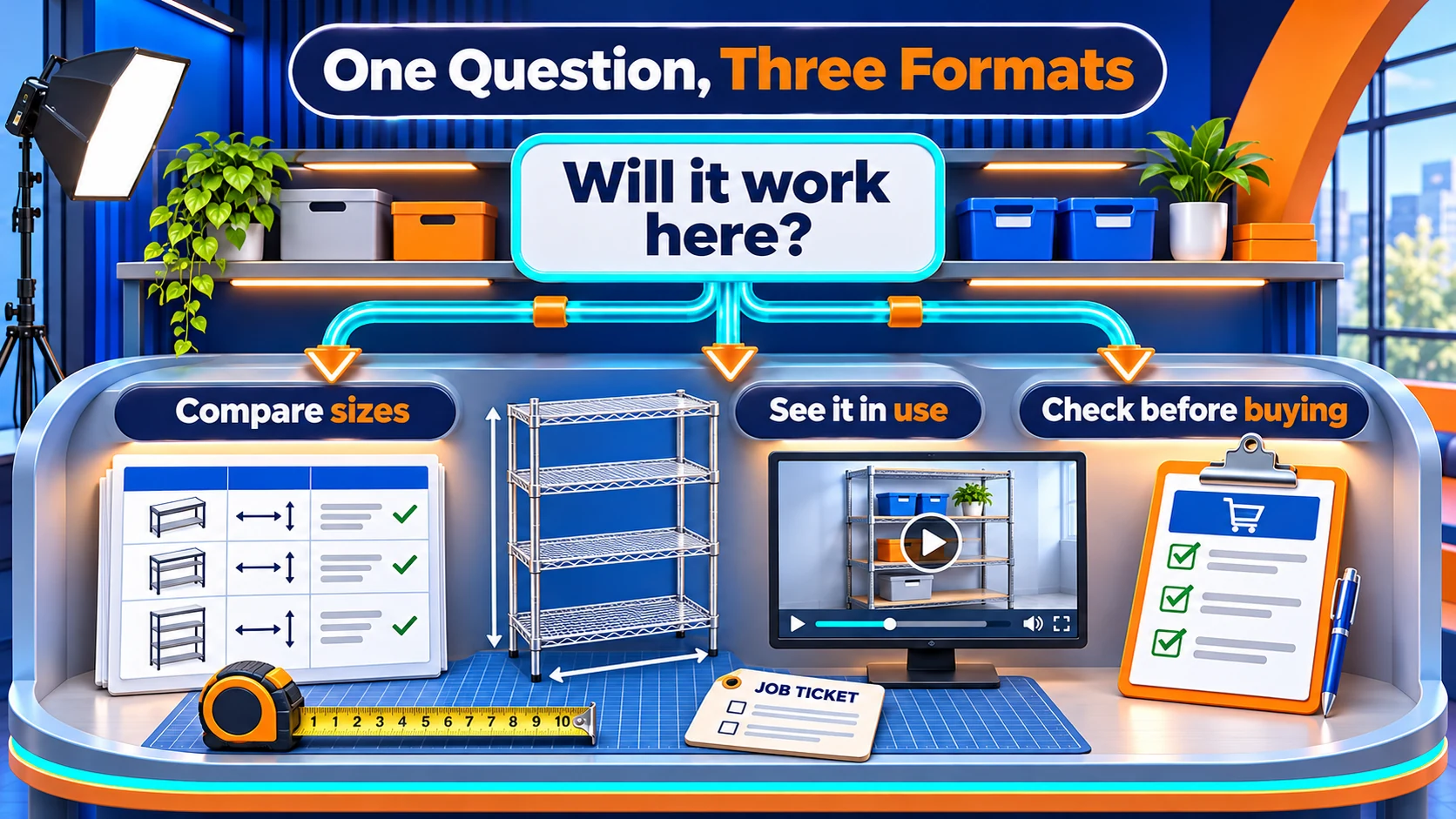
Choose a format that helps readers do what comes next. An article can explain the choices behind a purchase, while a video can show how a part moves. When buyers need to compare products, a table puts the same criteria side by side. Start with the reader’s task, then decide how much detail the piece needs.
| Audience need | Format to consider | What makes it work |
| Understand a problem | Article or illustrated explainer | An example that helps readers recognise the problem |
| Complete a task | Checklist or step-by-step video | Steps in the order people carry them out |
| Compare options | Table or buyer guide | The same criteria in the same order for each option |
| See what a product does | Short demonstration | The product in use, with the result visible |
| Judge whether a service suits them | Case study or sample deliverable | The starting problem, the work involved and the limits of the example |
Your team’s ability to maintain the piece also affects the choice:
- If software menus change often, keep detailed steps in an editable article and film a short clip for the hardest step. You can then update the written instructions when a menu changes.
- If shoppers need to identify replacement parts, start with a dimension guide and labelled photos. They can check their measurements before ordering.
- If a service team answers the same buyer questions each week, create a guide it can share after sales calls. One guide can answer those questions in a consistent way.
The same question may therefore lead to different formats. Once you know what readers need to do, choose the version your team can keep accurate.
How Do You Turn a Brief Into a Finished Piece?
A production brief carries your plan into the work of writing, design or filming. It tells the creator who the piece serves, what it promises, which evidence supports it and what readers can do next. It also names the person who gives final approval, so the team knows where decisions rest.
Give each assignment four decisions
Set the goal, audience, format and distribution before production starts. These choices give the team a basis for reviewing the draft. Distribution belongs in the brief because a search guide, a sales follow-up and a social demonstration serve people in different places.
| Brief field | Worked example for a commercial shelving supplier |
| Goal | Generate enquiries from buyers planning a storage upgrade |
| Audience | Operations managers who need to check which shelving their space can hold before asking for a quote |
| Format | A measuring guide with a sample floor plan and a printable checklist |
| Distribution | Publish on the website, link from the enquiry page and share in sales follow-ups |
The shelving supplier could also provide product drawings, an approved measurement example, a product specialist’s name and a review date. Those details tell the writer which facts the supplier can confirm. Because sales staff will share the guide, the writer can make its measuring steps easy to refer to during a follow-up.
Write for the reader’s next decision
Answer the main question early, then show readers what to do with the answer. The shelving guide could begin with the measurements buyers need and mark each one on a sample floor plan. If buyers can request a quote afterwards, the enquiry form copy can say which measurements to send and what the supplier will do with them.
When search is the main way people will find the guide, SEO content planning starts with the question they bring to the page. Someone searching for shelving dimensions needs the measuring steps first. Product background and exceptions can follow once the reader knows what to measure.
Google applies the same search fundamentals to its generative AI features. For this guide, a labelled floor plan and an example checked by a product specialist would also help readers apply the advice to their own space.
Review facts, rights and accessibility before release
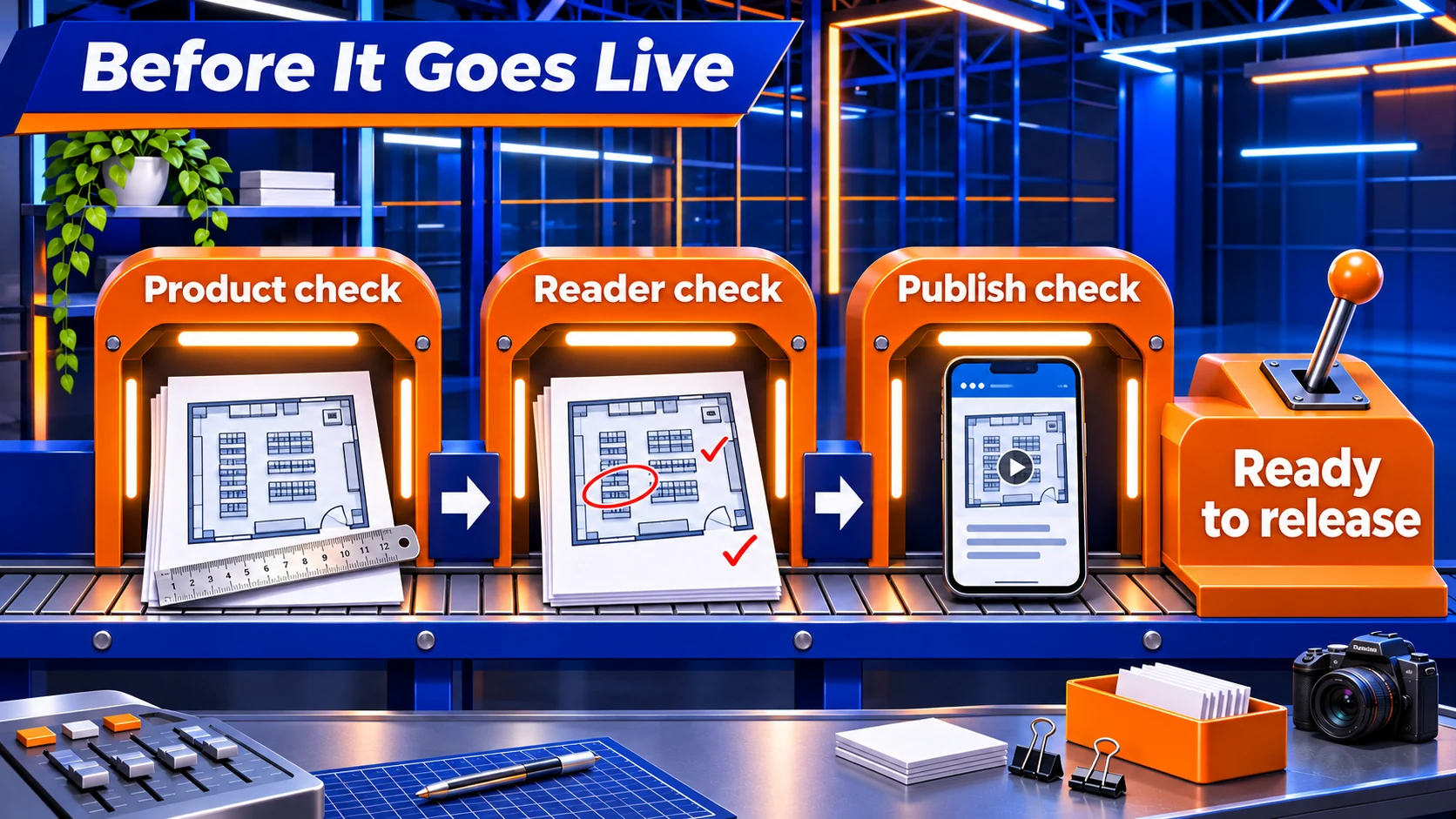
Give each reviewer a specific job. A product specialist can verify the shelving measurements, and an editor can check that the labels match the floor plan. Before publication, a publisher can test the download and enquiry form on a phone. Together, those checks cover what the guide says and whether readers can use it.
The same review should cover assets and access:
- If an illustration has a Creative Commons licence, check whether you can adapt it and how to credit its creator. Keep the source link and licence record for the next editor.
- If you publish video, add captions for speech and relevant sounds. Have someone check product names and measurements that automatic captions may get wrong.
- If an AI-assisted production workflow helps group interview notes or suggest headings, keep the original notes for review. A reviewer can then catch a claim about every model that the specialist made about only one.
Once those checks are complete, the publisher has what they need to release the piece.
How Should You Distribute and Repurpose Content?
Start with the place where people are likely to need the answer. A measuring guide can sit near a quote form and on a page buyers find through search. A setup video can live on the product page and appear in an email after purchase. Give the piece a primary home first, then decide where else it can help.
Give each channel a reason to carry the piece
The full measuring guide can live on your website, where buyers can return to it while they work. In a social media content plan, a short clip could show the measurement people often miss. The checklist could also support the email marketing lifecycle as a follow-up to someone preparing for a quote call.
When you share those versions, campaign URL parameters help Google Analytics group visits by source, medium and campaign. Agree on campaign names before links go out. If one person labels the email shelving_guide and another calls the same campaign shelving_checklist, the team must bring those results together during review.
Adapt the answer to the new audience task
Give each new version one job:
- A short demonstration can show the hardest step from the guide close up, so viewers can see how to do it.
- A checklist can put the measurements on one sheet buyers can keep beside them.
- A sales email can take one example from the guide and answer a question raised on a call.
Each version should make sense on its own. The work behind the original piece can also support later updates:
- An interview with a product specialist can provide a written explanation, a diagram and a short voiceover.
- A shared folder of approved facts, visuals and permissions lets future editors check what they can reuse.
- When a product detail changes, the folder and calendar help the team find related pieces to review.
How Do You Measure Content Creation Results?
Start with the outcome in the brief. A search guide may need to bring in people looking for a specific answer. A product video may need viewers to reach the demonstration. A buyer guide may need to help customers send better information with quote requests. Once you know the job, choose a measure that can show how it is going.
Match the metric to the job
Search impressions and clicks can show whether people find a guide through the searches it addresses. For a product video, audience retention shows where viewers leave. If many leave before the demonstration, the editor can try showing it sooner.
A confirmed form submission can count as a key event in Google Analytics 4. Sales records can then show which submissions came from buyers the business could serve. For social content, reach and engagement metrics answer an earlier question: did people see or interact with the post before they had a reason to enquire?
Calculate the cost of a result you can define
Cost per qualified enquiry shows how much you spent for each enquiry that met your criteria. In a hypothetical example, the shelving supplier spends US$800 on production and distribution. The campaign brings in 12 enquiries, and five meet its criteria. That makes the cost US$160 per qualified enquiry.
Total submissions tell the supplier how many people got in touch. The qualified count helps it judge whether the guide attracted buyers it can serve. Sales staff may need more time to see which enquiries become orders, especially when several people take part in the purchase. A content marketing ROI calculation also needs a way to connect revenue to the work.

Let the first weak signal guide the next change
Start your review with the first result that needs attention:
- If the page gets few impressions for its intended topic, check whether it is indexed and answers what people search for.
- If people visit but rarely enquire, review the offer, form and call to action.
- If enquiries come in but few meet your criteria, review the example or requirements shown on the page.
A small business can track these decisions in a spreadsheet with one row per piece. Record the goal, review period, result, decision and owner. The owner can add what changed and when. At the next review, the team can check the result and consider whether a new promotion or seasonal demand also played a part.
Conclusion: Give Each Piece a Job
A small team can begin with one question it hears often and one piece it can keep current. A team with a larger collection can review what it has before assigning new work. Either way, the audience question gives you a reason to publish, while the results give you a reason to revisit the piece.
If customers keep asking questions your website leaves unanswered, MediaOne can help turn them into a publishing plan. Our content marketing services can start with a few enquiry emails, a draft your team has been working on or a guide that needs updating.
FAQs About Content Creation
How often should a small business publish content?
Publish at a pace that leaves time to research, review and share each piece. Start with one manageable publishing cycle and see how long approvals take. That experience can help your team choose its next publication date.
Which parts of content creation can a business outsource?
Outside specialists can handle writing, design, editing and video production when they have a brief and a review process. Keep a named person in your business responsible for providing sources, approving facts and making the final publishing decision.
Can a business create content without sharing client names?
An anonymised example can show the problem, decision and process if you have permission to use its details. Check that readers cannot identify the client from those details together. A labelled hypothetical example can also show how a decision works.
Who should own the source files after publication?
Agree on ownership and file access with external contributors before production starts. Keep editable artwork, approved copy, transcripts and licence records in a handover folder. The next editor can then update the piece without rebuilding it.