| AI Summary
A long-tail keyword receives relatively few searches compared with popular terms in the same market. These queries often describe a specific need, customer or location. Singapore businesses can find opportunities in search reports, customer questions and keyword tools. Related phrases belong together when one page answers them well. Results depend on the offer, content, competition and customer experience. |
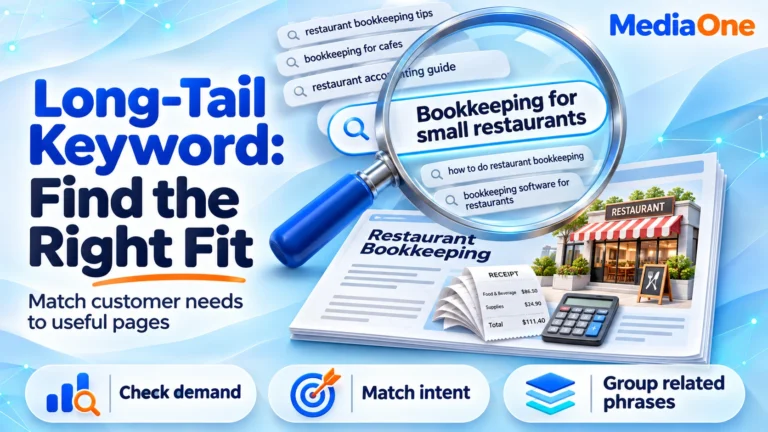
A long-tail keyword is a search term with relatively low individual search demand. It often describes a specific need, such as “bookkeeping for small restaurants in Singapore”. Word count alone does not define it. Businesses target these searches by matching each group of related queries to a page that answers the searcher’s needs.
Key Takeaways
- Customer enquiries can reveal service details that broad keyword lists miss.
- Search volume estimates need the right country settings and supporting evidence.
- Buying intent, business value and production effort help set publishing priorities.
- One strong page can answer several closely related long-tail searches.
- Page-level enquiries and sales help show whether organic traffic supports the business.
A Singapore business does not need every searcher. It needs people whose needs match what it sells. Someone searching for “bookkeeping for a small restaurant in Singapore” gives a provider more context than someone searching for “accounting”.
That detail can shape the page, its examples and the next step. A restaurant owner may need information about transaction records, outlet reporting and monthly fees.
Long-tail keyword research connects those needs with content. The work starts with customer language and ends with pages that help people decide whether a business can serve them.
What Is a Long-Tail Keyword?
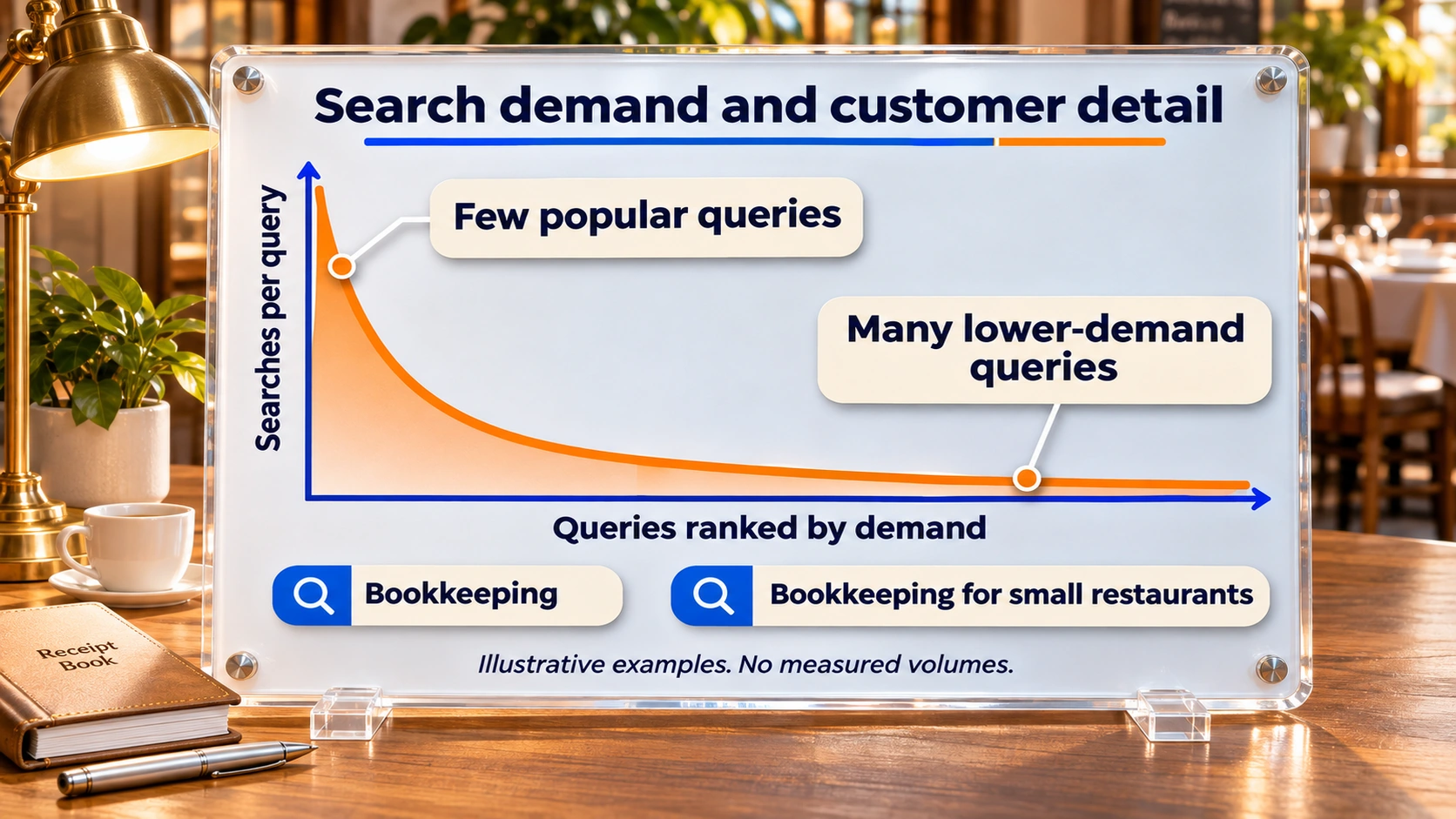
A long-tail keyword sits in the lower-demand end of a search-demand distribution. A few popular terms receive many searches, while many less common terms receive fewer searches individually.
These terms often contain several words because people add details. However, a long phrase can still be popular, and a short specialist term can receive few searches. Length is a clue, not the definition.
How long-tail searches differ from broad terms
The following examples show how added detail can narrow a search. They illustrate possible customer wording; they are not verified search-volume figures.
| Search | What it reveals | Possible page |
| Bookkeeping | A broad subject | Service overview or introductory guide |
| Bookkeeping services Singapore | A service and market | Main service page |
| Bookkeeping for small restaurants Singapore | A business type and service need | Restaurant bookkeeping page |
| What records does a restaurant bookkeeper need? | A practical information need | Guide or service-page section |
The last two searches may have lower demand, but their value depends on the business. A provider that serves restaurants can answer them with relevant detail.
Why specificity does not guarantee a sale
A detailed search can still come from someone doing research. “Why does restaurant bookkeeping take longer?” asks for an explanation. “Monthly restaurant bookkeeping fees Singapore” suggests someone comparing costs.
The distinction comes from keyword intent, meaning what the person hopes to achieve. Lower demand does not automatically mean lower competition, better conversion rates or easier rankings.
How to Find Long-Tail Keywords in Singapore
A practical list combines searches people already make with questions customers ask before buying. Existing data provides evidence, while research tools help expand the list.
Search Console queries
The Google Search Console performance report shows queries, clicks, impressions and average position for a website. A country filter can narrow the report to Singapore.
A research sheet can record:
- Queries relevant to the business.
- Pages receiving impressions for those queries.
- Questions containing customer needs or constraints.
- Searches mentioning services the website barely explains.
- Phrases that already bring clicks to commercial pages.
Three months provides a starting view. A longer comparison can reveal seasonal demand. A festive catering business, for example, needs context beyond a quiet month.
The report does not show every query. Google omits some searches for privacy, so an absent phrase does not prove that nobody searches for it. A four-word filter can help browsing, but it cannot identify every long-tail opportunity.
Customer enquiries and sales conversations
Enquiry emails, call notes and website search logs reveal questions that keyword tools may miss. Personal information should stay out of the research sheet.
A restaurant owner might ask:
- “Can the bookkeeper handle records from two outlets?”
- “Does the monthly fee include payroll?”
- “What happens if receipts are missing?”
- “Can the service work with the software already in place?”
Each question reveals information a prospective customer needs. Repeated questions deserve attention even when their wording differs between conversations.
Customer language also helps avoid stiff headings. “What does the monthly fee include?” is easier to understand than a heading built from several service keywords.
Google suggestions and search results
Google autocomplete, related searches and People Also Ask can suggest topics to investigate. Search results also reveal whether Google commonly shows service pages, guides, shops or local listings for a phrase.
Google autocomplete predictions draw on searches and other signals, including language, location and trends. They do not provide a ranked list of demand.
A phrase appearing in a suggestion is a research lead. Its presence does not establish monthly volume or commercial value.
A research note should capture the phrase, source, date and likely customer need. That record helps the team separate observed wording from ideas generated during brainstorming.
Keyword tools with Singapore settings
Keyword tools can estimate demand and suggest related terms. The location setting should match the market the business serves.
Google’s Keyword Planner metrics include average monthly searches based on the selected period, location and network settings. These figures can include close variants. Its competition metric concerns advertisers, not organic ranking difficulty.
A low or missing estimate needs context. A phrase repeated in sales calls may still deserve coverage. Conversely, a tool-generated phrase with no connection to the business should not become a priority simply because it has a number beside it.
How to Choose Phrases Worth Targeting
A keyword list becomes a content plan when each phrase has a reason to earn attention. Keyword analysis connects demand with the business’s offer and ability to answer the search.
A weighted scoring method
A small team can rate candidates from 1 to 5 using four criteria. Higher scores always mean a better publishing opportunity.
| Criterion | Score 1 | Score 5 |
| Buyer intent | Little connection to a service decision | Strong connection to an enquiry or purchase |
| Business value | Limited connection to current services | Direct connection to a priority service |
| Ranking opportunity | Strong results already meet the need | Relevant results leave important questions unanswered |
| Production ease | Evidence or expertise is difficult to obtain | The team can provide accurate detail now |
The suggested formula is:
Priority score = (buyer intent × 2) + (business value × 2) + ranking opportunity + production ease
The maximum is 30. This is an editorial planning method, not a Google metric.
A bookkeeping example
The following scores illustrate decisions a bookkeeping firm might make. They do not represent measured performance.
| Candidate phrase | Intent × 2 | Value × 2 | Opportunity | Ease | Total |
| Bookkeeping services for sole traders Singapore | 10 | 8 | 3 | 4 | 25 |
| What is GST registration? | 4 | 4 | 2 | 3 | 13 |
| Bookkeeper fees for a small restaurant Singapore | 10 | 10 | 4 | 3 | 27 |
The fees phrase receives priority because it connects closely with a paid service and a customer decision. The GST question could still support an educational article if the firm has the expertise to cover it.
Scores should include a short reason. “Customers asked this six times during recent enquiries” explains a judgement better than an unexplained number.
A search-results check before approval
A high spreadsheet score still needs a manual review. The leading results help test whether the planned page answers the same need.
The review can cover:
- The page types appearing most often.
- Questions those pages answer.
- Information they leave out.
- Evidence the business can contribute.
- Whether the business actually serves the requested customer.
A directory result does not automatically mean weak competition. A small website can also publish an excellent answer. Page quality and relevance deserve more attention than brand size alone.
How to Turn Keywords Into Pages
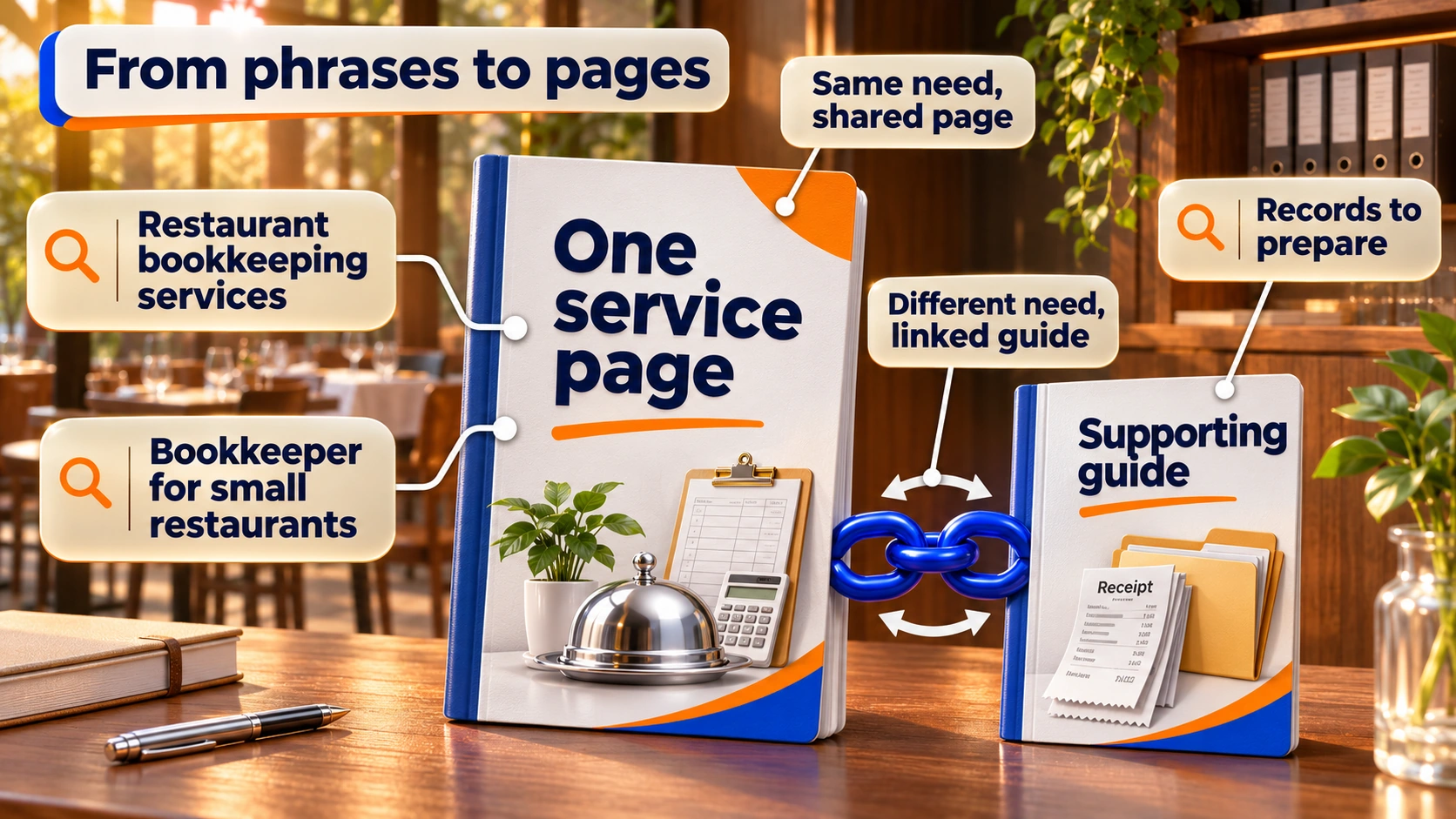
A long-tail strategy does not require a separate URL for every phrase. Several searches can belong on one page when they share the same need.
One page for one main customer task
A keyword map records which page will answer each group of related searches. Its purpose is to organise coverage before writing starts.
| Query group | Main customer task | Page choice |
| Restaurant bookkeeping services; bookkeeper for small restaurants | Find a provider | Restaurant service page |
| Restaurant bookkeeping fees; monthly restaurant bookkeeping cost | Understand charges | Pricing section or detailed pricing page |
| Records needed for restaurant bookkeeping | Prepare documents | Guide linked from the service page |
| Bookkeeping software versus outsourced bookkeeping | Compare approaches | Comparison guide |
The pricing queries may belong on the service page if a short section answers them fully. A separate pricing page needs enough distinct information to justify its existence.
Related rankings are not automatically a problem
Two pages appearing for a query does not prove keyword cannibalisation. A service page and a guide can serve different needs. Concern grows when similar pages compete for the same task, the less relevant page receives visibility, or performance changes between overlapping URLs.
The diagnosis should consider page content, search queries and results over time. A merge makes sense when the pages duplicate each other and one stronger page can serve readers better.
Local pages need local substance
A business serving Tampines and Jurong does not automatically need two almost identical pages. Different place names alone add little information.
A separate location page should explain something real, such as:
- A branch address and opening hours.
- Service availability in that area.
- Relevant travel or appointment details.
- Local project examples with permission.
- Area-specific delivery conditions.
A Singapore-wide provider can often explain its coverage on one service page. Customers need accurate service information before a list of neighbourhood names.
How to Write Pages That Answer and Convert
A page should help a reader understand the offer and decide what to do next. Keyword placement supports that purpose.
Natural titles, headings and opening answers
The main phrase or a close variation can appear in the title, H1 and opening paragraph when it reads naturally. Every heading does not need the exact wording.
A restaurant bookkeeping page could use headings such as:
- Monthly services and what they include.
- Documents needed to get started.
- How the monthly fee is calculated.
- Support for businesses with several outlets.
- What happens after an enquiry.
The headings describe answers. The wording also gives the business room to explain details that affect a buying decision.
Google’s keyword stuffing policy identifies unnatural repetition intended to manipulate rankings as spam. A fixed keyword count is not a substitute for accurate coverage.
Evidence near the decision
Claims need support where readers encounter them. A page promising industry experience should explain that experience through verified qualifications, documented work or specific service knowledge.
A restaurant bookkeeping page might explain:
- Which records the provider handles.
- What the quoted fee includes.
- Which tasks cost extra.
- How documents are submitted.
- Who responds to account questions.
Prices should use Singapore dollars and explain whether GST applies. A starting price also needs its conditions. The reader should understand what changes the final quote.
Unverified testimonials, invented results and unsupported service promises should stay out of the page.
A next step that matches the search
A pricing visitor may need a quotation form. Someone reading about required records may need a checklist before contacting the provider.
A relevant form can ask for details needed to respond, such as outlet count or the service required. An unnecessarily long form creates extra work before the business has explained its value.
The call to action should state the expected outcome. “Request a bookkeeping quote” tells the visitor more than “Submit”.
How Internal Links and AI Search Support the Page
A new page also needs connections to the rest of the website. Those links help readers reach related information and help search engines discover content.
An internal linking strategy connects pages where the next destination helps the reader. A guide about organising restaurant receipts can link naturally to restaurant bookkeeping services. The service page can link back to the preparation guide when it explains onboarding.
Descriptive anchors work best in context. “Monthly bookkeeping fees depend on outlet count” can link the fee explanation without interrupting the sentence.
A broad service page can connect to specialist pages, while those pages link back where relevant. Every page does not need links to every related article.
Answers for readers and search features
Direct definitions, descriptive headings and comparison tables make SEO content writing easier to follow. Google’s AI search requirements rely on established search practices. An indexed page eligible for a search snippet can qualify as a supporting link, but inclusion is not guaranteed.
Similarly, Google selects featured snippets through its systems. A publisher cannot mark a paragraph as a guaranteed featured snippet.
The practical goal remains a complete answer supported by evidence. Short answers help readers find information quickly; examples and detail help them understand it.
How to Measure Long-Tail Keyword Results
A ranking report shows visibility. A business also needs to know whether the pages attract relevant enquiries.
Search metrics and business outcomes
A monthly review can compare search performance with page-level outcomes.
| Metric | What it helps assess | Important limit |
| Impressions | Search visibility | Changes can reflect demand or query mix |
| Clicks | Visits from search results | More visits may not mean better prospects |
| Click-through rate | Clicks relative to impressions | Position, devices and result features affect it |
| Average position | Ranking trends | An average can hide large differences |
| Qualified enquiries | Relevance of incoming leads | The team needs a consistent definition |
| Sales or bookings | Commercial outcomes | Several channels may influence a decision |
Search Console reports search activity. Analytics and enquiry records help connect landing pages with later actions.
Organic query data generally cannot identify the exact search phrase behind each individual enquiry. Reporting should respect that limit. Page-level patterns can still support decisions without assigning a sale to an unverified keyword.
A review routine with context
A monthly check can identify sudden changes. A quarterly review gives the team time to assess content, demand and enquiries together.
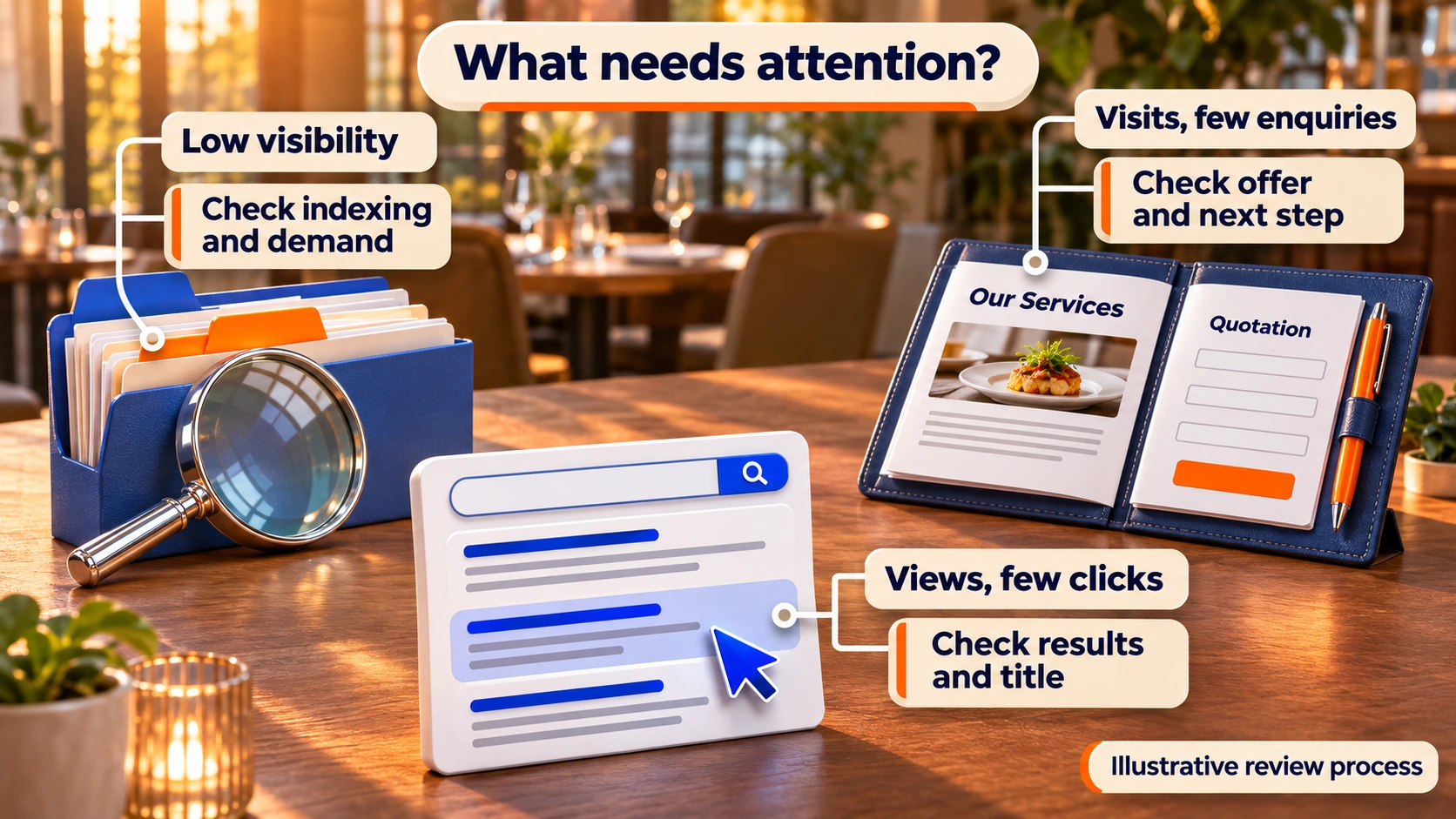
A page with impressions but few clicks needs a search-results review. Its title may be weak, or competing results may answer the question directly.
A page with traffic but few relevant enquiries needs a different investigation. The offer, content, pricing information, form or audience may explain the gap. A keyword change alone may not solve it.
An underperforming-page checklist
The following checks help narrow the cause before a rewrite:
- Indexing: Whether Google can index the intended URL.
- Intent: Whether the page answers the task shown in current results.
- Content: Whether important decision details are missing.
- Links: Whether relevant pages connect to it.
- Conversion: Whether the next step works and matches the visitor’s need.
- Overlap: Whether another page duplicates its purpose.
SEO basics still apply to narrow searches. A specific phrase cannot overcome an inaccessible page.
Low traffic alone does not justify deletion. A page may support existing customers, seasonal demand or a small number of valuable enquiries.
Singapore Language and Customer Wording
Local keyword research should reflect the customers a business serves. Neighbourhood names, abbreviations and familiar service terms can help reveal how those customers describe a need.
Everyday language and local details
A search such as “aircon servicing Tampines” uses familiar wording. A service page can use that wording naturally while explaining appointment availability and coverage.
A research sheet can record local variants without forcing them into every paragraph. Formal and everyday terms can appear together when that helps understanding.
Pricing, delivery areas, business hours and contact options also affect the reader’s decision. Local relevance comes from those details as well as place names.
Separate language pages when the business can support them
Translated content needs accurate language and a service experience the business can provide. A translated enquiry page creates expectations about communication after someone responds. Google’s approach to multilingual websites supports separate URLs for language versions and appropriate language annotations.
Demand evidence, customer needs and translation resources should guide the decision. A business should avoid publishing language pages it cannot maintain.
Long-Tail Keywords and Better Customer Enquiries
Long-tail keyword research helps businesses find specific customer needs and answer them through the right pages. Search demand, buyer intent and service relevance work together. Related phrases can share a page, while performance reviews show where content or the customer experience needs attention.
Our keyword research services connect search opportunities with business goals. At MediaOne, we can help identify relevant phrases, assess their intent and plan the pages needed to support enquiries from Singapore customers.
Frequently Asked Questions
Can AI tools create a long-tail keyword list?
AI tools can suggest wording and organise phrases into groups. Their suggestions need verification through search results, business knowledge and available demand data. An AI-generated phrase is an idea, not evidence that customers search for it.
Do long-tail keywords work for online shops?
Product categories, product pages and buying guides can answer specific shopping needs. “Waterproof laptop bag for a 16-inch laptop” describes features a shopper can compare. A page should accurately show those features, availability and purchasing information.
Should a keyword appear in an image filename?
A descriptive filename can identify the image’s subject. A keyword belongs there when it accurately describes the visual. Alternative text should explain the image for readers who cannot see it, without adding a list of search phrases.
Can paid search help assess a keyword?
Paid search can provide evidence about clicks and enquiries for a relevant offer. Results depend on targeting, advertisements, budget and the landing page. A successful paid campaign does not prove that an organic page will rank or produce identical results.
Does every keyword page need a 2026 date?
A date helps when the content depends on current rules, prices or annual comparisons. Evergreen service information may not need a year. A page carrying a year should receive a substantive accuracy review when that year changes.
Does a new page need manual submission to Google?
Google can discover pages through links and sitemaps. A site owner can also request a crawl through URL Inspection. Google states that crawl requests do not guarantee indexing, and repeated requests do not make crawling faster.