| AI Summary
Local pack visibility describes how often a business appears in Google’s map-based local search results. Google considers relevance, distance and prominence when ordering these results. Singapore businesses can improve their business information, customer reviews and website content, but cannot choose the searcher’s location. A five-part audit checks eligibility, categories, reviews, business listings and website performance. Progress needs tracking across nearby locations and actual customer enquiries. |
Local pack visibility is a business’s presence in Google’s map and local business listings within search results. Better visibility starts with an eligible, verified Google Business Profile, accurate categories and hours, genuine customer reviews, consistent contact details and relevant website pages. Rankings vary by search, location and competition.
Key Takeaways
- A completed profile does not guarantee a place among the displayed businesses.
- Business names should match real-world branding; a registered company name is not automatically the right profile name.
- Review requests should welcome honest feedback without rewards or pressure.
- A five-part audit identifies tasks; its completion status does not predict rankings.
- Calls, bookings and qualified enquiries help show whether search exposure produces business.
Local pack visibility can put a nearby business in front of someone who needs its service now. A search for “plumber near me” or “café Tampines” can lead straight to a phone call, directions or a website visit.
That opportunity depends on more than regular profile updates. A business needs accurate information, a relevant offer and a customer journey that works after the search.
For Singapore owners, the starting point is an audit of what customers and Google can see. The checks below separate profile problems from website problems and show which tasks deserve attention first.
What the Local Pack Shows Customers
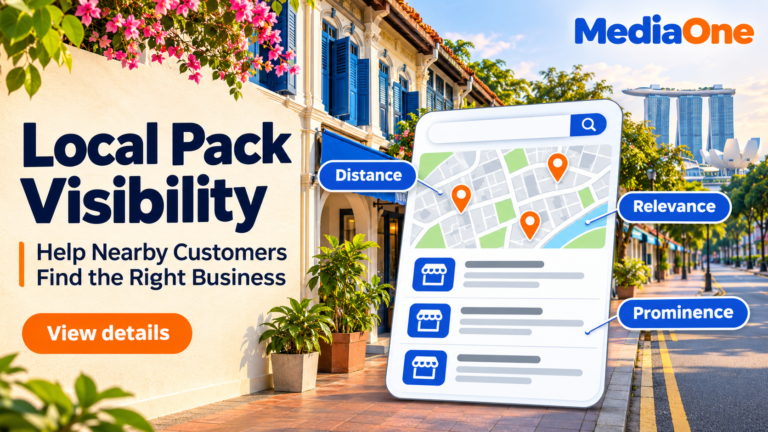
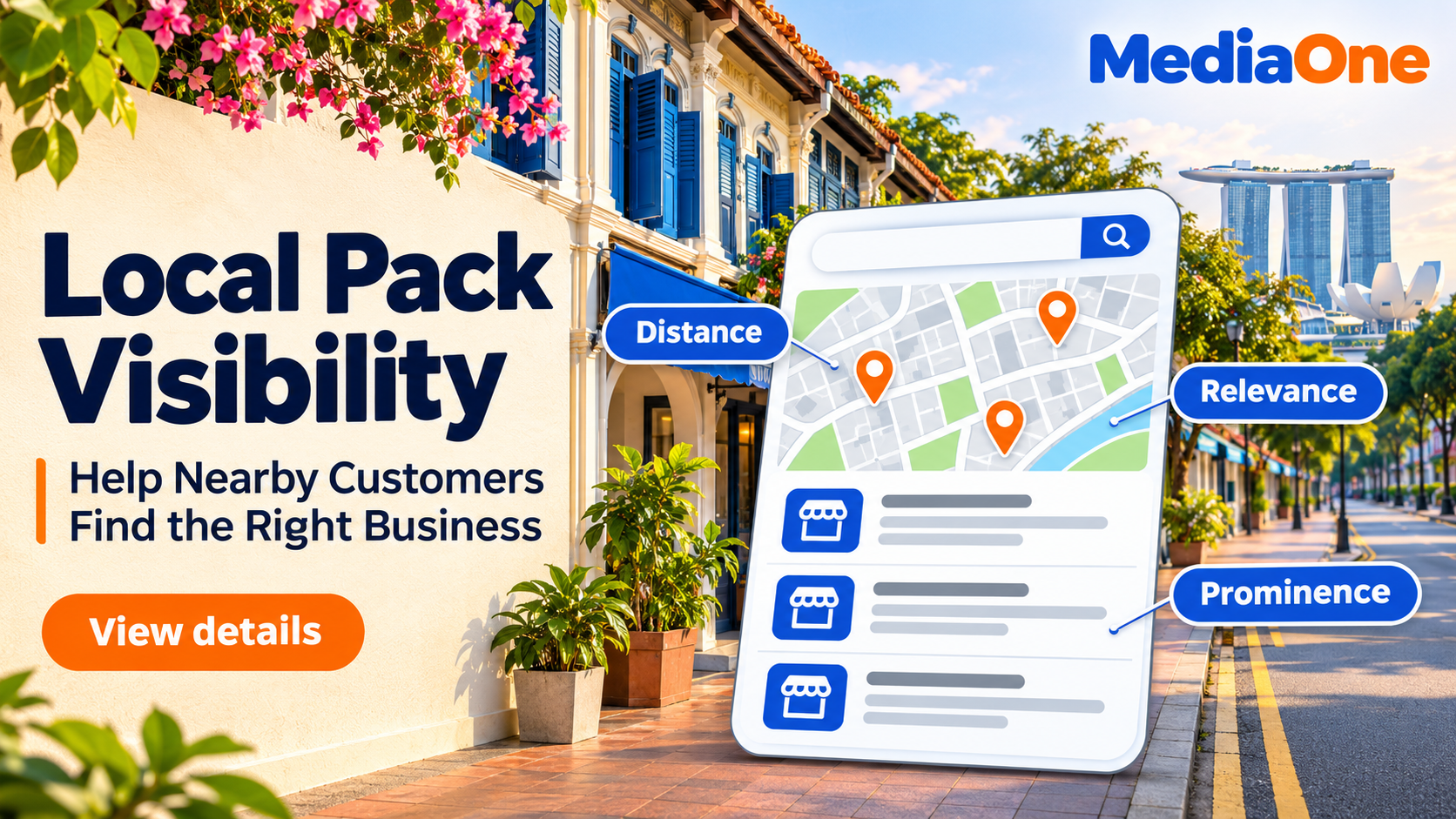
The Local Pack is a map-based group of business listings inside Google Search. It commonly displays three businesses, although the layout, number of listings and available buttons can vary.
A listing can show a business name, category, rating, opening status and contact options. Those details help someone decide whether to investigate further.
A customer searching for a nearby café may check opening hours before the menu. A homeowner with a leaking pipe may look for a phone number and evidence that the plumber serves the estate.
Local Pack vs. Google Maps
The Local Pack appears within search results. Google Maps is a separate app and website where people search, browse places and request directions.
| Feature | Local Pack | Google Maps |
| Starting point | A search within Google Search | A search or browsing session in Maps |
| Presentation | A compact map-based results section | A larger map and business results |
| Customer actions | Available profile and contact options | Place details, directions, saved places and other options |
| Measurement approach | Search-location checks and business results | Maps-location checks and business results |
A business’s position can differ between these surfaces. Reporting should record which surface the team checked.
Visibility vs. customer enquiries
A listing can attract attention without producing a suitable enquiry. Wrong hours, missing service information or a broken website link can interrupt the customer’s next step.
A wider local SEO strategy for businesses connects search exposure with the information people need before contacting the company. The practical goal is relevant visibility followed by customer action. A higher position for an unrelated service has little value.
What Determines Local Pack Rankings?
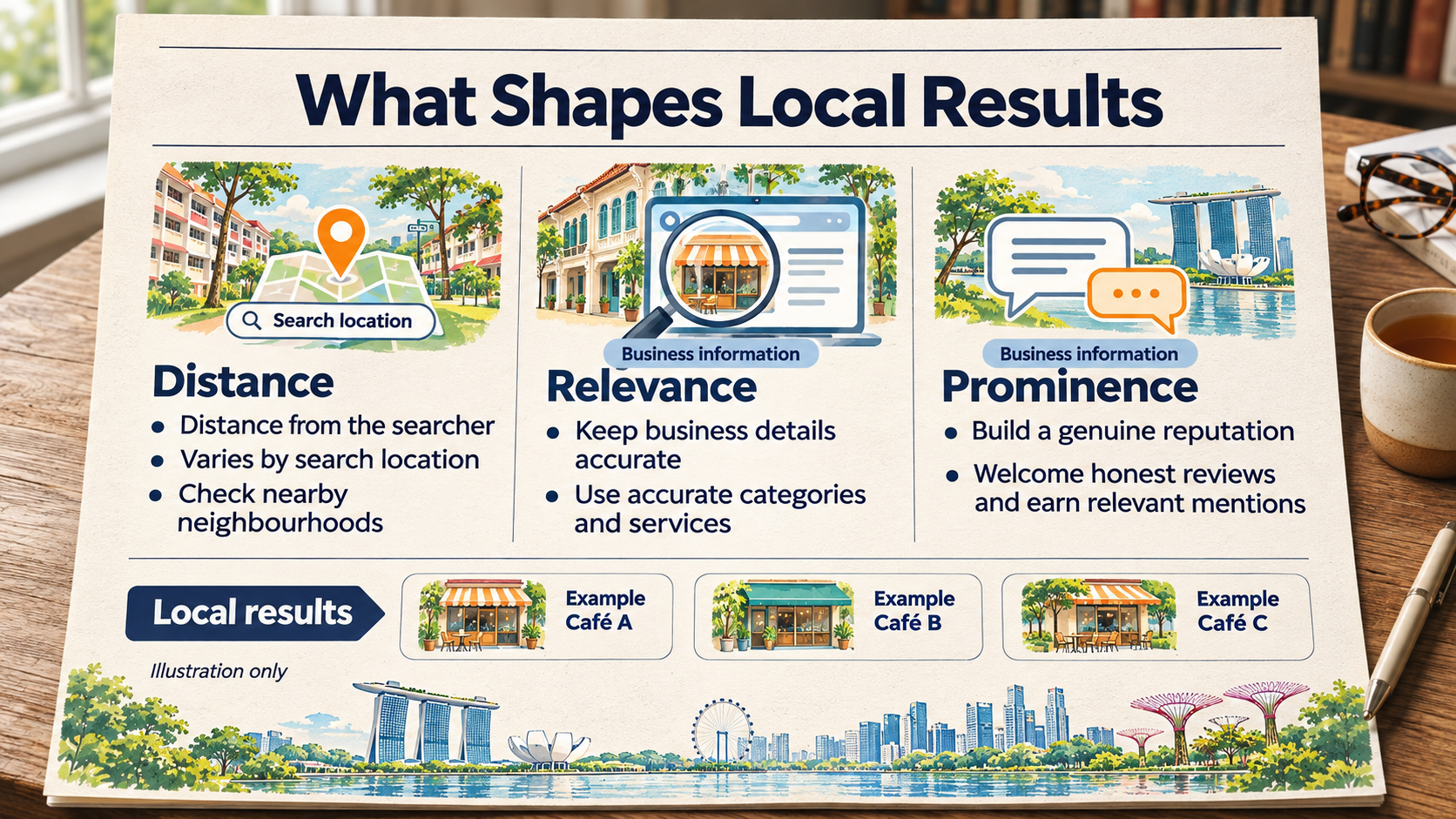
Google’s published local ranking factors centre on relevance, distance and prominence. Google does not publish a percentage formula for these factors.
Industry surveys can describe expert opinions, but their percentages are not measurements of Google’s algorithm. Local Pack rankings and ordinary website rankings also need separate analysis.
Relevance: Does the business match the search?
Relevance concerns how closely a business matches the customer’s request.
A specific category and accurate service information help describe that match. A plumbing business should explain its actual plumbing work, while a café should provide information about its menu and customer facilities.
A description should answer practical questions without turning into a list of repeated search terms.
Distance: Where is the search happening?
Distance concerns the business’s location relative to the searcher. When location information is unavailable, Google uses what it knows about the person’s location.
A search made in Bishan can produce different results from the same search made in Orchard. One position checked from the owner’s office cannot represent performance across Singapore.
A business cannot edit the customer’s location. Its audit should therefore cover the neighbourhoods where customers realistically need its services.
Prominence: How well known is the business?
Prominence concerns how well known a business is. Google identifies reviews and links from other websites among the information it considers.
A business can develop its reputation through genuine customer experiences and relevant coverage. Those activities take time and do not provide a guaranteed position.
An established reputation also helps customers judge the listing. Search performance and customer trust belong in the same discussion.
The Five-Part Local Pack Visibility Audit
A local SEO audit needs evidence, not an unsupported ranking score. Each check below should receive a status: complete, needs work or blocked.
A blocked task requires something before work can continue, such as account access. A completed task means the team checked the requirement; it does not mean Google will rank the business higher.
| Audit area | Evidence to collect | First action when a problem appears |
| Eligibility and access | Profile status, account access and location details | Resolve ownership or eligibility issues |
| Categories and information | Categories, services, hours and contact links | Correct inaccurate customer information |
| Reviews and replies | Review-request process and recent responses | Establish a neutral request routine |
| Listings and mentions | Important external listings and old details | Correct conflicting contact information |
| Website and measurement | Landing page, working forms and baseline results | Repair broken customer actions |
1. Eligibility and account access
Google’s business representation rules cover businesses with qualifying customer-facing premises or businesses that travel to customers. A mailing address alone does not establish eligibility.
The audit should establish:
- Whether the business qualifies for a profile.
- Whether someone has already created its listing.
- Whether the business controls the account.
- Whether verification or another profile issue remains unresolved.
- Whether the address represents the actual operation.
A business should investigate an existing listing before creating another. An extra profile can create a second problem without resolving the first.
The profile name should reflect the name customers recognise from real-world branding. A legal company record can help establish identity, but the draft’s instruction to copy the registered name exactly was too broad.
2. Categories, services and customer information
A primary category should describe the main business. Additional categories should represent genuine business activities.
A profile review should compare the information with current operations:
- Main business category.
- Relevant additional categories.
- Services actually available.
- Regular and special opening hours.
- Telephone number and website destination.
- Address or service area.
- Current photographs.
Google’s profile editing options allow businesses to maintain these details. Some available fields depend on the business category.
A customer-facing review is often revealing. Someone unfamiliar with the business should be able to understand what it does, when it operates and how to contact it.
The Google Business Profile setup process also needs a named owner so changes do not depend on one employee remembering them.
3. Reviews and customer responses
A review audit should examine the request process alongside the public feedback. A large review count does not explain whether requests are fair or whether complaints receive attention.
Google allows businesses to request reviews through a review link or QR code. Requests should invite genuine experiences.
The audit should check:
- Whether customers receive the same neutral invitation.
- Whether staff avoid requesting a particular rating.
- Whether the business offers any review-related reward.
- Whether someone monitors feedback.
- Whether replies address the customer’s actual experience.
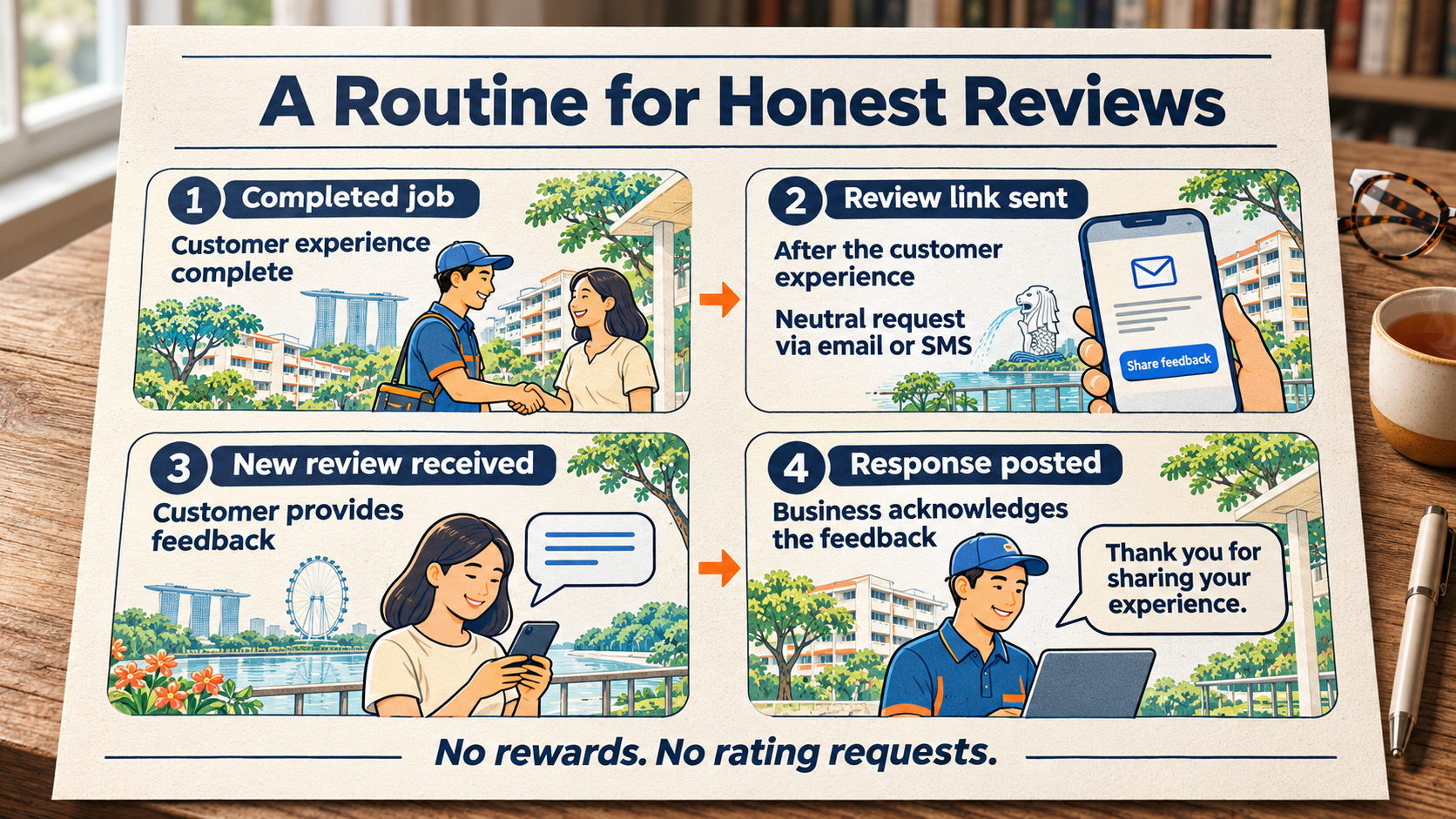
A review routine can follow a completed visit or job. The timing should suit the service, without presenting a 24-hour deadline as a Google requirement.
4. Business listings and relevant mentions
Local citations are online references to business information, often including the name, address and telephone number.
The audit should begin with listings customers may encounter: map services, social profiles, booking platforms, trade associations and relevant directories.
The priority is factual accuracy. An old phone number or wrong unit number deserves attention before minor punctuation differences.
A listing record should contain:
- The page URL.
- Current business details.
- The person or account controlling it.
- Any correction submitted.
- The date the correction appeared.
Name, address and phone consistency is easier to maintain when one approved record supplies the details. Directory volume alone is a poor reason to create another listing.
5. Website pages and measurement
The profile’s website link should reach a page that represents the business or relevant location. A customer should not have to search again for the service promised by the listing.
A website check should cover:
- The service description.
- Actual operating location or coverage.
- Contact details and opening information.
- Mobile reading and button use.
- Working enquiry forms.
- Booking or payment steps, where relevant.
- Recorded search and enquiry results.
A Tampines customer contacting a repair business needs to know whether the firm serves Tampines. A page that names every estate without explaining its services adds little.
The audit should end with a baseline and task owner. Otherwise, the team cannot tell what changed or whether the change helped.
Reviews That Help Customers Choose
Reviews provide customer experiences that a business description cannot supply. Specific comments about communication, service delivery or accessibility can answer concerns before someone calls.
A steady request process also spreads the work across normal operations. One employee should not need to remember every customer personally.
A neutral request without pressure
A short message can say:
“Thank you for choosing the business. A Google review about the experience can help other customers decide. Feedback is welcome at this link: [review link].”
The invitation should not depend on whether the customer seemed happy. Staff should avoid filtering dissatisfied customers away from the public review process.
Google’s fake-engagement policy prohibits incentives for reviews and other forms of rating manipulation. A discount offered for an “honest review” still creates a policy problem.
Replies that address the experience
A reply should acknowledge the point the customer raised. A complaint about a missed appointment needs a different response from praise for a staff member.
Public replies should avoid customer account details, private correspondence and arguments. A complaint requiring investigation can move to an appropriate private channel.
A business’s online reputation management process should connect feedback with operational improvements. Repeated complaints about unanswered calls need attention beyond the reply box.
Website Content That Supports Local Searches
A Business Profile and website should describe the same operation. Different opening hours or service claims leave customers unsure which information to trust.
Website improvements should begin with the pages linked from the profile. The first screen should explain the service and provide an obvious next step.
Service pages with practical answers
A service page should explain what the business does, who it serves and how someone can enquire.
A plumbing page, for example, can describe the types of repairs offered, operating arrangements and information needed when requesting help. Claims about round-the-clock service belong on the page only when the business provides it.
Keyword research can identify the language customers use. The resulting page still needs answers based on real services.
Location pages grounded in actual operations
A location page should contain details that distinguish that location or service area.
Relevant information might include:
- The branch address and contact number.
- Services available at that branch.
- Opening arrangements.
- Building access or appointment instructions.
- Genuine coverage information for visiting services.
A separate page for every neighbourhood is unnecessary when each page repeats the same text. The business should create pages around customer needs and real operational differences.
Structured data with matching information
Google’s LocalBusiness structured data provides a format for describing details such as a business’s address and opening hours. The information should match the page.
Structured data does not promise a Local Pack position. Its implementation should support accurate business information without inventing branches, ratings or services.
Service Areas and Singapore Locations
Singapore’s short travel distances do not make every business equally relevant everywhere. Customers still search around estates, workplaces and destinations.
A shop in Katong and a visiting repair service covering several estates need different profile arrangements.
Businesses that visit customers
Google’s service-area settings describe where a business provides services. Businesses that do not receive customers at their address should follow Google’s address-hiding requirements.
A plumber operating from a residential base should not present that home as a walk-in shop. Customer instructions should explain how appointments work.
A service-area entry tells customers about coverage. It should never become a claim that the business has premises in every listed estate.
Businesses with several branches
Each branch needs information that represents its actual operation. Branch-specific hours, telephone numbers and website pages help customers reach the right team.
A central record can track:
- Profile access for each branch.
- Current addresses and map pins.
- Regular and special hours.
- Branch website links.
- Recent customer feedback.
- Staff responsible for updates.
A change at one branch should trigger checks across its related listings. A moved outlet can continue losing customers through an old address even after the main website changes.
Measuring Local Pack Visibility and Customer Results
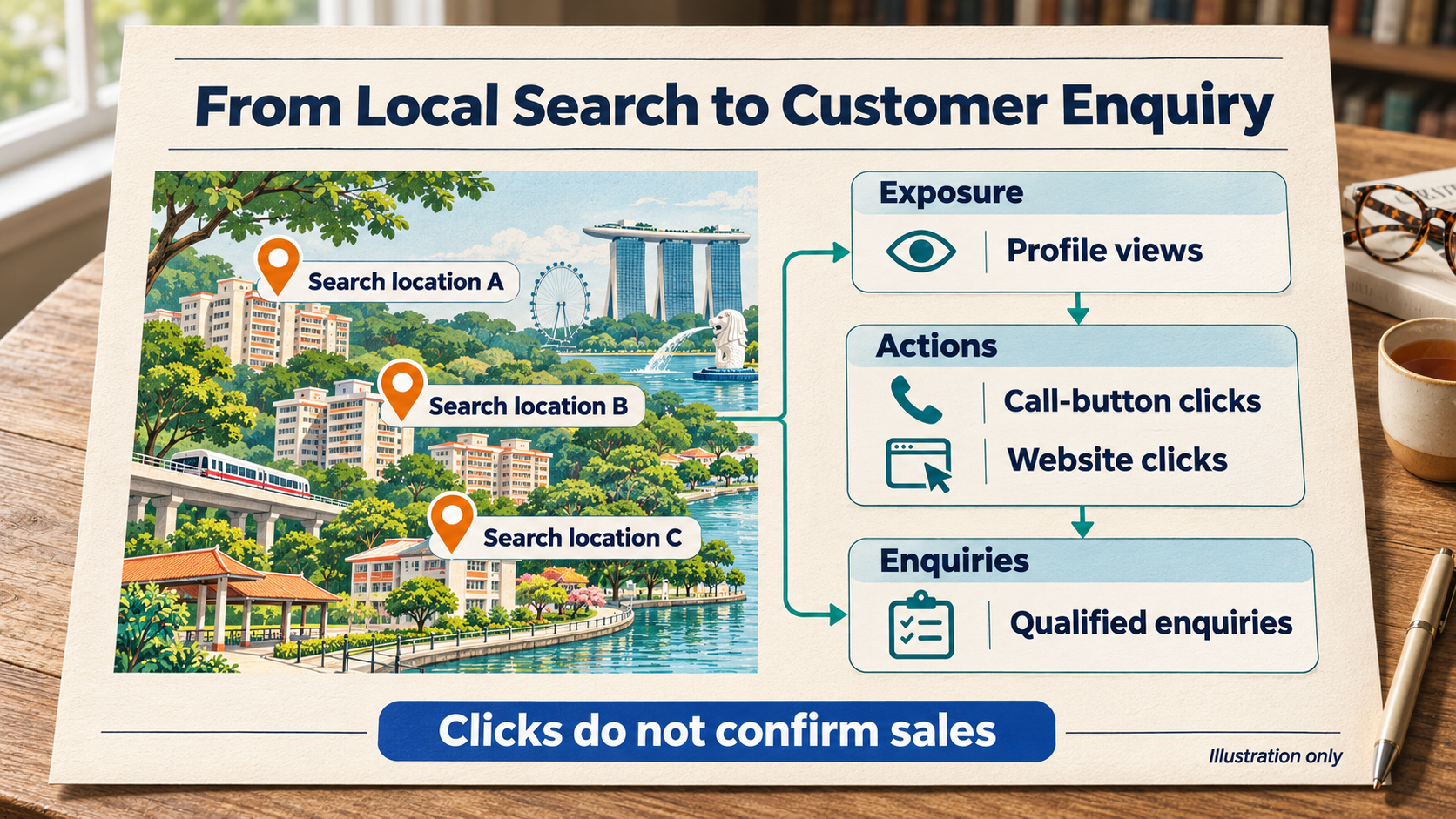
Measurement needs two views: where the business appears and what customers do afterwards. Neither view provides the full answer alone.
A baseline should record the date, search phrase, search location, device and search surface. The same conditions should guide later comparisons.
Search checks across nearby areas
A starting list might contain five to ten service searches based on actual enquiries. Branded searches and general service searches should remain separate.
A café’s own name answers a different question from “breakfast near me”. Strong branded visibility does not establish that new customers can find the café through general searches.
Location-based rank tracking can reveal where results change. Any map grid should show its search locations and settings, without presenting a single city-wide position as universal.
Profile actions and completed enquiries
Google’s Business Profile performance report includes available views and interaction metrics. Its “calls” metric records call-button clicks, not confirmed conversations or sales.
| Measure | What it helps assess | Limitation |
| Search-location checks | Presence for selected searches and places | Covers only the tested conditions |
| Profile views | Exposure on supported Google surfaces | Does not prove someone became a customer |
| Call-button clicks | Interest in telephone contact | Does not confirm a completed call |
| Website clicks | Traffic from the profile link | Does not confirm an enquiry |
| Direction requests | Interest in reaching the premises | Does not confirm a visit |
| Qualified enquiries | Relevant demand received by the business | Needs reliable enquiry records |
A business should connect these measures without assuming every change has one cause.
Interpreting changes without jumping to conclusions
More views with fewer enquiries can have several explanations. Search demand, service availability, unanswered calls or a broken form may contribute.
A fall in visibility also needs investigation before changing the category. The team should check profile status, recent edits, search locations and seasonal demand.
Monthly reviews can compare similar periods and note changes made. A short activity log helps distinguish a sustained pattern from a single unusual day.
Turning the Audit Into a First-Week Plan
A useful action plan assigns responsibility and a checkable result to each task. The work should start with problems that prevent customers from finding or contacting the business.
| Timing | Task | Evidence of completion |
| Day 1 | Review eligibility, access and profile status | Recorded access and unresolved issues |
| Day 2 | Check categories, hours and contact details | Accurate published information |
| Day 3 | Test the review-request process | Working link and neutral wording |
| Day 4 | Correct important external listings | Logged corrections and live updates |
| Day 5 | Test website actions and record a baseline | Successful test enquiry and reporting record |
The schedule is an organisational example, not a ranking timetable. Some corrections require platform review or another account owner.
A blocked account issue should remain visible in the task list. Meanwhile, the team can repair a website form or correct information it already controls.
Improve Local Pack Visibility With an Accurate Profile and Measured Results
Local pack visibility depends on the search, the location and the information Google can use about a business. The five-part audit turns that broad challenge into specific checks across eligibility, profile details, reviews, listings and website performance. Customer enquiries then show whether the work supports business goals.
At MediaOne, we connect local SEO services with profile improvements, website content and reporting. Our team can review the gaps affecting a business’s local presence and help prioritise the work. A consultation can establish the services, locations and customer actions the campaign needs to support.
FAQs About Local Pack Visibility
How long does a Local Pack improvement take?
Google provides no fixed timetable for earning a position. A published correction and a ranking change are separate events. A business should record when an edit appears, then compare visibility and enquiries over time without treating an immediate movement as proof of lasting progress.
Does paying for Google Ads improve unpaid local rankings?
Google states that businesses cannot pay for a better local ranking. Advertising and unpaid visibility need separate expectations. A paid campaign may generate customer activity, but its budget does not purchase an unpaid Local Pack position.
Can a business remove a negative review?
A negative opinion does not automatically qualify for removal. A business can flag a review that appears to violate Google’s content policies. The report should identify the relevant issue; disagreement with the customer’s rating alone does not establish a violation.
Should staff write sample reviews for customers to copy?
Customer reviews should reflect the customer’s own experience. Staff-written scripts can influence the wording and weaken the independence of the feedback. A neutral invitation and direct review link give customers a way to respond without supplying praise for them to reproduce.