| AI Summary
White label SEO lets Singapore agencies buy search engine optimisation from a specialist and resell it under their own brand. Agencies can outsource audits, page updates, content, local SEO or reporting while keeping responsibility for client approvals and quality. A fair provider comparison uses the same scope, total delivery cost in Singapore dollars, and proof from sample work. A paid pilot on one account can reveal how the provider handles deadlines, revisions and reporting before an agency commits more clients. |
White label SEO is an arrangement in which an agency pays another company to carry out SEO work and sells that work under its own brand. The provider delivers agreed tasks, such as audits or content. The agency sets the client price, reviews the work and remains the client’s point of contact.
An agency can have enough demand for SEO and still lack the staff to deliver each new account. White label SEO gives a Singapore agency a way to cover that gap. The business case depends on which work the partner can take on and how much review the agency still needs to do. A buying decision starts with one client, one defined scope and a price the agency can explain.
Key Takeaways
- A quote becomes easier to compare once every provider prices the same pages, deliverables and reporting period.
- Monthly reports should show what went live, what changed in search and who owns the next action.
- An illustrative S3,000clientpackageleavesS790 after S$2,210 in direct delivery costs, before general agency expenses.
- A paid pilot should test the actual team, including how it handles a missed deadline or a revision.
- Client accounts and work files need named owners before access is shared.
How White Label SEO Works
A white label SEO arrangement usually involves three parties. The client pays the agency. The agency buys delivery from a specialist provider. The provider sends work to the agency, which reviews it before sharing it with the client or publishing it. The parties can also agree that a provider specialist joins selected calls. The agency sets those terms before work begins.
A web design team, for example, might sell a post-launch SEO package to a Singapore retailer. The provider checks how Google can find and index the new pages, suggests page edits and prepares a report. The design team approves the changes with the retailer, assigns the fixes and explains what the next month will cover. The retailer has one team to contact about the work.
| Delivery option | When it suits the agency | What the agency needs to manage |
| In-house team | Client work is steady enough to support staff with the right skills | Hiring, training and cover during busy periods |
| Freelance specialist | A project has a defined need, such as checking a site move | Availability, handover and review |
| White label partner | Several clients need repeatable work across one or more SEO areas | Scope, quality checks and client communication |
A good first purchase is work the agency already knows how to review. A team that understands ecommerce can check whether proposed edits suit a category page. It may need a technical reviewer for a site move involving thousands of URLs. The agency should identify that reviewer before selling the work.

Which White Label SEO Services Should You Buy?
The client’s problem should determine what the agency buys. A clinic with outdated opening hours has a different need from an online shop with thousands of product pages. A written quote should name the work, the pages or locations it covers, and what the provider hands back. Google’s SEO starter guide explains the basics of how search engines find and understand pages.
SEO audits and technical fixes
An audit should tell the agency what to fix first, which URLs are affected and how to check each fix. For example, an audit of a retailer might find that links still point to old category pages after a site move. A useful handover gives the web team the affected URLs and the intended destinations. MediaOne’s SEO audit illustrates the kinds of website issues an assessment can cover.
An audit and implementation can be separate purchases. The quote should name who edits the site, who checks the work after it goes live and how much developer time the agency should allow. A provider that delivers a spreadsheet may have completed its scope even if every issue remains open.
Keyword research, on-page SEO and content
Keyword research should connect each search topic to a page and a reason for targeting it. A shopper searching for “office chair delivery Singapore” may need a product category with delivery fees and timelines. Someone searching for “how to adjust an office chair” needs a guide. A list of search volumes alone leaves those decisions to the agency.
A provider quoting for on-page SEO should say whether the work includes titles, headings, internal links and publishing. For content, one paid sample can show whether the writer answers the search question, checks claims and follows the client’s tone. The agency should also settle who approves changes to product details, service terms or prices.
Local SEO and link building
Local SEO quotes should specify each location and the tasks covered, such as checking Business Profile details, reviewing location pages or tracking calls and enquiries. Google explains that local rankings depend mainly on relevance, distance and prominence. An agency that serves several outlets should account for each location separately. Google reviews and local search visibility can also form part of that review.
Link building calls for closer review because the work takes place on other sites. The provider should explain how it chooses publishers, how each link is obtained and whether payment is involved. Google’s link spam policies cover links created mainly to influence rankings. A sample of live placements can help the agency spot weak publisher choices and private blog network risks.
How to Compare White Label SEO Pricing in Singapore
White label SEO quotes usually make sense once the agency puts them on the same footing. Each shortlisted provider should price the same client, month and service list. A one-off audit fee, an hourly block and a monthly campaign fee cover different kinds of work. A Singapore digital marketing cost guide gives context for retail budgets. The agency’s supplier comparison needs wholesale quotes for the exact work it plans to resell.
| Pricing model | When it suits the work | What to confirm |
| Per deliverable | A defined audit, brief or set of page edits | Quantity, page limits, revision rounds and publishing |
| Hourly block | Technical support or work that changes month to month | How time is logged, what uses the allowance and what an extra hour costs |
| Monthly retainer | Recurring delivery across a set group of clients | Included work, account limits, reporting and fees for extra work |
Compare all-in costs in S$
A quote should show the invoice currency, payment fees, taxes where charged and any planned price change after the pilot. For a foreign-currency quote, the agency can note the exchange rate and date it used, then apply the same method to each quote. A separate total for add-ons makes it easier to see what the agency would pay in an ordinary month.
Internal time belongs in the comparison too. Account managers still handle calls and approvals. Editors may need to check drafts before the client sees them. If a provider charges for revisions or bills meetings against an hourly allowance, the agency should include those costs. A written quote can also specify when a new client qualifies for a volume discount and what happens if the account count falls again.
A worked example for one client
Suppose a Singapore agency sells a monthly SEO package for S$3,000. Both providers quote for the same pages and monthly report. The figures below illustrate how review time, paid revisions and other direct costs affect what is left after delivery.
| Monthly cost for the same scope | Provider A | Provider B |
| Provider fee | S$1,500 | S$1,780 |
| Agency review and client service | S$450 | S$300 |
| Extra revisions | S$350 | S$100 |
| Payment and tool costs | S$50 | S$30 |
| Total direct delivery cost | S$2,350 | S$2,210 |
| Amount left from the S$3,000 client fee | S$650 | S$790 |
Provider B charges S$280 more for its work, yet costs S$140 less to deliver in this example. The S$790 is about 26% of the client fee before general agency expenses. During the pilot, the agency can replace its estimates with actual staff time and revision charges. That gives it a better basis for deciding whether the client price can support the work.
Check how far an hourly package will go
A 40-hour package spread across 10 accounts averages four hours per account. A site move could take up 12 of those hours in a single month, leaving 28 for the other nine accounts. The agency can ask the provider for a sample time log, then check how research, meetings, edits and reporting would use the hours across its real mix of clients.
What a White Label SEO Report Should Show
A client-ready report should connect work to results and next actions. It should state the reporting dates and comparison period, name the data source and separate completed work from work still awaiting approval. Google Search Console’s metric definitions explain how impressions, clicks and average position are counted. A report should name these measures plainly so clients know what a change represents.
| Report section | What the client should see |
| Work completed | A short list of changes, with affected pages and dates |
| Search performance | Clicks and impressions, with the period and filters shown |
| Client outcomes | Agreed actions such as calls, forms or sales, with the data source named |
| Next actions | What comes next, who owns it and when it is due |

Test the report with a client question
A report sample should survive a question your account manager might hear. If clicks fell while impressions rose, the provider can show which pages or queries drove the change. It should separate what the data shows from any proposed explanation. A page may have reached more people on a broader set of searches, for example, while fewer of those people clicked.
A branded report needs a final check before it reaches the client. The agency should open the exported PDF, test the report links and check the file name, footer and sender details. An account manager should be able to present the report without asking the provider to interpret every chart. The provider can include revision rates or missed deadlines in a separate agency review.
Keep client data available through a handover
Client-controlled accounts can give the agency and provider the access their roles require. Search Console’s user permissions explain which actions owners and users can take. The agency should check that it can export the relevant data and that the client can remove supplier access when work ends. A sample handover can show whether the client will receive reports, page-change logs and work files in formats the next team can use.
How to Score and Shortlist SEO Providers
A shortlist should compare providers on proof. Each candidate can quote on the same account brief and return a sample audit, sample report and written scope. A case study carries more weight when the provider can explain when the work took place, what its team did and how it measured the outcome. Google’s advice on hiring an SEO also recommends checking references and treating first-place ranking guarantees with caution.
Score six areas from zero to ten
This scorecard is an agency buying tool. A score of zero means the provider offered no evidence, five means the evidence meets the agency’s minimum, and ten means it meets the full requirement with proof. An agency can set five as its pass mark for each area it needs. A high total should carry little weight if the provider fails a requirement such as access control or documented approval for site changes.
| Area | Evidence to request |
| Delivery process | A sample audit or page brief with a named reviewer and approval record |
| Communication | An account lead, available hours in Singapore time and backup cover |
| Reporting quality | A branded sample with dates, sources and next actions |
| Pricing clarity | An itemised S$ comparison with revision limits and extra fees |
| Capacity | The number of accounts the team can take on and how it handles excess work |
| AI search measurement | A list of tracked questions, a sample results log and a defined measure, if the quote includes it |
Review the work with the team that will deliver it
A sales call shows how the provider presents the service. A walkthrough with the delivery lead shows how work moves from a brief to approval. One candidate might flag that the client’s product data needs checking before it writes category pages. Another might promise the same deadline without asking for that data. The agency can use those answers to judge whether the proposed schedule reflects the work involved.
References help when they cover a similar client or task. An agency buying local SEO for several outlets can ask for a reference that has dealt with location approvals and branch reporting. If a provider protects client identities, a redacted report and a paid sample still give the agency evidence it can assess directly.
A Step-by-Step Checklist for Your First Engagement
A paid pilot on one account gives the agency a chance to see the provider’s work before adding more clients. The pilot should cover a complete delivery cycle, from the first brief through at least one client-ready report. The agency can use that cycle to judge how the provider works while search results have time to develop.
- Define the work. The pilot brief names the client’s goal, the pages or locations in scope, the number of edits or drafts and the date the report is due. A retailer’s scope might cover one category audit, three page updates and a report on search enquiries.
- Set service and revision terms. The written agreement names the lead and backup contact, the hours of overlap with Singapore, turnaround times and included revisions. It also sets out who approves extra fees and what happens if a deadline slips.
- Agree on access and handover. The agency checks its client agreement before sharing account access or files. The provider’s terms cover confidentiality, file ownership and return, and the steps for removing access when the work ends.
- Record the starting point. The first brief includes target pages, key search terms, recent search data and how the client counts an enquiry. Known issues, such as a broken form or a recent site move, go into the baseline so the team can interpret later results.
- Review the first delivery. The agency checks a sample of edits against the brief and compares actual staff time and revision costs with its quote. The review records which tasks shipped on time, whether the provider flagged issues early and whether the account manager could use the report.
- Decide whether to extend. The account lead records what passed, what needs a fix and when the next decision is due. If the work passes, the agency can add accounts in small batches and check that delivery times and review standards hold.
Set the resale scope before the client signs
The client proposal should say what the fee buys, which changes require approval and what the agency measures. The account manager can show how the first month differs from later months. For example, the first month may cover an audit and changes to three pages, while later months cover ongoing updates, monitoring and reporting. A defined scope helps staff explain extra requests without turning every call into a pricing discussion.
Test AI visibility if it is part of the pilot
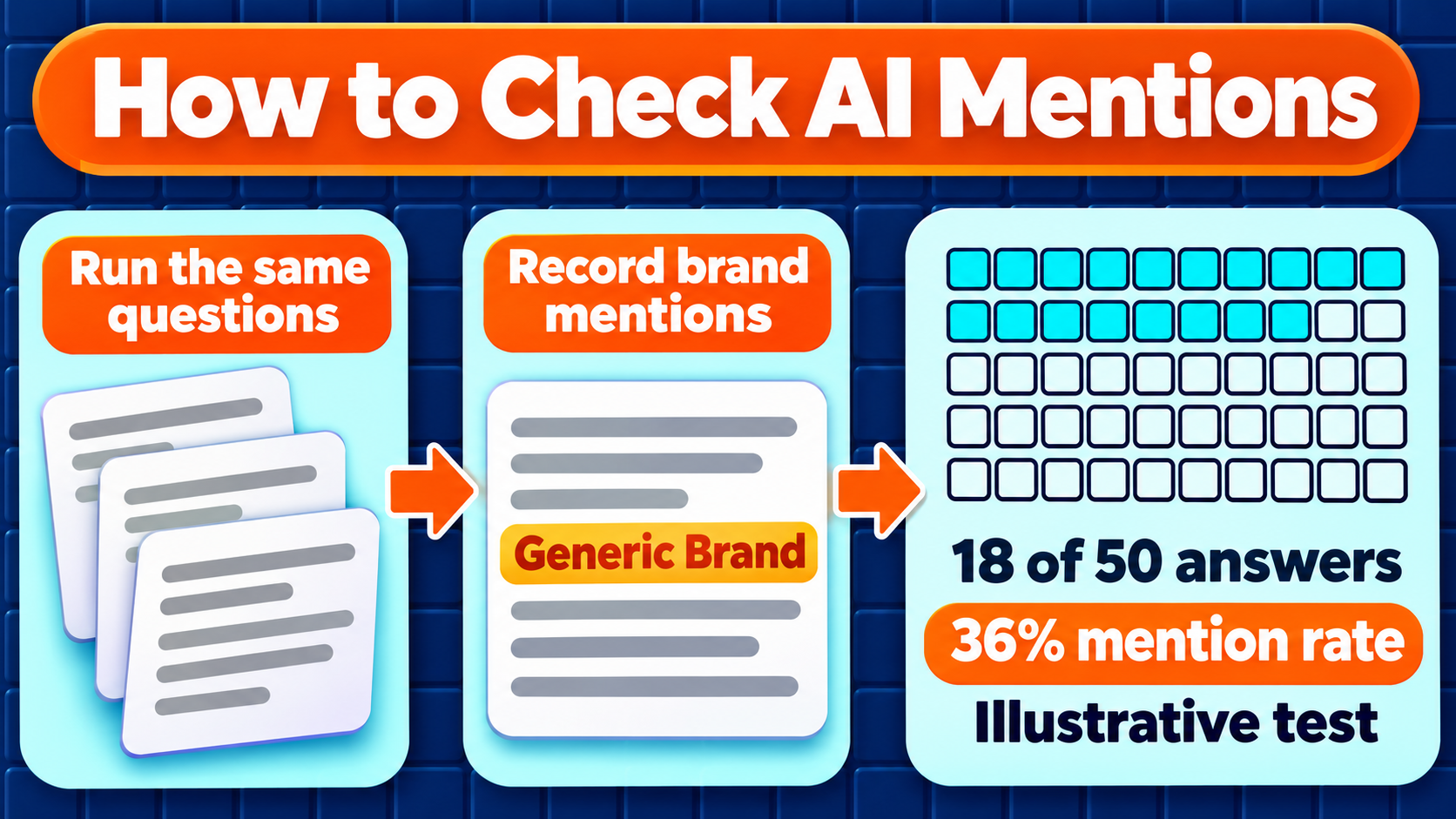
An AI search add-on needs a repeatable method. The provider should record the platform, the exact questions, the date and any location settings. It should also separate brand mentions from links that cite the client’s website. A brand name can appear in an answer without a link, so the two measures can tell different stories.
For an illustrative test, the agency could run 50 agreed questions and find the brand mentioned in 18 answers. That gives a 36% mention rate for that test set. A later check can reuse the same questions and settings. Google’s documentation on AI features in Search explains how traffic from Google’s AI features is included in Search Console’s overall web search reporting. A separate prompt test records answers observed under the provider’s own test conditions.
Choosing a White Label SEO Partner for Your Agency
A white label SEO partner earns a wider contract when the agency can sell the scope, check the work and cover its costs. A single-account pilot gives the agency real delivery times, revision costs and a report it can take into a client meeting.
At MediaOne, we can help you assess the SEO services your client needs and the work your team can manage. A conversation with our Singapore team can start with one client brief, the pages in scope and the results you need to report.
FAQs About White Label SEO
What is the difference between white label SEO and an SEO referral?
With white label SEO, the agency sells and manages the work under its own brand. With a referral, the client usually signs with the SEO provider directly. The referring agency may receive a fee if the parties agree to one. The two models give the agency different roles in billing, approvals and day-to-day client service.
Can a client keep its current SEO provider while the agency buys a separate service?
Yes. An agency can buy an audit or a content project while the existing SEO provider keeps its regular work. The client should give each team a list of pages and tasks it owns. A shared change log can help the teams see who updated a page and avoid changing it twice.
Can an agency carry the same white label package into another country?
An agency can reuse the service structure, such as the number of page briefs or reports. The work itself should reflect local search terms, language, competitors and customer needs. A package made for Singapore should be scoped again for Malaysia or Australia before the agency quotes the same fee or timeline.
Who should write the brief when a client changes its offer?
The account lead should confirm the new offer with the client, including what changed and when it takes effect. The provider can then identify affected pages and search topics. If a retailer ends free delivery, for example, the client confirms the new terms and the provider checks where the old terms still appear.