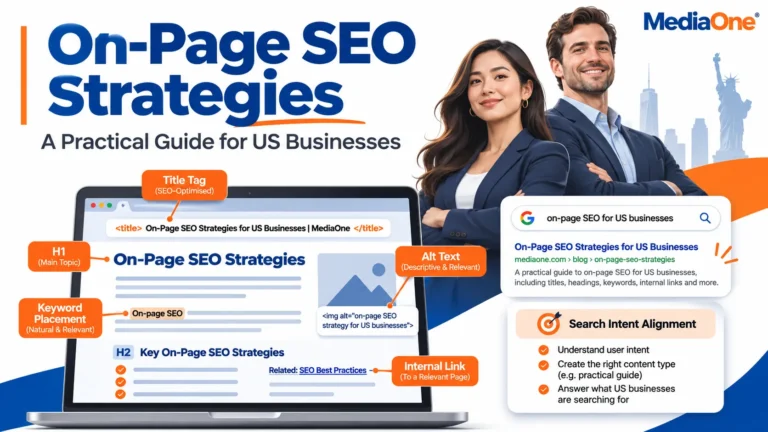
On-page SEO is the process of making a specific webpage the best possible answer to a particular search need. It includes the page’s topic, search intent, title, headings, content, internal links, images, structured data, and the visitor experience after they click. You do not need to repeat a keyword a prescribed number of times or publish the longest page in the results.
A better starting question is: What did this visitor come to accomplish, and what would make this page genuinely useful enough to choose? A page selling emergency plumbing repairs should help people obtain urgent assistance. A guide to replacing a water heater should provide clear steps, safety boundaries and costs. Both may mention plumbing, but neither should try to perform the other’s job.
This expanded guide is designed for US small businesses, publishers, e-commerce teams and marketing managers who want a repeatable optimisation process. It contains a ten-point Intent-to-Element audit, complete before-and-after examples, Search Console instructions, WordPress implementation tips, troubleshooting scenarios and a 30-day action plan. Examples and numbers marked illustrative are teaching scenarios, not claimed client results.
Key Takeaways
- Diagnose the page before rewriting it. Check indexing, search queries, impressions, position, clicks and user actions. A page cannot fix every problem through content edits.
- Define one dominant search intent per page. Closely related questions can live together; genuinely different tasks may deserve separate pages.
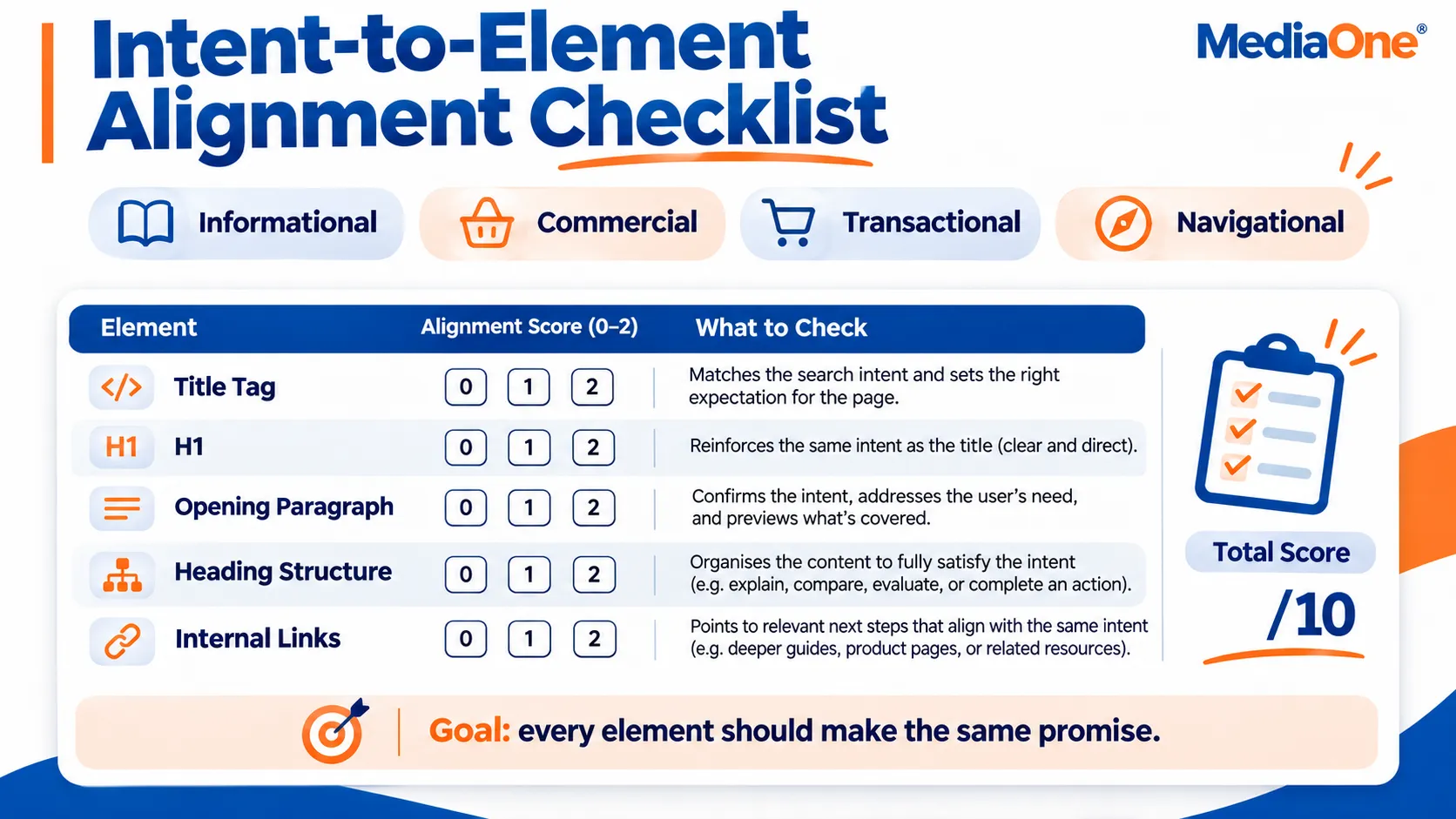
- Use an Intent-to-Element scorecard. Score the title, H1, opening answer, section structure and internal-link context 0–2 each. This 0–10 editorial rubric is ours, not a Google ranking metric.
- Make the result compelling but accurate. Google can generate title links and snippets from sources other than your title tag and meta description; no character count or pixel width guarantees display.
- Add information competitors lack. Original examples, screenshots (where appropriate), first-hand tests, pricing details, comparison criteria, limitations and sources can make the page more useful.
- Keep important links crawlable. Descriptive internal links help visitors and search engines discover relevant pages.
- Measure outcomes, not green plugin scores. Compare relevant impressions, organic clicks, conversions and qualified enquiries using Search Console, GA4 and business records.
What On-Page SEO Is and Why It Still Matters
On-page SEO improves individual pages so they are useful to visitors and understandable to search systems. It overlaps with, but differs from, technical SEO (site infrastructure, access and rendering) and off-page SEO (external references, reputation and links). Changing one page’s title or adding a buyer comparison is on-page work. Fixing a sitewide server outage is technical work. Earning an editorial link from an industry publication is off-page work.
A good on-page strategy connects three outcomes: discoverability (can the page be found and indexed?), relevance (does it satisfy the query?), and usefulness (does the visitor leave informed or able to act?). Even excellent content will struggle if a page is inadvertently set to noindex; and a technically perfect page may disappoint readers if it doesn’t answer their question.
Google’s Search Essentials recommends people-first content, descriptive words in important locations, and crawlable links. Its helpful-content guidance asks whether a page adds original value and leaves visitors satisfied. Those are more reliable principles than any fixed keyword-density formula.
Why on-page SEO matters commercially
Imagine a residential HVAC company in Phoenix. It receives 5,000 monthly organic visits to an article about the history of air conditioning but only 150 visits to its repair page. The blog may be popular without generating much service demand. An improved repair page that explains emergency availability, service areas, diagnosis, costs and scheduling could bring fewer visits but more qualified calls.
SEO performance therefore has two layers: search visibility and business value. A better title might improve clicks; a better page may improve the proportion of visitors who call. Do not assume the first automatically causes the second.
What on-page SEO cannot guarantee
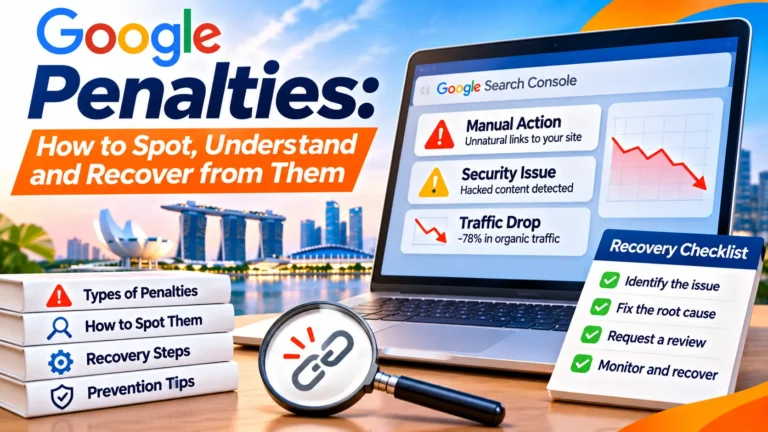
No title rewrite, content score, schema addition or internal link guarantees a particular ranking. Google considers multiple signals, query context and competing results. Rankings also vary by location, device, language and search features. Treat on-page work as an evidence-based improvement process, not a promise of page-one placement.
The Intent-to-Element Alignment Checklist (0–10)
Score each item 0, 1 or 2: 0 = missing or misleading; 1 = partly relevant; 2 = clear and genuinely useful. The maximum is ten. A score of eight is a useful internal quality target, not an algorithm threshold.
| Element | 0 points | 1 point | 2 points |
|---|---|---|---|
| Title link proposition | Wrong or vague topic | Topic named without clear angle | Accurately describes the task and has a useful distinction |
| H1 / main heading | Missing or misleading | Broad topic only | Clear page purpose matching intent |
| Opening answer | Buried, evasive or generic | Partial answer | Direct answer or next step immediately visible |
| Section structure | Repetitive or disorganised | Some useful sections, major gaps | Logical coverage of important follow-up questions |
| Internal-link context | No relevant routes / misleading links | A few generic links | Descriptive links to genuinely helpful next pages |
Worked assessment (illustrative): A page called “Plumbing Services” may score 1 + 1 + 0 + 1 + 0 = 3/10 if it is vague, buries the booking details and has no useful supporting links. After rewriting it for “Emergency Plumber in Austin,” adding service hours, a clear call button, response-area details, a pricing explanation and links to troubleshooting and coverage pages, an editor might score it 9/10. That is an assessment of page completeness, not proof that Google will rank it higher.
Use the rubric to prioritise edits. If the opening answer is missing, fix it before polishing an already adequate image filename. Then measure independent outcomes after publishing.
Matching Search Intent Before You Optimize Anything
Search intent is the goal behind the query. The familiar categories are informational, commercial investigation, transactional and navigational. Real queries can combine them, especially local searches.
| Search query | Likely intent | Suitable page | Critical answer near the top |
|---|---|---|---|
| “how to unclog a kitchen sink” | Informational | Step-by-step guide | Safe steps, tools, and when to call a plumber |
| “best tankless water heater 2026” | Commercial comparison | Comparison guide | Models, selection criteria, trade-offs |
| “emergency plumber Austin TX” | Local transactional | Service landing page | Service area, availability, contact method |
| “Acme Plumbing contact” | Navigational | Contact page | Accurate phone, address and hours |
A seven-minute search intent investigation
- Search the target phrase in the country and market you serve. For US firms, check relevant US results and, where possible, your service location; do not assume what you see personally represents every customer.
- Record the types of top results: service pages, product listings, guides, videos, forums or maps.
- Note what searchers need to decide: prices, definitions, steps, availability, photos, trust evidence or comparisons.
- Identify the questions the existing results leave unclear.
- Choose a page format that satisfies the dominant purpose; do not copy competitor word counts merely because their pages rank.
- Write a one-sentence page promise: “After reading this page, a visitor can ___.”
A query such as “roof replacement cost Texas” might require price ranges, roof types, labour factors, financing considerations and a quote process. A page containing only “contact us for a quote” may be commercially relevant but leaves the principal question unanswered.
What if the search results contain mixed intent?
Mixed results signal which audience you can serve convincingly. For “home security cameras,” shopping results and explanatory articles might both appear. A retailer could build a category page with concise buying guidance and product comparisons. A publisher might produce a review guide. Do not cram two unrelated journeys into one page purely to capture every variant.
How intent changes after a page is published
Search result composition can change. An informational query may become purchase-oriented; new products may appear; local map results may dominate. Recheck intent when the page loses important queries over a sustained period. Also check for sitewide changes, competitors, seasonality and measurement errors before concluding the page itself is the cause.
Keyword Research and Keyword Optimization
Keywords are evidence of demand, not a script to repeat. A good keyword map assigns a coherent group of closely related searches to a page that can satisfy them. A “seed keyword” helps research; it should not force unnatural wording into every heading.
Build the map from customer language
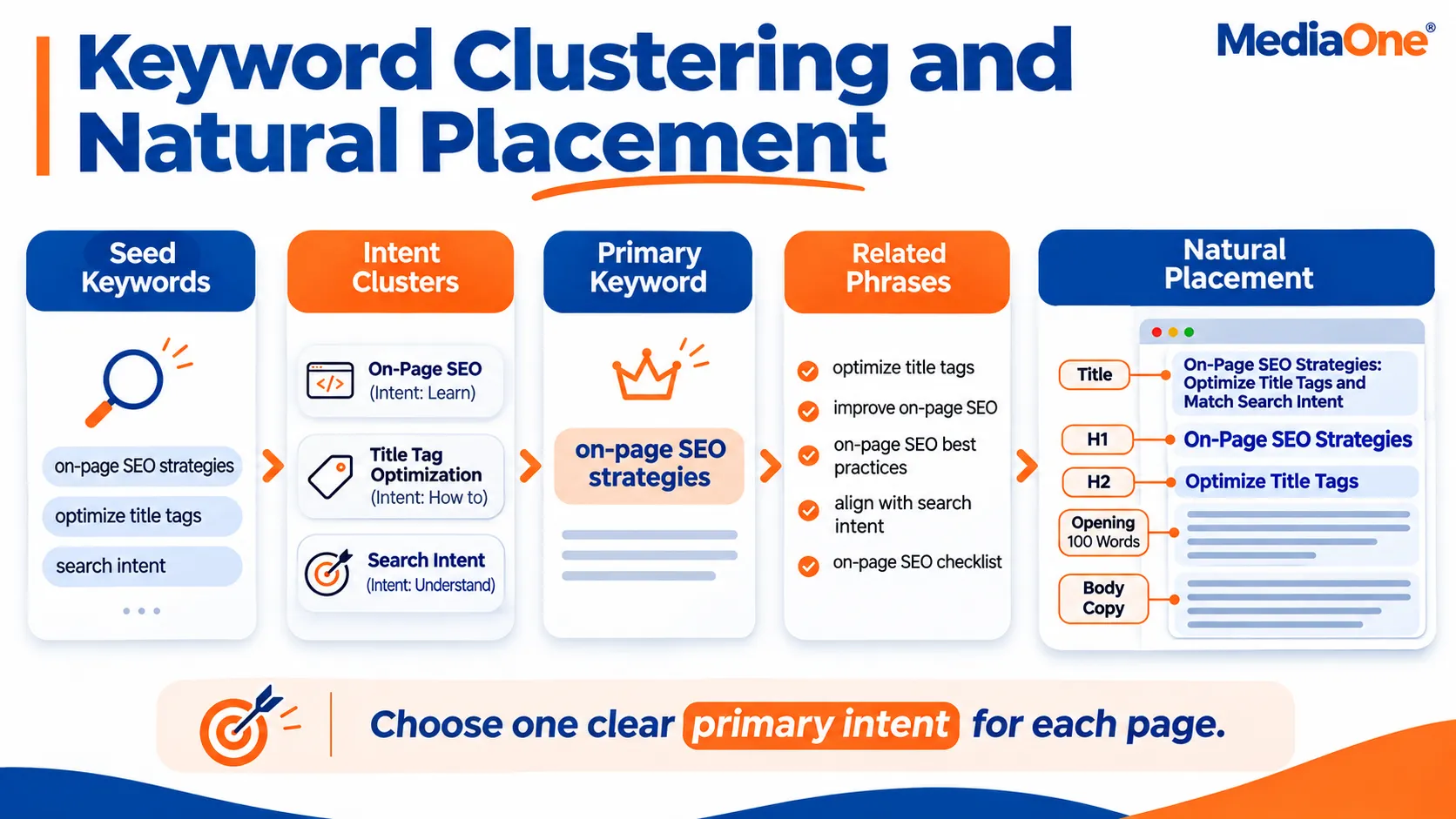
Start with questions from sales calls, service tickets, product reviews and live chat. Add queries already visible in Google Search Console, then expand using a research tool such as Ubersuggest, Semrush, Ahrefs or Google Keyword Planner. These tools use different datasets and modelling; their search-volume and difficulty estimates are directional, not exact.
A small HVAC company might group the following searches:
| Cluster | Primary page intent | Example phrases | Content decision |
|---|---|---|---|
| Emergency repair | Book urgent help | emergency AC repair Phoenix; AC not cooling urgent | One service page with clear contact options |
| Pricing | Understand costs | AC repair cost Phoenix; diagnostic fee HVAC | Cost explainer linked from service page |
| Routine maintenance | Book scheduled service | AC tune-up Phoenix; HVAC maintenance plan | Separate maintenance service page |
| DIY diagnosis | Learn or troubleshoot | why AC blows warm air | Helpful guide with safety boundary and service link |
These should not all be forced into an “AC services” homepage. They represent different decisions, and some warrant different URLs.
How to use Ubersuggest without depending on one tool
Enter a relevant seed phrase in Keyword Ideas (available options and limits can change). Choose the target country or market, review suggestions, then manually classify by intent. Retain candidate terms where your page can provide meaningful information. Verify the actual search results, and avoid creating separate articles for variants that ask essentially the same question.
Combine potential business value, search intent match, existing visibility and feasibility. A high-volume informational term may be less valuable than a narrow query from someone ready to enquire. For existing sites, Search Console queries with meaningful impressions and weak relevant performance are often more useful starting points than speculative keyword lists.
Keyword placement: practical, not mechanical
Use natural terminology in the title, main heading, early explanation and relevant sections where it helps readers. Google Search Essentials also recommends descriptive link text and suitable image alt text. That does not mean every page requires the exact phrase in an H2, every image alt attribute or the first 100 words. Accessibility and accuracy take priority over checklists.
Avoid repeating “best on-page SEO strategies” in paragraphs where the language becomes awkward. Cover the related decisions people actually face: choosing an intent, evaluating a title, organising sections, linking to supporting pages and measuring a change.
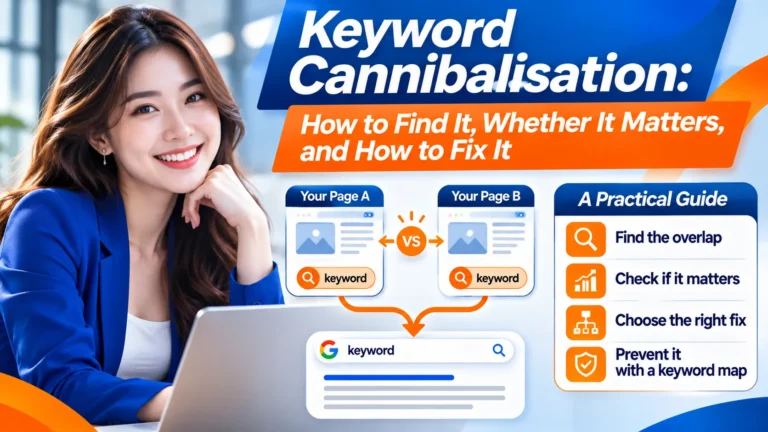
Avoid keyword cannibalisation
Two URLs may compete for overlapping searches when they cover indistinguishable intent. Overlap is not automatically a problem: Google can rank more than one page from a site or choose different pages for different queries. Investigate when impressions, clicks or the ranking URL shift unpredictably between near-duplicates.
In Search Console, filter by a query and inspect the Pages tab. Compare which URLs are receiving impressions and whether both satisfy distinct needs. If they duplicate the same job, consider consolidating useful content into one stronger page, redirecting a genuinely retired URL where appropriate, and updating internal links. Do not merge pages solely because they share a keyword.
Title Tags, Meta Descriptions and Heading Structure
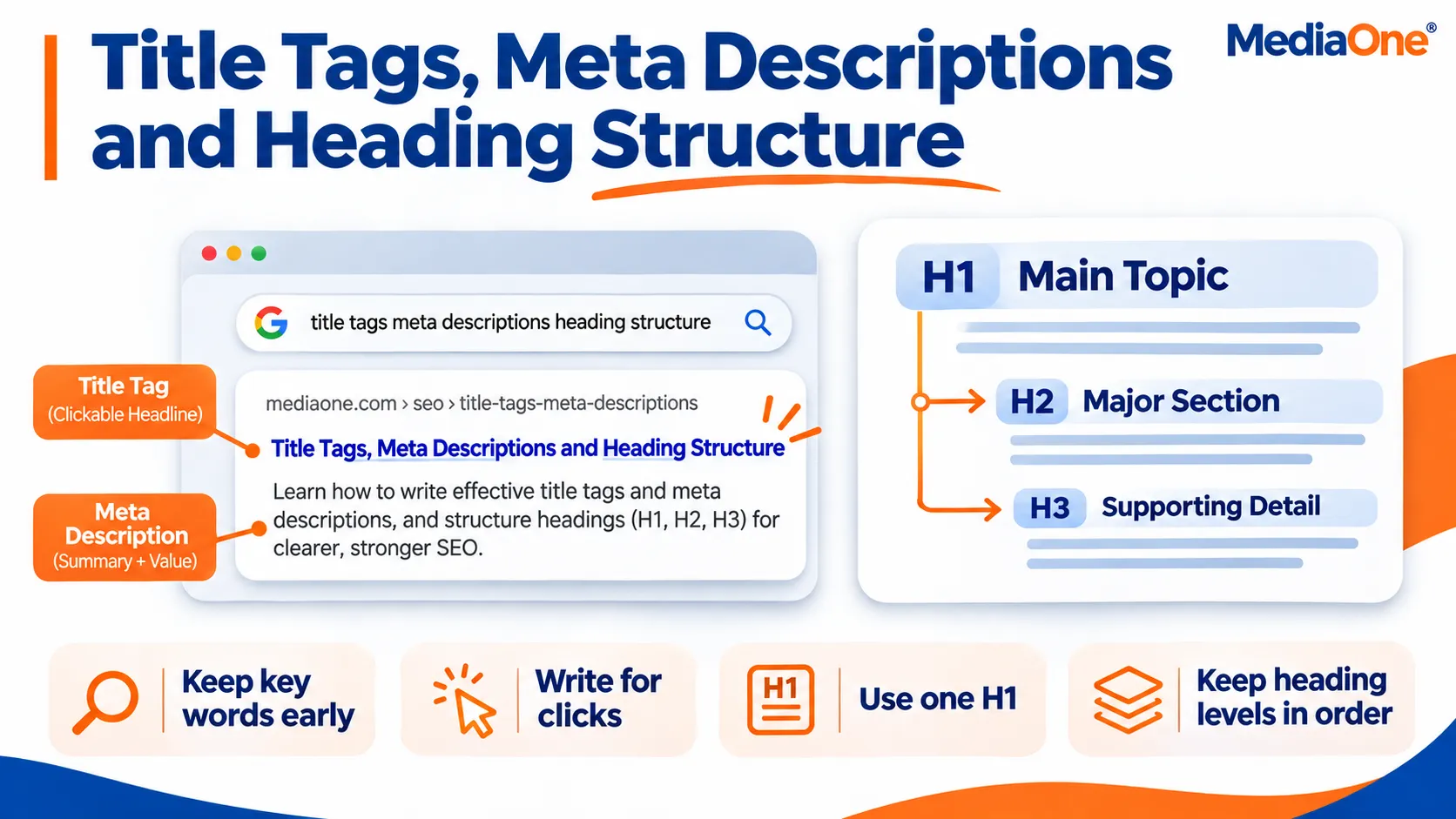
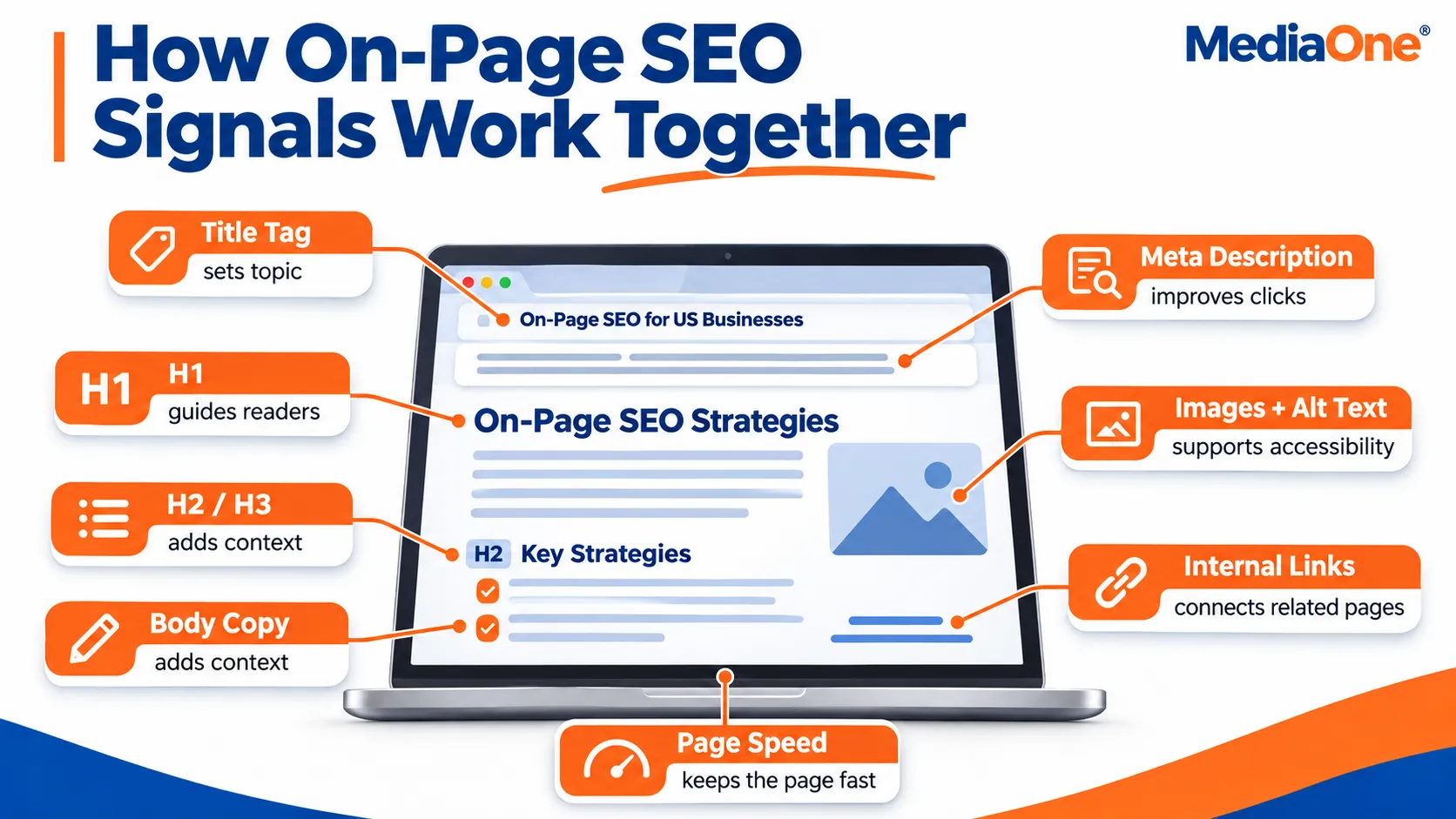
The search result is a promise; the page must deliver it. Your HTML title is an important input into Google’s title-link generation, but Google may also use the main visual title, headings and other signals. A meta description may contribute to the search snippet, though Google often extracts page text instead.
Write titles that state value, not just the keyword
Weak: “Roof Repair Services”
Better: “Roof Repair in Dallas: Leak Detection, Pricing & Booking”
Why: The revised title identifies the service and market and points to information that buyers need. It should only mention pricing if the page explains pricing meaningfully. Avoid invented promises such as “Same-Day Guaranteed” unless the business can substantiate them.
There is no fixed Google rule requiring 60 characters or a 600-pixel limit. Different devices and result layouts truncate titles differently, and Google may generate a different title link. Keep the main meaning early, write naturally and review the live result after Google recrawls the page.
Write meta descriptions as useful summaries
Weak: “We provide excellent roofing services at the best prices. Contact us today.”
Better: “Learn what affects roof repair costs in Dallas, how our inspection works and how to request a written estimate.”
The better version summarises actual page content. Google’s snippet documentation says snippets are often generated from page text and can change with the query. There is no guaranteed 155-character display length. Avoid identical descriptions across a large number of distinct pages.
Headings should describe the reader’s journey
Use an H1 as a clear main heading and H2/H3 elements to organise subtopics logically. One H1 is a useful editorial convention, but multiple H1 elements are not automatically an SEO penalty, nor does every skipped heading level imply a ranking problem. Prioritise logical structure and accessibility.
A service page could use:
- H1: Emergency AC Repair in Phoenix
- H2: Signs You Need Immediate AC Repair
- H2: What Our Technician Checks
- H2: Emergency Service Areas and Availability
- H2: Typical Repair Costs and What Changes the Price
- H2: Book a Repair Appointment
This structure gives customers the information needed to decide. Adding an unrelated “What Is Air Conditioning?” section purely to extend the article is usually unnecessary.
On-page rewrite: before and after
Illustrative example. An original service page starts: “Welcome to Acme Cooling. We are an industry-leading provider dedicated to excellence.” Its H2s are “Our Mission,” “Our Team” and “Get in Touch.” The page has little explanation of what customers receive.
A revised opening says: “If your AC has stopped cooling in Phoenix, our repair team can diagnose common failures, explain the options and provide an estimate before work begins. Check the service areas and current appointment availability below.” Its sections answer the buyer’s practical questions.
The improvement is not keyword frequency. The new copy clarifies the transaction. Confirm factual details and actual business policies before using similar claims on a live site.
Images, Alt Text and Section Structure
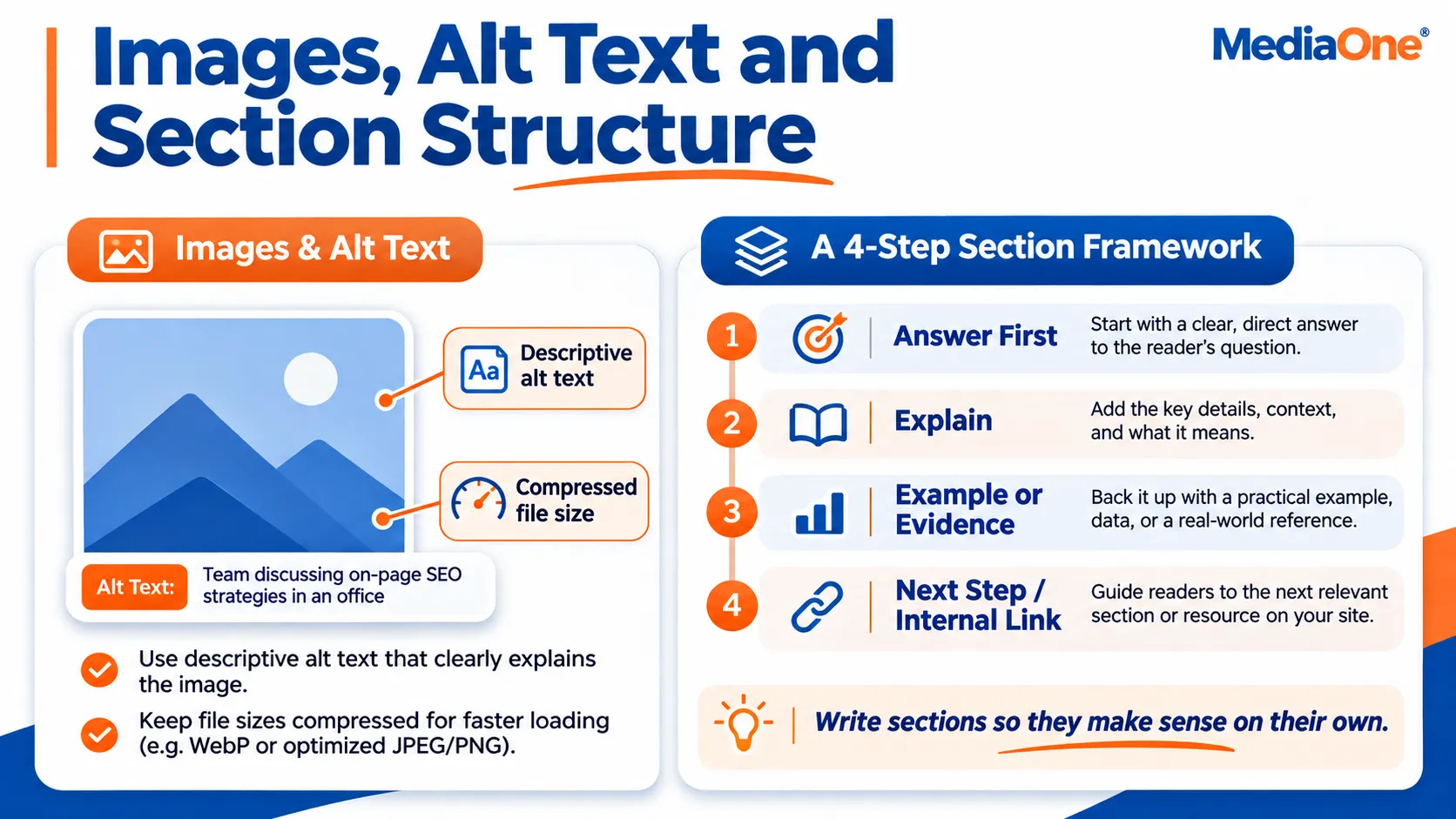
Images can support understanding: a product-detail photo, a real before-and-after repair example, a labelled process diagram or a screenshot of an actual tool. Decorative stock visuals add little explanatory value. This article intentionally uses no images, but the principles below still apply when readers use them on their websites.
Alt text that helps humans first
Alt text describes meaningful visual content for people who use assistive technology. It also provides useful information to search engines. Examples:
| Image | Poor alt | Better alt |
|---|---|---|
| Technician diagnosing a compressor | “best HVAC repair Phoenix cheap HVAC” | “Technician checking an outdoor AC compressor” |
| Bar chart of service costs | “SEO graph” | “Estimated repair costs by service type, with compressor replacement highest” |
| Decorative blue divider | “blue SEO separator” | Empty alt attribute (alt="") |
Do not invent detail that the image does not show. There is no universal 125-character SEO rule; use enough words to convey the necessary meaning, and ensure complex charts have supporting text or a table nearby.
File formats, dimensions and loading
Use an appropriate format such as WebP or AVIF for photographic assets when supported, specify display dimensions to reduce layout shifts, compress sensibly and consider responsive image sizes. Lazy-load below-the-fold images where appropriate, but avoid unnecessarily delaying the primary above-the-fold image. Check actual performance rather than assuming a format alone solves speed problems.
Make sections independently useful
A helpful section answers its heading promptly, then supplies context, evidence, examples and next actions. A useful formula is question → direct answer → explanation → evidence or example → action. This can improve readability and make passages easier for people to reference. It does not guarantee inclusion in Google AI Overviews or other AI answers.
Example heading: “How much does a home AC repair cost?”
Useful opening: “The price depends on the faulty component, labour, parts and whether urgent attendance is required. Request a diagnostic quote that separates inspection, parts and labour before authorising work.” Add real prices or verified ranges if available, with a date and geographic context. Avoid a made-up national average.
E-E-A-T in practice
Google’s E-E-A-T framework concerns experience, expertise, authoritativeness and trustworthiness; it is not a simple numerical score a plugin can assign. A useful page shows who produced the information, when it was reviewed, what was tested, how facts were verified, and what limitations apply.
For a product review, document which models were tested and how. For a service guide, include legitimate examples, relevant certifications where verifiable, and transparent policies. For health, finance or legal topics, subject-matter review and reliable sources are especially important. Avoid invented author biographies or fabricated case studies.
Internal Linking, Schema and Page Experience
A site should help visitors move from discovery to a sensible next step. On an HVAC site, a guide about warm air blowing from vents could link to an AC diagnosis article, a repair service page and a service-area page. Use descriptive anchors such as “AC repair appointment options in Phoenix” rather than repeated “click here.”
Prioritise links that readers would reasonably use, not an arbitrary count per 500 words. Make sure core links are rendered as normal crawlable HTML anchors. When changing or consolidating pages, check for broken links and update relevant navigation.
Schema markup: support correct interpretation, not magical rankings
Structured data can help eligible pages appear in enhanced search features, but adding schema does not guarantee a rich result. Select a supported type that matches visible, truthful content, such as Product on appropriate product pages or BreadcrumbList for meaningful navigation. Validate using Google’s Rich Results Test where applicable, and review supported features.
Avoid applying FAQ schema indiscriminately in expectation of prominent FAQ rich results. Google has restricted FAQ rich results, and eligibility depends on current documentation and site type. Structured data cannot turn misleading content into trustworthy content.
Page experience: fix genuine friction
On-page experience includes readability, mobile navigation, accessible controls, clear calls to action and avoiding disruptive overlays. Technical teams may also inspect Core Web Vitals. Google’s recommended ‘good’ thresholds are LCP ≤ 2.5 seconds, INP ≤ 200 milliseconds, and CLS ≤ 0.1 at the 75th percentile of real-user measurements where sufficient data exists. These metrics are useful diagnostics, not substitutes for relevant content.
A slow hero image, excessive JavaScript, a sticky call button covering the form, or a broken mobile accordion may harm visitors. Fixing the highest-friction issue often matters more to actual enquiries than adding more paragraphs.
An On-Page SEO Audit: Before-and-After Examples
An audit should answer what is wrong, why it matters and what to change. Use a small set of commercially important URLs first, then work outward.
Example 1: Service page attracts impressions but few clicks
Illustrative data only. A home-insulation service page has 8,000 monthly impressions, 80 clicks and a 1% CTR. It appears for cost-related queries, but its title says only “Insulation Services | Company Name.” The page does not explain common price drivers.
Diagnosis: Searchers are seeking an estimate and comparison, but the search result and page are vague.
Action: Add a cost-explanation section based on the company’s real quoting practices; rewrite the title and summary to reflect it; improve the opening and link to a pricing FAQ. Do not change the URL without a real need.
What to measure: Query-level impressions, CTR, clicks, ranking mix, qualified quote requests and whether Google displays the intended title. A higher CTR without more qualified enquiries may not represent a full business improvement.
Example 2: Good rankings, poor conversion
Illustrative data only. A local pest-control landing page gets 300 relevant organic visits a month but only two enquiry forms. The mobile form is difficult to use, and the page offers no explanation of the treatment process.
Diagnosis: Intent may match, but visitors lack confidence or cannot complete the action conveniently.
Action: Explain the actual treatment, safety considerations, service availability and next steps; make phone and form actions usable on mobile; verify event tracking. Test the form itself before trying another title rewrite.
What to measure: Qualified calls, submitted forms, drop-off points and leads accepted by the sales team.
Example 3: Two articles cover the same question
Illustrative scenario. A website publishes both “How to Choose a Commercial HVAC Contractor” and “Commercial HVAC Contractor Selection Guide.” Both give nearly identical criteria. Search Console alternates between the two URLs for similar searches.
Diagnosis: Potential content duplication and unclear page roles, not automatically a Google penalty.
Action: Compare the pages’ audiences, links and performance. If they perform the same job, combine unique material into a stronger guide, preserve useful references and redirect the retired URL where appropriate. Update internal links and inspect the resulting page.
What to measure: Combined query visibility, organic clicks, user engagement and whether the preferred URL consistently serves the intent.
A decision table for prioritising fixes
| Symptom | Inspect first | Likely next action |
|---|---|---|
| No impressions at all | Indexing, canonical, URL Inspection, query demand | Correct eligibility issues or set realistic expectations |
| Impressions but low CTR | Query intent, title link, snippet, position and SERP layout | Make promise clearer; review rich results and search features |
| Clicks but no enquiries | Page offer, mobile UX, forms, attribution, trust evidence | Fix conversion path and content gaps |
| Different URLs rank for same term | Search Console query → Pages | Differentiate, consolidate or improve internal links |
| Traffic fell after site redesign | Redirects, noindex, canonicals, templates, analytics | Technical QA before large-scale rewriting |
| Content scores high but rankings weak | Competitive relevance, originality, technical state, external factors | Improve substance; do not chase plugin scores |
Measuring Results and Troubleshooting Underperforming Pages
The Google Search Console workflow
- Open Performance → Search results and choose the relevant Search type (usually Web).
- Set a time range appropriate for volume and seasonality. Use comparable periods, not only yesterday versus today.
- Filter by the exact URL in the Page filter. Review clicks, impressions, CTR and average position.
- Open the Queries tab to see which searches generate visibility. Note that privacy thresholds and aggregation mean this table may not include every query.
- Export the baseline and record the title, main heading, date of change, competing search features and target intent.
- After publishing, monitor comparable periods. For a specific query, filter it and inspect the Pages tab if you suspect overlap.
Remember that average position is an aggregate across impressions, not a stable rank for all users. CTR can change because query mix, device mix, advertising and SERP features changed. A higher average position combined with fewer clicks does not necessarily mean the on-page edit failed.
Connect organic visibility to GA4 and real business outcomes
Use GA4 to inspect organic landing-page sessions and key events if tracking is correctly configured. Connect lead forms, booked calls, purchases or qualified opportunities to the appropriate page and source where feasible. For service businesses, the CRM should distinguish spam or unqualified submissions from genuine enquiries.
A useful baseline table is:
| Measure | Baseline | After change | How to interpret |
|---|---|---|---|
| Relevant organic impressions | 4,000 | 4,500 | Visibility grew, but query mix may have changed |
| Organic clicks | 120 | 150 | More visits from search |
| Qualified enquiries | 6 | 9 | Better business outcome if tracking is consistent |
| Lead-to-sale rate | 20% | 20% | Sales quality appears stable |
All numbers are illustrative. Do not attribute changes solely to one edit if campaigns, demand or competitors changed. For high-value pages, consider controlled SEO testing when feasible rather than treating every before-and-after comparison as causal proof.
A simple maintenance cadence
Weekly: Look for serious tracking, crawling or conversion failures on priority pages. Monthly: Review query movement, conversion quality and leading pages. Quarterly: Recheck intent, outdated claims, broken links and important competitor changes. Increase frequency for high-risk or rapidly changing topics.
A 30-Day On-Page SEO Improvement Plan
This schedule is an implementation plan, not a guarantee of ranking results in 30 days.
| When | Work | Deliverable |
|---|---|---|
| Days 1–5 | Select 5–10 priority URLs; verify Search Console/GA4; inspect index status and conversions | Baseline and issue register |
| Days 6–10 | Research primary queries, intent and SERP formats; map each cluster to an appropriate page | Keyword-to-URL intent map |
| Days 11–18 | Rewrite titles, openings, headings and critical missing sections; add original evidence | Updated page drafts and change log |
| Days 19–23 | Improve internal links, calls to action, accessibility, schema accuracy and mobile usability | QA checklist and tested pages |
| Days 24–30 | Publish, inspect live output, validate forms, request recrawl where appropriate and set monitoring | Live changes and reporting calendar |
Prioritise high-impact problems. A mistakenly nonindexed revenue page is time-sensitive. A minor title tweak on a page with almost no demand is not. Keep a log of what you changed and why, so later analysis can separate implementation from outcome.
Practical WordPress and Elementor checklist
- Edit the SEO title and meta description using the site’s chosen SEO management system; confirm the live output rather than relying only on the editor preview.
- In Elementor, inspect the actual HTML heading tags; visual font size does not determine whether an element is an H1 or H2.
- Check the page template, theme and SEO plugin for conflicting canonical or metadata output.
- Confirm a business-critical page is not set to
noindexand that a robots or firewall rule is not preventing access. - Test the page on mobile, including forms, fixed buttons, accordions, anchors and navigation.
- Add descriptive internal links from relevant existing pages, not an arbitrary number of links from unrelated posts.
- Run the Rich Results Test if using supported structured data.
- Record the publish date and inspect the page in Search Console, understanding that recrawling and ranking changes may take time.
Conclusion and Summary
Strong on-page SEO is not a contest to maximise keyword repetition, length or plugin scores. It is the discipline of giving the right person a useful answer on an accessible, credible, well-organised page. Identify the query’s purpose, check whether the current page addresses it, then improve the title promise, opening answer, supporting evidence, structure and next steps.
Use the 0–10 Intent-to-Element Alignment Checklist as an internal editorial aid. Pair it with actual search and business data rather than treating it as a Google score. Begin with a few commercially important URLs, fix obvious failures, and keep careful records of changes.
For teams that want specialist assistance, MediaOne provides SEO and digital marketing services. A useful agency engagement should involve transparent diagnosis, documented implementation, quality controls and reporting that connects organic visibility with meaningful business outcomes, without promising guaranteed rankings.
Frequently Asked Questions
What is the difference between on-page SEO and technical SEO?
On-page SEO mainly improves the meaning, structure and usefulness of an individual page, including titles, content, headings, internal links and conversion clarity. Technical SEO focuses on how the website is accessed, rendered, indexed and delivered, including server responses, architecture, canonicalisation, redirects and performance. They overlap: page experience and internal linking require both editorial and technical decisions.
How many keywords should one page target?
There is no fixed number. Choose one coherent search intent and include natural variants that genuinely belong to it. If phrases represent different buyer tasks, separate pages may be appropriate. Do not create near-identical pages for every keyword variant.
Is there an ideal title-tag length?
No fixed limit guarantees Google’s display. Use a concise, descriptive title that puts the key purpose early. Google may generate its own title link from the page and other signals. Review the actual result rather than treating 60 characters or 600 pixels as an algorithm rule.
Does the meta description affect rankings?
It is not generally a direct ranking signal. It may help explain the result to searchers, but Google often creates the snippet from visible content. Write a truthful, specific description and measure search performance rather than merely checking the character count.
Must every page have exactly one H1?
A clear main heading is good for people and accessibility, and one H1 is a simple editorial convention. But Google does not require exactly one H1 as a universal ranking condition. Use headings in a logical hierarchy that makes the page understandable.
They help describe informative images to screen-reader users and provide context for search engines. Use accurate, concise descriptions where needed, and empty alt attributes for purely decorative images. Do not fill every alt attribute with an exact-match keyword.
How many internal links should I add?
Enough to help people find related information and important pages, not a fixed quota. Use descriptive anchor text and ensure relevant links are crawlable. A short page might need only one excellent link; a long guide may need several.
Do I need FAQ schema for my FAQ section?
No. You can publish helpful FAQs without schema. Rich-result availability depends on Google’s current supported features, and FAQ rich results are restricted. If you use schema, ensure it is eligible, accurate and matches visible content.
Does AI-written content rank on Google?
AI assistance does not automatically disqualify a page. Google emphasises helpful, reliable, original content rather than the production method alone. Fact-check output, contribute genuine expertise and avoid large-scale content created mainly to manipulate search rankings.
How often should I update a page?
Update it when the information, buyer intent, product details or evidence materially changes. Review important commercial pages regularly, but do not alter publication dates or expand text only to appear fresh. Measure performance and user needs before making changes.
How long do on-page SEO improvements take to show results?
There is no guaranteed timetable. Google must recrawl and process changes, and movement depends on competition, query demand, the type of change and other factors. Some display updates occur relatively quickly; broader ranking effects can take longer. Use comparable reporting periods rather than expecting a fixed number of days.
Why does my page have impressions but no clicks?
Possible reasons include low-ranking position, an unconvincing or rewritten title, competing search features, mismatched search intent or queries that are informational rather than commercial. Filter the exact page and queries in Search Console before choosing a remedy.
Is a green Yoast or Rank Math score enough?
No. Plugin scores are editorial prompts, not Google’s ranking scores. A page can satisfy plugin checks while remaining generic, inaccurate or less useful than the alternatives. Review the actual page, its audience and the business outcome.
Should I rewrite a page that lost rankings?
First check for technical changes, seasonality, indexing or canonical issues, query shifts, site redesign effects and competitor developments. Rewrite when evidence shows the page no longer satisfies its target audience. Avoid making several unrelated changes at once without recording them.
References and Further Reading
- Google Search Essentials
- Creating helpful, reliable, people-first content
- How Google creates title links
- How Google creates search snippets
- Core Web Vitals and Google Search
- Google Search structured data gallery
Editorial note: Reviewed November 2026. Worked scenarios and performance figures are illustrative. This guide does not claim any particular rankings, traffic gains or AI-citation outcomes.