Businesses rely on multiple internet marketing channels to attract customers, build trust, and generate sales online. These channels include search engines, email, social platforms, and paid advertising.
In 2026, the digital landscape continues to evolve as AI-driven search results, changing privacy regulations, and shifting consumer behaviour reshape how brands connect with audiences. Because users often interact with several platforms before making a decision, businesses must understand how each channel contributes to the overall marketing strategy.
This guide compares four key internet marketing channels: SEO, SEM, email marketing, and social media marketing. Each channel serves a different purpose in generating traffic, nurturing leads, and converting prospects into customers.
Businesses that want to maximise their results often combine several channels rather than relying on a single tactic. For organisations seeking expert support, our agency also offers digital marketing services that help businesses build and manage effective multi-channel strategies.
Key Takeaways:
- Businesses achieve stronger results when they combine multiple internet marketing channels rather than relying on a single platform.
- SEO builds long-term organic visibility while SEM provides immediate traffic through paid search campaigns.
- Email marketing remains valuable because it enables direct communication and supports customer retention.
- Social media marketing increases brand awareness and engagement but requires consistent content and a clear understanding of the audience.
- A coordinated strategy across internet marketing channels improves attribution, performance tracking, and long-term growth.
What Are Internet Marketing Channels?

An internet marketing channel is simply a platform or medium that allows your business to reach customers online. Each channel plays a different role in moving people from awareness to purchase.
Think of them as distribution systems for attention. Some channels bring new visitors to your website. Others nurture relationships. Some convert prospects directly into paying customers. Most digital strategies revolve around three types of channels, namely owned, earned, and paid:
Owned channels
You control these assets.
- Email lists
- Your website
- Your blog content
Earned channels
You gain exposure through authority or credibility.
- Organic search rankings
- Mentions from other websites
- Shares on social media
Paid channels
You pay to access audiences.
- Google Ads
- LinkedIn Ads
- Facebook advertising
Successful businesses rarely rely on a single category. Instead, they diversify their internet marketing channels so that growth does not depend on a single algorithm or advertising platform.
Why Businesses Must Compare Internet Marketing Channels in 2026

When deciding where to invest your marketing budget, understanding each channel’s strengths is essential. Digital marketing has become more competitive and more expensive.
There are three forces that are reshaping the landscape:
AI-driven Search Results
Search engines increasingly summarise information directly in the results page. Google’s AI Overviews and generative search features influence how users interact with search results. This means ranking well still matters, but the strategy behind SEO must evolve.
Rising Advertising Costs
Advertising competition continues to increase. According to WordStream’s 2025 benchmarks, the average Google Ads cost per click across industries is approximately USD 5.26 for search ads. In competitive sectors such as legal or finance, CPCs can be significantly higher.
For Singapore businesses targeting keywords like “corporate lawyer Singapore” or “property agent Singapore”, clicks can cost far more.
Privacy and Data Regulation
Regulations such as Singapore’s Personal Data Protection Act (PDPA) limit how businesses collect and use personal data. This is one reason many companies are investing more heavily in owned channels like email marketing.
The takeaway is clear. Smart marketers balance quick-win channels with long-term assets.
Using SEO as an Internet Marketing Channel
Search engine optimisation remains one of the most sustainable ways to attract customers online. When someone searches for a solution, they already have intent. Your job is to appear when that moment happens.
How SEO Works
SEO focuses on improving visibility in organic search results. Ranking depends on several factors:
- Content relevance to search queries
- Backlinks from authoritative websites
- Website speed and technical performance
- User engagement signals
Google confirms that content quality and relevance remain core ranking factors.
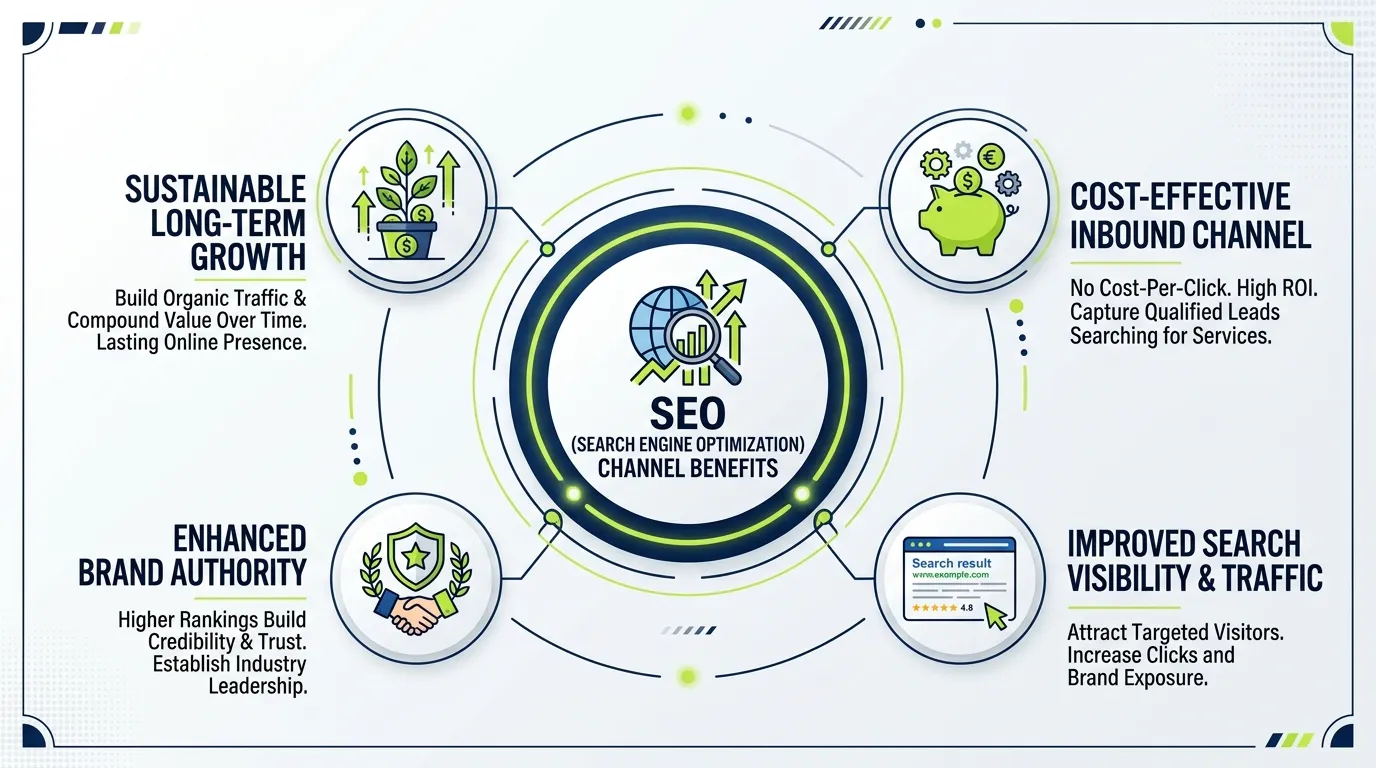
Benefits of SEO
SEO is powerful because it compounds over time.
- Organic traffic can grow for years from a single well-ranked article
- High-ranking sites build trust with users
- Content assets continue generating leads long after publication
According to BrightEdge, organic search drives 53% of website traffic on average.
Limitations of SEO
SEO is not instant.
- Rankings take months to develop
- Algorithm updates can shift results
- Continuous content investment is required
When to Prioritise SEO
SEO is particularly effective if you:
- Operate in a research-heavy industry
- Sell high-value services such as consulting or finance
- Want sustainable lead generation rather than short bursts of traffic
A strong SEO strategy turns your website into a long-term asset.
Using SEM as a Performance-Driven Internet Marketing Channel

Search Engine Marketing focuses on paid search advertising. Instead of waiting for organic rankings, you pay for immediate visibility.
What SEM Includes
The most common SEM platforms are:
- Google Ads
- Microsoft Ads (Bing)
These platforms allow businesses to bid on keywords and display ads at the top of search results.
Advantages of SEM
SEM delivers speed and precision.
- Immediate traffic
- Highly targeted keyword bidding
- Detailed performance tracking
Challenges of SEM
Paid search has several limitations.
- Cost per click can rise quickly in competitive sectors
- Traffic stops when your budget stops
- Campaign management requires expertise
When SEM Makes Sense
SEM is most effective when you need rapid results.
- Product launches
- Seasonal promotions
- Competitive markets where SEO rankings are difficult
Many Singapore companies use SEM to generate immediate leads while their SEO strategy matures.
Using Email Marketing as a High-ROI Internet Marketing Channel
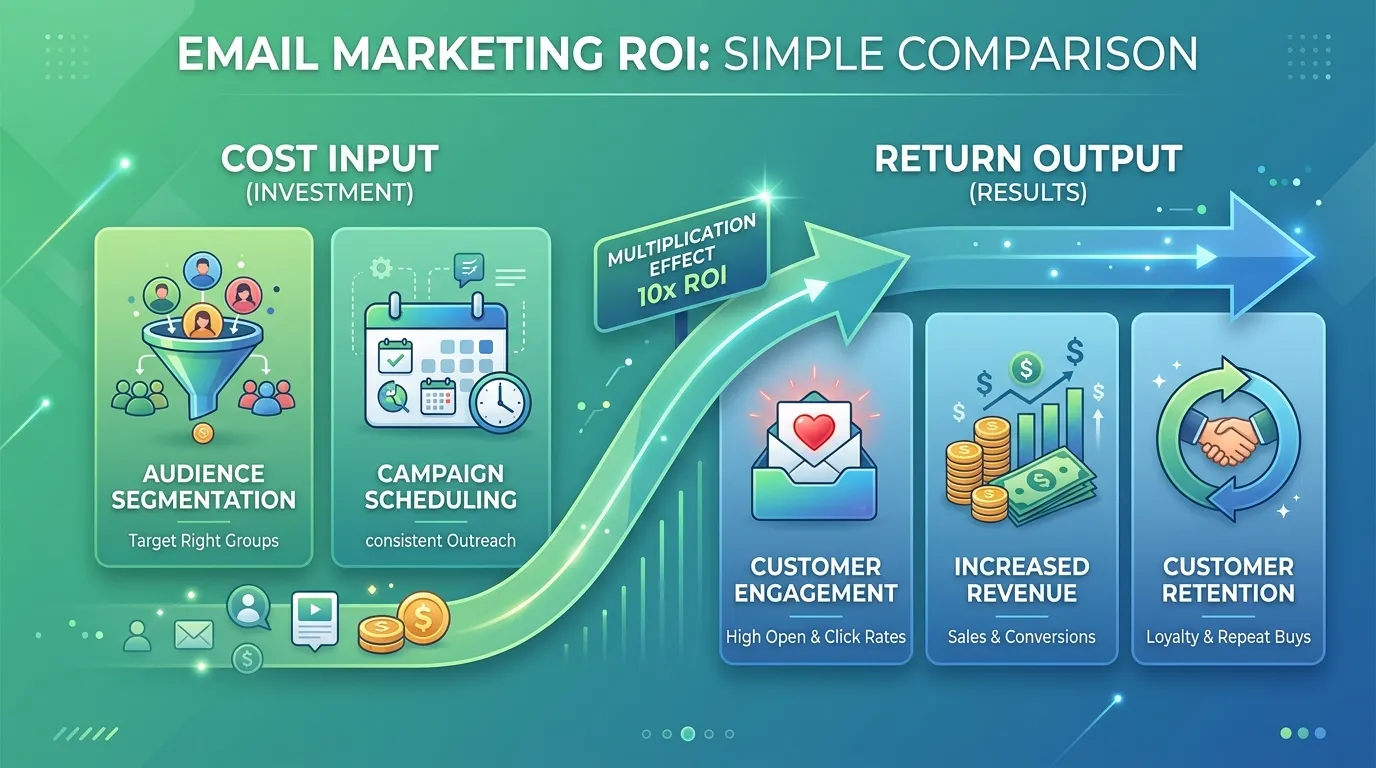
Email marketing remains one of the most profitable digital channels available. Unlike search or social platforms, you own the audience.
How Email Marketing Works
Effective email strategies include:
- Subscriber list building
- Segmentation based on behaviour
- Automated lifecycle campaigns
Personalisation is increasingly important. According to Litmus, email marketing generates an average return of USD 36 for every USD 1 spent.
Key Benefits
Email marketing offers several advantages.
- Direct communication with prospects
- High conversion rates compared to social media
- Lower ongoing costs
Limitations
However, email marketing requires careful management.
- Growing your list takes time
- Deliverability must be monitored
- Compliance with regulations like PDPA is mandatory
Best Use Cases
Email performs best for:
- Lead nurturing
- Customer retention
- Promotional campaigns
For many companies, email becomes the bridge between awareness and purchase.

Social media platforms remain powerful tools for visibility and engagement. But they serve a different purpose than search.
Major Platforms Used by Businesses
Singapore brands frequently invest in:
- LinkedIn for B2B marketing
- Instagram for lifestyle and retail brands
- TikTok for discovery-driven content
- Facebook for community and advertising
Benefits of Social Media
Social platforms excel at building brand presence.
- High audience reach
- Direct engagement with customers
- Shareable content that increases visibility
Challenges
However, social media also has limitations.
- Organic reach depends heavily on platform algorithms
- Consistent content creation is required
- Platforms control distribution
When Social Media Should Be Prioritised
Social marketing is most effective for:
- Visual products
- Consumer brands
- Community-focused businesses
Choosing between channels is easier when you evaluate them side by side.
| Channel | Speed of Results | Cost Structure | Best For |
| SEO | Slow but compounding | Content investment | Long-term traffic |
| SEM | Immediate | Pay-per-click | Lead generation |
| Medium | Low cost | Retention and conversion | |
| Social | Medium | Organic or paid | Brand awareness |
Each channel occupies a different stage in the marketing funnel.
- SEO attracts new visitors.
- SEM captures immediate demand.
- Email nurtures relationships.
- Social media builds awareness and trust.
The most successful strategies integrate all four.
How to Choose the Right Internet Marketing Channels for Your Business
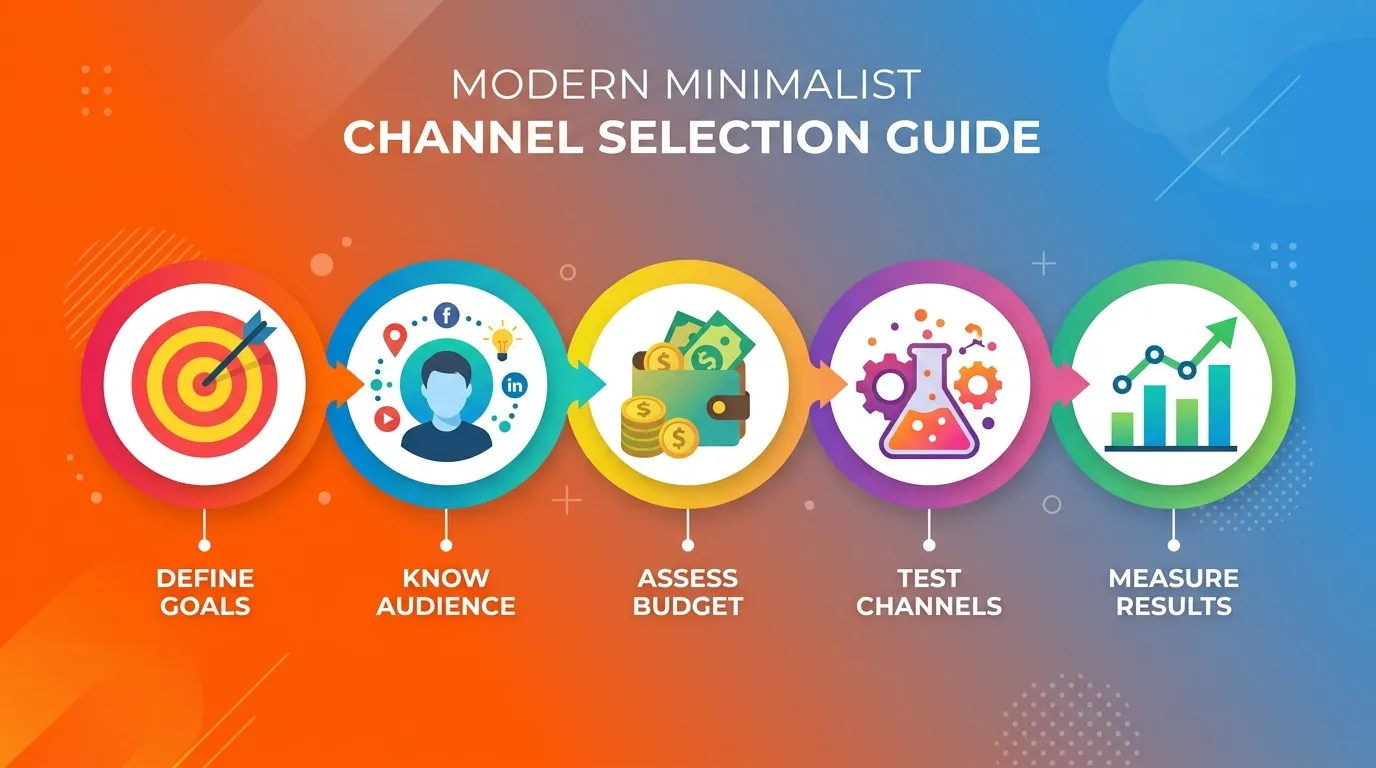
Selecting the right internet marketing channels requires more than simply following trends or copying competitors. Every business operates with different goals, resources, and audiences. A channel that works well for one company may deliver poor results for another if the context is different.
The most effective strategies begin with a clear understanding of how marketing supports the overall business. Some organisations focus on building brand authority over time. Others prioritise lead generation and fast revenue growth. These priorities influence which internet marketing channels deserve the greatest investment.
Before allocating significant budget or effort to any platform, it helps to step back and evaluate the factors that determine whether a channel will actually support your objectives.
Key Decision Criteria When Evaluating Internet Marketing Channels
A thoughtful evaluation process reduces wasted marketing spend and helps businesses build a more resilient digital strategy. Several factors influence channel selection.
Business Objectives
Your marketing goals should guide the choice of internet marketing channels. For example, a company focused on brand awareness may benefit from channels that maximise reach and visibility. These often include SEO-driven content, social media platforms, and digital PR initiatives.
Businesses that prioritise direct sales or lead generation may find that performance-driven channels such as SEM or targeted email campaigns deliver stronger results. These channels allow more control over audience targeting and timing.
To clarify the direction of your strategy, ask questions such as:
- Are you trying to increase brand visibility in your industry?
- Do you need to generate leads for a sales team?
- Are you aiming to grow recurring revenue through customer retention?
The answers will influence which internet marketing channels should receive the most attention.
Audience Behaviour
Marketing channels only perform well when your audience actively uses them.
Understanding where your customers spend time online can help businesses avoid investing heavily in platforms that yield little engagement. Research may involve analysing website analytics, reviewing competitor activity, or surveying existing customers.
A few patterns often appear across industries.
- Professional audiences frequently engage on LinkedIn and through search engines when researching solutions.
- Younger demographics often discover brands through short-form social media platforms.
- Buyers researching complex products tend to rely on search engines and in-depth educational content.
When your audience’s habits are clear, it becomes easier to prioritise the internet marketing channels that align with those behaviours.
Budget Considerations
Different internet marketing channels require different types of investment. Paid channels can scale quickly because visibility increases from the moment campaigns launch. However, they require continuous funding to maintain results. Once spending stops, traffic usually declines.
Organic channels often require more time and expertise than direct advertising budgets. SEO and content marketing, for instance, demand sustained effort but can produce traffic long after the initial investment.
A balanced approach often combines both models:
- Paid channels for immediate visibility and lead generation
- Organic channels for sustainable traffic and authority
Businesses with limited marketing budgets frequently prioritise channels that build long-term assets such as SEO content and email lists.
Internal Resources and Expertise
Another factor that influences the selection of internet marketing channels is your internal team’s capacity.
Some channels demand specialised expertise or consistent content production. SEO campaigns require technical optimisation, keyword research, and ongoing content creation. Social media strategies often depend on regular posting, visual content development, and community engagement.
If a business lacks the internal resources to maintain these activities, the channel may underperform even if the opportunity exists.
In those situations, organisations may either:
- Focus on fewer channels that can be executed properly, or
- Partner with agencies that provide digital marketing support
Effective channel selection, therefore, involves matching opportunities with the team’s available skills and capacity.
Building a Balanced Internet Marketing Channels Strategy
Rarely does a single platform drive all marketing success. Most effective digital strategies rely on multiple internet marketing channels working together across the customer journey.
Customers typically move through several stages before making a purchase. They first become aware of a brand, then research options, and finally decide whether to convert. Different channels serve different roles during these stages.
When businesses structure their marketing around this journey, each channel reinforces the others.
Awareness Stage
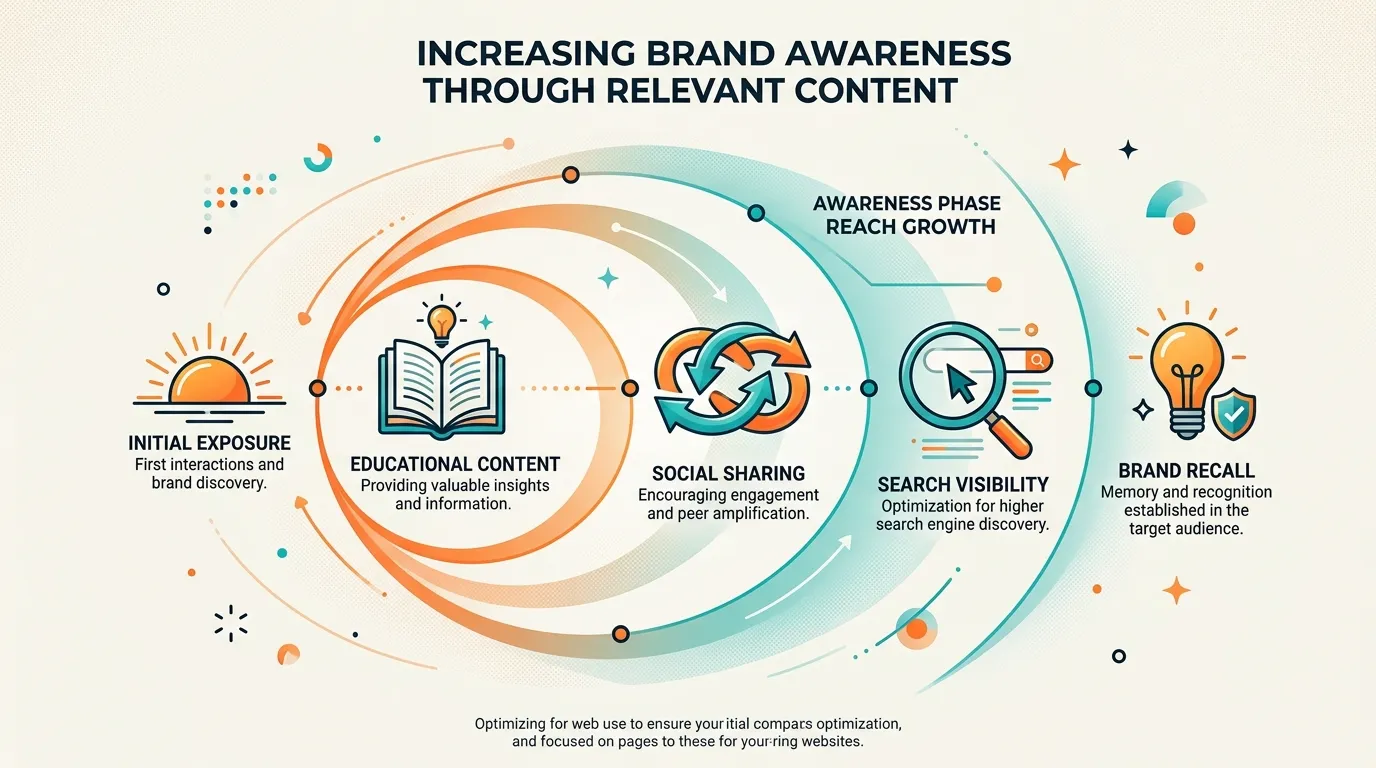
At the beginning of the funnel, the goal is to help potential customers discover your brand. Several internet marketing channels perform particularly well at this stage.
- SEO content that targets informational search queries
- Social media platforms that encourage content discovery and sharing
- Thought leadership articles and industry insights
Content in this phase should focus on education, problem-solving, and visibility. Readers may not be ready to purchase yet, but they are beginning to explore possible solutions.
Consideration Stage
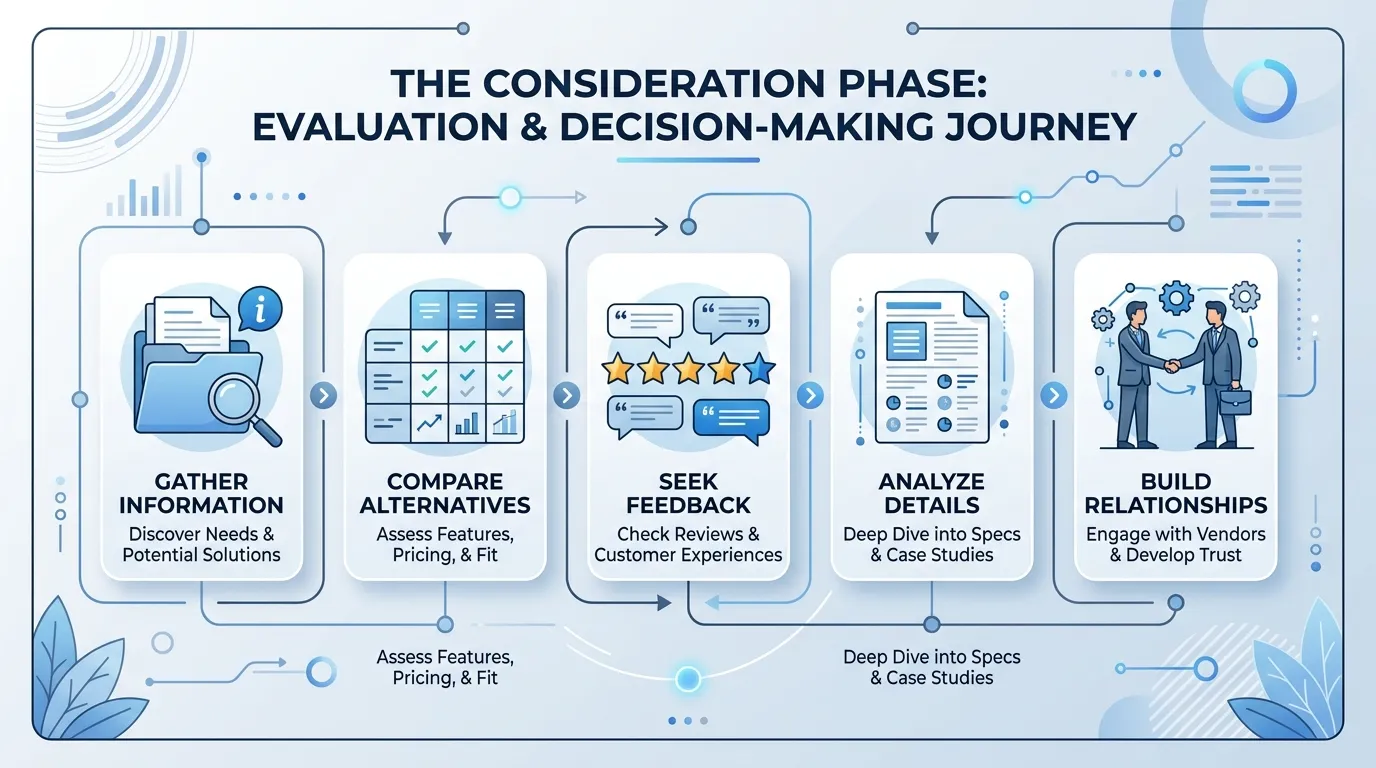
Once potential customers recognise a need, they begin evaluating possible solutions. This stage requires more detailed information and relationship building.
Several internet marketing channels support this process effectively:
- In-depth blog articles and guides that compare options
- Email sequences that nurture leads and deliver useful insights
- Case studies or demonstrations that explain how a product or service works
At this point, content should help prospects understand the benefits of your offering and why it stands out from alternatives.
Conversion Stage

The final stage focuses on turning interest into action. Performance-driven internet marketing channels often play a significant role here.
- SEM campaigns that target high-intent keywords
- Retargeting advertisements that reconnect with visitors who previously interacted with your website
- Promotional email campaigns directed at qualified leads
These channels allow businesses to reach users who already demonstrate buying intent.
Why a Multi-Channel Strategy Matters
Relying on only one of the available internet marketing channels can create unnecessary risk. Algorithm changes, rising advertising costs, or shifting consumer behaviour can quickly reduce the effectiveness of a single platform.
A layered strategy provides stability because different channels support one another. For example:
- SEO may generate a steady flow of organic traffic
- Social media introduces new audiences to the brand
- Email marketing nurtures relationships over time
- SEM captures users actively searching for solutions
When these channels operate together, they create a marketing system that continues producing leads even if one channel experiences temporary declines.
Over time, this integrated approach also improves efficiency. Insights gained from one channel often strengthen others. High-performing search keywords can inspire blog topics. Email engagement data can reveal what content resonates most strongly with customers.
Final Thoughts on Choosing Internet Marketing Channels
Choosing the right internet marketing channels is less about finding a single perfect platform and more about designing a strategy that supports the entire customer journey.
Businesses that succeed online tend to focus on three principles.
- They align marketing channels with clear business objectives.
- They prioritise platforms where their audiences already spend time.
- They combine several channels so each stage of the funnel receives support.
When these elements work together, marketing becomes more resilient and more predictable. Traffic sources diversify, lead generation improves, and the business is less vulnerable to sudden changes in any one platform.
Future Trends Shaping Internet Marketing Channels in 2026
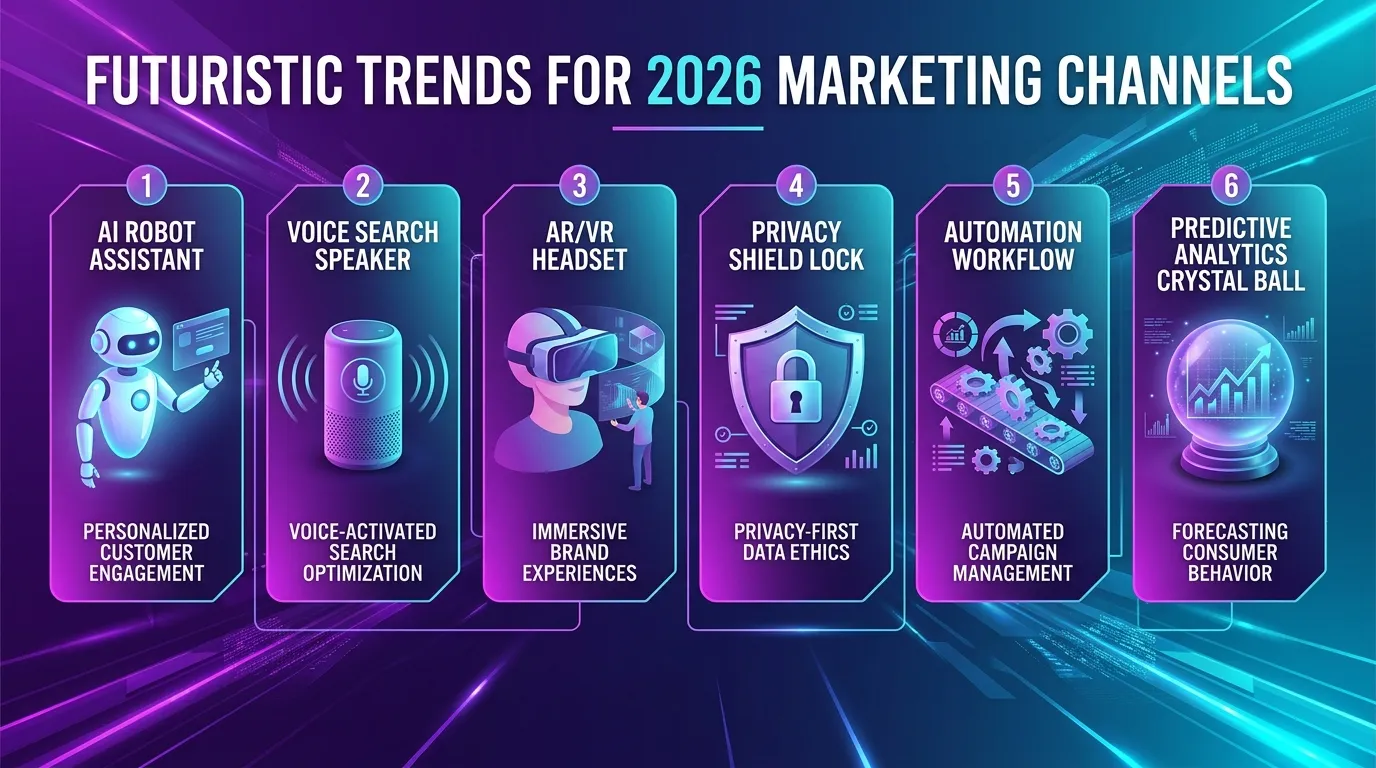
Digital marketing never stays still for long. New technologies, privacy policies, and changes in consumer behaviour continue to reshape how businesses use internet marketing channels. Strategies that worked only a few years ago may now deliver weaker results or require a different approach.
In 2026, several structural shifts are influencing how companies distribute budgets and plan campaigns. These developments affect how people discover brands, how businesses collect data, and how marketing platforms interact with one another. Understanding these trends allows marketers to adapt early rather than react after performance begins to decline.
Below are four developments that are already shaping the future of internet marketing channels:
AI-Powered Search Is Changing How Users Discover Content
Search engines are becoming increasingly AI-driven. Instead of presenting a simple list of links, many search results now include summaries that answer questions directly within the results page.
These AI-generated responses influence how users interact with search results. A person may receive an immediate answer without clicking through to a website, especially for informational queries.
At the same time, more complex searches still lead users to explore sources that provide deeper explanations. For marketers, this shift affects how SEO works within broader internet marketing channel strategies.
Several adjustments are becoming increasingly important:
- Content depth and clarity: AI systems often prioritise well-structured, authoritative information when generating summaries. Pages that clearly answer questions and provide context are more likely to be referenced.
- Semantic relevance rather than keyword repetition: Search algorithms analyse topics and relationships between ideas rather than relying only on exact keyword matches.
- Structured information: Clear headings, logical organisation, and concise explanations help both users and AI systems understand the content.
SEO remains one of the most valuable internet marketing channels, but the approach is evolving. Businesses that focus on expertise, clarity, and topical authority are better positioned to maintain visibility as search technology continues to develop.
First-Party Data Is Becoming Central to Internet Marketing Channels
Privacy regulations and browser restrictions have reduced the reliability of third-party tracking technologies. As a result, companies are placing greater emphasis on collecting and using first-party data.
First-party data refers to information that a business gathers directly from its own audience. This data typically comes from:
- Email subscriptions
- Customer accounts and purchase histories
- Website interactions
- Survey responses or preference centres
Because this data comes directly from the user, it is generally more accurate and compliant with privacy standards.
Among internet marketing channels, email marketing has gained renewed importance. Email lists provide a direct line of communication with customers, bypassing algorithm-driven platforms.
Businesses are therefore investing more in:
- Lead magnets and downloadable resources that encourage sign-ups
- Loyalty programmes and membership platforms
- Personalised email sequences based on user behaviour
The value of owned audiences continues to grow because companies maintain control over how and when they communicate with subscribers. This stability makes email and other owned platforms essential components of modern internet marketing channel strategies.
Predictive Marketing Is Improving Campaign Timing and Personalisation
Artificial intelligence tools now analyse large sets of behavioural data to identify patterns in customer activity. These insights help marketers predict when users are most likely to take specific actions.
This approach is often called predictive marketing. Instead of sending the same message to every subscriber or targeting every visitor with identical ads, predictive systems analyse signals such as:
- browsing behaviour
- purchase history
- time spent on certain pages
- previous engagement with emails or ads
Using these signals, marketing platforms estimate when someone may be ready to buy, subscribe, or request more information.
Across internet marketing channels, predictive analytics allows marketers to improve several aspects of their campaigns:
- Timing of outreach: Messages can be delivered when users are most likely to respond.
- Content personalisation: Recommendations and offers can reflect individual interests or past behaviour.
- Budget allocation: Advertising systems can prioritise audiences with the highest conversion probability.
Predictive marketing does not replace human strategy, yet it allows teams to make decisions based on patterns that would be difficult to identify manually.
Integrated Marketing Ecosystems Are Blurring Channel Boundaries
One of the most noticeable changes in recent years is the growing integration between different internet marketing channels. In the past, companies often managed each platform separately. SEO teams focused on search rankings, social media managers handled engagement, and email marketers worked on newsletters.
Today, data flows between these channels more freely. Search behaviour may inform social media targeting. Email engagement can influence advertising audiences. Customer activity across multiple touchpoints contributes to a single unified profile.
This shift creates what many marketers call an integrated marketing ecosystem. In practice, integration enables businesses to coordinate campaigns across multiple internet marketing channels simultaneously.
For example:
- A visitor who reads a blog article may later see related social media ads.
- Someone who clicks a product page might receive a follow-up email with additional information.
- Email subscribers who engage frequently may be added to lookalike advertising audiences.
The goal is to create a consistent experience as users move between channels during the customer journey.
This integration also improves measurement. Instead of analysing each channel independently, marketers can examine how multiple internet marketing channels contribute to conversions together.
Why Understanding These Trends Matters
The digital environment will continue to evolve as new technologies and regulations emerge. Businesses that remain aware of these developments are better prepared to adapt their marketing strategies.
Understanding how AI search, first-party data, predictive analytics, and integrated ecosystems influence internet marketing channels helps marketers make informed decisions about where to invest time and resources.
Rather than relying on a single platform, successful companies build flexible strategies that combine multiple internet marketing channels. This approach allows them to maintain visibility, strengthen customer relationships, and respond quickly to changes in the digital landscape.
Best Practices for Managing Multiple Internet Marketing Channels
Running campaigns across multiple internet marketing channels can build strong brand momentum, but it also introduces complexity. Each platform has its own format, audience behaviour, and performance metrics. Without coordination, these efforts easily become fragmented, with teams producing disconnected campaigns that compete rather than support one another.
A structured approach helps businesses ensure that all channels contribute to the same objectives. The following practices help marketers maintain alignment while improving efficiency and measurable results.
Maintain Consistent Messaging Across All Platforms
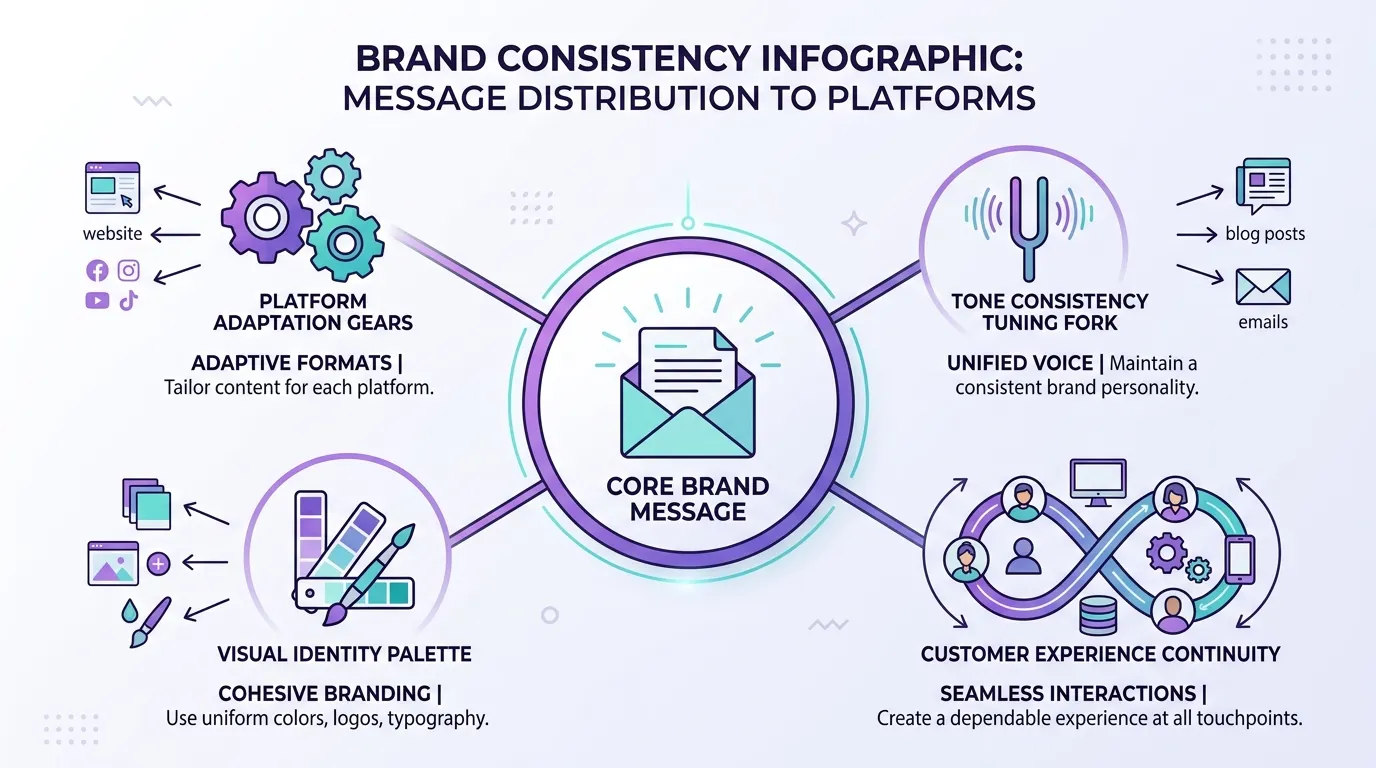
Customers often encounter a brand across several touchpoints before making a decision. A person might first discover a company through social media, later search for reviews on Google, and eventually subscribe to an email list.
When messaging differs across internet marketing channels, it can create confusion and weaken brand trust. Consistency does not mean repeating identical content everywhere. Instead, the core message, tone, and value proposition should remain aligned.
For example:
- The brand promise should stay the same whether someone reads a blog article, an email campaign, or a social media post.
- Visual identity, including colours and design elements, should remain recognisable across platforms.
- Key product benefits should appear consistently in search content, ads, and promotional emails.
When audiences encounter the same message reinforced across multiple channels, the brand becomes easier to remember and trust.
Track Attribution to Understand Which Channels Drive Revenue

Marketing performance becomes difficult to evaluate when businesses only track surface-level metrics like clicks or impressions. What matters most is understanding which internet marketing channels contribute to revenue and conversions.
Attribution analysis helps marketers identify how different channels influence the customer journey. Many conversions involve multiple touchpoints, such as:
- A social media post introduces the brand.
- A search query leads the user to a blog article.
- A later email campaign encourages the purchase.
Without attribution tracking, it would appear that the final email campaign alone generated the sale. In reality, several internet marketing channels contributed to the outcome.
Modern analytics tools allow businesses to monitor:
- Conversion paths
- Assisted conversions
- Multi-channel customer journeys
These insights help marketers allocate budgets more effectively and strengthen the channels that consistently drive revenue.
Use Marketing Automation Tools to Streamline Campaigns
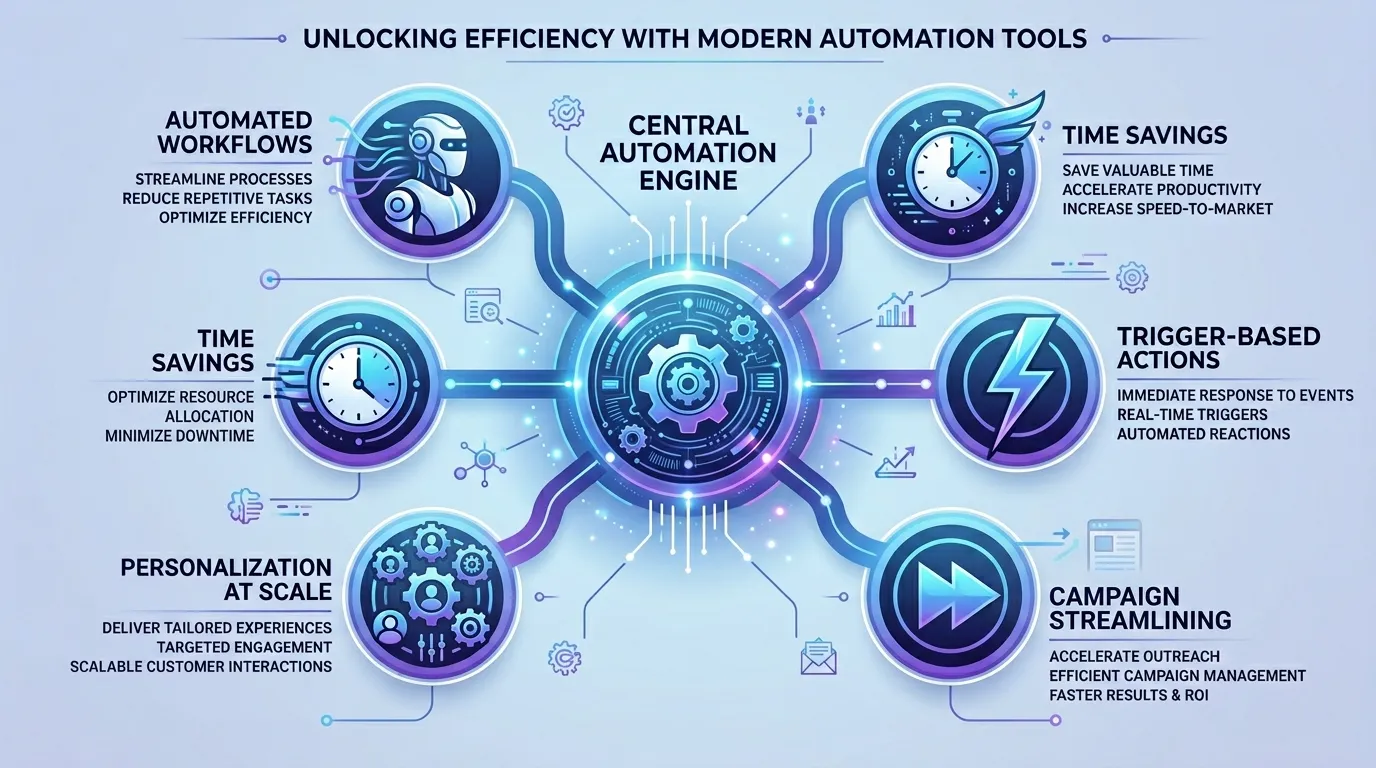
Managing campaigns across many internet marketing channels can quickly become time-consuming. Marketing automation platforms help businesses coordinate activities without manually handling every interaction.
Automation tools commonly support tasks such as:
- Scheduling social media posts
- Triggering email sequences based on user behaviour
- Synchronising audience data between advertising platforms
- Nurturing leads through automated workflows
Automation does not remove the need for strategy or creativity. Instead, it reduces repetitive work, allowing marketers to focus on planning, analysis, and campaign improvement.
When implemented carefully, automation helps multiple internet marketing channels operate together more efficiently.
Continuously Analyse Performance and Optimise Campaigns
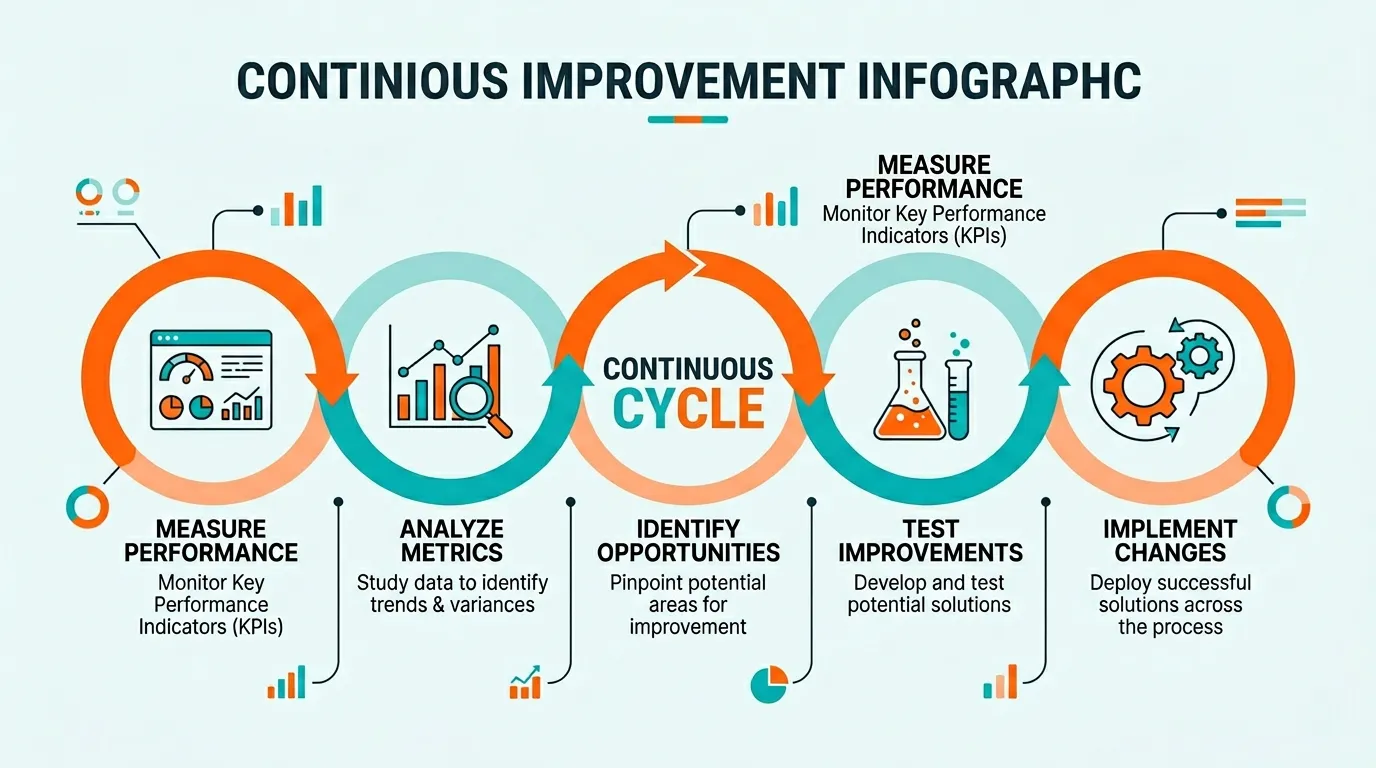
Digital marketing performance rarely remains static. Search algorithms evolve, audience preferences shift, and competitors adjust their strategies. Regular analysis helps businesses maintain strong results across their internet marketing channels.
Effective optimisation involves more than reviewing traffic numbers. Marketers should examine deeper indicators such as:
- Conversion rates
- Engagement metrics
- Customer acquisition costs
- The lifetime value of customers acquired through different channels
Small adjustments often lead to significant improvements over time. A change in email segmentation, a revised landing page, or a more targeted advertising audience can improve how several channels work together.
Businesses that treat marketing as a connected ecosystem generally outperform those running isolated campaigns. When these channels operate in coordination rather than independently, each channel reinforces the others and contributes to a stronger overall marketing strategy.
Building a Sustainable Strategy With Internet Marketing Channels
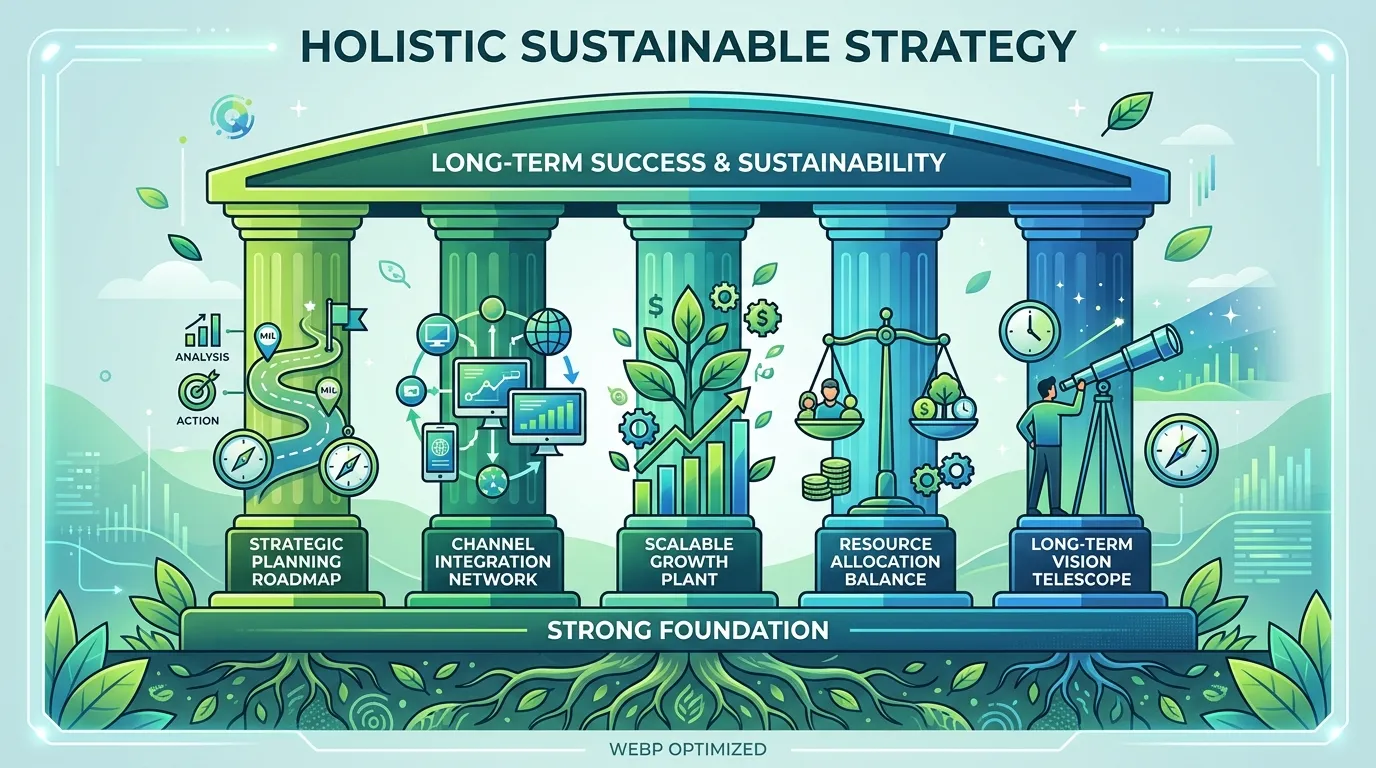
Digital marketing rarely succeeds through a single platform. Businesses that grow consistently tend to build strategies that combine several approaches, allowing each channel to support different stages of the customer journey. Search visibility helps people discover your brand.
Paid campaigns can accelerate traffic when speed matters. Email strengthens relationships with existing customers, while social media builds awareness and engagement.
The challenge is not simply choosing a channel, but understanding how these channels work together. When marketing activities operate in isolation, opportunities are often missed. A well-planned strategy aligns messaging, data, and campaign goals so that every effort contributes to measurable growth.
This is where experienced guidance can make a difference. Agencies with deep expertise in digital strategy can help businesses identify which tactics deserve the most investment, how campaigns should be structured, and where improvements can deliver the greatest return.
For organisations seeking structured support, MediaOne provides professional digital marketing services that help companies build scalable strategies and optimise performance across key internet marketing channels.
If you want to explore how a coordinated digital strategy can strengthen your marketing results, contact MediaOne to discuss your goals and learn how the right mix of internet marketing channels can support long-term growth.
Frequently Asked Questions
What are the most effective internet marketing channels in 2026?
The most effective internet marketing channels in 2026 typically include SEO, SEM, email marketing, and social media marketing. SEO helps businesses generate long-term organic visibility, while SEM delivers immediate traffic through paid search campaigns.
Email marketing remains valuable for nurturing leads and retaining customers, and social media platforms help brands build awareness and engagement. The most effective strategies combine several internet marketing channels to support different stages of the customer journey.
Is SEO better than SEM for business growth?
SEO and SEM serve different purposes, so neither is universally better. SEO focuses on organic search visibility and can generate sustainable traffic over time, which supports long-term business growth. SEM provides faster results because paid ads can appear immediately in search results. Many businesses use both approaches together to balance quick traffic with long-term visibility.
Why is email marketing still important?
Email marketing remains important because it gives businesses direct access to their audience without relying on platform algorithms. Companies can send personalised messages, promotions, and updates to subscribers who have already expressed interest in their brand.
This often leads to stronger engagement and higher conversion rates compared with many other marketing channels. Email lists also represent owned assets that businesses control.
Which social media platform works best for marketing?
The best social media platform depends on the target audience and the type of content a business produces. LinkedIn is often effective for B2B marketing and professional services, while Instagram and TikTok work well for visual content and consumer brands.
Facebook still offers a broad reach and strong advertising tools across many industries. Businesses usually see the best results when they focus on the platforms where their audience is most active.
How do businesses choose the right marketing channels?
Businesses choose marketing channels by evaluating their goals, target audience, and available budget. Understanding where potential customers search for information and spend time online helps determine which channels deserve priority.
Companies also consider the stage of the customer journey each channel supports, such as awareness, research, or conversion. Testing and analysing performance over time helps refine the mix of marketing channels that delivers the best results.