Lead generation drives growth, but with so many methods available, prioritising your efforts can be overwhelming. Whether you’re a small business owner or a marketing manager at a large company, generating high-quality leads is always a challenge.

You don’t have to rely on a single method. By combining effective strategies with a trusted lead generation agency, you can attract more qualified prospects.
In this blog, we’ll look at 7 proven lead generation methods to grow your sales pipeline in 2026.
These strategies are designed to work together, allowing you to cast a wider net and capture leads at different stages of the buyer’s journey. Let’s dive in and discover how you can start attracting and converting more leads today! Next, we’ll highlight the key points to keep in mind before examining each strategy in detail.
Key Takeaways
- A well-defined lead generation strategy is the foundation of growth, continuously bringing in, nurturing, and converting potential customers into real ones.
- Focus on targeting qualified leads rather than casting a wide net. The more relevant the lead, the higher the conversion rate.
- Maintain regular contact with leads through email, webinars, and retargeting ads. Consistent communication moves leads closer to a purchase.
- Paid methods yield quick lead results, while investing in SEO and content marketing delivers steady, long-term organic growth. Now that you know what makes a strong lead generation strategy, let’s define lead generation and explore its significance.
What is Lead Generation and Why is It Important?
Lead generation is the process of attracting, nurturing, and converting potential customers into sales opportunities. Without a robust lead generation strategy, businesses risk stagnation.
Why Lead Generation Matters:
- Builds a Steady Pipeline: A well-optimised lead generation strategy ensures you always have prospects in the pipeline, ready to be converted.
- Boosts Sales & Revenue: By targeting qualified leads, you’re more likely to convert them into paying customers.
- Increases Brand Awareness: Consistent engagement with prospects strengthens brand recognition, which is vital to long-term success.
Without effective lead generation, even the best products and services will struggle to reach their target market. That’s why it’s crucial to employ proven methods to attract, nurture, and convert your leads. In the following sections, we’ll outline actionable lead generation techniques you can implement.
7 Lead Generation Methods That Work

Each method we’ll explore is designed to help you attract and nurture high-quality leads, whether you’re just getting started or looking to enhance your existing strategy. From content marketing to AI-driven chatbots, these methods can be integrated into your overall approach for maximum impact. Let’s start by reviewing the first strategy:
1. Use Content Marketing and SEO to Attract High-Quality Leads

Content marketing and SEO are two of the most cost-effective lead generation methods when done correctly. They work together seamlessly to attract high-quality, organic leads to your business. Here’s how to make this strategy work for you:
Create High-Value Content
The key to successful content marketing is creating content that addresses your audience’s specific pain points. Develop educational blogs, case studies, guides, whitepapers, and eBooks that answer questions your target audience is actively searching for.
The content should not only showcase your expertise but also offer actionable solutions to the problems your leads face.
Content Examples:
- Write blog posts that answer common questions or outline top lead generation strategies for specific industries.
- Develop case studies illustrating how your business solved client problems.
By creating high-quality content, you can capture attention and drive qualified traffic to your website.
SEO Optimisation
SEO ensures your content is discoverable when potential leads search for relevant keywords. Start by conducting keyword research using tools such as Google Keyword Planner, SEMrush, or Ahrefs to identify high-intent lead generation terms.
- On-Page SEO: Optimise your content by using relevant keywords in your title tags, meta descriptions, header tags, and throughout your content. This helps ensure your pages rank well in search engine results.
- Off-Page SEO: Building backlinks from authoritative sources improves the trustworthiness of your content and boosts your rankings. Reach out to other industry blogs or sites to contribute guest posts or secure backlinks.
SEO is a long-term strategy that delivers consistent, organic traffic to your site.
Lead Magnets & CTAs
A lead magnet is an irresistible offer (such as a free eBook, webinar, or checklist) that encourages your audience to exchange their contact information. Add clear calls to action (CTAs) throughout your content to encourage visitors to download these resources.
Example: At the end of your blog post on lead generation strategies, offer a free downloadable guide like “Top 10 Lead Generation Tools” in exchange for the visitor’s name and email.

With lead magnets and strategic CTAs, passive readers become active leads.
Tools to Use:
- Google Keyword Planner for keyword research
- SEMrush or Ahrefs for competitive analysis and backlink opportunities
- HubSpot for lead capture forms
Example: A SaaS company could create an in-depth guide to automating lead generation and ranking for keywords such as “automating sales pipeline.” This content would attract business owners seeking automation solutions and generate high-quality leads.
2. Using Paid Advertising (PPC) to Generate Leads: Tips and Strategies for Success

Paid advertising offers a fast-track solution to generate qualified leads. Unlike SEO, which can take time to deliver results, PPC campaigns provide immediate visibility on platforms such as Google, Facebook, and LinkedIn.
Targeting the Right Audience
The key to successful PPC campaigns is targeting the right audience. Use platforms like Google Ads, Facebook Ads, and LinkedIn Ads to target high-intent users actively searching for services or products like yours.
Example: A CRM software provider can run ads targeting keywords like “best CRM for small businesses” to attract leads who are actively looking for CRM solutions.
A/B Testing Ads
Testing different ad variations is crucial for optimising conversion rates. A/B testing allows you to experiment with different headlines, images, CTAs, and targeting strategies to see which combinations generate the most leads.
Example: Test two versions of an ad: one with the CTA “Get a Free Demo” and another with “Start Your Free Trial” to determine which one converts better.
Retargeting
Retargeting is a powerful way to reach visitors who have previously engaged with your website but didn’t convert. By showing them tailored ads, you can re-engage these visitors and encourage them to take action.
Example: If someone visited your landing page but didn’t sign up for a free trial, you can use retargeting ads to remind them of your offering, offering a special discount to entice them back.
Tools to Use:
- Google Ads for search and display ads
- Facebook Ads Manager for targeting and retargeting
- LinkedIn Campaign Manager for B2B lead generation
Example: A B2B SaaS company might run Google Ads targeting terms such as “best CRM for small businesses” to attract leads actively seeking CRM solutions.

Social media platforms like LinkedIn, Facebook, and Instagram are essential tools for generating leads. Each platform serves a specific purpose depending on your business model. Here’s how to optimise your social media presence for lead generation:
Platform Selection
Choose platforms that align with your business goals. For B2B businesses, LinkedIn is a must; for B2C businesses, Instagram and Facebook work well. LinkedIn is ideal for networking, while Instagram is great for product promotions and visual content.
Example: A fashion brand could use Instagram to showcase products and run giveaways, while a tech company could focus on LinkedIn to reach enterprise decision-makers.
Content That Converts
Your content should be tailored to the platform and audience. Use engaging content like live videos, customer success stories, and educational posts to drive interest. Instagram Stories and Facebook Live let you engage users in real time, offering a more personalised experience.
Example: Share customer testimonials and behind-the-scenes content to humanise your brand and build trust with potential leads.
Lead Forms
Incorporating lead generation forms directly on platforms like Facebook and LinkedIn makes it easy for prospects to submit their information without leaving the platform. This frictionless process boosts conversion rates.
Example: Use LinkedIn Lead Gen Forms to collect professional information from users interested in your services without requiring them to leave the site.
Tools to Use:
- Hootsuite or Buffer for scheduling and managing social posts
- LinkedIn Lead Gen Forms for easy lead capture
- Facebook Ads Manager for lead form campaigns
4. Creating High-Converting Email Marketing Campaigns to Nurture Leads
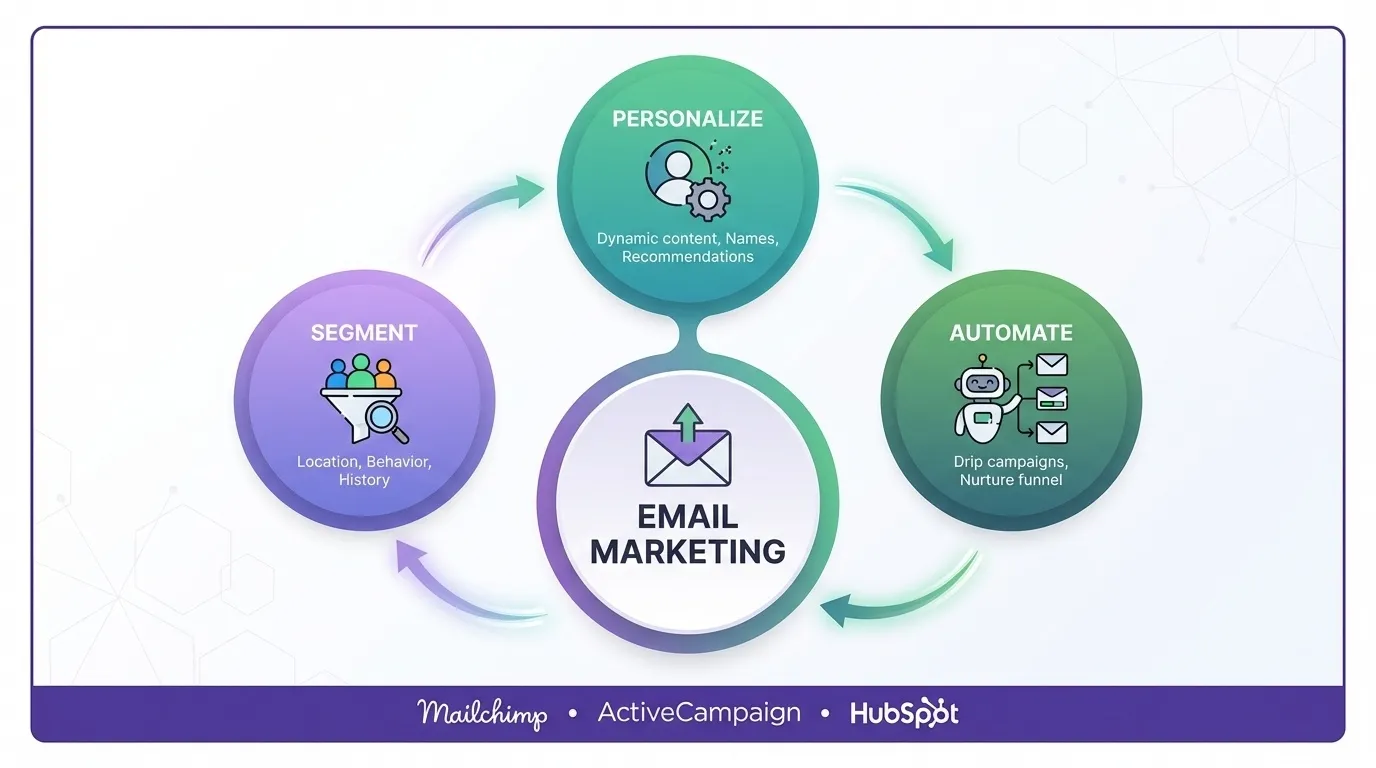
Email marketing remains a top-performing lead generation method. Here’s how to design campaigns that convert:
Segmentation
Segment your email list by factors such as location, previous interactions, or purchase behaviour. Tailored messaging ensures that each lead receives the most relevant content.
Example: Send specific promotions to first-time visitors and exclusive content to repeat customers.
Personalisation
Personalised emails with dynamic content (e.g., using the recipient’s name) and messaging tailored to their interests can improve engagement.
Example: An e-commerce brand could send a personalised email with product recommendations based on the subscriber’s browsing history.
Automated Drip Campaigns
Set up automated sequences that nurture leads through the funnel, providing value and gently nudging them towards a purchase or demo. Start with an introductory email, then move on to educational content and exclusive offers.
Tools to Use:
- Mailchimp for segmentation and automation
- ActiveCampaign for advanced email workflows
- HubSpot for lead nurturing campaigns
5. Design an Effective Referral Program for Maximum Lead Generation
Referral programs leverage word-of-mouth marketing to generate high-quality leads. Here’s how to create a successful referral program:
- Offer Incentives: Provide rewards such as discounts, exclusive content, or cash bonuses to encourage customers to refer friends and colleagues.
- Make It Easy: Provide customers with a unique referral link or discount code to share with their network. The simpler the process, the more referrals you’ll generate.
- Track and Optimise: Use tools like ReferralCandy or Yotpo to automate and streamline the referral process, ensuring referrers are properly rewarded.
6. Use Webinars and Live Events to Capture Highly Qualified Leads

Webinars and live events are ideal for engaging with qualified leads directly. By showcasing your expertise and solving their pain points, you can capture high-quality leads.
- Host Educational Webinars: Offer valuable information that addresses your audience’s pain points. Webinars on solving industry-specific problems are great for capturing leads interested in your solutions.
- Example: A marketing agency could host a webinar on content marketing strategies, generating high-quality leads interested in learning about and ultimately purchasing its services.
- Interactive Engagement: During the webinar, engage with attendees through Q&A sessions, polls, and live demonstrations. This interaction builds trust and drives lead conversion.
- Follow-Up Emails: After the event, send follow-up emails with a recording of the webinar and include a CTA, such as a product demo or free trial.
Tools to Use:
- Zoom for webinar hosting
- GoToWebinar for advanced event management
- HubSpot for email follow-ups and CRM integration
7. Harness Chatbots and AI for Instant Lead Generation and Qualification

AI-powered chatbots enable businesses to engage visitors immediately, qualify leads in real time, and deliver tailored content or product suggestions.
- Instant Qualification: Use chatbots to engage visitors immediately upon landing on your site, ask qualifying questions, and direct them to relevant content or product pages.
- AI-Powered Conversations: Leverage AI-driven chatbots to provide personalised recommendations based on user behaviour or preferences.
- Seamless Integration: Integrate chatbots with your CRM system to automatically add qualified leads to your sales pipeline.
Example: A real estate website could use a chatbot to ask users what kind of property they’re interested in, qualify their budget, and schedule a viewing, all while capturing lead details.
Tools to Use:
- Drift for lead qualification via chat.
- Intercom for customer support and lead nurturing
- ManyChat for Facebook Messenger bots
How to Integrate Multiple Lead Generation Methods for Maximum Impact
Generating leads effectively isn’t just about picking a single method; it’s about combining multiple lead generation strategies into a cohesive, multi-channel approach. By integrating different tactics, you can reach potential customers at various stages of the sales funnel, increase engagement, and significantly boost conversion rates.
1. Combine PPC and SEO for Immediate and Long-Term Results
Paid search (PPC) and organic search (SEO) complement each other when used strategically. PPC ads allow you to target highly specific audiences and generate immediate traffic to your landing pages. Meanwhile, SEO helps ensure your pages continue to attract organic traffic over time.
How to integrate:
- Create an SEO-optimised landing page with high-quality content and clear calls to action (CTAs).
- Use PPC ads to drive targeted traffic to this page.
- Capture leads via forms, gated content, or newsletter sign-ups.
- Follow up with email marketing campaigns to nurture these leads and gradually move them through your sales funnel.
This combination allows you to balance short-term results with sustainable growth, making your lead generation strategy more resilient.
2. Use Webinars and Email Marketing for High-Quality Leads
Webinars are excellent for attracting engaged, high-intent prospects. They provide value upfront and help you establish authority in your niche. By pairing webinars with targeted email follow-ups, you can effectively nurture these leads.
How to integrate:
- Promote your webinar via social media, email campaigns, and PPC ads.
- Collect registration information to build your email list.
- After the webinar, send personalised follow-up emails with additional resources, case studies, or special offers.
- Segment your leads by engagement level to deliver highly relevant content and move them closer to conversion.
This approach ensures your leads receive multiple touchpoints, reinforcing your message and increasing trust.
3. Social Media and Content Marketing Integration
Social media and content marketing can work together to attract and convert leads across multiple channels.
How to integrate:
- Share valuable blog posts, infographics, or videos on social media to drive traffic to your website.
- Include CTAs in your content to capture leads (newsletter sign-ups, free guides, consultations).
- Use social retargeting ads to re-engage visitors who didn’t convert initially.
By weaving content marketing into social campaigns, you create a continuous flow of lead generation opportunities, ensuring that prospects encounter your brand repeatedly.
4. Multi-Touch Attribution for Better Performance
Integrating multiple lead generation methods allows you to track which channels and touchpoints are most effective. Use analytics to measure performance across PPC, SEO, email, webinars, and social campaigns. This helps you:
- Identify high-performing channels.
- Optimise underperforming tactics.
- Allocate your marketing budget more efficiently.
By combining methods such as PPC, SEO, webinars, email marketing, and social media, you create a multi-touch lead generation strategy that maximises reach, engagement, and conversions. Integrating multiple approaches helps you connect with leads at different stages of their journey, nurture them effectively, and ultimately drive higher-quality conversions.
Understanding the Cost of Lead Generation Methods

The cost of lead generation methods can vary significantly depending on your business goals, industry, and target market. Here’s a quick breakdown of the most common methods:
- PPC: Paid advertising can be expensive, but it delivers immediate results. The cost will depend on the competition for keywords in your industry. Google Ads and social media ads typically charge based on a cost-per-click (CPC) model, meaning you’ll pay for every click your ad receives. It’s crucial to set a budget and carefully monitor ROI to ensure cost-effectiveness.
- SEO & Content Marketing: While the initial investment in SEO services (including content creation, backlinking, and optimisation) can be substantial, the long-term payoff is significant. SEO is a long-term strategy that helps you generate organic leads. Once your content starts ranking in search engines, you’ll receive free traffic that can continue to bring in leads long after the initial effort.
- Email Marketing: This method is low-cost and offers a high ROI, especially when using tools like Mailchimp, ActiveCampaign, or HubSpot. The key expenses come from email automation platforms and potentially hiring someone to manage the campaigns. However, when executed correctly, email marketing can generate up to $42 in revenue for every $1 spent, making it one of the most cost-effective methods for lead generation.
- Social Media Ads: Social media ads offer precise targeting but require continuous investment. The cost of running ads on platforms like Facebook or Instagram will depend on your audience size, bidding strategy, and ad duration.
However, with optimised campaigns, social media ads can be a highly effective way to generate highly-targeted leads.
When evaluating which lead generation methods to prioritise, consider your budget and expected ROI. While some methods, such as PPC, can deliver immediate leads, others, such as SEO, may take longer to yield results but offer more sustainable, long-term benefits.
Lead Generation Mistakes to Avoid

While lead generation is crucial for business growth, it’s easy to make mistakes along the way. Here are common pitfalls to avoid:
- Neglecting Follow-Ups: Many businesses capture leads but fail to follow up effectively. Leads can go cold if they aren’t nurtured with relevant content or offers. Ensure you have a follow-up strategy in place, such as an email sequence, retargeting ads, or personalised outreach from your sales team.
- Inconsistent Messaging: If your messaging isn’t consistent across different channels (e.g., your website, ads, and emails), prospects may get confused or disinterested. Ensure your brand voice, CTAs, and overall messaging are consistent across all platforms to maintain trust and clarity.
- Poor Lead Qualification: Not all leads are created equal. It’s essential to qualify leads effectively before investing time or resources in them.
Implement lead-scoring systems to identify and prioritise high-quality leads based on criteria such as engagement level, demographics, or purchasing intent. This ensures your sales team spends time on prospects most likely to convert.
By avoiding these mistakes and adopting effective lead generation methods, your business can build a sustainable, efficient pipeline of high-quality leads, ultimately driving greater revenue and long-term growth.
Maximise Your Lead Generation Strategy for 2026 Success
In 2026, it can feel like you’re constantly trying to get noticed amidst the noise. Whether you’re a startup or an established enterprise, finding and attracting the right leads can be a challenge.
The good news? You don’t have to put all your eggs in one basket. By combining multiple effective lead generation strategies, you can cast a wider net, engage more prospects, and convert them into loyal customers.
In this blog, we’ve covered 7 proven lead generation methods that are designed to help you do just that. By leveraging SEO and content marketing, PPC ads, webinars, and AI-powered chatbots, you can fill your sales pipeline with high-quality leads.
So, why wait? Start integrating these methods today, and you’ll be well on your way to generating more leads, driving conversions, and propelling your business towards growth in 2026. It’s time to take charge of your lead generation. Let’s make it happen. Contact us now!
Frequently Asked Questions
What is the difference between inbound and outbound lead generation?
Inbound lead generation focuses on attracting leads through content, SEO, and social media, drawing potential customers to you. Outbound lead generation, on the other hand, involves actively reaching out to prospects through channels such as cold calls, emails, and direct sales.
How can I measure the success of my lead generation strategy?
Success can be measured by metrics such as conversion rates, cost per lead (CPL), return on investment (ROI), and lead quality. Tracking these KPIs helps determine whether your strategy is generating the right leads and delivering profitable outcomes.
What are some low-cost lead generation methods for small businesses?
Small businesses can leverage social media for organic reach, create SEO-optimised content to attract traffic, and use referral programs to tap into existing customers’ networks. These methods can be highly effective without requiring a large budget.
How do I qualify leads effectively?
Lead qualification involves assessing the likelihood that a lead will convert based on criteria such as budget, need, and authority. Use lead scoring to rank leads by how closely they match your ideal customer profile and their level of engagement.
What role does lead scoring play in the lead generation process?
Lead scoring helps prioritise leads based on their potential to convert, using factors like engagement level and demographic fit. By scoring leads, you ensure that your sales team focuses on the highest-potential prospects, improving efficiency and conversion rates.