| AI Summary
Social media post ideas work best when each post answers a customer need and supports a business goal. This guide groups 42 ideas into six content pillars: educational, inspirational, entertaining, promotional, interactive and user-generated content. Singapore brands can choose ideas by production effort, adapt them to each channel and review customer responses alongside enquiries and sales. |
Social media post ideas include tutorials, founder stories, behind-the-scenes videos, product demonstrations, polls and customer photos. A content pillar groups posts by their purpose. Brands can choose a pillar, identify the audience’s need, select a suitable format and measure the action each post should encourage.

Key Takeaways
- Customer enquiries, sales conversations and everyday work provide material for recurring posts.
- Production effort includes preparation, permissions, editing and replies after publication.
- A sample monthly calendar helps small teams balance teaching, conversation and sales content.
- A save, click or enquiry signals a different action; none proves trust or revenue on its own.
- Customer photos, music and paid collaborations need permission or disclosure checks before publication.
A busy feed can still leave customers unsure about what a business sells or why they should care. A Singapore café might post a popular joke while leaving its lunch hours, menu and location unanswered.

Social media post ideas become easier to choose when every post has a job. Some explain a problem. Others introduce the team, answer buying questions or invite customers to contribute.
The ideas below build on that approach. Each includes an example and an effort label, so a small team can select something it can produce and maintain. These are planning examples, not promises of reach or sales.
How Content Pillars Connect Posts to Business Goals
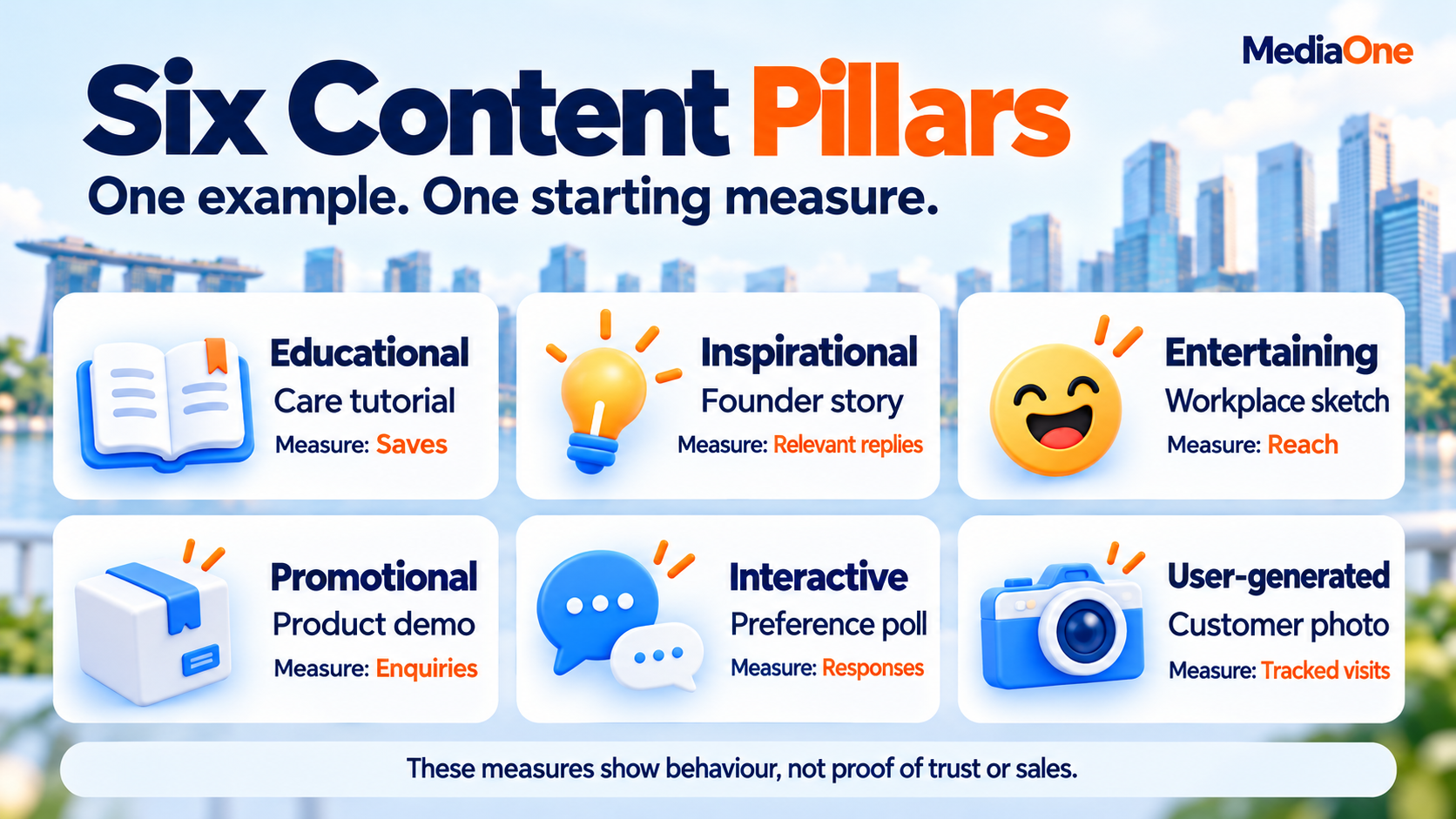
A content pillar is a recurring category that keeps a brand’s posts focused. The six pillars below organise ideas by their main purpose. A post can serve several purposes, but one priority makes production and measurement easier.
| Content pillar | Main purpose | Example | Starting measure |
| Educational | Explain a problem or task | Product care tutorial | Saves |
| Inspirational | Show values through actions | Founder’s lesson | Shares and relevant replies |
| Entertaining | Create interest or recognition | Workplace sketch | Reach and shares |
| Promotional | Help someone buy or enquire | Product demonstration | Orders or qualified enquiries |
| Interactive | Start a conversation | Product preference poll | Responses |
| User-generated | Show customer experiences | Customer photo | Product enquiries or tracked visits |
These measures describe behaviour. A profile visit does not prove credibility, and a link click does not prove a purchase. The wider social media marketing plan connects those actions to the business’s goals.
The effort labels refer to production needs:
- Low: Existing material, a short caption and basic editing.
- Medium: New photos, recording, design or customer coordination.
- High: Several contributors, event preparation or more involved editing.
Actual effort depends on the team. A phone video may take little time to record but need several rounds of caption checks. Existing social media insights can help identify topics worth that work.
Educational Social Media Post Ideas That Answer Customer Questions
Educational posts explain something customers need to understand. The strongest starting material often sits in support emails, shop conversations and sales enquiries.
- One customer question, one answer (Low). A florist could explain how early customers should order for a weekend event. The caption gives the usual process and names any exceptions, without exposing the person who asked.
- A short how-to (Medium). A coffee seller could show how to clean a reusable filter. Each step appears on screen, with a close-up of the part customers often miss. The finished post covers one task.
- A buying checklist (Low). A furniture shop could list measurements customers need before ordering a dining table. Doorway width and room space turn a vague shopping decision into something readers can check at home.
- A common mistake explained (Low). A plant shop could show how standing water affects a pot. The post explains what customers can inspect and how the shop handles that problem, without making sweeping claims about every plant.
- Two options compared (Medium). A printer could compare matte and gloss finishes using the same design. Side-by-side photos help customers see the difference, while the caption explains which everyday printing needs each option serves.
- A term translated into everyday language (Low). A packaging supplier could explain “minimum order quantity” with a sample order. The example shows why an order has a minimum and what customers should confirm before buying.
- A product care reminder (Low). A clothing retailer could explain the care instructions on one garment’s label. A photo of the label and a short explanation help buyers look after something they already own.

A teaching post should leave readers with an answer on the post itself. An unfinished explanation that forces everyone to send a message adds work for both the customer and the team.
Inspirational Posts That Show the People Behind the Brand
Inspirational content becomes more believable when it describes an event, decision or action. A generic quote rarely tells customers anything specific about a business.
- A founder’s starting problem (Medium). A homeware founder could describe the storage problem that prompted the first product. An early sketch and a current photo show the connection between the original need and today’s range.
- A decision that changed the business (Low). A bakery could explain why it introduced smaller celebration cakes. Customer requests, production limits and the eventual decision create a story with a beginning and an outcome.
- A team member’s learning moment (Medium). A new barista could share one skill they practised and what helped them improve. The employee chooses what to share, keeping the story comfortable and relevant to their work.
- A milestone with context (Low). A repair shop could mark its anniversary with a photo of its first workspace. The caption explains what changed for customers over that period, giving the milestone a purpose beyond celebration.
- A community activity recap (Medium). A business could describe a completed volunteering session, including what the team did. The post reports verified actions and respects participants’ privacy, without claiming wider social results it cannot measure.
- A progress report on a commitment (Medium). A retailer could show how it reduced packaging in a named product range. Comparable photos and documented changes support the story. Broad environmental claims need evidence beyond a redesigned box.
- A supplier’s craft (High). A food brand could feature a supplier explaining one production step. Agreed filming details and accurate attribution give the supplier a voice while helping customers understand the work behind the finished product.
A three-part story keeps these posts readable: the situation, the decision and the result. The result can be a lesson or a changed process; it does not need to be a dramatic sales figure.
Entertaining Posts Built Around Everyday Brand Moments
Entertainment works as a content choice when the audience recognises the situation. Humour should respect customers, colleagues and the context in which the post appears.
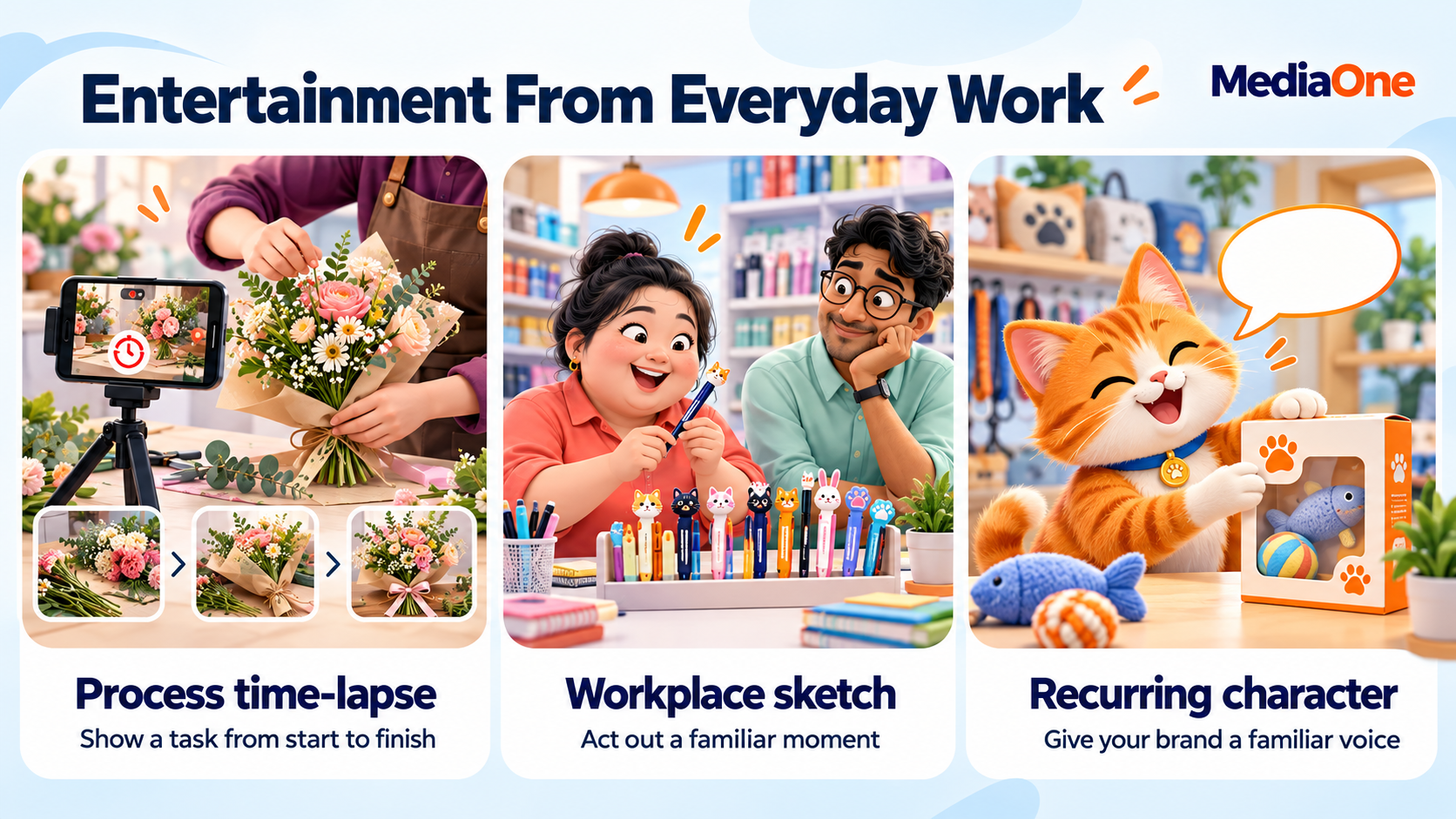
- An everyday work sketch (Medium). A stationery shop could act out someone testing six pens before choosing one. The joke comes from a familiar shopping moment, with staff playing the roles and no customer footage required.
- An original reaction image (Low). A bookkeeping business could create a graphic about finally receiving a missing receipt. Original artwork avoids depending on an image copied from a film, celebrity account or another brand.
- A process time-lapse (Medium). A florist could condense bouquet assembly into a short video. A caption names the occasion and materials, so viewers understand what they are watching without needing sound or specialist knowledge.
- A product in an unexpected scene (Medium). A desk organiser could appear beside a mountain of cables before the workspace is tidied. The scene stays truthful about the product’s size and what it can hold.
- A harmless outtake (Low). A team could share a missed line from its own product shoot. Everyone featured agrees to publication, and the clip avoids presenting an employee’s distress or mistake as entertainment.
- A recurring character (Medium). A pet retailer could create an illustrated office cat reviewing new stock. The character offers a recognisable format, while captions keep product descriptions accurate and separate jokes from buying information.
- A sound-led process clip (Medium). A bakery could record pastry being cut or bread leaving the oven. On-screen text explains the process, giving the post meaning for viewers who watch with audio turned off.
Entertainment should still belong to the brand. A popular joke with no connection to the audience can attract attention that contributes little to the business’s next conversation.
Promotional Posts That Help Customers Make a Purchase
Promotional content answers buying questions: what the offer includes, who it serves, what it costs and what happens next. A discount is only one possible reason to post.
- A product demonstration (Medium). A lunchbox seller could show the lid, compartments and packed contents. Everyday handling helps customers assess the item. Any claim about leak resistance needs support from the actual product’s specifications or testing.
- A service walkthrough (Medium). A cleaning company could explain what happens during a standard visit. The post identifies included tasks and exclusions, helping customers understand the service before they request a booking.
- A price breakdown (Low). A photographer could show what a stated package includes, such as session length and delivered images. Customers can see the scope and any additional charges before making an enquiry.
- A new product with context (Medium). A café could introduce a new sandwich by showing its ingredients, serving hours and price. Availability information gives an interested customer enough detail to decide whether to visit.
- A restock announcement (Low). A retailer could name the returning item, available sizes and ordering method. A photograph of the current stock helps prevent confusion with older colours or product versions.
- A dated offer (Low). A hypothetical promotion might reduce an item from S$40 to S$32, saving S$8. The post states the dates, qualifying item and conditions. The previous price must provide a genuine basis for that saving.
- An event preview (High). A craft business could show what participants will make at a workshop. The post includes the location, duration, included materials and booking details, helping customers judge whether the session meets their needs.
Singapore’s price transparency guidelines cover discount claims, price comparisons, mandatory charges and “free” offers. Accurate prices and visible conditions belong in the customer’s buying information, not in a hard-to-find correction later.
One main action keeps a promotional post manageable. A booking post can direct people to the booking page; a product post can name the item to order. Several competing requests make the next step harder to understand.
Interactive Posts That Give Customers a Reason to Reply
Interactive posts invite participation that the business can acknowledge or act on. The topic should relate to something customers recognise, without requesting personal information in public comments.
- A product preference poll (Low). A bakery could ask whether followers prefer pandan or chocolate for an upcoming trial batch. The poll describes the choice accurately and avoids promising a launch before production is agreed.
- A quiz with an explanation (Low). A coffee business could ask which brewing method uses a paper filter. The answer explains the method, giving participants something to learn even when their first choice was wrong.
- A question collection post (Low). A repair shop could collect questions about looking after everyday appliances. The team groups recurring topics for future posts and directs account-specific or potentially unsafe problems to an appropriate private conversation.
- A live demonstration and Q&A (High). A craft seller could demonstrate one technique and answer questions about materials. A planned topic and named host keep the session focused. Preparation is part of effective live streaming.
- A caption invitation (Low). A café could post an original photo of an unusually shaped pastry and invite captions. The activity remains a conversation, with no prize or competition mechanics attached.
- A customer challenge (Medium). A stationery brand could invite followers to share a weekly desk drawing. Participation remains optional, and the prompt explains whether submissions may be considered for a later customer feature.
- A joint expert conversation (High). A florist and an event decorator could discuss preparing flowers for a small venue. Each contributes knowledge to a shared customer problem, with agreed responsibilities for hosting and answering follow-up questions.
Replies complete the interaction. A business that asks for opinions should acknowledge the responses and explain any resulting decision. That follow-through gives social media engagement a purpose beyond collecting comments.
User-Generated Posts That Show Customer Experiences
User-generated content comes from customers or community members. A brand can invite contributions, but the contributor’s experience and words should remain their own.
- A customer photo in context (Low). A homeware business could feature a customer’s shelf arrangement. The caption identifies the product and credits the contributor, while avoiding personal details such as their home address.
- An unboxing clip (Medium). A customer could show what arrived in an order. The business checks that the featured packaging and contents match what buyers currently receive, so an older clip does not create false expectations.
- A product in everyday use (Medium). A bag seller could feature a customer showing what they carry for work. Actual contents help viewers understand capacity, while the customer explains the use in their own words.
- A testimonial with specifics (Low). A customer might describe how a delivery option helped them organise an event. The approved wording identifies the service and experience without turning one person’s result into a guarantee for everyone.
- A documented customer case (High). A software provider could describe a customer’s process before and after implementation. Any result needs records, a stated period and context. The customer agrees to publication of both the story and figures.
- A customer-created variation (Medium). A food brand could feature a recipe someone made with its product. The post credits the creator, describes the changes accurately and avoids presenting an untested recipe as the brand’s own instructions.
- A customer-led account feature (High). A regular customer could contribute a short “day using the product” sequence. The team can publish approved material through its own account, keeping account access and editorial responsibility with the business.
Written permission should cover the planned reuse, including whether the content will appear in paid advertising. A tag or public post does not automatically provide that permission. IPOS explains that copyright gives owners control over the use of their work.
How to Adapt Ideas for Platforms and Singapore Occasions
The same topic can support different posts without repeating the same message everywhere. A product care article might become a step-by-step carousel, a demonstration video and a discussion about common mistakes.
| Customer need | Possible format | Detail to include |
| Understanding a task | Carousel or document post | Numbered steps |
| Seeing a product work | Short video | Actual use and scale |
| Comparing choices | Image pair or carousel | The same comparison points |
| Asking a quick question | Poll or Story | A simple response option |
| Discussing a business problem | Text post or expert video | A specific example |
An Instagram content plan can give carousels, Stories and videos different jobs. Other channels need their own presentation, captions and working links. No format guarantees distribution beyond existing followers.
Readability deserves a check before scheduling. Large text, contrast and short slides help mobile readers. W3C’s accessible writing principles include meaningful image descriptions and captions for multimedia. Captions should match the spoken explanation, including product names and prices.
Singapore occasions add context when they connect to the audience. A gifting business could explain festive order deadlines; a shop could publish holiday opening hours. The Ministry of Manpower’s public holiday calendar provides official dates for planning.

Cultural greetings need accurate wording and respectful imagery. A sales promotion does not belong in every greeting. Retail campaigns such as the Great Singapore Sale need confirmed current dates before appearing in scheduled copy.
How to Turn a Post Idea Into a Finished Caption
A finished caption connects the opening line, supporting detail and customer action. The opening names the topic or situation. The middle answers the main question. The ending tells an interested reader how to respond.
A hypothetical cafe promoting lunch collection might draft this caption:
Lunch collection for nearby offices is available on weekdays. Our example lunch set includes a sandwich and drink for S$12, including applicable charges. Pre-orders close at 10 am for collection between noon and 1 pm. Orders go through the link in our profile. The menu page lists ingredients and available options.
The example gives an audience, offer, price, deadline and ordering method. A photo should show the actual set, with text large enough to read on a phone. The destination page needs to match the offer described in the post.
Different goals need different endings. A tutorial might finish with a recap of its steps. A customer story might end with the customer’s own observation. Every post does not need a request to buy, comment and share.
The final edit should remove anything the customer cannot use. A sentence such as “We are committed to delivering excellence” takes space without explaining the lunch service. Details about collection times give the reader something to act on.
A colleague unfamiliar with the draft can check three things: what the post describes, who it helps and whether any essential detail is missing. That review also catches abbreviations, unexplained product names and links that open the wrong page.
How to Plan and Measure a Month of Posts
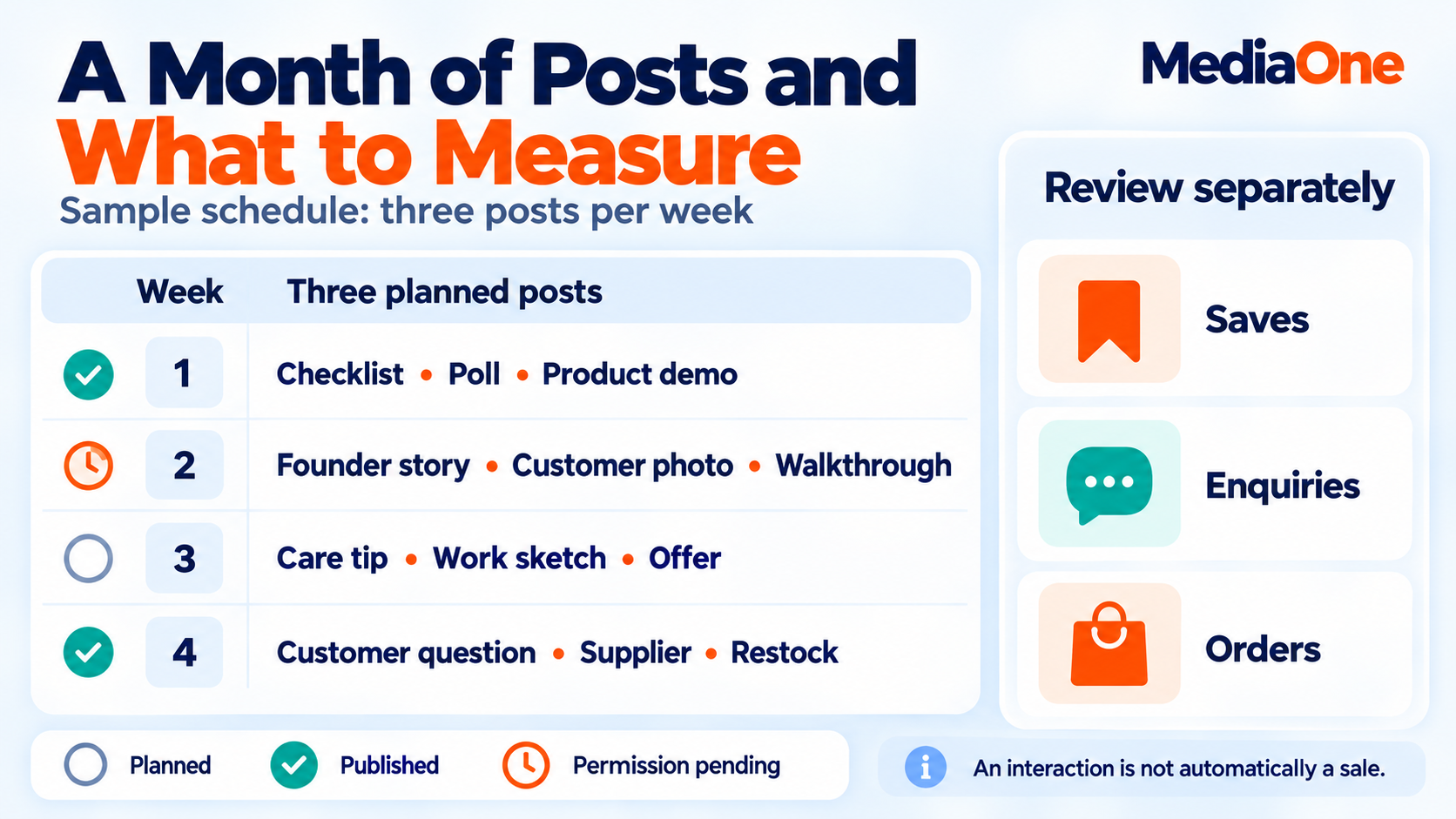
A small team can begin with a schedule it can maintain. The example below uses three posts per week as a planning exercise, without treating that frequency as a platform rule.
| Week | First post | Second post | Third post |
| 1 | Buying checklist | Product poll | Product demonstration |
| 2 | Founder decision | Customer photo | Service walkthrough |
| 3 | Product care tip | Workplace sketch | Dated offer |
| 4 | Customer question | Supplier feature | Restock announcement |
The calendar leaves room for changes in stock, customer questions and business priorities. A team can replace a demanding shoot with an existing photo when production time runs short.
A post record needs the topic, owner, publication date, materials, permission status, destination link and intended result. Content scheduling tools help organise publication, while someone still needs responsibility for comments and messages.
Measurement starts with the action selected before publication. Educational posts may earn saves; offers need checks on enquiries or orders. A qualified enquiry comes from a potential customer whose needs, location, budget and timing match the service or product offered. Appropriate social media metrics connect attention with customer behaviour without treating every interaction as a sale.
Google Analytics supports campaign parameters in links, which help identify campaigns sending website traffic. Consistent labels distinguish a product demonstration from an offer post. Completed sales still need their own measurement, and some customer journeys will remain partly untracked.
A record of production time adds another perspective. A video that earns more enquiries may still require more staff time than the team can sustain. Comparing results alongside hours spent helps decide which formats deserve regular space in the calendar.
A seven-day review can provide an early comparison, followed by another review after the normal buying period. Similar posts need comparable observation periods. A small change to the opening line or demonstration can be tested across several posts, but a handful of results cannot establish what caused an improvement.
Social Media Post Ideas That Support Your Next Month
The next month’s content can begin with a customer question the team already answers well. One person gathers the example, another checks the details, and the finished post gives customers something they can understand or act on.
A manageable calendar also needs time for replies, corrections and sales follow-up. Content production and customer service work together once a post goes live.
MediaOne’s social media marketing services cover content planning and campaign management. A business seeking support can bring its current posts, audience questions and enquiry process to a social media consultation so the discussion starts with its actual needs.
Frequently Asked Questions
Posts without faces can demonstrate products, show hands completing a task, explain a screen recording or present original illustrations. The content still needs a recognisable subject and enough context to explain what viewers are seeing. A real voiceover is optional.

AI can organise existing customer questions, suggest caption variations and turn approved information into draft outlines. A person should check every claim and example. Private customer information should stay out of public AI tools, and invented reviews or customer results should never appear as evidence.
Can a business use trending music in its posts?
Music availability does not establish commercial permission. TikTok’s commercial music information recommends its Commercial Music Library for promotional content. Music outside that library needs the necessary rights. Other platforms and any later advertising use require separate checks.
Do promotional TikTok posts need a disclosure label?
TikTok requires its content disclosure setting for content promoting a brand, product or service. That includes promotion of the creator’s own business and third-party branded content. The selected label should reflect the relationship behind the post.
Should Singapore brands write every post in several languages?
Language choices should reflect the customers the business serves and the enquiries it receives. Separate versions may help when one caption becomes difficult to read. Someone fluent in the language should check meaning, product details and cultural references before publication; automatic translation alone can miss context.