| AI Summary
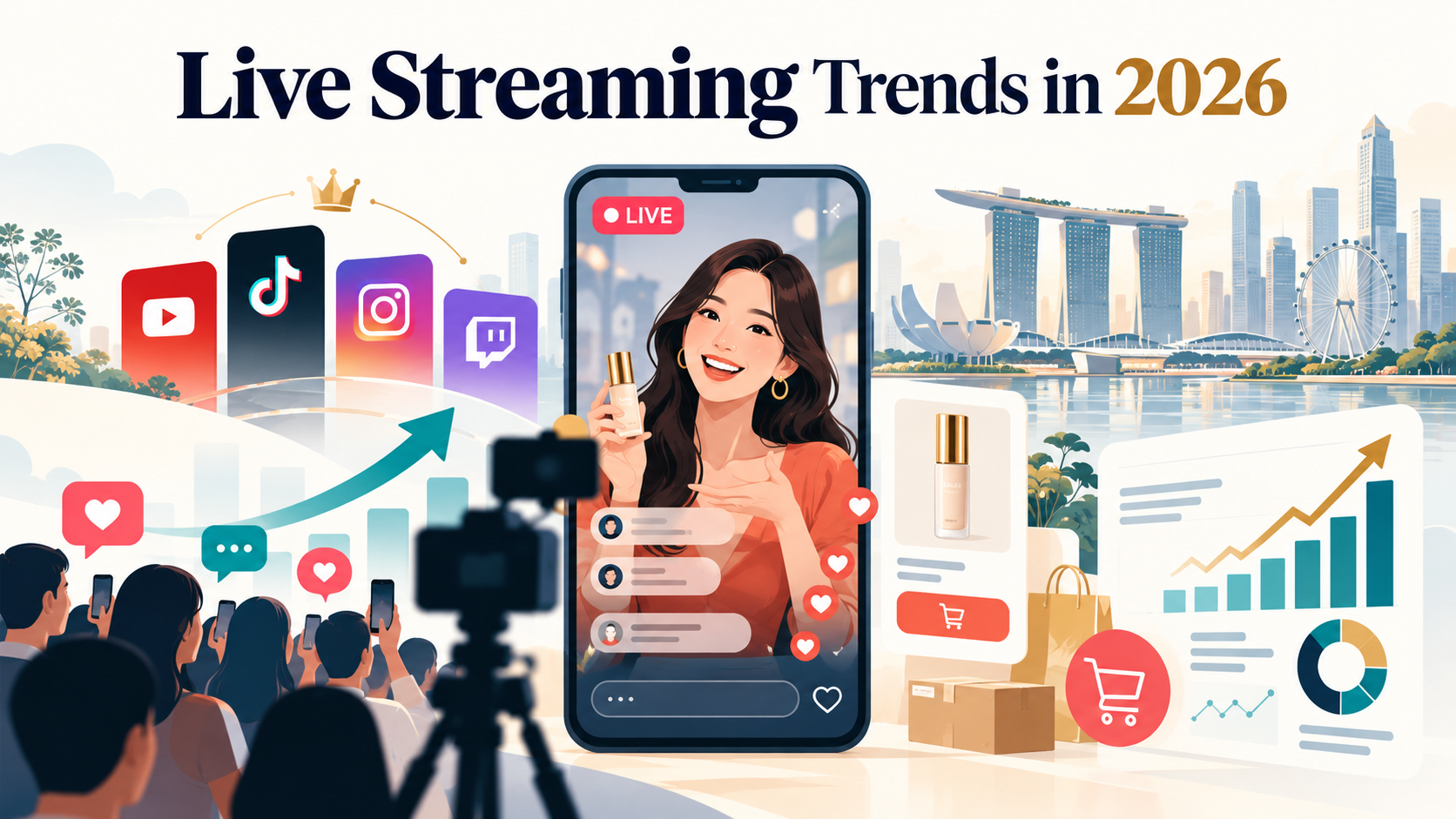
Live streaming trends in 2026 highlight the growing influence of YouTube, TikTok LIVE and interactive commerce. YouTube led global watch time in Q3 2026 with a 43% share, followed by TikTok LIVE at 33.5%. In Singapore, TikTok Shop reported 150% year-on-year growth in LIVE viewership. Businesses can use live streaming for product demonstrations, customer engagement and lead generation. This guide examines platform performance, emerging trends and practical strategies. It also introduces MediaOne’s Live Fit Matrix to help businesses choose suitable platforms, control production costs and measure results. |
Live streaming trends in 2026 point to a market shaped by YouTube’s broad reach, TikTok LIVE’s rapid expansion and growing demand for interactive content. For Singapore businesses, the opportunity is practical: demonstrate products, answer customer questions and turn broadcasts into measurable enquiries or sales.


The right platform depends on your audience and commercial goal, not the largest global viewer count. We examine the latest available platform data, explain which formats are gaining traction and share a decision framework for planning your next broadcast.
Key Takeaways
- YouTube leads overall watch time. It accounted for 43% of hours watched across platforms tracked by Streams Charts in the third quarter of 2026.
- TikTok LIVE is closing the gap. Its share reached 33.5% in the same period, reflecting growth beyond gaming.
- Singapore live commerce is expanding. TikTok Shop reported a 150% year-on-year increase in local LIVE viewership in July 2026.
- Interaction drives format choice. Use live video for demonstrations, questions and time-sensitive events. Use recorded video when control and evergreen search value matter most.
- Measure business outcomes. Watch time and chat activity help diagnose performance, but leads, orders and attributable revenue determine commercial value.
How Big Is the Live Streaming Market in 2026?
The sector is expanding, although market valuations are estimates rather than audited industry totals. Grand View Research estimates the global live streaming market at US$137.1 billion in 2026 and forecasts US$345.1 billion by 2030. Its definition includes platforms and related services. Other research firms use different boundaries, so their valuations should not be combined into a single growth narrative.
Viewing statistics offer a separate measure of demand. Stream Hatchet’s 2025 review recorded 36.4 billion hours watched in 2025 within its reporting scope, up 6% year on year.
A newer Streams Charts analysis published in October 2026 recorded 31.7 billion hours during the third quarter alone across a broader set of tracked services, including TikTok LIVE. These figures cover different platforms and periods. They cannot be compared directly to calculate annual growth.

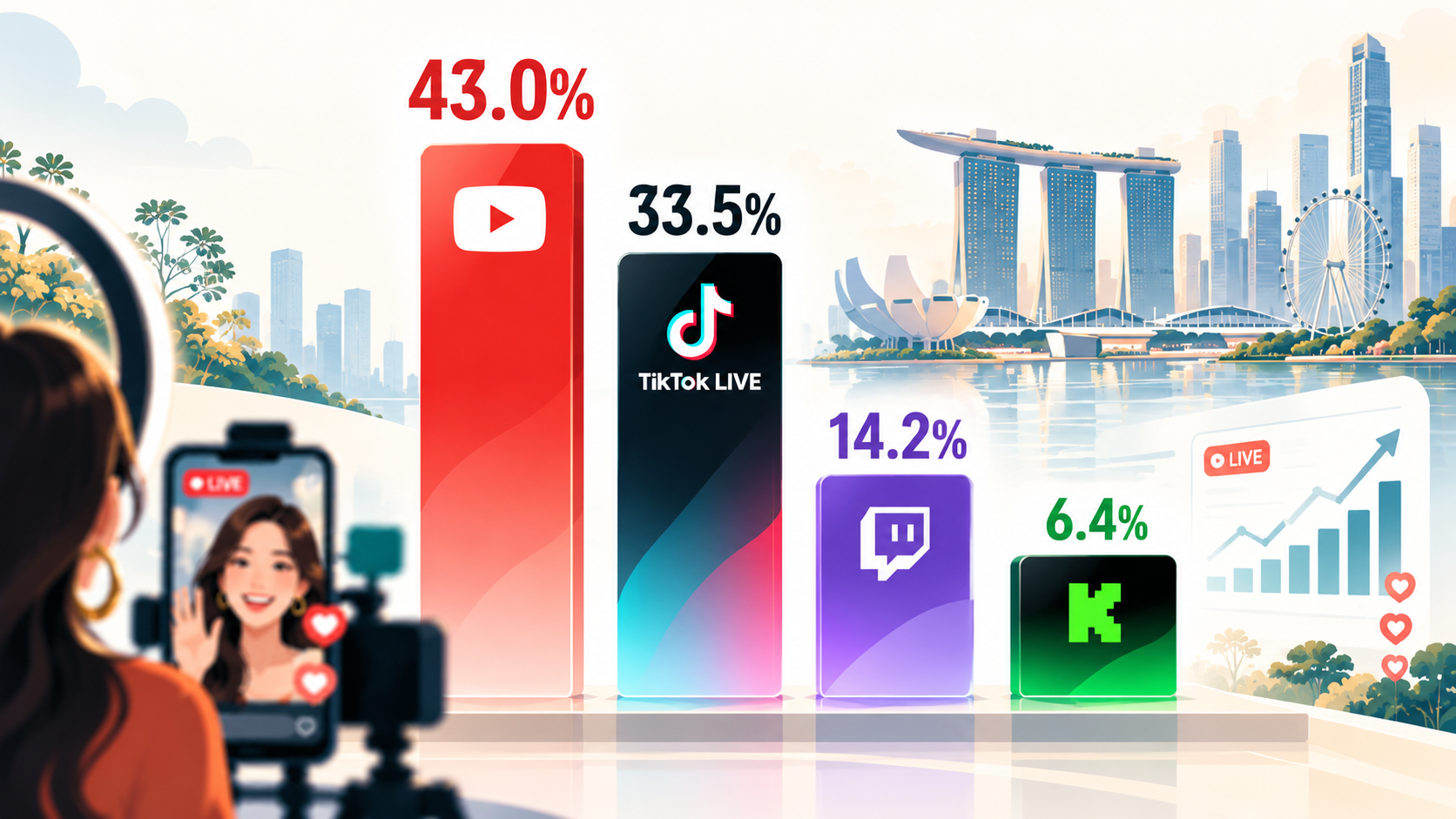
Where viewers spent their time in Q3 2026
| Platform | Share of tracked live watch time | What the audience pattern suggests |
| YouTube | 43.0% | Broad reach across entertainment, news, sports and education |
| TikTok LIVE | 33.5% | Discovery-led conversations, creators and shopping |
| Twitch | 14.2% | Strong concentration around gaming and established communities |
| Kick | 6.4% | Growing creator-led entertainment and gaming |
Source: Streams Charts, Q3 2026. Shares describe watched hours within its tracked platforms, not the percentage of internet users on each service.
YouTube generated 13.62 billion watched hours that quarter. TikTok LIVE reached 10.6 billion, up 19% from the previous quarter. Twitch recorded 4.51 billion, while Kick reached 2.04 billion, growing 30.7% quarter on quarter.
The clear shift is competition between platforms with different content strengths, rather than one service dominating every audience.
Six Live Streaming Trends Shaping 2026
1. Vertical, mobile-friendly streams are gaining distribution
Live content increasingly appears within scrolling feeds rather than only on dedicated video pages. That changes how creators earn attention. A viewer may discover a broadcast midway through, without reading an event announcement or knowing the presenter.
YouTube’s live streaming guidance explains that vertical broadcasts can appear in the Shorts feed. Its supported dual-format feature also allows eligible streams to serve horizontal and vertical viewing experiences. However, certain features differ: clickable links are not available in the vertical live feed’s chat and description in the same way as on horizontal live streams.
We recommend choosing orientation by task. Use a vertical frame for a product close-up or informal discussion. Choose horizontal when slides, multiple speakers or detailed demonstrations need screen space. Test your layout on an actual phone before going live; captions and product labels must remain readable.
2. Conversation is competing successfully with gameplay
Gaming still commands substantial viewing, particularly on Twitch. However, personality-driven conversations have become a leading live category. The Streamlabs and Hatchet Q2 2026 report recorded 670.5 million hours watched for Twitch’s Just Chatting category. On Kick, conversational streams also remained prominent.
This matters for businesses that cannot produce esports-scale entertainment. A knowledgeable presenter can hold a useful discussion around pricing, product selection or common customer concerns. Live questions create a reason to attend rather than watch a polished advertisement later.

Avoid launching without a topic. Announce the exact question your session will answer, invite questions beforehand and give viewers a clear reason to stay. Consistency builds recognition, but useful answers make the schedule worthwhile.
3. Live shopping is becoming a stronger Singapore sales channel
Among the most commercially relevant live streaming trends is the growth of shoppable broadcasts. Customers can watch a demonstration, ask about a product and purchase through supported shopping features while the session continues.
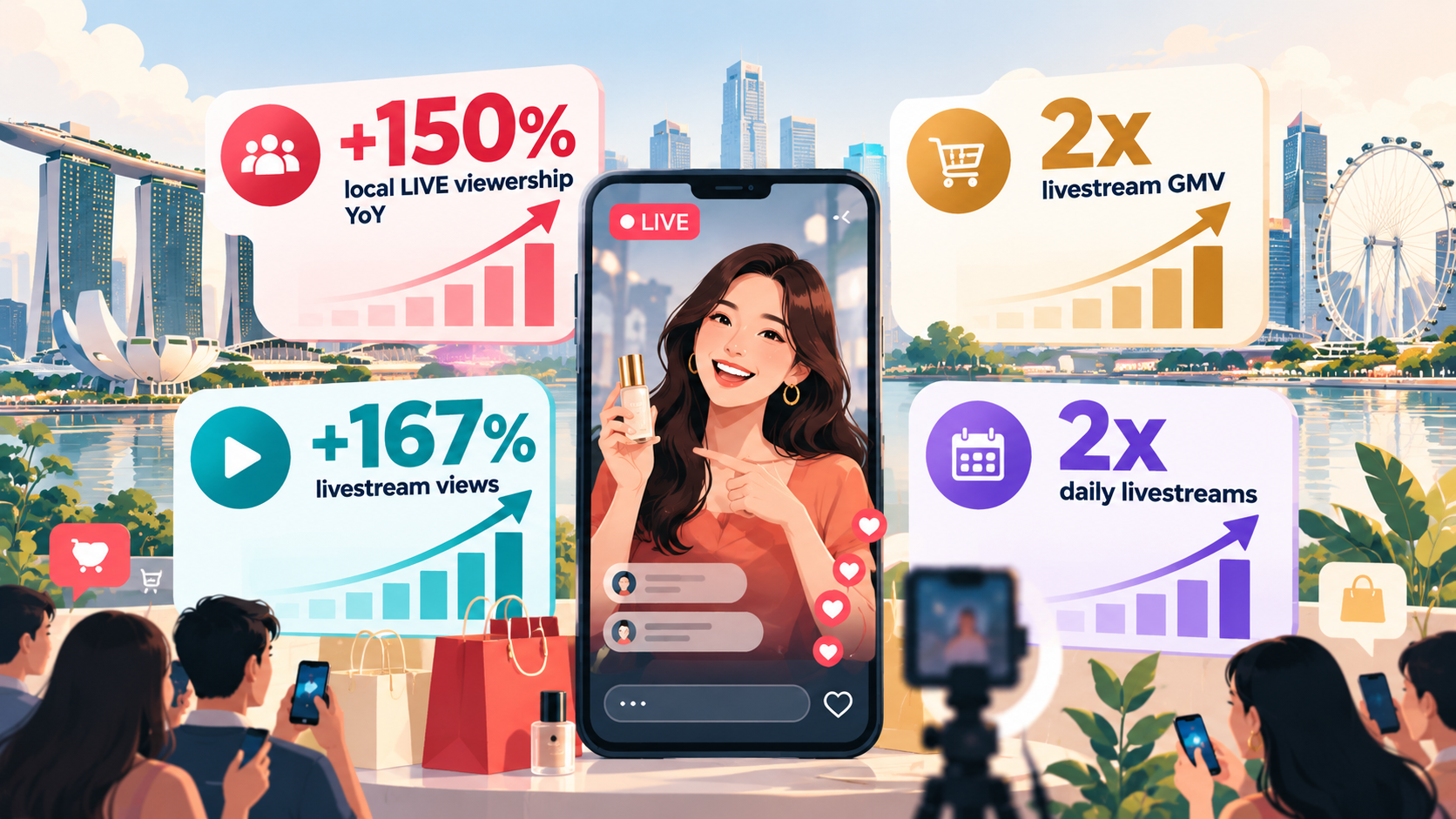
In a July 2026 Singapore announcement, TikTok Shop reported 150% year-on-year growth in local LIVE viewership. It also reported 1.7 times year-on-year growth in gross merchandise value (GMV) and 1.6 times growth in monthly buyers across TikTok Shop Singapore. Those latter figures refer to the overall shop, not exclusively to live-stream purchases.
Its 2026 6.6 Birthday Mega Sale results offer a clearer live-specific comparison: livestream GMV doubled year on year, livestream views increased 167% and the number of daily livestreams doubled during the campaign.
We would prioritise live selling for products that benefit from demonstration, including beauty items, kitchenware and apparel. Presenters should explain the product honestly, show its limitations and respond to buying objections. A flash promotion alone is unlikely to create lasting confidence.
4. Sports and scheduled events still produce viewing spikes
Entertainment, sports and competitive gaming can attract large audiences around a single scheduled moment. According to Streams Charts’ Q3 2026 analysis, YouTube reached a peak of approximately 36.06 million concurrent viewers during the 2026 FIFA World Cup final. Such peaks should not be mistaken for the normal audience available to a small business.
The transferable lesson is scheduling. Product launches, expert interviews and industry briefings work best when the audience has a reason to attend at a particular time. Promote the agenda in advance and build anticipation around a genuine reveal or opportunity to participate.
For conferences, obtain speaker permissions and confirm recording rights. Live distribution may require separate authorisation for music, footage or other third-party material. Rights management is part of production planning, not an afterthought.
5. Replays and clips are becoming essential to the workflow
Live broadcasts generate material that can continue attracting attention after the event. A useful question-and-answer segment can become a short clip. A demonstration can become a product video, while a webinar can support a searchable article.
Retention rules make archiving especially important. Meta’s Facebook Live policy states that new live videos posted from 19 February 2025 are available for replay, download or sharing for 30 days before automatic removal. Meanwhile, YouTube says streams under 12 hours can be automatically archived, although it recommends keeping a local backup.
We recommend recording a clean copy independently of the platform. After each session, extract the strongest answers, add captions and publish them in suitable formats. Link related clips to a product page or article where viewers can act on the information.
6. Commercial measurement is replacing vanity metrics
High viewer counts can look impressive without producing enquiries or sales. Conversely, a modest live session attended by qualified buyers may support valuable conversions. These outcomes require different measures.
YouTube’s live analytics documentation includes concurrent viewers, average view duration, watch time and chat rate. For commerce, TikTok Shop Singapore’s LIVE Performance guidance lists orders, buyers, click-through rate and GMV among available measures.
Track engagement to find what worked during the broadcast. Then assess completed purchases, qualified leads or appointments against the total cost of production. Where sales occur later, document your attribution window rather than automatically crediting every subsequent order to live streaming.
Keep a simple log of each session’s topic, date, production hours and primary outcome. This gives your team a consistent record for comparing formats and makes it easier to identify whether repeat broadcasts justify a larger budget.
Which Live Streaming Platform Should Singapore Businesses Choose?
The best platform depends on who already follows you, how viewers discover your content and what action you want them to take. Global market share indicates scale, not a guaranteed route to Singapore customers.
| Platform | Strongest business use | Main consideration |
| YouTube Live | Webinars, interviews, tutorials, events | Prepare titles and replays for later discovery |
| TikTok LIVE | Product demonstrations, creator-led selling | Confirm account eligibility and commerce tools |
| Instagram Live | Community discussions, founder updates | Discovery and replay options require planning |
| Facebook Live | Existing groups and page communities | Download recordings before the 30-day limit |
| Twitch or Kick | Gaming, entertainment and specialist creators | Audience fit matters more than platform growth |
For YouTube, check channel verification and feature eligibility before scheduling. TikTok’s LIVE safety guide says hosts must be at least 18 and meet a follower threshold that varies by market. Do not promise access to interactive commerce features until the relevant account has been approved.
What Singapore audience data can tell us
DataReportal’s Digital 2026 Singapore report estimates 5.78 million internet users and 5.33 million social media user identities in late 2025. Its advertising-tool data show potential reach of 5.33 million for YouTube, 3.80 million for Facebook and 3.80 million adults for TikTok. These are advertising audience estimates, not counts of people who watch live streams.
We would use them to shortlist channels, not forecast live attendance. Your own follower activity, customer surveys and test broadcasts provide a stronger basis for choosing between two otherwise suitable platforms.
Live Versus Pre-Recorded Video: Which Format Fits?
Live video gives viewers immediate access to a presenter. Pre-recorded video allows detailed editing, tighter explanations and fewer on-air risks. Neither format guarantees stronger engagement; the task determines the better choice.
| Decision factor | Live video | Pre-recorded video |
| Interaction | Questions and responses in real time | Comments or follow-up after publishing |
| Editing | Errors are visible when they occur | Full editorial control before release |
| Scheduling | Audience must attend or watch a replay | Viewers can watch whenever convenient |
| Best use | Launches, demonstrations, consultations | Tutorials, evergreen explainers, advertisements |
For a Singapore consultancy, a live question-and-answer briefing can reveal client concerns. A pre-recorded explainer may be better for a precise regulatory topic that requires checking every statement. We often favour a hybrid workflow: broadcast an interactive session, retain the original file and publish a concise edited version afterwards.
Use the Live Fit Matrix Before Committing Your Budget
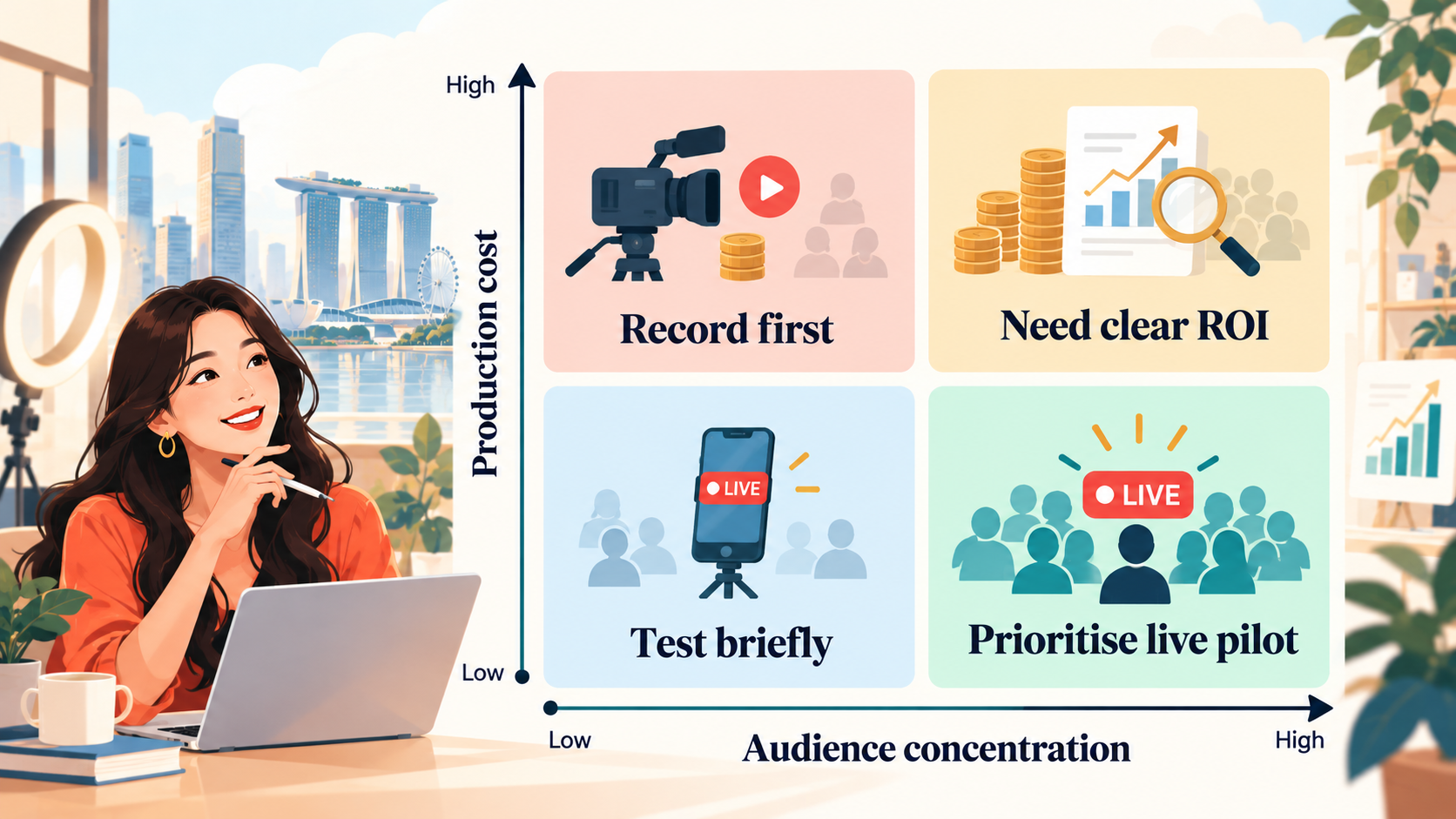
Our Live Fit Matrix is a planning tool, not a validated industry benchmark. It compares audience concentration with production cost so a business can decide which ideas deserve a live trial.
Score audience concentration from 1 to 5. Give 1 when the intended audience is dispersed across unrelated channels, and 5 when most of your reachable customers already engage on one platform. Score production cost from 1 for a basic phone setup to 5 for a complex multicamera event with external staff. Use 3 as the dividing line for both scores.
- High audience concentration, low cost: prioritise a live pilot.
- High concentration, high cost: require a defined commercial outcome and realistic forecast.
- Low concentration, low cost: experiment briefly, then evaluate results.
- Low concentration, high cost: prefer recording first or build an audience before committing.
Consider a neighbourhood bakery whose customers regularly engage with its Instagram account. Its weekly demonstration might score 4 for audience concentration and 1 for production cost. We would test a short live format and compare product enquiries with preparation time.
A specialist business hosting a panel with hired production staff might score 2 for concentration and 5 for cost. We would first build demand through registrations or release a recorded interview. The scores are internal judgements; adjust them using genuine channel and budget data.
How to Plan and Measure Your First Four Live Sessions
We recommend a four-session pilot before investing in studio equipment. Keep the core format consistent enough for comparison, but improve one weakness after each broadcast.
- Set one outcome. Choose qualified enquiries, product orders, event registrations or another measurable action.
- Confirm the audience. Review follower behaviour, invite relevant customers and select a realistic time slot.
- Prepare a reliable setup. Test sound, lighting, connection stability, captions and a backup recording.
- Build an interactive running order. Open with the topic, demonstrate the main idea, answer questions and close with one clear call to action.
- Review results. Compare average watch time, chat participation, clicks and completed outcomes across the four sessions.
- Repurpose selectively. Publish clips that answer real questions rather than uploading every minute of footage.
A smartphone, stable mount, microphone and adequate lighting can support a basic pilot. Avoid quoting an equipment budget without checking current Singapore supplier prices. We would invest first in dependable audio and a stable connection, then upgrade cameras only when production quality limits the experience.
For broader distribution, connect your clips with an ongoing social media marketing strategy. Viewers should have an obvious route from an interesting moment to your website, product page or enquiry form.
Frequently Asked Questions
What is the biggest live streaming trend in 2026?
The strongest shift is growing competition between YouTube and TikTok LIVE for overall viewing time. In Q3 2026, Streams Charts recorded respective shares of 43% and 33.5% across the services it tracked.
Which live streaming platform has the most viewers?
YouTube led in total hours watched in Streams Charts’ Q3 2026 comparison. Hours watched do not equal unique viewers, so that figure cannot establish which platform has the most individual users.
Is live streaming worth it for small businesses?
It can be worthwhile when customers benefit from demonstrations or direct answers. Start with a low-cost pilot and compare attributable orders or leads with the time spent producing it.
How do live streamers make money?
Possible revenue comes from product sales, sponsorships, subscriptions, advertising, gifts and ticketed access. Availability depends on the platform, location, account eligibility and content category.
How long should a business live stream last?
There is no universal ideal duration. Choose enough time to deliver the promised demonstration or discussion, then use retention data to refine future sessions.
Can businesses reuse their live streaming recordings?
Yes, subject to platform access and content rights. Download a backup promptly, especially on Facebook, where new live recordings are normally removed after 30 days.
Turn 2026 Live Streaming Trends Into Measurable Business Growth
The latest live streaming trends show audiences spreading across platforms while interactive shopping and conversation gain commercial importance. That does not mean every Singapore business needs a daily show. It means the opportunity should be assessed against an audience, a specific format and a measurable objective.
We recommend YouTube for discoverable educational sessions, TikTok LIVE for suitable product-led commerce and established social communities for customer conversations. Test four broadcasts before expanding production. Keep the recordings, measure what viewers actually do and invest where live engagement contributes to qualified demand. That is how live streaming becomes a sustainable part of your marketing plan.