| AI Summary
A digital marketing project gives students, beginners and working marketers a way to plan a campaign, measure what happened and explain what they learned. This guide covers email, social media, search engine optimisation, paid search and content projects. A worked example from a fictional Singapore café shows how to set a target, count sign-ups and report results for a portfolio or client. |
A digital marketing project is a piece of work with a deadline that uses an online channel to reach a measurable goal. A project can involve growing an email list, improving a page’s search performance or testing a paid ad. Its main parts are a goal, an audience, a channel, a way to track results and a final report.
Key Takeaways
- Account access can decide which project you can finish. A public website review and a live ad campaign need different permissions.
- A short test can reveal a broken form or an unclear offer before it brings in enough data to compare results.
- A portfolio can include an audit, a practice project or a campaign that missed its target. Each shows a different kind of work.
- A campaign report is easier to assess when it names the dates, the source of the numbers and the limits of the data.
A café shares a sign-up link on Instagram. People tap it, but few join the mailing list. Did the post reach the wrong people, or did the form ask too much? A digital marketing project gives you a way to find out where people stopped and decide what to try next.
That approach works for a school assignment, a first portfolio piece or a campaign at work. The examples below show how to choose a project you can finish and turn the work into something you can explain to a teacher, employer or client.
What Is a Digital Marketing Project?
A digital marketing project focuses on one piece of work. A business might post on social media all year, while one project tests whether a month of posts can bring people to a class sign-up page. The project ends when the team reviews what happened and makes a decision about the next round of work.
Some projects test a live campaign. Others review what already exists. A student might check five pages of a tuition centre’s website and hand over a list of fixes. A marketer with access to the site might make one of those fixes and compare search performance before and after. Both projects have value when the report explains what the team actually did.
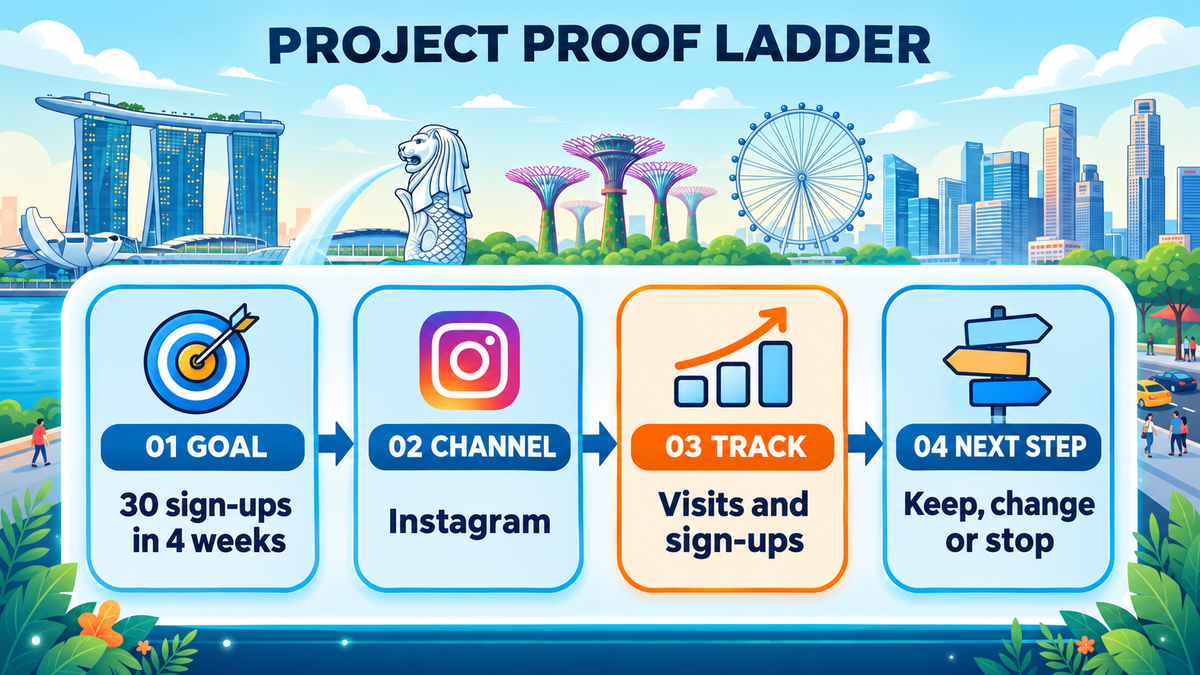
The four questions in the Project Proof Ladder
The Project Proof Ladder is a planning check for this guide. Each step covers a question that can save time later.
| Step | Question | Example |
| Goal | What should happen, and by when? | The café wants 30 new email subscribers in four weeks. |
| Channel | Where can you reach those people? | Its Instagram account already answers questions about weekend specials. |
| Tracking | How will you know the action happened? | The email platform records each new confirmed sign-up. |
| Business decision | What will the result help you decide? | The café will decide whether to keep promoting the email list through Instagram. |
A project can start with a missing answer. If the café cannot tell which channel brought in sign-ups, for example, the first task is to set up a way to check where visits came from. The team can do that before spending time on new posts.
How to Plan a Digital Marketing Project
Set a goal and record your starting point
A goal works best when the team can check it on a specific date. SMU Academy’s overview of digital marketing strategy explains how measurable, time-bound goals can support a wider marketing plan. For a class project, a goal might be to collect 20 confirmed registrations for an event by Friday. The student running the project can check the number against the registration list.
Your baseline is the starting point you will compare your result with. A tuition centre that receives 12 trial-class enquiries in a typical four-week period can use a recent four-week total as its starting point. A new page may start at zero. When you record the baseline, write down the dates and where the number came from.
Find out who will take the next step
A project audience is the group you want to reach. “Parents looking for a Saturday maths class near Tampines” gives a tuition centre something specific to write about. The offer can cover the location, class time and what happens at the first lesson. “Parents in Singapore” leaves more questions open.
A marketing message based on customer questions can start with enquiries the business already receives. If parents keep asking about class size, that detail belongs on the page. If they already understand the offer but struggle to book, the form may need more attention than the ad.
Check what the team can use
The project brief should record which website pages, social accounts, email lists and booking tools are available. For each one, note who can approve a change, who can publish it and who can see the results. A class project can lose a week waiting for access to an account that nobody checked at the start.
The project timeline should also allow time for someone to respond. A post can generate visits on the day it goes live, while a parent may need a few days to discuss a class booking. A small team can set separate dates for its last post and its final report.
Pick the numbers you will check
A key performance indicator, or KPI, is a number that tells you how the project is doing. For a trial-class campaign, completed enquiries may be the main number. Page visits and form starts can help explain the total. If 100 people visit and only three start the form, the next thing to check is what visitors see on the page.
A simple pre-launch check covers the work that is easy to miss:
- Owner and dates. Each task has a person, a due date and time for review.
- Budget. Any spend has an approved limit and a place in the project record.
- Mobile test. The link, page and form work on a phone.
- Tracking test. A test action appears in the right report and counts once.
- Reporting dates. The team knows when to export the results and what dates to compare.
Digital Marketing Project Ideas for Students and Beginners
The right project depends on what you can access and what skill you want to show. A student club can provide a real audience for an event campaign. A family business may have a website you can review. A marketer with permission to see sales data can ask a question about repeat orders.
| Project | What You Produce | What You Can Check |
| Email sign-up campaign | Sign-up page and welcome email | Confirmed sign-ups and clicks from the welcome email |
| Social media event campaign | A set of posts and an event page | Visits from social posts and completed registrations |
| Customer journey map | A diagram and a list of problem points | Where people stop, if records are available |
| Local search review | A list of fixes for a location page or business listing | Which details are missing or hard to find |
| Campaign sales analysis | A short report on sales and costs | Orders linked to the campaign and the cost of running it |
Build an email sign-up campaign
A bakery might offer a weekly email about its weekend menu. The sign-up page explains what people will get and how often it will arrive. The welcome email tells new readers what to expect and gives them one next step, such as checking the menu. These are two early stages of the email marketing lifecycle.
Confirmed sign-ups show whether people joined the list. Clicks on the menu link show which readers took that extra step. Apple’s Mail Privacy Protection can load remote email content in the background, so open counts are a weaker sign that someone read an email. A small campaign can report its actual counts and describe what happened without treating the first send as a rule for future sends.
A student club could test whether posts bring people to a volunteer sign-up page. One post can explain what volunteers do, while another can show what a shift looks like. Both can point to the same form. Registration totals show how many people signed up, while the campaign report can record the main questions that came in before the event.
A post with many views and few page visits can still tell you something. The team might find that people enjoyed the video but missed the link. When the next post goes out, a visible link and an earlier mention of the event date give the team specific changes to test.
Map a customer journey
A customer journey is the series of steps someone takes from finding a business to buying or coming back. A home baker’s customer might find an Instagram post, check delivery areas, message about a date and pay a deposit. The map should show the question the buyer needs answered at each step.
An enquiry log may reveal that people often ask about delivery before placing an order. A project could test whether showing delivery areas and fees on the order page cuts down on those messages. Without access to the log, a student can still draw the map and flag the steps that need checking.
Compare campaign sales and costs
An MBA student or a marketer with access to order records can examine whether a campaign brought in enough sales to cover its costs. A report might compare two email offers and include discounts, refunds and the direct costs of filling the orders. The best comparison uses the same rules for both offers, including how long an order can follow an email click and still count in the report.
Hands-On Projects in SEO, Paid Search and Content
Review a website and track a search fix
A search engine optimisation, or SEO, project can start with five pages on a small website. The review can check whether titles explain each page, whether links work and whether the pages answer the questions people have. For a local business, a local search review can also check whether opening hours, location and contact details are easy to find.
A live test might use one on-page SEO change, such as giving a class page a title that states the subject and age group. The Google Search Console performance reports can show impressions, which record appearances in search results, and clicks to the site. The report should note when the change went live and compare the same page over similar periods. School holidays or a change in demand can affect the numbers too.
A review can still stand on its own if you only have access to public pages. A screenshot of the issue, a suggested fix and a note on why it comes first give the website owner something they can act on.
Plan a paid search test
A Google Ads campaign for a tuition centre could focus on one service, such as Primary 5 maths tuition. The ad leads to a page about that class, and the form asks families for enough information to arrange a trial lesson. A small campaign budget is easier to review when the team knows which action it is paying to get.
Google Ads conversion measurement can record selected actions, including completed website sign-ups. The project should test its chosen action before launch. If the account counts every tap on “Book a trial” as a booking, it may overstate how many people actually sent the form. A practice version can show the ad copy, search terms, budget and tracking plan without running the ads.
Create content around one customer question
A content project can start with a question customers already ask. A bicycle shop could explain what a basic service includes, how long it takes and when a rider should book a repair. These questions belong at different points in the content marketing funnel, from learning about the service to making a booking.
A first project might cover one article, one booking page and the link between them. Early results can show whether the article appears in search and whether readers click through to the booking page. A later review can check whether those visits led to bookings. The report should state how long the content had been live when the team checked.
A Digital Marketing Project Example for a Singapore Café
Imagine a café in Tiong Bahru that wants more people to hear about its weekend menu. The café already has an Instagram account and a mailing list. It gives one staff member time to build a sign-up page and gives another access to the email report. The owner wants to find out whether the café should keep asking Instagram followers to join the list.
A one-page project brief
| Brief Item | Café Example |
| Audience | People who follow the café and want weekend menu updates |
| Offer | One email a week with the weekend menu |
| Goal | 30 new confirmed sign-ups in four weeks |
| Starting point | 200 contacts at launch, with new sign-ups counted separately |
| Channel | Instagram posts and Stories |
| Tracking | Tagged campaign link, page visits and confirmed sign-ups |
| Review date | The first working day after the four-week campaign |
A staff member can use campaign link tags to identify visits from the Instagram promotion in Google Analytics. The email platform can provide the confirmed sign-up total. If the café needs to show how many of those people came from Instagram, it also needs a way to link that source to the completed sign-up. A tagged visit and a list-wide sign-up total answer different questions.
What the cafe could report
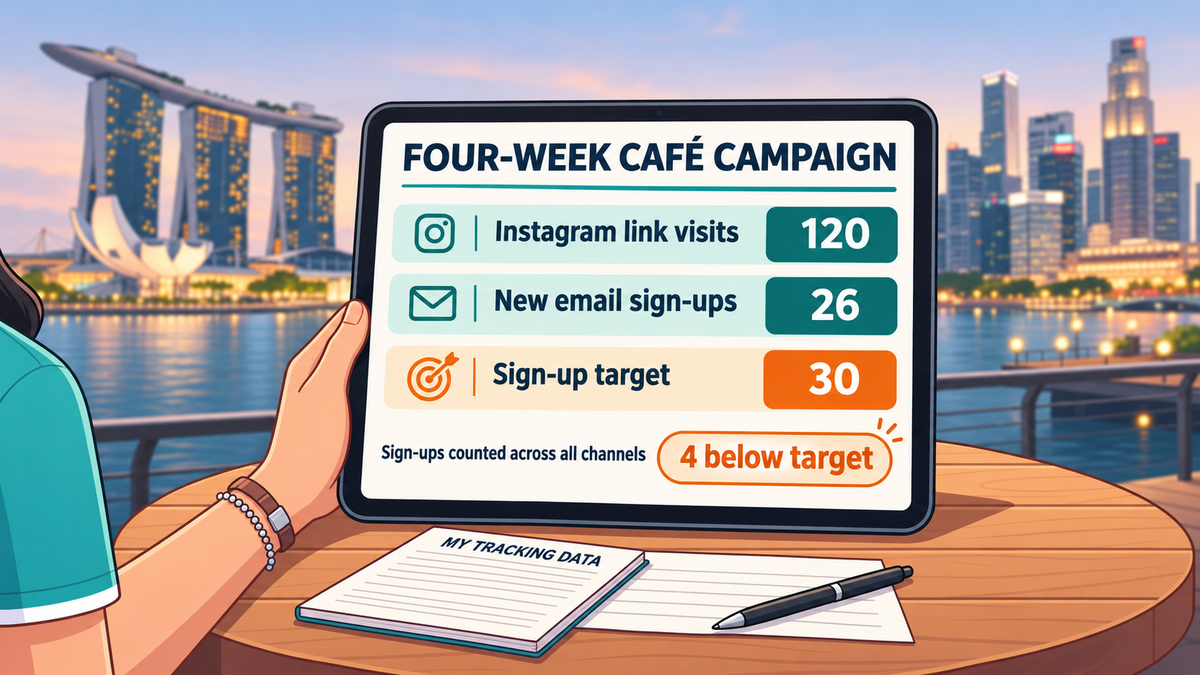
Suppose the café logs 120 visits from the Instagram campaign and 26 new confirmed sign-ups across the whole list. The sign-up count falls four short of the target. The café also finds that its form works on phones, but visitors have to scroll past a large menu photo to see it. The next test can move the form higher and keep the offer the same.
The report can show the two counts side by side. If the café can link confirmed sign-ups to individual campaign visits, it can calculate a sign-up rate for those visits. If it only has the two totals, it can explain the gap in the data and record the form change as an idea to test.
How to Measure Results and Explain What They Mean
Count the completed action
The tracking setup should match what the project promised to count. For an enquiry campaign, a completed form is the action. For an online shop, it may be a paid order. In Google Analytics 4, a team can mark an important action as a key event. A test order or enquiry helps check whether the event records at the right time.
A short reporting sheet can hold the result, the source and any issues that affect the count. For instance, a team that received 14 form submissions might remove two test entries and one duplicate before it reports 11 enquiries. The method should stay the same when the team compares two periods.
Separate linked sales from profit
Attribution is the rule a report uses to give a channel or campaign credit for an action. A shop might count orders placed within seven days of an email click. That rule helps the team compare emails on the same terms. A buyer may also have seen a social post, visited the shop or planned to buy before opening the email.
Suppose a campaign report links S$600 in sales to an email, and the products and delivery cost S$360. That leaves S$240 before campaign costs. If the campaign cost S$80, S$160 remains before other business costs. The report can show the amounts and the attribution rule so the owner can see how the team reached the figure.
Learn from a real Singapore campaign
The Singapore Tourism Board’s destination marketing work provides a larger example of how the choice of metric follows the campaign goal. For its 2023 #MadeInSingapore TikTok campaign, the board worked with creators to draw attention to Singapore as a travel destination. TikTok’s published case study reports 95 million views across 66 selected videos and a reach of 24 million unique users. Those figures describe exposure. A project about bookings would need a separate booking measure.
A student campaign can apply the same distinction on a smaller scale. If a campus club wants students to see a new event, reach can be the main number. If the club needs 40 volunteers, completed registrations belong at the top of the report.
How to Present a Digital Marketing Project in Your Portfolio
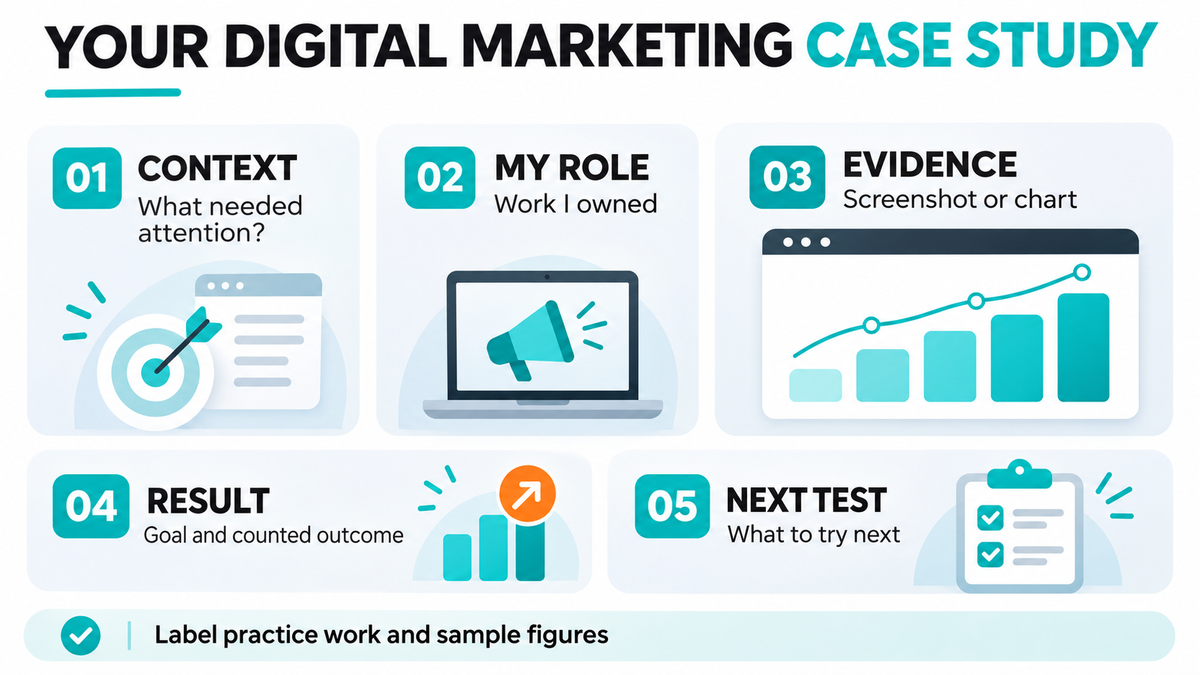
A portfolio case study can take one page. A teacher, interviewer or client should be able to tell what you owned, what you changed and what happened after the change. In a group project, one sentence can explain which parts you handled and which parts the team shared.
A simple case study format
- Context. The first line names the business or project and the problem it needed to solve.
- Your role. The next line explains what you did, such as writing the page, checking the form or reviewing the data.
- Work sample. One image or excerpt shows the work, such as a page design or a chart with dates.
- Result. The result gives the target, the final count and the source. An audit can show which issue you found and why you put it first.
- Next test. The final line names one change you would test and what you would watch.
A project that misses its target can still show how you work. A campaign might bring in plenty of visits while the form collects few enquiries. A case study that points to the part of the page you would test next gives an interviewer a decision to ask about. If the campaign stayed in the planning stage, a “practice project” label and a proposed measurement plan make its scope easy to understand.
Next Steps for Your First Digital Marketing Project
Your first project can start with a business question someone wants answered this month. A student could help a campus club find out which posts bring people to its event page. A marketer could help a shop test one part of its digital marketing strategy for Singapore consumers, such as how shoppers move from a product page to a purchase.
A business planning a wider campaign can speak with MediaOne about its digital marketing project. A short brief with the offer, budget and records the business already keeps gives both teams a place to start the discussion.
FAQs About Digital Marketing Projects
Can I use a fictional brand for a school project?
A fictional brand can work if the assignment allows it. A sample campaign can show your audience research, ad copy and proposed budget. Any figures you create for the exercise should carry a label such as “sample figures”. If your lecturer asks for measured results, a campus club or your own website can give you a real project to work on.
Where can I practise reading campaign reports without client data?
The Google Analytics demo account includes data from the Google Merchandise Store and the Flood-It! app. A beginner can use the store data to compare traffic sources or examine purchases. A portfolio entry based on the account should say that you analysed demo data and explain the question you explored.
The client or account owner should approve any screenshots you plan to publish. A cropped chart may still show a business name, account number or information the client treats as private. A chart you redraw with approved totals can show the same result. If you use sample figures, label them so readers know what they are seeing.
What should I do if two reports show different totals?
The first check is whether both tools count the same action over the same dates. A form tool may count all submissions, while an ad report counts only submissions it credits to the ads. The time zone can also affect totals near the start or end of a day. The project report should use the source that matches the goal and explain the difference if it affects the result.
Can a group use one project for several portfolios?
Each person can write about the work they did, with permission to share any common materials. The person who set up tracking might show how they checked the form count. The person who wrote the page might explain how they chose which customer questions to answer. Both can state the team’s result and give credit for the shared work.