Many Singapore consumer brands spend heavily to win a first purchase, then lose the customer. B2C marketing works best across the full customer lifecycle: discover, consider, first purchase, repeat purchase and lapse – with win-back flows aimed at the last of these.
A sound marketing strategy – our guide to marketing strategies for SME growth covers the planning basics – helps you rebalance your channels across that lifecycle. B2C digital marketing reaches individual consumers online through search, social media, email, SMS and marketplaces, aiming to persuade people to buy, buy again and recommend.
In Singapore, that means designing for mobile-first shoppers who compare prices before buying. Engaging existing customers is often the cheapest growth, so this guide covers acquisition and retention – and if you want a partner across the channels, MediaOne Marketing’s digital marketing services cover the full mix.
Key Takeaways
- Acquisition is only half the job. Automated flows produce nearly 41% of email revenue from just 5.3% of sends, per Klaviyo’s benchmark data. This is vendor-reported and varies by category.
- Audit by lifecycle stage, not channel. Score each stage (discover, consider, first purchase, repeat purchase, lapse) against your channels.
- Fix high-impact, low-coverage gaps first. Repeat purchase and lapse stages are often under-invested by Singapore brands.
- Use marketplace data for owned channels. Shopee and Lazada insights can sharpen website and email targeting.
- Set one measurable goal. Lifting customer lifetime value gives the plan a clear finish line. The 12 percent figure here is illustrative, not an expected outcome.
- Start small. Automate two or three flows before building more.
What B2C Digital Marketing Is and How It Differs from B2B
B2C digital marketing is the practice of reaching individual consumers online so they buy a product, buy again and recommend it. Its fundamentals match any market: understand the buyer, make a useful offer, and keep the relationship going after the first sale. Strong B2C marketing also depends on building customer loyalty after that first purchase, which keeps repeat buyers coming back.
The difference from B2B lies in who decides. A consumer usually decides alone, often within minutes, driven by emotion, convenience and price. Those forces change the playbook:
- Decision speed: the offer and checkout must work on the same device.
- Emotion: images and video carry more weight than spec sheets.
- Price sensitivity: your site competes directly with marketplace listings.
|
Factor |
B2B digital marketing |
B2C digital marketing |
|
Decision makers |
Committee |
Individual |
|
Typical sales cycle |
Weeks to months |
Minutes to days |
|
Main appeal |
Rational return on investment |
Emotion, convenience, price |
|
Core channels |
LinkedIn, search, email |
Social, marketplaces, search, SMS |
Who Is Actually Buying: Target Audience and Segmentation
Your target audience is the group most likely to buy and come back. Segment it by age, household, location, shopping habits and purchase reason, then start with one or two segments. Test each separately to learn which customers respond to which content.
Understanding Singaporean Consumer Behaviour
An eMarketer forecast put smartphone penetration in Southeast Asia at 88.9% of internet users in 2023, so most browsing happens on a phone. Buyers move between English, Mandarin, Malay and Tamil content. A campaign built for a desktop-first, single-language audience will underperform, so plan for mobile-first, multilingual content from the outset.
Price comparison is the default. Shoppers check a brand’s own site against Shopee and Lazada listings before buying. Brands that cannot match marketplace trust signals – reviews, delivery speed and clear returns – lose the sale before the advertising does its work. Loyalty incentives matter as much as winning new customers, particularly for products with repeat purchase potential.
Turning audience data into targeting decisions
|
Audience signal |
Where to find it |
Decision it informs |
|
Device and session mix |
Google Analytics |
Whether to prioritise mobile landing pages and checkout |
|
Age and interest groups |
Meta Business Suite |
Which audiences to target on Facebook versus TikTok |
|
Top-selling products and price points |
Shopee and Lazada seller insights |
Which products to feature on owned channels |
|
Repeat purchase rate |
Store or CRM records |
Whether to fund retention flows or acquisition |
Marketplace insight data is underused. A product that sells well on Shopee at a particular price point is a strong signal for the owned-site offer. Brands that run both B2B and B2C sales should keep these signals separate, since business buyers rarely behave like consumers. Google Analytics and Meta Business Suite are both free and usually provide enough insight for small and medium-sized businesses – start with the signals in the table before buying further tools. If your customer records are the weak link, our guide to customer relationship management for SMEs covers keeping them clean at the source.
Choosing Your Digital Channels
Most B2C brands in Singapore cannot run every channel well, so prioritise two or three. Score each channel from 1 to 5 on three inputs:
- Audience fit: where your customers spend time (1 = rarely, 5 = most of their time).
- Buying fit: how the category is bought (1 = needs detailed explanation, 5 = impulse or visual appeal).
- Sustainable budget: what you can hold for at least three months (1 = under a few hundred dollars a month, 5 = a committed monthly budget).
Funding rule: fund the two channels with the highest totals, provided each scores at least 3 on audience fit. Review each channel on a fixed schedule: keep one that meets its target cost per acquisition, scale one that beats it, and kill one that fails for two review cycles running. Set these thresholds before the first spend, so channel decisions support long-term loyalty rather than short-term spikes, and create a baseline for each campaign before you start so every review compares against the same starting point.
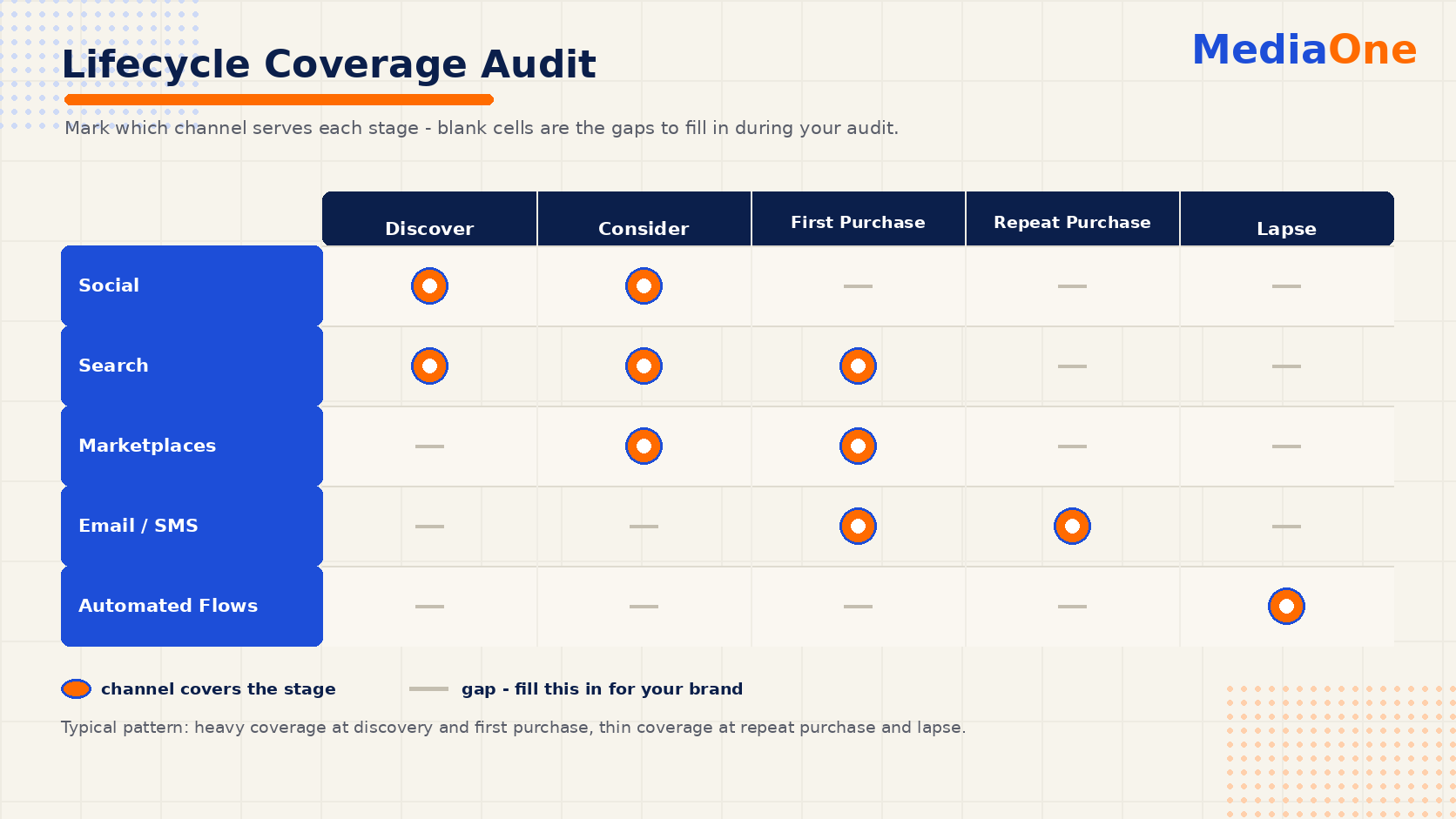
Figure 3: Lifecycle coverage audit: mark each channel against each stage
Social Media Marketing
Facebook remains the largest social platform – Meta reported 3.58 billion family daily active people on average for December 2025 – and its ads suit interruptive marketing, though engagement depends on how relevant the message is to each customer. For the strategy layer (targeting options and ad formats for B2C), 2Stallions’ review of social media marketing for B2C success is a useful reference. If you would rather have a team run it, MediaOne’s social media marketing service covers campaigns end to end.
TikTok works differently. TikTok Ads, including in-feed video and hashtag challenges, suit fast-moving categories such as FMCG, fashion and entertainment. It is a weaker fit for high-consideration purchases, so check it against your goals before committing budget.
Instagram and other platforms earn their place when the product is visual, and the audience follows creators in that niche. Add a platform only when its audience clearly overlaps with your segment.
|
Channel |
Typical audience |
Format |
Typical use |
|
|
Families and adults across age groups |
Feed posts, interruptive ads |
Broad reach, retargeting |
|
TikTok |
Younger, trend-led shoppers |
In-feed video, hashtag challenges |
FMCG, fashion, entertainment |
|
|
Visual, creator-following shoppers |
Stories, Reels, shoppable posts |
Lifestyle and visual categories |
|
Marketplaces (Shopee, Lazada) |
Price-comparing shoppers |
Product listings, marketplace ads |
Direct sales and purchase data |
Search Engine Marketing: SEO and Paid Search
Search engine marketing covers two levers. SEO earns free visibility through pages that answer buyer questions, and it compounds over time. Paid search places ads against keywords and stops delivering when spend stops. Use paid search to test which keywords convert, then build SEO content around the winners.
Paid search campaigns are structured in ad groups, each with a tight keyword set and a matching landing page. Compare cost per click against your margin on each sale before scaling spend. Search captures existing intent, your website converts it, and email and SMS bring customers back – and if you want the compounding lever built properly, MediaOne’s SEO service covers the content side.
Search, Owned Channels and Retention
Search builds traffic that compounds
Paid search stops delivering visits when the spend stops. SEO keeps earning visits for months or years, because pages built around real buyer questions keep ranking. Jotform’s B2C marketing guide cites REI’s SEO approach: its Expert Advice section brings 600,000 visitors a month to one part of the site, built from 500+ articles targeting mid-tail and long-tail terms. That is a benchmark from a large retailer, not a target for a small brand – expect slow early returns, then steady growth.
Email and SMS are your retention engines
Email is one of the strongest owned channels you have: 50% of people say they buy from a marketing email at least once a month, and Mailjet research (as reported by EmailToolTester) found 55.2% of email users check email first thing in the morning, so your send window is a real decision. Use SMS sparingly, for time-sensitive messages such as restocks and delivery updates.
Automated flows outperform one-off campaigns
Abandoned cart emails reach each customer at the moment of intent, and post-purchase flows follow up after a sale. Klaviyo’s benchmarks put numbers on the gap: campaigns drive 94.7% of send volume, while automated flows generate nearly 41% of email revenue from just 5.3% of sends. This is vendor-reported, and results vary by brand and category – so test before relying on it. Build these flows before any new campaign, starting with abandoned cart, then post-purchase, then win-back for lapsed buyers.
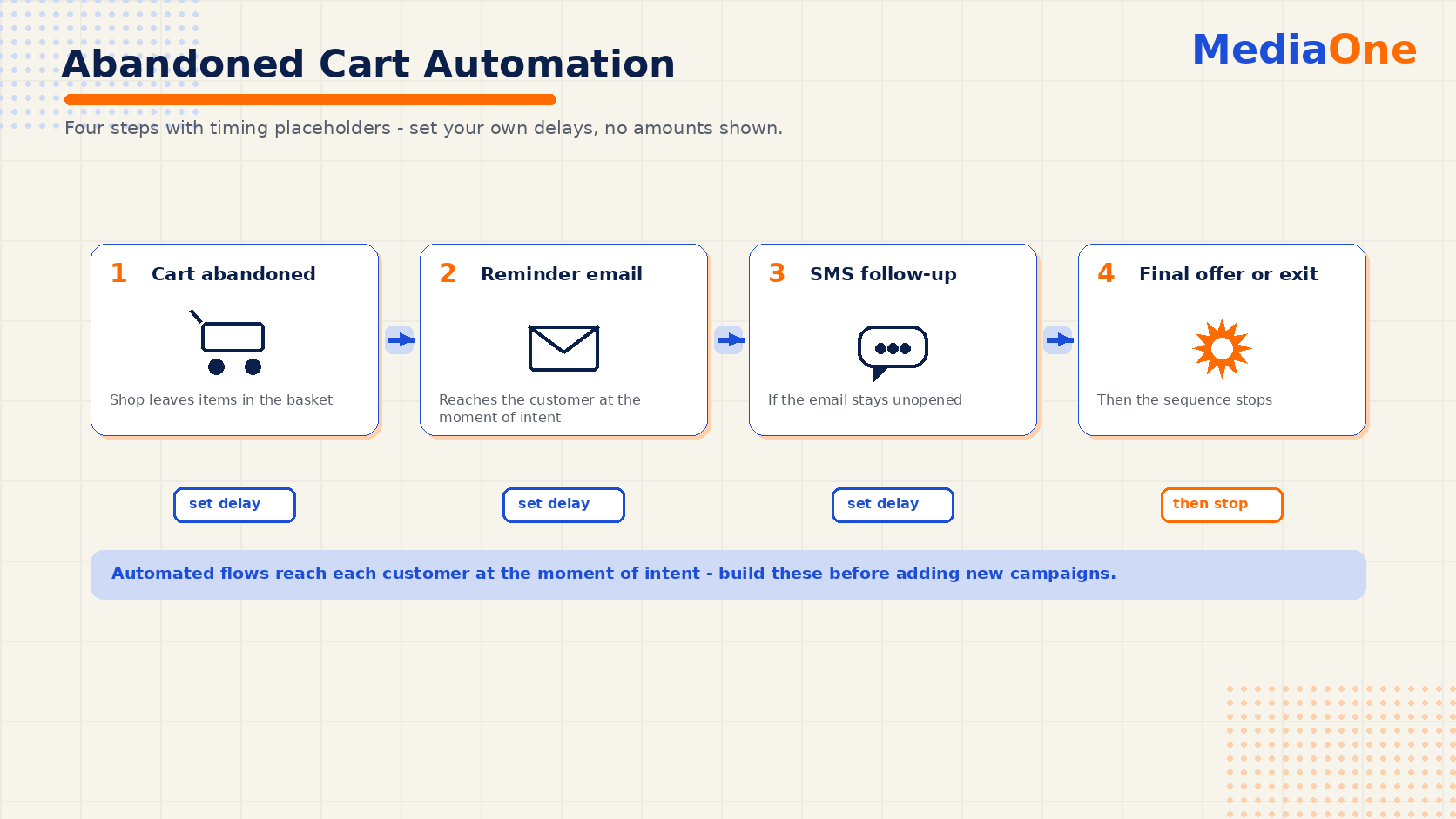
Figure 4: Abandoned cart automation: four steps with timing placeholders
Loyalty, cross-selling and launches lift lifetime value
Loyalty programmes and personalised messages work best when mapped to lifecycle stages. A first-time buyer needs a reason to return, and a repeat buyer needs an upgrade path. Launch to your existing list first, since these buyers already trust the brand and can spread the word on social media.
A Step-by-Step B2C Digital Marketing Plan
Most Singapore consumer brands plan around acquisition, then wonder why revenue stalls. This plan starts with the target audience and works outward.
Step 1: Define the customer segment and purchase trigger.
Name one segment and the moment it tends to buy, such as a new parent shopping for baby care. Score each candidate segment from 1 to 5 on size, purchase frequency and reachability, then pick the highest total.
Step 2: Audit current data sources and set up measurement.
Start with Google Analytics, whose standard version is free and usually provides enough insight for small and medium-sized businesses. Add Meta Business Suite for social audiences and Shopee or Lazada insights for marketplace demand. Combine these into one monthly sheet to see whether a shopper who found you on Instagram later bought on Shopee.
Step 3: Select two or three channels and set one goal.
Calculating customer lifetime value shows how to baseline it before you lift it. Apply the funding rule from the channels section: fund the two highest-scoring channels provided each clears 3 on audience fit, and hold back anything scoring 2 or lower. Set one measurable goal for the plan – a natural choice is lifetime value, and our guide to
Step 4: Build owned channels and automated lifecycle messaging.
Automated flows deliver the strongest return (see the retention section above for the Klaviyo numbers). Build abandoned cart first, then post-purchase, then win-back – before adding more campaigns.
Step 5: Test, measure and iterate with a monthly review checklist.
Each month, check:
- Which channel brought the first purchase for each segment?
- Which automated flow has the lowest conversion, and why?
- Did repeat purchase rate move against last month?
- What one change will you test next?
For the goal-setting format itself, Jotform’s marketing guide offers a worked SMART-goal example: six new content campaigns and 12 new email campaigns, targeting a 12 percent rise in lifetime value. Treat it as an illustrative target to set your own figure against, not an expected outcome.
Run the Lifecycle as One System
Singapore B2C brands win by treating the customer lifecycle as one system. Audit your stages, fund the channels that fit your audience and product, and invest in retention before adding more acquisition – sustained engagement at each stage is what drives long-term value.
Next step: list the channels you use at each lifecycle stage and score them this week. Set one measurable goal, such as lifting customer lifetime value, then build the first automated flow.
If you would rather have a team own the channel mix, review MediaOne Marketing’s digital marketing services and hold it to the same standard: stage-by-stage coverage, monthly reviews and flows built before campaigns.
Frequently Asked Questions
What is the main difference between B2C and B2B digital marketing?
B2C sells to individual consumers, who usually decide quickly, respond to emotion and compare prices. B2B sells to businesses, where several people approve a purchase over a longer cycle based on return on investment. B2C campaigns lean on fast-moving paid social and marketplace listings, while B2B relies more on long-form content and sales follow-up.
It depends on who you sell to. Facebook suits broad reach across age groups, and TikTok Ads, including in-feed video, suit fast-moving sectors such as FMCG and fashion. Pick the platform your target audience already uses, then test it with a small budget before scaling.
How do B2C brands measure digital marketing performance?
Track metrics tied to revenue, not only reach. Use Google Analytics to follow visits, conversions and purchase paths, and Meta Business Suite for ad and audience performance. Compare cost per purchase and customer lifetime value across channels each month, and set thresholds for keeping, scaling or stopping each channel.
Is SEO worth investing in for a consumer brand?
Yes, because search builds traffic that keeps arriving without paying for each click. Good SEO takes months to compound, so it works best alongside paid channels – use paid search to test keywords while SEO content matures. Focus first on product and category pages that match what shoppers type when they are ready to buy.
How often should a B2C brand send email or SMS campaigns?
There is no single correct frequency, but consistency matters more than volume. Automated flows such as abandoned cart and post-purchase messages should run continuously. For broadcast campaigns, start with a steady weekly rhythm and reduce frequency if unsubscribe rates rise or engagement drops.
Which free tools help identify a B2C target audience?
Google Analytics shows who visits your site, from where and on which devices. Meta Business Suite shows the age, location and interest profile of people engaging with your posts. Shopee and Lazada seller dashboards reveal purchasing patterns and popular products. Combine these signals to build a clear picture of your core buyer.