| AI Summary
Social media marketing examples show how brands turn an idea into attention, participation or customer action. These 12 examples cover creator partnerships, customer content, product launches, fundraising and personalised experiences. Each case explains what happened and which lesson a smaller business can apply. Singapore businesses can adapt the underlying idea to their audience, resources and sales process, then measure results against a specific campaign goal. |
Social media marketing examples include CeraVe’s Michael Cera campaign, Apple’s Shot on iPhone challenge, Spotify’s personalised music recaps and the ALS Ice Bucket Challenge. Each gives people a reason to watch, participate or share. Campaign performance depends on whether those actions support the brand’s stated goal.
Key Takeaways
- A shareable action should take little explanation and give participants something they value.
- Customer photos, brand films and paid creator posts serve different purposes and need different production plans.
- A memorable campaign can combine social posts, packaging, websites and stores.
- Published results belong to a particular brand, audience and period; another business cannot treat them as forecasts.
- Participation needs staff time for replies, permissions and customer support, even when distribution happens without advertising.
Campaigns succeed because of deliberate choices. The audience needs a reason to care, the content needs a recognisable idea, and the business needs a way to judge the response.
The examples below explain those choices without treating a famous brand’s budget or audience as something every company can reproduce. Some began as planned launches. Others grew from customer behaviour that a brand supported.
For a Singapore business, a social media marketing strategy connects that inspiration to local customers. A neighbourhood café and a software supplier can learn from the same campaign while choosing different content and goals.
What Is a Social Media Campaign?
A social media campaign brings related posts and activities together around one goal during a defined period. That goal might be introducing a product, collecting enquiries or encouraging donations.
Everyday posting maintains a brand’s presence. A campaign adds a particular reason for people to pay attention now.
A campaign brief usually names six things:
- Goal: The result the business wants.
- Audience: The people the campaign needs to reach.
- Idea: The central message or activity.
- Channels: The platforms and other places carrying the message.
- Schedule: The launch, follow-up and end dates.
- Measurement: The evidence that will show progress.
For example, a bakery could promote a new breakfast set for two weeks, with short preparation videos and a booking link. Its wider social media marketing continues after that promotion ends.
Which Campaign Type Supports Your Goal?
Campaign labels often overlap. A product launch can involve creators, customer submissions and a hashtag at the same time. The starting point is the behaviour the business wants to encourage.
| Business goal | Campaign approach | Example to study |
| Reach people through an existing conversation | Brand participation in a trend | OLIPOP’s Sleepy Girl Mocktail |
| Show what customers can make | Customer content challenge | Apple’s Shot on iPhone |
| Explain a brand belief | Brand film | Dove’s Real Beauty Sketches |
| Build interest before a reveal | Creator storytelling | CeraVe and Michael Cera |
| Introduce a product range | Coordinated launch | Rosalía and Calvin Klein |
| Encourage fundraising | Participation challenge | ALS Ice Bucket Challenge |
| Invite creative participation | Timely audience activity | Getty Museum Challenge |
| Connect online interest with local shopping | Shared shopping event | Small Business Saturday |
| Make product creation shareable | Interactive launch | UNIQLO UTme! |
| Explain an unmet customer need | Service launch | adidas Single Shoe |
| Encourage personal sharing | Customer data stories | Spotify 20 |
| Connect a product with relationships | Personalised packaging | Share a Coke |
Each approach has costs beyond content production. Customer challenges need moderation, while a launch needs available stock and working purchase links. Those requirements help narrow the choice before creative work begins.
12 Social Media Marketing Examples and the Lessons Behind Them
1. OLIPOP’s Sleepy Girl Mocktail: Joining an Existing Trend
OLIPOP appeared in the Sleepy Girl Mocktail trend as people shared drink-making videos. The brand’s own account of the trend described its popularity in 2023 and renewed attention in 2024.
The marketing lesson concerns an everyday activity people could film and repeat. A familiar product became part of content that audiences already wanted to make.
That makes this an example of brand participation in a wider trend. The trend’s popularity does not establish that the brand created every post or generated every view.
A local drinks business could feature customer serving ideas and credit the people behind them. Its earned and paid media report should separate independent mentions from sponsored posts and advertising.
Organic attention can introduce a product to new audiences. The business still needs to check whether those people visit its store or become customers.
2. Apple’s Shot on iPhone: Letting Customers Demonstrate the Product
Apple’s 2019 Shot on iPhone challenge invited people to submit photographs through social platforms or email. Judges selected ten winning images for use across channels including billboards, stores and online media.
The photographs did two jobs. They gave participants a chance to receive recognition and showed what people could create with the product.
This is user-generated content, often shortened to UGC: material created by customers or other users. The product’s role was visible in the result itself.
A smaller retailer could invite customers to show how they use a bag, arrange a room or style an outfit. A specific prompt makes entries easier to understand and compare.
Permission and credit belong in the campaign plan. A public submission should not become an assumption that the brand can reuse the image in every advertisement.
3. Dove’s Real Beauty Sketches: Giving a Brand Message a Story
Dove’s Real Beauty Sketches film featured forensic artist Gil Zamora drawing women from their own descriptions and from descriptions provided by strangers. The participants then saw the portraits together.
The campaign turned a message about self-perception into something viewers could see. The reveal gave the film a beginning, a question and an emotional response.
Dove produced the film, so it belongs under brand storytelling. Audience sharing helped distribute it, but that does not make the original film customer-created content.
The transferable lesson is a storytelling structure. A service business could show a customer’s initial problem, the work involved and the result, with the customer’s permission.
Sensitive stories need care. Participants should understand how the business will present their experiences, and the final edit should preserve their meaning.
4. CeraVe and Michael Cera: Building a Story Across Creator Posts
CeraVe’s Michael Cera campaign played with the similarity between the actor’s name and the skincare brand. Social content and creator appearances built towards a Super Bowl reveal in 2024.
The reveal reinforced the brand’s message that it develops products with dermatologists. The humour stayed connected to a fact the company wanted people to remember.
Creators had roles within one story, giving their posts a shared purpose. The campaign extended across social media, video and the brand’s own channels.
For a smaller business, influencer marketing can follow a simpler version: a creator introduces a problem, demonstrates the product and answers audience questions in separate posts.
Audience relevance and delivery deserve attention during creator selection. A large following alone cannot show whether viewers need the product or will understand its benefits.
5. Rosalía and Calvin Klein: Connecting Launch Content with the Product

Calvin Klein introduced Rosalía as the face of its euphoria elixirs campaign in February 2026. The announcement presented three fragrances and campaign imagery connecting each one with a distinct mood.
The campaign offers a lesson in consistency. The ambassador, movement, bottle colours and product descriptions supported the same launch.
Social content can introduce that world in small pieces: a short film, a product close-up or a post explaining the differences between options. The purchase page then needs to carry the same product names and visuals.
A local skincare launch could use coordinated Instagram marketing to introduce a range and explain who each product serves.
Availability should shape the schedule. Interest becomes frustrating when customers cannot find the item, confirm delivery details or understand which version to buy.
6. ALS Ice Bucket Challenge: Connecting Participation with Donations
The ALS Ice Bucket Challenge asked people to film an activity, nominate others and support a cause. The ALS Association reports that the 2014 challenge raised US$115 million for its work.

The visible action helped people recognise the challenge. Nominations invited another person into the activity, while donations gave the attention a purpose beyond the video.
The reported figure concerns the ALS Association; it should not be presented as the worldwide fundraising total.
A charity or community group can learn from the link between participation and a specific action. The donation page should explain who receives the money and what it supports.

Participation should remain voluntary and safe. A campaign can offer several ways to help, including sharing information or donating privately, so people do not need to perform publicly to contribute.
7. Getty Museum Challenge: Making Participation Possible at Home
During the 2020 lockdowns, Getty invited people to recreate artworks with three objects found at home. Its account of the museum challenge credits inspiration from the Rijksmuseum and the Between Art and Quarantine Instagram account.
Participants could interpret the task in their own way. Household objects and pets became part of the recreations, giving people room for humour without requiring specialist equipment.
The timing connected the activity with what audiences could do while staying home. Getty also supplied access to artworks that people could recreate.
A Singapore arts business could invite audiences to reinterpret a design using everyday materials. The instructions should make the activity possible for beginners.
Comments and submissions can provide social media insights about which prompts people understand and enjoy. Those responses can help shape the next activity.
American Express founded Small Business Saturday in 2010. The U.S. Small Business Administration describes the event and links to marketing materials, including social media resources for participating businesses.
The idea gives many merchants a shared occasion to promote. Each business can explain its own offer while contributing to a wider message about shopping locally.
Social posts connect that message with something customers can do in person. A shop can show its products, introduce the owner and tell people when to visit.
The lesson travels beyond the American event. A group of Singapore retailers could organise a neighbourhood shopping weekend with a shared identity and individual offers.
The practical details support conversion: participating outlets, opening hours, dates and offer terms. A shared hashtag cannot replace that information when someone is deciding whether to make the trip.
9. UNIQLO UTme!: Making Product Creation Part of the Content
UNIQLO’s 2014 UTme! launch announcement introduced an app that let people design a T-shirt, share the design on social media and purchase it. The activity connected personal expression with the product. People had something individual to show, while the purchase option remained close to the creation process.
This is a consumer retail example. Its lesson concerns the connection between an interactive experience, social sharing and shopping.
A smaller business could apply the idea through personalised gift previews or a simple product configurator. The experience needs to work on a phone, with readable options and an accurate preview.
Creation and purchase are separate stages to measure. A high number of designs can show interest, while completed orders show how many people decided to pay. Abandoned designs can also reveal confusing choices or unexpected prices.
10. adidas Single Shoe: Giving a Service Launch a Concrete Purpose
adidas announced its Single Shoe service for people with leg limb difference in 2026. The European launch allowed eligible customers to buy the shoe they needed at half the full-pair price.
The service addressed a particular purchasing need. It was not a replacement scheme for anyone who had lost one shoe.
For social content, that distinction is important. A service announcement should explain who can use it, what changes for them and where it operates.
The marketing lesson is that a practical improvement can supply the story. A business does not always need an elaborate challenge or celebrity partnership to have something worth discussing.
The launch announcement documents the service, not a social-media sales result. Its value here is the way a customer need becomes a message people can understand and share.
Spotify’s Your Party of the Year(s) experience marked its twentieth anniversary in 2026. Listeners received information about their own history, including their first streamed song and their most-streamed artist.
Share cards made those details easy to send to friends or publish on social platforms. The anniversary belonged to the company, but the content centred on each listener.
Personal relevance supplied the reason to share. Someone’s listening history could recall a friendship, a particular year or a favourite artist.
A membership business could apply the idea through a voluntary anniversary recap or a summary of completed activities. The information should feel appropriate for the customer to share.
Customers should control whether they publish their recap. A private preview lets someone enjoy the experience without making their activity public.
Coca-Cola’s account of Share a Coke describes the campaign’s Australian origins in 2011. Bottles and cans carried popular first names, creating a reason to find a drink for someone else.
The packaging became a conversation starter. A person could photograph a name, tag a friend or give the bottle as a small gesture.
Coca-Cola reports selling more than 250 million named bottles and cans during that Australian summer. That figure describes product sales during the campaign; it does not isolate sales caused by social media.
The broader lesson is the connection between offline products and online sharing. The social idea existed on the item itself.
A local gift business could test personalised messages or recipient names on a limited range. Customers would have a reason to share the finished item, while the business could track orders for that range separately.
How to Apply These Campaign Ideas to Your Business
A campaign brief should turn inspiration into decisions the team can carry out. The following sequence keeps the work connected to a business goal.
The Goal and Audience Come First
A specific goal makes content choices easier. A restaurant seeking weekday lunch bookings needs a different offer from a supplier seeking meetings with procurement managers.
The audience description should include the problem people want to solve and what might stop them from acting. Existing customer questions can provide a starting point.
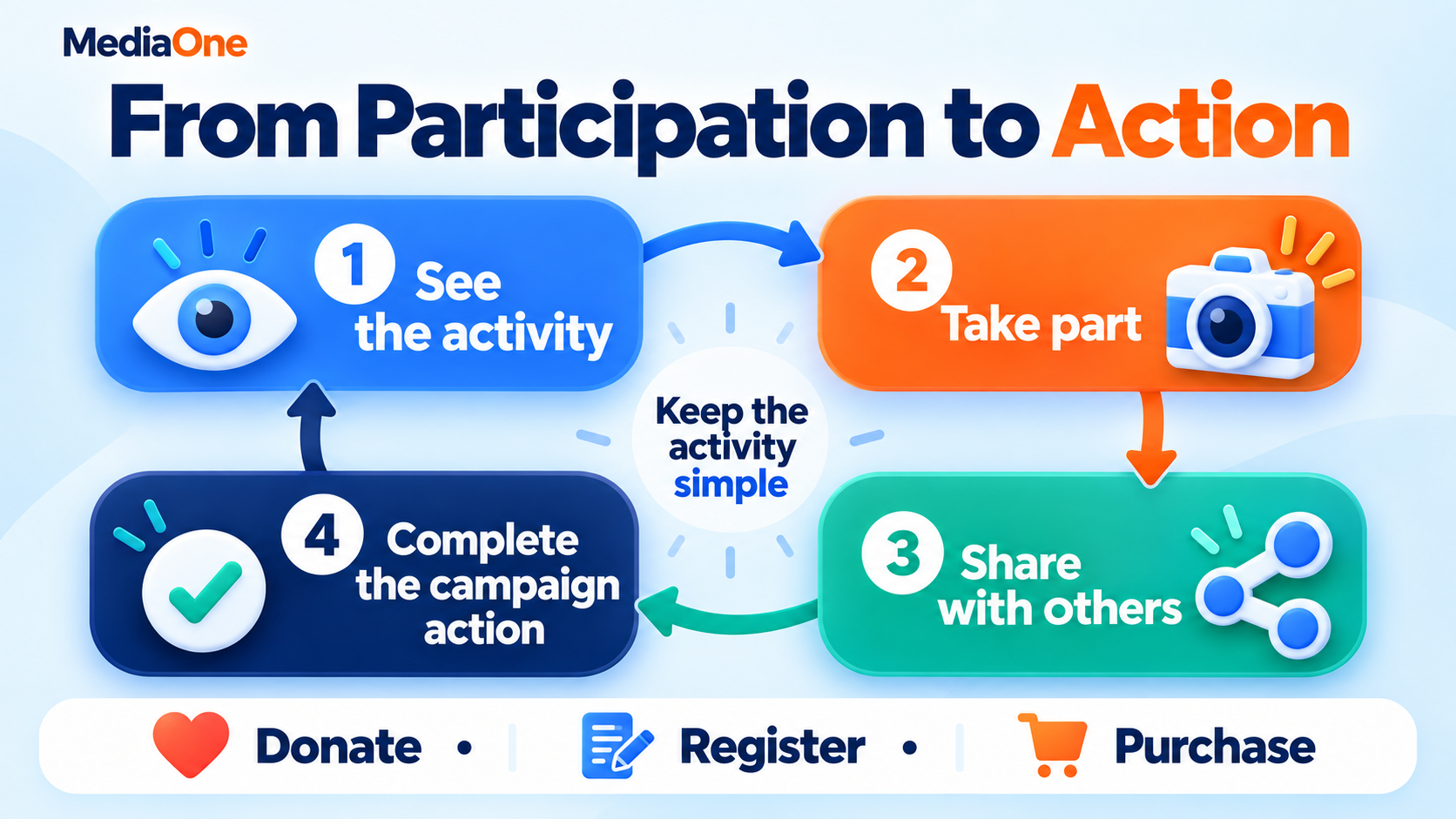
The Campaign Needs One Main Action
A campaign might ask people to submit a photo, view a product range or book an appointment. Several competing requests can make the next step harder to understand.
The action should match the audience’s familiarity with the business. A first-time viewer may need a demonstration before considering a purchase.
The Buying Decision Shapes the Content
Business-to-business campaigns often need to answer questions from several people involved in a purchase. A facilities manager might care about installation, while a finance manager wants to understand ongoing costs.

A supplier could turn one product demonstration into separate posts addressing those concerns. A downloadable specification sheet and a meeting request would give interested buyers different ways to continue.
Consumer campaigns may involve a shorter decision, such as choosing a lunch venue. Even then, the post needs enough information for the next action: location, opening hours and a working reservation link.
The campaign idea can stay consistent while each post answers a different customer question. Repeating the same promotional sentence across every format adds little information.
The Content Schedule Needs Owners
A short schedule can cover an introduction, supporting posts, audience questions and a final reminder. Each item needs someone responsible for production, approval and replies.
A shared calendar or content scheduler helps teams manage publishing dates. Customer service staff also need product details and agreed responses before the campaign begins.
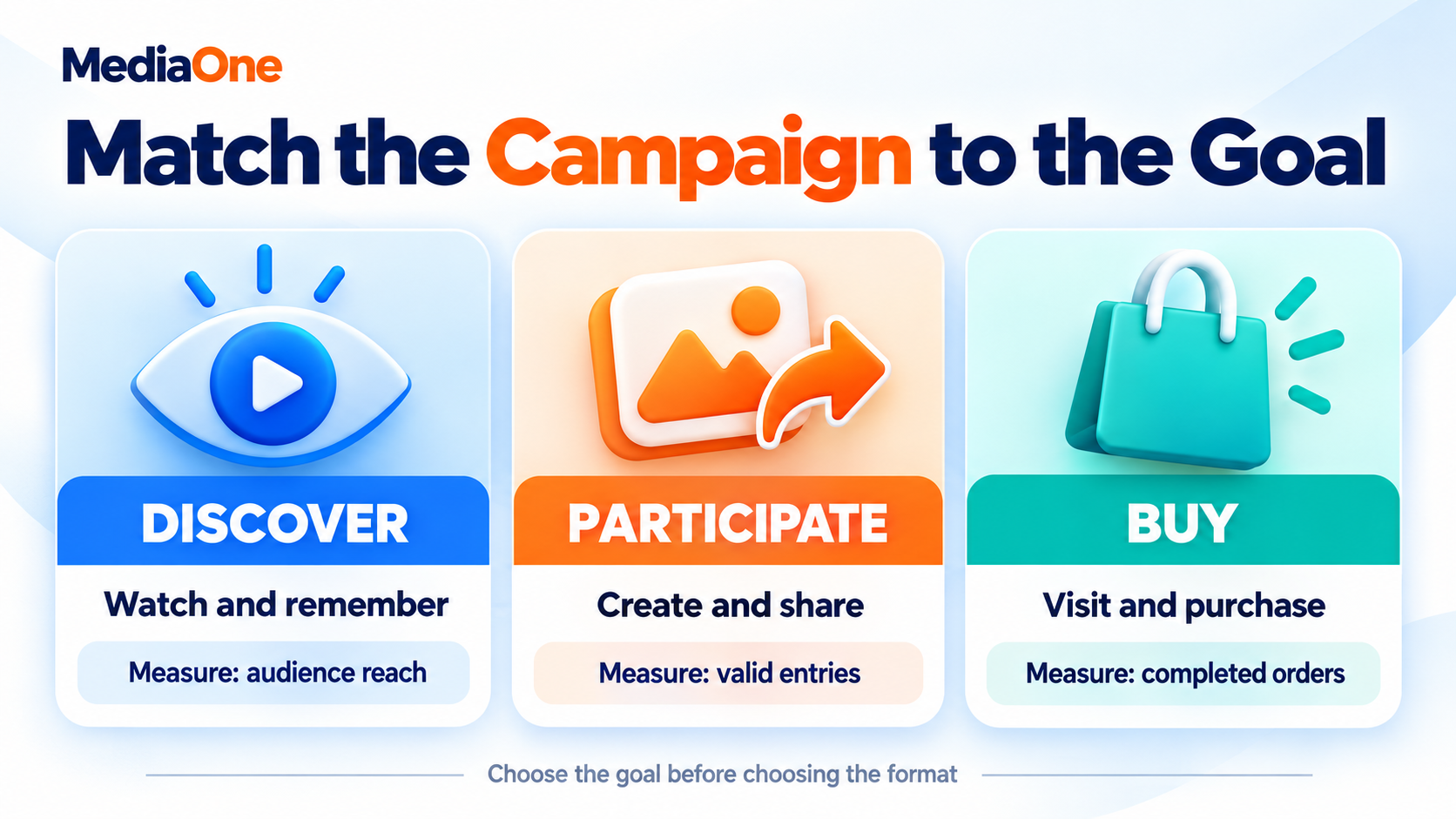
How to Measure Results Beyond Views
Campaign measurement starts with the goal. Relevant social media metrics connect audience activity with the outcome the business wants.
| Goal | Main measures | Supporting evidence |
| Awareness | Reach within the intended audience | Video viewing and brand recall research where available |
| Participation | Valid entries or participating people | Entry quality and moderation workload |
| Enquiries | Qualified enquiries or booked meetings | Follow-up results and eventual customers |
| Sales | Completed purchases and acquisition cost | Returns, delivery costs and profit |
| Fundraising | Completed donations | Donor numbers and repeat support |
An illustrative campaign spends S$1,000 on advertising and generates 20 purchases. Advertising cost per purchase is S$50. If production and management add S$500, total campaign cost per purchase becomes S$75.
Those figures answer different questions. Neither establishes profit without knowing revenue and the cost of supplying the orders.
Tracking links, campaign codes and enquiry records can help connect activity across channels. Reports should also state their limits: people may view content on one device and buy later on another.
A comparison with the business’s previous results is often more informative than an unrelated platform average. Similar audiences, time periods and measurement definitions make comparisons easier to interpret.
Campaign Checks Before Launch
A campaign can attract attention and still disappoint customers. A final review should cover the experience people encounter after the post.
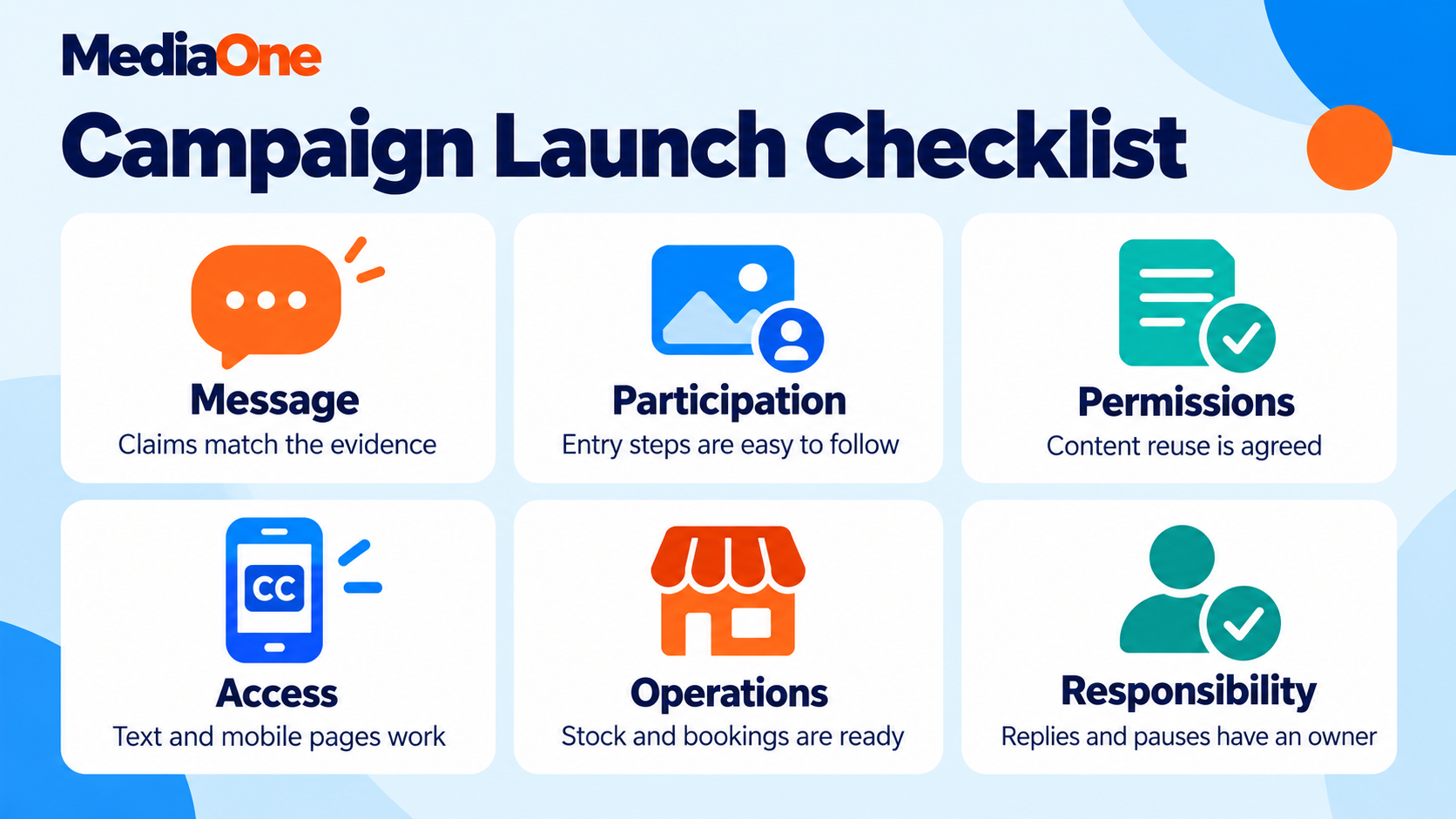
- Message: Product claims agree with the product page and supporting evidence.
- Participation: Entry instructions explain what people need to do.
- Permissions: The team has agreed how submitted content may be reused.
- Access: Captions, readable text and working mobile pages help people participate.
- Operations: Stock, bookings and response times can support the promotion.
- Responsibility: A named person can answer complaints or pause scheduled posts.
Stories involving appearance, illness or personal hardship need particular care. The campaign should preserve participants’ dignity and avoid turning distress into a sales device.
Turning Social Media Marketing Examples into a Campaign Brief
The next campaign brief can begin with one of these examples and a sentence explaining what the business wants customers to do. The team can then decide which parts of the idea it has the audience, time and resources to deliver.
A small test provides evidence about the message and customer response before a larger commitment. MediaOne’s social media marketing services can support campaign planning, content and measurement for businesses that need help carrying out that work.
Frequently Asked Questions
Can a Business Run a Campaign Without a Large Following?
A campaign can reach people through relevant partners, paid distribution or an existing customer list. A small audience can also produce results when the offer addresses a specific need. Follower count alone does not determine whether a business can attract enquiries or purchases.
How Long Should a Social Media Campaign Run?
Campaign length depends on the decision people need to make. An event promotion follows its booking deadline, while a considered purchase may need several rounds of explanation. The schedule should allow time for customers to respond and for the team to handle that response.
Can the Same Campaign Run in Several Languages?
A campaign can use several languages when they serve its intended audience. Translation should preserve the offer and tone, including dates and product details. A joke or wordplay may need a different expression in another language for the idea to remain understandable.
What Should Happen to Campaign Posts After the Promotion Ends?
Expired offers need an update so customers do not mistake them for current promotions. The business can remove outdated links, add an end notice or unpin the post. Evergreen demonstrations and customer stories can remain available when their information and permissions still apply.
Should Every Campaign Include a Discount?
A discount is one possible offer. A demonstration, product preview, service improvement or community activity can give people another reason to respond. The offer should support the campaign’s goal and leave the business able to deliver what customers expect.