We often hear jargon thrown around in meetings, client presentations, and boardrooms, but not everyone uses it correctly. One common area of confusion is the distinction between a social media app and a social media platform. Many people use these terms interchangeably when discussing campaigns, strategy, or analytics—but understanding the difference is essential for clear communication and effective decision-making.
For brands working with a social media marketing agency, this distinction becomes even more important. When planning campaigns, evaluating performance, or briefing teams, knowing whether you’re referencing an app (the software used to access content) or a platform (the ecosystem where content is shared and communities interact) ensures your strategy is precise and actionable. Misusing these terms can lead to misaligned expectations, poorly targeted campaigns, or ineffective reporting.
In this guide, we’ll break down the key differences between social media apps and platforms, explain why it matters for marketing strategy, and show how understanding these terms can help you collaborate more effectively with your team, clients, or your social media marketing agency.
Key Takeaways
- Social media platforms are the digital ecosystems where users connect, share content, and build communities.
- Social media management apps are third-party tools that allow marketers to schedule posts, track data, and manage messages across multiple channels.
- The main difference is that a platform acts as the marketing channel, while an app provides the toolkit to run campaigns efficiently.
- Apps connect to platforms via digital bridges called APIs to perform tasks such as post scheduling, analytics, and brand monitoring.
- Using these terms correctly ensures clarity and reduces communication friction within and between teams.
Right off the bat, one might think that social media apps are the applications you download from your phone, and that the platforms are the networks that we connect to.
This is partially true.
However, in the context of social media marketing, the distinction is more nuanced.
The difference between “social media apps” and “social media platforms” can be best summarised with the chart below:
| Social Media Apps | Social Media Platforms | |
| Defenition |
|
|
| Use in Marketing |
|
|
| Relationship with each other |
|
|
| Examples |
|
|
An application, or “app,” is a piece of software designed to perform a specific task.
In social media, we generally refer to two things when we say social media apps:
The App Version of a Social Media Platform on a Phone or Device
This is the most common meaning.
When you download Instagram or TikTok from the Apple App Store, you are downloading an app.
This app is a gateway. It is the interface you use to interact with the platform while on a mobile device.
It is designed for a smooth user experience—an immediate way to open and use the social media platform rather than opening it from your browser.
Social Media Management Tools
The term “social media app” also applies to third-party software like Sprout Social, Hootsuite, and Buffer.
These are management apps. They do not own the social network or the user data.
Instead, they connect to various platforms to help you schedule posts, track analytics, and manage messages in one place.
Some of the more popular social media management apps’ functions include:
- Unified Scheduling and Publishing. You can create content once and push it out to multiple platforms simultaneously. You wouldn’t have to log in to multiple social media platforms separately just to schedule the publication of your content across them.
- Unified Inbox. These tools aggregate comments and direct messages from all your connected platforms into one feed. That way, you wouldn’t have to log in to every platform you’re on just to check for notifications.
- Cross-Platform Analytics. Management tools pull data from all your social accounts into a single, clean report.
- Social Listening and Monitoring. You can set up alerts to notify you whenever your brand, product, or a relevant keyword is mentioned online—even if you aren’t tagged.
The rest of this guide will focus on this definition of “social media app.”
If you’re a marketer, social media platforms need no further introduction. These are the online platforms where people go to interact with their friends and family. It is the entire ecosystem that enables social interaction. In the context of digital marketing, a social media platform is the channel for the campaign.
Social Platforms Are Where People Go to Connect
Think of a platform as the land where a community lives.
Facebook, Instagram, LinkedIn, TikTok, and X (formerly Twitter) are platforms.
They consist of massive databases and host millions of users.
The platform is the engine and the chassis. It is the heavy machinery that makes everything run.
The app is the steering wheel and the dashboard. It is the tool you use to control and interact with that engine.
Management apps connect to platforms via APIs (Application Programming Interfaces). This is a digital bridge that enables the app to communicate with the platform.
As such, social media apps allow marketers to perform the following functions on social media platforms:
Post Scheduling

Source: https://youtu.be/Kgey4cOXkHc?t=47
When you schedule a post on Sprout Social or Buffer, for example, the app sends a message across that bridge to the platform, telling it when and what to publish.
These social media apps allow marketers to plan and plot content calendars, so an entire month’s content plan can be laid out in a week, without having to sign in each time content must be published.
Analytics
When you post content or run campaigns on social media platforms, people see those marketing initiatives. They gain traction and produce results.
Social media management apps give marketers insight into the performance of their campaigns.
They show numbers and plot trends so that marketers are not operating in the dark.
Brand Monitoring
Source: https://youtu.be/yxM-tq9Js-U?t=157
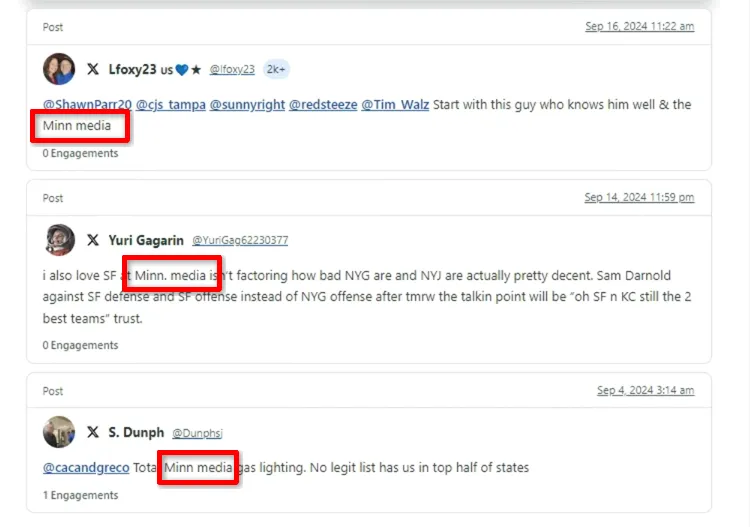
On social media, accounts are only notified of content that they’re tagged in or if the poster uses the brand-unique hashtag.
Other social media content that mentions your account but doesn’t tag you won’t notify you.
Nonetheless, these untagged brand mentions are crucial, as it allows you to stay on top of the discussion and sentiment around your brand.
Social media management apps let you see brand mentions, even misspellings and non-hashtags and non-tags, giving you a better, qualitative overview of how customers feel about you.
Inbox and Engagement Monitoring
Businesses on social media receive messages on their accounts and comments on their posts—both of which must be replied to promptly, as they may be queries.
Social media apps aggregate emails, direct messages, comments, and tagged posts from various platforms, enabling the business to stay on top of these queries.
In digital marketing, it’s important to distinguish between social media platforms and social media apps, as each plays a unique role in campaign strategy and execution. Understanding this distinction helps marketers, brands, and even clients work more effectively with a social media marketing agency.
- Social Media Platforms: These are the ecosystems where audiences live, interact, and engage with content. Platforms such as Facebook, Instagram, TikTok, LinkedIn, and YouTube enable marketers to build communities, run paid advertising, share content, and gather insights into audience behaviour. Platforms are where your campaigns actually make an impact and where your brand presence grows.
- Social Media Apps: Tools that allow marketers to access and manage these platforms efficiently. This includes posting content, scheduling campaigns, monitoring engagement, and analysing performance. Examples include Hootsuite, Buffer, Later, Sprout Social, and native platform apps. These apps streamline workflow, save time, and reduce the friction of managing multiple platforms simultaneously.
The social media platform is the ocean, full of opportunities, audiences, and challenges, while the social media apps are the submarines or frigates that help you navigate, deploy, and optimise your campaigns.
By leveraging both platforms and apps effectively, a social media marketing agency can ensure campaigns are strategic, targeted, and efficient—maximising reach and engagement while simplifying management for brands.
Why This Distinction of Terms Matters
Precision in language leads to precision in strategy. In digital marketing, misunderstanding these terms can cause misaligned campaigns, wasted time, or inconsistent messaging. Knowing the difference between a social media app and a social media platform ensures your team or your social media marketing agency can execute campaigns effectively.
Key reasons this distinction matters include:
- Clear Communication During Planning: Using the correct terms ensures brainstorming sessions and campaign planning are precise. Everyone knows whether you are referring to the platform where your audience engages or the app used to manage posts.
- Avoiding Misinterpretation: For example, asking your team to switch to a different “social media app” should clearly mean changing a management tool like Hootsuite or Buffer, not shifting strategy from Facebook to LinkedIn.
- Operational Clarity: Meetings become more efficient, workflows stay organised, and instructions are easier to follow when the language is consistent and accurate.
- Accurate Reporting and Analysis: Distinguishing between platform metrics (reach, impressions, engagement) and app metrics (scheduled posts, workflow efficiency) helps teams and agencies evaluate campaigns accurately and take actionable steps.
- Better Collaboration with Agencies: When working with a social media marketing agency, using precise terms improves understanding, reduces miscommunication, and ensures campaigns run smoothly across multiple teams and platforms.
Understanding and applying the right terminology is essential for efficient collaboration, strategic execution, and measurable results in social media marketing.
Succeeding in social media marketing involves more than just distinguishing between the two terms.
In the world of social media, companies must master short-form content that hooks attention. Businesses must maintain a captivated audience amidst a sea of enticing distractions.
Scale your social media growth with a social media marketing agency! Focus on your R&D and other digital marketing efforts, like email marketing. Allow us to handle your social media. We’ll drive reach, engagement, and conversions for you through this content-driven marketing channel.
MediaOne is an AI-powered agency run by expert marketing consultants and professionals. We’ve worked with a range of businesses and influencers, navigating common pitfalls and challenges that frustrate entrepreneurs.
Get in touch with us today for a free strategy call. Let’s wade through the vast ocean of social media together!
Frequently Asked Questions
Are social media platforms free for businesses to use?
Most platforms offer free organic accounts, but businesses must pay for advertising reach, sponsored content, and advanced commercial features.
Can management apps post to every single platform feature?
No, some specific features, such as Instagram Collabs or certain music tags, may require you to use the native platform app due to technical restrictions.
Do management apps replace the need for content creation tools?
No, management apps primarily handle distribution and engagement, so you will still need separate software for graphic design and video editing.
Who owns the content I publish through a management app?
You retain ownership of your content, but the platform’s terms of service govern how it is displayed and stored on their servers.
Can a single management app handle multiple accounts on the same platform?
Yes, social media tools let you connect to and manage multiple profiles within the same network, such as three different LinkedIn company pages.