

Traffic alone is never enough when investing in Shopify SEO. You need authority, credibility and conversion working together. That is where Shopify reviews stop being a cosmetic add-on and become a ranking asset.

When structured properly, review content expands your keyword footprint, improves click-through rates, and compounds trust over time. If you are serious about scaling organic revenue in Singapore, from Orchard to Jurong, you cannot treat reviews as a passive afterthought.
You need a system. If you are exploring professional support for Shopify SEO, this is exactly where an experienced agency can shorten your timeline and reduce costly mistakes. Let us break this down properly in this guide.
Key Takeaways
- Shopify reviews expand keyword coverage, strengthen trust signals and improve conversion rates when structured correctly
- Consistent review velocity matters more than sudden spikes in volume
- Proper schema implementation can improve click-through rates before rankings move
- Sustainable review systems compound authority and organic revenue over 6 to 12 months
Why Shopify Reviews Matter for SEO and Conversion Growth

If you are treating reviews as decoration, you are leaving growth on the table. On Shopify, reviews are not just short testimonials at the bottom of a product page. They include:
- Product-level reviews
- Store-wide reviews
- Photo and video user-generated content
- On-page Q&A sections beneath product listings
Every one of these elements is crawlable content when implemented correctly. That means they are not only persuasion tools for buyers. They are indexable assets for search engines.
Google explicitly supports review structured data and explains how it can influence how your results appear in search, including eligibility for rich snippets such as star ratings. When you implement structured data properly, you are not gaming the system. You are giving Google clearer signals about the quality and context of your product pages.
Now consider behaviour. According to BrightLocal’s 2023 Local Consumer Review Survey, 76 percent of consumers regularly read online reviews for local businesses, and 87 percent used Google to evaluate businesses in 2022.
Although that research focuses on local businesses, the behaviour translates directly to ecommerce. Buyers validate before they purchase. They compare. They scan star ratings. They read two or three detailed reviews before committing.
If your Shopify store lacks visible, credible reviews, you are not simply missing social proof. You are introducing friction at the exact moment someone is ready to buy.
The Strategic Connection Between Reviews, Rankings and Revenue
Let us map the chain clearly, because this is where most brands oversimplify. When implemented correctly:
- Reviews increase on-page content depth.
- Increased content depth expands keyword coverage, especially long-tail variations.
- Structured data can make your listings eligible for rich results.
- Rich results often improve click-through rate.
- Higher CTR sends stronger performance signals over time.
Each step compounds the next.
Greater depth of content does not mean bloated paragraphs. It means semantic richness. When customers describe a product as “lightweight but durable” or “comfortable in humid weather”, they introduce natural language variants that you might not have targeted deliberately. Over time, this broadens your query footprint.
From an AI Search perspective, this matters even more. Large language models rely on contextual depth and entity associations. Reviews add contextual nuance that static product descriptions often lack. They describe use cases, outcomes, comparisons and real-world conditions. That strengthens topical authority signals across your domain.
Realistic Timelines, Not Marketing Promises
You should calibrate expectations properly.
- CTR improvements may appear within weeks if star ratings become visible in search results.
- Ranking shifts typically require three to six months, depending on niche competition and domain authority.
- Authority compounding, especially in competitive verticals, can take six to twelve months or longer.
Anyone promising instant ranking jumps from reviews alone is overselling. Reviews are a growth multiplier. They are not a shortcut. What you are building is layered credibility.
How Google Evaluates Reviews in Practice
Google does not treat reviews as a single ranking factor. Instead, reviews intersect with multiple evaluation systems:
- Structured data compliance
- Content quality and uniqueness
- Freshness signals
- Reputation indicators
Google’s Search Quality Evaluator Guidelines highlight the importance of reputation and external validation as part of E-E-A-T assessments. While E-E-A-T itself is not a direct ranking factor, it informs how Google trains its systems to evaluate content quality.
If your product pages have consistent, detailed reviews, that contributes to perceived expertise and trust. If your site has none, or they appear manipulated, that perception shifts in the opposite direction.
Why This Matters for Conversion Growth
SEO without conversion is vanity. Reviews bridge the gap. When a buyer lands on your product page, three silent questions run through their mind:
- Has anyone else bought this?
- Did it meet expectations?
- Is there any risk I am missing?
Reviews answer those questions in the language of real customers, not marketing copy. In practical terms, that reduces hesitation and increases the likelihood of purchase. At scale, even a small improvement in conversion rate can materially increase revenue, especially if your average order value is above SGD 100.
This is why reviews should not be managed by accident. They should be engineered. You are not simply collecting testimonials. You are building a continuously expanding content layer that strengthens rankings, improves click-through rate, enhances credibility and supports revenue growth over time.
When you treat Shopify reviews as an SEO asset rather than a cosmetic feature, you move from reactive marketing to structured, compounding growth.
How Shopify Reviews Influence Search Rankings
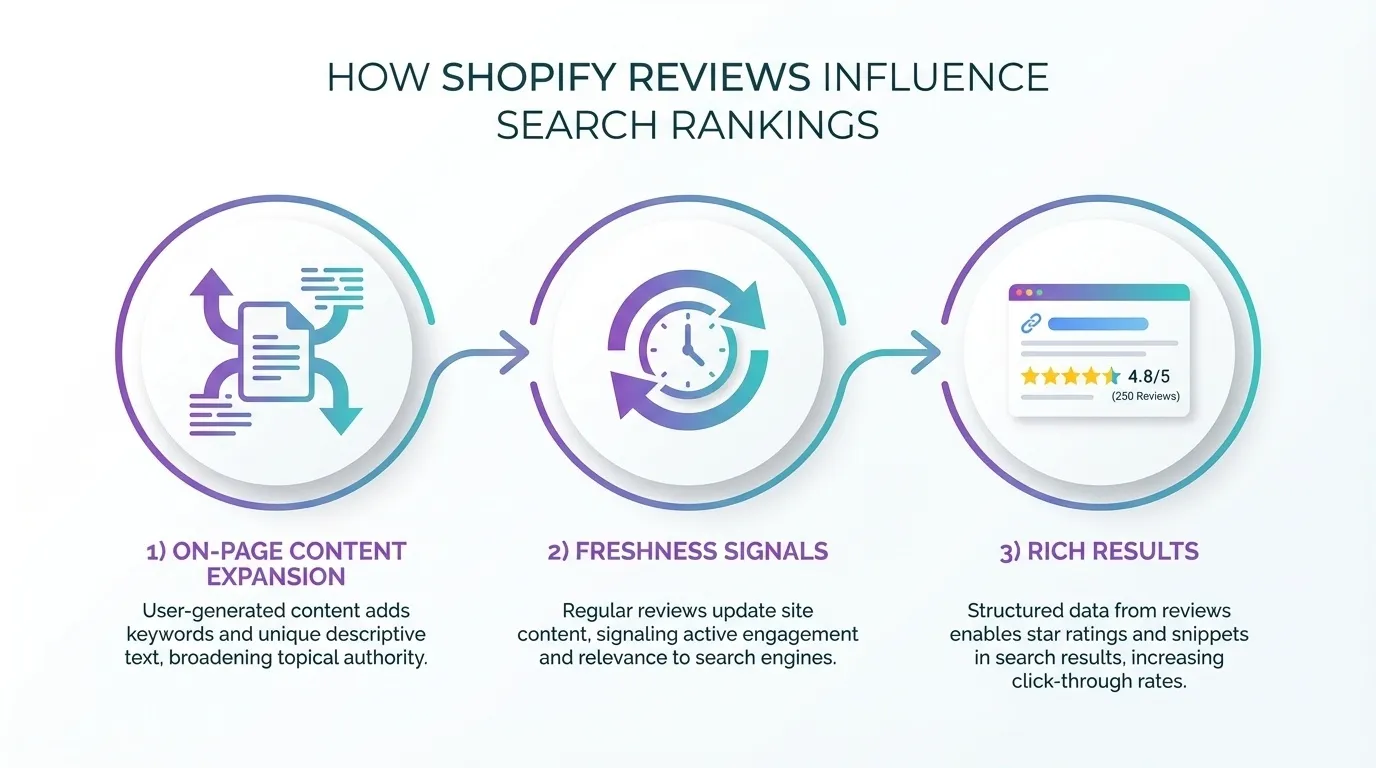
If you are treating reviews as decorative elements under your product description, you are leaving ranking power on the table.
Search engines do not just look at your polished brand copy. They analyse the full content ecosystem of a page. That includes what your customers write, how often they write it, and how structured that information is.
Done properly, reviews strengthen three ranking levers at once: content depth, freshness, and search result visibility
Shopify Reviews and On-Page Content Expansion
When a customer says your jacket “fits smaller than expected for Asian sizing” or your skincare product “does not irritate sensitive skin in humid Singapore weather”, they are adding language you would rarely think to include in your own copy.
That language matters. It expands your page into areas you did not deliberately optimise for, yet where real buyers are actively searching.
User-generated content typically increases:
- Semantic keyword variation: Reviews introduce synonyms, modifiers and related phrases that broaden topical coverage.
- Problem-solution phrasing: Customers describe pain points and outcomes in plain language. This aligns closely with conversational and AI-driven search queries.
- Geographic modifiers: References to climate, local usage or lifestyle contexts naturally strengthen local relevance.
- Comparative language: Phrases such as “better than Brand X” or “lighter than my previous model” introduce comparison-based search intent.
Semrush’s 2024 ranking factors study found no significant correlation between content length and higher rankings, with a minimal correlation coefficient of 0.02. The study emphasises that text relevance (0.47 correlation) and content quality (0.17 correlation) are far more important than comprehensiveness or word count.
Reviews expand content depth organically. You are not manufacturing extra paragraphs. Your customers are contributing them. From an LLM and AI Search perspective, this matters even more. Generative systems favour pages with rich, varied, human-generated context because it increases semantic clarity.
Over time, review content turns a 500-word product page into a living document that reflects real usage patterns.
Shopify Reviews and Freshness Signals
Search engines assess whether content remains relevant. Google confirmed in its Freshness Update announcement that certain queries benefit from more recent content signals. Every new review updates your page. That update is not cosmetic. It changes the page’s content footprint.
When review activity is consistent, it sends three signals:
- The product is actively purchased.
- The page is maintained and relevant.
- Users are engaging post-purchase.
In competitive eCommerce niches, stagnation can quietly weaken performance. A page that has not changed in months appears static. A page with steady, organic review growth signals continued demand.
However, velocity must be natural. A sudden surge of 200 reviews followed by silence can raise quality concerns. Sustainable review acquisition builds authority gradually and credibly.
Freshness alone does not guarantee ranking improvements. But when combined with depth and engagement, it strengthens the overall signal stack.
Shopify Reviews and Rich Results
Structured data is where technical SEO meets commercial impact.
If your review data is properly implemented using the Review or AggregateRating schema, your product listings may qualify for star ratings in search results. Google has outlined the requirements for review snippets.
When stars appear in SERPs, your listing stands out visually. That visual contrast influences user behaviour. Search Engine Land reported that rich snippets can significantly improve click-through rates when correctly implemented.
Even a modest CTR lift matters. If you are ranking in position four with a 3 percent CTR and structured data increases that to 4 percent, that is a 33 percent relative traffic increase without changing position.
In crowded Singapore ecommerce categories, incremental advantages compound. Higher CTR improves traffic. More traffic increases engagement data. Strong engagement supports sustained visibility. Structured review implementation is not cosmetic. It is strategic leverage.

Shopify Reviews as Trust Signals: What Google and Customers Look For
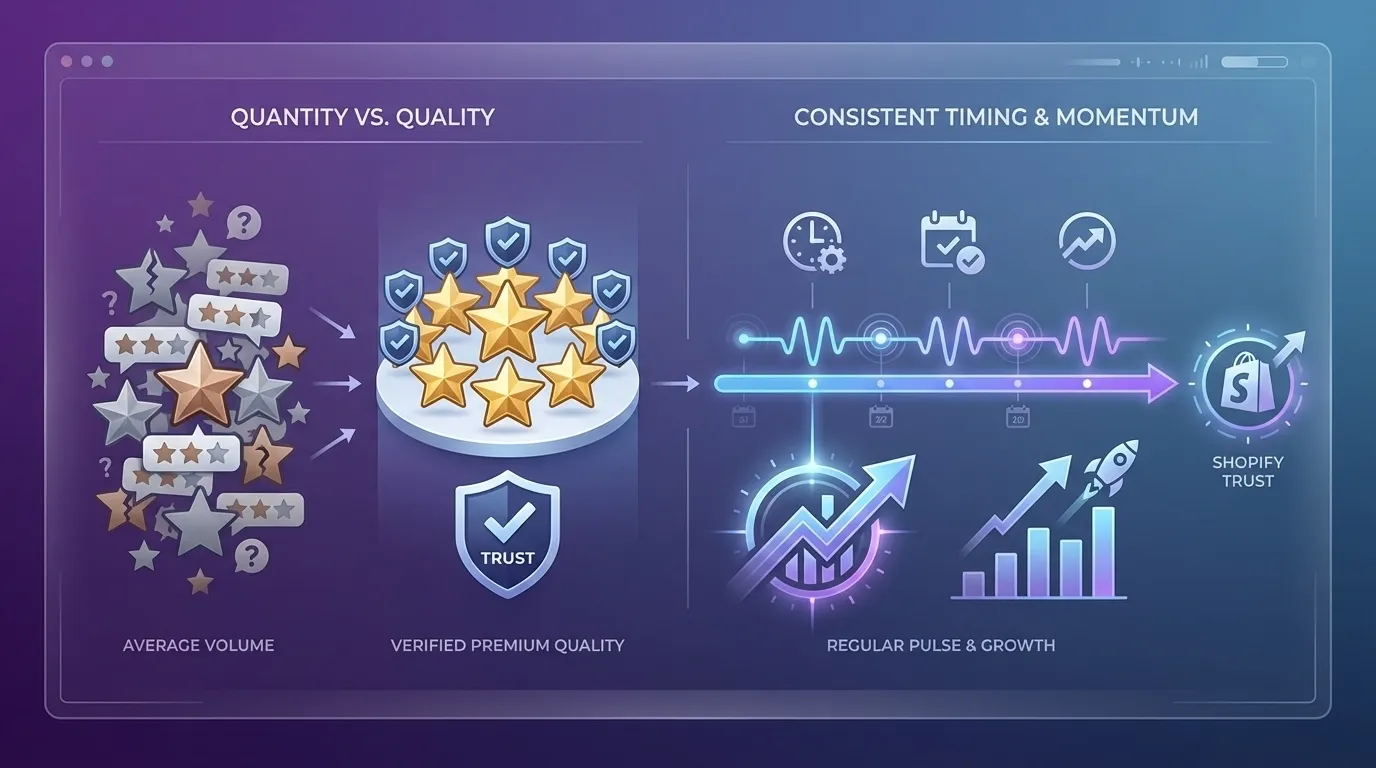
Ranking and trust are inseparable. Search engines attempt to model user trust. Customers assess it instinctively within seconds. Reviews influence both.
Quantity vs. Quality of Shopify Reviews
Five reviews may reassure a handful of visitors. They do not establish authority in competitive ecommerce verticals.

Volume expectations vary by industry. In electronics, consumers may expect hundreds of reviews. In niche handcrafted products, dozens may suffice.

As a practical benchmark, 25 to 50 reviews on a core product are often where authority signals begin to feel credible. That is not a ranking threshold set by Google. It is a behavioural tipping point for users.
Authentic review patterns typically show:
- Mixed sentiment rather than perfect five-star uniformity
- Specific product details that indicate genuine usage
- Natural variation in writing style and length
Manipulated reviews often display:
- Repetitive phrasing
- Identical structure across entries
- Clusters of reviews within unrealistic timeframes
Trust is fragile. Over-optimisation undermines it quickly.
Review Velocity and Consistency
Consistency outperforms intensity. A steady stream of reviews suggests ongoing sales and customer engagement. It mirrors real demand patterns.
Sudden spikes, particularly if they coincide with promotional pushes, are not inherently problematic. However, spikes followed by long inactivity can create credibility gaps.
From a search engine perspective, consistent activity supports ongoing crawling and indexation. From a customer perspective, it reassures them that your business is active and current. Velocity is not about speed. It is about rhythm.
UGC Types That Strengthen Shopify Reviews
Not all review formats contribute equally. Different formats influence different behavioural metrics. Consider how each format supports both SEO and conversion:
- Text reviews: Crawlable, indexable, and rich in keyword variation. These form the backbone of semantic depth.
- Photo reviews: Increase credibility and reduce perceived risk. Visual confirmation shortens decision cycles.
- Video reviews: Extend dwell time and engagement, which can indirectly support stronger performance signals.
- On-page Q&A sections: Capture informational intent and long-tail questions that resemble “People also ask” queries.
Each format aligns with a different stage of the buyer journey. Text may answer comparison queries. Photos reduce uncertainty. Q&A content addresses hesitations. Together, they transform your product page from a static catalogue entry into a decision-making environment.
When structured properly, Shopify reviews are not passive testimonials. They are layered trust assets that expand semantic coverage, reinforce credibility, and improve search visibility in ways that traditional product copy alone cannot.
How to Scale Shopify Reviews Without Triggering Spam Signals
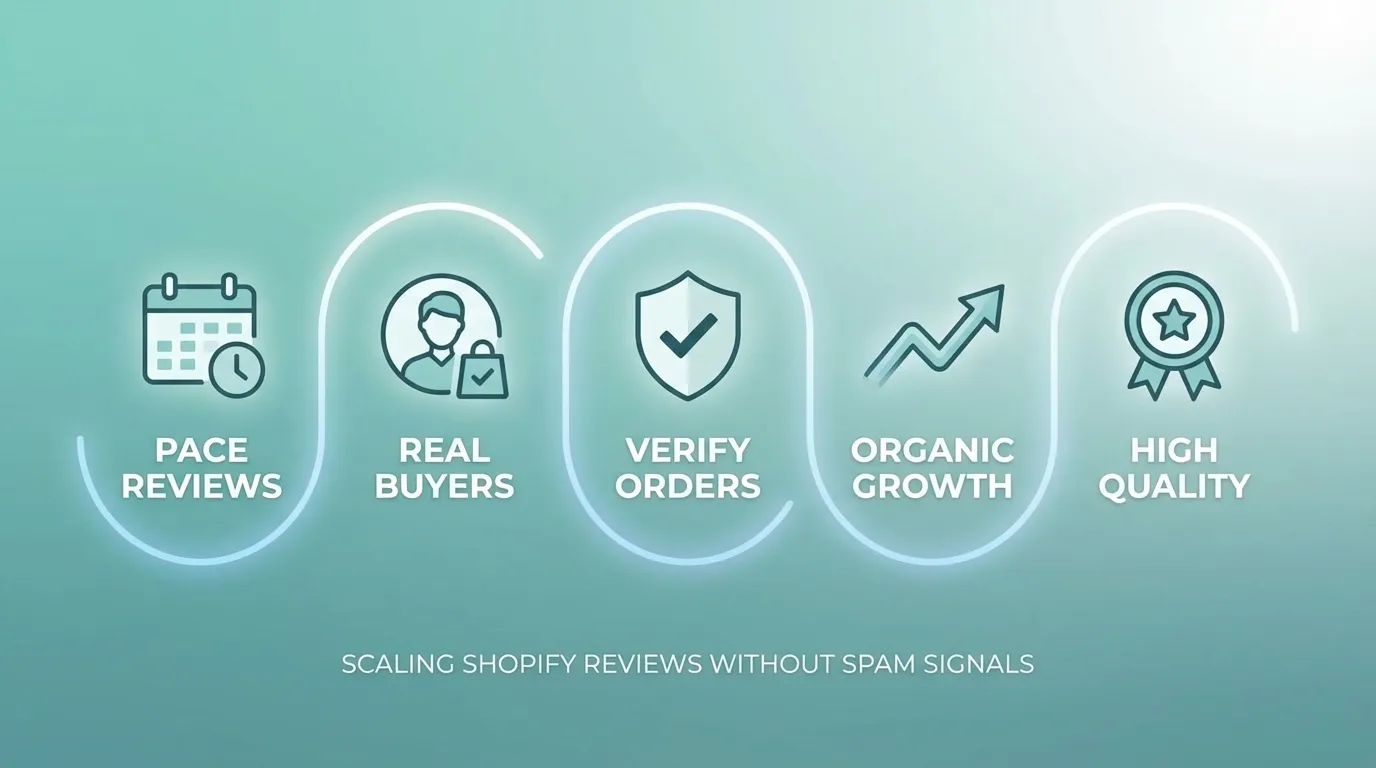
If you are serious about long-term organic growth, you cannot treat review acquisition as a numbers game. Scaling Shopify reviews is not about forcing every customer to give five stars. It is about building a defensible, compliant system that increases content depth, strengthens trust signals, and compounds SEO value without raising quality red flags.
Ethical scaling is non-negotiable. Google explicitly prohibits review gating and selective filtering. You cannot request feedback only from happy customers or suppress negative sentiment. That violates platform policies and undermines credibility.
A sustainable system focuses on consistency, transparency and proper technical implementation. Let us break this down into practical layers:
Post-Purchase Email Automation for Shopify Reviews
Email remains the foundation of structured review collection because it is scalable, measurable and automatable. Timing is not arbitrary. The best practice is to request feedback 7 to 14 days after the delivery is confirmed. That window allows:
- Sufficient product usage
- A meaningful customer experience
- Lower refund risk before review capture
The timing should reflect the product type. A fashion accessory can be evaluated quickly. A skincare product or supplement requires longer usage before a fair review can be given. Sending a review request too early produces shallow feedback. Sending it too late reduces response rates.
Design your workflow intentionally:
Recommended structure
- Order confirmation
- Delivery confirmation
- Usage window buffer
- Review request email
- Gentle reminder if no response
Now, about incentives. You may offer incentives for honest reviews. You may not condition rewards on positive sentiment. Google’s review policies are clear. Review gating or filtering is not allowed.
If you offer a SGD 5 voucher or loyalty points, the reward must apply to any submitted review, regardless of rating. Transparency builds trust. Manipulation destroys it. Segment your review requests. Do not blast every buyer with identical messaging. Segment by:
- Product category
- First-time vs repeat buyer
- High-ticket vs low-ticket SKU
- Subscription vs one-off purchase
Segmentation increases response rates by aligning your messaging with the customer’s experience stage.
Leveraging SMS and Loyalty Programmes
Email is foundational. SMS is catalytic. SMS open rates typically exceed email across many industries, although exact percentages vary. Gartner reports that SMS has open and response rates as high as 98% and 45% respectively, making it one of the most effective direct channels in mobile marketing.
That does not mean you replace email. It means you layer intelligently. Use SMS for:
- Short reminder nudges
- High-value product follow-ups
- Repeat buyer review requests
Do not overuse it. SMS is intrusive if abused. A simple structure works:
“Hi [Name], how is your [Product] working out? We would value your honest feedback here: [Link]”
Repeat buyers are your lowest-friction review source. They already trust you. They have experienced your fulfilment and service quality. Their feedback tends to be more detailed and credible. This is where loyalty programmes become strategic.
Instead of rewarding five-star reviews, reward participation. For example:
- Tier upgrades for cumulative review contributions
- Points for uploading photos or answering Q&A
- Exclusive previews for community contributors
When you reward contribution rather than positivity, you increase authenticity. Authenticity increases conversion. Conversion strengthens behavioural signals.
Using Shopify Review Apps Strategically
Technology decisions determine whether your review content is an SEO asset or a hidden liability.
Not all Shopify review apps are built with search performance in mind. Some render reviews in iframes or via scripts that search engines struggle to crawl. If Google cannot access the content, you lose ranking value.
Before selecting a review app, evaluate these four non-negotiables:
- Schema Markup Compatibility: The app must support structured data for aggregateRating and review schema in a format compliant with Google’s documentation. Without a valid schema, you reduce your chances of earning star ratings in search results.
- On-Site Indexability: Reviews must render in crawlable HTML, not hidden behind inaccessible scripts or blocked resources. Test this. View your page source. Use URL Inspection in Google Search Console. Confirm that review text is visible to crawlers.
- Moderation Workflows: You need tools to manage spam, abusive content and duplicate submissions. Moderation does not mean filtering negative feedback. It means removing policy violations and low-quality noise.
- Google Shopping and Merchant Centre Integration: If you run paid Shopping campaigns, product ratings can influence performance. Google Merchant Centre requires accurate, policy-compliant review data to determine seller rating eligibility.
If your review system cannot integrate with Merchant Centre feeds, you limit your performance upside.
What Ethical Scaling Actually Looks Like
When done correctly, your scaling framework should feel predictable and structured rather than aggressive.
Here is what a healthy scaling profile typically includes:
- Gradual increase in monthly review volume
- Mixed sentiment distribution
- Consistent response cadence
- Ongoing schema validation
- Quarterly audit of technical rendering
Avoid sudden spikes from mass-discount pushes that artificially inflate review volume. Those patterns look unnatural to both customers and algorithms.
Also, respond to reviews. This is often overlooked. A thoughtful response to a three-star review demonstrates accountability. It also adds fresh content to the page, reinforcing activity signals.
The Mindset Shift
Stop thinking of reviews as a conversion widget. Start thinking of them as:
- User-generated content
- Keyword expansion engines
- Trust amplifiers
- Structured data opportunities
When you scale ethically, your review content compounds over time. Pages grow richer. Long-tail coverage expands. Click-through rates improve as star ratings appear. Customers convert because they see social validation that feels real, not manufactured.
If you are building this properly, you are not chasing stars. You are building credibility at scale.
Realistic Growth Benchmarks for Shopify Reviews SEO
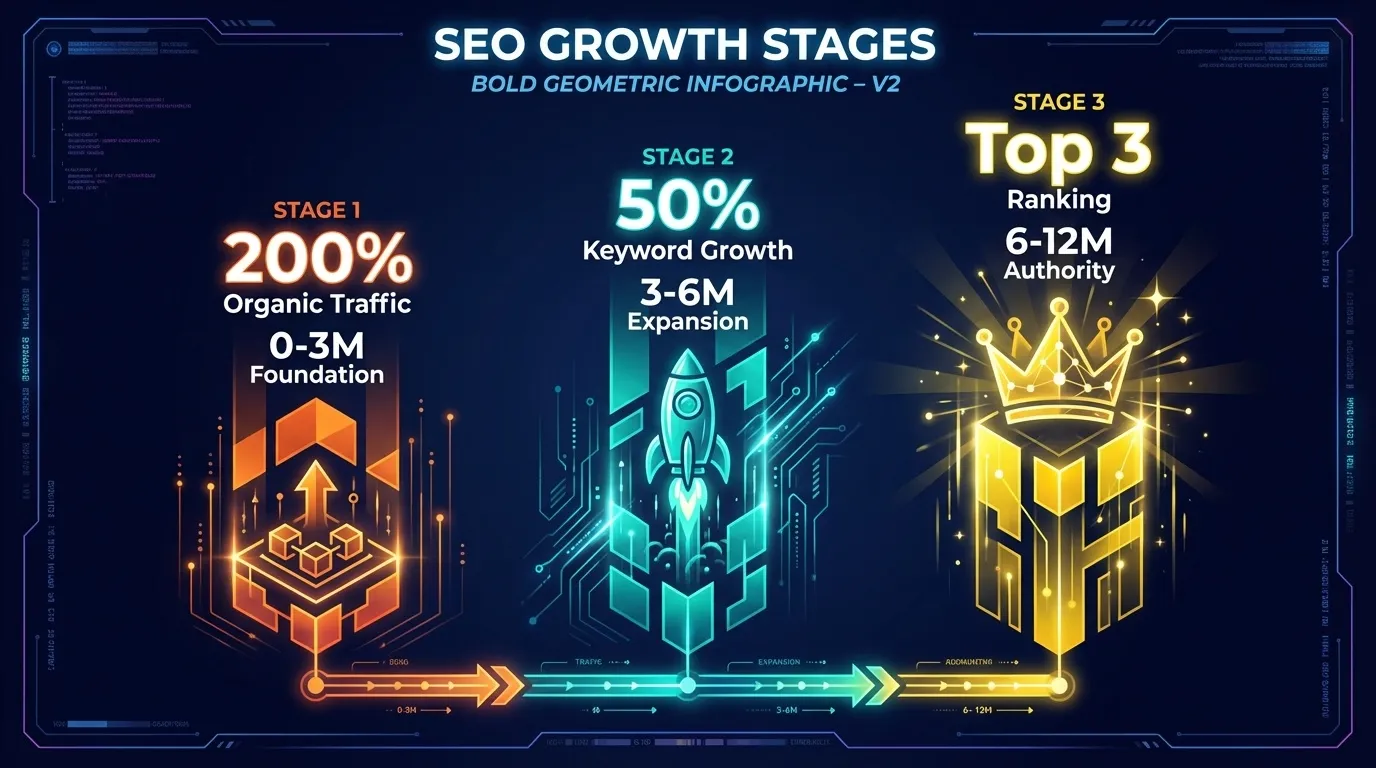
If you want reviews to drive rankings and revenue, you need patience and structure. Reviews compound. They do not spike overnight and transform your visibility in a week. Most ecommerce brands underestimate two things:
- First, how long does the authority take to build?
- Second, how powerful reviews become once momentum sets in.
Below is a practical, experience-driven roadmap you can use to set expectations internally and align your marketing team around realistic milestones.
Industry guidance from platforms such as Shopify and BigCommerce consistently emphasises that customer reviews improve trust, conversion and search visibility when implemented correctly.
0–3 Months: Foundation Stage
This is infrastructure, not glory. Your goal is not rankings yet. Your goal is system stability and early proof of traction.
In this stage, you should:
- Implement automated post-purchase review requests
- Ensure reviews are indexable and marked up with proper schema
- Reach 25 to 50 reviews per key SKU
- Validate that star ratings are eligible for display in SERPs
Reaching 25 to 50 reviews per core product is a meaningful early signal. It demonstrates activity and gives search engines enough text to begin understanding sentiment patterns and semantic variation.
You may start seeing click-through rate improvements once star ratings appear in search results. CTR improvements can happen before rankings move, because visual enhancements increase attention even if the position stays constant.
Do not expect dramatic ranking jumps yet. What you are building here is crawlable depth and behavioural engagement signals.
Focus on:
- Clean implementation
- Review authenticity
- Consistent request timing
If this stage is rushed or poorly executed, everything that follows will be weaker.
3–6 Months: Content Expansion Stage
Now the compounding begins. By now, your product pages should include substantial user-generated content. That means:
- Diverse language patterns
- Real-world usage descriptions
- Natural long-tail keyword variations
Search engines can now associate your products with more nuanced queries. You should begin to observe:
- Growth in indexed keywords
- Ranking movement for long-tail phrases
- Early visibility for rich results across more SKUs
This is also when your category pages may begin to benefit indirectly. As individual product pages strengthen, internal linking passes relevance signals upward. Expect gradual movement, not dramatic leaps.
If you track performance in Google Search Console, you should see:
- More impressions for descriptive queries
- An increase in query diversity
- Small but measurable CTR shifts on pages with visible star ratings
At this stage, review mining becomes critical. Export reviews quarterly. Analyse repeated phrases. If customers repeatedly describe a product as “good for humid weather” or “suitable for small flats in Singapore”, those phrases belong in your FAQs and category descriptions.
You are no longer collecting reviews. You are operationalising them.
6–12 Months: Authority Compounding Stage
This is where the real advantage appears. If review velocity has remained steady, meaning new reviews arrive each month rather than in one large spike, your site now signals:
- Active customer engagement
- Ongoing relevance
- Trust consistency
Stable review velocity reduces suspicion of manipulation and strengthens credibility. At this point, you may observe:
- Stronger rankings for competitive mid-tail keywords
- Improved category page visibility
- Clear organic revenue contribution from review-enhanced pages
Revenue lift becomes measurable through:
- Higher conversion rates on high-review products
- Improved click-through rates from search
- Assisted conversions from users who engage with reviews before purchasing
This is the compounding effect. Reviews do not affect a single metric. They influence ranking, CTR and conversion simultaneously.
Brands that reach this stage typically have formalised systems in place rather than ad hoc review collection.
Practical Benchmarks You Can Use
Below are realistic operating metrics that align with guidance from ecommerce platforms such as Shopify and BigCommerce.
| Metric | Realistic Range | What It Tells You |
| Review-to-order ratio | 3 to 8 percent | Indicates whether your request system is functioning effectively |
| Minimum review target per core SKU | 50+ | Establishes credibility and semantic depth |
| Expected CTR lift with star ratings | Variable, often visible within weeks | Measures the visual SERP advantage |
Review-to-Order Ratio: 3 to 8 Percent
If you are generating fewer than 3 percent reviews per order, your request system likely needs optimisation. That could involve timing, email subject lines, SMS integration or loyalty incentives. If you are exceeding 8 percent consistently, audit authenticity carefully. Extremely high response rates are possible but should be reviewed for compliance and natural behaviour.
Minimum 50 Reviews per Core SKU
Fifty reviews do not make you dominant. It makes you credible.
Below that number, authority signals remain thin. Above that number, semantic variation expands meaningfully. You will likely notice richer keyword coverage in the search console data.
For highly competitive niches, targets may need to be higher. However, 50 is a defensible baseline.
CTR Lift from Star Ratings
The exact lift depends on industry, competition and position. However, once the review schema qualifies for rich results, many brands report measurable CTR improvement within weeks.
CTR improvement does not always require ranking improvement. Visual differentiation alone can shift behaviour.
Monitor this carefully. Compare CTR before and after schema validation. Do not rely on assumptions.
What Most Brands Get Wrong About Growth Timelines
They expect reviews to fix weak fundamentals. Reviews amplify strength. They do not compensate for:
- Poor technical SEO
- Weak product descriptions
- Slow site speed
- Thin category pages
If your foundation is unstable, review growth will not rescue performance. However, when layered on top of solid technical and content architecture, reviews accelerate trust and semantic expansion faster than almost any other on-page element.
The Bigger Picture
When considering review benchmarks, think beyond numbers. Ask yourself:
- Is review velocity steady month to month?
- Are customers using descriptive, natural language?
- Are category pages benefiting from aggregated signals?
- Is organic revenue increasing in parallel with review growth?
If the answer to those questions becomes yes over time, you are not just collecting feedback. You are building an authority engine.
Turning Shopify Reviews Into a Sustainable SEO Growth Engine
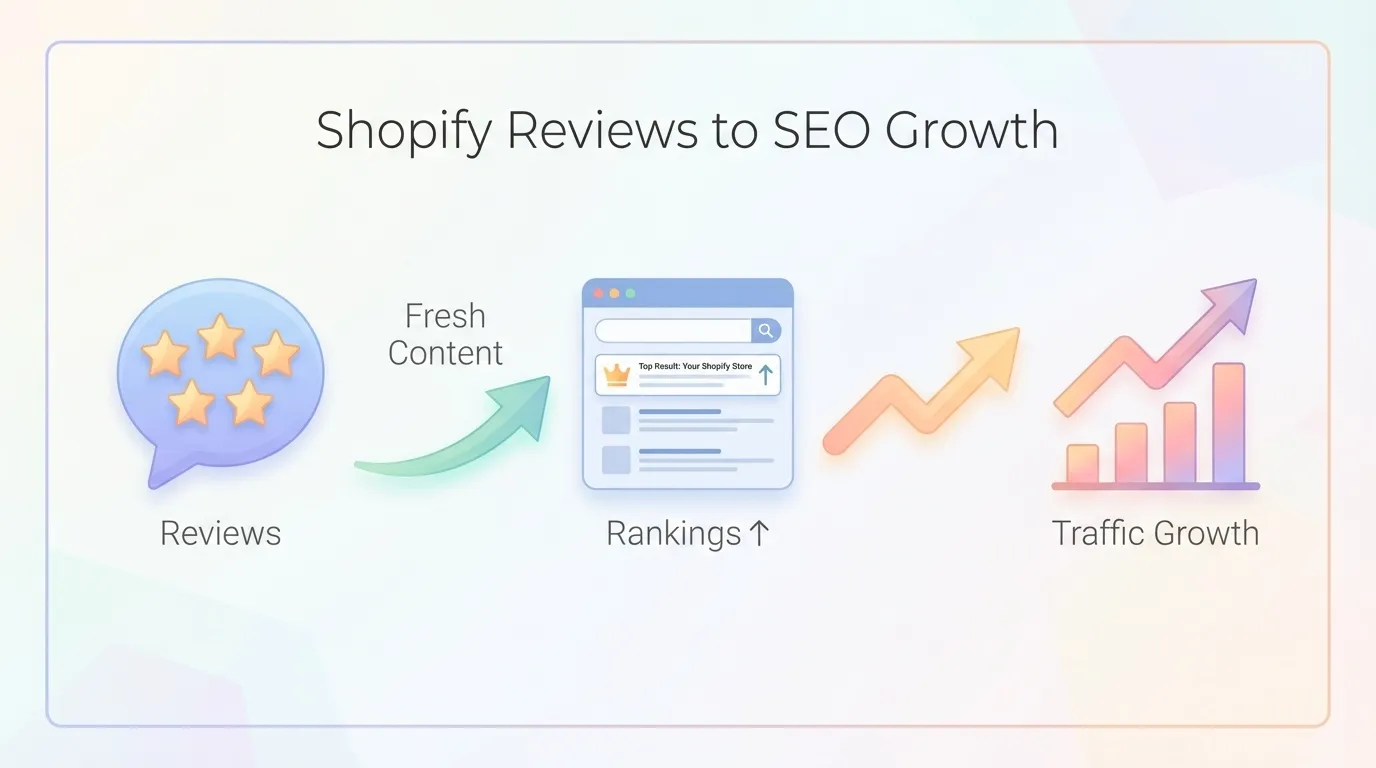
If you treat reviews as a passive widget on your product page, you will see passive results. If you treat them as structured, indexable assets that influence trust, click-through rate and long-tail visibility, you build something far more powerful. You create a compounding growth system.
A sustainable review engine requires three things. Clear acquisition processes. Technical implementation that search engines can properly crawl and interpret. Ongoing optimisation that turns customer language into strategic content opportunities. When these elements align, your rankings become more resilient, your category pages gain depth, and your conversion rates strengthen alongside organic traffic.
This is where many ecommerce brands plateau. They collect feedback but fail to operationalise it. They support star ratings but do not validate the schema. They celebrate volume but overlook velocity and semantic richness. Sustainable performance demands discipline.
If you want to move beyond surface-level tactics and build a long-term competitive advantage, you need a structured Shopify SEO roadmap that integrates technical precision with conversion strategy. MediaOne works with growth-focused brands in Singapore to transform Shopify reviews into measurable improvements in search performance and revenue.
If you are ready to turn Shopify reviews into a scalable SEO asset, call us today to discuss a data-led strategy built for sustainable growth.
Frequently Asked Questions
Are Shopify reviews a direct Google ranking factor?
Shopify reviews are not listed as a direct ranking factor by Google. However, they indirectly influence rankings by expanding on-page content, increasing keyword relevance, and improving user engagement signals. When marked up with valid structured data, they can also qualify for rich results, which may improve click-through rates and behavioural metrics over time.
Can I import reviews from another platform into Shopify?
Yes, you can import reviews from platforms such as Amazon or other ecommerce systems, provided you comply with platform terms and clearly attribute the source. Google requires that structured data accurately reflect genuine reviews and not misrepresent origin. Always ensure imported reviews are authentic and transparently presented to avoid misleading users.
Do reviews help new Shopify stores rank faster?
Reviews can support new stores by increasing content depth and trust signals, but they do not override core SEO fundamentals. Technical structure, internal linking and site authority still play a major role. For new stores, reviews accelerate credibility but should be part of a broader optimisation strategy.
Should I respond to Shopify reviews for SEO benefit?
Responding to reviews demonstrates engagement and customer care, which supports brand trust. While responses alone do not guarantee ranking improvements, they add fresh content to the page and show activity. This ongoing engagement can contribute to stronger user signals and perceived credibility.
Can Shopify reviews influence Google Shopping results?
Yes, product ratings can influence how listings appear in Google Shopping if they meet Merchant Centre requirements. Accurate and compliant product ratings can qualify for seller ratings and product star annotations. This can improve visibility and potentially increase click-through rates within Shopping ads and free listings.