| AI Summary
A brand ambassador represents a business through an ongoing relationship. Ambassadors may be customers, employees, creators, experts or public figures. Their work can include product demonstrations, events, content and customer feedback. This guide explains the role, compares ambassador types and shows how businesses can assess candidates, agree payment, manage disclosure and measure results. The best starting point is a person whose experience and audience match the product. |
A brand ambassador is a person who represents and promotes a brand through an ongoing partnership. Their duties may include demonstrating products, creating content, attending events and sharing customer feedback. Ambassadors can receive fees, products or commissions, depending on their agreement.
Key Takeaways
- Audience location and interests help determine whether an ambassador can reach potential buyers.
- A small following does not guarantee trust, and a large following does not guarantee sales.
- Payment, content rights and any restrictions on competing partnerships need separate terms.
- Sponsored and gifted content can require disclosure even when no cash changes hands.
- Referral codes record attributed orders; they do not prove that every order came from a new customer.
- A small pilot lets a business test the relationship before committing more money and staff time.
A familiar face can make a product easier to understand. A running coach might explain how a shoe feels during training, then answer questions after several weeks of use. The audience gets context that a product photograph cannot provide.
That is the opportunity behind brand ambassador marketing. The business gains someone who can explain its products in everyday situations. The ambassador gains an agreed role, support and compensation where applicable.
The relationship still needs care. A recognisable name cannot rescue an unsuitable product, poor service or promises the business cannot keep. The sections below explain how to choose someone who can represent the brand responsibly.
What Is a Brand Ambassador?
A brand ambassador acts as a representative of a business, usually across a series of activities or an agreed period. The work may happen online, in person or through both.
Genuine product knowledge helps the person explain what the product does, who it serves and where its limits lie. An ambassador who describes personal results should have the experience to support them.
The title does not describe one employment arrangement. Some ambassadors are employees. Others work under a freelance or commercial partnership. An enthusiastic customer can also become an ambassador after agreeing to represent the business.
Brand Ambassador vs Influencer vs Customer Advocate
These roles can overlap. An influencer describes someone with an audience they can influence. An ambassador describes their relationship with a brand. A customer advocate recommends a business and may have no formal agreement.
| Role | Main feature | Example |
| Brand ambassador | Agreed representation over time | A coach demonstrates the same equipment across several events |
| Influencer | An audience that follows their content | A creator produces a sponsored launch video |
| Customer advocate | Voluntary support from a customer | A buyer recommends a shop to friends without a reward |
| Affiliate | Payment linked to an agreed action | A publisher earns commission on qualifying orders |
An influencer can become a brand ambassador. An ambassador can also earn affiliate commission. The labels describe different parts of the arrangement, so the written responsibilities explain more than the title alone.
What Does a Brand Ambassador Do?
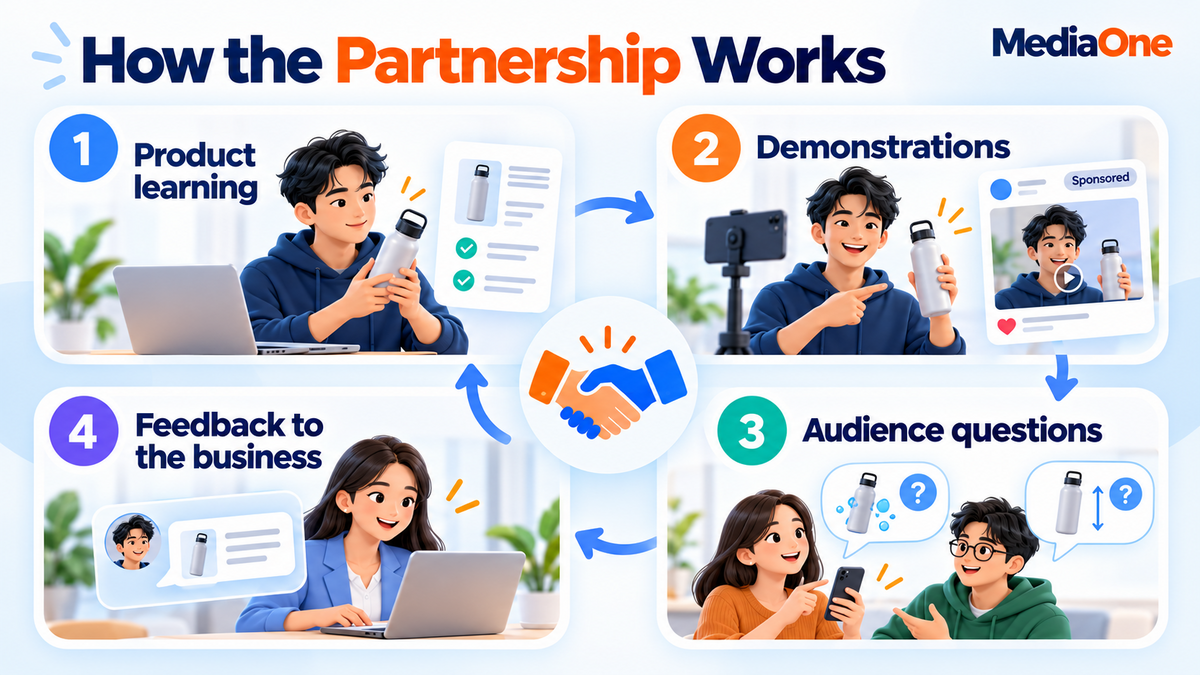
A brand ambassador helps people understand a product and the business behind it. Their exact duties depend on the product, audience and agreement.
Product Demonstrations and Content
Demonstrations show how a product works in a situation customers recognise. A coffee ambassador might explain a brewing method. A software ambassador might show how a small team handles a recurring task.
Content can include videos, photographs, written posts or live sessions. Each piece should answer something a potential customer wants to know. A demonstration of cleaning a reusable bottle may explain more than another photograph of the packaging.
Events and Customer Conversations
Some ambassadors welcome visitors, demonstrate products or support community activities. Their presence gives people someone to question before buying.
A representative should know which questions they can answer. Delivery problems, refunds and technical faults need a route to the business. An ambassador should not promise a replacement or discount without permission.
Feedback to the Business
Ambassadors also hear questions that a marketing team may miss. Repeated comments about sizing, setup or instructions can reveal problems worth fixing.
A short feedback log can record the question, its frequency and the team responsible for answering it. That keeps customer conversations connected to product and service improvements.
The business remains responsible for accurate product information and customer support. A wider social media marketing plan helps connect ambassador activity with the channels and staff handling those enquiries.
Types of Brand Ambassadors and When to Choose Each
Ambassador types differ by the knowledge, audience and setting they bring. A programme can include several types, provided each person has a defined role.
| Ambassador type | What they bring | A possible role |
| Customer ambassador | Experience as a buyer | Sharing everyday product use |
| Creator ambassador | Content skills and an existing audience | Producing demonstrations and answering followers |
| Employee ambassador | Knowledge of the company and its work | Explaining processes or introducing the team |
| Expert ambassador | Knowledge of a particular subject | Explaining technical features within their expertise |
| Celebrity ambassador | Public recognition | Representing the brand in a larger campaign |
| Campus or community ambassador | Connections within a particular group | Supporting local activities and product introductions |
Customer and Creator Ambassadors
Existing customers can describe practical details because they know the buying experience. Their audience may be small, so the business should assess what they can contribute without expecting national reach.
Creators bring production skills as well as distribution. A creator who films demonstrations well may contribute strong content even when their audience is modest. Microinfluencer partnerships are one option within this group; follower categories alone do not establish performance.
Employee, Expert and Celebrity Ambassadors
Employees can explain work that outsiders rarely see. Their company connection should remain apparent when they promote its products.
Experts can explain complex features, but their expertise must relate to the subject. A respected photographer can discuss camera handling; that reputation does not support unrelated health claims.
Celebrities can introduce a brand to a wide audience. The business still needs a reason for the association that customers can understand. Recognition alone does not show that the audience will buy.
Community Ambassadors in Practice
Red Bull’s Student Marketeer programme includes sales and marketing activity around university communities, both online and offline. The role shows how ambassador work can extend beyond publishing posts.
Lululemon’s description of its ambassador community includes athletes, yoga teachers, creatives and entrepreneurs. That illustrates how people from different backgrounds can represent a shared interest. These examples explain programme structures; they do not establish expected results for another business.
What Can Brand Ambassador Marketing Achieve?
Brand ambassador marketing can support awareness, product understanding, community participation and referrals. The intended result should guide the choice of representative.

An unfamiliar kitchen appliance may need repeated demonstrations. A local fitness studio may need someone who can introduce residents to a class. A business product may need a practitioner who can explain how it works during a normal working day.
The value comes from the connection between the person’s experience and the customer’s decision. An ambassador can address questions that remain unanswered in an advertisement.
The arrangement also creates costs. Products, fees, training, approvals and customer replies all require resources. Repeated content can lose its appeal when every post repeats the same sales message.
A programme therefore needs a specific purpose within the company’s brand marketing. A goal such as trial bookings gives the team something more practical to assess than a general wish for more attention.
Some businesses should fix service problems before recruiting ambassadors. An enthusiastic recommendation can send more customers into the same delivery delays or confusing checkout. The resulting complaints can harm the relationship with both the ambassador and the audience.
How to Choose the Right Brand Ambassador
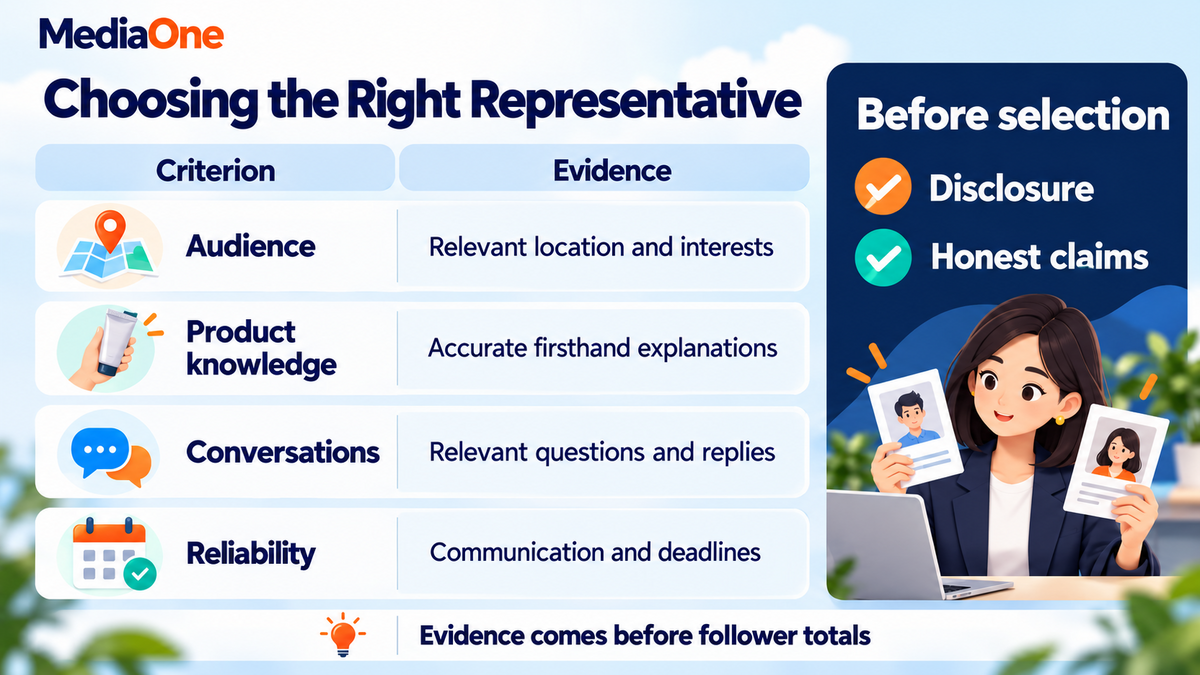
The right brand ambassador understands the product, reaches relevant people and can carry out the agreed work. Candidate selection needs evidence from past content and direct conversations.
Audience Relevance
Audience location, interests and needs should match the people the business serves. A Singapore retailer with local delivery has little reason to pay for reach concentrated in markets it cannot supply.
Recent audience analytics can help verify location and activity. Public comments add context, but they cannot establish the full audience profile.
The person’s language and examples also need to suit those buyers. A specialist explaining equipment to professionals may need different content from someone introducing it to beginners.
Product Experience and Communication
Product access should come before an experience-based endorsement. Candidates need time to try the product, ask questions and decide whether they want the role.
A short conversation often reveals how well someone can explain it. Their description should remain accurate without depending on memorised sales lines.
The business should also welcome honest limits. A person who can explain who a product may disappoint helps customers make informed decisions.
Engagement Quality and Reliability
Comments about price, availability or product use show different interest from generic reactions. Several recent posts provide a better sample than one exceptional video.
Relevant social media engagement signals include questions, replies and repeated participation. Those signals still need checking against the programme’s goal.
Reliability deserves its own assessment. Past delivery records, response times and a small paid test can show whether someone can manage the work. A polished account does not prove that deadlines will be met.
A Worked Candidate Comparison
A hypothetical Singapore retailer is choosing between two candidates. Candidate A has 50,000 followers, with most outside the retailer’s delivery area. Candidate B has 4,000 followers concentrated around the neighbourhoods it serves.
Candidate B deserves closer attention for a local sales programme. However, the smaller audience is only one part of the decision. The retailer still needs evidence of product knowledge, relevant conversations and dependable work.
Candidate A might suit a different objective, such as introducing an international launch. The same person can be unsuitable for one programme and appropriate for another.
The comparison should therefore begin with the business goal and service area. A follower total becomes meaningful when the team understands who those followers are and what the partnership needs to achieve.
A Simple Candidate Scorecard
The following scorecard is an example for internal comparison, not an industry standard. Each criterion receives a score from one to five, supported by a short evidence note.
| Criterion | Evidence to review | Suggested weight |
| Audience relevance | Location, interests and customer needs | Double |
| Product knowledge | Experience and accurate explanations | Double |
| Engagement quality | Relevant conversations across recent posts | Single |
| Working reliability | Communication and delivery evidence | Single |
The maximum weighted score is 30. A candidate scoring four for audience relevance receives eight points for that row.
Disclosure, truthful claims and respectful conduct should be entry requirements. A high total score should not excuse a refusal to identify sponsored content or a record of misleading claims.
How Much Should a Brand Ambassador Be Paid?
Brand ambassador payment depends on the work, time, audience and rights involved. There is no single rate that applies across Singapore businesses or ambassador types.
| Payment model | What the ambassador receives | What the agreement needs |
| Product or service exchange | An agreed non-cash reward | What is provided and whether content is required |
| Fixed fee | Payment for defined work | Deliverables, revisions and payment dates |
| Retainer | Recurring payment during an agreed period | Ongoing duties and availability |
| Commission | Payment for qualifying sales or actions | Tracking, returns and payout rules |
| Combined model | A fee plus another reward | Separate terms for each payment element |
A product gift does not automatically secure a promised post. The brand and recipient need to agree whether there is an obligation to create content.
Content reuse also needs its own terms. Posting a video on the ambassador’s account is different from allowing the brand to run that video in advertisements. The price should reflect the agreed channels, duration and editing permissions.
The budget should include product delivery, staff time and reporting. A low creator fee can still lead to an expensive programme when coordination takes more time than expected.
How to Build a Brand Ambassador Programme
A brand ambassador programme gives the relationship a repeatable structure. A small pilot can test the work before the business adds more representatives.
A Goal and a Manageable Starting Group
One main goal helps the team judge the pilot. Examples include product trials, qualified enquiries or event attendance. Supporting measures can explain how people responded along the way.
The starting group should match the team’s capacity to train, answer and pay participants. Three well-supported ambassadors may be easier to learn from than a large group receiving little attention. The number is a planning choice, not a performance benchmark.
A Brief That Explains the Work
A brief should cover the customer problem, product facts, planned activities and intended audience action. The ambassador also needs a contact who can answer questions.
The agreement should name:
- Deliverables, channels and deadlines.
- Compensation, expenses and payment dates.
- Disclosure responsibilities and supported product claims.
- Review steps and the number of revisions.
- Content ownership and reuse permissions.
- Any restrictions on competing partnerships.
- Cancellation, correction and end dates.
Exclusivity should name the relevant product category and period. An undefined ban on other brands can create confusion about unrelated work.
Product Learning and Ongoing Support
Onboarding should give ambassadors access to the product, accurate information and the customer support process. A short practice demonstration can reveal misunderstandings before publication.
Creative freedom can sit within factual boundaries. The business supplies supported facts; the ambassador chooses examples and language that sound natural to their audience.
An eight-week pilot could include product learning, an introduction, a demonstration and a follow-up answering questions. That schedule is an illustration. Products requiring longer use need more time.
A shared calendar and one contact reduce missed handovers. Influencer campaign management connects those approvals, publication dates and payments when creators take part in the programme.
What Disclosure Does a Brand Ambassador Need?
A brand ambassador should make the commercial relationship apparent when promoting a business. Payment is one possible connection; products, services and invitations can also be relevant.
The Singapore Code of Advertising Practice sets the underlying expectation that advertising is legal, decent, honest and truthful.
ASAS’s social media advertising rules address the identification of commercial messages and relationships. These are advertising self-regulation standards, alongside applicable laws and platform policies.
ASAS’s disclosure examples cover paid promotion and reviews arranged through products or services. Its notes also explain disclosure placement across images, video and audio.
In practice, the disclosure should appear early and remain readable. A video needs a visible disclosure within the video; an audio-only promotion needs an audible one. The audience should understand the relationship without searching the ambassador’s profile.
Platform requirements apply too. YouTube’s branded content settings require creators to notify the platform about relevant commercial relationships. The platform label does not remove other disclosure responsibilities.
International campaigns need attention to the markets they reach. The US Federal Trade Commission’s endorsement disclosure rules can apply to posts from abroad when effects on US consumers are reasonably foreseeable. Singapore standards remain relevant to local campaigns.
How to Measure Brand Ambassador Results
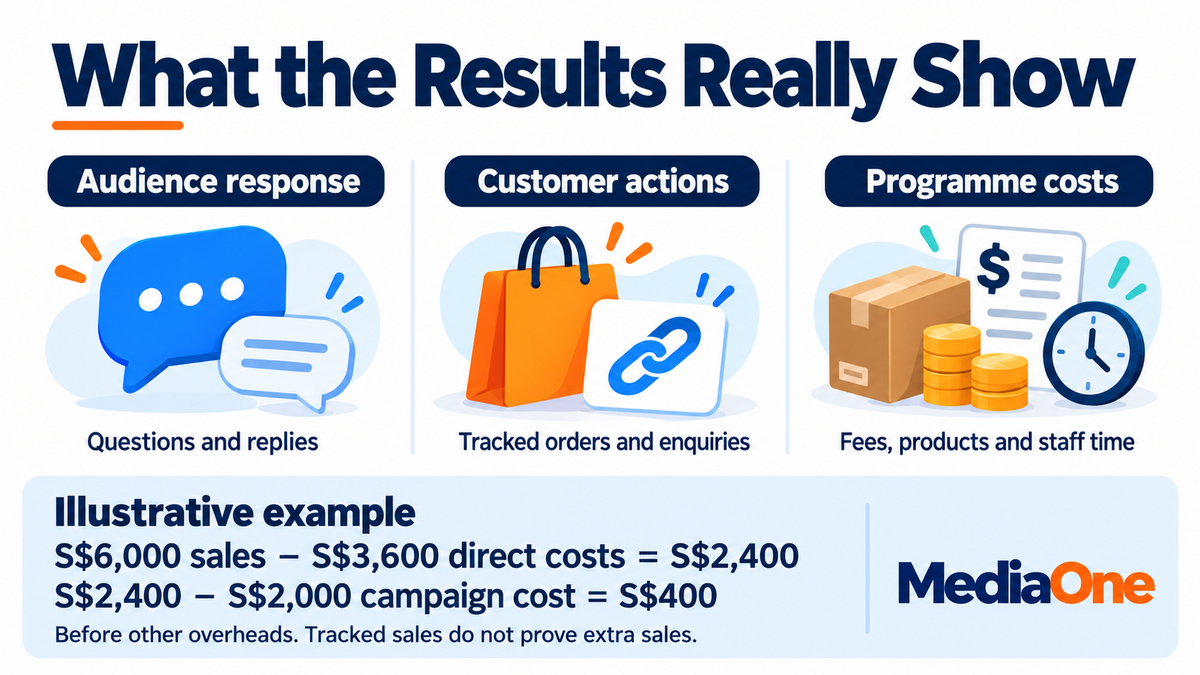
Brand ambassador reporting should connect the person’s work with the programme goal. Likes and views describe audience activity, while orders and enquiries show different outcomes.
Measures That Match the Goal
| Programme goal | Main measure or indicator | Supporting evidence |
| Awareness | Reach among intended customers | Viewing and audience location |
| Product understanding | Relevant questions and demonstrations watched | Comments and customer feedback |
| Lead generation | Qualified enquiries | Bookings and sales follow-up |
| Sales | Tracked orders and revenue after refunds | New customer share and campaign costs |
| Community participation | Attendance or participation | Repeat involvement and feedback |
Consistent social media metrics help teams compare ambassadors using the same definitions and reporting period. Awareness programmes may also use brand awareness measures, such as research into whether people recognise the brand.
Referral Links and Codes
Each ambassador can receive a separate referral link or code. Google’s campaign URL parameters help identify traffic through source, medium and campaign labels. Consistent naming makes results easier to compare.
A code used on 30 orders records 30 attributed orders under the programme’s rules. It does not establish that all buyers were new or that every purchase happened because of the ambassador. Codes can spread beyond the intended audience, while some viewers buy without using them.
The report should separate tracked results from assumptions. Returns, cancellations and duplicate claims need checking before commission payments.
Campaign Costs and Commercial Return
An illustrative campaign costing S$2,000 might record S$6,000 in sales after refunds. If direct product and delivery costs total S$3,600, those sales leave S$2,400 before campaign costs. After the S$2,000 campaign cost, S$400 remains before other business overheads.
That is a 20% return on campaign cost using those assumptions. It is not proof of incremental profit: some customers may have bought anyway. Revenue alone cannot show whether the programme earned money.
Common Brand Ambassador Problems and How to Address Them
Ambassador programmes need attention after launch. The response should depend on the source of the problem.
- Repeated content: A new customer question or product use can give the next post a different purpose.
- Missed deadlines: A conversation can establish whether the workload, product access or approval process caused the delay.
- Incorrect claims: Publication should pause while the team checks the statement and arranges a correction.
- Weak sales: The review should cover audience relevance, the offer and the buying experience.
- Unanswered complaints: Customer support needs ownership of the response, with the ambassador directing people to that team.
A programme review should also record what customers asked and what the business changed. Those lessons can explain results that a sales total misses.
Renewal and Ending the Partnership
A renewal discussion should consider the next period’s work, the ambassador’s availability and what the pilot taught both sides. Strong results do not mean the same content should continue unchanged. New product questions may call for another format or fewer posts.
An ending also needs practical handovers. Outstanding payments, active referral links and scheduled posts should each have an owner. Both sides need to know when representation stops. That prevents a former ambassador from receiving customer requests they can no longer handle.
Choosing a Brand Ambassador for an Ongoing Partnership
A brand ambassador needs product knowledge, an appropriate audience and support from the business. The relationship works best when both sides understand the duties, payment and standards from the start.
MediaOne’s influencer marketing services support businesses planning creator partnerships. Our team can help connect candidate selection, campaign planning and measurement. A consultation with MediaOne can start with the product, intended customers and result the business wants to achieve.
FAQs About Brand Ambassadors
A personal account is unnecessary for some roles. An ambassador may demonstrate products at events or appear in content published by the business. The role needs to specify where the person will represent the brand and whether their own audience is part of the arrangement.
Is a brand ambassador the same as a distributor?
A distributor supplies products through a sales network or to retailers. A brand ambassador represents and promotes the business. One company may work with both, but the titles do not mean the same thing. An ambassador does not automatically receive authority to sell or supply products.
Does a brand ambassador need a marketing degree?
A degree is not a universal requirement for ambassador work. Each business sets requirements for its role. Communication skills, subject knowledge and examples of relevant work can help demonstrate suitability. Specialist roles may require qualifications related to the product or activity, so applicants should check the stated requirements.
What should happen when an ambassador’s featured product sells out?
The business should update the product page and tell the ambassador which details have changed. Active promotions may need pausing. Any waiting list should explain what customers are signing up for, and restock dates should appear only when the business can support them.
How can someone apply to become a brand ambassador?
An application should use the brand’s official contact or application channel. A short introduction can explain the applicant’s connection to the product, relevant community and proposed contribution. Two or three examples of previous content or event work help the business assess the proposal. Private customer information should stay out of the application.