| AI Summary
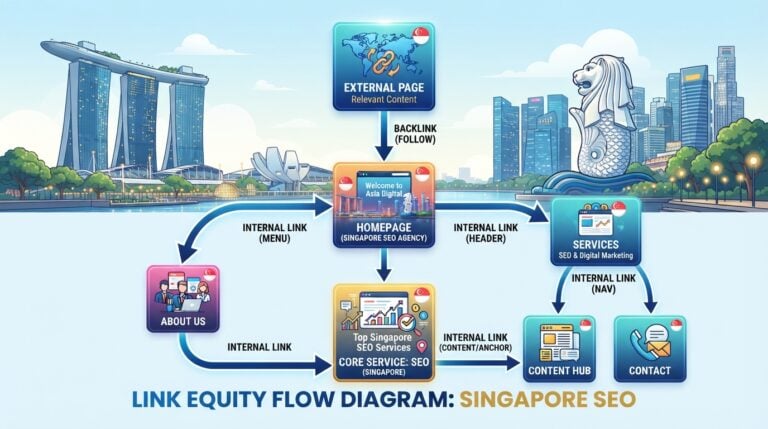
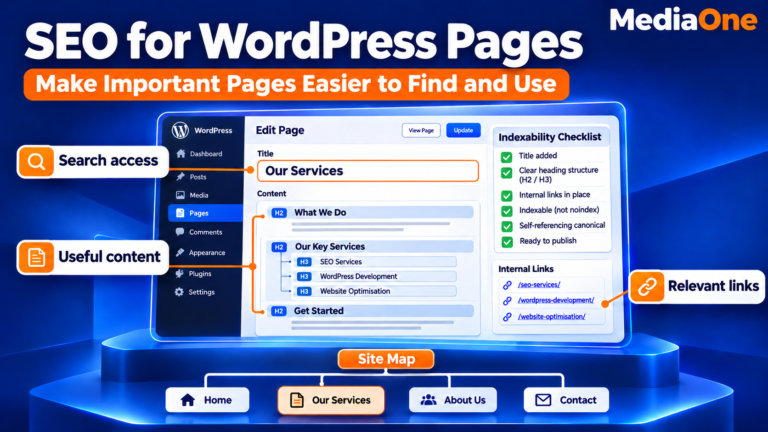
SEO link juice describes the ranking value that links may pass between pages. Relevant backlinks can support a website, while internal links connect that support to related articles, products and services. Singapore businesses should prioritise accessible commercial pages, relevant editorial coverage and accurate link destinations. Google does not provide a public link-equity score, and extra links cannot guarantee higher rankings. |
SEO link juice is an informal name for the ranking value passed through links, often called link equity. Backlinks connect other websites to yours, while internal links connect your own pages. Google uses link analysis within its ranking systems, but businesses cannot measure the exact value of an individual link.
Key Takeaways
- Priority service and product pages need relevant internal links from accessible pages.
- Link counts and third-party authority scores cannot show Google’s exact assessment.
- Broken destinations, isolated pages and inconsistent URLs deserve attention before additional outreach.
- Paid links need appropriate attributes; purchasing ranking credit breaches Google’s spam policies.
- Reporting should connect link work with page visibility, customer visits and qualified enquiries.
A website can earn attention for an excellent article while its main service page remains difficult to find. SEO link juice helps explain why links between those pages deserve attention.
The phrase sounds technical, but the practical task is familiar: customers need sensible connections between information and the services behind it. Search engines also use links to discover pages and understand their relationships.
A sound link strategy starts with the pages a business already has. External outreach comes next, supported by content that gives another publisher a reason to reference it.
What Is SEO Link Juice?
SEO link juice is industry shorthand for the value a link may pass from its source page to its destination. Link equity describes the same broad idea without the liquid metaphor.
A reference from another website can help search engines assess a page. Internal links then connect pages within the receiving website. Neither process works like pouring a measured amount of water between containers.
How PageRank relates to link equity
Google’s early PageRank system assessed importance through links between pages. Its current ranking systems still include PageRank, although the system has evolved.
Links operate alongside other signals. A page still needs content that answers the search, an accessible website and a reason for visitors to choose the business.
Why link juice is not a score
Google does not publish a current PageRank score for each page. Third-party tools provide their own estimates, based on their own databases and calculations.
A high tool score cannot establish whether a specific link will improve rankings. A low score also cannot prove that a relevant publication has no value. A business reviewing its backlink profile should examine the actual linking pages, their audiences and the reasons for those references.
How Link Equity Flows Through a Website
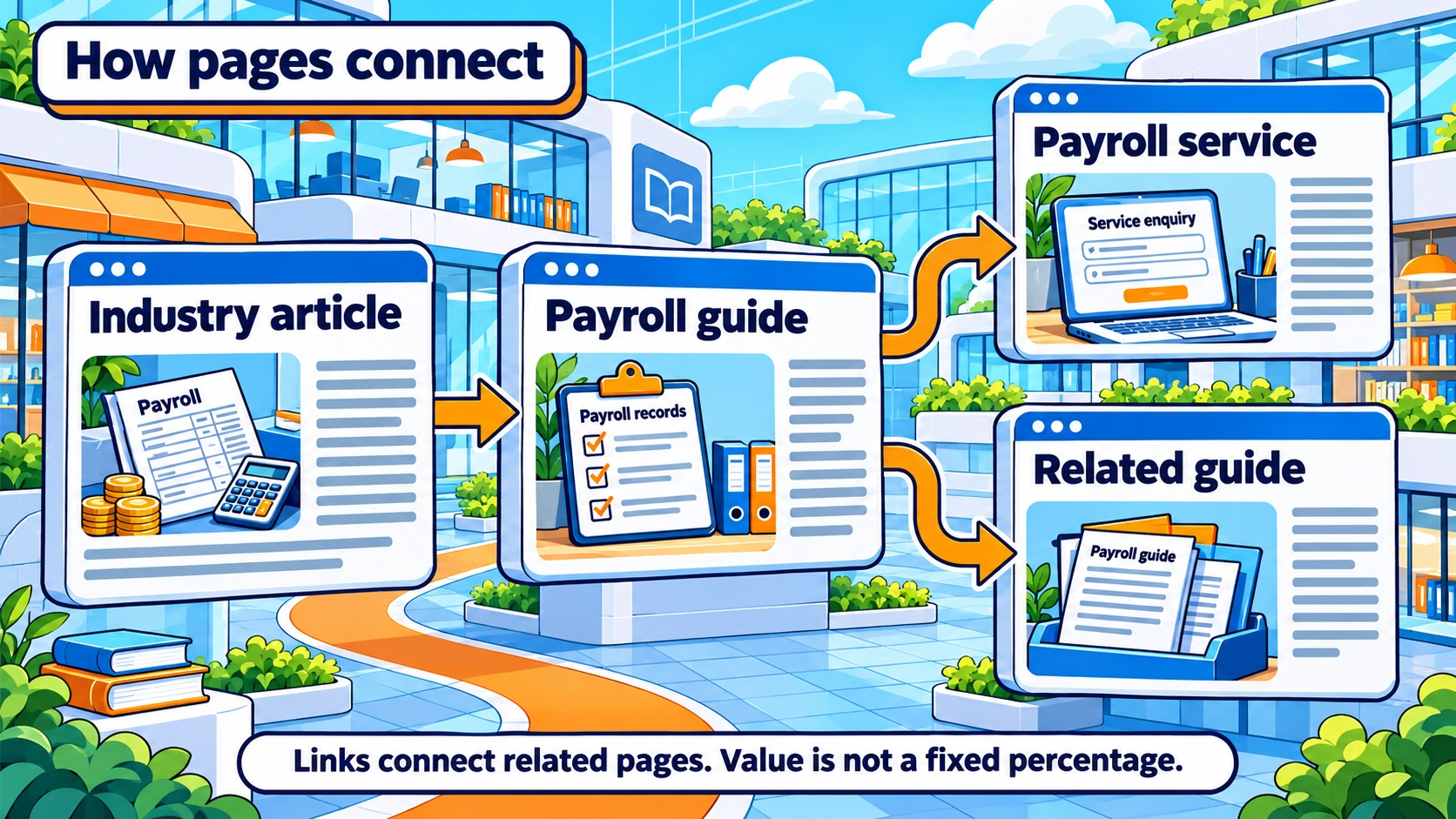
Link equity involves connections between individual pages. A backlink to an article does not automatically give every product page the same support. The following distinctions help explain where a business has control:
| Link type | Example | Business control |
| External backlink | A trade publication links to a company’s research | The publisher chooses the link |
| Internal link | A research article links to a related service | The company controls the connection |
| Outbound link | A company article cites a government source | The company chooses the reference |
External links introduce references
An external backlink can point to a homepage, article, category or service page. The destination should match the reason for the reference.
For example, a publication discussing an original survey should link to the survey. A link to an unrelated sales page would leave readers searching for the evidence. A company’s off-page SEO work should therefore consider the pages earning attention, alongside the websites providing it.
Internal links help visitors move between related information. They also help Google discover content and understand connections.
An accounting article about preparing payroll records could link to a payroll service page where the text explains when outside support may help. The destination answers a question raised by the article. A planned internal linking strategy makes those connections part of the website’s structure.
Link equity does not remove other barriers
A linked page can still struggle if it blocks indexing, answers the wrong question or contains little information. A page receiving a backlink may also contain internal links to several related destinations. The business cannot calculate a guaranteed percentage of ranking value for each connection.
The metaphor describes relationships. It does not provide a financial balance that a team can allocate precisely.
Which Links Deserve Attention?
A link review needs more than a domain score. The source page, surrounding text, destination and business purpose all deserve examination. The following questions help a team assess an opportunity without inventing a ranking formula:
| Check | Question |
| Topic | Does the source discuss something related to the destination? |
| Reader purpose | Does the destination answer a question raised on the source page? |
| Editorial choice | Did the publisher choose the reference for its readers? |
| Accessibility | Does the link lead to a working, relevant page? |
| Commercial arrangement | Does payment or another benefit require a link attribute? |
Context and anchor text
Anchor text is the clickable wording of a link. Descriptive wording helps readers understand the destination before clicking.
For example, “payroll record checklist” tells readers more than “click here”. A phrase should also match what the destination actually contains.
Google’s link best practices favour descriptive wording and crawlable links built with an <a> element and an href address. JavaScript-generated links can work when they produce that markup.
Placement and reader needs
A contextual link can explain why a destination is relevant. Menus and footers serve other purposes, including access to categories, contact details and business information.
Google does not publish a universal multiplier proving that every paragraph link outweighs every navigation link. Placement should follow the reader’s task.
A crowded footer containing unrelated services and locations can make a website harder to use. Relevant navigation remains necessary.
Link attributes
Google’s outbound link attributes describe the relationship behind a link:
| Attribute | Intended use |
| rel=”sponsored” | Advertising and paid placements |
| rel=”ugc” | User-generated content, such as forum posts |
| rel=”nofollow” | Other links where the alternatives do not apply and the publisher does not want the usual association |
Ordinary editorial links do not need a special “follow” attribute. Google generally does not follow links marked with these qualifying attributes, although destination pages may be discovered elsewhere.
How to Audit Internal Links
An internal-link audit compares the pages a business wants customers to find with the connections those pages receive. A spreadsheet can organise the first review. A website crawler adds detail when the site has many pages.
A practical audit sequence
- Page inventory: A list combines published URLs, sitemap entries and pages found by a crawler.
- Business priorities: Service pages, product categories and other important destinations receive priority labels.
- Existing connections: Each priority page receives a record of its incoming internal links.
- Click depth: The review records how many clicks separate each page from the homepage.
- Technical checks: Status codes, indexability and preferred URLs join the same sheet.
- Editorial opportunities: Related articles receive proposed links where the destination answers a reader’s next question.
Google Search Console’s Links report provides a sample of internal and external links. It is not a complete inventory, and it does not identify whether a reported link uses nofollow.
Warning signs worth investigating
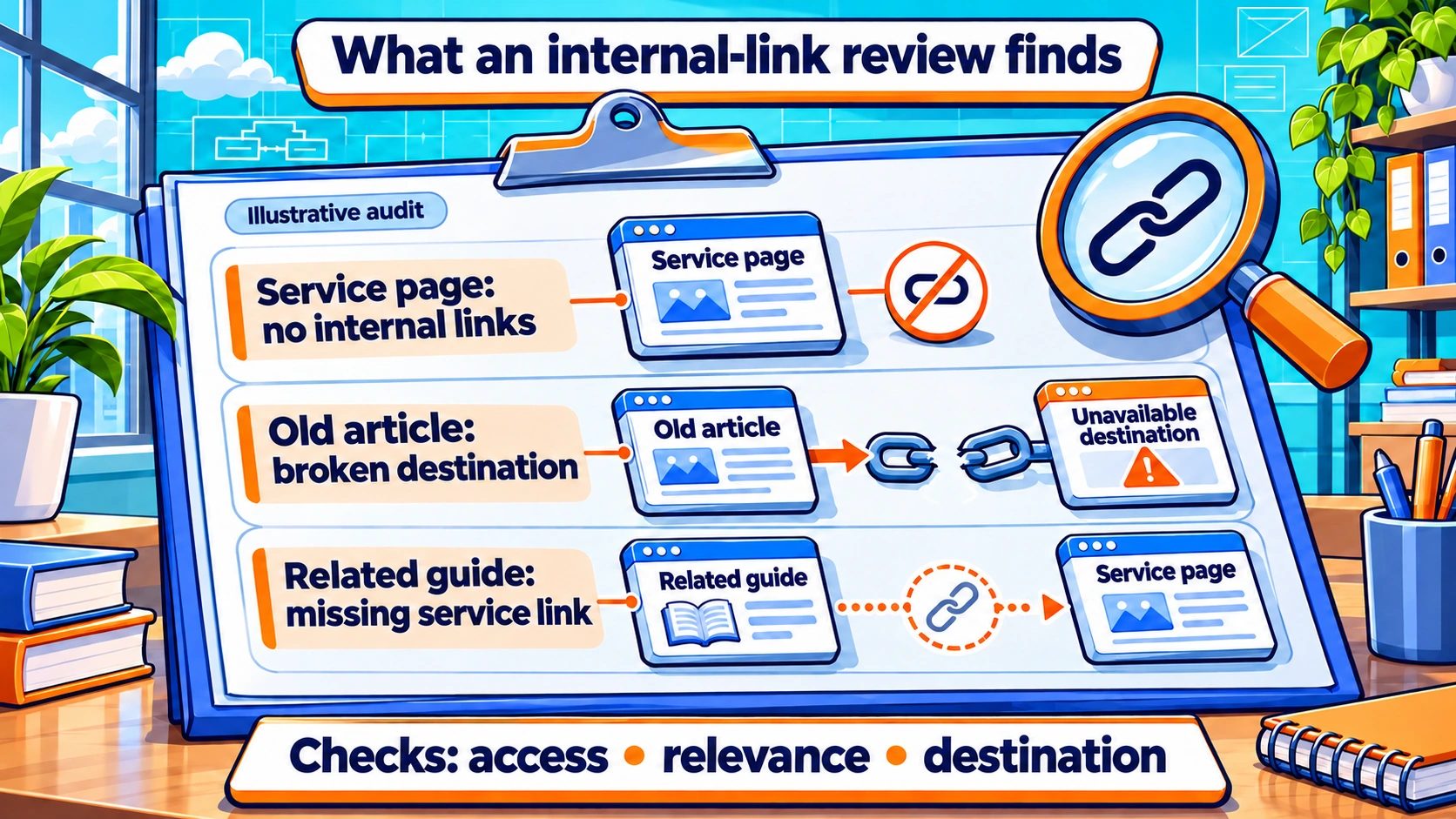
- Orphan pages: No crawlable internal links point to the page.
- Buried destinations: Important services require unnecessary steps to reach.
- Unrelated anchors: Link wording promises something the destination does not provide.
- Missed connections: Relevant articles discuss a service without linking to its page.
- Technical barriers: Links lead to errors or pages that cannot be indexed.
An orphan page may still be discovered through a sitemap or external backlink. Its isolation means the website itself provides no internal connection to it. A broader SEO audit checklist helps separate linking problems from content and indexing issues.
Why fixed link targets mislead
Google does not require three contextual links per service page or a universal three-click limit. A small site may place every service in its main menu. A large retailer needs categories, filters and deeper product structures.
The practical test concerns access and relevance: customers should reach important destinations without unnecessary effort, and related pages should connect where appropriate.
A page with one relevant internal link is not automatically weak. A page with fifty unrelated links is not automatically strong.
How to Improve Link Distribution
An audit becomes valuable when each finding leads to a specific change. Additional links belong where they improve the connection between pages.
Relevant links from established content
Pages that already attract visits or backlinks deserve an editorial review. Their content may raise questions answered by a service page.
For example, a renovation guide discussing electrical safety could reference the company’s electrical services where the text explains the work involved. An unrelated paragraph about paint colours would provide poor context.
A small business can begin with five important commercial pages and their closest supporting articles. That is a manageable starting scope, not a ranking requirement.
Topic hubs and supporting articles
A topic hub introduces a broad subject and connects readers to detailed articles. An accounting business might organise its content around:
- A business accounting overview.
- Payroll records.
- GST responsibilities.
- Year-end preparation.
- Relevant accounting services.
Each supporting article should answer a distinct question. Links back to the overview help readers see the wider subject, while service links belong where commercial support becomes relevant.
A hub cannot compensate for repeated or shallow articles. Each page needs a separate purpose within the business’s SEO basics.
Broken links and redirects
A broken internal link sends visitors to an unavailable destination. The appropriate response depends on what happened to the content.
A moved page may need a permanent redirect. A deleted page without a close replacement may correctly return an error response.
Google treats permanent redirects as signals that the destination should become canonical. Internal links should point directly to the final relevant URL, avoiding unnecessary redirect chains.
Unrelated homepage redirects can frustrate visitors who expected specific information. A documented website relaunch SEO process helps preserve relevant destinations when addresses change.
Consistent preferred URLs
Duplicate addresses can represent the same content. Examples include tracking parameters and alternative versions of a page.
Google’s canonicalisation methods help indicate which address should represent those versions. Internal links should consistently use the preferred URL.
Canonical tags are signals, and Google can select another address. A canonical tag also cannot justify combining unrelated pages.
Which Link-Building Priorities Suit Singapore Businesses?
Singapore businesses need links that relate to their customers, services and evidence. A local address alone does not make a website a good source.
A relevant international industry publication may provide a stronger business opportunity than an unrelated Singapore directory. The following order keeps outreach tied to actual reasons for a reference.
First priority: existing references and memberships
Existing relationships provide a sensible place to begin:
- A publication mentions the company but omits a link to the source.
- A trade association offers an accurate member profile.
- A supplier lists authorised partners.
- An event page identifies a participating business.
- A research partner cites a joint project.
A link request should explain how the destination helps the publisher’s readers. The publisher retains the editorial decision.
An association membership may have value through networking and recognition. Its fee does not establish that the accompanying link will pass ranking credit.
Second priority: evidence worth citing
Original material gives publishers something specific to reference. A business might publish a documented survey, a technical explanation or a case study with permission.
A credible resource should identify:
- The source of its information.
- The collection date.
- The method used.
- Relevant limits.
- The person or organisation responsible.
A manufacturer’s measured product test gives an industry writer evidence to cite. A general article repeating familiar advice provides less reason for another site to reference it.
Third priority: targeted outreach
A relevant outreach message connects one resource with one editorial need. For example, an industry guide may contain an outdated explanation that a company’s documented research can help correct. The message should identify the issue and the supporting evidence.
Bulk requests for keyword-rich links rarely explain why readers need the destination. A small, researched contact list gives the team more room to assess relevance and respond properly.
Local search alongside link work
Local service businesses also need accurate profiles and location information. Google’s local ranking factors include relevance, distance and prominence; links are one source of information about prominence.
A complete Business Profile does not replace a well-organised website. Equally, more backlinks cannot change a customer’s distance from a business. A local SEO plan should connect accurate business details, relevant location pages and customer needs.
Link Practices That Can Waste Time or Create Risk
Link work becomes expensive when teams buy a metric or treat every unfamiliar reference as a threat.
Paid ranking links
Google’s link spam policies prohibit buying or selling links for ranking purposes. The policy also covers excessive exchanges and automated link creation.
Paid advertising and sponsorship can serve legitimate business purposes when links are appropriately qualified. A visible sponsorship label does not replace the link attribute in the page code.
A placement review should consider the real audience, expected referral visits, disclosure and editorial context. A seller’s promised authority score provides no ranking guarantee.
Link hoarding and excessive repetition
Relevant outbound references help readers verify facts. Removing them solely to retain “juice” weakens the article’s evidence.
Repeated internal links also need a purpose. A sentence containing several variations of the same keyword can become difficult to read.
A natural link belongs where the destination answers a question. Every possible mention does not need to become clickable.
Routine disavow uploads
A third-party “toxic” score does not establish that Google considers a link harmful. Google’s disavow criteria concern substantial artificial or spammy links associated with a manual action or a likely manual action. Most sites do not need the tool, and incorrect use can harm search performance.
An unexplained ranking decline needs investigation across indexing, content, demand and technical changes. A disavow file should not become the automatic response.
How to Measure Link Work
A reporting sheet should connect completed changes with the performance of their destinations. Link counts alone cannot show whether the business benefits.
The following measures answer different questions:
| Measure | What it helps assess |
| Working internal links | Whether implemented connections reach their destinations |
| Indexing status | Whether priority pages can appear in search |
| Impressions and clicks | Whether those pages receive search exposure and visits |
| Relevant query positions | Whether visibility changes for the intended searches |
| Referral visits | Whether external placements attract readers |
| Qualified enquiries or sales | Whether visits support business goals |
Google Search Console’s Performance report supports page and query analysis. Comparable date ranges help teams interpret changes, especially when demand varies through the year.
A record that supports interpretation
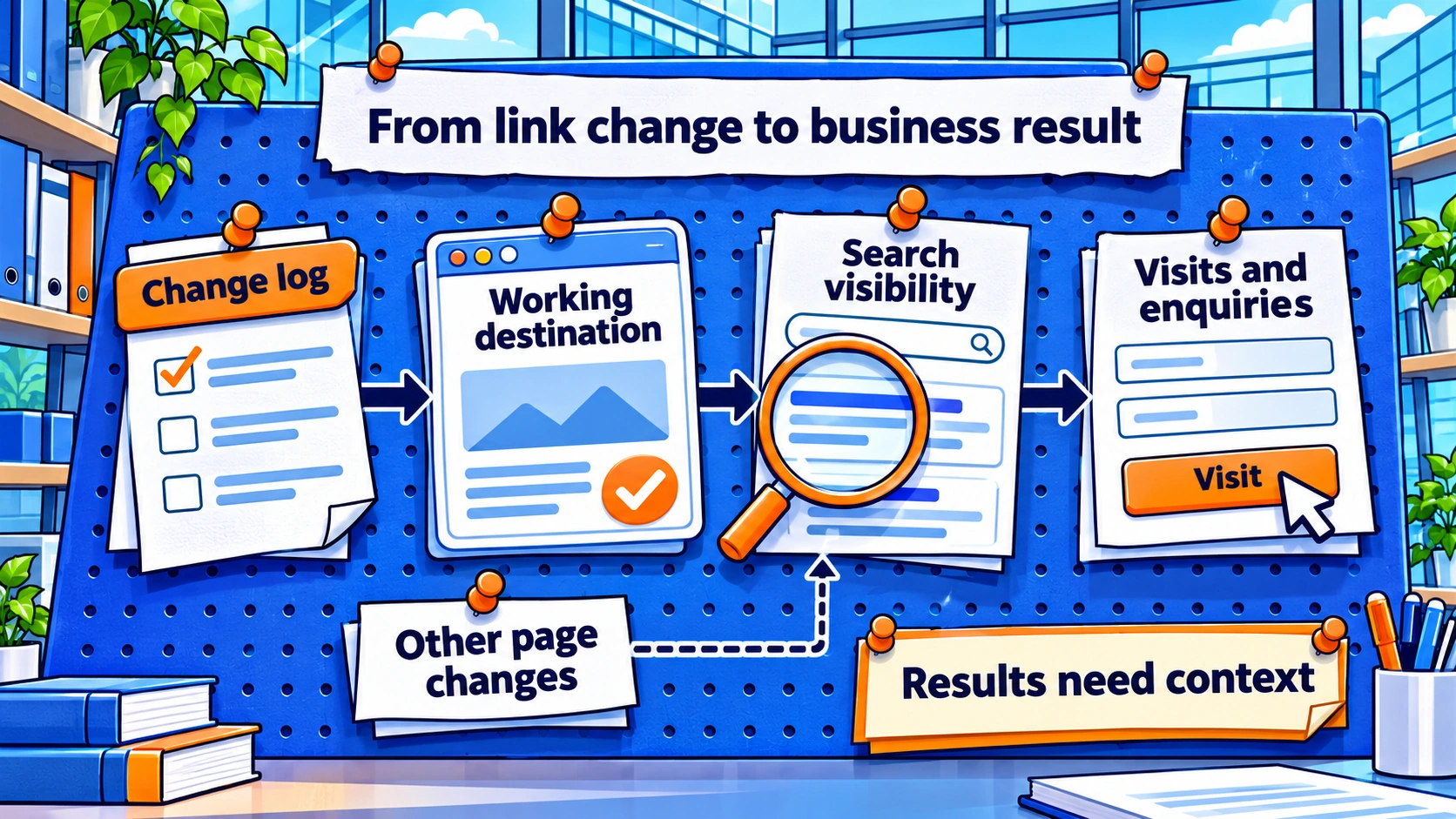
Each change needs a date, source URL, destination and reason. The record should also note other work affecting the same page.
A service page receiving new links may also receive revised copy or a new title. Any later improvement cannot automatically be credited to links alone.
A quarterly review suits strategic decisions, while technical errors deserve attention when found. Crawling and ranking updates do not follow a guaranteed timetable.
Put SEO Link Juice to Work on Relevant Pages
SEO link juice describes how links can support connected pages. The practical priorities are accessible destinations, relevant internal connections and external references earned through evidence. A business can assess progress through search visibility and customer actions without treating link equity as a measurable score.
At MediaOne, we connect SEO services with the pages and searches that support business goals. Our team can review your website’s links and identify where technical fixes, content changes or relevant outreach deserve attention. A consultation with us can help establish the next priorities for your Singapore business.
FAQs About SEO Link Juice
Does a .sg domain pass more link equity?
A .sg address does not establish how much ranking value a link passes. The source page still needs assessment for relevance, editorial purpose and audience. A relevant overseas publication can deserve attention alongside Singapore sources.
Can a PDF backlink help a website?
Google can discover links in documents, but a PDF link provides no guaranteed ranking outcome. A relevant report can also generate referral visits. The destination should remain available so readers can reach the cited evidence.
Should a business request exact-match anchor text?
A publisher should choose wording that describes the destination naturally. A business can correct an inaccurate description without demanding the same keyword phrase across placements. Repeated keyword-led requests can turn editorial outreach into an attempt to control ranking signals.
Should an old article keep a backlink after its content changes?
The original reference needs reassessment when the destination changes purpose. An article that once contained research should not become an unrelated sales page while retaining the same address. An archived research page or a closely relevant replacement can preserve the reference for readers.
Can link work guarantee inclusion in an AI answer?
Links cannot guarantee a citation in an AI answer. An accessible page with relevant evidence gives systems material they may reference, but citation choices vary. A service promising guaranteed inclusion should explain the basis of that claim before a business commits funds.