| AI Summary
Free SEO resources help Singapore SMEs check search visibility, find customer questions, spot website problems and measure enquiries. A weekly routine gives each tool a purpose. Google Search Console, Google Analytics 4 and PageSpeed Insights cover different measurement needs, while keyword tools and a crawler support research and repairs. Paid software becomes worth considering when a specific limit delays work or leaves important checks unfinished. |
Free SEO resources for Singapore SMEs include Google Search Console, Google Analytics 4, PageSpeed Insights, Google Keyword Planner, Google Trends and Screaming Frog’s free crawler. These tools cover search performance, visitor activity, keyword research and website checks. Paid upgrades are worth considering when free limits prevent required work or repeated manual tasks cost more than the subscription.
Key Takeaways
- A weekly routine connects search data with a website improvement and a follow-up check.
- Each tool answers a different question. Search clicks, website visits and enquiries need separate measures.
- Singapore location settings help prevent overseas search estimates from shaping local content decisions.
- Free-plan limits affect coverage. Crawl caps, reporting restrictions and estimated figures need attention before decisions.
- Paid software earns its place when it removes a documented constraint and the team can act on its findings.
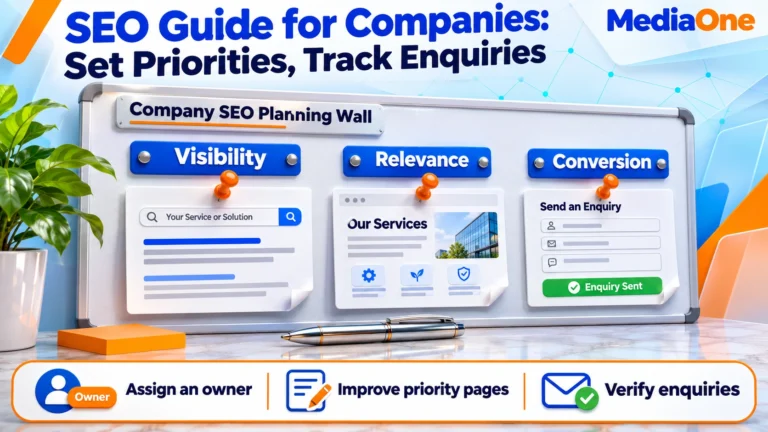
Free SEO resources give small businesses a way to begin improving their websites without buying several subscriptions. The challenge comes when reports pile up but nobody knows which finding deserves attention.
A Singapore tuition centre, café or home services company needs answers to practical questions: Can customers find the business? Does the right page appear? Can visitors complete an enquiry?
A manageable routine turns those questions into work. The following approach starts with a weekly check, then explains which tools support it, where their limits appear and when paying becomes reasonable.
A Free Weekly SEO Routine for Singapore SMEs
A regular appointment with your website is a practical starting point. The suggested schedule below takes about 90 minutes after setup; repairs or new content may need separate time.
| Weekly task | Suggested time | Resource | Recorded result |
| Search performance review | 20 minutes | Search Console | One page or query needing investigation |
| Enquiry check | 15 minutes | GA4 and enquiry records | Whether search visitors complete valuable actions |
| Website health check | 20 minutes | Search Console, PageSpeed Insights or a crawler | One confirmed issue |
| Page improvement | 25 minutes | Website editor and keyword research | One published change |
| Progress note | 10 minutes | Spreadsheet | Change date, owner and next review |
Search performance comes first
The Search Console review should begin with pages linked to business goals: service pages, product categories and booking pages. A comparison of the latest complete period with the previous period can reveal changes worth examining.
A seasonal business also needs a comparison with a similar trading period. December catering demand, for example, may behave differently from demand in an ordinary month.
The review should answer:
- Which important pages gained or lost clicks?
- Which customer searches showed those pages?
- Did the change affect Singapore traffic?
- Did a website edit, promotion or seasonal event coincide with it?
A single week can be noisy for a small site. A longer comparison period helps when daily activity is low.
One improvement keeps the routine manageable
The weekly task should address the strongest finding. An outdated service price, broken booking link or missing explanation may deserve attention before another blog post.
A short change log prevents repeated work. Each row can record the page, problem, edit, date and result to review. A practical SEO process connects those small actions across research, website repairs and measurement.
A tool collection has little value without an owner. One person should decide what happens next, even when another colleague handles the edit.
Which Free SEO Resources Cover Each Task?
Free resources include reporting tools, limited software plans and learning materials. Their roles overlap, but they do not produce interchangeable evidence.
| Resource | Main job | Main limitation |
| Google Search Console | Google search visibility and indexing checks | Incomplete query detail and reporting limits |
| Google Analytics 4 | Website visits and tracked actions | Results depend on implementation and collection settings |
| PageSpeed Insights | Page speed and user experience checks | Real-user data may be unavailable |
| Google Keyword Planner | Keyword ideas and demand estimates | Advertising context and account requirements |
| Google Trends | Relative interest and seasonality | Scores do not represent search counts |
| Ubersuggest free account | Additional keyword ideas and limited monitoring | Daily and project limits |
| Screaming Frog free version | Website crawling | Maximum of 500 URLs per crawl |
| Google Business Profile | Business information on Search and Maps | Eligibility rules and local ranking factors |
A small service website may need only part of this collection. A shop with changing stock may need more frequent website checks. A neighbourhood business may place greater weight on local SEO and accurate business information.
The tool choice should follow the task. A keyword subscription cannot repair a broken form, and a speed score cannot explain whether enquiries meet the business’s needs.
Google Search Console: Search Visibility and Indexing
Search Console provides first-party information about a verified website’s presence in Google Search. Its performance reports cover clicks, impressions, click-through rate and average position.
An impression records an appearance under Google’s reporting rules. A click records a visit from a search result. Click-through rate, or CTR, expresses clicks as a percentage of impressions.
A low click-through rate needs context
A low CTR does not automatically mean the title needs rewriting. Position, search intent, device and the surrounding results all influence clicks.
A service page appearing for a broad research query may attract few visitors because the searcher wants an explanation. A title change alone may leave that mismatch unresolved.
The investigation should consider:
- The query: Does the page answer what the searcher wants?
- The position: Is the result receiving attention near the top?
- The country: Does the traffic come from the market served?
- The page: Does its title accurately describe its content?
A comparison between similar queries or the same page over time is more informative than a universal CTR target.
Report limits affect the picture
Google’s Search Console reporting documentation explains that tables display a maximum of 1,000 rows and omit anonymised queries. Chart totals can therefore differ from the visible rows. A downloaded table should not be treated as a complete record of every search.
Country and page filters help narrow an investigation. They do not recover every hidden query.
The report also needs a decision before an edit. The following visual shows that reasoning without inventing traffic figures.

Google Analytics 4: Visits and Enquiries
GA4 answers a different question: what happens after someone reaches the website?
A search campaign may attract visitors without producing relevant enquiries. GA4 helps connect arrival pages with recorded actions, provided the tracking works.
Organic search needs the correct filter
GA4’s channel definitions distinguish traffic sources. The Session default channel group can identify Organic Search visits across recognised search engines. A google / organic filter narrows the review to Google organic traffic.
A basic review can focus on:
- Organic Search sessions.
- The pages where those sessions began.
- Recorded enquiry or purchase events.
- The quality of resulting enquiries in business records.
A click on a telephone number does not prove that a conversation happened. A form event also needs testing so failed submissions do not inflate results.
Tracking quality comes before interpretation
A team member should test the main enquiry process on a phone and computer. The website should confirm a successful submission, and the tracking setup should record the intended action once.
The monthly review can then compare website events with actual enquiries. Differences may reveal tracking faults, spam or missed follow-up.
More traffic is not automatically better traffic. A smaller number of relevant visits can be more valuable when those visitors request services the business provides.
PageSpeed Insights: Loading and Page Experience
PageSpeed Insights combines controlled test results with real-user information when enough data exists. Google’s PageSpeed Insights documentation explains that real-user results cover a previous 28-day collection period. A quiet or recently published page may lack enough observations.
The main experience measures describe:
| Measure | Everyday meaning |
| Largest Contentful Paint | How quickly the main content appears |
| Interaction to Next Paint | How quickly the page responds to interaction |
| Cumulative Layout Shift | How much visible content moves unexpectedly |
Important pages deserve attention first
The first test should cover a page that customers need, such as the main service or booking page. A template shared across many pages also deserves attention because one repair may help several URLs. Common tasks include resizing oversized images, removing unused scripts and reserving space for embedded content.
A developer should investigate the reported cause before removing a feature. A booking widget may slow a page while remaining essential to customers.
A score needs a business question
A higher test score does not guarantee more enquiries or a stronger ranking. The practical question is whether visitors can see the content, use the page and complete their task.
A broader technical SEO audit connects performance findings with access, indexing and website structure. Speed testing alone cannot cover those areas.
Free Keyword Research With Singapore Demand in Mind
Keyword research connects customer language with the pages a business needs. Singapore settings help keep estimates relevant, but local intent still requires judgement.
A term can have high search demand while attracting people who will never buy the service. The business’s coverage, audience and offer should guide the shortlist.
Google Keyword Planner estimates demand
Google’s Keyword Planner generates ideas and search estimates within Google Ads. Its account setup requirements include billing information for access to basic features. Account completion and campaign spending are separate considerations.
Singapore targeting should be checked before reviewing estimates. Language settings should reflect the intended audience.
The competition field concerns advertisers. It does not directly measure how difficult an organic ranking will be.
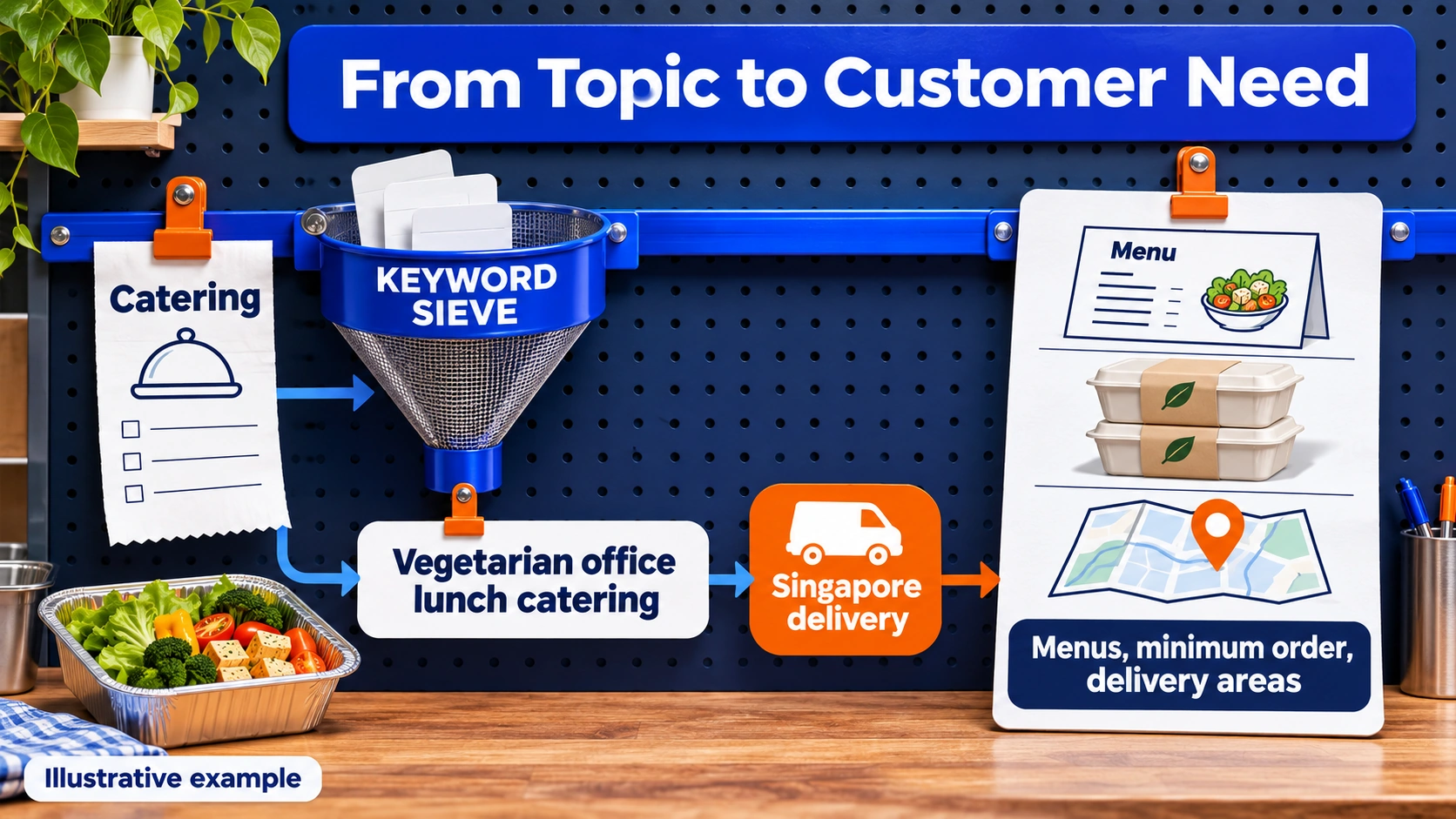
A catering company might compare “office lunch catering”, “corporate buffet catering” and “vegetarian catering Singapore”. Each phrase suggests a different requirement that the relevant page should address.
Google Trends reveals seasonal patterns
Google’s Trends data explanation describes relative interest scaled from 0 to 100. A score of 100 represents peak interest within the selected comparison; it does not mean 100 searches. Low-volume terms may display zero.
A Singapore retailer can compare interest across several years before planning seasonal content. A short spike should prompt investigation because news coverage or an unusual event may explain it.
Trends works best as supporting evidence. Customer questions and website data help explain what a pattern means for the business.
Ubersuggest adds ideas within daily limits
Ubersuggest can expand a starting phrase into related topics. Its free-account documentation lists three searches or reports daily, one project and one location. Its listed free rank tracking covers up to 25 keywords with weekly desktop updates. Plan terms can change.
A prepared list of starting terms helps conserve searches. Returned suggestions still need checks for location, customer intent and relevance.
A café selling breakfast should examine phrases connected to its menu and area. A nationwide “best cafés” topic may attract readers with little reason to visit.
Customer intent turns ideas into page topics
A manageable keyword research plan can record four items for each shortlisted phrase:
- The customer’s likely need.
- The service or product that answers it.
- The existing page that should appear.
- The missing information that page needs.
Specific long-tail keywords can reveal requirements such as dietary needs, delivery area or service type. Their value comes from relevance, not simply their length. The next visual follows one illustrative catering query from a broad topic to a service-page section.
Screaming Frog: Website Checks Within 500 URLs
Screaming Frog’s free SEO Spider crawls up to 500 URLs at a time. Its official product information distinguishes the free version from paid features and larger crawl capacity. The cap concerns URLs, so it should not be treated as a promise to check 500 distinct content pages.
Important errors come before tidy reports
The first crawl should support a short repair list. A long export of warnings can distract from problems customers encounter.
| Finding | First check | Possible response |
| Broken internal link | Does the destination still exist? | Correct the link |
| Deleted page | Is there a relevant replacement? | Redirect only when appropriate |
| Missing title | Does the page need search visibility? | Add an accurate title |
| Missing description | Does the page need a tailored summary? | Write a relevant description |
| Repeated redirect | Can the link reach the final page directly? | Update the source link |
A missing meta description does not automatically prevent ranking. A broken link to a booking page may deserve attention first.
Crawl coverage needs checking
A report that reaches the free cap may leave parts of the website unchecked. The team should establish what the crawler covered before calling the audit complete.
The repair also needs verification. A corrected link should open the intended destination, and a redirect should reach the relevant replacement.
An internal linking strategy can help connect related pages after broken links are repaired. Relevant links support readers who need more detail before enquiring.
Google Business Profile and Free SEO Learning
Google Business Profile deserves attention when an eligible business serves customers in person. Accurate hours, categories and contact details help customers understand the business before visiting or calling.
Google’s local ranking explanation identifies relevance, distance and prominence as main factors. Profile completeness supports the work, but a free listing cannot remove distance as a factor. A profile review can accompany the weekly routine when opening hours, services or contact details change.
Free learning resources also help teams interpret reports. Google’s SEO Starter Guide covers search fundamentals without requiring a software subscription. Its explanations can support decisions about titles, content and website organisation.
A learning session works best when attached to a current task. A team investigating missing pages can study indexing first, then apply the explanation to its own evidence.
When a Paid SEO Upgrade Is Worth It
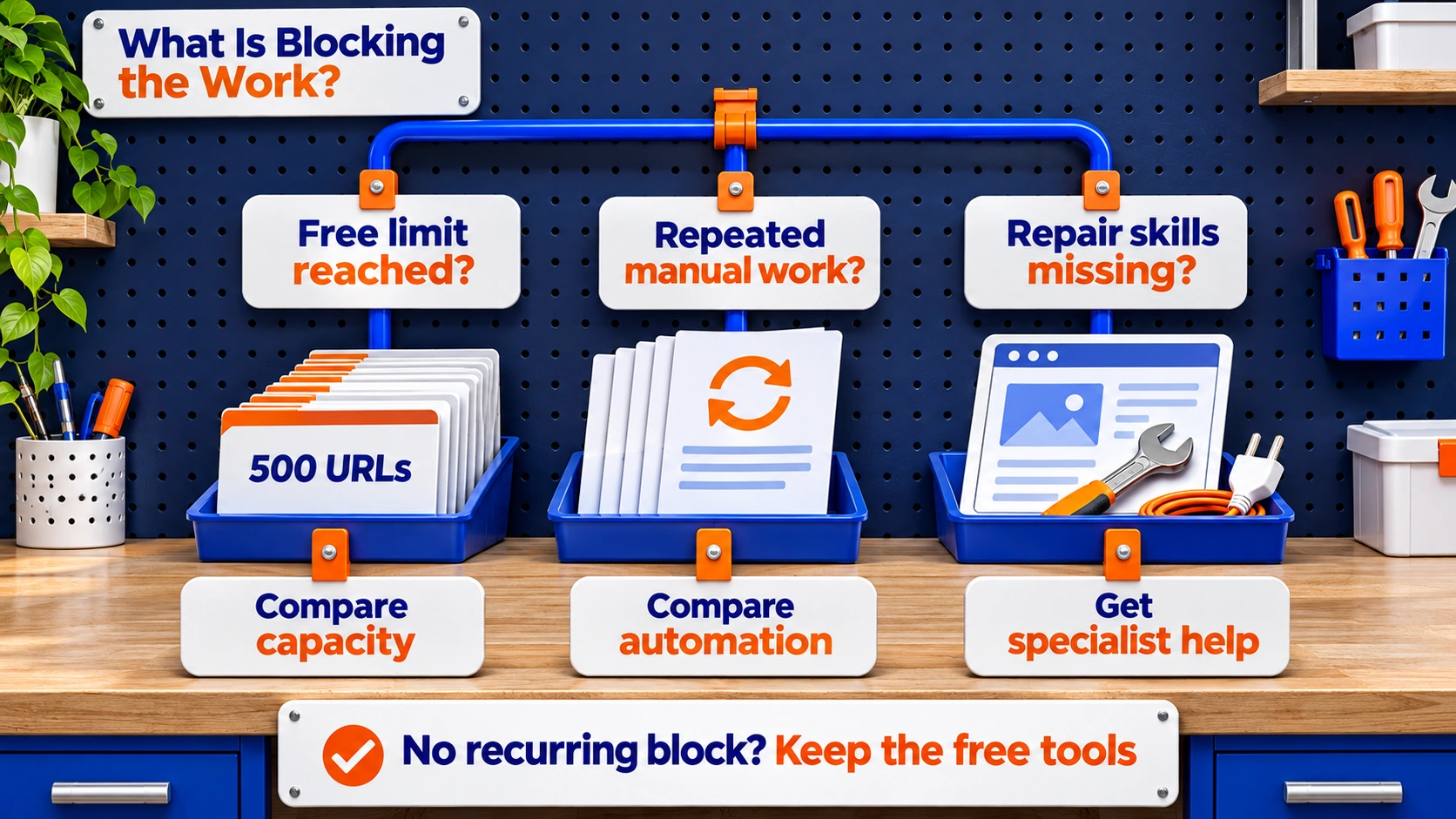
Paid software becomes reasonable when the free option blocks required work. Website age, company size and the number of reports available are weak reasons on their own.
A repeated constraint justifies comparison
The team should record the blocked task, how often it occurs and what it costs in time or incomplete coverage.
| Recurring need | Constraint to document | Paid feature to compare |
| Complete website crawl | Required URLs exceed free coverage | Larger crawl capacity |
| Frequent keyword monitoring | Free update frequency is insufficient | More frequent checks |
| Several markets | Free location allowance is insufficient | Additional locations |
| Repeat reporting | Manual preparation consumes staff time | Scheduled reporting |
| Advanced website diagnosis | Required checks are unavailable | Relevant technical features |
A trial should use a real task. A tool that produces more findings without helping the team resolve them may add work.
Time savings need a simple calculation
An illustrative calculation can help: four saved hours each month at an internal cost of S$30 per hour equal S$120 in staff time.
A S$90 monthly subscription would leave a S$30 difference before setup, training and review time. Those figures are examples, not market prices or promised savings. The calculation should also consider whether staff will use the recovered hours productively.
Expertise may be the missing resource
Some teams can already see the problem but cannot repair it. Others have enough data yet struggle to choose the right page or topic.
In those cases, development help, research support or content marketing support may address the constraint better than another subscription. The following visual separates software needs from delivery needs.
Make Free SEO Resources Part of Weekly Work
Free SEO resources support search checks, keyword research, website repairs and enquiry measurement. A weekly routine gives those findings a purpose, while a change log helps the team review what happened. Paid tools deserve consideration when a recurring limit prevents necessary work.
At MediaOne, we help businesses turn website findings into SEO priorities. Our SEO services can support teams that need help interpreting reports, improving pages and planning the next stage of work. A review of the current tools and unfinished tasks can establish where support would help.
Frequently Asked Questions
Can a business keep its SEO accounts when an employee leaves?
Company-controlled accounts should hold ownership wherever possible. Individual colleagues can receive access for their work. A departure checklist should cover permissions, recovery details and connected services so reporting does not depend on a former employee’s login.
Do bilingual websites need separate paid tools?
A paid subscription is not automatically necessary for bilingual content. Each language needs its own keyword research, page review and measurement. Translation alone may miss how customers phrase searches, so a fluent reviewer should assess the wording and intended meaning.
Should confidential customer information go into an SEO tool?
Customer names, private enquiry details and confidential business records should stay out of general keyword and website-checking tools. Anonymised examples can explain a customer need without exposing personal information. Access decisions should follow the business’s data-handling requirements.
Can a free browser extension replace a website audit?
A browser extension usually examines the page currently open. That can help during editing, but it provides a limited view of the website. Site-wide relationships, inaccessible pages and recurring template problems need broader investigation.
What should an SME keep when changing SEO software?
The business should retain permitted exports, its keyword list, change log and report definitions. A record of location settings, devices and comparison periods helps explain differences between old and new reports. Vendor estimates may differ even when the underlying website has not changed.