| AI Summary
SEO helps Singapore businesses appear when customers search for their services. The work covers keyword research, website access, page content, local listings, earned links and reporting. A manageable starting point is two important service pages. Progress depends on whether the website attracts relevant visitors and helps them become customers. |
SEO involves finding customer search terms, matching them to suitable pages, fixing website problems and answering buying questions. Local businesses also need accurate listings and genuine reviews. Search Console shows search performance, while analytics and enquiry records help connect website visits with bookings, qualified leads and sales.
Key Takeaways
- Related search phrases can share one page when they serve the same customer need.
- Indexing checks come before content promotion because excluded pages cannot appear in search.
- Local listings should reflect actual premises, opening hours and service areas.
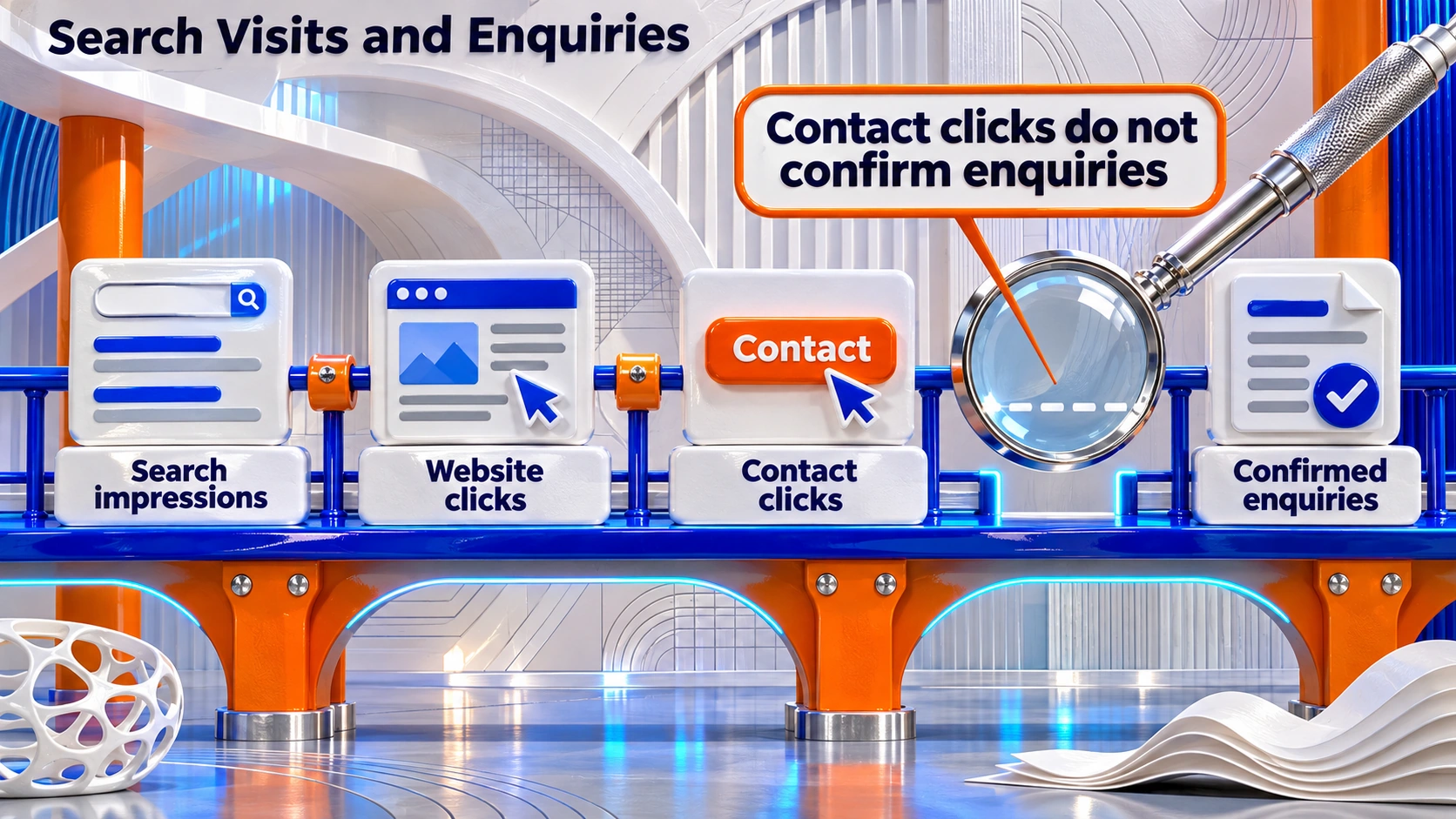
- Contact clicks show interest; confirmed enquiries provide stronger evidence of business results.
- A monthly review helps small teams choose which page or problem deserves attention next.
Learning how to do SEO starts with understanding what customers need before they contact a business. Someone searching for an aircon repair wants different information from someone researching how an air conditioner works.
A Singapore business needs pages that answer those different needs. The seven steps below turn that work into a routine, from choosing search terms to checking whether enquiries follow.
Your First 30 Days of SEO
A small team can begin with its main services. A complete website rewrite is rarely necessary before the first improvements.
| Week | Main task | Result to record |
| 1 | Establish a baseline and test tracking | Search clicks, confirmed enquiries and website faults |
| 2 | Collect customer questions and research phrases | A shortlist grouped by customer need |
| 3 | Check indexing and improve two service pages | Accessible pages with answers and contact options |
| 4 | Review listings and test the customer journey | Accurate business details and working forms |
The baseline should cover the same date range across tools. A quiet holiday week and a full trading month are poor comparisons.
A simple worksheet can hold the page URL, target customer, main search phrase, current problem, owner and completion date. That record keeps work moving when several people share the website.
Step 1: Research Keywords Customers Actually Use
Keyword research connects the language customers use with the services a business provides. Search volume helps estimate demand, but relevance determines whether that demand deserves attention.
Customer questions provide the starting list
Enquiry emails, call notes and WhatsApp messages often reveal the wording buyers use. A commercial kitchen cleaner might hear questions about grease removal, operating hours or cleaning certificates.
A starting list can include:
- Service searches, such as “commercial kitchen cleaning Singapore”.
- Problem searches, such as “aircon leaking water”.
- Buying questions, such as “aircon chemical wash price”.
- Location searches, such as “tuition centre Bishan”.
Customer records used for research should exclude personal details. The questions themselves provide enough information for topic planning.
Search results reveal the expected page
Keyword intent describes what a person wants to achieve through a search. The current results help reveal whether that person expects a guide, service page, product listing or comparison.
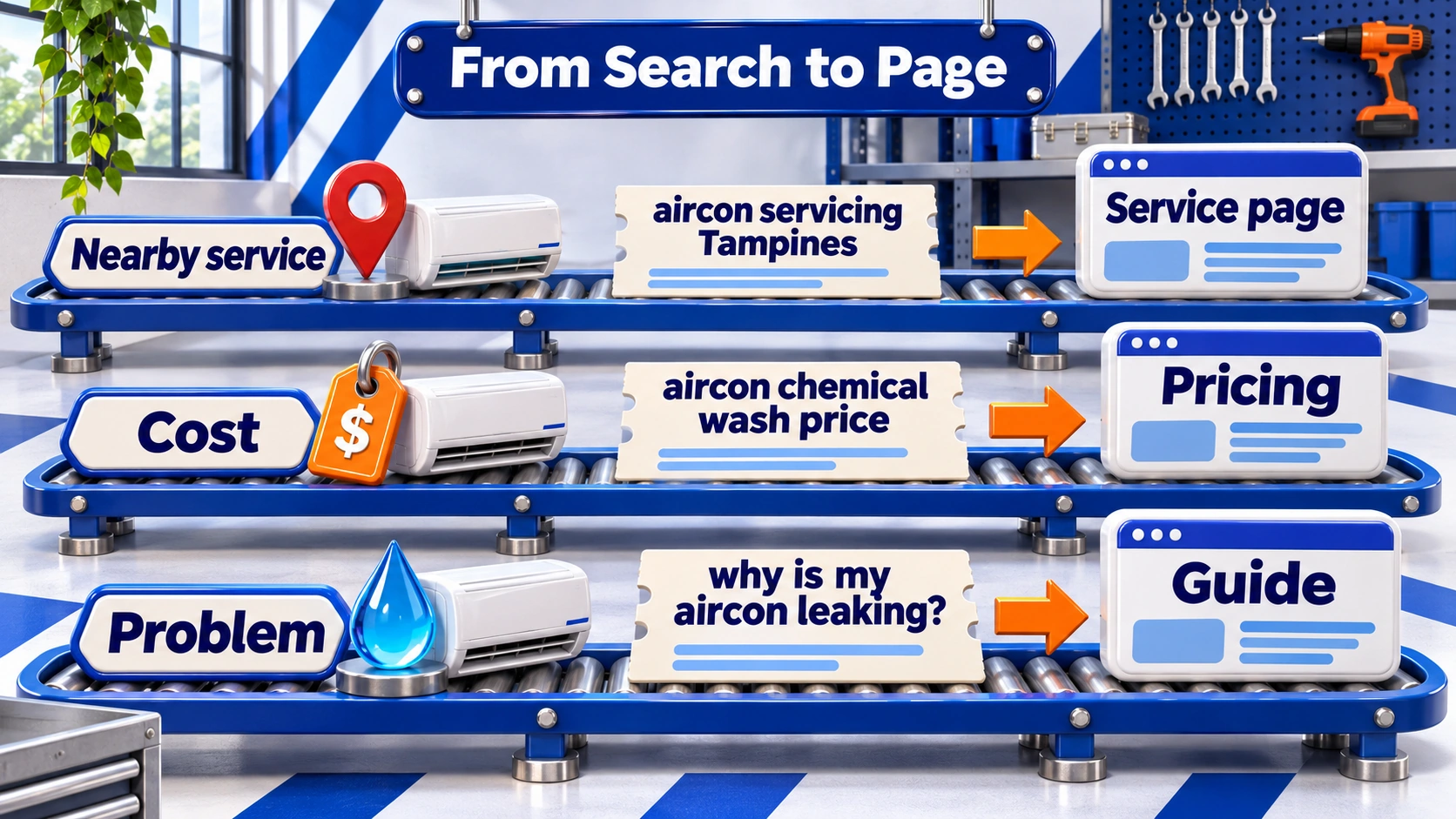
| Search phrase | Likely need | Suitable page |
| Aircon servicing Tampines | Find a nearby provider | Service or relevant location page |
| Aircon chemical wash price | Compare costs and inclusions | Pricing section or detailed pricing page |
| Why is my aircon leaking? | Understand a problem | Troubleshooting guide |
The same business can serve all three searches. Each page needs a different answer and next step.
Search results provide clues about intent, rather than a template to copy. A page should add information from the business’s own work.
Tools help check demand and competition
Search Console shows queries already generating impressions for an existing website. Google Autocomplete and related questions can expand the initial list. Keyword Planner can help explore demand with Singapore selected as the location.
Paid tools add estimates and competitor research, but their figures are not exact counts of future customers. A sound keyword analysis weighs demand alongside relevance, search intent and the business’s ability to provide a strong answer.
A short evaluation can cover four questions:
- Does the phrase describe something the business sells?
- Can the business answer the search better with specific evidence?
- Does the phrase support a buying decision?
- Does an existing page already serve this need?
Related phrases belong together
One page can cover “aircon servicing Tampines”, “Tampines aircon maintenance” and similar phrases when they describe the same service.
Separate pages for every wording variation create unnecessary work. A keyword map should assign groups of related searches to a page with one main purpose.
Neighbourhood names belong only where the business operates or serves customers. A page should never imply that an outlet exists when the business merely travels to that area.
Step 2: Check That Google Can Access Your Pages
Technical SEO helps search engines reach and process website content. A strong service page still needs to load, allow crawling and remain eligible for indexing.
Indexing checks identify the first obstacle
Search Console’s URL Inspection tool helps check individual pages. The Page indexing report gives a wider view of pages Google has included or excluded.
An excluded page does not automatically have poor content. Possible reasons include redirects, duplicate URLs, access problems or a deliberate instruction to exclude it.
The first checks are:
- The page loads without a login.
- The server returns a successful response.
- Important content appears on mobile.
- No accidental noindex instruction excludes the page.
- Internal links lead to the page.
- The preferred URL matches the version intended for search.
Google’s sitemap documentation explains how sitemaps help search engines discover URLs. Sitemap submission supports discovery but does not guarantee indexing.
Mobile checks should cover the whole task
Google uses the mobile version of website content for indexing. The mobile-first indexing requirements make content access across devices important.
A real phone test should cover more than the homepage. A customer needs to find the service, understand the offer and complete the contact process.
Typical faults include menus covering buttons, text disappearing on mobile, forms rejecting valid phone numbers and pop-ups blocking the page. These problems deserve attention before decorative changes.
Speed reports help prioritise repairs
Core Web Vitals measure loading, responsiveness and layout stability. Real visitor data and simulated tests answer different questions: visitor data shows recorded experience, while lab tests help investigate faults.
Practical repairs may include smaller images, fewer unnecessary scripts and reserved space for images or embeds. A developer should confirm which change addresses the reported problem.
A perfect test score is not the business goal. Customers need pages that respond promptly and let them complete their task.
Duplicate URLs and broken links need suitable fixes
A permanent redirect suits a page that has moved to a genuine replacement. Internal links should then point directly to that destination.
A canonical tag identifies the preferred version when similar URLs must remain available. It does not replace a redirect in every situation.
Broken pages without a relevant replacement can return 404 or 410. Redirecting every missing page to the homepage creates a confusing experience for visitors.
Step 3: Improve Page Content and Structure
Page content should help a visitor decide whether the business can solve their problem. Search terms provide context, but the answer earns the reader’s attention.
Titles and descriptions should describe the page
The title tag helps describe a page, although Google may generate different wording for its title link. A concise title should place the service or topic early and avoid repeated keywords.
An example is:
Aircon Servicing in Tampines | Example Company
Meta descriptions summarise the page and give a reason to visit. Google may use that description or generate a search snippet from page content. Fixed character counts cannot guarantee how either element will display.
A short URL such as /aircon-servicing-tampines/ is easy to understand. Existing URLs should change only when there is a reason and a redirect plan.
Headings should follow the customer’s questions
A main heading identifies the page topic. H2s divide major sections, while H3s organise details within them.
An aircon service page might cover:
- Services included.
- Prices and possible additional charges.
- Areas served.
- Appointment arrangements.
- Booking requirements.
Related phrases can appear naturally throughout the page. Exact keyword repetition in every heading makes the text harder to read.
Buying information should appear early
A visitor should quickly understand what the business offers, whom it serves and how to contact it. Important details should not depend on opening several other pages.
For example, “Aircon servicing available” leaves questions unanswered. A fuller explanation could state which units the service covers, what cleaning includes and which conditions require a separate quotation.
Specific information also prevents unsuitable enquiries. A company serving commercial premises should say so before a homeowner completes its form.
Internal links should explain the connection
Internal links connect related pages and help visitors explore information when they need more detail.
A troubleshooting guide can link to the relevant repair service. A service page can connect to pricing, booking terms or a genuine branch page.
Descriptive anchors explain the destination. “Aircon chemical wash prices” tells readers more than “click here”.
Images and structured data need accuracy
Original job photographs, process diagrams and product images can explain details that text alone cannot. Descriptive filenames and alt text help identify what each image shows.
Structured data labels information for machines. Google’s LocalBusiness documentation covers supported business details and eligibility requirements. Markup must reflect the page, and valid code does not guarantee a special search appearance.

Step 4: Maintain Your Local Business Presence
Local SEO helps nearby customers find and assess a business. An accurate profile supports that decision, but it cannot remove the role of location.
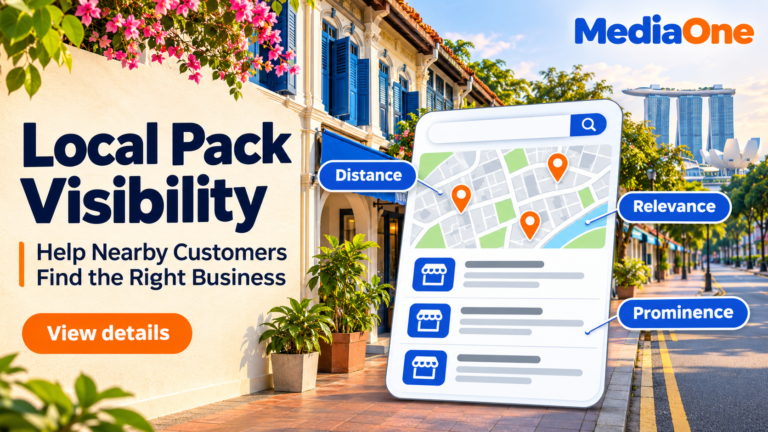
Google describes local ranking through relevance, distance and prominence. Complete information helps Google understand the business; no profile change guarantees first place across Singapore.
Business details should reflect real operations
An eligible Google Business Profile should use the business’s actual name, suitable categories, current hours and accurate contact details.
A storefront and a business visiting customers have different address requirements. Google’s service-area rules say businesses that do not serve customers at their address should remove that address from the public profile.
A routine profile review can cover:
- Public holiday opening hours.
- Phone and website links.
- Services and categories.
- Current photographs.
- Address or service-area changes.
Review requests should welcome honest feedback
A review request can follow a completed service or purchase. Customers should receive a direct route to leave their own account of the experience.
Google’s review policies prohibit incentives and selective requests for positive reviews. Discounts, gifts or pressure to change criticism can breach those rules.
Review replies should address the experience without sharing private customer details. A complaint involving personal information belongs in a private conversation.
Listings and location pages need real detail
Consistent business details reduce confusion across directories, social profiles and the website. Old phone numbers and former addresses deserve correction; minor punctuation differences are not the main concern. A practical local SEO plan also connects listings with relevant website pages.
Each genuine outlet can have its own page with hours, available services, transport information and contact details. A service-area page needs specific information about coverage or delivery arrangements, rather than a town name pasted into repeated text.
Step 5: Earn Relevant Links and Mentions
Links from other websites can help people discover a business and give search engines context. Their value depends on the source and purpose, so a backlink total alone says little.
Resources give publishers a reason to link
Businesses can contribute information that other people need to reference. Examples include:
- Original survey findings with a stated method.
- Maintenance checklists based on actual work.
- Technical explanations reviewed by a qualified team member.
- Local event resources created with community partners.
A resource needs substance beyond a sales pitch. Permission and privacy checks should happen before customer information or job photographs become public.
Outreach should connect with the recipient’s work
A relevant approach explains why a resource helps the publication’s audience. An editor covering food safety may welcome a practical kitchen maintenance checklist; an unrelated lifestyle pitch wastes their time.
A small outreach log can record the recipient, resource, date and response. No universal reply-rate benchmark determines whether the campaign succeeds.
Paid placements require proper treatment
Google’s spam policies cover links created to manipulate rankings. Paid advertising and sponsorship links need appropriate attributes, such as rel=”sponsored”. An ethical SEO approach avoids automated link networks and bulk exchanges.
Google’s disavow instructions describe a limited use case involving substantial problematic links and a manual action or likely manual action. Most websites do not need the tool. A low third-party link score alone is insufficient reason to use it.
Step 6: Show Who Stands Behind the Content
Trust grows when readers can identify the business, understand its claims and check supporting evidence. Qualifications, examples and policies should reflect actual practice.
Authors and evidence should be identifiable
Advice pages benefit from an author name, relevant role and appropriate review. A service page can demonstrate experience through original photographs, documented processes and specific explanations.
Google’s people-first content framework discusses experience, expertise, authoritativeness and trustworthiness. E-E-A-T is not a single ranking factor or a score earned by adding a biography.
Evidence should sit near the claim it supports. Original research needs a date range, method and sample size so readers can judge its limits.
Business policies should answer practical concerns
Customers need to know what happens after they enquire or pay. Relevant details may include:
- Contact and response arrangements.
- Cancellation or refund conditions.
- Service exclusions.
- Privacy practices.
- Complaint handling.
A published response time should match what the team can deliver.
AI search still depends on sound SEO
Google’s AI search documentation keeps established SEO practices relevant to its generative search features. Special AI files and repeated question headings do not guarantee inclusion.
A concise answer helps readers find information. Original examples, accessible pages and supporting evidence give that answer substance.
Step 7: Measure Enquiries and Improve Monthly
Reporting should connect search visibility with customer activity. Rankings show one part of that picture; enquiry quality and sales records explain more.
Tracking should separate interest from enquiries
Search Console reports search impressions, clicks, click-through rate and average position. GA4 records website activity.
Google Analytics uses key events to identify actions important to a business. A successful form submission can qualify, provided the event fires correctly and avoids duplicate counts.
A phone tap or WhatsApp click shows contact intent. It does not confirm that a conversation occurred. Booking records or a customer management system can help verify the outcome.
Tracking tests should include a successful submission, a rejected form and a repeat page visit. Personal information such as names, email addresses and message contents should stay out of analytics events.
Reports should lead to a specific check
| Pattern | Possible explanation | Next check |
| Impressions but few clicks | Weak relevance, search layout or title | Query results and page promise |
| Clicks but few enquiries | Missing information or contact friction | Page content, offer and forms |
| Little search visibility | Indexing issue, limited demand or weak relevance | Index status and target searches |
| Enquiries but few suitable leads | Audience or service mismatch | Search terms and qualification details |
A data-driven SEO routine uses these signals together. One metric rarely identifies the cause on its own.
Monthly reviews should focus on manageable changes
A monthly review can compare similar date ranges, check priority pages and choose one problem to address. Seasonal businesses should also compare the same period in the previous year when data allows.
The change log should record what changed, why, when and who completed it. Later reviews can check whether relevant clicks, confirmed enquiries or lead quality improved.
Urgent technical faults need immediate attention. Content changes need enough time and traffic for a reasonable assessment; a single quiet week proves little.
Turn SEO Work Into Better Customer Enquiries
SEO connects customer searches with pages that answer their needs. Relevant topics, accessible content, accurate local details and reliable tracking help a business identify what needs attention. A regular review keeps the work focused on customer questions and confirmed enquiries.
At MediaOne, we connect keyword research, website improvements and content through our SEO services. We can help assess your priority pages and plan the next improvements. A defined starting scope makes that conversation more productive, whether you need technical support, content work or an ongoing SEO programme.
Frequently Asked Questions
Does a business need to pay Google to appear in organic search?
Organic search inclusion does not require payment to Google. Website development, content and professional support can still involve costs. Google Ads is a separate paid advertising service, and advertising spend does not purchase organic rankings.
Does a Singapore business need a .sg domain?
A .sg domain is not required to reach Singapore customers. A .com website can serve the same audience. Domain choice should consider branding, ownership and future plans. A domain change needs careful planning because it affects URLs, redirects and monitoring.
Can SEO continue while a website is being redesigned?
SEO work can continue during a redesign. The project needs a record of existing URLs, important content and tracking settings before launch. Redirects, mobile content and indexing controls need checking when the new site goes live.
Should an English website add Chinese or Malay pages?
Additional languages can help when customers need them and the business can maintain accurate translations. Separate language URLs and appropriate language annotations support multilingual websites. A few translated keywords inserted into an English page do not provide the same experience.
What should a business request before hiring SEO support?
A proposal should identify the work, responsible people, reporting method and account ownership. An SEO consultant should explain proposed changes and their purpose. Business-controlled access to the website, Search Console and analytics helps preserve continuity if the working relationship ends.