
| AI Summary Brand marketing in Singapore focuses on building brand awareness, trust and customer loyalty through strategic positioning and consistent messaging. Businesses can use digital, traditional and experiential marketing channels based on their target audience and objectives. Effective strategies require market research, cultural awareness, clear brand identity and measurable performance indicators. |
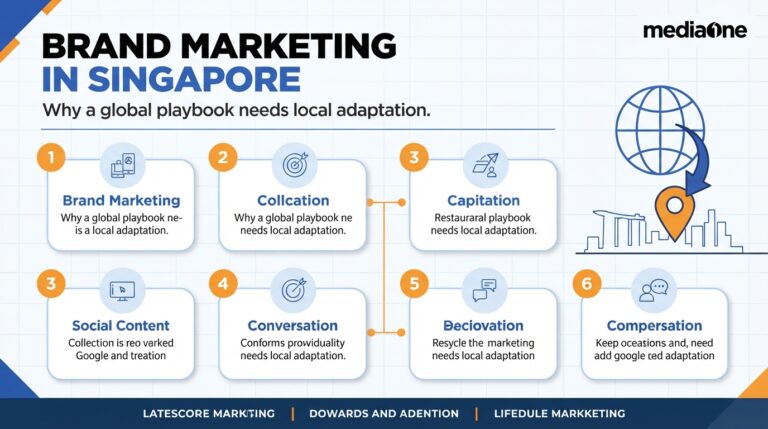
Effective brand marketing Singapore strategies help businesses build a distinct identity, strengthen their reputation and stand out in a competitive market. A successful approach combines clear brand positioning, consistent messaging and a strong understanding of local consumer behaviour.

Singapore’s multicultural audience also requires businesses to adapt their marketing strategies to different customer preferences. By choosing the right channels and delivering consistent brand experiences, businesses can build trust, strengthen customer loyalty and support long-term growth.
Key Takeaways
- Brand marketing builds long-term business value. It strengthens brand awareness, customer trust, reputation and loyalty through consistent messaging and positioning.
- Singapore’s multicultural market requires localisation. Successful brands adapt their messaging to local consumer behaviour, cultural preferences and audience needs.
- The right strategy depends on business goals. B2B, consumer, luxury, digital-first and purpose-driven approaches require different channels, budgets and positioning.
- Measuring brand performance is essential. Track brand awareness, customer perception, consideration and loyalty to evaluate results and refine campaigns.
How Brand Marketing Works in Singapore
Brand marketing operates through a structured process that builds brand strength over time:

1. Research & Strategy Development
Understanding the target audience, competitive landscape, and market dynamics is the foundation. Singapore’s diverse population (Chinese, Malay, Indian, and expatriate communities) requires brands to research cultural nuances, language preferences, and buying behaviors across segments. Market research identifies opportunities, threats, and the emotional drivers that resonate with Singaporean consumers.
2. Brand Identity Creation
A brand’s visual identity (logo, color palette, typography), verbal identity (tone, messaging, tagline), and values must reflect the target audience’s aspirations while differentiating from competitors. In Singapore’s competitive market, consistency across touchpoints (packaging, website, retail environment) reinforces recognition and trust.
3. Multi-Channel Campaign Execution
Singaporean consumers engage across digital platforms (social media, search engines, streaming services), traditional media (television, print, radio), and experiential channels (events, retail experiences). Effective brand marketing integrates these channels to create a cohesive message while respecting channel-specific audience behaviors.
4. Reputation & Relationship Management
Ongoing monitoring of brand sentiment across social media, review platforms, and news sources allows brands to respond quickly to feedback, manage crises, and maintain trust. Customer service, community engagement, and thought leadership reinforce the brand promise.
5. Performance Measurement & Optimization
Metrics such as brand awareness (aided and unaided recall), consideration, preference, and customer lifetime value track progress. Data from digital channels (website traffic, engagement rates, conversion rates) and market research provide insights for refinement.
Types of Brand Marketing Approaches in Singapore
1. Corporate / B2B Brand Marketing
Targets businesses and organizational decision-makers. Focus is on demonstrating expertise, reliability, and value proposition to businesses in banking, professional services, manufacturing, and technology sectors. Examples include thought leadership content, industry events, and relationship-based sales approaches.
Who it suits: Professional service firms, technology companies, industrial suppliers, and enterprise software providers.
Advantages: High customer lifetime value, long-term partnerships, credibility-driven decision-making.
Limitations: Longer sales cycles, smaller addressable audience, requires deep industry knowledge.
2. Consumer / B2C Brand Marketing
Targets individual consumers through emotional appeals, lifestyle positioning, and convenience. Brands in F&B, retail, automotive, and personal care frequently use this approach. Singapore’s affluent middle class and high digital adoption make integrated digital and retail strategies effective.
Who it suits: Consumer goods companies, restaurants, fashion brands, and lifestyle services.
Advantages: Larger addressable market, shorter sales cycles, multiple touchpoint opportunities.
Limitations: Higher customer acquisition costs, intense competition, requires continuous innovation.
3. Luxury Brand Marketing
Emphasizes exclusivity, heritage, craftsmanship, and prestige. Singapore’s high concentration of high-net-worth individuals makes it a key market for luxury goods. Strategy relies on selective distribution, curated experiences, and personalized service.
Who it suits: Luxury goods, premium automotive, high-end hospitality, and exclusive services.
Advantages: Higher margins, brand loyalty, premium pricing power.
Limitations: Smaller market size, high investment in brand experience, sensitive to economic cycles.
4. Digital-First Brand Marketing
Leverages social media, content marketing, influencer partnerships, and search engine visibility. Particularly effective in Singapore, where internet penetration exceeds 90% and consumers research products extensively online before purchase.
Who it suits: Technology startups, e-commerce platforms, digital services, and direct-to-consumer brands.
Advantages: Measurable ROI, rapid scaling, real-time audience feedback, lower barriers to entry.
Limitations: Attention span fragmentation, algorithm dependency, high content production demands.
5. Cause-Driven / Purpose-Driven Brand Marketing
Aligns the brand with social, environmental, or community values. Singaporean consumers, particularly younger demographics, increasingly prefer brands that demonstrate genuine commitment to sustainability, social responsibility, and community impact.
Who it suits: Sustainable businesses, social enterprises, corporate responsibility programs, and values-aligned brands.
Advantages: Attracts values-aligned customers, builds emotional loyalty, attracts talent.
Limitations: Requires authentic commitment (greenwashing damages trust), slower ROI, niche audience initially.
Comparison Table: Brand Marketing Approaches in Singapore
| Approach | Primary Audience | Best Channels | Typical Timeline to Impact | Typical Cost Level | Best Suited For |
| Corporate B2B | Business owners, executives, and decision-makers | LinkedIn, industry events, webinars, thought leadership | 6–18 months | High | Professional services, B2B technology, corporate services |
| Consumer B2C | Individual consumers | Social media, digital advertising, retail channels, television | 3–6 months | Medium to high | Retail, food and beverage, consumer goods, QSR brands |
| Luxury | Affluent and high-net-worth consumers | Premium publications, private events, experiential marketing, curated content | 12+ months | Very high | Luxury fashion, jewellery, hospitality, premium automotive |
| Digital-first | Digitally active consumers and online buyers | Search, social media, content marketing, paid media, influencers | 1–3 months | Medium | Startups, e-commerce businesses, technology brands |
| Purpose-driven | Consumers who prioritise social or environmental values | Social media, community programmes, partnerships, content marketing | 6–12 months | Medium | Sustainable brands, social enterprises, mission-led businesses |
How to Choose the Right Brand Marketing Approach for Your Business
Use this decision framework to identify the most appropriate strategy for your brand:
Step 1: Define Your Core Audience
Ask: Who are your primary customers? (e.g., working professionals aged 25–45, business owners, young families, luxury consumers)
- More targeted, niche audiences favor specialized approaches (luxury, B2B, purpose-driven)
- Broad consumer bases benefit from multi-channel integration
Step 2: Assess Your Budget & Resources
Ask: What is your annual marketing budget and in-house capability?
- Limited budgets: Start with digital-first and content-focused approaches; outsource selectively
- Mid-range budgets: Integrate digital with targeted traditional media; hire generalist in-house expertise
- Large budgets: Full-service agencies, integrated campaigns, market research, experiential activations
Step 3: Evaluate Market Position & Competitive Intensity
Ask: Are you a market leader, challenger, or new entrant? How differentiated is your offering?
- Leaders: Reinforce awareness and maintain preference through consistent messaging
- Challengers: Use digital-first and cause-driven approaches to create disruption and emotion
- New entrants: Combine digital (low cost, rapid reach) with niche positioning (luxury or purpose-driven)
Step 4: Understand Customer Behavior & Purchase Context
Ask: How much research, consideration time, and emotional involvement is involved in the purchase?
- High involvement (automotive, financial services, premium products): B2B/corporate and thought leadership
- Low involvement (packaged goods, QSR): Consumer B2C with mass reach
- Values-dependent (sustainable products, services): Purpose-driven
Step 5: Choose Primary & Supporting Channels
Ask: Where does your audience spend time and how do they prefer to engage?
Audience Segments and Recommended Marketing Channels in Singapore
| Audience Segment | Primary Channels | Supporting Channels |
| Working professionals | LinkedIn, YouTube, business podcasts | Email marketing, industry events, thought leadership articles |
| Young consumers (18–35) | Instagram, TikTok, YouTube | Influencer partnerships, user-generated content, WhatsApp |
| Affluent consumers (40+) | Premium publications, targeted digital ads, Facebook | Luxury events, exclusive experiences, brand partnerships |
| Business decision-makers | LinkedIn, industry publications, webinars | Email marketing, direct sales, client testimonials |
| Sustainability-conscious consumers | Instagram, TikTok, sustainability publications | Community partnerships, sustainability campaigns, educational content |
Step 6: Set Clear Objectives & Metrics
Ask: What do you want to achieve? (awareness, preference, trial, loyalty)
Define success metrics aligned with your approach:
- Awareness: Brand recall, reach, impression share
- Preference: Consideration, intent to purchase, net promoter score (NPS)
- Trial: Website visits, trial rates, app downloads
- Loyalty: Repeat purchase rate, customer lifetime value, advocacy
Brand Marketing Channels & Tactics in Singapore

Digital Channels
Social Media Platforms
- Instagram, TikTok, Facebook: Visual storytelling and community building
- LinkedIn: Professional networking and B2B thought leadership
- YouTube: Long-form video content and tutorials
- WhatsApp Business: Customer service and direct engagement
Search & Content
- Google Search: Capture high-intent customers actively searching for solutions
- Content marketing (blogs, articles, whitepapers): Establish expertise and attract organic traffic
- SEO: Build visibility in search results over time
Email & Direct Digital
- Email marketing: Nurture existing customers and re-engage lapsed audiences
- Paid social and search advertising: Targeted reach with measurable ROI
Traditional Channels
Media
- Television: Broad reach for mass market brands, though declining in younger segments
- Radio: Geographic targeting, morning commute reach
- Print (newspapers, magazines): Credibility and affluent audience targeting
Out-of-Home (OOH)
- Billboard, transit advertising, shopping mall displays: High-visibility brand presence
- Location-based: Reinforce local relevance
Events & Sponsorships
- Product launches, brand experiences, community events: Direct interaction and word-of-mouth
- Sports and cultural sponsorships: Association with values and communities
Experiential & Relationship
Retail & In-Store Experience
- Visual merchandising, product demonstrations, knowledgeable staff: Reinforce brand promise at point of sale
Events & Activations
- Pop-ups, roadshows, experiential marketing: Generate buzz and trial
Influencer & Ambassador Partnerships
- Micro-influencers (10K–100K followers): Niche, authentic engagement; cost-effective
- Macro-influencers (1M+ followers): Broad reach, higher cost
- Brand ambassadors: Long-term credibility and advocacy
Public Relations & Media Relations
- Press releases, media outreach, thought leadership: Build credibility and earned media
Practical Guide: Launching a Brand Marketing Initiative in Singapore
Phase 1: Discovery & Strategy (Weeks 1–4)
1. Conduct market research
- Identify target audience demographics, psychographics, and behaviors
- Map competitive landscape: positioning, messaging, channels, strengths, weaknesses
- Assess cultural nuances and language preferences (English, Mandarin, Malay, Tamil depending on segment)
2. Define brand strategy
- Articulate brand purpose, values, and unique positioning
- Develop brand personality and tone of voice
- Create core messaging framework and key supporting messages
3. Set objectives and KPIs
- Define what success looks like: awareness %, consideration %, purchase intent, NPS
- Identify measurement methodology and baseline data
Phase 2: Creative Development (Weeks 5–8)
1. Develop creative concepts
- Design visual identity if needed (logo, color, typography) or refresh existing identity
- Create campaign concepts, messaging, and creative assets (copy, visuals, video scripts)
- Develop channel-specific adaptations (Instagram stories, LinkedIn articles, TV spots)
2. Build core assets
- Website or landing pages: Optimize for mobile (essential in Singapore; mobile-first browsing dominates)
- Social media profiles and content calendar (4–8 weeks of content planning)
- Brand guidelines: Ensure consistency across all touchpoints
3. Obtain internal alignment
- Present strategy and creative to stakeholders for feedback
- Refine based on input; document approvals
Phase 3: Campaign Launch (Weeks 9–12)
1. Execute across channels
- Schedule and publish content on social media, website, blog
- Launch paid advertising (Google Ads, social media ads) with budget allocation
- Coordinate media placements (TV, radio, print if included)
- Brief sales team and retail staff on campaign messaging
2. Monitor and optimize
- Track daily performance metrics (impressions, clicks, engagement, conversions)
- Adjust ad spend and creative based on early performance data
- Respond to customer comments and inquiries on social media
3. Generate PR and amplification
- Distribute press release to media
- Pitch stories to journalists and bloggers
- Encourage employee and customer sharing (organic amplification)
Phase 4: Measurement & Refinement (Ongoing)

1. Analyze performance data
- Compare results against KPIs: Did we achieve awareness, preference, and trial targets?
- Conduct post-campaign brand research: Track changes in awareness, perception, consideration
2. Gather qualitative feedback
- Review customer comments, reviews, and sentiment across social media and review platforms
- Conduct focus groups or surveys to understand customer perception shifts
3. Document learnings and optimize
- Identify what worked and what didn’t
- Refine messaging, creative, and channel mix for next campaign phase
- Plan ongoing brand maintenance and nurture activities
Troubleshooting: Common Brand Marketing Challenges in Singapore
Common Brand Marketing Challenges and Recommended Solutions
| Common Challenge | Why It Happens | Recommended Action |
| Low brand awareness despite high ad spend | Unclear positioning, ineffective creative messaging, or fragmented marketing channels | Review brand positioning and audience targeting. Focus on relevant channels and test creative variations before increasing budgets. |
| Strong awareness but low purchase intent | Weak value proposition, limited differentiation, or failure to address customer needs | Clarify unique benefits and competitive advantages. Use customer feedback to identify purchase barriers and refine messaging. |
| High social media engagement but low conversions | Content attracts attention without driving action. Calls to action may be unclear or poorly aligned with audience intent. | Add clear calls to action. Align content with product benefits and track website visits, enquiries, and conversions. |
| Difficulty reaching the target audience | Broad targeting, unsuitable channels, or inadequate audience segmentation | Refine customer profiles and test specific audience segments. Prioritise channels generating qualified leads and conversions. |
| Negative sentiment or social media crisis | Product issues, poor customer experiences, inappropriate messaging, or delayed responses | Address concerns promptly and transparently. Resolve underlying issues, monitor sentiment, and establish a crisis communication plan. |
| Campaign messaging fails to resonate in Singapore | Cultural differences, unsuitable language, or messaging that overlooks local consumer preferences | Review cultural relevance and localise campaign messaging. Test content with Singapore audiences before launching. |
| High customer acquisition cost and low customer lifetime value | Inefficient targeting, poor customer retention, or weak post-purchase experiences | Improve targeting and customer onboarding. Strengthen retention campaigns, loyalty initiatives, and repeat-purchase strategies. |
| Unclear analytics and campaign attribution | Inconsistent tracking, disconnected platforms, or missing performance benchmarks | Standardise tracking with Google Analytics 4 and UTM parameters. Configure conversion events and establish baseline metrics before launching campaigns. |
Standards & Accreditations in Singapore Brand Marketing
Singapore’s advertising and brand marketing industry operates under several regulatory and industry standards:
Advertising and Brand Marketing Regulations in Singapore
| Standard / Regulatory Body | Jurisdiction | What It Means for Brands |
| Singapore Code of Advertising Practice (SCAP) | Singapore | Advertising must be legal, decent, honest and truthful. Brands should substantiate claims, avoid misleading promotions and follow applicable advertising guidelines. |
| Advertising Standards Authority of Singapore (ASAS) | Singapore | Oversees advertising industry self-regulation under SCAP. Handles complaints and may require advertisers to amend or withdraw advertisements that breach the code. |
| ASEAN Guidelines on Consumer Protection in E-Commerce | ASEAN | Provides non-binding guidance on consumer protection in digital commerce. Brands running regional campaigns should also comply with each country’s applicable laws. |
| Personal Data Protection Act (PDPA) | Singapore | Regulates the collection, use and disclosure of personal data. Brands must establish a valid basis for data processing and comply with applicable marketing consent and Do Not Call requirements. |
| Consumer Protection (Fair Trading) Act (CPFTA) | Singapore | Protects consumers against misleading claims, false representations and unfair trade practices. Brands should ensure that advertisements, promotions and pricing information are accurate. |
| Competition Act | Singapore | Prohibits anti-competitive practices such as price-fixing, bid-rigging and market sharing. Brands must avoid unlawful coordination with competitors. |
| Trade Marks Act | Singapore | Provides legal protection for registered trademarks. Businesses should consider registering eligible brand names, logos and other distinctive marks with the Intellectual Property Office of Singapore. |
| Infocomm Media Development Authority (IMDA) Regulations | Singapore | Regulates relevant broadcasting and media activities. Television and radio advertisements must comply with applicable advertising, sponsorship and content standards. |
Building a Strong Brand in Singapore
Successful brand marketing in Singapore starts with clear positioning and a strong understanding of your target audience. Consistent messaging, culturally relevant campaigns and positive customer experiences help build lasting recognition and trust.
The right approach depends on your business goals, budget and market position. We recommend combining suitable marketing channels with measurable objectives. Regular performance reviews help refine your strategy and strengthen customer loyalty.
At MediaOne, we help Singapore businesses build stronger brand visibility through data-driven digital marketing strategies. Contact us to discuss a brand marketing strategy tailored to your business goals.
Frequently Asked Questions
What is the typical budget for brand marketing in Singapore?
Brand marketing budgets depend on business size, industry and objectives. Startups may budget SGD 10,000–50,000 annually, while established businesses may spend significantly more. We recommend setting a budget based on your target audience, marketing channels and growth goals. Review spending regularly against measurable results.
How long does it take to build brand awareness in Singapore?
Brand awareness campaigns may show measurable progress within three to six months. Building strong recognition and customer preference often takes a year or longer. Results depend on your budget, target audience and campaign consistency. We recommend tracking brand recall and customer perception from the start.
Is Singapore’s multicultural population a challenge or opportunity for brand marketing?
Singapore’s multicultural population creates opportunities for brands to reach diverse audiences. Consumer preferences, languages and cultural traditions can influence purchasing decisions. Brands should adapt their messaging to relevant audience segments. Campaigns aligned with local celebrations can also strengthen customer engagement.
What role do influencers play in Singapore brand marketing?
Influencers help brands reach specific audiences and build credibility. Micro-influencers often suit niche campaigns, while larger creators can provide broader exposure. Instagram, TikTok and YouTube are common platforms for influencer partnerships. We recommend prioritising audience relevance and engagement quality over follower counts.
How do I measure brand marketing success?
Measure success using metrics aligned with your campaign objectives. Brand awareness, recall and reach indicate visibility. Customer consideration, purchase intent and sentiment help assess brand perception. We recommend tracking repeat purchases and customer lifetime value to evaluate long-term performance.
Should I invest in traditional media or focus on digital in Singapore?
Your choice depends on your audience, budget and marketing objectives. Digital channels offer targeted advertising and measurable engagement. Traditional media, including television, radio and outdoor advertising, can support broader brand exposure. We recommend prioritising channels that consistently reach your intended customers.
What is the difference between brand marketing and performance marketing?
Brand marketing builds awareness, trust and long-term customer preference. Performance marketing focuses on measurable actions such as purchases, enquiries and registrations. Brand campaigns typically require longer evaluation periods, while performance campaigns provide faster conversion data. We recommend combining both approaches to support customer acquisition and retention.
How do I avoid greenwashing or inauthentic cause-driven marketing?
Align sustainability claims with genuine business practices and measurable results. Avoid exaggerated environmental benefits or unsupported promises. Singapore’s competition and consumer protection guidelines emphasise accurate and substantiated claims. We recommend publishing evidence of your initiatives and reporting progress transparently.
Platform selection depends on your target audience and business objectives. Instagram, Facebook and TikTok support consumer engagement and brand visibility. LinkedIn suits B2B marketing, while YouTube supports educational content and video storytelling. We recommend focusing on platforms where your customers are most active.
What is a common misconception about brand marketing in Singapore?
A common misconception is that brand marketing involves advertising alone. It also includes market research, brand positioning, reputation management and customer experience. Effective branding requires consistency across every customer interaction. Strong advertising cannot compensate for poor products or customer service.
How do cultural celebrations affect brand marketing planning in Singapore?
Cultural celebrations create seasonal marketing opportunities for Singapore businesses. Chinese New Year, Hari Raya, Deepavali and Christmas can influence consumer demand and purchasing behaviour. Brands should plan campaigns around relevant audiences and seasonal preferences. We recommend preparing promotions early and ensuring culturally appropriate messaging.
How important is brand registration and intellectual property protection in Singapore?
Trademark registration helps protect your brand identity against unauthorised use. The Intellectual Property Office of Singapore (IPOS) offers registration starting at SGD 280 per class for eligible applications. Registered trademarks receive ten years of protection, with renewal available. We recommend checking trademark availability before investing heavily in branding.