Consumers are now sceptical of traditional marketing. Brands increasingly turn to influencer marketing to drive action. What makes influencer marketing so successful?

The answer lies in psychology. Influencers tap into deep emotions (feelings like excitement, admiration, or desire), social dynamics (how people interact and influence each other), and trust (the belief that influencers are sincere and reliable).
Traditional ads can’t replicate these effects. When an influencer promotes a product, they do more than share a brand message. They transfer their credibility, relatability, and authority to the brand. This process, called trust transfer, is why some campaigns go viral, and others flop.
In this article, we’ll explore the psychology behind influencer marketing strategies, uncover the triggers that drive campaign success, and explain why understanding human behaviour is crucial to building campaigns that truly resonate with audiences.
If you want to take your influencer campaigns further, consider working with an expert influencer marketing agency in Singapore. They can help you create data-driven strategies that achieve lasting impact.
Key Takeaways
- Influencer marketing succeeds because it taps into the psychological mechanisms of trust, authority, and emotional resonance. Campaigns that align with human behaviour build stronger connections and drive higher conversions than traditional advertising.
- Influencers who maintain authenticity and relevance within their niche can build trust with the brands they promote. The most successful influencer marketing strategies align the influencer’s authority with the brand’s values and target audience.
- Micro-influencers often engage more effectively than macro-influencers. They build closer relationships with their audience. Brands should focus on high-quality interactions rather than large follower counts to boost conversion potential.
What is Influencer Marketing?

Influencer marketing is when brands work with trusted individuals who have earned credibility and attention in a defined community. Instead of traditional ads, brands partner with influencers to reach their audiences. Influencers share brand messages with their followers in a more relatable and persuasive way.
The power of influencer marketing lies in trust transfer, meaning the influencer’s credibility and reliability are perceived as transferring to the brand. This transfer, a psychological process, is more important than achieving a wide reach alone.
At its core, influencer marketing is built on three foundational elements:
- Trust: Audiences follow influencers, recognised individuals with credibility and sway within a community, because they value their opinions, expertise, or lifestyle.
- Authority or Relatability: Influencers are seen as either experts or relatable peers. Their audience identifies with them.
- Community Influence: Engagement within a niche community amplifies persuasion beyond simple visibility.
Unlike celebrity endorsements of the past, modern influencer marketing strategies are data-driven and platform-specific.
Brands now work with micro, macro, or niche influencers across platforms such as Instagram, TikTok, YouTube, and LinkedIn, tailoring content formats to each platform’s native behaviour.
The objective may range from awareness and brand positioning to lead generation and direct conversions.
When done well, influencer marketing does more than generate impressions. It shapes perception, accelerates purchase intent, and integrates seamlessly into digital marketing ecosystems alongside paid media and performance campaigns.
The Core Psychological Triggers Behind Successful Influencer Marketing Strategies
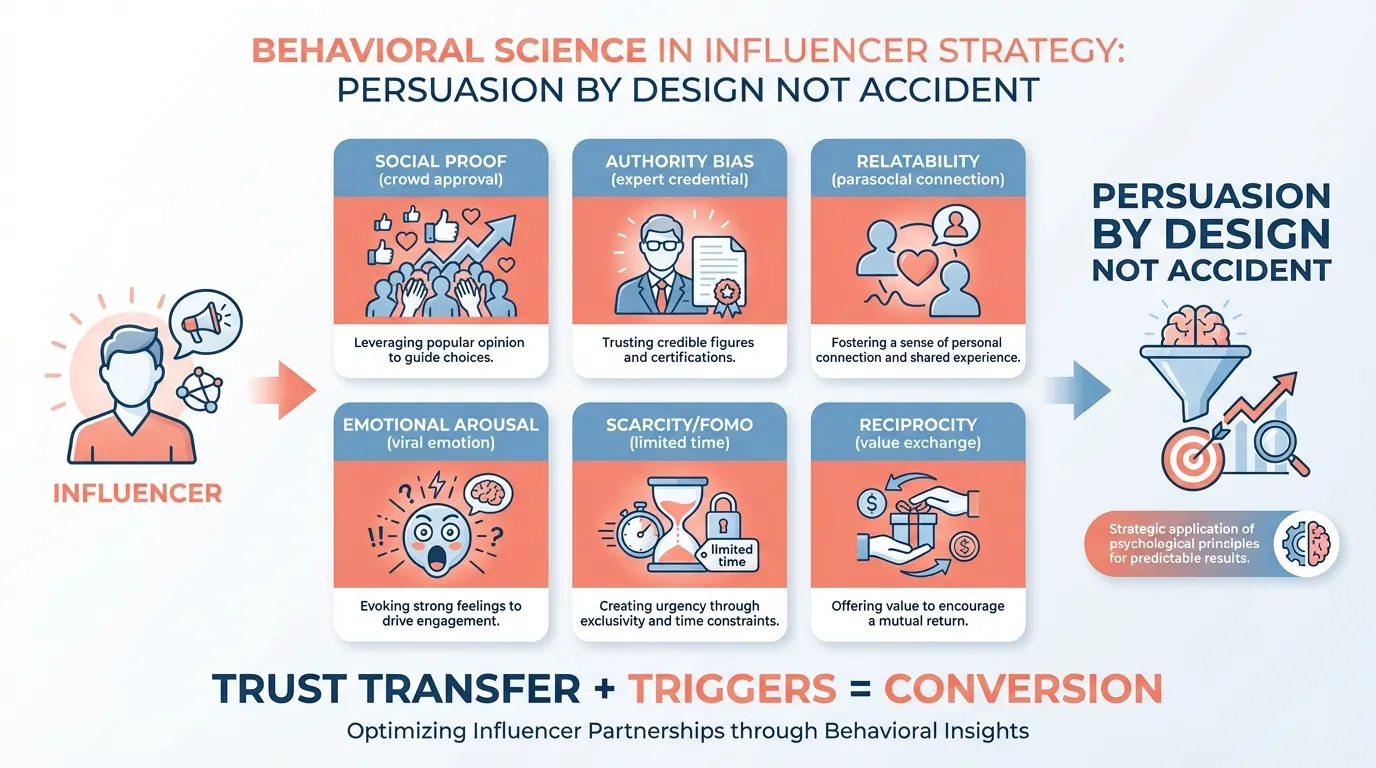
Influencer marketing works because it taps into patterns in human behaviour. It is not just about large followings. The best strategies use psychological triggers that shape attention, trust, and decisions. These triggers are more important than follower counts or creative aesthetics.
Campaigns go viral or drive conversions by activating certain cognitive biases. Knowing these triggers helps brands design influencer collaborations that persuade by design, not by accident.
- Social Proof and Herd Behaviour: People look to others to see what is safe, valuable, or desirable. High engagement, positive comments, or repeated mentions signal collective approval. This lowers risk and speeds up trust. Strong influencer strategies boost engagement signals like comments, shares, and conversations. These show that others trust the brand. When endorsements look natural, the herd effect gets even stronger.
- Authority Bias: People trust recommendations from those seen as knowledgeable or credible in a field. Authority often comes from niche expertise, not just celebrity. A fitness coach recommending supplements or a tech reviewer endorsing software carries more persuasive weight than a general lifestyle influencer. Aligning product relevance with influencer authority increases conversions. The endorsement feels more informed than promotional. When expertise matches the product, trust transfer is much stronger.
- Relatability and Identity Alignment: Consumers are drawn to people they identify with. Influencers who mirror their audience’s lifestyle, aspirations, or challenges create a sense of familiarity and emotional closeness, a phenomenon known as a parasocial relationship. This perceived relationship lowers resistance to recommendations. Effective strategies match the audience’s identity to the influencer’s persona. Choosing the right partner is key. When followers feel, “this person is like me,” the influencer’s product choices seem more authentic and less like ads.
- Emotional Arousal: Content that triggers emotion, whether humour, inspiration, awe, or even mild controversy, is more likely to be shared. Emotional intensity increases memorability and engagement, which drives algorithm amplification on social platforms. Viral campaigns stir strong emotions, not just describe features. Influencer strategies that use storytelling and emotion work better than simple product posts.
- Scarcity and FOMO (Fear of Missing Out): Scarcity increases perceived value. Limited-time discounts, exclusive drops, or early-access codes create urgency, accelerating decision-making. When influencers frame an offer as exclusive to their audience, it strengthens a sense of belonging within their community. Adding scarcity to influencer strategies spikes conversions for a short time. It also builds the influencer’s role as a key access point. Urgency plus trust pushes audiences to act.
- Reciprocity: When influencers give real value, like tips or honest reviews, people want to give back. This can lead to engagement, brand consideration, or purchase. The most sustainable influencer marketing strategies avoid purely promotional messaging and instead prioritise value-driven content. When followers feel helped rather than sold to, persuasion becomes natural.
Follower count is about visibility. Psychological triggers drive action. Brands that use these triggers create influencer strategies that feel organic and persuasive, not forced ads.
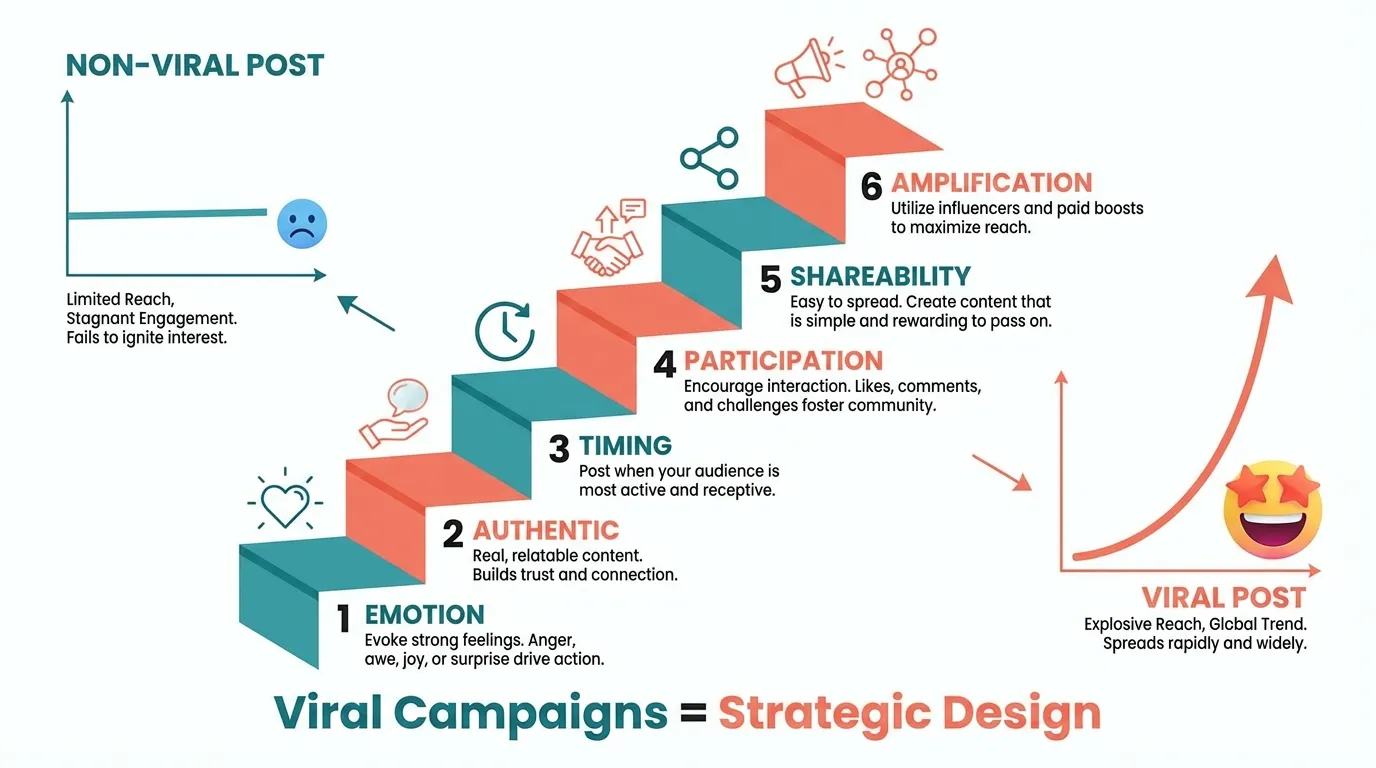
Virality is rarely accidental. Algorithms matter, but the real cause is human psychology. Viral campaigns use strong emotional, social, or identity triggers. These make people want to share content, not just consume it. The most effective influencer strategies focus on shareability and emotion, not just product promotion. Here are the main reasons some campaigns break through while others go unnoticed.
1. They Trigger High-Intensity Emotion
Content that triggers strong emotions, such as humour or surprise, is more often shared. High emotion boosts memory and makes people more likely to share. People share what makes them feel, not just what informs. Influencer campaigns that go viral typically prioritise storytelling, personal transformation narratives, or culturally relevant humour. Emotion acts as the fuel that powers amplification.
2. They Feel Native, Not Scripted
Audiences quickly notice if content feels fake. When influencer posts are overly scripted or corporate, trust drops. Viral campaigns fit the influencer’s usual style and tone. Successful influencer strategies match platform cultures. On TikTok, humour works. On Instagram, visuals inspire. On YouTube, reviews go in-depth. Content should feel natural, not forced, so audiences respond better.
3. They Align With Cultural Timing
Timing can make content go viral. Campaigns that use trending topics, seasons, or cultural moments get more attention. Timely content feels relevant and less like an ad. Influencer campaigns that go viral often intersect with broader societal narratives, whether through memes, trending sounds, or current events. Strategic timing amplifies psychological resonance.
4. They Encourage Participation
Viral campaigns often invite audience interaction rather than passive viewing. Challenges, duets, hashtag movements, giveaways, or interactive polls create a sense of involvement. When users contribute their own content, amplification multiplies exponentially.
Influencer marketing strategies that incorporate participation mechanics turn audiences into co-creators. This shifts campaigns from one-way communication to community-driven momentum.
5. They Balance Awareness With Shareability
Not all campaigns need to convert immediately. Some are designed to maximise reach and social conversation first, building familiarity before conversion. Viral campaigns often prioritise memorability and conversation triggers over direct selling. When awareness objectives are clear, influencers can focus on creativity rather than aggressive calls to action. The result is a broader organic distribution without resistance.
6. They Combine Organic Influence With Paid Amplification
True virality often involves strategic amplification behind the scenes. Brands may boost high-performing influencer content to extend its lifespan and reach beyond the creator’s immediate audience. When strong psychological triggers are paired with paid distribution, momentum accelerates.
Well-structured influencer marketing strategies monitor engagement signals early and invest in amplification only when organic traction is evident. This compounds performance rather than forcing exposure.
Why Other Influencer Marketing Strategies Flop
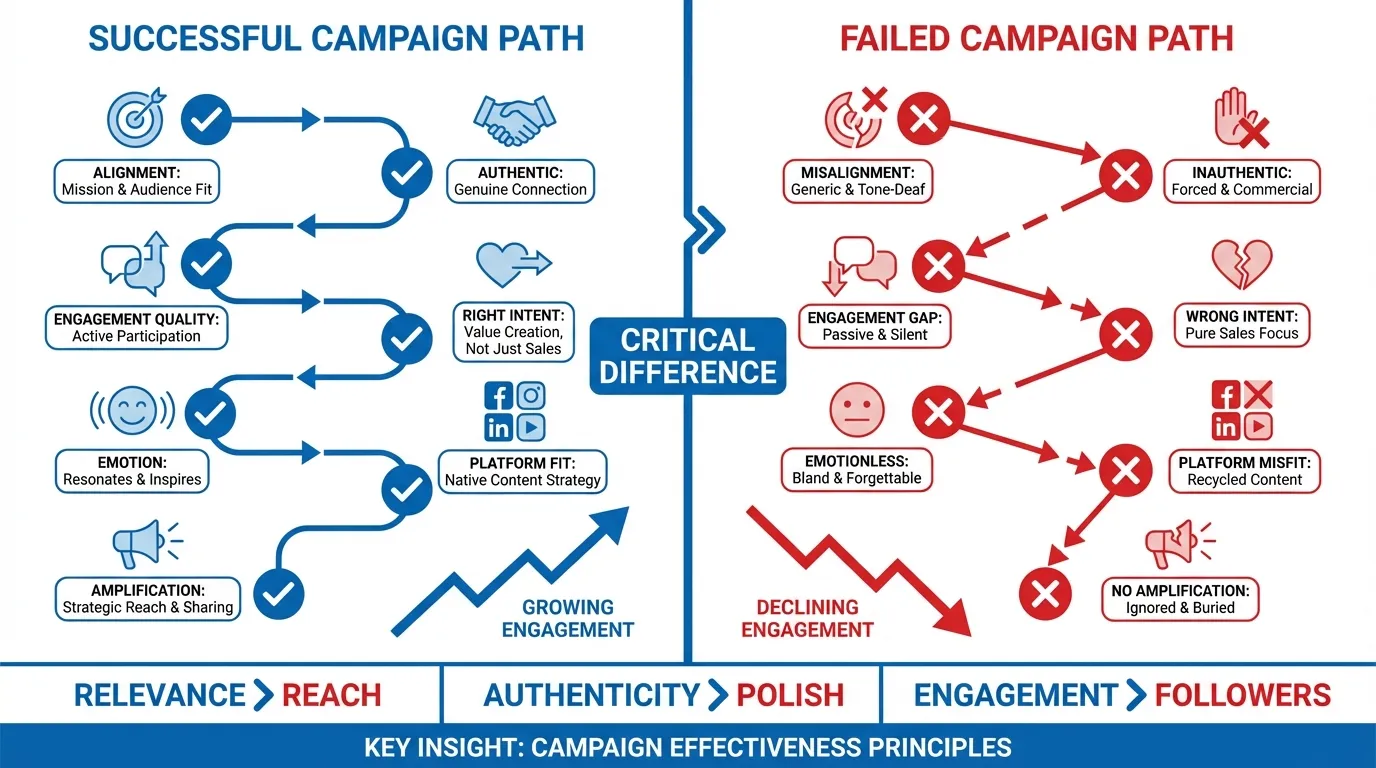
If virality is driven by psychological alignment, failure is usually caused by psychological friction. Most influencer campaigns do not flop because the idea was terrible or the influencer lacked followers. They fail because the strategy ignored how audiences think, feel, and decide.
Effective influencer marketing strategies are built on trust, relevance, and emotional resonance. When those elements are missing or misaligned, engagement drops, conversions stall, and the campaign fades quietly into the algorithm.
Below are the most common reasons influencer marketing strategies underperform.
1. Misalignment Between Influencer and Brand
One of the biggest mistakes brands make is choosing influencers based on reach rather than relevance. If the influencer’s persona, values, or audience demographics do not align with the brand’s positioning, the endorsement feels forced. Audiences are quick to detect inconsistency, and trust erodes almost instantly.
Successful influencer marketing strategies prioritise audience overlap and lifestyle congruence over vanity metrics. When there is no natural fit, even high-budget campaigns struggle to convert.
2. Overly Scripted and Inauthentic Content
Influencers build communities by being relatable, personal, and unscripted. When brands impose rigid messaging or overly polished ad copy, the content feels transactional rather than genuine. This breaks the parasocial bond between influencer and follower.
Flopping campaigns often read like advertisements disguised as posts. High-performing influencer marketing strategies offer creative flexibility, ensuring messaging feels native to the creator’s voice.
3. Obsession With Follower Count Over Engagement Quality
Large follower numbers can be misleading. Engagement rate, audience sentiment, and community depth matter far more than sheer reach. An influencer with 20,000 highly engaged followers can outperform one with 500,000 passive viewers. Influencer marketing strategies that ignore engagement quality often result in inflated impressions but minimal action. True influence is measured by behavioural response, not audience size.
4. Ignoring Audience Intent Stage
Not all audiences are ready to buy. Some are discovering a product category, others are comparing options, and some are actively searching for deals. Campaigns flop when the message does not match the audience’s psychological readiness.
For example, pushing hard conversion calls to action on an awareness-stage audience creates resistance. Strong influencer marketing strategies map messaging to the intent stage — building trust first, urgency later.
5. Lack of Emotional Resonance
Transactional messaging focused purely on features rarely spreads organically. If the content does not evoke emotion, surprise, relatability, or aspiration, audiences have no reason to engage or share. Without emotional intensity, content blends into the noise.
Campaigns that flop often prioritise product explanation over storytelling. Influencer marketing strategies that neglect emotional triggers struggle to generate momentum.
6. Poor Platform-Native Execution
Each social platform has its own behavioural norms. TikTok thrives on short-form spontaneity, Instagram leans towards visual and aspirational, and YouTube favours depth and storytelling. When content feels transplanted from one platform to another without adaptation, performance declines.
Influencer marketing strategies must align with platform culture. A mismatch between content style and platform expectation reduces algorithmic distribution and audience engagement.
7. No Strategic Amplification Plan
Even strong organic content may need strategic paid support to maximise reach. Campaigns that rely entirely on organic distribution without monitoring performance signals risk underexposure. Without optimisation and amplification, good ideas may fail to scale.
Flopping campaigns often lack structured performance tracking and reinvestment logic. Influencer marketing strategies should include measurement, iteration, and amplification rather than one-off posting.
The Science of Trust Transfer in Influencer Marketing
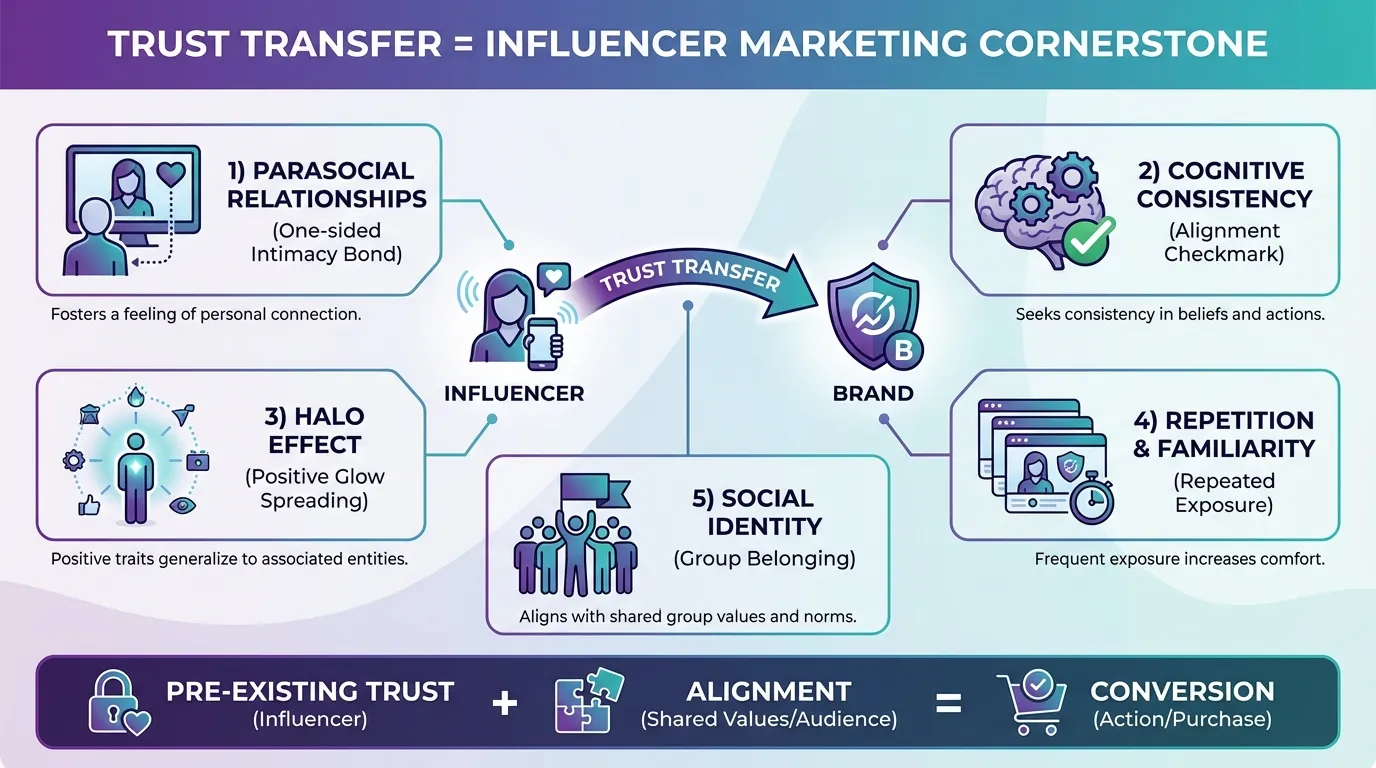
When an influencer recommends a product, their perceived credibility, relatability, and authority do not remain isolated; they extend to the brand they endorse. This is why influencer marketing strategies can outperform traditional ads: they leverage pre-existing trust rather than trying to build it from scratch.
However, trust transfer is not automatic. It operates under specific psychological conditions, and when those conditions are not met, persuasion weakens or even backfires. Understanding how this mechanism works is essential to building influencer campaigns that convert rather than simply generate impressions.
- Parasocial Relationships: The Illusion of Intimacy: Followers often feel personally connected to influencers, even though they have never met them. This one-sided emotional bond, known as a parasocial relationship, creates a sense of familiarity and trust. When an influencer shares personal experiences, daily routines, or vulnerabilities, audiences perceive authenticity. Influencer marketing strategies succeed when they leverage this perceived intimacy without disrupting it. If the promotion feels like a natural extension of the influencer’s lifestyle, trust flows seamlessly to the brand.
- Cognitive Consistency and Alignment: People are psychologically driven to maintain internal consistency. If an influencer consistently promotes healthy living, endorsing a wellness product aligns with their established identity and feels coherent. However, when a collaboration contradicts their usual values or content style, audiences experience cognitive dissonance. This dissonance weakens trust and reduces persuasive impact. Strong influencer marketing strategies ensure brand alignment with influencer persona to preserve psychological consistency.
- The Halo Effect: The halo effect occurs when positive perceptions in one area influence judgments in another. If an influencer is perceived as intelligent, stylish, successful, or trustworthy, those qualities unconsciously extend to the product they promote. Audiences assume that “if I trust them, the product must be credible too.” Campaigns that go viral often capitalise on this halo effect. When influencer-brand alignment is strong, positive associations compound rather than dilute.
- Repetition and Familiarity: Trust strengthens through repeated exposure. When followers see an influencer consistently integrate a product into their content over time, the endorsement feels more genuine than a one-off sponsored post. Repetition reduces scepticism and increases brand recall. Long-term ambassador partnerships often outperform single collaborations because familiarity deepens trust transfer. Influencer marketing strategies built around sustained relationships typically produce a stronger cumulative impact.
- Social Identity Reinforcement: Influencers often represent a specific lifestyle, belief system, or community. When followers identify with that group, purchasing endorsed products reinforces their own identity. This transforms buying behaviour from transactional to symbolic. For example, supporting a product recommended by a fitness influencer may feel like a way to reinforce one’s commitment to health. Effective influencer marketing strategies tap into identity reinforcement rather than mere product utility.
The science of trust transfer is the cornerstone of successful influencer marketing strategies. When done correctly, it builds lasting relationships between brands and consumers, turning a simple endorsement into a genuine connection.
Micro vs Macro Influencer Psychology: Which Converts Better?
Both types of influencers offer distinct advantages, but their effectiveness depends on the campaign goals, audience intent, and the brand’s strategic objectives. Each type of influencer triggers distinct psychological responses in their followers, and understanding these responses can significantly impact conversion rates and the overall success of an influencer marketing strategy.
Micro Influencers: The Power of Intimacy and Community
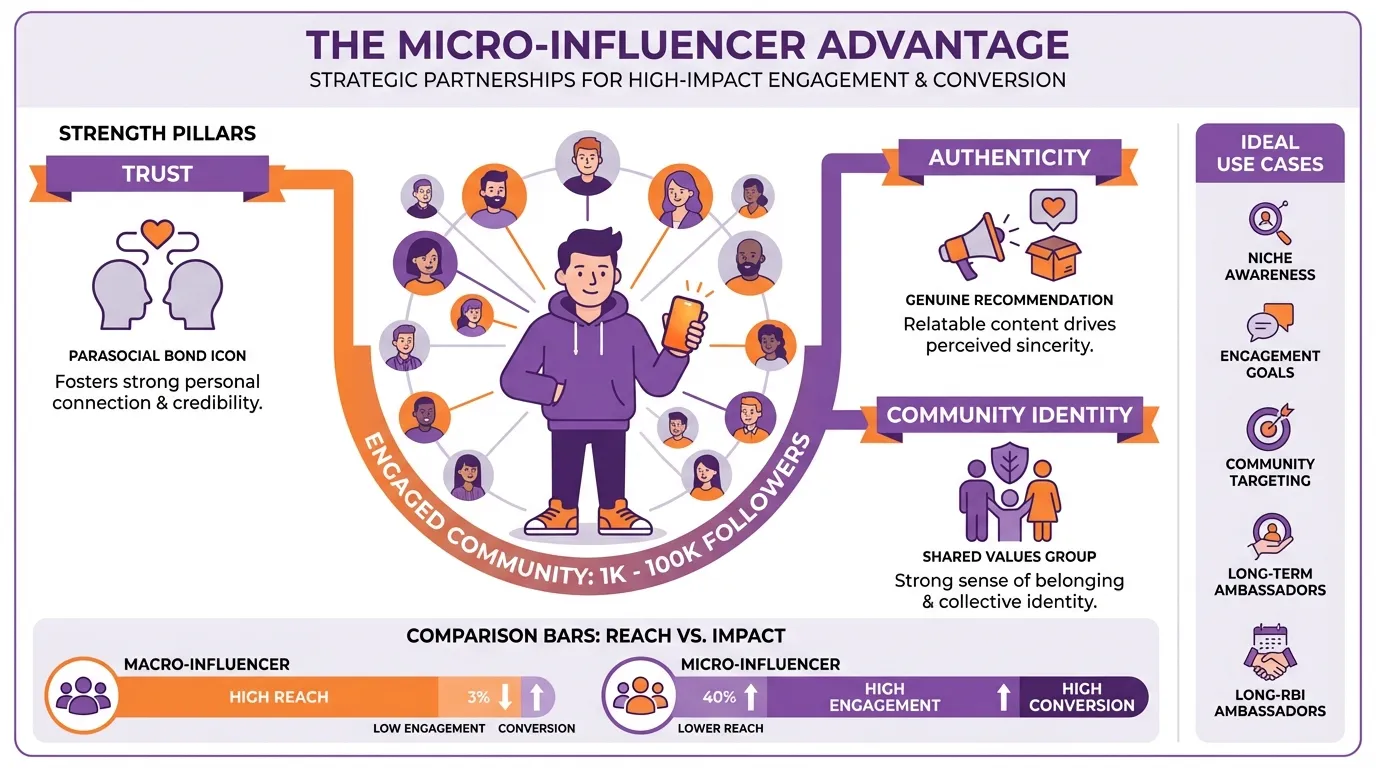
Micro influencers typically have between 1,000 and 100,000 followers. While their reach may be smaller than that of macro influencers, they tend to enjoy much higher engagement and a stronger connection with their audience. The psychological mechanisms behind micro-influencer success lie in trust, authenticity, and relatability.
Psychological Triggers for Micro Influencers:
- Closer, More Personal Connection: Micro influencers are often seen as relatable “friends” or peers rather than celebrities. Their smaller, more engaged audience sees them as more trustworthy and genuine, which leads to higher levels of personal connection. This intimacy builds a strong parasocial relationship, in which followers feel personally invested in the influencer’s opinions and recommendations.
- Community and Niche Focus: Followers of micro-influencers tend to be part of a tightly knit community with shared interests. Whether it’s fitness, beauty, or gaming, these communities are more loyal and often have a strong sense of identity. When micro-influencers promote products, it often feels like a recommendation from a trusted friend within a niche community, which boosts the campaign’s authenticity.
- Higher Engagement Rate: Despite having fewer followers, micro-influencers often achieve higher engagement rates. Their content resonates deeply with their community, and because the influencer is more accessible, followers are more likely to engage with the posts (like, comment, share). This results in higher engagement, which is a critical factor for conversions.
When Micro Influencers Excel:
- When building brand awareness in a niche market
- If the goal is engagement rather than just reach
- When targeting specific communities or micro-markets
- If you’re looking for long-term relationships and ambassador programs
Micro influencers are ideal for campaigns that aim to build trust and credibility in a highly engaged, smaller community. Their ability to make followers feel like part of an exclusive group enhances conversion potential, especially when selling products that align with their niche audience’s values or needs.
Macro Influencers: The Authority and Broad Reach
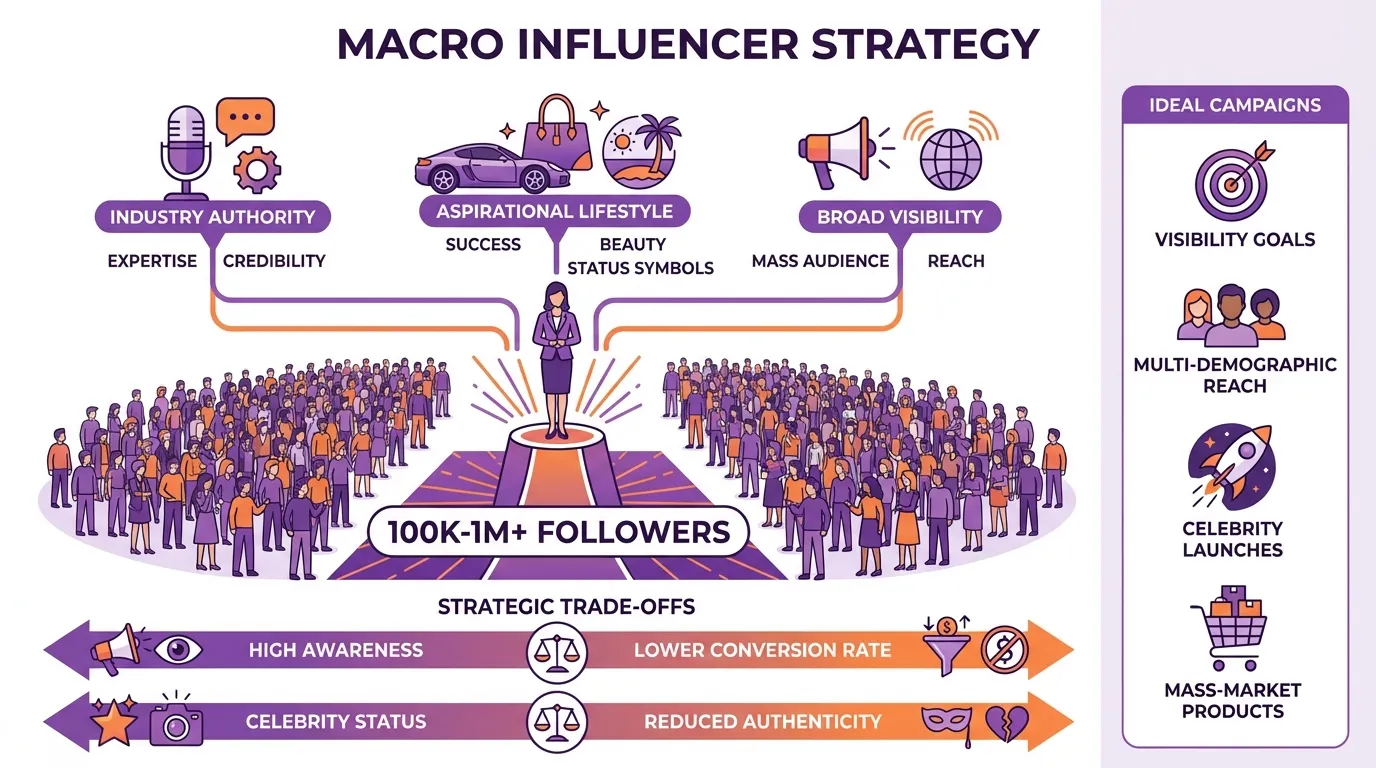
Macro influencers, on the other hand, boast follower counts in the hundreds of thousands to millions. While their reach is far broader, they can lack the personal connection that micro influencers foster. The psychology behind macro-influencer campaigns is based on authority, social proof, and aspirational value.
Psychological Triggers for Macro Influencers:
- Authority and Expert Status: With large followings, macro influencers are often seen as industry authorities or celebrities in their fields. Their recommendations carry weight due to their perceived expertise and authority, which makes their endorsements feel more reliable and trustworthy, especially for products that require a degree of credibility or expertise to be effective.
- Aspirational Appeal: Macro influencers often represent a lifestyle or aspirational persona that their audience admires and aspires to emulate. This aspirational value makes their endorsements powerful, especially when the product or service they promote aligns with the audience’s desires. Their followers are often motivated by the influencer’s success, beauty, or lifestyle, and a product recommendation can serve as a symbol of achieving that aspiration.
- Massive Reach and Brand Awareness: Macro influencers can reach a wide, diverse audience, enabling brands to gain instant visibility across a broad demographic. While this reach isn’t as targeted as micro-influencers’, it’s incredibly valuable for building mass awareness. Their campaigns typically create significant buzz, and viral moments often stem from content that garners widespread attention.
When Macro Influencers Excel:
- When the primary objective is brand visibility and awareness
- If you want to reach a broad audience across multiple demographics
- When promoting high-profile launches, celebrity-driven campaigns, or lifestyle products
- If targeting mass-market appeal rather than niche segments
Macro influencers are particularly effective for large-scale campaigns aimed at reaching millions of people, building widespread brand recognition, and establishing a brand as an authority in its industry.
However, macro influencers can often lack the authenticity and community connection that micro influencers offer, so conversion rates may be lower than with more personal recommendations.
They excel at driving action because their recommendations feel more personal and aligned with their audience’s identity.
Influence Without Psychology Is Just Advertising
At the core of successful influencer marketing lies a deep understanding of human psychology. Campaigns that go beyond simple product endorsements and tap into emotional triggers, trust dynamics, and audience psychology are the ones that truly resonate and convert.
When influencer marketing strategies are designed with psychological insight, they build lasting connections rather than just fleeting impressions.
Without these psychological elements, influencer marketing risks becoming just another form of advertising, where reach doesn’t necessarily equate to impact. To succeed, brands must understand how to build trust, leverage authority, and align with their audience’s identity and values.
When done right, influencer marketing transcends transactional advertising, creating a powerful, persuasive force for brand growth.
If you’re ready to take your influencer marketing campaigns to the next level and leverage psychological insights for deeper audience connection and conversion, MediaOne’s influencer marketing agency can help you craft data-driven, psychology-backed strategies that deliver measurable results. Contact us today!
Frequently Asked Questions
How can I choose the right influencer for my brand?
Choosing the right influencer involves evaluating alignment with your brand values, audience demographics, and engagement rates. Look for influencers whose content resonates with your target audience and whose personality or expertise reflects your brand’s image. The right influencer should have a genuine connection with their followers, as this will ensure trust transfer and effective promotion.
How do I measure the success of an influencer marketing campaign?
To measure the success of an influencer campaign, track both quantitative and qualitative metrics. Key performance indicators (KPIs) should include engagement rates (likes, comments, shares), traffic referral sources, conversions, and ROI. It’s also important to assess sentiment and brand recall through comments and feedback to understand how the influencer’s promotion impacted audience perception.
Can micro-influencers drive as many conversions as macro-influencers?
While macro influencers have a larger reach, micro influencers often deliver higher engagement rates and more authentic interactions. Their smaller but highly dedicated audience fosters greater trust, leading to higher conversion rates for niche or targeted campaigns. Micro influencers are particularly effective in building loyalty and driving action, especially for brands with specific customer segments.
How long should an influencer partnership last for maximum impact?
Long-term influencer partnerships tend to be more successful than short-term collaborations because they build ongoing trust and familiarity with the audience. Repeated exposure and consistent brand integration help influencers build a more authentic connection with their followers. Ideally, a partnership should span several months or even years to deepen trust transfer and maximise campaign impact.
How do I avoid influencer marketing burnout or over-saturation?
To prevent influencer marketing burnout or over-saturation, ensure that campaigns remain fresh and aligned with the influencer’s content style. Vary the types of promotions, integrate user-generated content, and limit the frequency of product mentions. Focusing on quality rather than quantity and balancing influencer promotions with authentic content will keep the campaigns engaging without overwhelming the audience.