| AI Summary
Social media listening helps Singapore businesses find patterns in public posts, comments and reviews. A team can use it to learn why customers keep asking the same question, check whether a complaint is spreading, or spot a problem that buyers want solved. This guide explains how to review local language, test a listening tool and measure whether the changes a team makes address the original problem. |
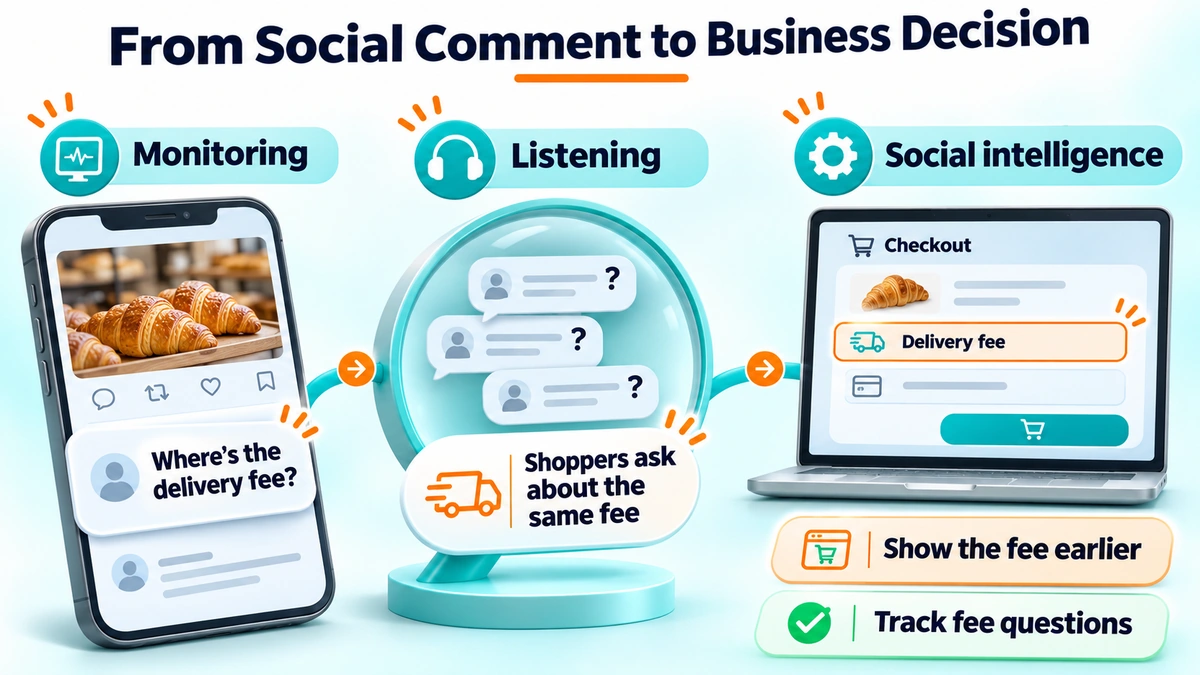
Social media listening is the process of collecting and analysing public conversations about a brand, its competitors or its industry. Social media monitoring flags individual mentions. Listening groups those mentions by topic and looks for patterns, such as why customers keep raising the same issue and which team can address it.
Key Takeaways
- Set a baseline before making a change. Compare the same sources, search terms and time periods so the team can judge what changed.
- Give reviewers an “unclear” label. Singlish, sarcasm and posts that mix praise with criticism can make automated sentiment scores misleading.
- Test tools with posts your team has already found. A vendor demo cannot tell you whether the tool will catch the local conversations you need.
- Keep a record of decisions. A short log connects each finding to an owner, a due date and a result the team can check.
- Treat online feedback as one source of evidence. Support tickets, order records and surveys can help confirm how widely a problem affects customers.
A Singapore bakery sees several Instagram comments asking why its delivery fee changes at checkout. The support team answers each customer. A week later, the same question comes up again. The comments point to a question the bakery can check for itself. How early can a customer see the fee before placing an order?
That is social media listening in practice. The bakery can compare comments with support tickets, test what customers see at checkout and change where it displays the fee. The same process works for campaign feedback, B2B buying research and service complaints.
What Is Social Media Listening?
Social media listening starts with a question about your brand, market or customers. A team gathers relevant conversations, sorts them into themes and checks what might explain them. The answer can shape a product page, a support process or a campaign brief. The NSW Government’s social listening resource also describes how teams can use online conversations to understand an audience and inform decisions.
Monitoring helps a team find individual posts that need attention. Listening connects those posts to a wider question. Social intelligence brings the finding together with other evidence so someone can make a decision. Arizona State University’s social media playbook distinguishes between following active conversations and studying what they reveal about an audience.
| Activity | Question it answers | Bakery example |
| Monitoring | What did someone say? | A customer asks why a delivery fee appears at checkout. |
| Listening | What pattern is emerging? | Customers across several threads ask when they can see the fee. |
| Social intelligence | What should the business change and measure? | The ecommerce team shows the fee earlier and checks whether questions about it decline. |
A bakery can look at social mentions that name or tag it. A listening search can also include posts about the wider issue, such as customers discussing delivery fees for birthday cakes in Singapore. Those posts can show what shoppers expect before they choose a bakery.
Where listening fits in day-to-day work
A social media management plan gives publishing, replies and reporting a regular schedule. Listening adds a way to share findings with teams that can act on them. A community manager might find the delivery questions, while the ecommerce manager tests the checkout and owns the change. Both can use the same record to see what happened next.
How Singapore Businesses Use Social Media Listening
Social media listening works best when it starts with a question the business can answer. A retailer may want to know why a product launch led to more returns. A supplier may want to understand what buyers ask before they book a demo. The choice determines where the team looks, what it records and who uses the findings.
| Team | What to listen for | What the team can do |
| Consumer brand | Questions about sizing, packaging, stock or delivery | Update product details or test a packaging change |
| B2B supplier | Buying questions about setup, training or existing software | Add answers to sales materials or change the demo |
| Nonprofit or public agency | Recurring questions about access, deadlines or service changes | Clarify instructions or share themes with the service team |
| Bank or insurer | Reports of access problems or confusion about a fee | Check the issue and send verified updates through the approved channel |
Consumer brands can find gaps in product information
Suppose a clothing retailer sees customers asking whether a shirt shrinks in the wash. The retail team can compare the comments with returns and support tickets, then check whether the product page explains how to wash the fabric. If those records point to the same problem, the product owner has a specific change to test.
Customer photos and reviews may also show how people use a product at home. Those details can inform a social media content marketing plan, such as a short care video that answers the question directly. A brand that wants to feature an identifiable customer’s post can seek permission before using that user-generated content in its own campaign.
B2B teams can learn what holds up a purchase
A payroll software supplier might see operations managers asking how to move records from their current system. If that question also comes up in sales calls, the supplier can add a sample migration to its demo and give prospects a list of what to prepare. Sales can then record whether prospects still raise migration as a concern.
The same questions can inform a social media marketing strategy. A post that answers a question buyers regularly ask gives the team something to test. Sales notes and enquiry forms can show whether people raise the topic later. A public comment is a sign of interest that needs context before anyone counts it as a lead.
Public-interest teams can identify questions that need an answer
A nonprofit changing how people register for a programme might hear the same question about eligibility on several channels. The programme team can group the questions, check the registration instructions and add an example that shows who can apply. A public agency can compare online discussion with submissions and service records. Singapore’s Ministry of Digital Development and Information describes using a range of methods to understand public sentiment. REACH’s online safety consultation offers an example of gathering and reporting formal feedback.
How to Track Brand Mentions and Check Sentiment
A listening report starts with the posts the team can find and review. A broad search can fill the report with unrelated mentions. A narrow search can miss people who spell the product name differently or describe a problem without naming the brand. A short trial helps the team see both kinds of error before it relies on the numbers.
Build searches from customer language
The first search can include a brand name, account handle, product names and common misspellings. A second search can pair an issue with the words customers use to describe it. A meal delivery company might look for its brand name alongside “late delivery”, “order never came” or “delivery slot”. A separate search for the issue across the category can reveal questions people ask before choosing a service.
| What the team tests | What to check |
| Brand and product terms | Do the results include known posts that omit the account tag? |
| Local wording | Do the results include phrases and languages customers actually use? |
| Exclusions | Can the team remove an unrelated result without losing a real complaint? |
| Duplicates | Is the same post showing up as several separate complaints? |
A short record of search changes helps when the team compares weeks. For example, adding a product nickname on Monday can raise the number of posts found even if customer interest stays the same. A note beside the chart can explain that change and help the team choose a fair period for comparison.
Read the post before trusting its label
Sentiment describes the attitude a post expresses. A tool may label a post positive, neutral or negative. The thread can change the meaning of a phrase such as “Wah, so fast”. A customer might be praising a delivery that arrived early or replying to a post about an order that took days. The post may also praise one part of the service and complain about another.
A small review can show where automated labels need a person’s judgement.
- Sample across topics and sources. The review can include short comments, mixed-language posts and posts the tool marked neutral.
- Read the surrounding thread. The reviewer records the topic, the tone and the words that support that reading. An “unclear” label covers posts with too little context.
- Compare the labels. The team records common errors, such as praise of a courier being counted as praise of the brand.
- Check high-risk posts individually. A report of a payment or safety issue needs a person to review the original post, even if the tool assigns a neutral label.
Record the theme and the limits of the sample
A weekly note might say, “Delivery fees came up in several Instagram threads after the checkout update.” That sentence identifies the source, the topic and the timing. The ecommerce team can check whether support tickets show the same pattern. A single thread with many replies may tell the team what to investigate. It cannot estimate how many customers had the problem.
Reports can group the feedback without carrying every username or screenshot into a shared file. Singapore’s Personal Data Protection Commission resource on basic anonymisation explains ways to reduce identifying information in datasets. NTU Singapore’s anonymisation resource also discusses identifiers in research data, including details that can identify someone when combined.
How to Use Listening During a Reputation Incident
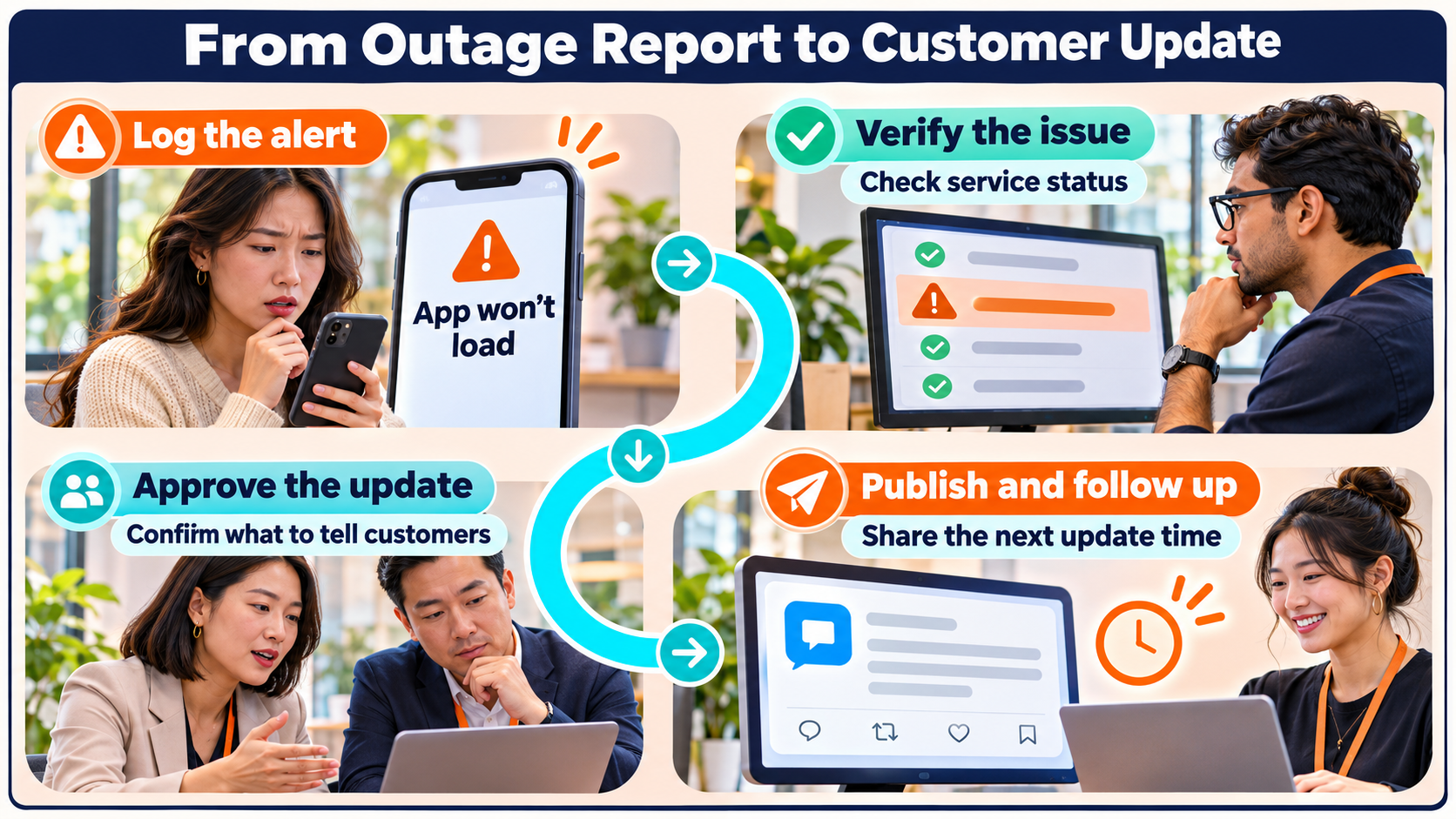
Social media listening can help a team see which questions people need answered during a disruption. If customers report that a banking app will not load, the service team can check whether there is an outage. The communications team can group questions about transfers, balances and where to get help. Those questions can shape the first update while the service team verifies the cause.
Set alerts based on the response they require
Some issues warrant a review as soon as the team sees them. A credible safety report, for example, can go straight to the person who handles that risk. Other alerts make sense when several separate customers describe the same problem within a short period. A follower count can help the team judge how far a post may travel. The content of the report determines who needs to check it.
| Signal | First check | Person or team to contact |
| Repeated reports that a service is down | Do internal systems show a disruption? | Service or operations lead |
| A rumour about a product or policy | Where did the claim start and what has the business confirmed? | Communications lead |
| A report involving safety or personal details | What can the responsible team verify through its approved channels? | Designated incident lead |
Give each response step an owner
- Log the alert. The person on duty records when it arrived, where it appeared and what people report.
- Verify the issue. The service owner checks records and identifies what the business can confirm.
- Approve the update. The named approver checks the wording, the customer instructions and the channel.
- Publish and follow up. The spokesperson shares the update and records questions that still need an answer.
The review after the incident can compare time to verify, time to publish and the questions customers kept asking after the update. If replies still ask whether a payment went through, the team has a specific gap to fix in its next message. A fall in comment volume on its own says little about whether customers got the help they needed.
How to Choose a Social Listening Tool
A tool earns its place by helping the team answer a question it already has. A small business may be able to review a few public threads and account notifications by hand. A team that follows several product lines or responds to service issues may need faster alerts, shared access and a record of who reviewed each case. The right test depends on the work the team needs the tool to do.
Test coverage with posts you already know about
A trial can start with a set of posts the team found by hand. The set can include an account tag, an untagged comment, a post using local wording and an unrelated mention that should stay out of the results. The team can test how many of those items it can find and how quickly a new result appears. A review of social media trends may point to channels worth exploring. A tool trial shows what the team can actually collect from those channels.
Coverage can vary by platform, content type and provider. A vendor may cover posts from a network while collecting only certain comments. Reddit’s Public Content Policy explains how it handles access to and licensing of public content. A team can ask the vendor to list the sources, post types, history and alert timing included in the plan under review.
Score the tool against the decisions it supports
A team can rate each criterion as meets the need, needs a workaround or fails the test. This gives people a way to compare plans without giving equal weight to every feature. A missing alert source may rule out a plan for an incident team. A weekly research team may be able to review that same source by hand.
| Criterion | What to test |
| Source coverage | The tool finds known posts from the channels and post types the team needs. |
| Alert timing | A new post appears in time for the team’s response window. |
| Sentiment review | A reviewer can open the original post, see its context and correct a label. |
| History and exports | The team can compare its chosen periods and export the fields it needs. |
| Cost and staff time | The plan covers enough work to justify its fee and the time spent checking results. |
A side-by-side trial gives procurement a better record than a list of features. If two tools both capture the required posts, the team can compare how long each takes to review and share one finding. A cheaper plan that sends many unrelated alerts can cost more staff time than its price suggests.
How to Set Up and Measure Social Media Listening
A listening routine becomes easier to manage when a team tests one question from start to finish. The bakery’s question could be, “Will showing the delivery fee earlier reduce checkout questions?” The bakery can answer it with a search, a small review and a checkout change it can track. The same process works when a team wants to test a change to onboarding, campaign copy or service instructions.
A five-step setup for a small team
- Name the decision and its owner. The ecommerce lead owns the fee display. The community manager records questions that could help the lead decide what to change.
- Choose the sources and set a baseline. The team picks the public posts it can review and records fee questions from support tickets for the same period.
- Review and group the evidence. The team checks original threads, combines copies of the same complaint and tags questions about when the fee appears.
- Make one change and log the date. The ecommerce lead adds the fee to the cart before checkout. The team records when the change went live.
- Compare the same measures after the change. The team checks whether fee questions fell and whether checkout activity changed during the comparison period.
The review schedule should match the job. A team responsible for incident alerts needs a way to reach the person on duty. A team collecting questions for a monthly content plan can group them during a scheduled review. An existing Instagram marketing plan can give the team a regular slot to turn repeated comments into answers, posts or page updates.
Measure the result alongside the conversation
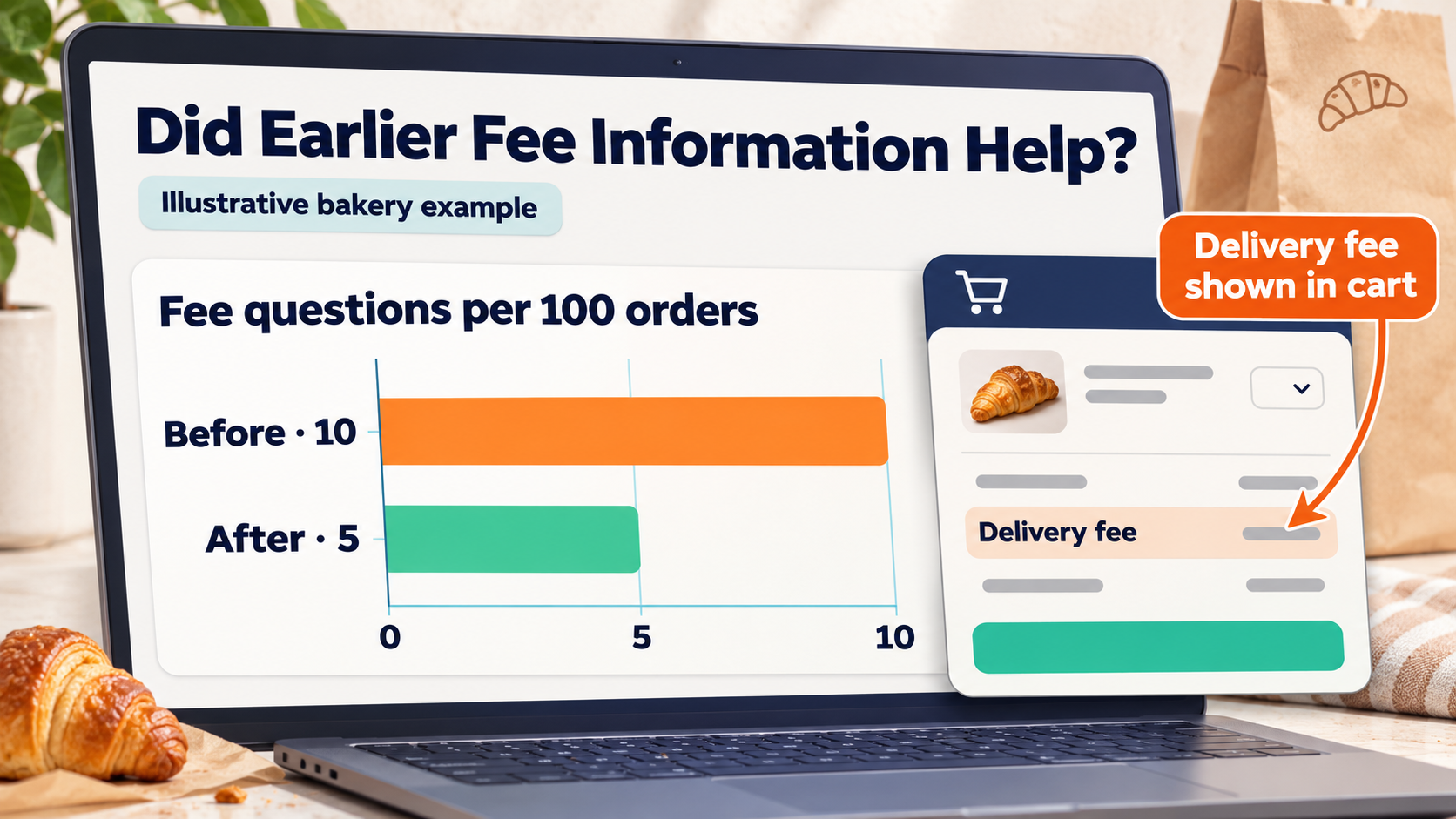
The team can record the number of fee questions per 100 orders. If 20 of 200 orders generated a fee question before the change, the rate was 10 per 100 orders. If 15 of 300 orders generated one afterwards, the rate was five per 100. These figures are illustrative. They show how a rate makes the two periods easier to compare when the number of orders changes.
The bakery should also record factors that could explain the result. A free delivery promotion, a change in order mix or a campaign that brought in new customers could affect the rate. A separate measure, such as the percentage of checkout visits that end in an order, can add context. The comparison gives the team a reason to keep testing if other changes happened at the same time.
A listening maturity checklist
A team can use this checklist after its first review cycle. Each “yes” should point to a record that someone else can find and use.
| Check | What a “yes” looks like |
| Does the work support a decision? | The team can name the change it may make and who owns it. |
| Can a teammate repeat the search? | The search terms, sources and dates are recorded. |
| Can a reviewer explain the finding? | The report shows how the team grouped posts and checked uncertain examples. |
| Did someone act on the finding? | The change, owner and date appear in the decision log. |
| Can the team judge what happened next? | The follow-up compares the same measure and records any other changes that could affect it. |
Turn Social Media Listening Into Business Decisions
A first listening review can focus on one question the team has the authority to answer. A retailer can check whether customers see delivery costs early enough. A supplier can test whether a demo answers a common setup question. The first report can capture the evidence, the change and the date the owner will review the result.
MediaOne’s social media marketing services can support Singapore businesses that want to connect audience feedback with community management and campaign planning. The first discussion can focus on one recurring customer issue and the decision your team needs to make about it.
FAQs About Social Media Listening
Yes. A team can search for conversations about the problem its product aims to solve, the alternatives buyers use and the questions they ask before buying. Those findings can help the team write interview questions or test how it describes the offer.
Can a company compare its results with a much larger competitor?
Yes, if both are measured across the same sources and dates. Raw mention counts often favour the larger brand. A topic-level comparison can show something more specific, such as how often customers ask each company about setup. The report should show the number of posts behind any percentage so the reader can judge the sample size.
How can an agency hand over a listening programme to a client?
A handover can include saved searches, exclusions, source limits, alert rules, sample reviews and open decisions. The client should have an account owner who can update the searches and a named contact for each type of alert. A joint review of one recent alert can confirm that both teams know who will handle the next one.
Can a business compare listening results across languages?
Yes, if reviewers can interpret the posts in context and the searches collect comparable material. A team can first review each language separately to see whether the same themes appear. A report that combines results should record differences in source coverage, sample size and how reviewers handled terms without a direct translation.