Most Singapore businesses treat social media as a posting chore. Social media management is a business function, and it needs a written strategy, a measurement plan and a crisis protocol before it needs more content. It covers planning, publishing, monitoring, engaging with the audience and analysing results, according to Reportei’s guide to social media management. Singapore’s reach makes this matter more. Social media reaches 88.2% of the population, and about 97% of that access happens on mobile, so a single message can travel from a private chat to a public controversy within hours. This guide gives you a five-layer audit to score your account, so you can find the gaps before a customer or a rumour does.


Key Takeaways
- Social media management is a business function, not just daily posting. It needs a written strategy, a measurement plan and a crisis protocol.
- Match the metric to the goal. Track reach and engagement rate for recognition, and clicks, leads and conversions for sales.
- Score your account across five layers: objective, content system, engagement rhythm, monitoring and crisis readiness. A total below 6 out of 10 is the author’s rule of thumb for flagging a gap to fix first, not an industry standard.
- In Singapore, misinformation spreads widely online and via messaging platforms, so monitoring must cover private channels too.
- Name a crisis owner, set escalation triggers and draft a holding statement before you need them.
- Treat tool rankings with caution and check whether the directory is commercially influenced before you rely on it.
What Social Media Management Is and Why It Matters for Singapore Businesses
Social media management definition and overview
Social media management covers the full cycle of running a brand’s presence on social platforms: planning content, publishing it, monitoring conversations, engaging with the audience and analysing results. It is a business function, not a posting task. A firm that treats it as daily posting alone usually has no measurement plan and no answer when a user’s complaint turns into a public issue that spreads. Good social media management depends on clear processes that show what the team is doing and why.
Why it matters for Singapore businesses
Reach is what gives this function real weight in Singapore. Social media reaches 88.2% of Singapore’s population, and about 97% of that access happens on mobile, according to MediaOne’s brand crisis overview. A customer complaint can reach thousands before the business has read it. Brand crisis management is the structured process of detecting, responding to and recovering from such events. For a small firm, the first question isn’t how many posts to publish, but whether anyone will notice a damaging message within the hour.
Before any post goes live, a business needs a written answer to one question: what is this account meant to achieve? Recognition and sales require different metrics. Marketers track engagement through likes, shares, comments and sentiment analysis; reach through unique views and visibility; and conversions through click-through rates, website traffic and leads, as described in SocialFirm’s guide to social media metrics. These key performance indicators help show whether the account is working. Settle the goal first, and every later decision (channels, format, tools) has a yardstick.
Social Media Strategy and Content Planning
Writing the strategy as a one-page document
A usable strategy fits on one page and states four things: the goal, the audience, the channels chosen for that audience, and the metric that proves progress. Anything longer tends to go unread by the people who must act on it. Free templates are widely available, so a one-page plan costs little to produce. Reviewing the available options before choosing a template helps a team pick one that fits its needs.
Sample one-page strategy for a small Singapore retailer:
| Element | Example entry |
|---|---|
| Goal | Grow repeat visits to the online shop |
| Audience | Existing customers and local shoppers aged 25 to 40 |
| Channels | Instagram and Facebook |
| Metric | Clicks from profiles to the product page, reviewed monthly |
| Owner | One named person who approves posts and replies |
Planning the content calendar
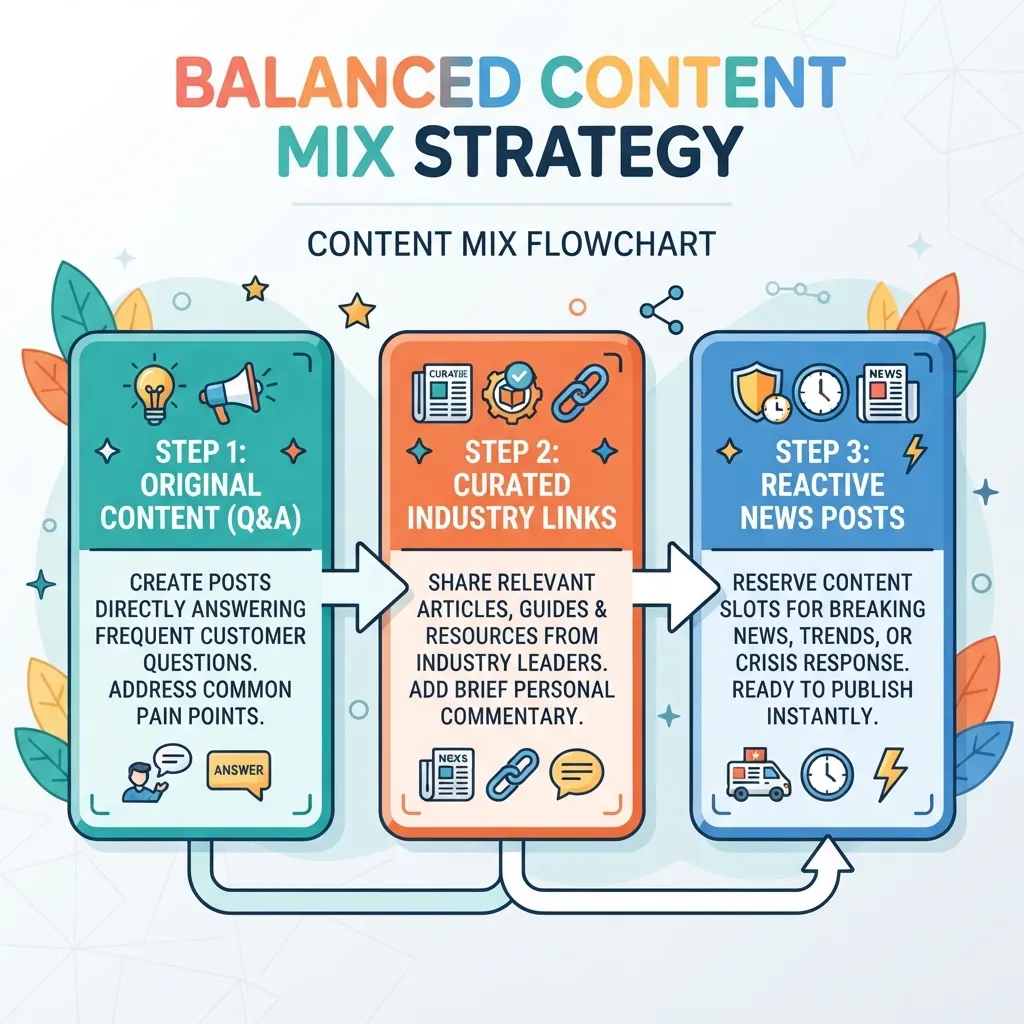
A calendar turns the strategy into a schedule. Plan a fixed mix each month, for example, mostly original posts with a smaller share of curated industry content, and block dates for launches and campaigns. Scheduling routine posts ahead of time helps, but keep a slot open for reactive posts so the account can respond to news. Many teams rely on scheduling management tools to keep the calendar on track, and a clear analysis of past posting results can guide which slots to keep.
Sample monthly calendar for the same retailer:
| Week | Original posts | Curated post | Campaign | Reactive slot |
|---|---|---|---|---|
| 1 | Two product posts answering common questions | One industry article with a short comment | None | Held open |
| 2 | One how-to post | None | None | Held open |
| 3 | Two product posts | One industry article with a short comment | Launch preview | Held open |
| 4 | One customer story, one launch post | None | Launch week | Held open |
The mix stays roughly three-quarters original and one-quarter curated, with a reactive slot held each week.
Creating original and curated content
Original content builds your own authority, while curated content signals that you follow your field. Original work should answer a real question your customers ask, since a strong social media presence starts with what users actually want to know. Curated work needs a short comment from you, since a bare link adds little value. As a working ratio, aim for about three original posts for every curated one, and choose the sorts of posts that match what your audience actually asks about. Customer reviews can show which questions arise most often.
Measuring and Auditing Social Media Management
Many small firms treat social media management as simply posting. They schedule a few updates a week, check likes now and then, and assume the account is working. That approach misses two things: the account has no measurable goal, and nobody owns what happens when a post or message goes wrong. Free tools can cover basic reporting, but the process still needs an owner. Review your scheduling, reporting, and channel ownership each quarter to keep the account accountable.
Before adding more tools or channels, score your account across five layers, rating each 0 to 2:
- Objective and metric. Is the goal recognition (reach, engagement rate) or revenue (clicks, leads, conversions)? As Reportei notes, these call for different measures.
- Content system. Is there a plan, a calendar and a defined mix of original and curated content? Show how each content type supports marketing, not just posting volume.
- Publishing and engagement rhythm. What are your response times, and who owns replies? Give each user-facing channel a clear owner.
- Monitoring and reporting. Do you use native platform analytics plus a dashboard? Please compare the available options and keep only those that your team will actually review.
- Crisis readiness. Are there named owners, escalation triggers and a holding statement? Document the processes for each, so that help can arrive quickly when a problem starts. Ensure that your company website and customer reviews are monitored alongside social channels.
A total below 6 is the author’s guideline, not an industry standard. It is a sensible point to pause and fix gaps before adding more posts. Many firms score highest on layer 2 and lowest on layer 5.
Worked example of an engagement rate: if a post receives 120 likes, comments and shares from 4,000 people reached, the engagement rate is 120 divided by 4,000, or 3%. Sentiment analysis tools usually classify comments as positive, negative or neutral, and they often fail on sarcasm, Singlish and mixed-language replies, so check a sample by hand before trusting the score.
Layer 5 matters because of local conditions. Complaints and rumours move through WhatsApp groups, Telegram channels and TikTok before any newsroom picks them up. Public-platform tracking alone will not catch the private channels where many of them start.
Choosing and Comparing Social Media Management Tools
A tool does not manage social media. It only speeds up the work once you know what that work is. Choose tools after you have set your objective and content system, or you will pay for features your team never uses. Working professionals who publish on Instagram or other channels should define their marketing objective and the processes behind it first.
Social media management tools
Most of the value comes from three functions: scheduling, native analytics and a shared inbox for replies. Native platform reports cover basic performance on your account, and Meta and TikTok each provide their own insights for their platforms. A strategic dashboard then combines them into one view. Reportei describes native reports and dashboards as the core analysis tools, a sensible starting point for a small team. Each platform’s own analytics help you judge how your website and digital presence perform, and the key performance indicators you track should match your objective. Dashboard results are only as useful as the objective they measure.
Before you shortlist, ask three questions: which platforms do we publish on, who needs access to replies, and do we need reporting for clients or just for ourselves? Vendors offer many options, so narrowing the field first helps you identify the right fit.
Social media management tools comparison
| Need | Native platform tools | Dashboard or scheduling tools | What to check |
|---|---|---|---|
| Scheduling across channels | Limited | Calendar view, approval steps, bulk upload | Approval steps and bulk upload |
| Measuring recognition | Reach and engagement rate by platform | Combined view across platforms | Reach and engagement rate by platform |
| Measuring sales | Clicks from profiles | Clicks, leads and conversions | Clicks, leads and conversions |
| Replies and escalation | Native inbox | Shared inbox with assignment and alerts | Assignment and alerts |
Short decision checklist: if you publish on one or two platforms and only need reports for yourself, native tools may be enough. If multiple team members are responding to customers, consider adding a shared inbox. If you report to clients, choose a dashboard that exports clean reports.
Be cautious with free directory rankings. GetApp’s service is free because software vendors pay when they generate web traffic and sales leads from GetApp users. GetApp sorts products by overall star rating, normalised for recency and review volume, from highest to lowest. A top placement may still reflect commercial arrangements, so check how a directory is funded before treating its order as an independent verdict. Its sorting shows which products have the highest ratings, not which ones deliver the best campaign results for your team.
Social Media Management as Crisis Readiness
Crisis readiness leads this guide for a reason: a poorly managed moment does more damage than a missed post. Singapore’s high reach means a difficult moment can quickly turn into a public conversation. CNA cites the CDL boardroom dispute in early 2025 between CEO Sherman Kwek and executive chairman Kwek Leng Beng as a reference point for a structural brand crisis. A business cannot control such events, but it can decide in advance who responds and which processes it will follow when a user raises a concern.
Crises here move differently from many other markets. With approximately 90% penetration and widespread use of community groups, forwarded messages and broadcast lists, a story can circulate privately and at scale before it surfaces on any public platform. For a small firm, this scenario is the most common crisis type, and it is frequently underestimated until it is too late. Monitoring must therefore cover the places where a complaint starts, not only the public feed, and reviews posted on any website should be checked too, including on free listing platforms where anyone can post.


Monitoring, responding and recovering from a brand crisis

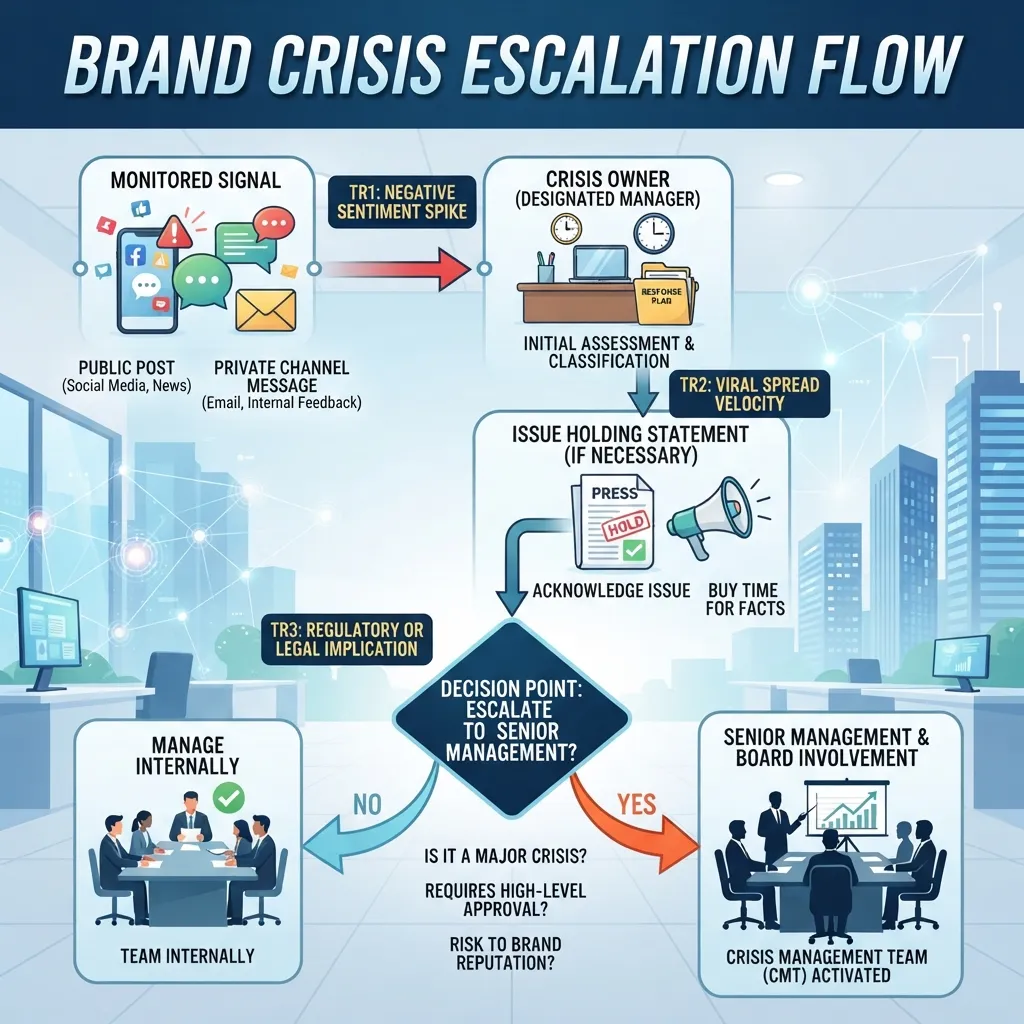
Three steps help. First, watch both public and private channels, and set a clear escalation trigger, such as a complaint that names the business. Second, reply quickly with a holding statement that acknowledges the issue and says when a full answer will follow. Third, after the event, review what was said, who replied and how long it took, then update the escalation trigger for next time. The aim is not to avoid every crisis but to shorten the time between the first message and a considered reply and to show the options a business has for each type of response.
Social Media Management as Crisis Readiness
Most small firms in Singapore plan for good days and nothing else. A single post, complaint, or forwarded message can become a reputational problem within hours. For Singapore firms, crisis readiness should come first, ahead of content volume or follower counts. Brand crisis management is the structured process of detecting, responding to and recovering from events that damage a brand’s reputation, trust or commercial relationships. It belongs inside social media management, not beside it. Crisis readiness analysis should therefore come before any decisions about content volume.
Social media reaches 88.2% of Singapore’s population, and news travels through WhatsApp groups, Telegram channels, and TikTok feeds before it reaches a newsroom. Industry commentary on brand crisis management notes that the mechanics here differ from many other markets. With approximately 90% penetration and widespread use of community groups and forwarded messages, a story can circulate privately and at scale before it surfaces on a public platform. Instagram, although not the only channel, is often where visual complaints first gain traction.
Public-platform tracking alone misses much of that early spread. Teams should also review how their website, reviews and customer messages surface complaints. The CDL boardroom dispute in early 2025, between CEO Sherman Kwek and executive chairman Kwek Leng Beng, is often cited as a structural brand crisis. It shows how internal conflict can become public.
Monitoring, responding and recovering from a brand crisis
Use the five-layer audit as a crisis check. Score each item from 0 to 2. Free monitoring tools can cover some of the results of this assessment but not all of them. Teams can compare the options available to them and the types of monitoring that suit their channels:
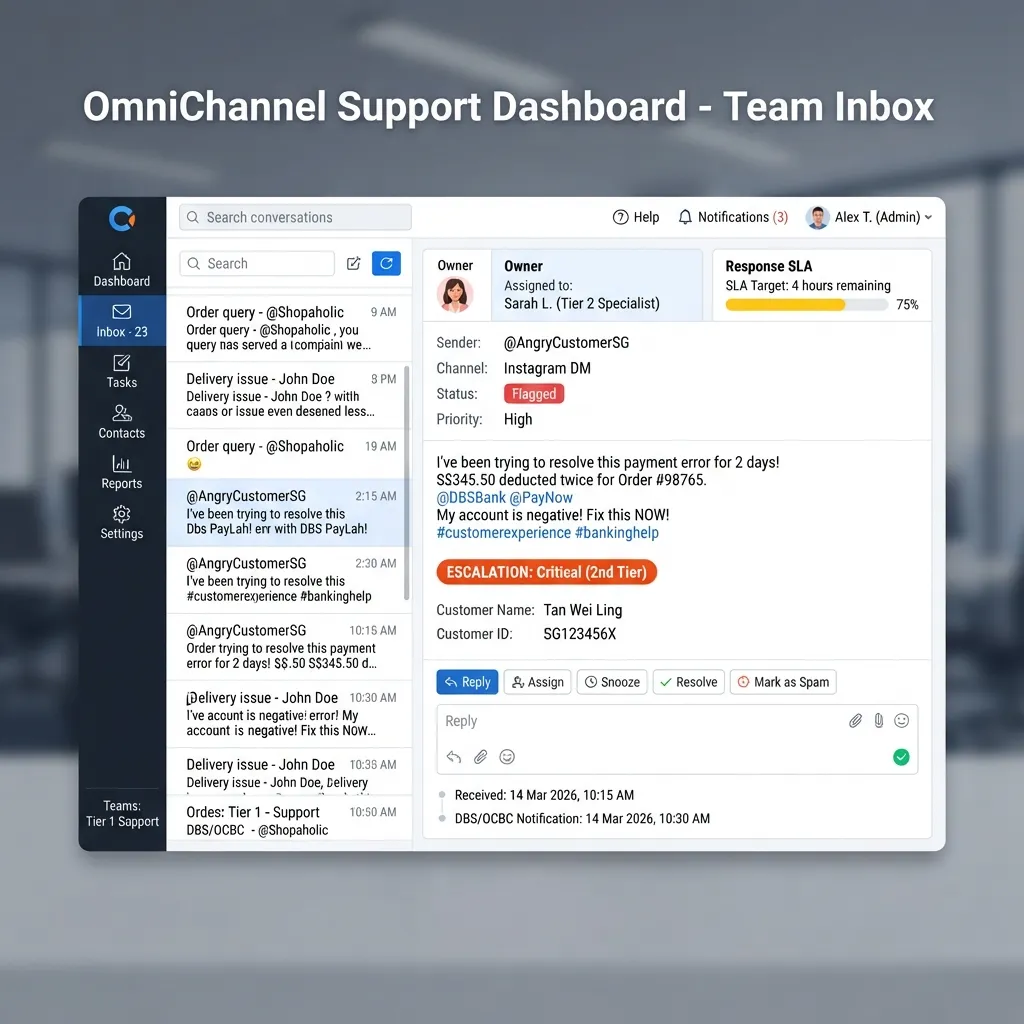
- Named owner: one user or staff member who can speak for the brand.
- Escalation trigger: a defined threshold, such as a spike in negative comments or a complaint shared outside the platform.
- Monitoring: native platform alerts, plus a manual review of private channels your customers use.
- Holding statement: a short, approved reply you can publish within the hour.
- Recovery step: a plan for follow-up once the immediate issue settles.
If the total is below 6, please address the gaps before adding more posts. This threshold is the author’s judgement, not an industry benchmark.
Conclusion
Social media management is a business function, not a posting schedule. The firms that get the most from it write a strategy before they publish, measure against the goal they actually have, and agree who responds when something goes wrong. Posting more and gaining followers feels like progress, but a large audience offers little protection if a single message spreads across Instagram, WhatsApp groups and TikTok before anyone in the company has noticed. Reviews, results and product feedback deserve the same disciplined attention as any other business metric, and a well-run website and digital presence should reinforce what the social channels say.
Run the five-layer audit this month. Score your objective, content system, response rhythm, monitoring and crisis readiness out of 2 each. A total below 6 points to the gap to close first, and for most small firms that gap is crisis readiness.
Frequently Asked Questions
Social media management is the ongoing work of planning, publishing, monitoring, engaging with your audience and analysing results across social platforms, as Reportei describes it. For a business, it is a function with its own strategy, measurement and crisis procedures.
The client material supplied for this article does not include local pricing, so we do not provide a figure here. Costs depend on the number of channels, the volume of original content, and whether you handle the work in-house or outsource it. Request itemised quotes that show planning, production, community management and reporting separately, so you can compare like with like.
The right platform depends on where your buyers spend their time and what you need from them. Recognition-led brands usually track reach and engagement rate. Sales-led firms track clicks, leads and conversions. Start with one or two channels you can run well, then expand once your monitoring and response routines are stable.
A tool becomes useful once you run several accounts, schedule posts across channels or need consolidated reports. Native analytics from Meta and TikTok cover basic reporting. Choose a tool only after you have written your objectives, because your goals should determine the software, not the other way around.
Work backwards from your goal. List the metrics you will track, the content types that move them and the posting frequency your team can sustain. Then map dates, owners and approval steps into a shared calendar. Review it monthly against results and keep a clear split between original and curated content.
Score your account on five layers: objective and metric, content system, publishing and engagement rhythm, monitoring and reporting, and crisis readiness. Rate each from 0 to 2. A total below 6 is a rule of thumb, not an industry standard, and it signals a gap to fix first. The lowest-scoring layer shows where to begin.