
Organic search remains the dominant source of website traffic, accounting for approximately 53.3% of all trackable website traffic globally, according to recent 2024–2026 SEO benchmarks.

For e-commerce brands, especially those on platforms like Shopify, this makes product page optimisation essential: product pages capture high-intent buyers who are ready to purchase.
When users search for specific models, materials, or features, they are not simply browsing. They are evaluating options and deciding where to buy. If your product pages lack structural clarity, semantic depth, or internal authority, search engines may not rank them prominently, and buyers may click away to competitors.
Shopify product page SEO is not about simply inserting more keywords. It is about aligning technical precision, search intent, and conversion clarity across five critical components. When these elements work together, product pages become predictable organic revenue drivers instead of passive inventory listings.
Key Takeaways
- Shopify product page SEO targets high-intent transactional searches, and product pages are where organic revenue is ultimately won or lost.
- Title optimisation has the greatest impact on rankings and click-through rates because it determines primary relevance in search results.
- SEO descriptions strengthen semantic depth and reduce buyer friction, improving both ranking stability and conversion rate.
- Product schema enhances SERP visibility with rich results, increasing clicks even without a change in ranking position.
- Internal linking distributes authority across your store, turning well-optimised product pages into consistent page-one performers.
What is Shopify Product Page SEO?


Shopify product page SEO refers to optimising individual product URLs so they can rank for specific transactional queries and convert that traffic into revenue.
Unlike collection pages, which target broader commercial keywords such as “men’s leather wallets,” product pages target specific intent, such as:
- men’s leather wallet RFID blocking
- brown slim leather wallet
- waterproof hiking backpack 40L
These searches indicate that the user already knows what they want. Your product page either clearly satisfies that intent or misses the opportunity.
Common issues that prevent product pages from ranking include:
- Duplicate titles across variants
- Thin or copied manufacturer descriptions
- Missing structured data
- Weak internal linking
- Indexing unnecessary parameter URLs
Fixing these is not optional if you want consistent organic revenue growth.
Title Optimisation: The Strongest On-Page Ranking Signal

Before discussing technical frameworks, it is important to understand why titles matter so much.
Search engines rely heavily on title tags to determine topical alignment. If your title is vague, repetitive, or lacks differentiation, Google may struggle to confidently match it to high-intent searches. At the same time, users rely on titles to decide which listing deserves their click.
A strong title improves two things simultaneously:
- Ranking relevance
- Click-through rate
That dual impact makes title optimisation the highest-leverage improvement on a product page.
Title Structure Framework
The goal of a product title is clarity, not creativity. A practical structure is: Primary Keyword + Key Differentiator + Brand
Differentiators may include:
- Material
- Size
- Model number
- Core feature
- Target audience
For example:
Weak: Leather Wallet – Brand
Optimised: Men’s Leather Wallet RFID Blocking Slim – Brand
The optimised version clearly signals:
- Who it is for
- What it is
- A distinguishing feature
Handling Variants Properly
Many Shopify stores create separate URLs for colour or size variants. If not handled carefully, this creates:
- Duplicate titles
- Competing URLs
- Diluted ranking signals
Use canonical tags to consolidate ranking signals where appropriate and avoid indexing low-value variant pages unless they have meaningful search demand.
SEO Descriptions: Ranking Signals + Conversion Psychology
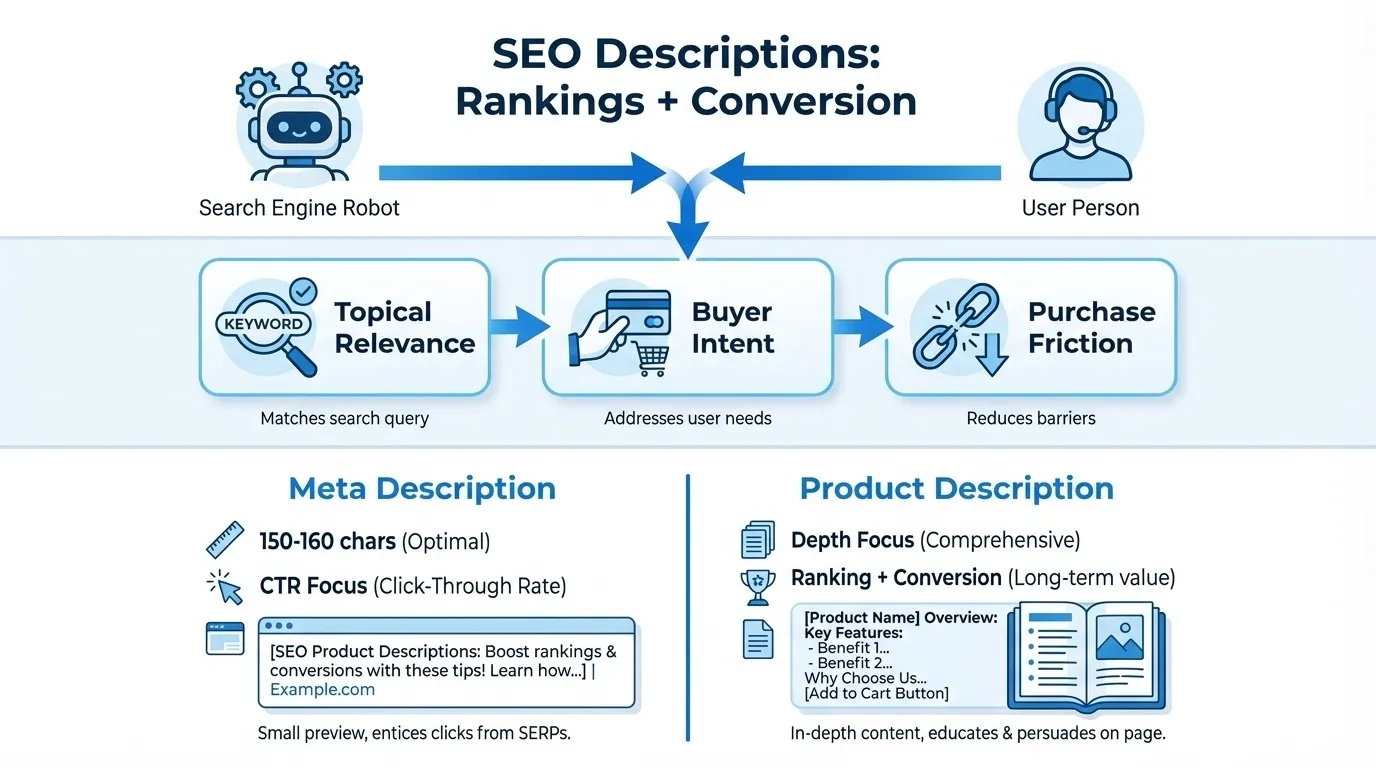
Descriptions serve two audiences:
- Search engines, which analyse semantic depth
- Users who evaluate trust and clarity
Many Shopify stores either write minimal descriptions or copy manufacturer content. Both approaches limit ranking potential. Before optimising structure, understand the purpose of the product description:
- Reinforce topical relevance
- Address buyer intent
- Reduce purchase friction
Meta Description vs Product Description
These serve different roles.
The meta description influences click-through rate. It should summarise the product’s key value in 150–160 characters and motivate the click.
The product description influences ranking and conversion. It must provide depth, clarity, and differentiation.
Structuring Product Descriptions for Performance
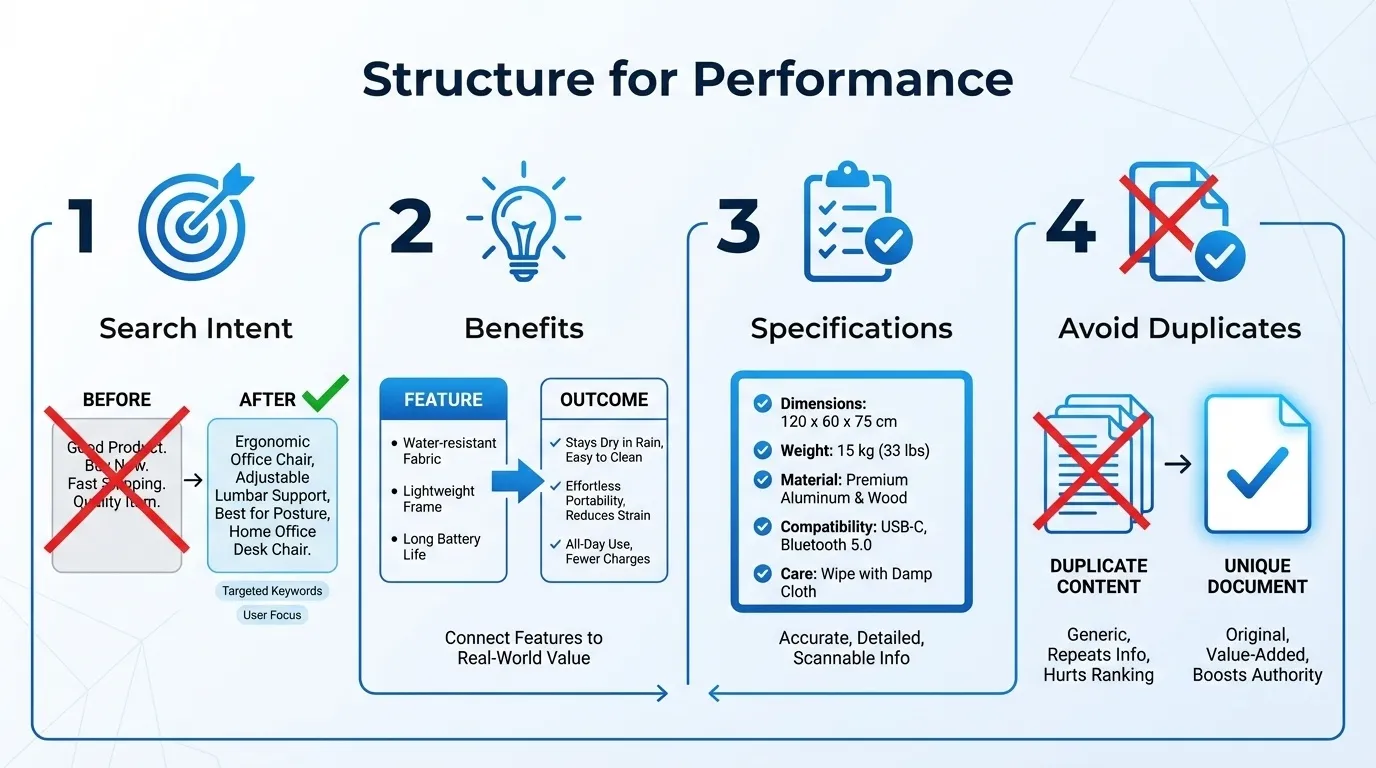
A well-optimised product description typically follows a logical progression.
1. Search Intent Alignment
Start by addressing the user’s primary need.
Instead of: High-quality leather wallet.
Write: Designed for everyday carry, this slim leather wallet protects your cards with built-in RFID blocking while maintaining a compact profile.
This signals immediate relevance.
2. Benefit-Led Explanation
Translate features into outcomes.
Instead of: Made from full-grain leather.
Write: Crafted from full-grain leather for durability that develops character over time.
Search engines recognise semantic depth. Users respond to benefit clarity.
3. Structured Specifications
Include clear, scannable details:
- Dimensions
- Weight
- Material
- Compatibility
- Care instructions
Specifications improve both semantic coverage and user confidence.
4. Avoiding Duplicate Content
If you sell similar products:
- Rewrite descriptions with unique positioning
- Highlight differentiating features
- Avoid repeating identical blocks across pages
Duplicate content weakens ranking competitiveness.
Image Alt Text: Underutilised SEO Opportunity

Search engines cannot interpret images the way humans do. They rely on surrounding content, file names, and most importantly, the alt attribute to understand what an image represents.
On Shopify product pages, images are often one of the strongest contextual signals available. They show product angles, features, materials, variants, and usage scenarios. If alt text is missing or poorly written, search engines lose a layer of descriptive information that supports topical relevance.
Alt text contributes to three important areas:
- Image search visibility: Properly described images can rank in Google Images, driving additional product discovery traffic.
- Accessibility compliance: Screen readers use alt attributes to describe images to visually impaired users.
- Context reinforcement: Alt text strengthens the semantic signals of the product page by aligning images with the target keyword and product attributes.
Alt text alone will not dramatically improve rankings. However, when combined with strong titles, descriptions, schema, and internal linking, it reinforces the page’s overall semantic footprint.
Search engines cannot see images. They interpret them through alt attributes and file names. Alt text supports:
- Image search visibility
- Accessibility compliance
- Context reinforcement
While alt text alone will not dramatically change rankings, it strengthens the page’s overall semantic signal.
How to Write Effective Alt Text
Use descriptive, natural language.
Structure: Primary Keyword + Attribute + Context
Example: Men’s leather wallet, brow, RFID blocking interior
Avoid stuffing multiple keywords into a single image or repeating identical alt text across images.
Product pages often fail to rank, not because of weak titles or thin descriptions, but because they lack internal authority.
Search engines evaluate pages not only based on content quality but also based on how they are positioned within the site’s internal structure. If a product page receives few internal links, sits deep within navigation, and is rarely referenced contextually, it signals lower importance.
Internal linking is how you communicate priority, relevance, and hierarchy to search engines. For Shopify product page SEO, this is often the most under-optimised ranking lever.
Strategic Internal Linking for Shopify Product Page SEO
Internal linking must be deliberate and structured.
1. Link from Collection Pages to Priority Products
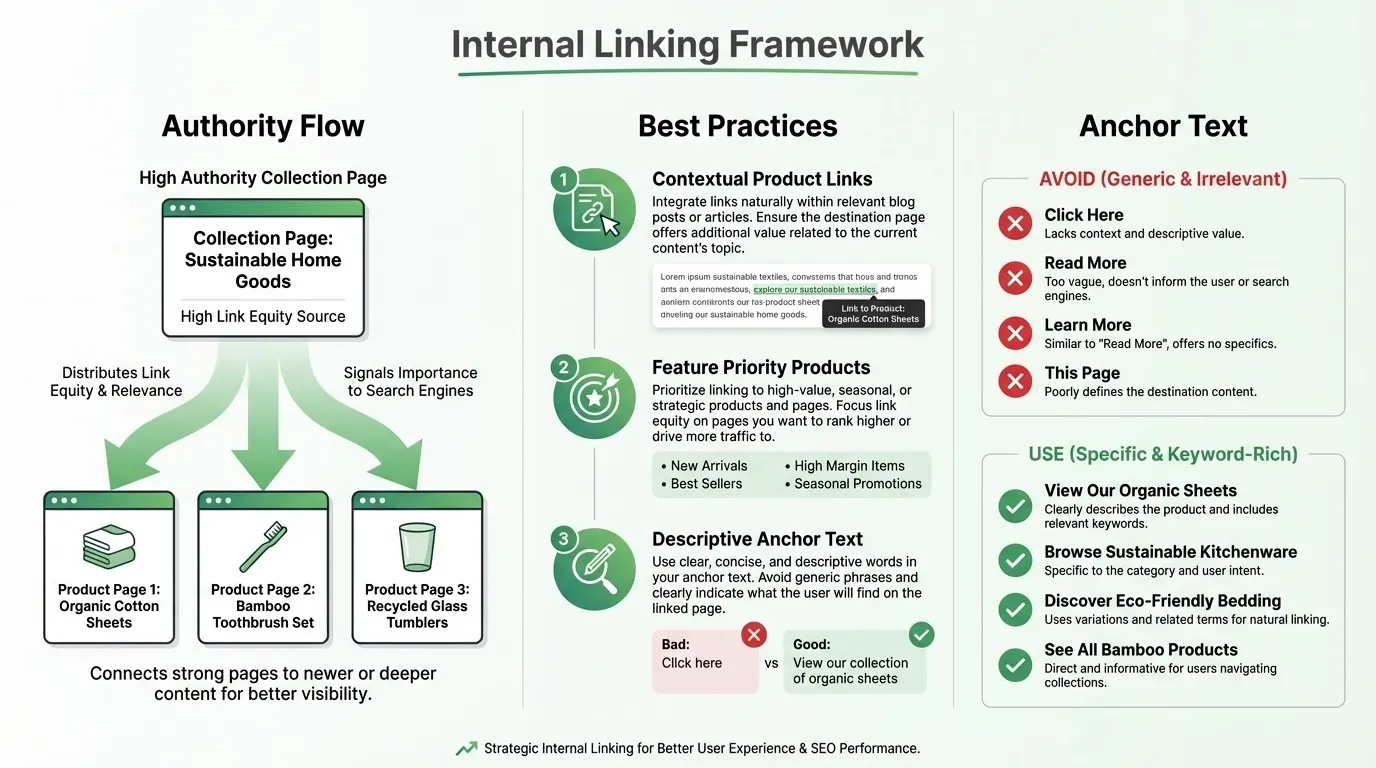
Collection pages typically accumulate more authority because they target broader keywords and receive more backlinks. Use that authority to strengthen product pages.
Best practice:
- Add contextual product links within collection descriptions
- Feature high-margin or high-demand products near the top
- Use descriptive anchor text
Avoid:
“Click here”
“View product”
Use:
“Slim leather RFID wallet”
“Waterproof hiking backpack 40L”
Descriptive anchor text reinforces keyword relevance.
2. Link from Blog Content to Product Pages
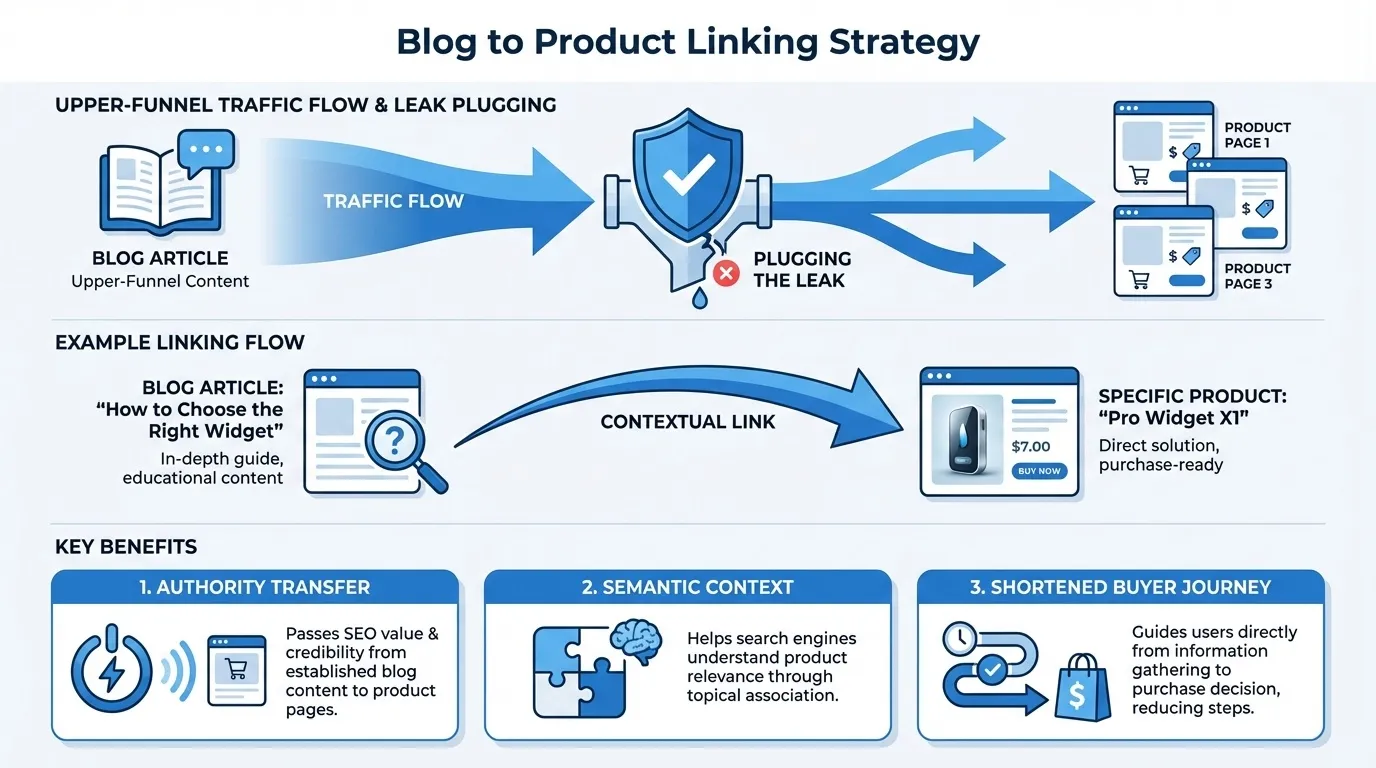
Informational blog content often ranks for upper-funnel queries. If your blog attracts traffic but does not link contextually to product pages, you are leaking authority and conversion opportunities.
Example:
If you publish: How to Choose a Durable Leather Wallet
Within that article, link naturally to: Men’s leather wallet RFID blocking
This achieves three things:
- Passes authority to the product page
- Strengthens semantic context
- Shortens the buyer journey
Contextual links are stronger than navigation links.
3. Use Breadcrumb Navigation Properly
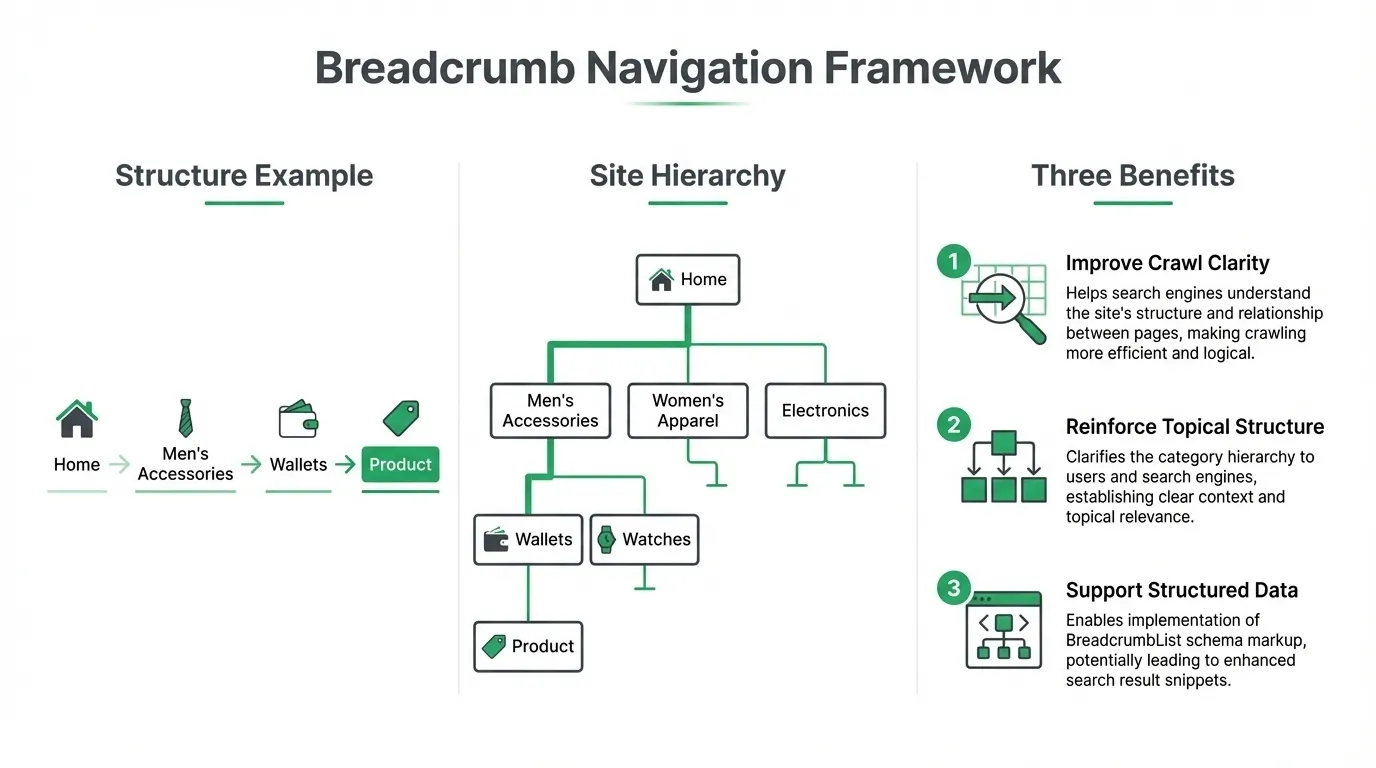
Breadcrumbs clarify site hierarchy for both users and search engines.
Example structure: Home > Men’s Accessories > Wallets > Men’s Leather Wallet RFID Blocking
Breadcrumbs:
- Improve crawl clarity
- Reinforce topical structure
- Support structured data implementation
Ensure breadcrumb schema is implemented correctly.
4. Related Products and Cross-Linking
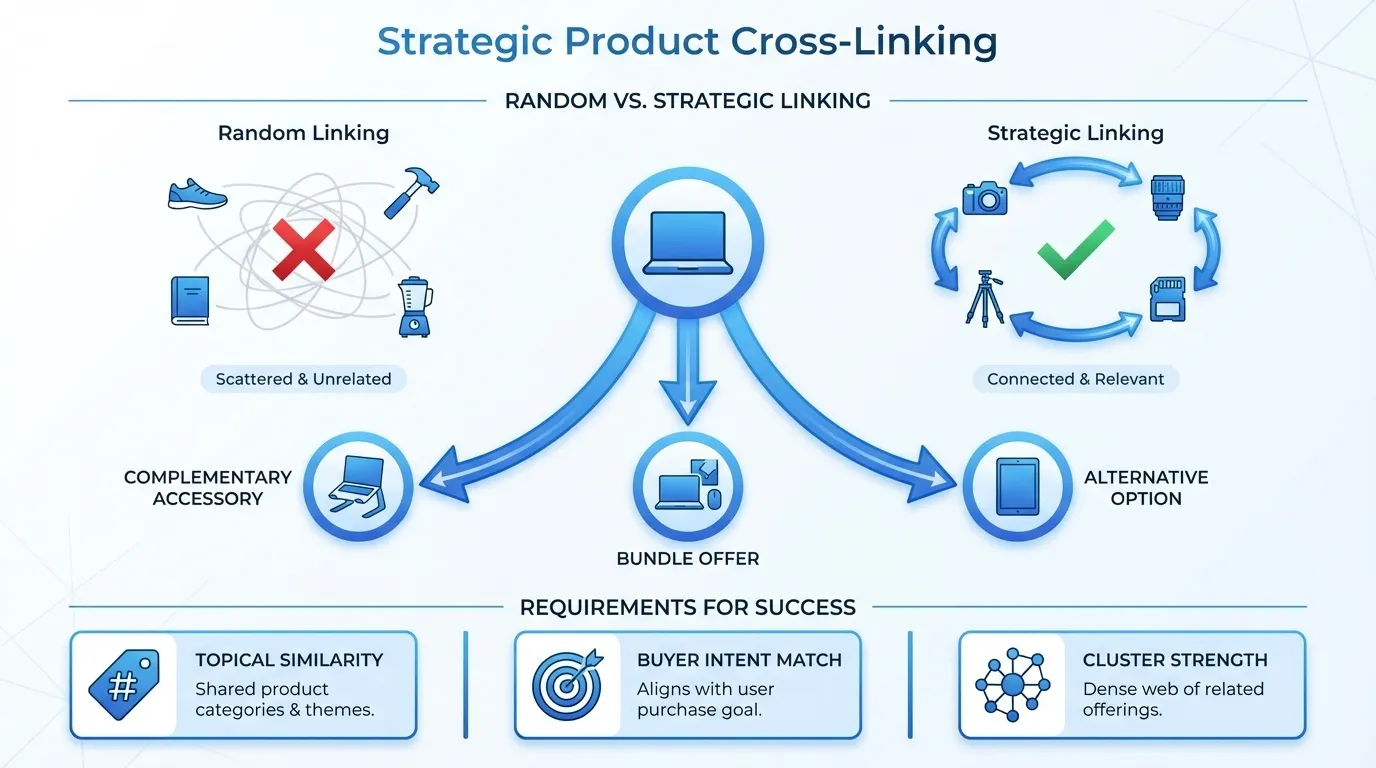
Related product modules should not be random.
They should:
- Share topical similarity
- Complement buyer intent
- Strengthen cluster structure
Avoid auto-generating unrelated suggestions. Strategic cross-linking increases internal depth and strengthens topical authority.
5. Control Click Depth
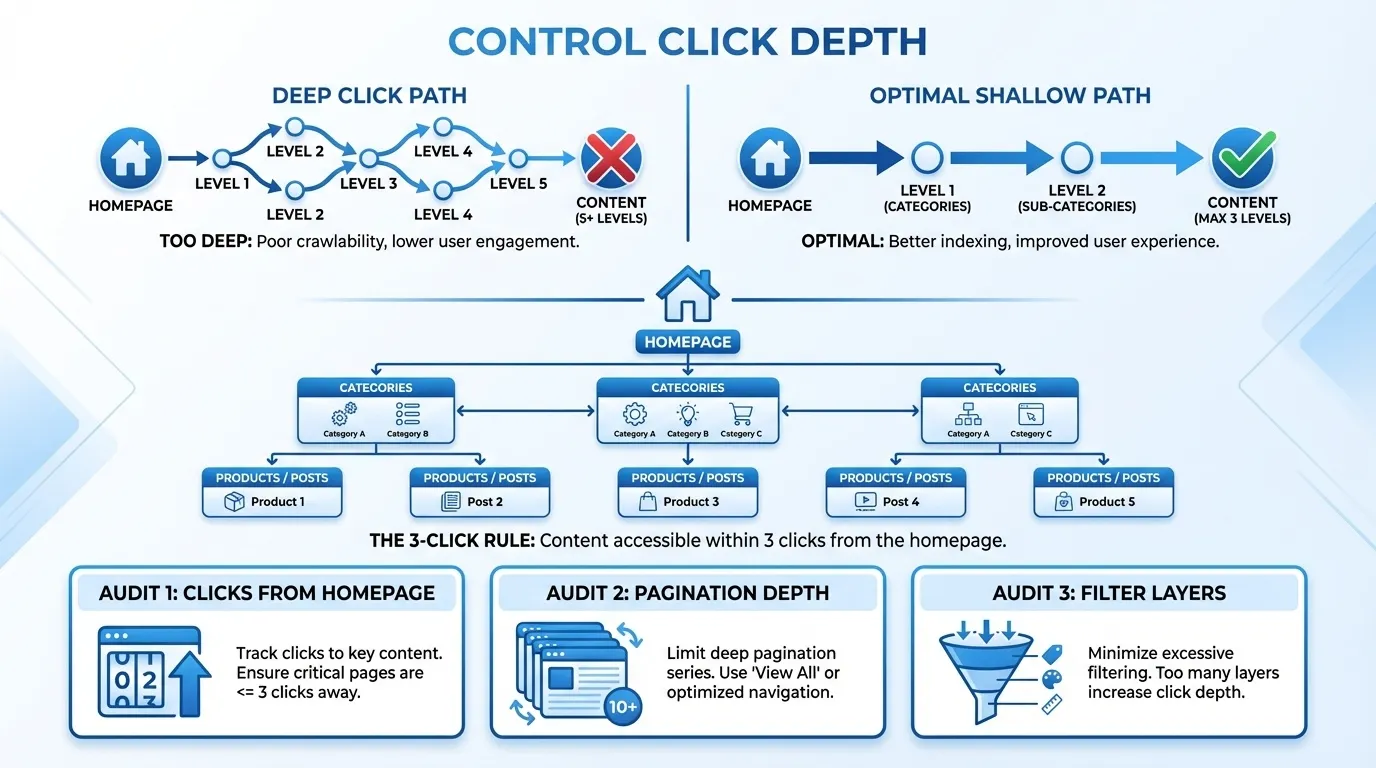
Product pages should not be buried more than three clicks from the homepage. Excessive click depth reduces crawl frequency and perceived importance.
Audit:
- How many clicks are there from the homepage to the product
Whether pagination pushes important products too deep - Whether filters create unnecessary layers
Shallower architecture supports stronger rankings.
How the 5 Elements Work as One System
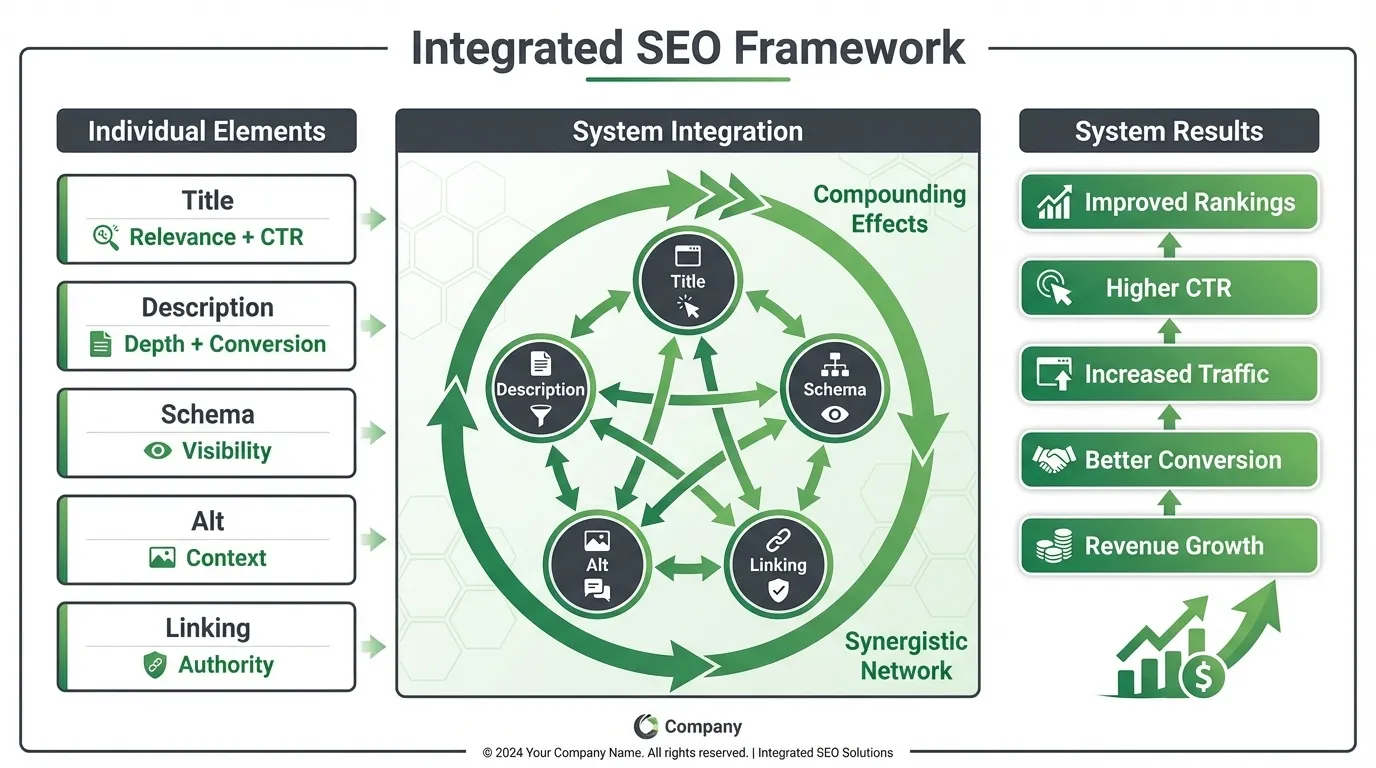
Most Shopify stores treat title optimisation, descriptions, schema, alt text, and internal linking as separate improvements. In reality, rankings do not improve because one element changes. They improve when multiple signals align and reinforce each other.
Each of the five elements affects a different performance metric. When optimised together, they create measurable gains across visibility, click-through rate, and revenue.
Individually, each element improves a different metric:
- Title → Improves relevance and CTR
- Description → Improves semantic depth and conversion
- Schema → Improves SERP visibility
- Alt text → Reinforces context
- Internal linking → Distributes authority
When aligned, they produce compounding outcomes:
- Higher rankings
- Stronger click-through rate
- Increased organic sessions
- Improved conversion rate
- More predictable revenue growth
For example: Improved ranking + enhanced rich snippet + higher CTR + clearer description
= More qualified traffic + higher conversion rate
This is not an incremental improvement. It is system-level optimisation. When all five elements are implemented correctly, product pages typically show:
- Improved keyword ranking position
- Higher click-through rate from search results
- Increased organic traffic
- Improved organic conversion rate
- Greater revenue per indexed product page
Instead of relying on paid traffic for product discovery, your Shopify store develops structurally strong, self-sustaining organic revenue channels.
Master Shopify Product Page SEO for Long-Term Ranking Stability
Shopify product page SEO is where transactional demand either compounds or disappears. Collection pages may generate exposure, but product pages capture high-intent buyers. If those pages lack strong titles, structured descriptions, schema clarity, contextual image signals, and internal authority flow, they will struggle to compete against structurally stronger competitors.
This is not incremental optimisation. It is structural optimisation. The stores that dominate organic ecommerce are not those with the largest inventories. They are the ones with the most strategically optimised product pages.
If you want a structured audit of your Shopify product pages, from title architecture to schema validation and internal authority mapping, MediaOne can help. Speak to our team to identify exactly where your product pages are underperforming and how to turn them into consistent organic revenue drivers. Contact us today!
Frequently Asked Questions
Should I noindex Shopify product pages for out-of-stock products?
Not necessarily. If the product is temporarily out of stock and likely to return, keep it indexed and clearly indicate availability. If it is permanently discontinued, consider redirecting it to a relevant product or collection page to preserve accumulated authority.
Do product page reviews impact SEO performance?
Yes, genuine user reviews add unique content, increase semantic depth, and can trigger review-rich results when properly marked up with schema. They also improve conversion rate by reducing buyer uncertainty.

How do I prevent keyword cannibalisation between similar products?
Ensure each product page targets a distinct primary keyword and emphasises unique attributes such as material, size, use case, or model number. Avoid creating multiple pages that compete for the same exact search term without differentiation.
Does page speed affect Shopify product page rankings?
Yes. Slow-loading product pages negatively impact user experience and Core Web Vitals, which are ranking signals. Large images, heavy apps, and excessive scripts are common causes of performance issues on Shopify.
How often should I update product pages for SEO?
Review high-priority product pages quarterly to assess ranking performance, CTR, and conversion rate. Updates should be data-driven, focusing on improving titles, expanding descriptions, refreshing schema, or strengthening internal links based on performance metrics.