Key Takeaways
Work in sequence. Fixing the technical and local on-page basics first is more effective than chasing a long list of techniques all at once.

Audit first, then rank the findings. Broken pages (404 errors), slow images and crowded elements are the usual starting problems.
Set up local signals before broad content. Local on-page SEO comes first, so location and service area are in place before you expand.
Target long-tail queries: one page per intent. Specific searches are easier to rank for than broad terms.
Leave link building for last. Off-page work and AI search visibility pay off once the earlier steps are solid.
Score each stage before moving on. Rate each stage 0, 1 or 2, and start the next stage only when the one beneath scores 2.
Most Singapore small and mid-sized enterprises (SMEs) do not lose search traffic because they lack ideas. They lose it because they try too many techniques at once, with a limited budget and no clear order. A list of forty tactics is less useful than a few steps taken in the right sequence. The core SEO techniques, in order, are an audit, technical fixes, local on-page optimisation, long-tail keyword targeting, then off-page work and AI search visibility. Start with the audit, and fix broken pages and slow images first. The sections below explain each step, how to score findings and what each tool can and cannot do for a small website.
Start With an SEO Audit to Find Critical Issues
An audit shows the problems that quietly cap your search visibility, so you can decide what to fix first. It covers your content, your technical health and how a search engine reads each page. Check these basics before adding anything else, because following SEO best practices from the start prevents costly rework later. The audit also shows which keywords your pages already rank for, so you can build on what works. Running a regular optimization review on your website keeps these checks current as your pages change. Work through a seo checklist that covers these basics before you start any new optimization work.
Spotting 404 Errors, Slow Images and Crowded Elements
The U.S. Chamber of Commerce recommends auditing for 404 errors, slow-loading images and page elements placed too close together. Three checks cover most of what an audit needs:
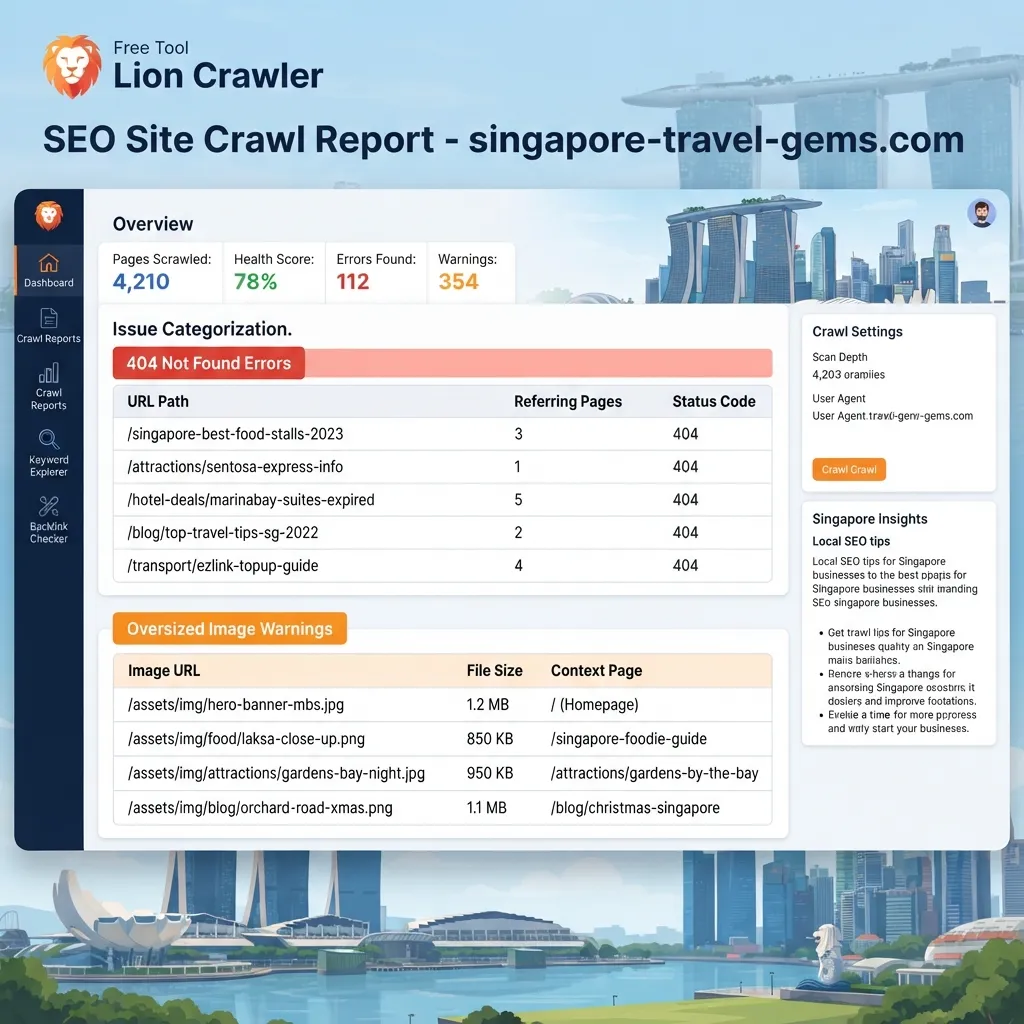
- Check for 404 errors. Find broken URLs in your Search Console, then restore the page, redirect it to the closest relevant page, or remove the internal links pointing to it.
- Check image size. Compress oversized images and write descriptive alt text. Original photos of your premises and staff help you stand apart from competitors who rely on stock images, as Neil Patel notes.
- Check spacing. Give buttons and text blocks room, then test the page on a real phone.
Free crawling tools can run these checks. The free plan of one popular audit tool analyses up to 500 URLs, which may be enough for a small site. Check the vendor’s pricing page for current limits, as these change over time. Larger sites should audit top-traffic sections first.
Setting Priorities Before You Change Anything
An audit often returns dozens of findings, and fixing them in the order they appear is a common error. Score each finding on two questions: how many visitors reach the affected page and how much the problem stops a visitor from acting. A 404 on a page that earns enquiries goes to the top. A slow image on a rarely visited archive page goes near the bottom. Ranking fixes this way keeps your optimization effort focused on the changes that matter most to your SEO strategies.


| Finding | Traffic | Impact | Priority |
|---|---|---|---|
| 404 on a service page | High | Blocks enquiry | Fix first |
| Oversized hero image | High | Slows first impression | Fix this week |
| Crowded contact buttons | Medium | Hurts mobile taps | Fix this month |
| Slow image on old post | Low | Minor | Schedule later |
Work the list from top to bottom and record the date of each fix. Re-run the audit after you fix the top items, since some findings disappear once you remove their root cause.
Technical SEO: The Foundation Search Engines Check First
Technical SEO covers how search engines find, crawl and read your pages. Once the audit is complete, these checks confirm that search engines can crawl the site cleanly. Google documents these topics in its Search Central guidance, which is the primary source for the points below.
Search engines must find a page, read it and decide it is worth showing before it can rank. Technical SEO covers that groundwork, and for most Singapore small and mid-sized businesses, it is the first place to spend effort. A website that cannot be crawled or that loads slowly on a phone, will struggle to rank, no matter how good the content is. Solid optimisation of the basics makes every later step far more effective. A page that loads and reads well is also more likely to satisfy the search intent behind the query that brought the visitor there, so each page should target relevant keywords within a clean website structure. Teams that track how visitors arrive and behave in Google Analytics can see which pages need this groundwork most.
The order matters. Many local businesses reach for new content or link building first, yet a page with broken links, duplicate URLs or a slow mobile load wastes that work. First, fix the technical foundation, then build on it. Use tools to find and prioritise the issues holding your pages back, and treat this groundwork as the base for every other SEO technique you apply. Once the foundation is sound, search engines’ best practices provide a reliable guide for what to do next. A clear seo strategy sets that order in advance, so fixes are scheduled before new content is commissioned.
Technical SEO Checklist for Site Owners
Work through these checks in order. Each one is a yes-or-no question with a clear pass mark, so you can score your website as you go.
- Can search engines reach your important pages? Pass if key service and product pages are not blocked in your robots file. Fail if any important page has no internal link pointing to it.
- Does every page return the correct status? Pass if live pages return a 200 response. Fail if any page that other sites link to returns 404 errors. Remove or redirect those pages.
- Is there one canonical version of each page? Pass if the http and https versions, the www and non-www versions, and the trailing-slash versions all redirect to a single address. Fail if two versions of the same page both load. Duplicate content of this kind splits your ranking signals.
- Is an XML sitemap submitted? Pass if your main pages are listed in a sitemap and it is submitted through Google Search Console. Fail if no sitemap has been submitted.
- Are images compressed and named sensibly? Pass if images are resized before upload and carry descriptive file names. Fail if a standard product or service photo makes the page feel slow on a phone.
- Does the mobile layout work? Pass if the text is readable without zooming, the buttons are not crowded or spaced apart, and all content is visible on screen. Fail if any of these three is missing on a key page.
- Are page titles and headings unique? Pass if every page has its title and a single H1. Fail if two pages share the same title, because duplicate titles make it harder for search engines to tell those pages apart.
A useful test is to run a crawl with a free tool. The free plan of one commonly used crawler analyses up to 500 URLs, according to the U.S. Chamber of Commerce. Check the current limits on the vendor’s own pricing page before you rely on them, because free allowances change. A small website may be covered by a free plan, while larger catalogues, such as an online store selling through Shopee with many product variants, will usually need a paid crawl or a sample of representative URLs.
Technical SEO Checklist for Site Owners
- Confirm each important page has one canonical URL. Google documents canonical tags in its canonicalisation guidance.
- Submit an XML sitemap listing the pages you want indexed, as Google’s sitemap documentation explains.
- Check for broken internal links and fix them before adding new pages.
- Check that the site is served over HTTPS.

These are best practices, and Google’s documentation describes the rules. Treat the checklist as a starting point, not a guarantee of rankings. Avoiding common mistakes, such as leaving duplicate URLs unchecked, keeps the checklist effective. Many teams include a free crawler in their SEO tool stack to surface these issues over time.
Managing URL Parameters Without Creating Duplicates
Filter and sort parameters can create many URLs showing near-identical content on your website. Point duplicates to a single canonical version, and keep parameter pages out of your sitemap so search engines spend their crawl effort on the pages that matter. Reviewing these URLs regularly saves time and keeps your site’s structure clean.
Speed, Mobile Usability and Crawlability
Core Web Vitals measure loading speed, responsiveness and visual stability, which together shape the user experience. Google’s Core Web Vitals guidance explains each metric. Test your pages with PageSpeed Insights to see which elements slow them down, and use Search Console’s crawl stats to check how often Google visits your site. Strong technical work supports the wider SEO strategies covered later.
Once the site loads and crawls cleanly, the focus shifts to what each page says.
On-Page SEO Techniques That Shape Each Page
On-page SEO is the work done on each page: its title, its headings, its images and its text. Good on-page work tells search engines and visitors what the page is about, and it shapes how the page appears in results. Keep each page focused on one search intent, and make sure the content matches the intent behind the query. Relevant content answers the question the searcher actually asked.
Meta Tags and Meta Descriptions That Earn Clicks
A meta title and meta description tell searchers what a page covers before they click. Describe what the page answers, in plain words, without repeating the title. Common mistakes include copying the same description across many pages, so write a distinct one for each page.
Before: “Our Services | ABC Plumbing”
After: “Emergency Plumbing in Tampines, Same-Day Callouts | ABC Plumbing”
Write the description to match: name the service, the area and the next step, in under 160 characters.
Using Original Images to Stand Out From Stock Photos
Original photos help a page earn trust and set you apart. Name image files descriptively and add alt text that describes what the image shows, not what you hope it ranks for.
People Also Ask Opportunities
Use the questions in the People Also Ask panel to shape your headings and short answers. Each question that matches a real customer concern is an opportunity for a section.
Heading Structure and Internal Links
Use one H1 per page and a clear H2 and H3 hierarchy. Link related pages with descriptive anchor text so visitors and search engines can follow the topic. A well-linked website helps both visitors and crawlers move between related content.
Keyword Research and Long-Tail Search Terms
Keyword research identifies the terms your customers type when they want what you sell. Start with the broad terms your business already uses, then extend them into specific phrases. Good research also considers how each term fits your broader SEO strategy and your website’s overall user experience.
Turning Broad Terms Into Long-Tail Opportunities
Another effective technique is using long-tail keywords instead of broad terms. A phrase such as “SEO techniques” is competitive, while “SEO techniques for a Singapore bakery” is specific, easier to rank for and closer to a buying decision. For an e-commerce store, long-tail phrases often match product-level searches more closely than category terms, which can help you improve conversions over time.
Using People Also Ask and Suggestion Tools for Content Ideas
Suggestion tools generate ideas from search engines and third-party marketplaces, including Amazon, YouTube and eBay. Singapore shoppers also search on Shopee and Lazada, so check those platforms for product terms. For a more extensive list, Answer the Public offers a free tool that Neil Patel recommends, and it can help you find questions your audience asks at any time.
Avoiding Keyword Cannibalisation Across Pages
Keyword cannibalisation occurs when two pages on your site compete for the same query, which can hurt your search rankings. Give each page one main intent, and merge or redirect pages that overlap.
Local SEO for Singapore Businesses
Local SEO helps nearby customers find your business in map results and local searches. For most local businesses, local on-page SEO comes first, as the U.S. Chamber of Commerce advises.
Why Local On-Page Work Comes First
Put your location, service area and opening hours on the website, and make them match your Google Business Profile. Consistent details across your site and directory listings help search engines confirm where you operate.
Personalising Content for Your Community
To benefit from local SEO, personalise your content to meet your community’s needs as the expert in your industry. Write about the neighbourhoods you serve, the questions local customers ask and the services they need.
Building Local Authority Signals
Local citations and reviews add trust signals. Structured data, a markup that labels your business details for search engines, helps them read your listing, and Google Business Profile reviews show how customers rate you.
Off-Page SEO and Backlinks
Off-page SEO covers signals from outside your website, mainly links from other sites. Leave this task for last, once the earlier steps are solid. A link from a relevant local directory or industry association is worth more than many links from unrelated sites. Unlinked brand mentions, where your business is named without a link, can also help people find you, and you can ask for a link when one is appropriate.
AI Search Visibility
AI search tools summarise answers from web pages. Google’s AI Overviews and similar tools favour clear, well-sourced pages. Answer one question per section, state facts plainly and keep your structured data accurate. Monitor whether your pages appear in these answers, and adjust the wording if they do not.
Maintaining and Updating Content
Search results change, so content needs regular attention. Schedule a review of your top pages every six months, and check whether each still matches its search intent on your website.
Keyword Cannibalisation and Reoptimisation
When two pages compete for one query, merge them or redirect the weaker page to the stronger one. Reoptimise pages that rank just outside the top results by improving their headings and answers, which is a core part of search engine optimisation.
Pruning Underperforming Content
Pages that earn no visits and no enquiries can be updated, merged or removed. Pruning keeps your site focused on the pages that help customers.
Managing URL Parameters Without Creating Duplicates
URL parameters are the extra text after a question mark, such as ?colour=red&sort=price. They help visitors filter a product list, but each combination creates a new address. Search engines may see near-identical pages as duplicates and split their ranking credit between them. Ask which keyword a filtered page targets before you let it stand alone, because a page without a clear keyword target rarely earns its place.
Handle parameters in three steps:
- Decide which parameters create pages worth ranking. A filter for “men’s running shoes size 10” may deserve its own page.
- Point parameter variants to the main page. Set a canonical tag on filtered and sorted pages to suggest the main category page as the preferred version. Google treats canonical tags as a hint and may choose a different version.
- Keep internal links clean. Link to the plain category address from your navigation, not to every filtered variant.
Speed, Mobile Usability and Crawlability
Speed, mobile usability and crawlability are the three checks that most often separate a site that ranks from one that does not. They share one root cause: how the site behaves on a phone over a real connection.
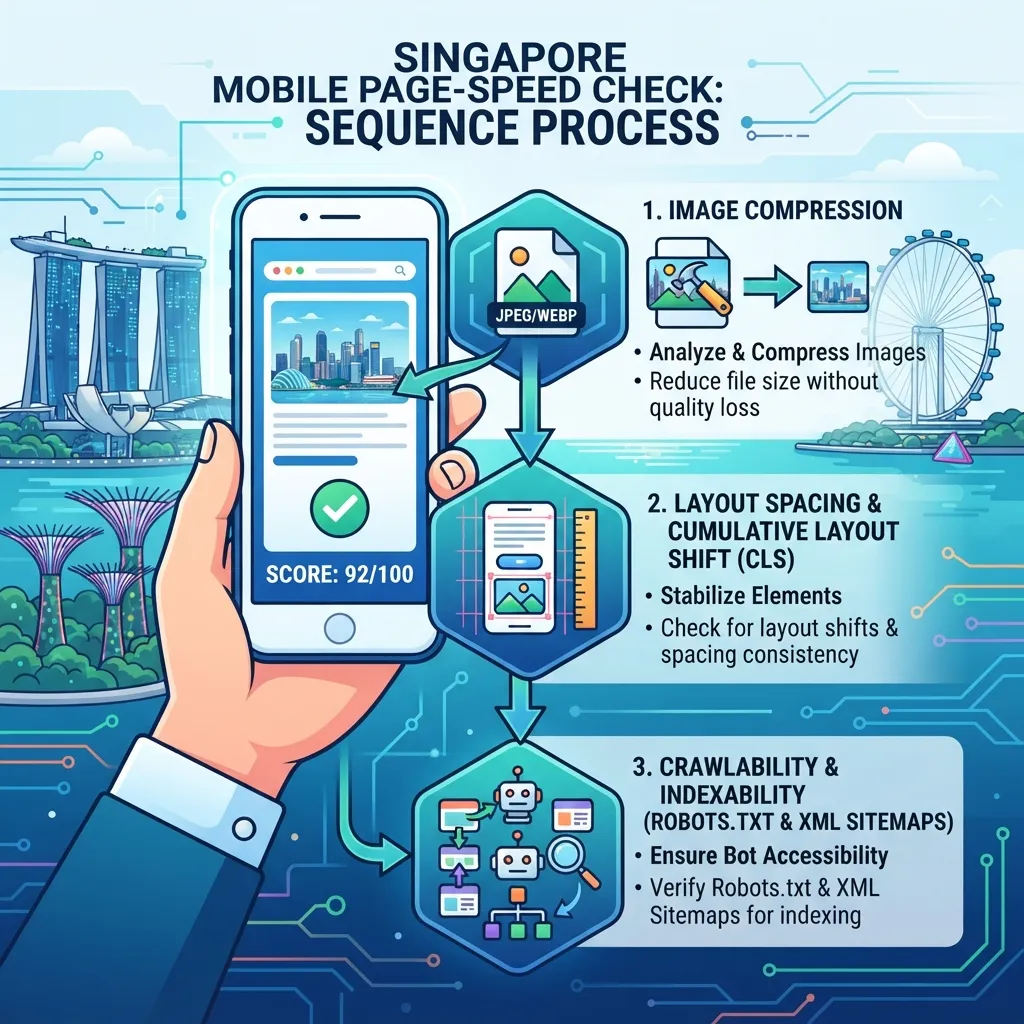
Speed. Page speed is the first check, because a slow page loses visitors before they read a word. Start with the images, since oversized files are a common cause of slowness. Then check whether scripts from chat widgets, tracking tags or embedded videos delay the main content. Google Search Central documentation explains how page experience is assessed.
Mobile usability. The second check is whether the layout works on a small screen. Text should be readable without zooming, and buttons should be spaced far enough apart to tap. Content hidden on mobile may also be missed by search engines. An easy-to-use layout also supports a good user experience, which keeps visitors on the page long enough to read it.
Crawlability. The third check is whether search engines can move through the site efficiently. Keep important pages within a few clicks of the homepage, avoid long chains of redirects and remove orphan pages, meaning pages nothing links to. The crawl and indexing guidance from Google Search Central covers these points in detail.
Once the site loads quickly and crawls cleanly, the focus shifts to what each page says. Use the Core Web Vitals report in Google Search Console and the PageSpeed Insights tool to measure these checks against real data. Treat any page flagged as slow on mobile as a priority, and fix the template it shares with other pages first, because one change can improve many URLs at once. Over time, the content ideas that follow from this review are easier to act on because the pages they will live on already load and read well.
On-Page SEO Techniques That Shape Each Page
On-page work is the part of SEO you control completely. Titles, descriptions, images and internal links all sit on your pages, so you can change them this week. Many of the easiest gains come from these basics, which people often neglect because they look too simple to matter. Clear, well-structured content on your own website gives both readers and search engines a reason to trust the page, and good on-page optimisation helps businesses earn that trust. Tracking how visitors arrive and behave with Google Analytics shows which of these basics are working. Treating these basics as part of a wider seo strategy keeps every page working toward the same goals, and a steady flow of content ideas tied to real searcher questions gives each page a clear purpose.
Meta Tags and Meta Descriptions That Earn Clicks
The title tag and meta description are the two lines a searcher reads before deciding whether to click. Search engines may rewrite the description, but a well-written one still shapes the snippet most of the time. Treat it as ad copy for a single page, and keep the brand voice consistent across every title you write. Match each description to the search intent behind the query it targets, and choose relevant keywords that reflect what searchers actually type.
Use this checklist when you write them. Each item has a clear pass mark you can verify on the page.
- Put the primary keyword near the start of the title tag. Pass if the keyword appears in the first few words.
Keep the whole title short enough to display in full on a phone.
- Write one unique title and description per page. Pass if no two pages share a description.
Two pages with identical descriptions compete with each other and often lose both, which is duplicate content that dilutes your rankings.
- Describe what the page answers, not what the business wants to sell. Pass if the description states the question the page answers.
“Dental implant cost in Singapore: what affects the price” beats “Dental implants at our clinic”.
- Name the place when the service depends on location. Pass if the neighbourhood or district you serve is already mentioned in the description.
Local searchers look for their area first.
- End with a reason to click. Pass if the description gives a specific outcome or a clear next step, without exaggerating what the page delivers.
Check every title and description against the page it describes. A description promising a price comparison that the page does not contain will earn one click and then a bounce.
For a worked example, take a small Singapore physiotherapy clinic in Tanjong Pagar. A weak title might read, “Physio Clinic | Our Services.” A stronger version is: “Sports Physiotherapy in Tanjong Pagar: Injury Assessment Explained.” The weak description reads “Welcome to our clinic. Book today.” The stronger one reads “Learn what a sports physiotherapy assessment covers in Tanjong Pagar, what to bring and how to book a first session.” The second pair names the service, the district and the question the page answers, so the searcher knows what they will get before they click.
Using Original Images to Stand Out From Stock Photos
Neil Patel notes that relevant, original images can set your site apart from others that rely on stock photos. This is a general best practice, not a specific finding for Singapore. A stock photo of a smiling family in a generic clinic could be anywhere. A photo of your team and premises tells the searcher you are a real local operator.
Original images also carry search value. Give each file a descriptive file name, write alt text that describes what is shown and why it matters to the page, and compress the files so they load quickly on mobile. Large, unoptimised images often slow pages, so handling them well supports both rankings and the user experience. Oversized files are one of the easiest mistakes to fix with the right tools. Following these technical SEO practices keeps every image working for the page rather than against it, and a business that treats images as part of its keywords strategy gets more value from each file.
People Also Ask Opportunities for On-Page Content
Questions shown in the People Also Ask box are a ready source of subheadings. When a page answers the questions a searcher is already asking, it matches the search intent more closely. Place each question as an H3 or as a short paragraph opener, then answer it in the first sentence. Keep answers to what the page actually offers. A question the page cannot answer belongs on another page, or should be left out.
Heading Structure and Internal Links
Headings show readers and search engines how a page is organised. Use one H1 per page that states the page topic, then use H2s for the main sections and H2s for any subsections. Do not skip levels to get a font size you like. Style the text with CSS instead. Scanning headings for issues such as skipped levels or duplicated H1’s is a quick check during any audit.
Internal links connect your pages and pass context between them. Link from a related article to a service page, using descriptive anchor text such as “local keyword research for Singapore shops” rather than “click here.” Each link should help a reader take a step they would plausibly want. Start with the pages that already earn traffic, and link from them to the pages you want to strengthen, since those links carry the most practical weight. This is a simple but effective part of any SEO strategy, and it helps a website improve how its pages support one another. Following best practices like these keeps the structure sound. For more on applying these basics to your own pages, see Media One Marketing’s SEO services.
Keyword Research and Long-Tail Search Terms
Keyword research is the step where you decide which searches your pages should win. Most Singapore small businesses either chase one broad term they cannot realistically rank for, or publish pages that compete with each other. A short, disciplined process avoids both problems and helps you improve the relevance of every page you publish. Rung 3 of the SEO Priority Ladder covers this work, and it only makes sense once the audit and local on-page basics in the earlier rungs score complete. Many of the common mistakes that hold small sites back start with skipping that foundation. A clear seo strategy starts from this foundation.
Turning Broad Terms Into Long-Tail Opportunities
A broad term such as “SEO techniques” or “dentist” attracts large search volumes, but the people typing them are at very different stages. Many are students, competitors or people who have just heard the phrase. Long-tail keywords are longer, more specific phrases, such as “dental clinic near Orchard with weekend appointments.” Each attracts fewer searches, yet the person typing it usually knows what they want. Neil Patel’s guide to advanced SEO techniques notes that using long-tail keywords instead of broad terms is effective and that you should choose a page’s keywords with the searcher’s intent in mind.
To turn a broad term into long-tail opportunities, work through three steps:
- List the broad terms your business should be known for and the brand terms that describe what you sell.
- For each, write five to ten relevant keywords a real customer would type, including location, price, urgency or problem.
- Score each phrase from 0 to 2 on two questions: does the searcher’s intent match what you sell, and is the competition beatable for a site your size?
Keep phrases scoring 4 or more out of 4 on that second check. A page that matches intent exactly usually converts better than a broader page that ranks lower, even when its search volume is smaller. Effective SEO strategies start with this kind of intent matching, not with raw search volume.
Using People Also Ask and Suggestion Tools for Content Ideas
Once you have a seed list, let search engines show you what else people ask. The “People also ask” box on Google results and the autocomplete suggestions in the search bar both reflect real queries. The U.S. Chamber of Commerce’s guide to SEO types explains that suggestion tools generate ideas from search engines and third-party marketplaces such as Amazon, YouTube and eBay. For a Singapore retailer, Shopee and Lazada search suggestions serve the same purpose, because buyers there often phrase product searches differently from Google, and a bare brand name in an e-commerce store search can hide the product terms customers really use.
Use these tools in a fixed order so the output stays manageable:
- Collect questions from People Also Ask for each seed term.
- Add autocomplete variations for each question, adding “Singapore” or a district name.
- Remove anything that does not match a product or service you offer.
- Group what remains by intent: learn, compare, or buy.
Only the “compare” and “buy” groups should become service or product pages. The “learn” group suits blog posts. Mixing the two is one reason pages end up unclear about what they are for.
Free tools cover most of this work. Neil Patel’s guide notes that free checklist templates are available and cites People Also Ask as a free tool for a more extensive list of related questions. Start with the free options before paying for any keyword platform. Use Google Analytics to confirm which phrases actually bring visitors once pages are live. Free plans have limits, so check current allowances on each vendor’s site before you rely on them, as tool terms change.
Avoiding Keyword Cannibalisation Across Pages
Keyword cannibalisation happens when two or more pages on your website target the same search intent. Search engines then struggle to tell which page should rank and may rank neither well. It is common on small sites where each new blog post is written around a slightly different phrasing of the same question, such as “cheap website design Singapore” and “affordable website design in Singapore.”
To detect it, search your website for each target phrase and list every page that appears. If two pages answer the same question, you have a cannibalisation problem. Before writing any new page, check whether an existing page already serves that intent. A simple decision rule works well:
| Situation | What to do |
|---|---|
| No existing page matches the intent | Create a new page for the phrase |
| One page matches and is current | Update that page, do not create another |
| Two or more pages match the same intent | Merge them into one stronger page and redirect the others |
| A broad page and a specific long-tail page both match | Keep both, link the specific page from the broad one, and make each title distinct |
The last row is the one most sites get wrong. A broad service page and a specific long-tail page can both exist, provided each targets a clearly different intent, and the titles and headings reflect that difference. A reader searching for “dental implants Singapore” and one searching for “dental implant cost for seniors in Singapore” need different pages, so the second should not simply repeat the first with a new heading.
Pruning and updating weak pages follows the same logic. Review pages that earn little traffic and no enquiries. Update those that cover a topic you still serve, merge those that overlap with a stronger page, and remove those with no remaining purpose, redirecting their URLs to the most relevant live page.
Cannibalisation checks also protect your audit work. Deleted duplicate pages can leave 404 errors behind, and consolidating them into one page clears both problems at once. Record which page owns each target phrase in a simple spreadsheet, and check it again before publishing anything new. That single record prevents most of the overlap that holds small sites back, and it helps your team follow sound technical SEO habits as the site grows. Check redirects and canonical tags at the same time so that consolidation does not create new crawl problems. Fixing these issues early keeps the site easier to maintain.
Local SEO for Singapore Businesses
Many Singapore small and medium-sized enterprise (SME) owners don’t need a broad SEO plan. They need nearby customers to find them. Local SEO is the part of search optimisation that decides whether a Singapore dental clinic, bakery or renovation firm appears when someone types a service and a neighbourhood into a phone. This section sets out the order in which to do that work, and why the order matters more than the number of tactics you run. Choosing the right tools and keeping your keywords relevant to each neighbourhood helps you focus that effort, and a clear search intent behind each local query tells you which page should answer it. Each stage of this optimisation work should build on the last, and a well-structured website gives every stage a clear place to land.
Why Local On-Page Work Comes First
The U.S. Chamber of Commerce makes a point that also holds in Singapore: local businesses generally benefit from focusing on local on-page SEO first. Off-page work such as links and mentions can wait. A page that does not clearly say where you operate and whom you serve gives search engines little reason to show it for a local query, however many links point at it. Sound on-page practice also means checking technical SEO issues that could stop a page from being indexed and reviewing your advanced SEO settings once the basics are in place. Improve these basics first, as they set the foundation for every later optimisation.
Use this as a quick check before any link building:
- Does your homepage name Singapore and your general area?
- Does each service page state the area you serve?
- Does your contact page show the full address, phone number and opening hours?
- Do those details match your Google Business Profile exactly?
- Does your SEO checklist include a review of meta descriptions for each location page?
If you answered no to any of these, please address that point before proceeding further. Mismatched addresses and missing service areas are the simplest local signals to correct.
Personalising Content for Your Community
Local content is not a matter of adding “Singapore” to every heading. It means writing the answers your neighbourhood customers actually need and drawing content ideas from the questions locals ask before they book. To benefit from local SEO, personalise content to meet your community’s needs as the industry expert.
A worked example: a hypothetical dental clinic in Bishan could publish a page answering “what to do after a dental emergency on a weekend in Bishan”. The page would name the nearby MRT station, describe the after-hours steps the clinic recommends, and state the clinic’s weekend hours. That page answers a local, intent-specific question. A generic page titled “Dental Services Singapore” does not.
Work through this checklist for each location or service page:
- Name the neighbourhoods, landmarks or transport links customers use to reach you.
- Answer one question a local customer would ask before booking.
- Use photos taken at your premises, not generic stock images.
- Update the page when your hours, staff or services change.
For more on how these local pages connect to wider search work, see Media One Marketing’s SEO services.
Building Local Authority Signals
Authority in local search comes from consistency and a real community presence, not volume. Focus on signals you can verify:

- A complete, accurate Google Business Profile, with categories, services, photos and recent posts kept up to date.
- Reviews that mention the service and the area. Request them from customers after a completed job, and answer them politely.
- Mentions of your business by local associations, community groups or local event pages, which you can ask for directly.
Do not buy reviews or create fake directory profiles. These damage trust with customers and with search engines. A small set of accurate listings and a steady flow of genuine reviews generally serves a small business better than many thin directory entries. Track how these signals perform in Google Analytics, and apply best practices to each listing so results are easy to compare over time.
AI Search Visibility
AI answer engines now summarise and cite their sources. Pages that answer questions directly and clearly have a better chance of being quoted, including in Google AI Overviews. In practice, this means writing self-contained definitions, using descriptive headings, and supporting claims with named, linked sources. The core work changes little: a technically sound website with accurate, well-structured content remains the foundation. Watch how your pages appear in AI-generated answers over time, and adjust the wording of key sections where they are overlooked. Search engine optimisation still underpins this visibility, so keep the basics in order alongside your AI-focused edits.
Conclusion and Summary
Most Singapore SMEs do not need more SEO techniques. They need a sequence. The SEO Priority Ladder in this guide asks you to fix the foundation first, then target specific searches, and only then build outside links and visibility. Each rung is scored 0 to 2, and you move up only when the rung below scores 2.
| Rung | Focus | Done when |
|---|---|---|
| 1. Audit | Fix 404 errors, slow images and crowded elements | Critical issues are logged and fixed |
| 2. Local on-page | Add location signals and community content | Core pages name your service area |
| 3. Long-tail mapping | Assign one page to each specific keyword | No two pages compete for one query |
| 4. Off-page and AI | Earn mentions and structure pages for AI answers | Pages are quotable and mentions are linked |
This order is practical. A local business generally benefits from focusing on local on-page optimization first, according to the U.S. Chamber of Commerce. Links and new content add little if search engines struggle to crawl a page or if visitors leave a slow, broken one. Once the basics are stable, advanced SEO work such as internal linking and structured data becomes far more effective.
Keep the scope realistic. The free plan of the audit tool used in that guide analyses up to 500 URLs. A small business site will often fit inside that limit. A larger catalogue, such as a busy e-commerce store, will need either a paid plan or a sampling approach that checks your highest-traffic pages first. Tool features and limits can change, so please check the current figures on the vendor’s site before you commit. Use your SEO checklist to confirm each step, and consolidate any duplicate content you find so search engines know which page to rank.
Start with one action. Run the audit, log every 404 and every oversized image, and rank them by the traffic and enquiries each page earns. First, fix the top five, starting with the pages that are most relevant to your website visitors.
Frequently Asked Questions
What are the most important SEO techniques for a small business?
For most small businesses in Singapore, the most useful SEO techniques involve fixing what’s already broken before you build anything new. Start with an SEO audit to find 404 errors and slow-loading images. Then make sure your location and service area are clear on each page. Next, target specific long-tail keywords rather than broad terms. Only after that should you invest in building links.
How often should I update existing pages for SEO?
There is no single correct interval, but a fixed review schedule beats irregular fixes. Regularly review your highest-traffic pages and ensure that titles, headings, and internal links still align with what visitors are searching for. Prioritise any page whose organic traffic has fallen over several months, because a drop often signals outdated content or a competing page. Keep a simple record of each review.
What is keyword cannibalisation and how do I fix it?
Keyword cannibalisation happens when two or more of your pages target the same search query, making it hard for search engines to decide which should rank. It often shows up when a business publishes several near-identical service pages. Choose one primary page for each keyword, then either merge the weaker page into it with a redirect or rewrite the weaker page to target a more specific long-tail keyword. Point internal links to the primary page.
Do I need a separate local SEO strategy in Singapore?
Usually, this is not a separate project. A local business generally benefits from focusing on local on-page SEO first. For a Singapore business, that means clearly stating your location and service area on each relevant page and writing content that answers your local community’s needs. Build this strategy into your core pages rather than running a second, parallel plan.
How can unlinked brand mentions help my SEO?
An unlinked brand mention is a web page that names your business without linking to your website. Finding these gives you a ready list of outreach opportunities, since the author has already written about you and may be willing to add a link. Ask politely, and point to the most relevant page on your site.

Are AI search results changing how SEO works?
AI answer engines now summarise and cite sources, so pages that answer questions directly and clearly are more likely to be quoted. In practice, this means writing self-contained definitions, using descriptive headings, and supporting claims with named, linked sources. A technically sound site with accurate, well-structured content remains the foundation.