

Keyword research is the foundation of any strong SEO strategy. In fact, about 53% of all website traffic comes from organic search, making it crucial to choose the right keywords to help your content be found online. This is why every experienced SEO agency places keyword research at the centre of its optimisation strategy.

No matter whether you’re building a new website or growing an existing business, knowing how to find and target the right search terms is what separates websites that get found from those that don’t.
In this guide, I’ll walk you through everything you need to know about keyword research, from the basics to advanced strategies the pros use to climb the rankings.
By the end, you’ll have a step-by-step plan for finding keywords that bring the right visitors (and more conversions) to your website.
Key Takeaways
- Understanding why people search is more important than how many of them do. Search intent reveals whether users are ready to learn, compare, or buy, which directly impacts how well your content converts.
- Target keywords you can actually rank for, given your current authority. This ensures faster wins and steady organic growth, rather than competing against sites with far stronger backlink profiles.
- Create comprehensive content that targets multiple related keywords. This approach improves topical authority and allows a single page to rank for dozens of long-tail variations.
- Not all traffic is equal; focus on keywords that attract your ideal customers. High-intent visitors are far more likely to engage, convert, and generate revenue than generic traffic.
- Keyword research isn’t a one-time task but an integral part of your content strategy. Regular updates help you adapt to changing search behaviour, new competitors, and emerging opportunities.
What Is Keyword Research?

Keyword research means figuring out exactly what people type into Google when they’re searching for information, products, or services like yours.
It’s like market research, but for the internet. Instead of running surveys or focus groups, you get real data on what your potential customers are searching for, how often they search, and what questions they want answered.
At its core, keyword research helps you:
- Understand your audience’s language: Discover the exact words and phrases people use to describe problems you can solve
- Spot new content ideas: Uncover topics your audience cares about that you haven’t written about yet
- Prioritise your efforts: Focus on keywords with the best potential return on investment.
- Stay ahead: Keep up with what’s trending in your industry and what your competitors are doing
Why Keyword Research Matters More Than Ever
Despite frequent claims that keyword research is obsolete in the age of semantic search, AI Overviews, and generative answers, this belief misunderstands how modern search engines actually work.
Google still uses keywords as critical signals to understand why a search is happening, even as it relies more heavily on entities and contextual meaning. Without keyword research, content teams risk creating pages that are well-written but misaligned with real user intent.
Here’s why keyword research is more important in 2026:
- Search intent has become more granular, not broader. Google now distinguishes between subtle variations in intent (e.g. “best,” “reviews,” “pricing,” “alternatives”), and keyword research is how you identify which intent a page should target.
- AI-driven SERPs reward clarity, not vagueness. Features like AI Overviews and dynamic results favour pages that clearly match a defined keyword cluster, rather than content that tries to cover a topic generically.
- Keywords still define the commercial value of traffic. Data from Search Console and modern SEO tools consistently show that lower-volume, high-intent keywords convert better and are less volatile during core updates.
- Topical authority is built through keyword clusters. Strategic keyword research lets you group related queries and build depth around a subject, thereby strengthening relevance signals across your entire site.
- Helpful content is measurable through keywords. Google’s helpful content and experience signals reward pages that answer real queries using the language real users search with language uncovered through keyword research.
When you target the right keywords, you are not optimising for Google in isolation. You are structuring content around real user needs and expectations. In an era where algorithms are increasingly human-like, keyword research remains the foundation that connects search behaviour to content performance.
The Three Pillars of Effective Keyword Research
Before we get into the step-by-step process, let’s cover the three basics you need to know for effective keyword research:
1. Search Volume: Gauging Demand
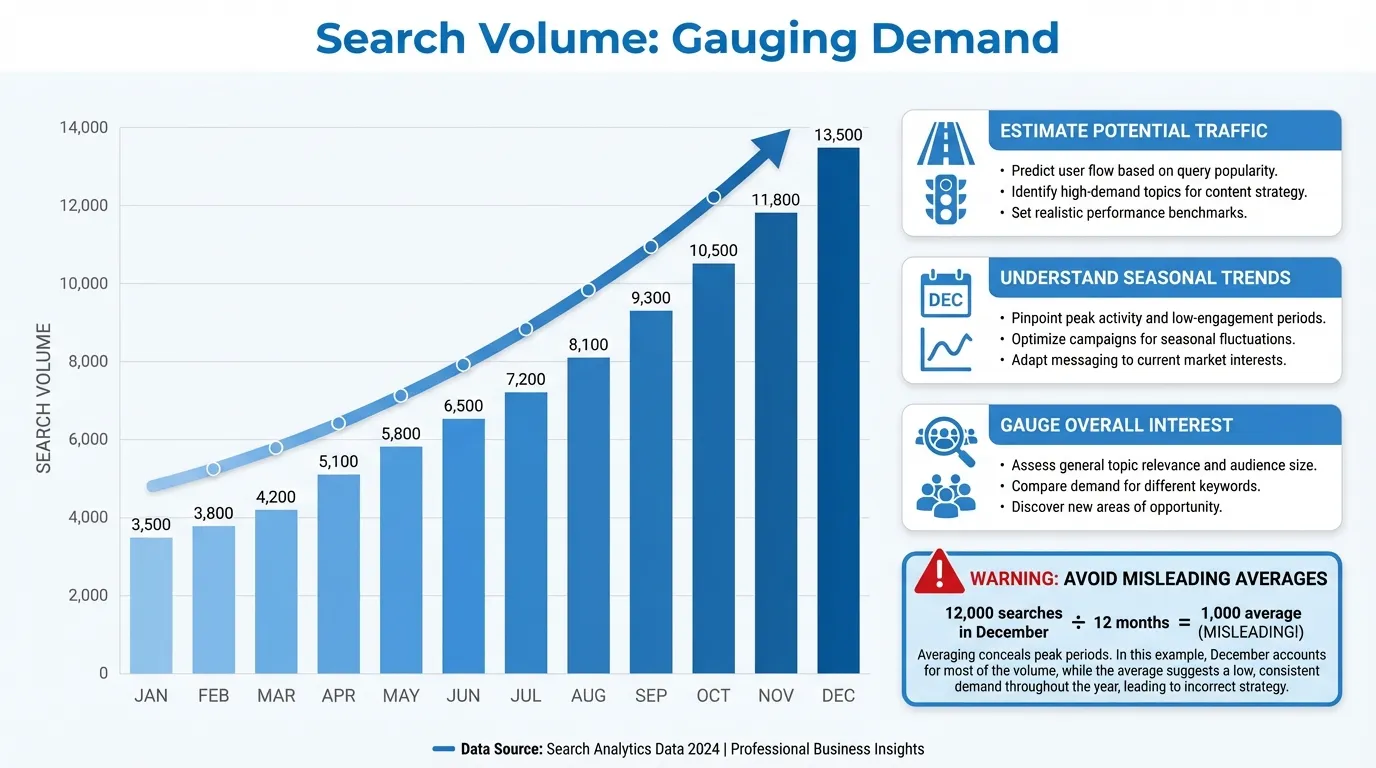
Search volume tells you how many times people search for a keyword each month. High search volume looks good, but it’s not everything. Sometimes, a keyword with just 100 targeted searches is worth more than one with 10,000 random searches.
For example, a broad term like “SEO tools” may attract tens of thousands of searches, but it combines informational, commercial and navigational intent into a single query. By contrast, a keyword such as “SEO tools for small businesses in the UK” may generate far fewer searches, yet consistently attract users who are closer to making a decision.
Search volume helps you:
- Validate whether a topic has sustained demand
- Identify seasonality and trend-driven spikes
- Prioritise topics for long-term content planning
Keep in mind, search volume is an average over the year. For example, a keyword might get 12,000 searches in December and none the rest of the year, so the average shows 1,000 per month. That can be misleading if you’re not careful.
2. Keyword Difficulty: Assessing Competition
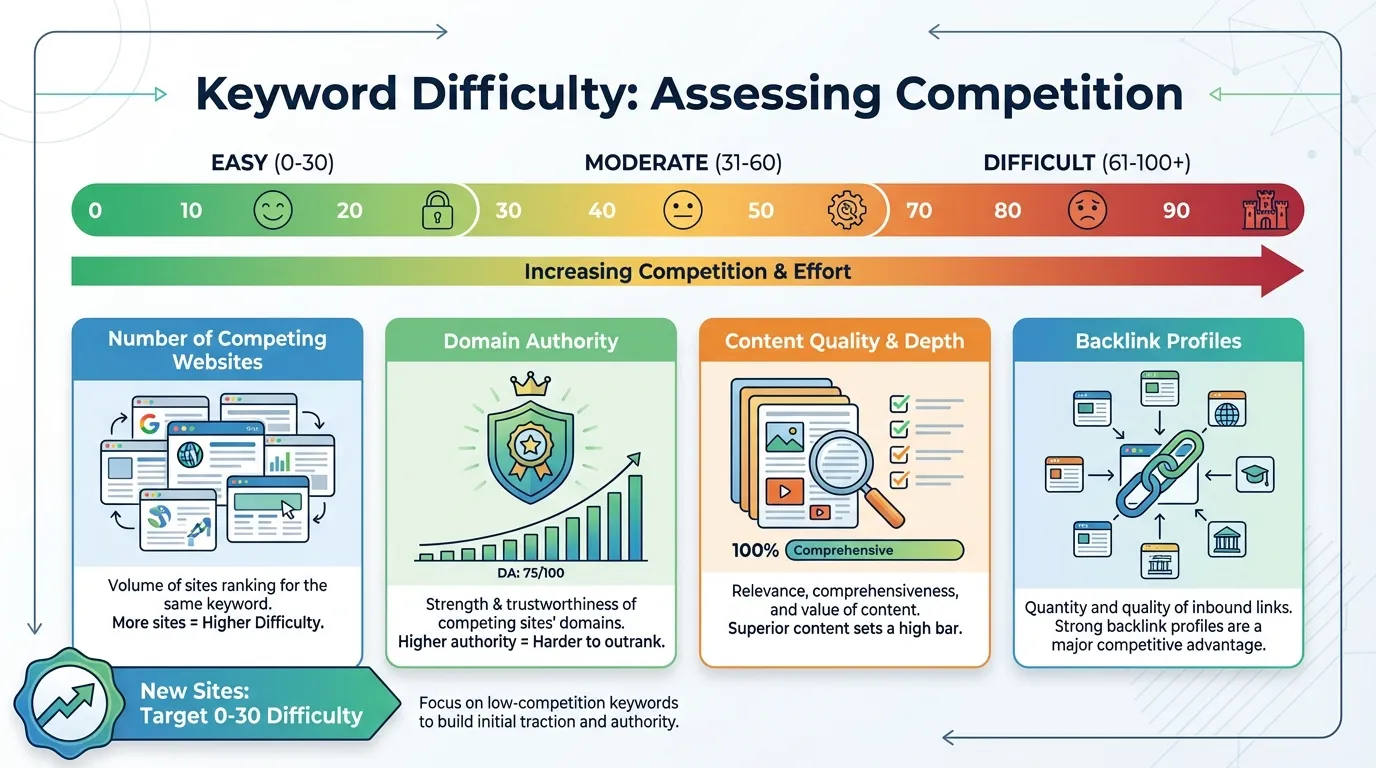
Keyword difficulty measures how challenging it would be to rank for a particular term. While useful, this metric should never be viewed in isolation, particularly as Google increasingly ranks pages based on topical authority and intent match, not just backlink strength.
Difficulty scores typically account for:
- The number of competing pages
- The authority of domains already ranking
- Content depth, freshness and quality
- The backlink profiles of top-ranking URLs
If your website is new or doesn’t have much authority yet, aim for keywords with a difficulty score between 0 and 30. These give you the best shot at ranking sooner rather than later.
For instance, rather than targeting “keyword research” directly, a newer site may gain traction faster with queries such as “keyword research for SaaS startups” or “keyword research process for AI-driven content teams”.
These keywords face less competition and are far more likely to satisfy a specific search intent, something AI-powered search systems actively reward.
3. Search Intent: Matching User Expectations
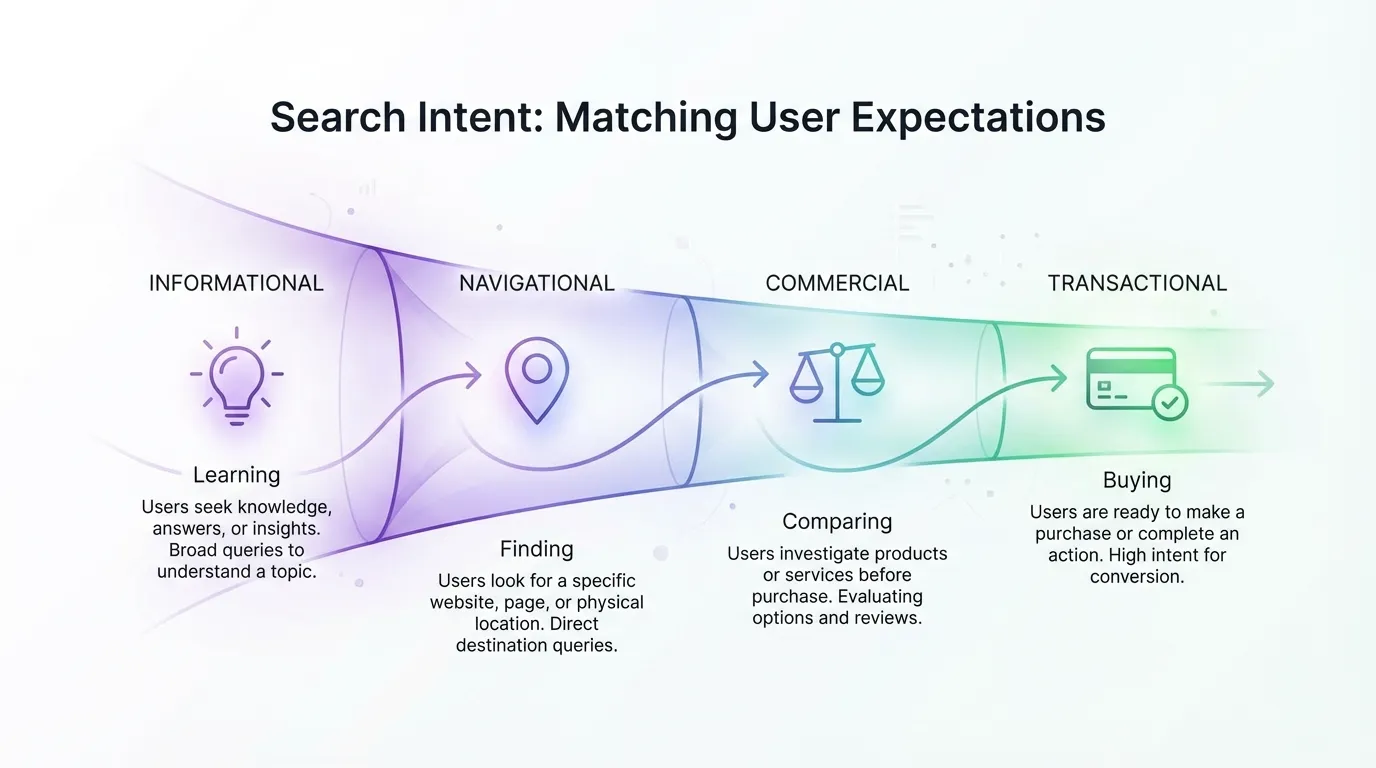
The most important part of keyword research is understanding search intent, why someone is searching in the first place. Google is great at figuring out what people want, and it rewards content that gives them exactly that.
The four primary types of search intent are:
Informational Intent: Users seeking knowledge or answers
- Example: “How to do keyword research”
- Content type: Guides, tutorials, blog posts
Navigational Intent: Users looking for a specific website or page
- Example: “Semrush login”
- Content type: Brand pages, tool access pages
Commercial Intent: Users researching before making a purchase decision
- Example: “best keyword research tools”
- Content type: Comparison articles, reviews, roundups
Transactional Intent: Users ready to take action or make a purchase
- Example: “buy keyword research tool”
- Content type: Product pages, pricing pages, signup forms
When intent is misunderstood, even well-written content fails to perform. When intent is matched correctly, content not only ranks more consistently but also converts more effectively.
In an era of AI-generated search results, keyword research remains the discipline that ensures your content meets both algorithmic expectations and real user needs.
How to Do Keyword Research: A Step-by-Step Process
Now that you know the basics, let’s walk through the practical steps to do keyword research that actually works.
Step 1: Define Your Niche and Core Topics
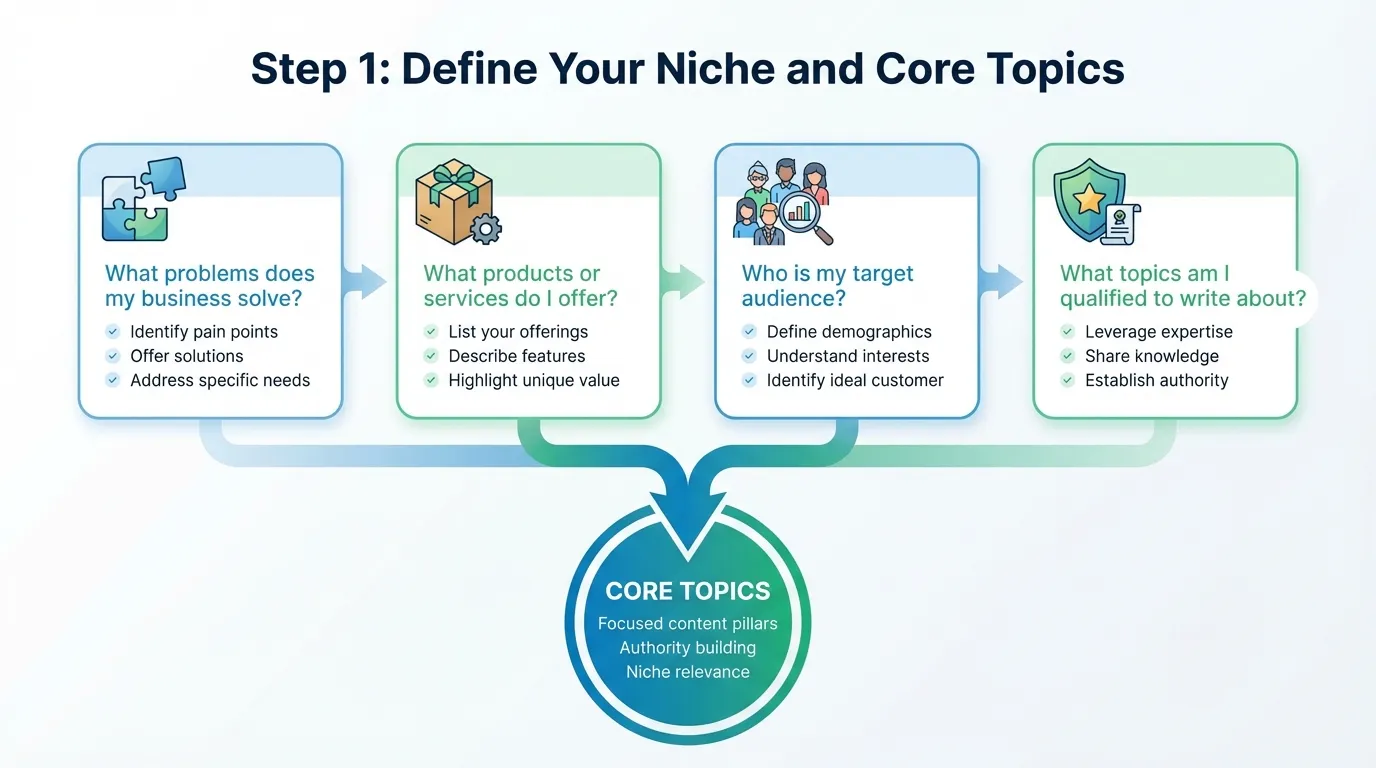
Before you start searching for keywords, get clear on your niche and the main topics that matter to your business. Ask yourself:
- What problems does my business solve?
- What products or services do I offer?
- Who is my target audience?
- What topics am I qualified to write about?
For example, if you run an online marketing agency specialising in helping Singapore businesses grow online, your core topics might include:
- Search engine optimisation
- Content marketing
- Social media marketing
- Pay-per-click advertising
- Local SEO
These broad topics become the foundation for your seed keywords.
Step 2: Generate Seed Keywords

Seed keywords are your starting point. They’re usually short, broad terms that relate directly to your business. Don’t stress about finding the perfect keywords yet—just brainstorm ideas you can build on later.
Using our marketing agency example, seed keywords might include:
- SEO
- Digital marketing
- Content creation
- Website optimisation
- Online advertising
Here are a few ways to come up with seed keywords:
- Thinking about how customers describe your products or services
- Reviewing your existing website content
- Examining your competitors’ websites
- Asking your sales team what questions prospects frequently ask
- Looking at your site’s internal search data (if available)
Step 3: Expand Your Keyword List with Research Tools
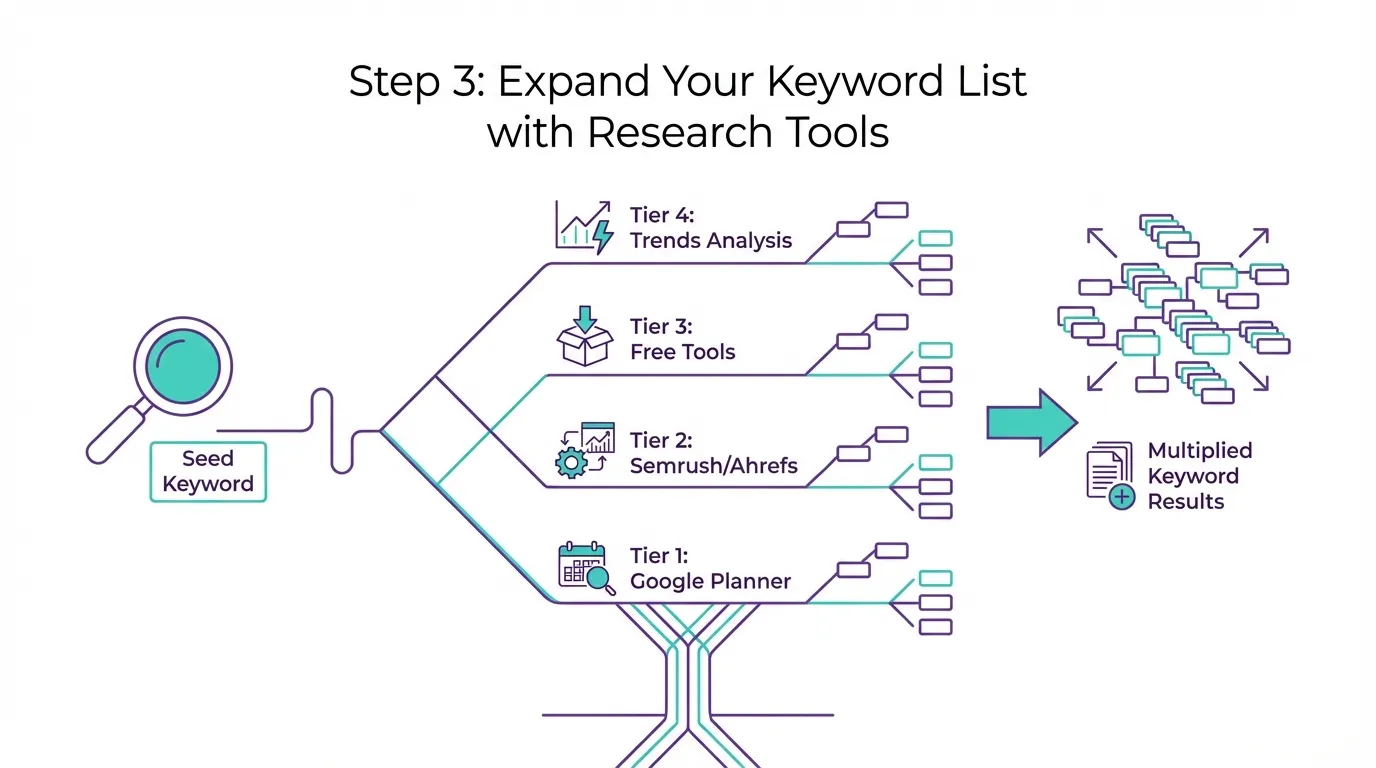
Once you’ve got your seed keywords, it’s time to grow your list using keyword research tools. There are plenty out there, but here are some of the best:
Google Keyword Planner
Google’s free tool remains valuable for getting keyword ideas directly from the source. Whilst it’s primarily designed for Google Ads users, it provides valuable insights into search volume and related terms. The main limitation is that precise search volume data is only available to active advertisers.
Semrush Keywords Explorer
Professional SEO tools like Semrush offer comprehensive keyword data, including:
- Accurate search volumes
- Keyword difficulty scores
- Related and question-based keywords
- SERP analysis showing who currently ranks
- Historical trend data
Ahrefs Keywords Explorer
Similar to Semrush, Ahrefs provides extensive keyword metrics and helps you discover thousands of keyword variations from a single seed term. The tool’s “Parent Topic” feature is handy for grouping related keywords.
Free Alternatives
If budget is a concern, several free tools can help:
- Google Autocomplete suggestions
- AnswerThePublic for question-based keywords
- Ubersuggest for basic keyword metrics
- Google Trends for tracking keyword popularity over time
Pro tip: Don’t stick to just one tool. Each one pulls from different data, so you’ll find unique keyword ideas by mixing it up.
Step 4: Analyse Competitor Keywords

One of the most efficient ways to find valuable keywords is to see what’s already working for your competitors. This doesn’t mean copying their strategy. It means identifying gaps and opportunities.
To conduct competitor keyword research:
- Identify your actual SEO competitors: These aren’t necessarily your business competitors. Their websites rank for keywords you want to target. A simple Google search for your seed keywords will reveal them.
- Analyse their top-performing content: Use tools like Ahrefs Site Explorer or Semrush’s Domain Overview to see which pages receive the most organic traffic.
- Extract their keyword rankings: Export lists of keywords your competitors rank for that you don’t. These represent immediate opportunities.
- Identify keyword gaps: Use competitive gap-analysis tools to find keywords where multiple competitors rank, but you don’t. These are often low-hanging fruit.
Working with an experienced SEO company can accelerate this process, as they have enterprise-level tools and expertise to conduct sophisticated competitive analysis quickly.
Step 5: Explore Long-Tail Keywords and Question Queries

Long-tail keywords, phrases with three or more words, have some significant advantages:
- Lower competition: Fewer websites target specific long-tail phrases
- Higher conversion rates: Users with specific queries are often further along the buying journey
- Voice search optimisation: Long-tail keywords mirror how people speak, making them ideal for voice search
- More apparent intent: Longer queries make it easier to understand exactly what users want
For example, instead of going after the super-competitive keyword “keyword research,” you could target:
- “How to do keyword research for a small business.”
- “keyword research tools for beginners”
- “free keyword research methods that work”
To find long-tail keyword ideas:
- Use the “People Also Ask” section in Google results.
- Check the “Related Searches” at the bottom of the search results.
- Use AnswerThePublic to generate hundreds of question-based keywords.
- Look at Reddit, Quora, and industry forums to see what people are actually asking.
Question keywords (like who, what, when, where, why, and how) are especially valuable because they:
- Align perfectly with informational search intent.
- Has the potential to trigger featured snippets.
- Match voice search query patterns
- Provide a clear content structure.
Step 6: Assess Keyword Metrics and Prioritise
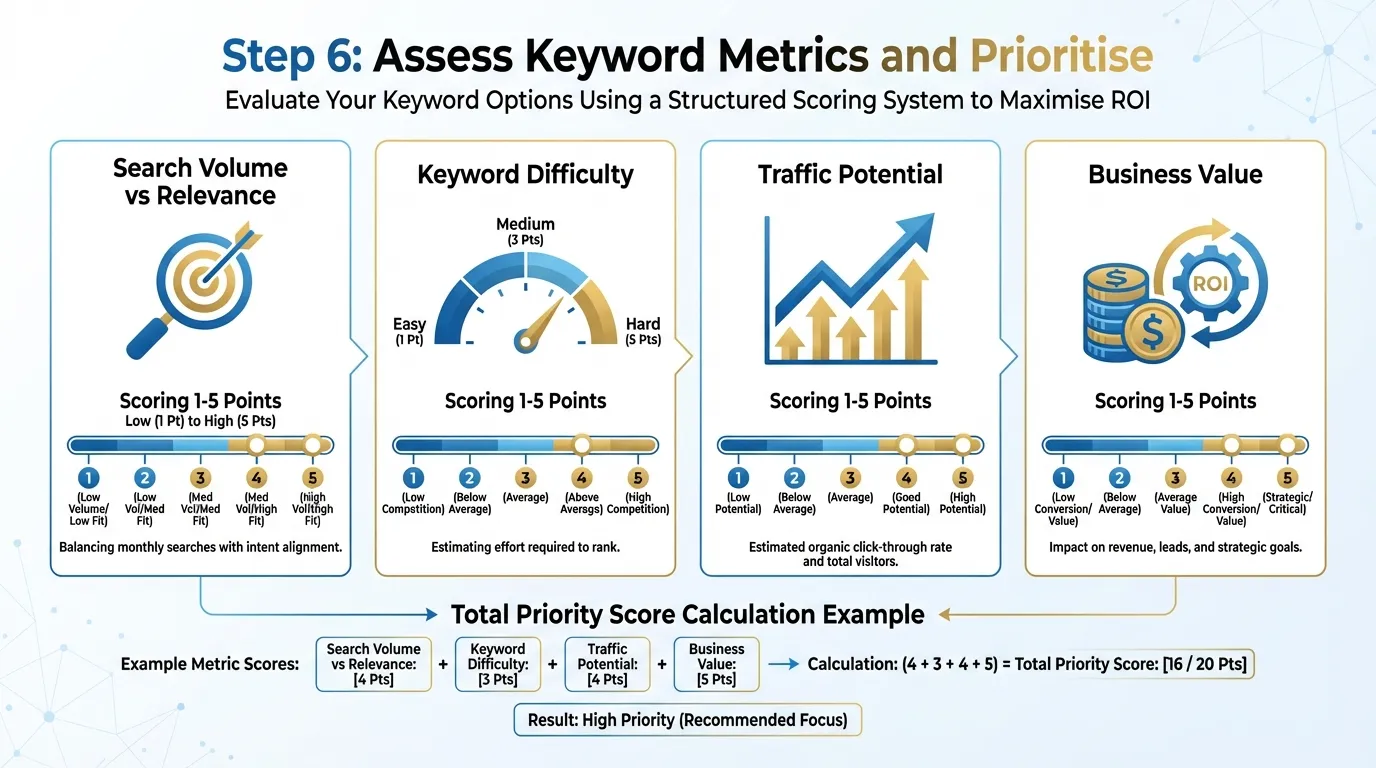
Once you’ve got a big list of keyword ideas, it’s time to sort and prioritise. Not every keyword is worth your time.
Consider these key metrics:
- Search Volume vs. Relevance: A keyword with 50 monthly searches that’s a perfect fit for your business is usually better than one with 5,000 searches that’s only loosely related. Focus on relevance first, search volume second.
- Keyword Difficulty: Be realistic about what you can rank for based on your site’s current authority. If your site is new, stick to keywords with difficulty scores under 30. If you’re more established, you can go after tougher terms.
- Traffic Potential: Don’t just look at the main keyword. The top-ranking page for a keyword often gets traffic from hundreds of related terms. Use tools like Ahrefs to see how much total organic traffic the top pages are getting.
- Business Value: Not all traffic is created equal. Focus on keywords that bring in your ideal customers and support your business goals. Ask yourself: If I rank #1 for this keyword, will it actually help my business?
You can use a simple scoring system to help you decide. For example:
- Relevance: 1-5 points
- Search Volume: 1-5 points
- Keyword Difficulty: 1-5 points (5 being easiest)
- Business Value: 1-5 points
Total the scores to identify your highest-priority keywords.
Advanced Keyword Research Strategies
Once you’ve got the basics down, try these advanced strategies to get ahead of the competition.
Leverage Keyword Clustering

Keyword clustering is grouping related keywords so you can target them with a single piece of content. Instead of making separate pages for “best coffee maker,” “top coffee machines,” and “coffee maker reviews,” you’d write one in-depth guide that covers all three.
Benefits include:
- More efficient content production
- Stronger topical authority
- Better internal linking opportunities
- Higher chance of ranking for multiple terms
Many keyword tools now have automated clustering features that group keywords based on what’s ranking in Google. If the same pages show up for several keywords, you can usually target them all with one page.
Target Featured Snippets
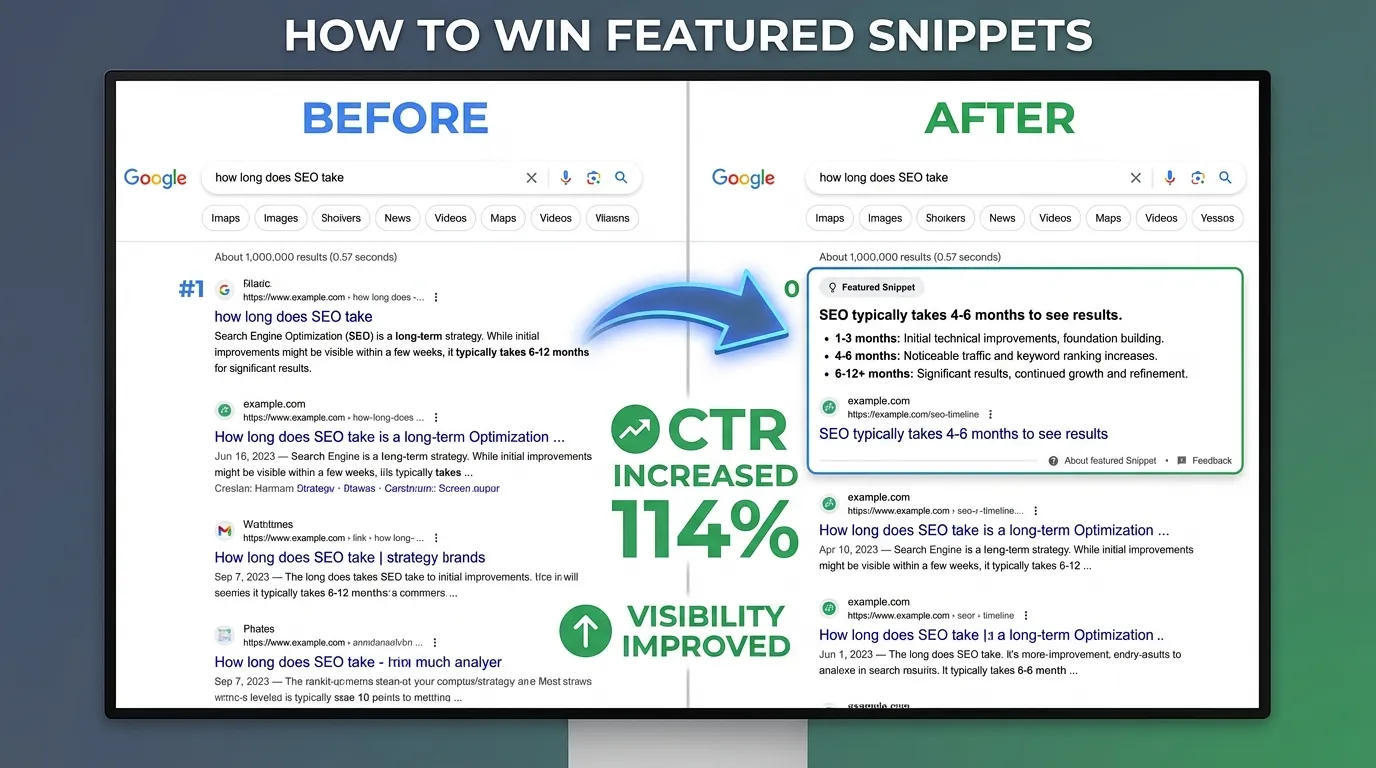
Featured snippets, the boxed answers that appear above organic results, represent “position zero” opportunities. To target them:
- Identify keywords that already trigger snippets.
- Analyse the current snippet format (paragraph, list, table, or video)
- Create content specifically structured to win the snippet.
- Use clear, concise answers to questions.
- Include proper heading hierarchy and formatting.
Explore Untapped Niches with Low-Volume Keywords

High-volume keywords get all the attention, but pursuing many low-volume keywords can add up to big results. These “zero-volume” keywords might only show 10 or fewer searches a month, but:
- Competition is minimal
- Conversion rates are often higher.
- You can rank quickly.
- They add up. 100 low-volume keywords can generate thousands of monthly visitors
Don’t dismiss keywords with low or zero reported search volume. Search tools are estimates, and actual search behaviour is more nuanced.
Consider Seasonal and Trending Keywords
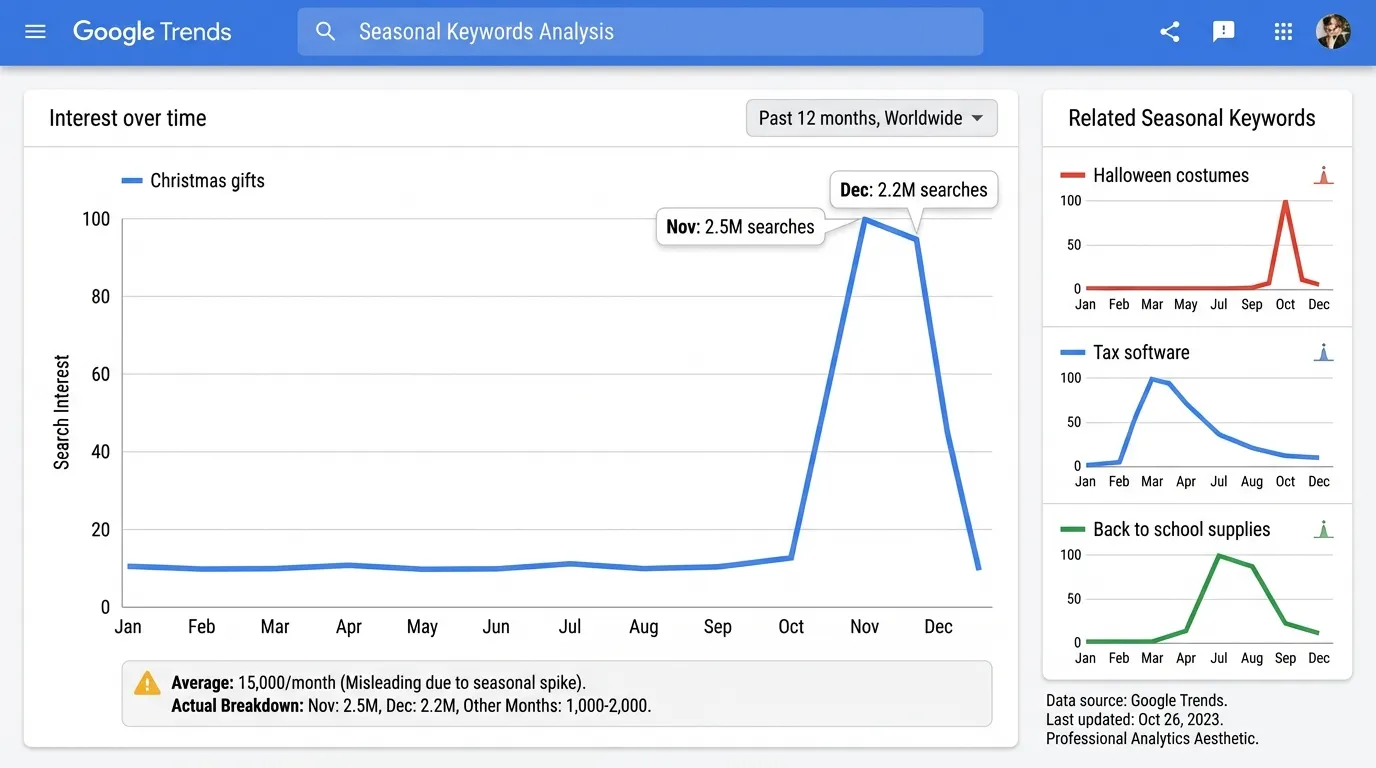
Some keywords exhibit clear seasonal patterns, such as “Christmas gifts” or “summer holiday destinations.” Others spike because of news, viral trends, or new product launches.
Use Google Trends to:
- Identify when specific keywords reach their peak popularity.
- Compare the interest over time for different keyword options.
- Discover emerging topics before they saturate.
- Plan your content calendar around seasonal opportunities.
If you create content before the seasonal peak, you’ll be ready to capture traffic when it matters most.
Analyse SERP Features and Intent Signals
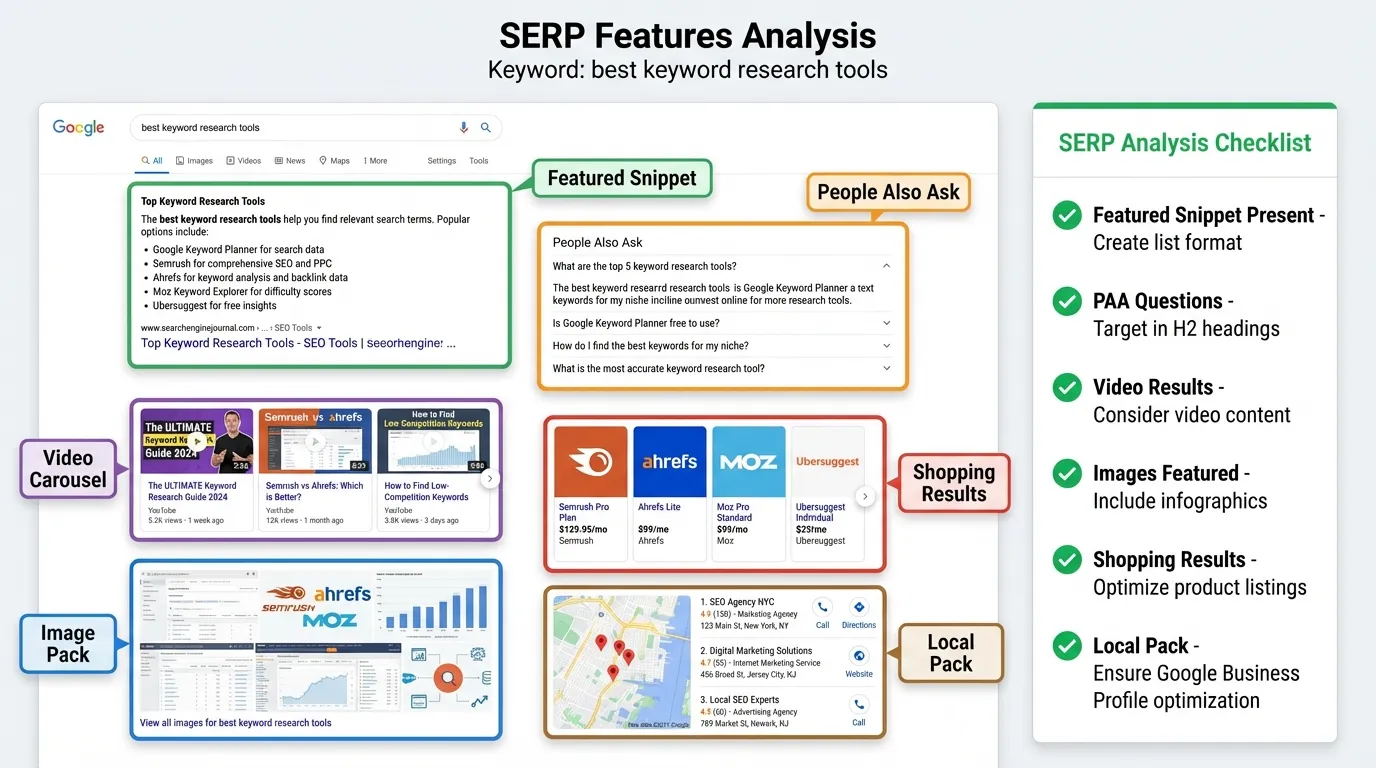
Before committing to a keyword, manually review the search results page. Look for:
SERP Features Present
- Featured snippets
- People Also Ask boxes.
- Video carousels
- Image packs
- Local pack results
- Shopping results
These features give you clues about what kind of content Google wants to show for that search.
Look at what’s ranking now: Are the top results blog posts, product pages, videos, or something else? This shows you what searchers want. For example, don’t write a blog post if all the top results are product pages.
Check how in-depth the current content is. Are the top articles 500 words or 5,000? Knowing this helps you figure out how much effort you’ll need to compete.
Building Your Keyword Research Workflow
Effective keyword research isn’t a one-time project; it’s an ongoing process that should be integrated into your content and SEO strategy.
Create a Keyword Research Database
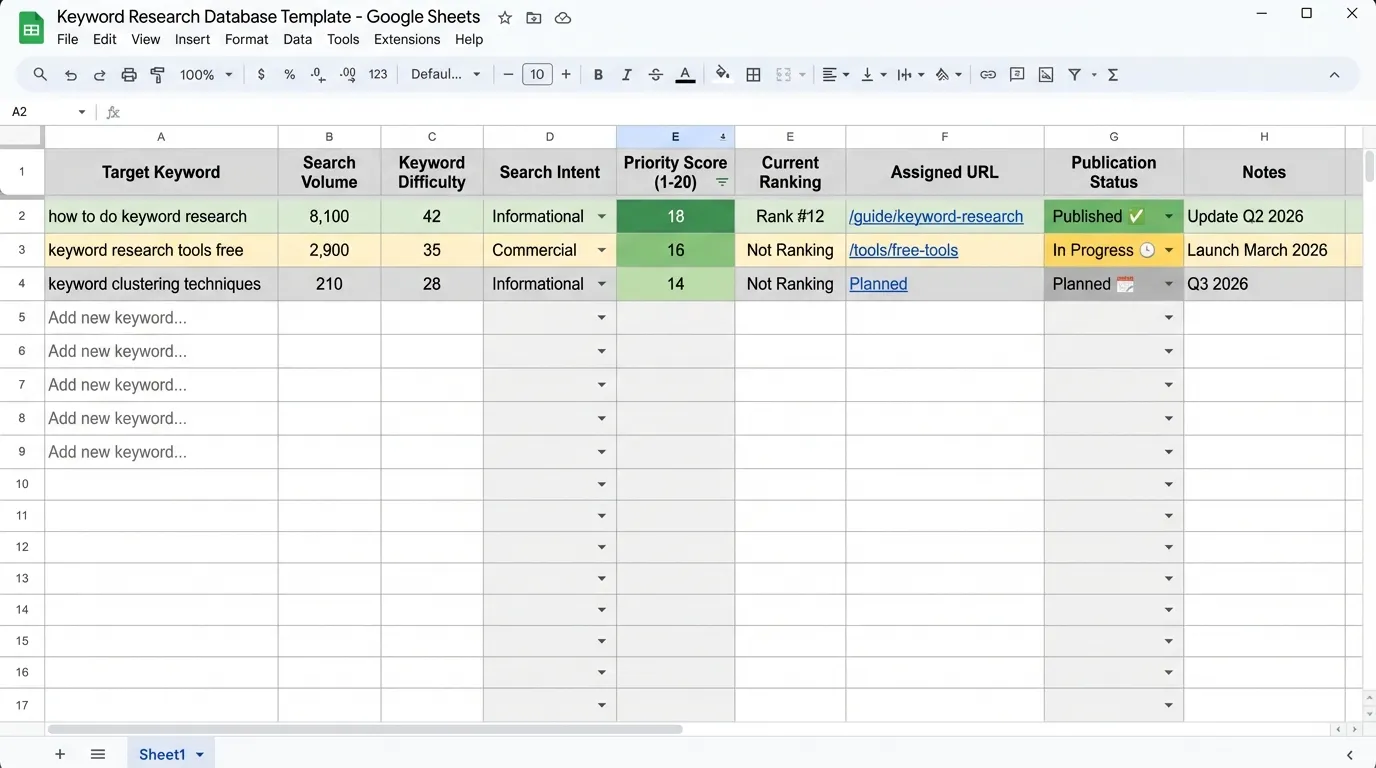
Keep a central spreadsheet or database to track:
- Target keywords
- Search volume
- Keyword difficulty
- Search intent
- Priority score
- Current ranking position
- Assigned content/URL
- Publication status
- Notes and observations
This helps you avoid duplicate work and gives you a clear overview of your keyword strategy.
Set a Regular Review Schedule

Block out time each month or quarter to:
- Discover new keyword opportunities.
- Track ranking progress for target keywords
- Identify emerging trends in your industry.
- Analyse competitor movements
- Refresh and update keyword priorities.
Connect Your Keywords to Your Content Plan
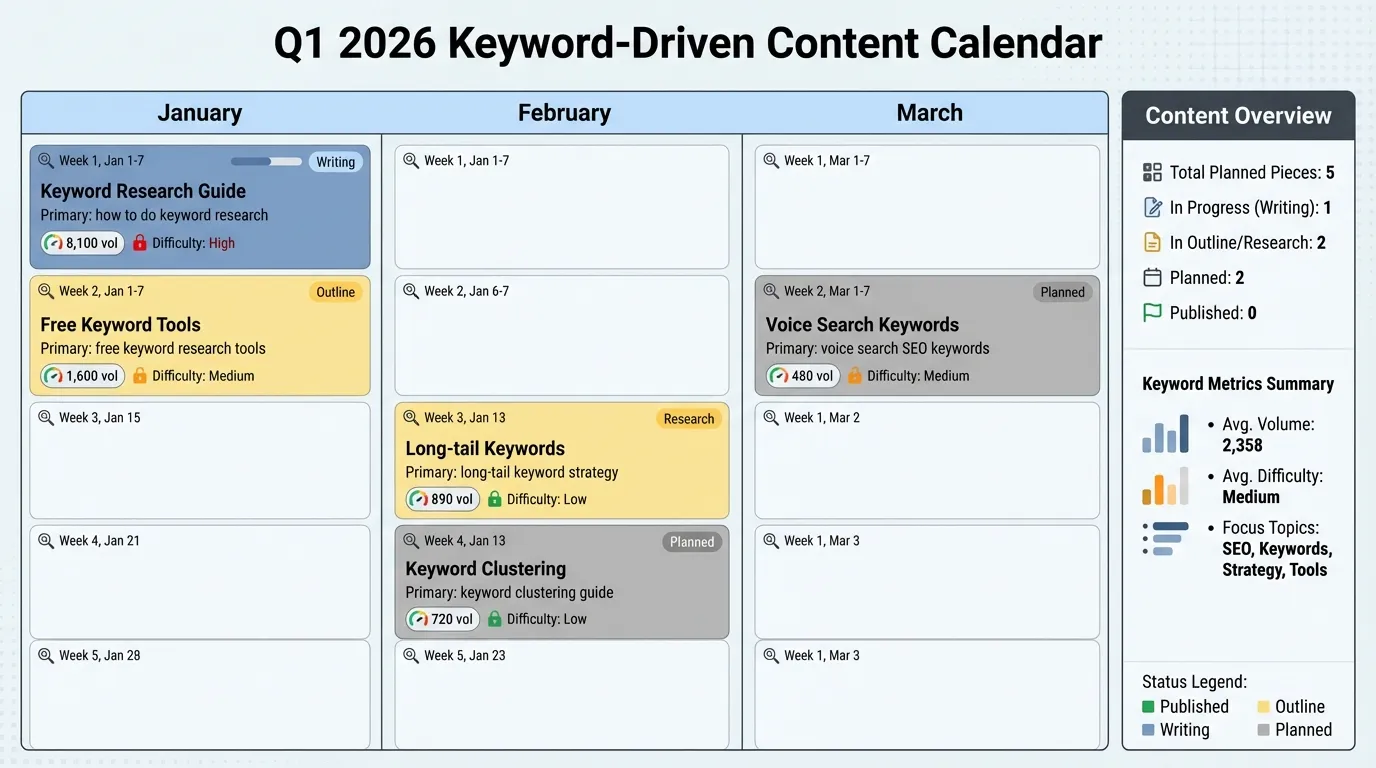
Your keyword research should directly inform your content calendar. For each target keyword cluster, plan:
- Content format (guide, tutorial, comparison, etc.)
- Content depth and word count
- Publishing timeline
- Internal linking strategy
- Promotion and distribution plan
Monitor and Adapt
SEO is constantly changing. Search trends shift, new competitors pop up, and Google updates its algorithms. Use tools like Google Search Console to:
- Track impressions and clicks for target keywords
- Discover keywords you’re ranking for unexpectedly.
- Identify declining rankings that need attention.
- Find pages underperforming for their target keywords.
This data helps you fine-tune your strategy and focus on what’s working best.
Common Keyword Research Mistakes to Avoid

Even experienced marketers fall into these traps:
- Focusing Solely on Search Volume: High search volume doesn’t always mean success. A keyword with 50,000 searches a month but a difficulty of 90 out of 100 might be less valuable than a 500-search keyword you can actually rank for.
- Ignoring Search Intent: If you create informational content for a keyword that’s really transactional (or the other way around), you’ll waste time and frustrate your visitors. Always match your content to the search intent.
- Neglecting User Experience: Ranking is just the first step. If your content doesn’t give people what they want, they’ll leave, and your rankings will drop. Focus on making your content genuinely helpful.
- Forgetting About Keyword Cannibalisation: If you target the same keyword on several pages, you’ll end up competing with yourself and confusing Google. Use keyword mapping to make sure each page has its own main focus.
- Overlooking Local Keywords: If your business serves a specific area, local keywords (like city names, neighbourhoods, or “near me”) are a must. Don’t let local traffic pass you by.
- Setting and Forgetting: Markets change. What worked last year might not work now. Make regular keyword research a habit.
Keyword Research Tools: What You Actually Need
There are a ton of SEO tools out there, but what do you actually need? Here’s a table to make decision-making easier.
| Category | Tools | Purpose / Notes |
| For Beginners / Small Budgets | Google Keyword Planner | Basic keyword data for search volume and trends |
| Google Search Console | Track your current rankings and identify opportunities | |
| Google Trends | Analyse search trends and seasonality | |
| Ubersuggest | Limited free searches for keyword ideas | |
| Answer the Public | Discover question-based keywords and user queries | |
| For Serious SEO Efforts | Semrush | All-in-one SEO suite with extensive keyword data |
| Ahrefs | Competitive research and backlink analysis | |
| Moz Pro | Keyword tracking, site audits, and SEO insights | |
| Specialised Tools | Surfer SEO | Optimise content for target keywords and SEO performance |
| KWFinder | User-friendly tool focused on long-tail keywords | |
| SpyFu | Competitor PPC and organic search insights |
How to Put Keyword Research into Action
Knowing how keyword research works is excellent, but the real results come from putting it into practice. Here’s how to turn your research into real traffic and leads:
1. Create Content That Deserves to Rank
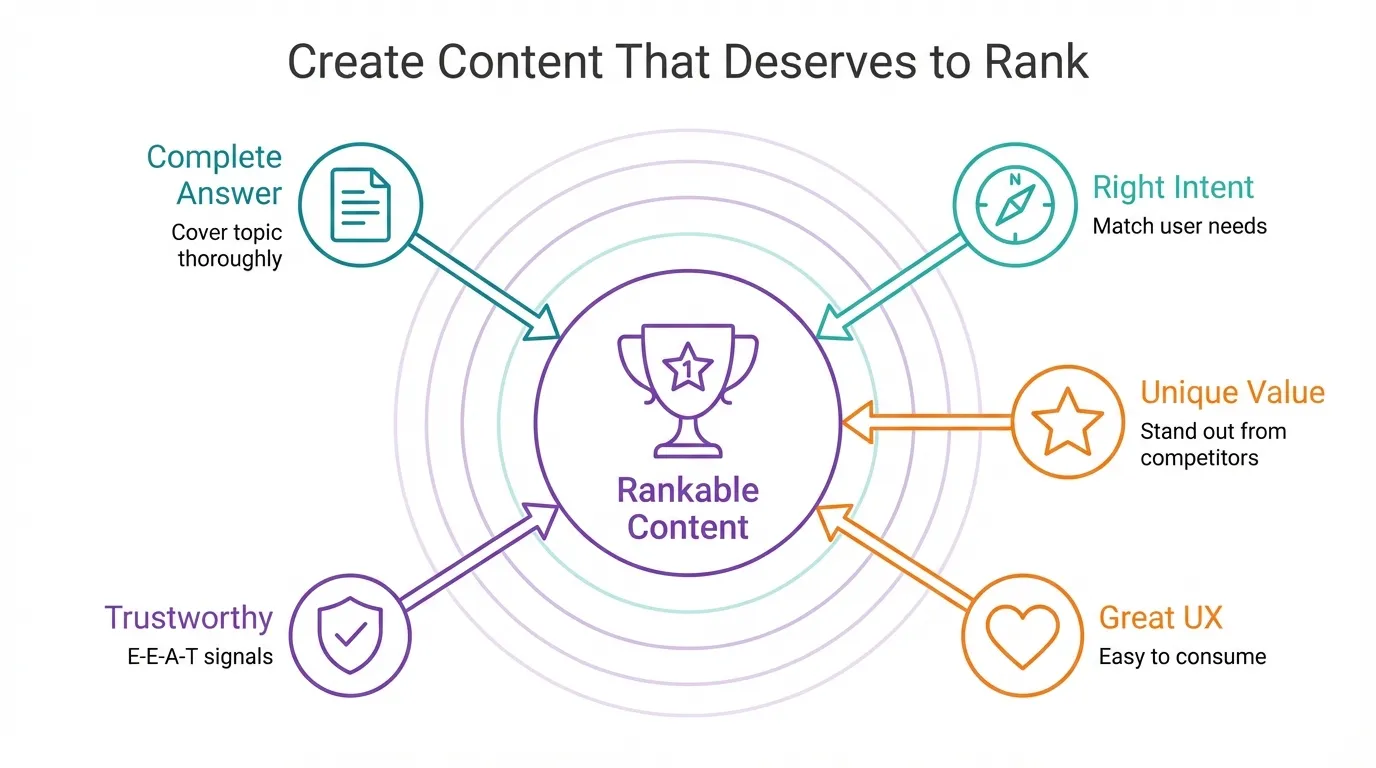
Once you’ve picked your target keywords, create in-depth, valuable content that:
- Directly answers the search query.
- Covers the topic more thoroughly than competitors
- Includes multimedia elements (images, videos, infographics)
- It is well-structured with clear headings
- Provides actionable information that users can implement
2. Optimise On-Page Elements

Incorporate your target keywords naturally into:
- Page title (H1)
- URL slug
- Meta description
- Subheadings (H2, H3)
- Image alt text
- Body content (without keyword stuffing)
Remember: Write for people first, search engines second.
3. Build Supporting Content and Internal Links
Create related content that supports your main keyword pages. Link them together to help Google understand your site and boost your rankings.
4. Earn Quality Backlinks
Promote your best content to secure links from trusted industry websites. Quality backlinks are still one of the top ways to boost your rankings.
5. Track, Measure, and Refine
Keep an eye on your rankings and traffic with Google Search Console and analytics tools. See what’s working and do more of it.
The Future of Keyword Research
Looking ahead to 2026, here are some trends that will shape how keyword research works:
- AI and Machine Learning: Google’s AI capabilities enable it to better understand context, synonyms, and what users really want. That means keywords aren’t going away; they’re just more critical than ever. Focus on covering topics in depth, not just repeating exact keywords. As voice assistants become ubiquitous, optimising for natural language queries and question keywords will become increasingly important.
- Zero-Click Searches: More searches now end without a click because Google answers questions right on the results page. Focus on keywords that still get clicks, and optimise for featured snippets to stay visible.
- Entity-Based Search: Google is paying closer attention to entities such as people, places, and topics rather than just keywords. Building authority around your topics and connecting your content will be even more important.
Take Your Keyword Research to the Next Level
Keyword research isn’t some secret skill only for SEO experts. It’s something anyone can learn with the right process and a bit of practice. Follow the steps in this guide, and you’ll find keywords that bring real traffic and results.
Whether you’re just starting out with SEO or want to improve your current strategy, keyword research is the foundation for getting found online. Start using these tips today, and you’ll be on your way to ranking for the keywords that matter most to your business.
What keyword will you research first?
If you want faster results or expert guidance, MediaOne’s SEO specialists can help you turn keyword research into a data-driven strategy that drives real business growth. Contact us today!
Frequently Asked Questions
How many keywords should I target on a single page?
Focus on one primary keyword and 3-5 closely related secondary keywords per page. Attempting to target too many unrelated keywords dilutes your focus and confuses search engines about your page’s purpose.
A well-optimised page will naturally rank for dozens or even hundreds of keyword variations without explicitly targeting each one.
Should I target keywords with low or zero search volume?
Absolutely! So-called “zero volume” keywords are often undervalued gems with minimal competition and particular intent. Search volume data is merely an estimate, and many low-volume keywords collectively drive significant traffic. Targeting 100 low-volume keywords can generate thousands of monthly visitors with better conversion rates than competitive high-volume terms.
How long does it take to rank for a keyword after publishing content?
The timeframe varies dramatically based on your website’s authority, keyword competitiveness, and content quality. Low-competition keywords on established websites might rank within days or weeks, whilst competitive terms could take 3-6 months or longer. Focus on creating exceptional content and building authority rather than expecting overnight success.
Can I change my target keywords after publishing content?
Yes, and you should when data indicates it’s necessary. Use Google Search Console to identify which queries actually drive traffic to your pages. You might discover unexpected ranking opportunities on page 2 for valuable keywords that need optimisation. However, give your initial strategy at least 3-6 months before making major pivots.
Is keyword research different for B2B versus B2C businesses?
Yes, significantly. B2B keyword research focuses on longer sales cycles, industry-specific terminology, and problem-solving keywords with lower search volumes but higher conversion values.
B2C keyword research emphasises higher volume, shorter-tail keywords with more immediate purchase intent. However, both require understanding your audience’s language and pain points as the fundamental principles remain consistent.