
Did you know that 63% of marketing leaders say SEO delivers a higher return on investment (ROI) than Pay-Per-Click (PPC)? That’s a powerful indication that organic search continues to be one of the most cost‑effective and sustainable ways to grow your business.

Key Takeaways
- Understanding your readers shapes tone, style and keyword choices.
- Target primary, secondary and long-tail keywords that match search intent.
- Use clear headings, short paragraphs and scannable lists for readability and SEO.
- Natural keyword placement and engaging copy are equally important.
- Clear, actionable, benefit-driven CTAs guide readers to take the next step.
What is SEO Copywriting?

Image Credit: SEOWriting.ai
SEO copywriting is about creating content that hooks your readers and ranks well on Google. It’s the art of persuasive writing and smart SEO. The goal is to craft content that not only captures attention and provides value to your audience but also ranks well in search engine results, helping your website attract more organic traffic.
At its core, SEO copywriting focuses on learning what your audience is searching for and delivering content that can answer their questions, solve their problems, or meet their needs. When your content is aligned with both user intent and search engine requirements, you maximise visibility and engagement online.
Know Your Audience Before You Write

Image Credit: Study
Before you get started on your draft, it’s always a good idea to know who you are writing for.
- Identify your target audience or buyer personas by thinking about your audience’s age, interests and challenges, you can provide content that truly connects with them and feels relevant.
- Understand search intent: Different search types require different approaches. Some people are just looking for answers (informational), others want to find a specific site or brand (navigational), and some are ready to buy or take action (transactional). Making sure your content matches what they’re actually looking for makes it much more effective.
- Use audience insights to shape tone, style and keywords: The way you communicate, formal or conversational, technical or simple, should reflect your audience’s preferences. Similarly, understanding their language helps you choose keywords that match how they search online.
Keyword Research: Finding the Right Words to Rank

Image Credit: Sitechecker
Once you know who you’re writing for, the next step is keyword research. It’s the backbone of any successful SEO copy. Picking the right keywords makes sure your content shows up when your audience is searching for the info, products, or services you provide.
Here’s how you can conduct effective keyword research:
- Primary and secondary keywords:
- Primary keyword: Reflects your main topic and should appear in the title, headings and throughout the text.
- Example: If your article is about SEO copywriting, your primary keyword might be “SEO copywriting guide”.
- Secondary keywords: Support the main topic and can be used in subheadings or paragraphs.
- Example: “SEO writing tips,” “writing for search engines.”
- Primary keyword: Reflects your main topic and should appear in the title, headings and throughout the text.
- Long-tail keywords:
- Longer, more specific phrases with lower competition and higher conversion potential.
- Example: “How to write SEO copy for small business websites.”
- Longer, more specific phrases with lower competition and higher conversion potential.
- Competitor analysis:
- Review content that ranks for your target keywords to see which terms, headings and subtopics they cover.
- Example: If top-ranking articles use sections on “keyword research tools” and “writing scannable content,” include similar but more detailed sections in your article.
- Review content that ranks for your target keywords to see which terms, headings and subtopics they cover.
- Keyword research tools:
- Tools like Google Keyword Planner, Ahrefs, SEMrush and Ubersuggest provide search volume, competition and related keywords.
- Example: Use Ubersuggest to find that “SEO copywriting tips” has 1,200 monthly searches with medium competition, which is an achievable target.
- Tools like Google Keyword Planner, Ahrefs, SEMrush and Ubersuggest provide search volume, competition and related keywords.
- Align keywords with search intent:
- Ensure your keywords match the type of content users are seeking:
- Informational: Users want knowledge. Example: “What is SEO copywriting?”
- Navigational: Users want to look for a specific site. Example: “MediaOne SEO blog.”
- Transactional: Users are ready to take action. Example: “Hire an SEO copywriting service.”
- Ensure your keywords match the type of content users are seeking:
Thorough keyword research provides a roadmap for your content, helping you target the right audience, answer their queries and improve your chances of ranking higher in search results.
SEO Copywriting: Your Step-by-Step Guide to Writing Content That Ranks
Writing SEO copy is more than just sprinkling keywords throughout your text. It’s about creating content that engages readers, answers their questions and ranks well on search engines. Let’s dive in and explore each step in detail so you can start crafting high-performing SEO content:
Step 1: Plan Your Content Structure

Image Credit: Mikeginley
Before you begin writing, take time to create a clear outline. This helps you organise your thoughts, maintain logical flow and ensure every section contributes value. A well-structured article is also easier for search engines to crawl and understand, improving your chances of ranking well.
Here’s how to structure your content effectively:
- Map out your headings clearly:
- Use an H1 for your main topic; it should reflect the page’s primary focus.
- Use H2S for major sections.
- Use H3S to break those sections into more minor, more specific points.
- Optimise your headings for SEO:
- Include your primary keyword naturally in your H1.
- Example: “SEO Copywriting 101: How to Write an Engaging SEO Copy.”
- Place secondary and long-tail keywords in relevant H2 or H3 headings when appropriate.
- Include your primary keyword naturally in your H1.
- Cover a broad range of user questions:
- Add an FAQ section or answer questions from Google’s People Also Ask box.
- This helps address user concerns and increases your chances of appearing in featured snippets.
By following this outline framework, you create content that is both reader-friendly and SEO-friendly, helping users find exactly what they’re looking for. Treat your outline like a roadmap. Every paragraph should have a clear purpose aligned with your headings.
Step 2: Craft a Compelling Introduction


Image Credit: MediaOne
Your introduction is your first opportunity to capture attention and set the tone of your article. In online content, the first two or three sentences can determine whether a reader stays or clicks away, so make them count.
To create a practical introduction:
- Start with a strong hook:
- Use a surprising statistic, a direct question, or a relatable problem.
- Aim to spark curiosity or address a pain point immediately.
- Include your primary keyword early:
- Make sure it appears naturally within the first few lines.
- This signals your topic to search engines without sounding forced.
- State the value of your article upfront:
- Tell readers exactly what they’ll gain: practical steps, insights, or strategies.
- This reassures them that continuing to read will be worth their time.
Whether you’re promising practical steps, expert insights, or actionable strategies, make it clear upfront.
For example: “Did you know that 70% of marketers report better conversion rates from SEO-driven content? In this guide, you’ll learn how to craft SEO copy that not only ranks well on Google but also engages readers and drives meaningful action.”
Step 3: Write Scannable Body Content

Image Credit: Graphic Mama
Most online readers skim content rather than reading every word, so your copy should be easy to digest and visually clear. Scannable content improves user experience, keeps readers engaged and helps search engines understand your structure and key points.
Key strategies for scannable content:
- Short paragraphs:
- Keep paragraphs to 2–4 lines.
- Breaking text into smaller chunks makes it less intimidating and easier to read on screens.
- Bullet points and numbered lists:
- Highlight important information or step-by-step instructions.
- Lists make key points stand out and are quicker for readers to absorb than dense paragraphs.
- Keyword-rich headings:
- Use H2 and H3 headings that include relevant keywords.
- Clear headings guide readers through the content and improve SEO by signalling what each section is about.
- Use emphasis wisely:
- Bold or italicise critical phrases to draw attention.
- Avoid overusing formatting, which can be distracting or reduce readability.
- Include subheadings and transitional sentences:
- Subheadings break content into logical sections.
- Transitional sentences help maintain flow and make the article feel cohesive.
Imagine you’re explaining the topic to someone in a conversation. Clear, concise sentences, structured lists and meaningful headings make your content approachable, engaging and easier to understand.
Step 4: Use Natural Keyword Placement

Image Credit: DefiniteSEO
Keywords are essential for SEO, but context and readability matter more than frequency. Overstuffing keywords can harm both the user experience and your search rankings.
How to place keywords naturally:
- Primary keyword:
- Please include it in the first paragraph and in relevant headings.
- Helps search engines immediately understand your content topic.
- Secondary and long-tail keywords:
- Sprinkle them throughout the body naturally, in subheadings or supporting sentences.
- Long-tail keywords capture more specific search queries and help reach highly-targeted audiences.
- Avoid keyword stuffing:
- Don’t force keywords into sentences unnaturally.
- Focus on natural flow. Readers should not notice the keywords at all.
Read your content aloud. If a keyword feels forced or awkward, rephrase it. Natural-sounding copy is always more engaging and effective for SEO.
Step 5: Add Internal and External Links

Image Credit: Smartboost
Links are essential for guiding readers, building credibility and improving SEO. They help search engines understand the relationships between pages on your site and between your content and authoritative external sources.
How to use links effectively:
- Internal links:
- Link to other pages or blog posts on your own website.
- Helps readers discover related content and spend more time on your site, which improves engagement metrics.
- Example: “Read our guide on on-page SEO for more detailed optimisation tips.”
- External links:
- Cite reputable, authoritative sources to support claims.
- Boosts your content’s credibility and signals trustworthiness to search engines.
- Example: Link to a recent industry report or study to provide supporting evidence.
- Best practices:
- Use descriptive anchor text that clearly indicates what the reader will get when they click.
- Avoid linking to low-quality, irrelevant, or outdated sites, which can harm trust and SEO.
- Limit the number of links per page to maintain readability and avoid overwhelming readers.
Think of links as a roadmap. Internal links guide readers deeper into your site, while external links reinforce your content’s authority. Both are important for a well-rounded SEO strategy.
Step 6: Include Visuals and Optimise Them

Image Credit: Scaleflex
Visual content makes your article more engaging, easier to understand and shareable. It also supports SEO when properly optimised.
How to effectively use visuals:
- Types of visuals:
- Images, infographics, charts, screenshots, or videos that complement your content.
- Help explain complex ideas, break up text and maintain reader interest.
- SEO optimisation for visuals:
- Use descriptive file names with relevant keywords.
- Include alt text that explains the image and naturally incorporates keywords.
- Compress images to improve page speed, a critical factor for SEO and user experience.
- Tips for engagement:
- Infographics summarising key information are highly shareable.
- Videos can increase time on page and encourage social sharing.
Each visual should add value and support your content. Avoid generic stock images that don’t enhance understanding or relevance.
Step 7: Write a Persuasive Call to Action (CTA)
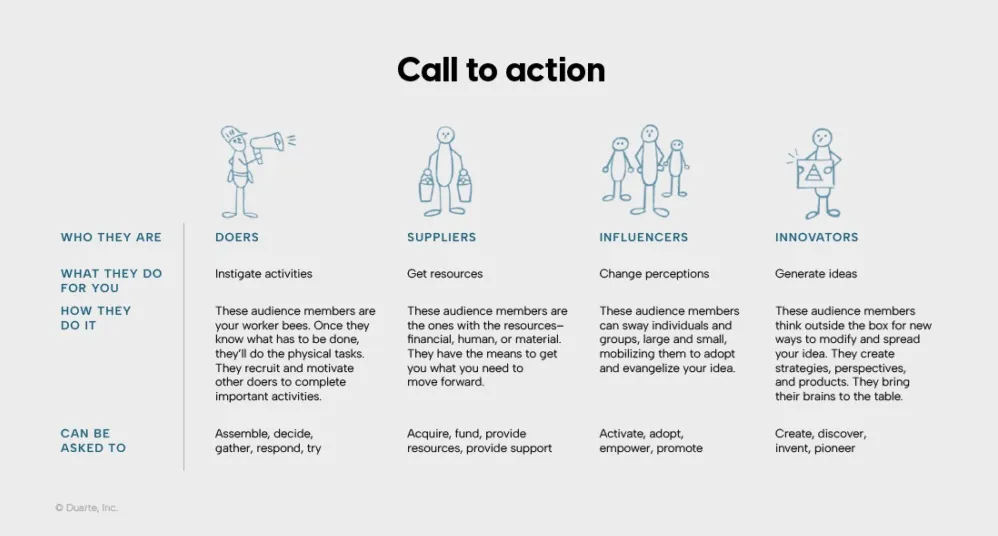
Image Credit: Duarte
A Call to Action (CTA) is one of the most essential elements of your SEO copy. It’s the point at which you lead readers to the next step, whether that’s subscribing to your newsletter, downloading a resource, booking a consultation, or making a purchase.
A strong CTA helps convert readers into customers or leads, making your content not only informative but commercially compelling.
To get the most out of your CTAs, place them strategically throughout your article. Consider adding a CTA in the middle of your content, where readers who are already engaged may be ready to take action.
Always include a CTA at the end of your piece, as readers who conclude are typically the most interested and more likely to convert.
When writing your CTA, aim for clarity and action. Use wording that is direct, concise and benefit-driven. Instead of simply telling readers what to do, show them what they will gain by taking that action. For example:
- “Download our free SEO checklist to start ranking today.”
- “Subscribe for weekly tips that help you boost your website traffic.”
- “Book a free consultation and discover how to increase your conversions.”
To make your CTA more persuasive, use strong, actionable verbs such as download, subscribe, learn, start, discover, or book. These words create momentum and encourage readers to commit. Focus on benefits rather than features. Highlight the outcome or value they will experience.
You can also reinforce your CTA visually by using buttons, bold text, or contrasting colours (if designing a webpage). This draws attention and improves click-through rates.
Step 8: Proofread and Optimise

Image Credit: Medium
Proofreading ensures your content is sharp, professional and easy to read. Even the most informative article can lose credibility if it contains spelling mistakes, awkward phrasing, or inconsistent formatting. Editing also helps strengthen your SEO by improving clarity and structure.

Start by reviewing your content for grammar, spelling and punctuation, ensuring everything follows British English standards. This includes spelling variations (e.g., optimise instead of optimise, organisation instead of organisation) and stylistic consistency throughout the article.
Next, revisit your keyword placement. Make sure your keyword density feels natural. Your primary and secondary keywords should enhance the content, not distract from it. If a sentence feels forced or overly stuffed, rewrite it more naturally.
Take time to refine your headings and subheadings, ensuring they are descriptive, keyword-relevant and helpful for readers skimming through the page. Review your CTAs as well and strengthen them to ensure they are clear, compelling and action-focused.
You should also look for opportunities to improve sentence flow and readability. Shorter sentences, smoother transitions and varied structures keep readers engaged and help maintain SEO value by cutting bounce rates and increasing time on page.
Step 9: Optimise Meta Elements

Image Credit: SEranking
Meta elements are essential components of SEO copywriting because they can determine whether someone clicks on your content as soon as it appears in search results. Even if your content ranks well, a weak title tag or meta description can reduce click-through rates (CTR).
Your title tag should be comprehensive, descriptive and include your primary keyword. Aim for at least 60 characters to prevent it from being truncated in search results. Make it compelling enough that users feel encouraged to click. Think clear value, curiosity, or benefit-driven wording.
The meta description should summarise the essence of your content in 150–160 characters. Incorporate your primary keyword naturally, but focus on making the description engaging and informative. Although meta descriptions don’t directly influence rankings, they strongly impact CTR, so a well-written one can significantly boost visibility.
Your URL structure should also be optimised. Keep it short, descriptive and keyword-rich, avoiding unnecessary words or numbers. Polished URLs are easier for both users and search engines to understand.
Step 10: Publish and Monitor
Publishing your copy is not the final step of SEO copywriting; it’s the beginning of an ongoing process. Search engines prefer content that is maintained, updated and continuously improved, so monitoring performance is vital.
Use tools like Google Analytics and Google Search Console to track metrics such as:
- Organic traffic: Are the right users finding your content?
- Bounce rate: Are visitors staying or leaving too quickly?
- Click-through rate: Are your title and meta description convincing?
- Time on page: Are readers genuinely engaging with your content?
Regularly updating your articles keeps them relevant. Add new statistics, adjust keywords based on current search trends, expand high-performing sections, or refine underperforming sections. Regular updates show Google that your content is still valuable.
Experimentation also plays a key role. Test different headings, CTAs, introductions, visuals and layouts to see which resonate most with your readers and improve retention.
Treat each piece of content as a living document, something that evolves. Consistently updated content often outperforms newly published articles because it builds authority, accumulates backlinks and maintains search relevance.
Ready to Take Your SEO Copywriting to the Next Level?
Mastering SEO copywriting is about crafting content that resonates with your audience, answers their questions and encourages action.
Start with knowing your readers, do your keyword homework, write clear, scannable copy and make sure it’s SEO-friendly. Follow these steps and your content will get noticed, read and acted on.
Remember, SEO copywriting is a continuous process. Monitor your content’s performance, refine your keywords, test different headlines and CTAs and update your articles regularly. With consistent effort, your SEO copy won’t just rank well; it will turn words into measurable business results.
If you’re ready to take your SEO copywriting to the next level, MediaOne can help. Our team specialises in creating content that ranks on Google and converts readers into customers. Contact us today!
Frequently Asked Questions
How long should an SEO copywriting article be?
It all comes down to the topic and search intent, but generally, longer content (1,200–2,000+ words) often does better in Google’s rankings, as long as it remains engaging and informative.
Can I optimise existing content for SEO copywriting?
Yes! Updating older posts with relevant keywords, improving headings, adding visuals and refreshing CTAs can significantly improve rankings and engagement without starting from scratch.
How often should I update my SEO copy?
Review your content at least every 6–12 months. Updating keywords, statistics, links and examples keeps your content accurate, relevant and competitive in search results.
Do meta tags really impact SEO rankings?

While meta tags like the title tag and meta description don’t directly boost rankings, they do influence click-through rates, which, in turn, affect SEO performance. Well-written meta tags can attract more visitors from search results.
Should I focus more on keywords or user experience?
User experience always comes first. Keywords help search engines understand your content, but readable, engaging and valuable content for your audience will perform better over the long term.