In 2026, mobile devices accounted for over 60 % of global internet traffic, indicating that most online interactions now occur on smartphones and tablets rather than desktops.

At the same time, another major development is underway: technologies like Progressive Web Apps (PWAs), advanced websites that offer features similar to those of mobile apps, are rapidly reshaping how businesses deliver mobile experiences.
PWAs remove the need for users to download native apps, allowing brands to combine the reach of the web with the performance of mobile apps and deliver rich experiences in a browser.
This evolution offers more than convenience; it boosts mobile SEO, engagement, and conversions beyond traditional websites.
Against this backdrop, this blog explores how PWAs boost mobile SEO, why they matter, and how an SEO agency optimises them for search rankings and engagement. We also provide practical steps and a checklist for business owners to confidently improve their mobile web experience.
Key Takeaways
- To summarise, PWAs greatly improve mobile SEO by delivering fast, app-like experiences that boost engagement and search rankings.
- PWAs improve mobile SEO through faster page speed, better Core Web Vitals, and responsive designs that meet Google’s mobile-first indexing.
- PWAs’ push notifications and offline features boost user engagement and conversions, making them powerful for businesses.
- Technical improvements, such as service workers (background scripts that manage caching and push notifications) and structured data (organised information to help search engines understand site content), play a key role in optimising PWAs for mobile SEO.
- PWAs deliver app-like experiences without downloads, improving accessibility, performance, and mobile user experience.
What is Mobile SEO?

Mobile SEO is the practice of optimising websites to perform well on mobile devices. As more users access the internet on phones and tablets, mobile-friendly sites matter more.
Factors such as page speed, responsive design, user experience (UX), and mobile-friendliness influence rankings on mobile search results.
Google’s mobile-first indexing now prioritises mobile versions for ranking. Mobile optimisation is essential for search competitiveness.
What are Progressive Web Apps (PWAs)?


Progressive Web Apps (PWAs) combine the best features of both web and mobile applications. They are websites that function like native apps, offering fast, reliable, and engaging experiences directly in a web browser, without requiring users to download an app.
Built with HTML, CSS, and JavaScript (which are programming languages for building websites), PWAs work on any device via a web browser.
Service workers (scripts that run in the background) and caching (storing data locally) give them offline functionality and push notifications, making them more interactive than traditional websites.
How PWAs Enhance Mobile SEO
Progressive Web Apps bring multiple benefits to mobile SEO, helping businesses improve their rankings and deliver better user experiences. Here’s how PWAs enhance mobile SEO:
1. Faster Load Times and Better Performance
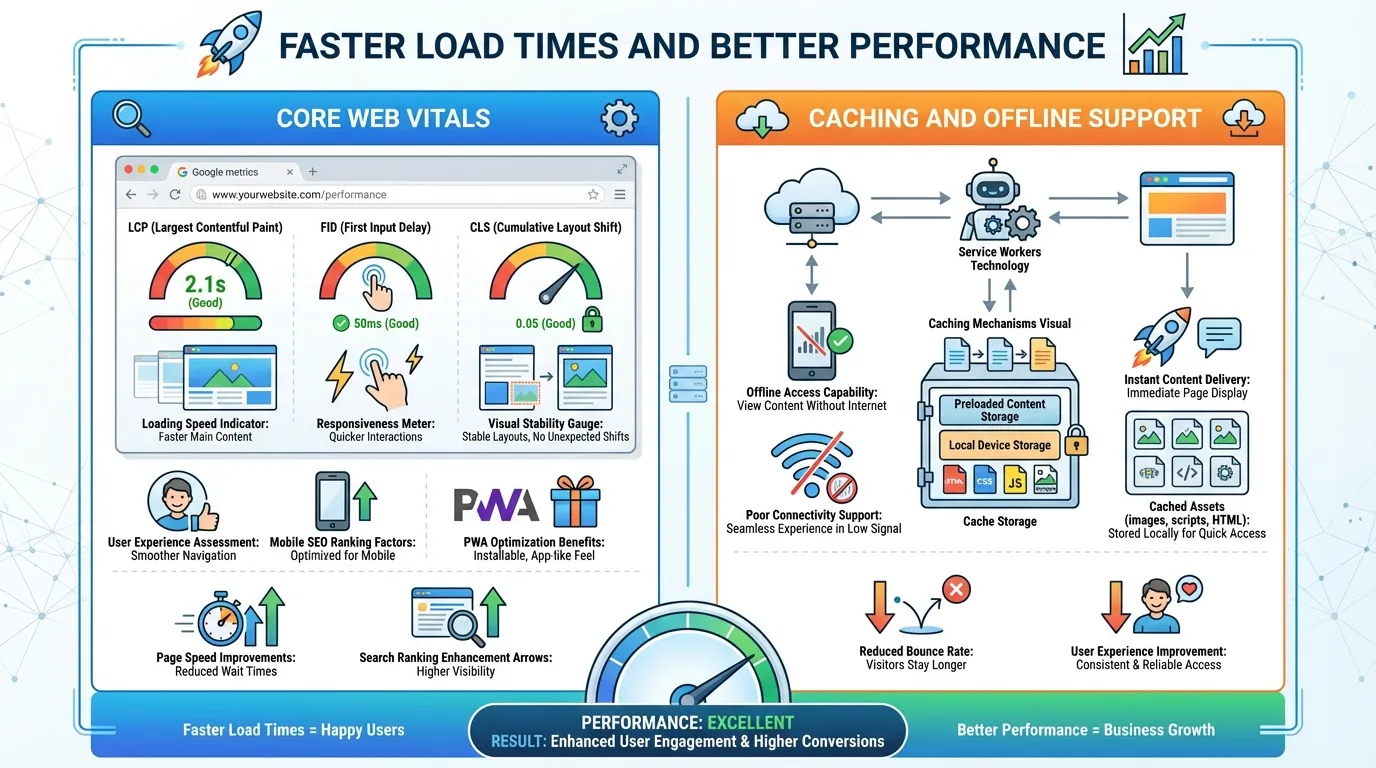
One of the most important factors for mobile SEO is how quickly your website loads, especially on mobile devices. PWAs excel in this area by leveraging service workers and caching mechanisms. These technologies allow content to be preloaded and stored locally, ensuring it can be delivered instantly, even on slow or unreliable networks.
- Core Web Vitals: Google uses metrics like Largest Contentful Paint (LCP), which measures loading speed; First Input Delay (FID), which measures responsiveness; and Cumulative Layout Shift (CLS), which measures visual stability, to assess important parts of the user experience. These metrics are vital for mobile SEO rankings. PWAs can dramatically improve LCP by reducing load times and optimising page speed, ultimately improving search rankings.
- Caching and Offline Support: PWAs store assets such as images, scripts, and HTML pages on the user’s device, allowing them to access content even when they are offline or in areas with poor connectivity. Instantly loading cached content improves the user experience and reduces bounce rate, a key metric for mobile SEO.
2. Mobile-Friendly, Responsive Design
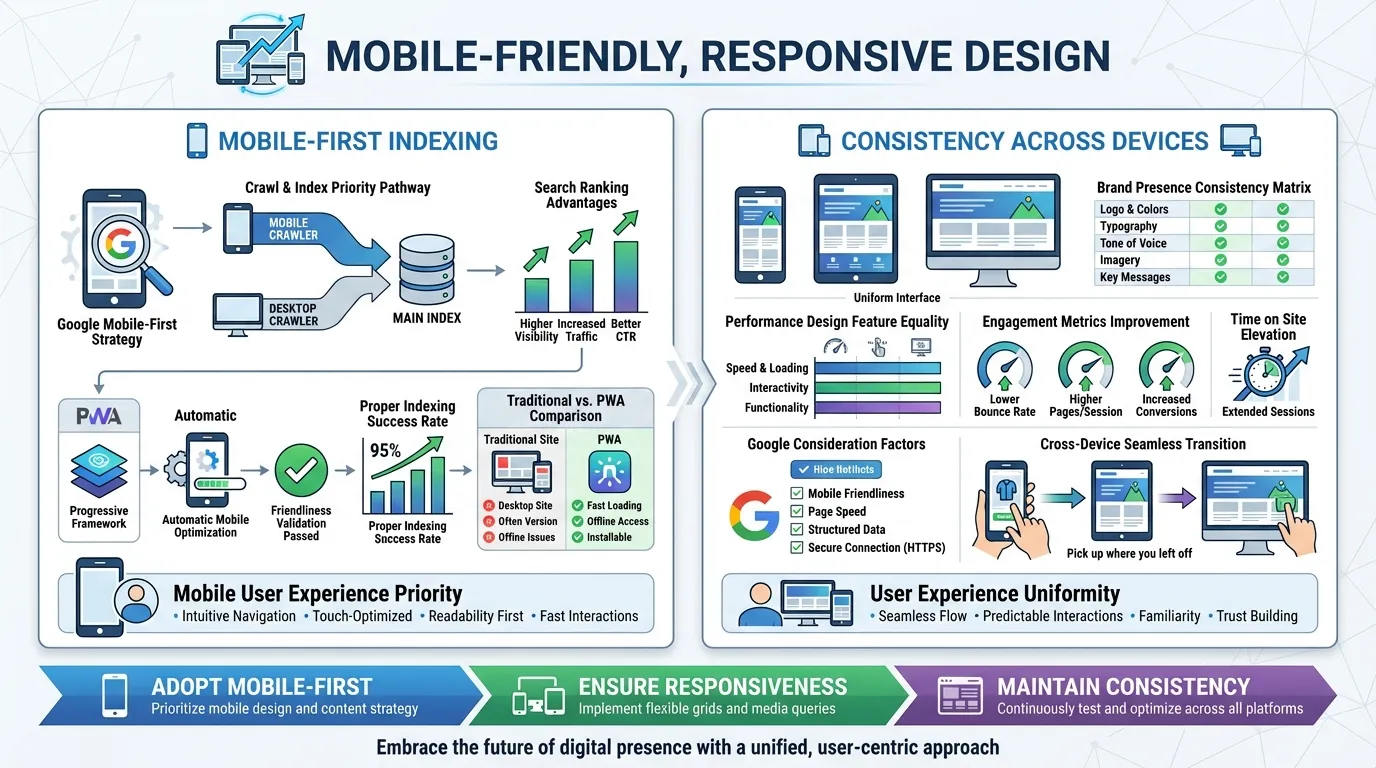

With mobile traffic growing, websites need to be fully optimised for mobile devices. PWAs meet this challenge by providing a responsive, mobile-first design that automatically adjusts to any screen size or device type. This ensures that users have a seamless experience, whether they are using a smartphone, tablet, or desktop.
- Mobile-First Indexing: Google’s mobile-first indexing prioritises mobile-friendly websites by crawling and indexing them first for search rankings. Because designers create PWAs with mobile devices in mind, these sites automatically pass Google’s mobile-friendliness checks. This design makes it more likely that Google will properly index and rank PWAs in mobile search results than traditional websites that don’t prioritise mobile users.
- Consistency Across Devices: A uniform user experience across devices helps businesses maintain a consistent brand presence. By ensuring that users enjoy the same performance, design, and features on both mobile and desktop platforms, PWAs increase engagement and time spent on site, factors that Google considers when ranking websites.
3. Improved User Engagement Metrics
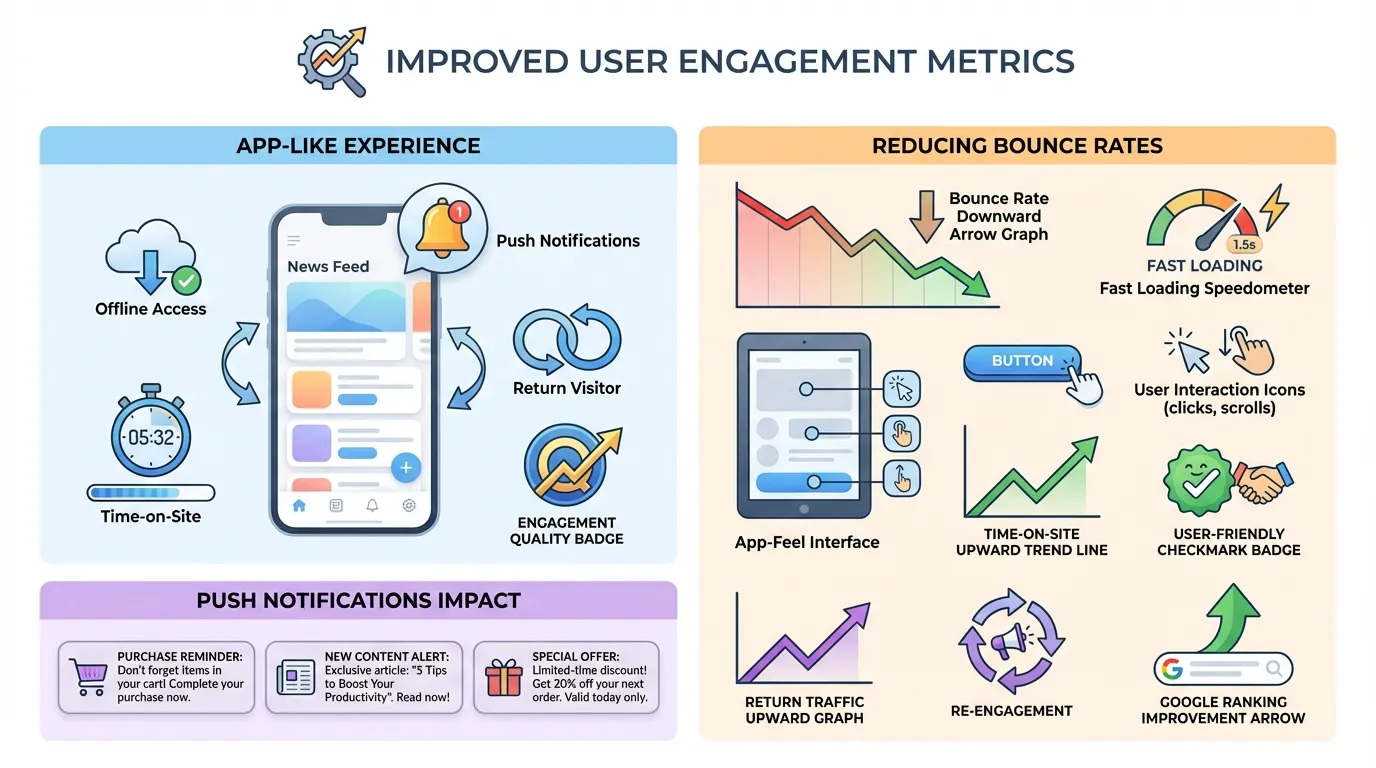
Google uses engagement metrics like bounce rate, average time on site, and pages per session to assess website quality. PWAs help these metrics, leading to better engagement and improved SEO rankings.
- App-Like Experience: PWAs provide a user experience that feels more like a native app than a traditional website. Features like push notifications, offline access, and smooth navigation encourage users to spend more time on your site and return for future visits. This increased engagement signals to Google that your site provides valuable content, which can improve your rankings.
- Reduced Bounce Rates: Fast, responsive experiences keep users engaged and reduce bounce rates. Users are more likely to stay and interact with content that loads quickly and feels like an app. PWAs increase time on site by engaging users, signal to Google that your site is user-friendly, and help improve rankings.
- Push Notifications: PWAs can send push notifications to help businesses re-engage users who have previously visited the site. These notifications prompt users to return to the site, whether to complete a purchase, read new content, or take advantage of special offers. This increased return traffic boosts user interaction and improves mobile SEO.
4. Better User Retention and Conversion Rates
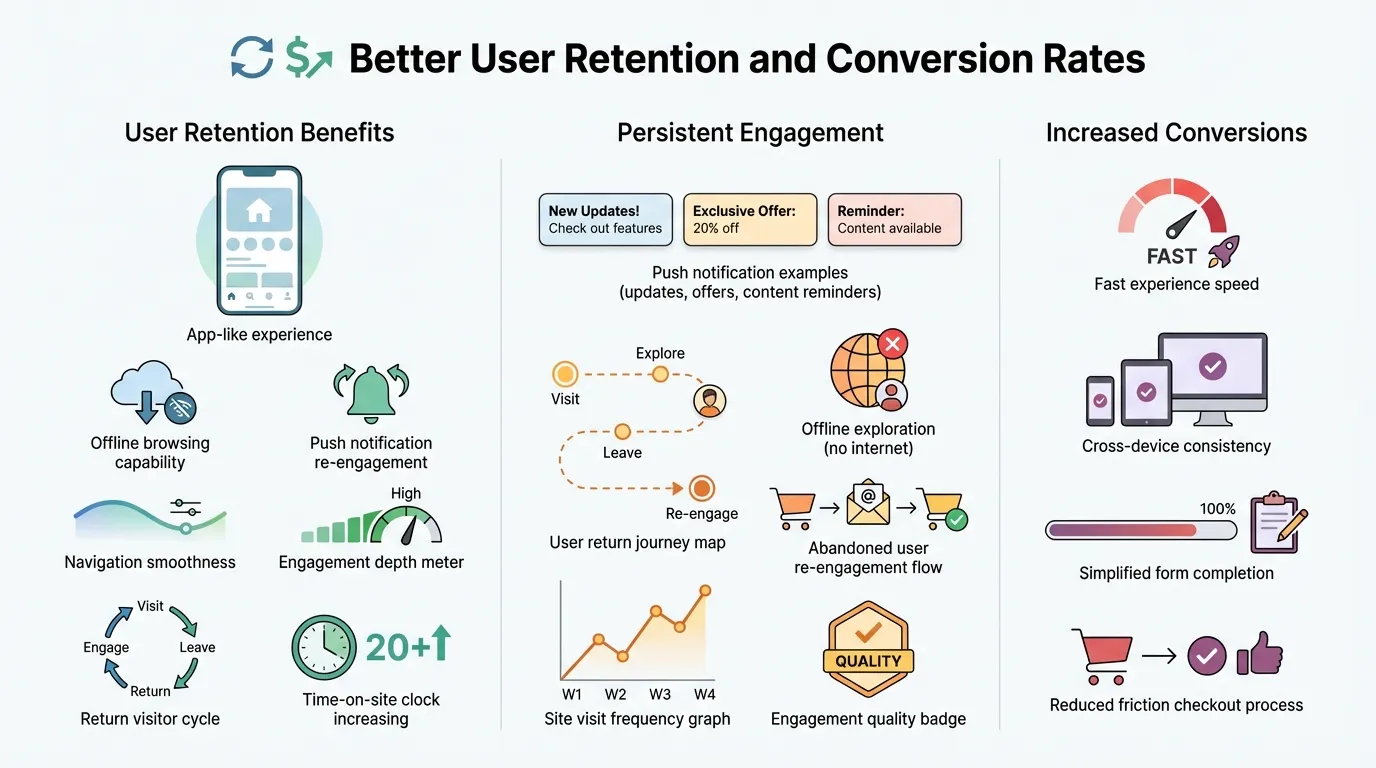
While mobile SEO focuses on ranking factors, businesses must also prioritise user retention and conversions to achieve long-term success. PWAs boost retention by offering an app-like experience that brings visitors back. Features like offline browsing, app-like functionality, and smooth navigation drive deeper engagement.
- Persistent Engagement: Push notifications help businesses remind users of important updates, offers, or content, bringing them back to the site when they might otherwise have abandoned it. Users continue exploring the app even without an internet connection. This feature makes PWAs especially helpful, boosting time on site and encouraging return visits.
- Increased Conversions: With a fast and consistent experience across devices, users are more likely to convert. Whether it’s completing a purchase, signing up for a newsletter, or engaging with content, the smooth experience of a PWA ensures users aren’t distracted by slow loading times or unresponsive elements. This higher conversion rate indirectly improves SEO rankings by signalling that the site is valuable and effective at driving business goals.
PWAs offer a variety of benefits that directly enhance mobile SEO, including faster load times, improved user engagement, and higher conversion rates. With Google prioritising mobile-first indexing and Core Web Vitals, businesses that invest in PWAs are positioning themselves for long-term success in search rankings.
How PWAs Improve Engagement and Conversions
Progressive Web Apps (PWAs) offer businesses a unique advantage by providing an app-like experience on the web, without requiring users to download anything.
These features, such as push notifications, offline functionality, and an app-like experience, enhance user engagement and significantly boost conversion rates. Here’s how PWAs contribute to higher engagement and improved conversions:
1. Push Notifications for Retargeting and Re-engagement

One of the most valuable features of PWAs is the ability to send push notifications to users, even when they are not actively on the site. These notifications serve as reminders for users to return, making them ideal for retargeting and re-engagement.
- Abandoned Carts: PWAs can send notifications to remind users about products they’ve added to their cart but didn’t purchase, increasing the chances of completing the transaction.
- Special Offers and Promotions: Push notifications also allow businesses to notify users of time-sensitive deals, new content, or promotions, encouraging users to return and engage with the brand.
These notifications drive repeat visits, improve user retention, and increase conversion rates, making them a crucial tool for businesses aiming to enhance engagement and sales.
2. Offline Functionality
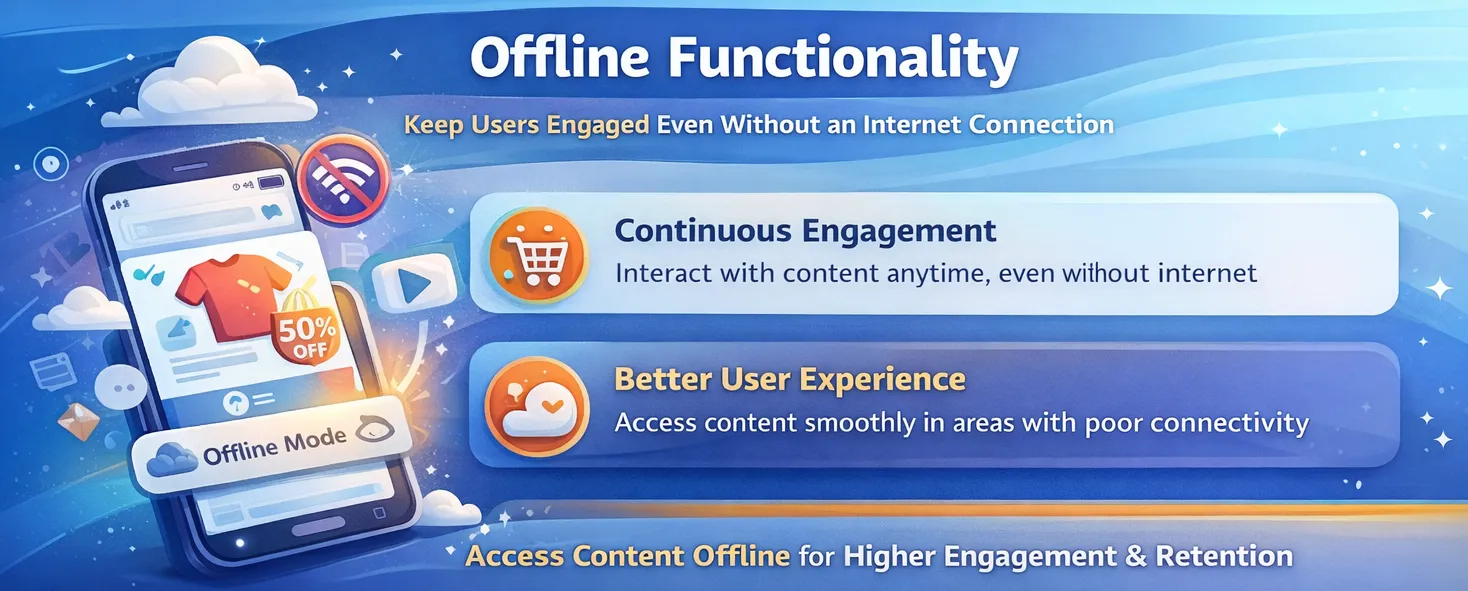
Offline functionality is one of the key features that set PWAs apart from traditional websites. By allowing users to continue interacting with content even without an active internet connection, PWAs provide a seamless experience for users in any environment.
- Continuous Engagement: Whether users are browsing products or reading content, PWAs enable them to interact with the website even when they lose connection, ensuring engagement doesn’t drop.
- Better User Experience: In regions with poor or intermittent mobile data connectivity, offline functionality lets users continue their activities, reducing frustration and improving the overall experience. This leads to higher retention rates, as users are more likely to return to a site that offers consistent access, even offline.
The ability to access content and continue interactions, even in offline scenarios, directly leads to increased engagement and ultimately higher conversions, especially for users who may otherwise abandon the site due to connectivity issues.
3. App-Like Experience Without the Need for Downloads
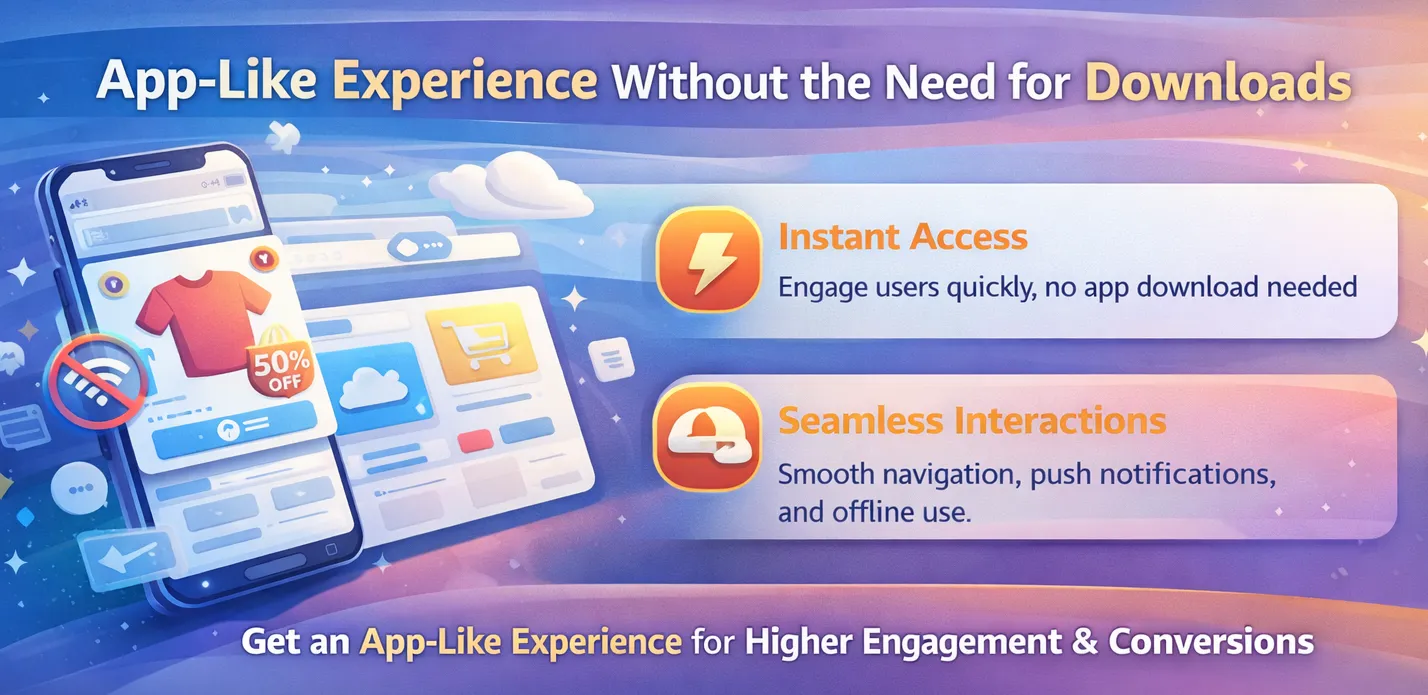
Unlike traditional websites, PWAs offer an app-like experience without requiring users to download a mobile app. This feature removes the friction of app installation and provides users with instant access to the site, improving both user experience and conversion potential.
- Instant Access: Users can quickly visit the website and start engaging with the content without the additional steps of downloading or installing an app. This convenience encourages users to return to the site more often, increasing overall retention.
- Seamless Interactions: With features like smooth navigation, offline access, and push notifications, PWAs provide an experience that feels just as good, if not better, than native mobile apps. This app-like experience increases user satisfaction and conversion rates by providing a streamlined, intuitive browsing experience.
These features not only enhance user satisfaction but also lead to measurable improvements in business outcomes.
To truly understand the impact of a PWA, business owners should track key metrics such as bounce rate, conversion rate, Core Web Vitals (including Largest Contentful Paint, First Input Delay, and Cumulative Layout Shift), average session duration, and pages per session.
Closely monitor these indicators to make informed, data-driven decisions that optimise your mobile strategy and ensure your PWA delivers strong engagement and results.
For businesses looking to improve engagement and conversion rates, adopting a PWA offers a powerful solution that combines the best aspects of web and mobile apps.
Technical Benefits of PWAs for Mobile SEO
Progressive Web Apps (PWAs) not only improve user engagement and conversions but also bring significant technical benefits for mobile SEO. These benefits directly contribute to better rankings, faster load times, and improved crawlability. Here’s a closer look at how PWAs optimise mobile SEO performance:
1. Service Workers for Optimised Performance
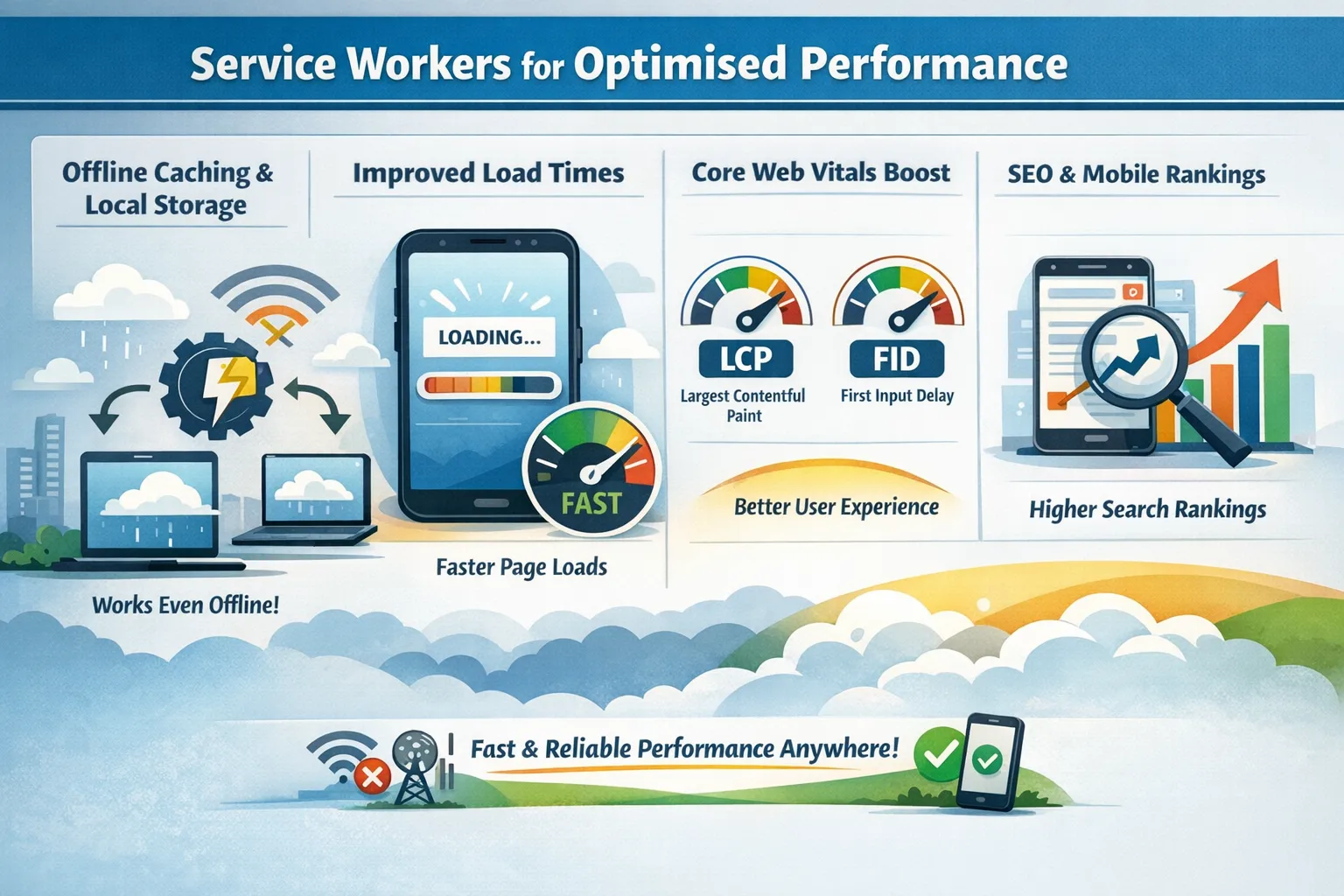
Service workers are a core feature of PWAs that enable offline functionality and caching. They work by storing essential content and assets locally on the user’s device, enabling faster access and reducing reliance on internet connections. This caching mechanism helps deliver a seamless user experience, even in areas with weak or no internet connectivity.
- Improved Load Times: By caching critical resources, service workers drastically reduce loading times, allowing pages to load quickly on mobile devices, even with slower connections.
- Core Web Vitals Impact: PWAs excel at improving Core Web Vitals, particularly Largest Contentful Paint (LCP) and First Input Delay (FID), two key metrics Google uses to assess user experience and determine SEO rankings.
Faster load times and better performance improve search rankings, particularly for mobile-first indexing.
Service workers allow PWAs to maintain a fast, responsive experience regardless of the user’s network conditions, which is crucial for both user satisfaction and mobile SEO rankings.
2. Mobile Indexing and Crawling
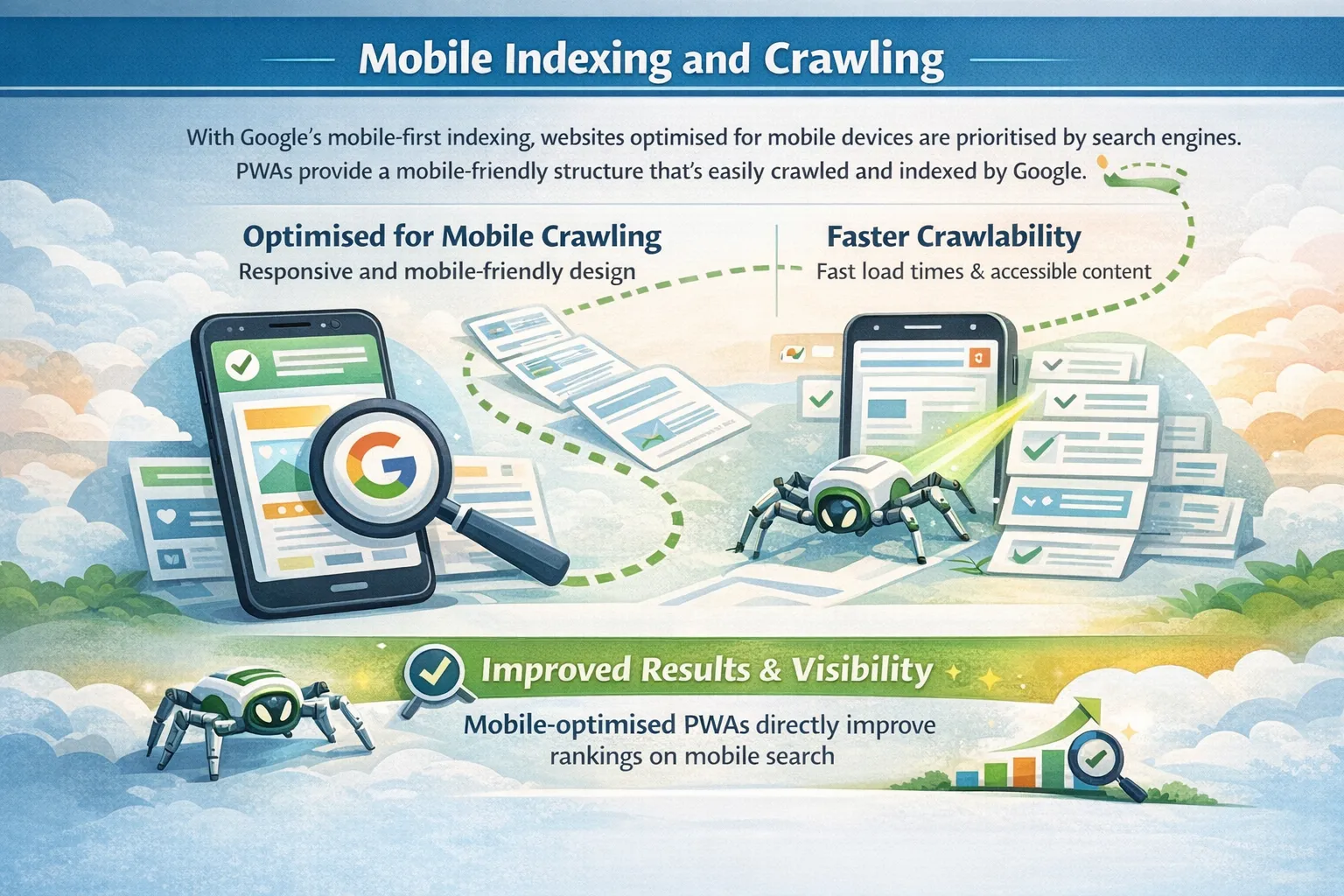
With Google’s mobile-first indexing, websites optimised for mobile devices are now prioritised during crawling and indexing. PWAs are designed with mobile-first principles, ensuring they perform optimally on mobile devices and are easily crawlable by search engines.
- Optimised for Mobile Crawling: PWAs provide a responsive design that adapts to all screen sizes, ensuring that Google’s crawlers can easily index content from the mobile version of the site. This helps improve the site’s visibility in mobile search results.
- Faster Crawlability: The structure and performance of PWAs, including fast load times and clear, accessible content, make it easier for search engines to crawl and index pages effectively. With mobile-first indexing a Google priority, a PWA ensures your mobile site is properly indexed, which is essential for higher mobile rankings.
By ensuring that your site is easily crawlable and optimised for mobile, PWAs directly impact your site’s mobile SEO performance, helping to improve rankings and search visibility.
3. Structured Data for Enhanced Visibility
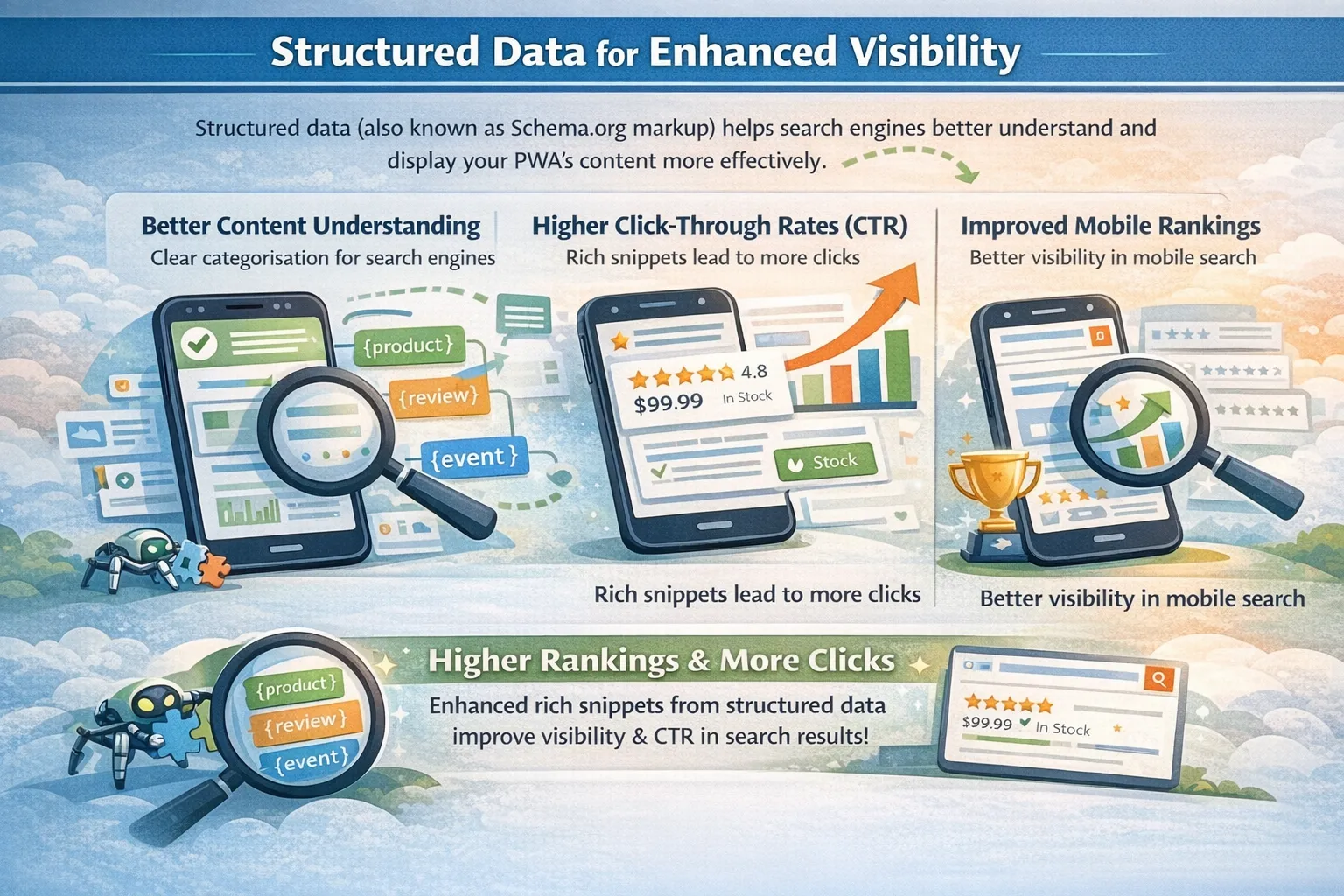
Structured data (also known as Schema.org markup) plays a vital role in enhancing a website’s visibility in search results. PWAs support structured data, helping search engines better understand page content, such as products, reviews, and events.
- Better Content Understanding: Structured data enables search engines to categorise and understand your website’s content more effectively. For example, marking up product pages, reviews, or local business information helps search engines display rich snippets and detailed search results, making it easier for users to find relevant information.
- Higher Click-Through Rates (CTR): By using structured data, PWAs can increase the visibility of their content in search results through enhanced rich snippets, which often lead to higher CTRs. For example, a product listing with price, availability, and review ratings may appear in a more prominent format, driving more organic traffic to the site.
- Improved Mobile Rankings: PWAs that leverage structured data can also gain an edge in mobile search results, as they help deliver more comprehensive and engaging results to users. This ultimately contributes to better mobile rankings and increased user interaction.
By using structured data, PWAs ensure that content is easily indexed, understood, and ranked, thereby enhancing visibility and click-through rates across desktop and mobile search results.
Common Mistakes to Avoid When Optimising Your PWA for Mobile SEO
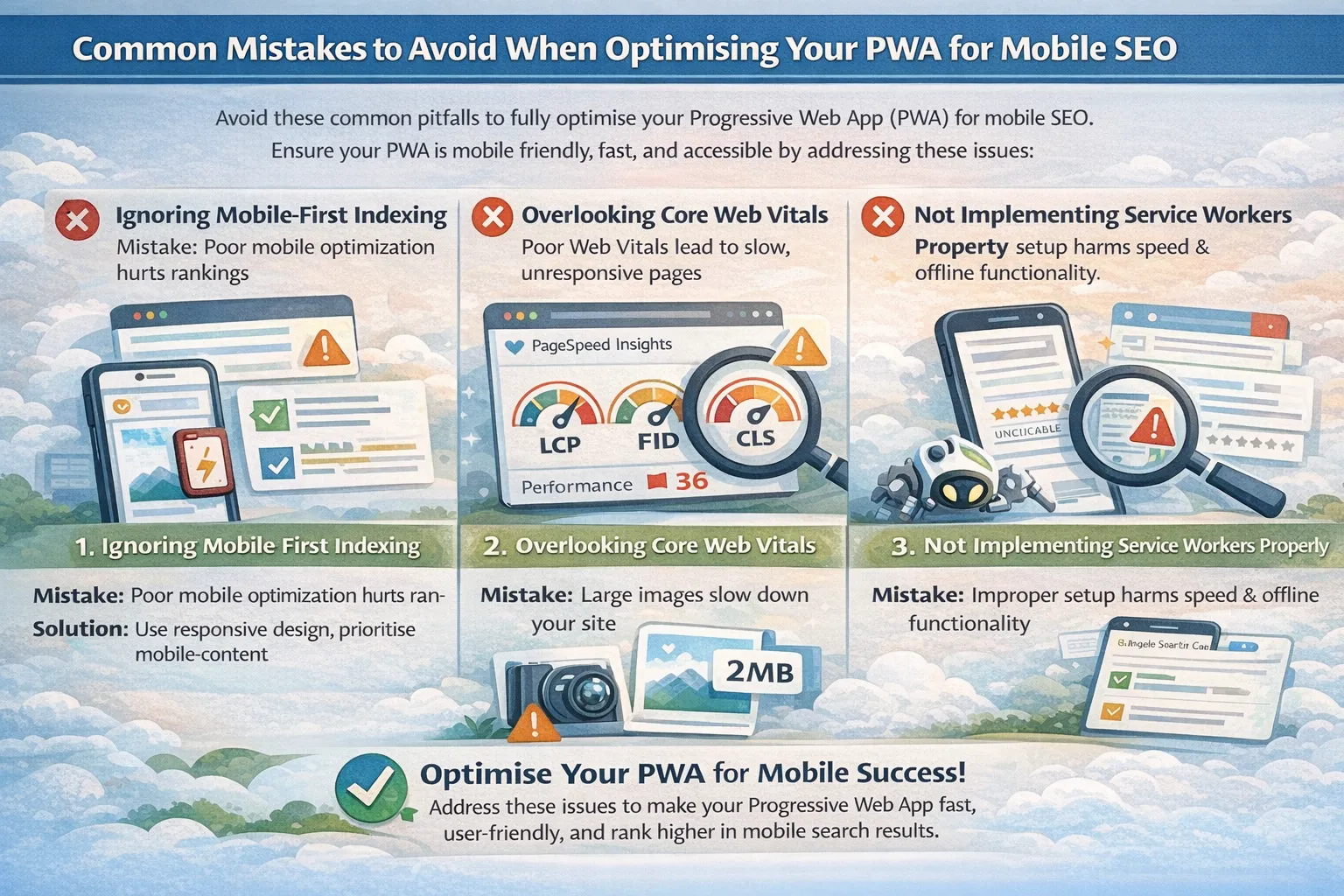
While optimising your Progressive Web App (PWA) for mobile SEO, it’s important to avoid common pitfalls that could hinder performance or negatively impact your rankings. Here are some frequent mistakes and how to avoid them:
1. Ignoring Mobile-First Indexing
- Mistake: Failing to optimise your PWA for mobile-first indexing can result in lower rankings, as Google prioritises mobile-friendly content when crawling and indexing.
- Solution: Ensure your PWA is fully optimised for mobile by using responsive design and prioritising mobile-first content, including optimising images, reducing load times, and improving the mobile UX.
2. Overlooking Core Web Vitals
- Mistake: Failing to focus on Core Web Vitals (LCP, FID, and CLS) can negatively affect both user experience and SEO rankings.
- Solution: Regularly monitor and optimise Core Web Vitals, particularly LCP (Largest Contentful Paint) and FID (First Input Delay), to ensure fast page load times and responsive interactions. Use Google PageSpeed Insights to test and address any issues affecting these metrics.
3. Using Uncompressed Images
- Mistake: Uploading large, uncompressed images can significantly slow down your PWA, resulting in poor page speed and higher bounce rates.
- Solution: Compress and optimise images using formats like WebP to reduce their file size without compromising quality. Implement lazy loading to load images only when they are visible on the screen, further improving page load times.
4. Not Implementing Service Workers Properly
- Mistake: Failing to implement or improperly configuring service workers can result in slow load times, unreliable offline functionality, and a poor user experience.
- Solution: Ensure service workers are correctly implemented to cache key content and assets for faster load times, both online and offline. Test the service worker’s offline capabilities regularly to ensure content remains accessible without an internet connection.
5. Neglecting Mobile Usability Testing
- Mistake: Failing to test for mobile usability issues can lead to a poor user experience, including small font sizes or unclickable elements on mobile screens.
- Solution: Use Google Search Console to identify and fix mobile usability issues. Ensure that your PWA is fully optimised for mobile, with readable text, accessible buttons, and a layout that works seamlessly across all screen sizes.
Avoiding these common mistakes is crucial to fully leverage the potential of PWAs for mobile SEO. Implementing best practices like optimising for mobile-first indexing, focusing on Core Web Vitals, and testing regularly for mobile usability, so you can ensure that your PWA delivers an excellent user experience
Consider PWAs for Mobile SEO
Progressive Web Apps (PWAs) are a powerful solution for businesses looking to improve mobile SEO, enhance user engagement, and drive better conversion rates.
By combining the best features of both mobile apps and websites, PWAs offer faster load times, offline functionality, and a seamless, app-like experience that keeps users coming back. With Google’s mobile-first indexing and the increasing dominance of mobile web traffic, optimising your site for mobile SEO is more critical than ever.
As we’ve discussed, PWAs provide unique advantages that can significantly improve your website’s performance in mobile search rankings. Whether you’re looking to enhance page speed, boost engagement, or improve Core Web Vitals, PWAs offer a clear path to success.
If you’re ready to take your mobile SEO strategy to the next level, consider implementing a PWA to enhance both performance and user experience.
MediaOne can help you optimise your PWA and unlock the full potential of mobile SEO. Contact us today! Discover how we can help drive better results for your business.
Frequently Asked Questions
How does implementing a PWA impact my website’s mobile SEO rankings?
Implementing a Progressive Web App (PWA) can significantly improve your mobile SEO rankings by enhancing page speed, ensuring a mobile-friendly design, and improving user engagement. With features like service workers, offline functionality, and push notifications, PWAs provide a seamless user experience, a key factor in better SEO performance, especially with Google’s mobile-first indexing.
Can PWAs improve my website’s conversion rates?
Yes, PWAs can increase conversion rates by providing a faster, more responsive user experience. The app-like functionality of PWAs, combined with features such as offline access and push notifications, encourages users to stay engaged and return to the site. This leads to higher user retention and more completed transactions or sign-ups, ultimately improving conversion rates.
Do PWAs require a separate SEO strategy from traditional websites?
While many of the best practices for SEO still apply to PWAs, they do come with specific considerations due to their unique features, such as service workers, offline capabilities, and push notifications. PWAs require a strategy that focuses on performance optimisation, mobile-first design, and structured data to ensure they are fully SEO-friendly and effectively indexed by search engines.
Are PWAs suitable for all types of businesses?
PWAs are ideal for businesses looking to enhance the mobile experience and engagement without requiring users to download an app.
While they are especially beneficial for businesses with a mobile-heavy audience or those that need to provide offline functionality, any business aiming to improve mobile SEO performance, conversion rates, and user engagement can benefit from implementing a PWA.
How can I measure the impact of my PWA on mobile SEO?
To measure your PWA’s impact on mobile SEO, focus on key metrics including Core Web Vitals, page load times, bounce rates, user engagement, and conversion rates. Tools like Google PageSpeed Insights, Google Search Console, and Google Analytics can help track these metrics and show how PWAs improve performance, rankings, and user retention over time.