
Traffic alone does not grow rankings or revenue. Relevance does. If visitors land on a page and leave without interacting, that behavior often reveals a disconnect between your keyword targeting and user intent. That is where bounce rate SEO becomes useful.

Used correctly, bounce rate SEO becomes one of the most practical diagnostics for improving keyword targeting and revenue performance.
Google has publicly stated that it uses aggregated and anonymised interaction data to improve Search quality through systems such as RankBrain and other machine learning models. That means user behaviour matters. Not as a single metric. But as a pattern.
If you are actively investing in SEO services and you want measurable ROI in SGD, especially in competitive markets like Orchard Road retail, Tanjong Pagar B2B services, or Jurong industrial solutions, you cannot afford to ignore behavioural signals. This is where a strategic agency partner makes the difference. Execution without interpretation is expensive guesswork.
This guide breaks down how to use bounce rate SEO strategically to improve keyword targeting in a measurable way.
Key Takeaways:
- You can view bounce rate as behavioural feedback that reveals whether users find what they expect from your content.
- Analysing bounce rate in tools like GA4 and Search Console helps identify mismatched keywords and intent.
- Aligning intent with content structure and user experience will improve engagement and conversions.
- Bounce rate SEO is most effective when used as a diagnostic measure within a broader optimisation strategy.
What Is Bounce Rate SEO and Why It Matters for Keyword Targeting


Bounce rate, in simple terms, measures the percentage of visitors who land on a page and leave without meaningful interaction. In GA4, Google defines bounce rate as the inverse of engagement rate.
A session is considered engaged if it lasts longer than 10 seconds, has a key event, or includes two or more pageviews. Meanwhile, the exit rate is different. Exit rate measures how often users leave a page, regardless of how they arrived there.
Why does this distinction matter to you? Because bounce rate is a key SEO metric, SEO focuses on first impressions. It shows whether your keyword promise matches the experience delivered.
Common misconceptions you should avoid:
- A high bounce rate always means failure: Not true. A user may find their answer instantly.
- A low bounce rate always means success: Not necessarily. They may be confused and clicking around.
- Bounce rate alone determines rankings: Google has never confirmed that bounce rate as a standalone metric is a ranking factor.
The real value of bounce rate SEO is diagnostic. It signals potential keyword misalignment. If a page ranking for high-intent commercial keywords shows weak engagement, you have a targeting problem.
How Bounce Rate SEO Data Reveals Keyword Targeting Gaps
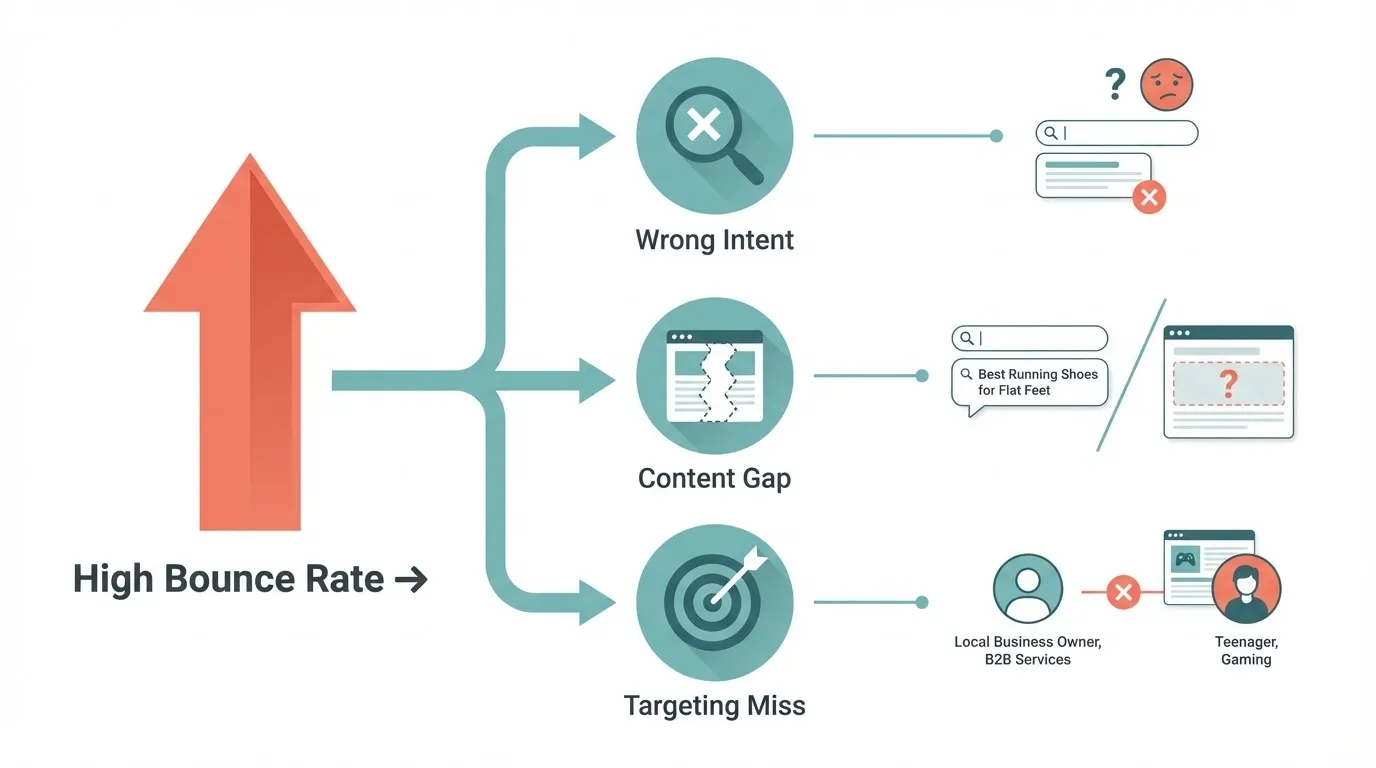
When you notice a spike in bounce rate, resist the urge to “fix” the metric immediately. Instead, pause and ask the only question that matters: Did the user get what they expected when they clicked?
That single question reframes bounce rate SEO from a vanity number into a diagnostic tool. You are not analysing behaviour in isolation. You are evaluating whether your keyword promise matches the experience delivered on the page.
A high bounce rate often signals a targeting gap. It usually points to one of the following:
- Intent mismatch between the keyword and the page type
- Misleading metadata that sets the wrong expectation in search results
- Thin or surface-level content that fails to address the depth implied by the query
- Irrelevant traffic caused by overly broad keyword targeting
However, context matters. Google explicitly states that helpful content should satisfy users’ needs. If a user finds the answer immediately and leaves, that is not a failure. It can be a sign of success.
So bounce rate SEO is not about eliminating exits. It is about diagnosing whether exits are happening for the right reasons. Let’s make this practical and grounded in real business scenarios:
Scenario 1: Informational Keyword Landing on a Transactional Page
Imagine a Singapore accounting firm targeting the query “how to register a company in Singapore.” The search intent is clearly informational. The user wants a process breakdown, eligibility criteria, timelines, and possibly ACRA requirements.
Instead, the landing page contains:
- A short sales pitch
- A price list in SGD
- A contact form

There is no step-by-step explanation. No regulatory context. No documentation checklist. The user clicked, expecting guidance. They received a sales page. They leave.
In this case, bounce rate SEO is not highlighting a traffic problem. It reveals a structural intent mismatch. The keyword and page type are misaligned. The solution is not cosmetic optimisation. It is content re-architecture.
The correct approach would be:
- Create a comprehensive guide explaining the incorporation process
- Include regulatory references such as ACRA requirements
- Add internal links to service offerings as a logical next step
Now the informational intent is satisfied. The transactional offer becomes relevant rather than intrusive.
Scenario 2: Broad Keyword Attracting the Wrong Audience
Consider a tuition centre in Bishan ranking for “PSLE maths tips.” On paper, that looks promising. High volume. Strong relevance to education services.
But the page itself reads like an advertisement. It promotes enrolment packages and testimonials without offering actual study techniques or revision frameworks.
Parents and students searching for actionable tips do not find practical guidance. They leave.
Here again, bounce rate SEO is exposing a gap in alignment. The keyword implies educational value. The page delivers commercial promotion.
Broad keywords are particularly dangerous because they attract multiple audience segments. If your content speaks only to buyers while the query is exploratory, your bounce rate will reflect that disconnect.
How to Interpret the Signal Correctly
Not every high bounce page requires rewriting. The key is pattern recognition.
Ask yourself:
- Is engagement time also low, or are users staying briefly and leaving satisfied?
- Does the query imply depth that the page does not provide?
- Is traffic coming from outside your target geography?
- Are you ranking for secondary keywords you did not intend to target?
When bounce rate SEO is paired with:
- Short engagement duration
- Low scroll depth
- Weak conversion performance
You are likely looking at a keyword targeting issue rather than a technical one. The mistake many marketers make is treating bounce rate as a performance scorecard. It is not. It is feedback.
Traffic volume can hide structural weaknesses. You may see thousands of visitors and assume success. But if a large portion of them leave because your keyword targeting is misaligned, your acquisition cost per qualified lead rises silently.
Keyword alignment is not about ranking for more terms. It is about ranking for the right terms and matching them with the right content format.
Sometimes the fix involves:
- Splitting a page into informational and transactional versions
- Rewriting metadata to clarify intent
- Removing irrelevant keyword targeting
- Expanding content to satisfy search depth
Sometimes it means accepting that a page should have a higher bounce rate because it delivers a concise answer. The distinction is subtle, but it is where serious SEO strategy lives.
When you treat bounce rate SEO as a lens for diagnosing intent alignment rather than a number to minimise, you move from reactive optimisation to strategic keyword architecture. That shift is what separates surface-level traffic growth from sustainable, conversion-driven SEO performance.
How to Analyse Bounce Rate SEO in Google Analytics and Search Console
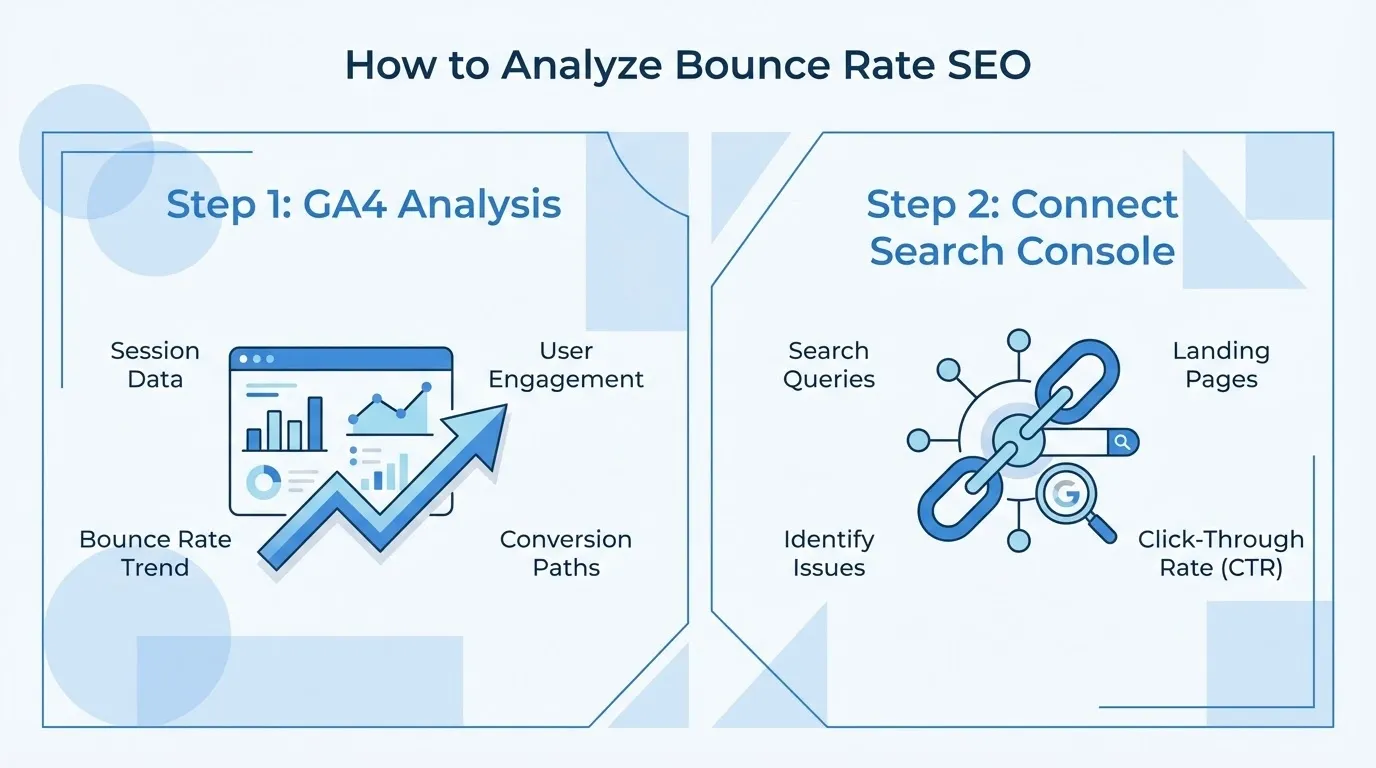
If you treat bounce rate as a surface-level metric, you will draw surface-level conclusions. The goal is not to “check bounce rate.” The goal is to connect behavioural signals with keyword intent and commercial outcomes.
That requires structure. Not random checking. Not reacting to one alarming number. You are building a diagnostic system.
Step 1: Analyse Bounce Rate SEO Properly in GA4
Start inside Google Analytics 4. You are looking at landing page behaviour, not site-wide averages.
Navigate to:
- Reports
- Engagement
- Landing page
From there:
- Add Bounce Rate as a metric if it is not visible.
- Sort by Sessions to focus on statistically meaningful traffic.
- Compare each page against your site’s average.
This immediately filters out low-traffic noise. Now you move from overview to segmentation. This is where serious insights begin.
Segment by Landing Page
Not all pages deserve equal attention. Prioritise:
- Pages ranking in the top 3 to 10 positions
- Pages driving commercial traffic
- Service pages with clear revenue intent
A blog post with 200 visits a month and a high bounce rate is not urgent. A service page generating 5,000 visits with poor engagement is a strategic risk.
Segment by Traffic Source
Bounce behaviour varies dramatically by acquisition channel.
Compare:
- Organic Search
- Paid Search
- Direct
- Referral
If Organic traffic shows high bounce while Paid does not, you may have a keyword alignment issue rather than a messaging issue.
Segment by Device Category
Mobile performance often tells a different story. If your mobile bounce rate is significantly higher than desktop, investigate:
- Page load speed
- Above-the-fold clarity
- CTA visibility
- Layout compression
According to Google’s Core Web Vitals documentation, page experience and loading performance directly affect user engagement. If your site loads slowly on 4G connections in Tampines or Jurong, the behaviour will reflect that.
Segment by Geographic Location
This is critical for Singapore-based businesses. If you operate locally but receive high volumes of traffic from India, the US, or Indonesia that never converts, your bounce rate will be artificially inflated.
Use GA4’s geographic reporting to filter by:
- Singapore only
- Specific regions such as Central Singapore, the West Region, or the North-East
When you isolate relevant traffic, bounce rate SEO insights become far more accurate.
Step 2: Connect Bounce Rate SEO With Google Search Console
GA4 shows you what users did. Google Search Console shows you why they came. Move to Google Search Console and open the Performance report.
Now:
- Filter by the specific landing page.
- Review the queries, driving impressions, and clicks.
- Examine:
- Impressions
- Click-through rate
- Average position
You are looking for a specific pattern:
- High impressions
- Decent rankings
- Strong clicks
- High bounce rate
This combination is your optimisation opportunity. It tells you the page is visible and attractive enough to earn clicks, but not aligned enough to hold attention.
For example, if a Singapore-based SEO agency page ranks for “SEO pricing Singapore” but the content does not clearly display pricing ranges in SGD, visitors will leave. The keyword implies pricing transparency. The page must deliver it.
How to Interpret the Data Without Overreacting
Before you change headlines or rewrite entire pages, ask yourself:
- Does the keyword intent match the page type?
- Is the content depth aligned with the query?
- Is the bounce occurring primarily on mobile?
- Is irrelevant geographic traffic skewing the metric?
Bounce rate SEO becomes dangerous when interpreted in isolation. It becomes powerful when layered with intent analysis.
A Simple, Repeatable Workflow for Bounce Rate SEO Analysis
You do not need complexity. You need discipline. Before changing anything, follow this process:
- Export your top 20 landing pages by organic traffic from GA4.
- Highlight pages with above-average bounce rate.
- Filter those pages in Google Search Console.
- List the top 10 queries per page.
- Categorise each query by intent: informational, commercial, transactional, navigational.
- Evaluate whether the page structure satisfies that intent.
If a transactional keyword leads to a long-form informational article with no clear CTA, that is misalignment. If an informational keyword lands on a hard-sell service page, that is friction.
If broad keywords attract international audiences outside Singapore, that is a dilution of targeting. Once you identify the root cause, you can respond strategically rather than reactively.
Why This Matters for AI Search and LLM Visibility
Large language models and AI-driven search systems increasingly prioritise content that clearly satisfies intent. While Google does not disclose every behavioural signal used in ranking systems, its documentation consistently emphasises helpful, people-first content.
When your bounce rate SEO analysis leads to better intent matching, clearer structure, and deeper coverage, you are not just improving user behaviour. You are strengthening topical authority and content clarity, which benefits both traditional search and AI-powered discovery systems.
The goal is not to chase a lower bounce rate number. The goal is to create pages that make visitors think, “This is exactly what I was looking for.”
When that happens consistently, rankings stabilise. Engagement improves. Conversions follow.
Using Bounce Rate SEO to Align Keywords with Search Intent
Search intent generally falls into four categories:
| Intent Type | Example Query | Correct Page Type |
| Informational | “What is corporate tax in Singapore” | Educational guide |
| Navigational | “IRAS corporate tax portal” | Specific brand page |
| Commercial Investigation | “Best CRM software Singapore” | Comparison article |
| Transactional | “Hire SEO agency Singapore” | Service page |
Google’s Search Quality Evaluator Guidelines emphasise intent matching as central to page quality.
If your blog ranks for “best CRM software” but lacks feature comparisons, pricing breakdowns, or side-by-side analysis, users bounce. The keyword implies commercial research. Your content must reflect that.
In the middle of your optimisation process, this is where bounce rate SEO becomes decisive. It forces you to re-map keywords to content types that actually serve intent.
Step-by-Step Framework: How to Use Bounce Rate SEO to Improve Keyword Targeting
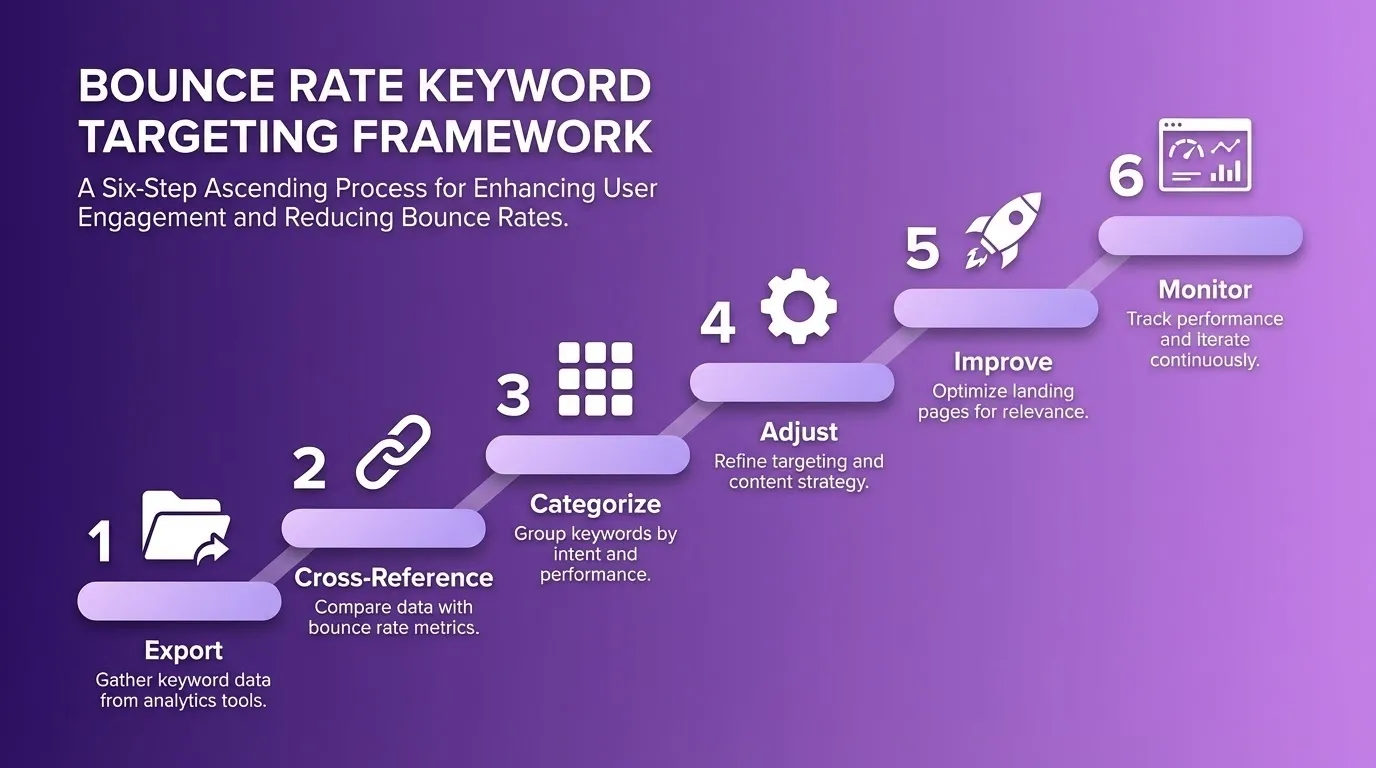
If you treat bounce rate as a surface metric, you will make surface-level changes. If you treat it as a behavioural signal tied to search intent, it becomes a precision tool for refining keyword targeting.
The framework below is built for business owners and marketing teams who want controlled optimisation, not reactive edits. Each step builds on the previous one. Skip a step, and you risk fixing the wrong problem.
Step 1: Export Landing Pages With High Bounce Rate SEO
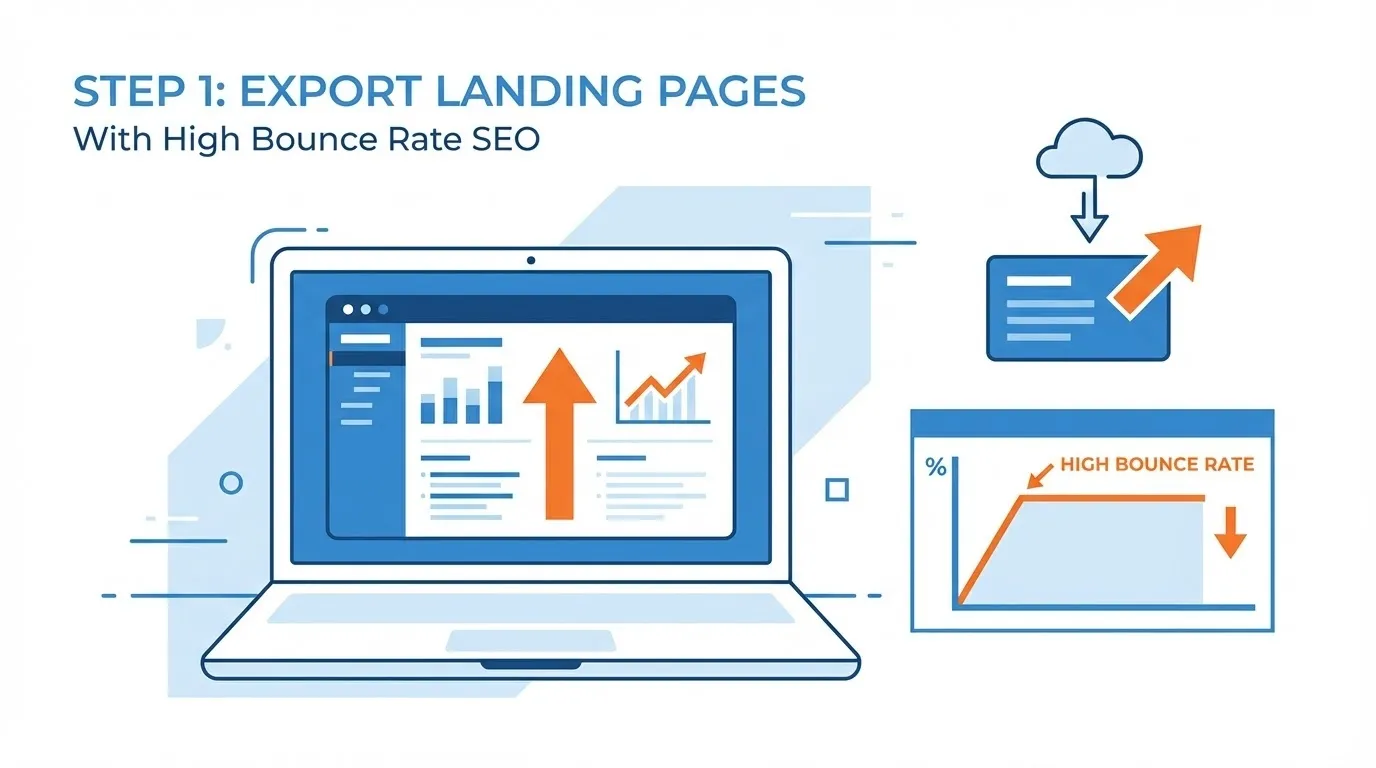
Start with clarity, not assumptions. In GA4, pull a report of your top landing pages by sessions. Add the following metrics:
- Bounce rate
- Engagement rate
- Average engagement time
- Conversions
You are not looking for every page with a high bounce rate. You are looking for high-traffic pages with above-average bounce behaviour.
This distinction matters because a page with 30 sessions and 90 percent bounce is noise. But a page with 3,000 sessions and 78 percent bounce is an opportunity.
Create a shortlist of 10 to 20 pages where:
- Traffic is meaningful
- Rankings are relatively stable
- Bounce rate SEO is noticeably higher than similar pages
This becomes your optimisation queue.
Step 2: Cross-Reference Queries in Search Console
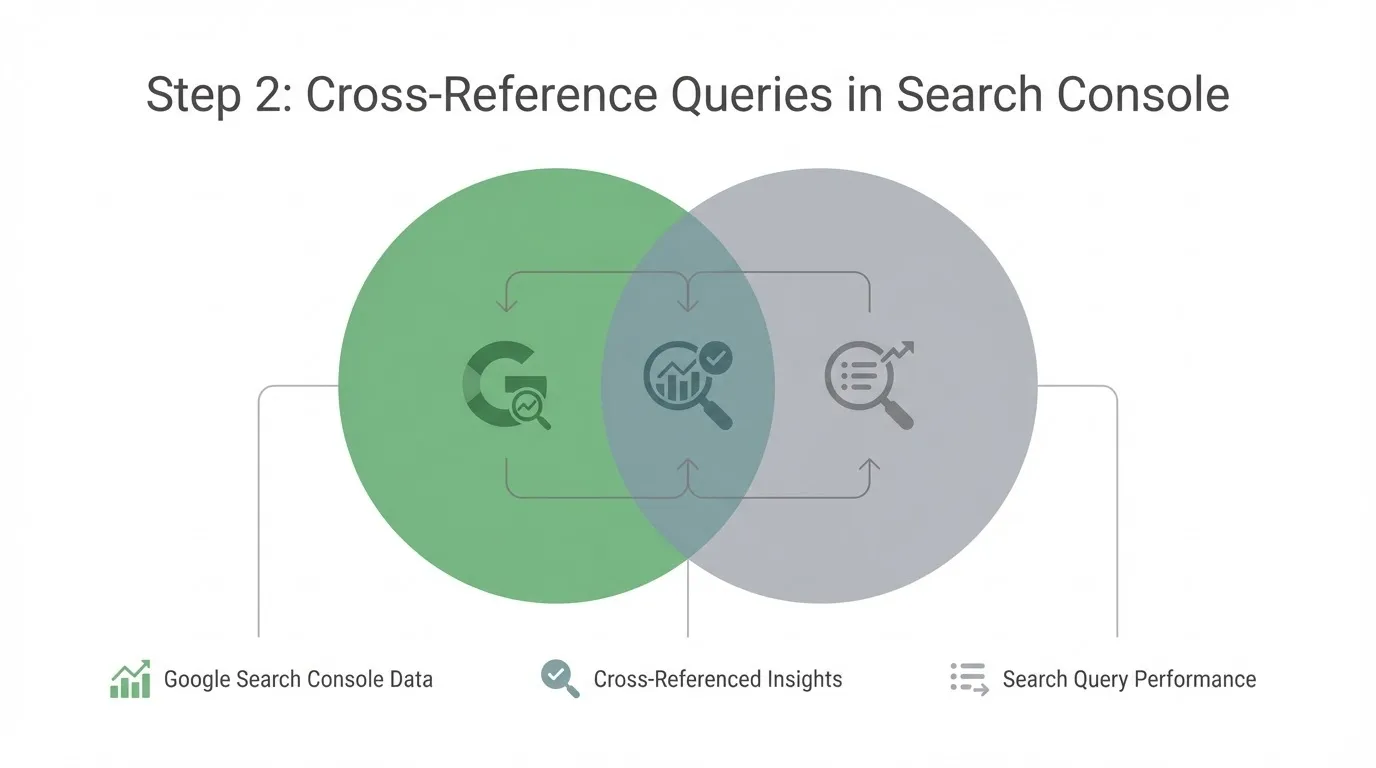
Now move to Google Search Console. For each shortlisted page:
- Filter performance by that URL.
- Export queries, impressions, clicks, and average position.
- Sort by impressions first, then by clicks.
You are looking for disconnects.
For example:
- High impressions but weak CTR suggests a title or meta description problem.
- Strong clicks but a high bounce rate. SEO suggests an intent mismatch.
Pay attention to query language. The wording reveals expectations. If users search “best accounting software Singapore pricing” and your page discusses general features without cost comparisons in SGD, they will leave.
Do not rush this step. Keyword language is often more revealing than metrics.
Step 3: Categorise Search Intent With Precision
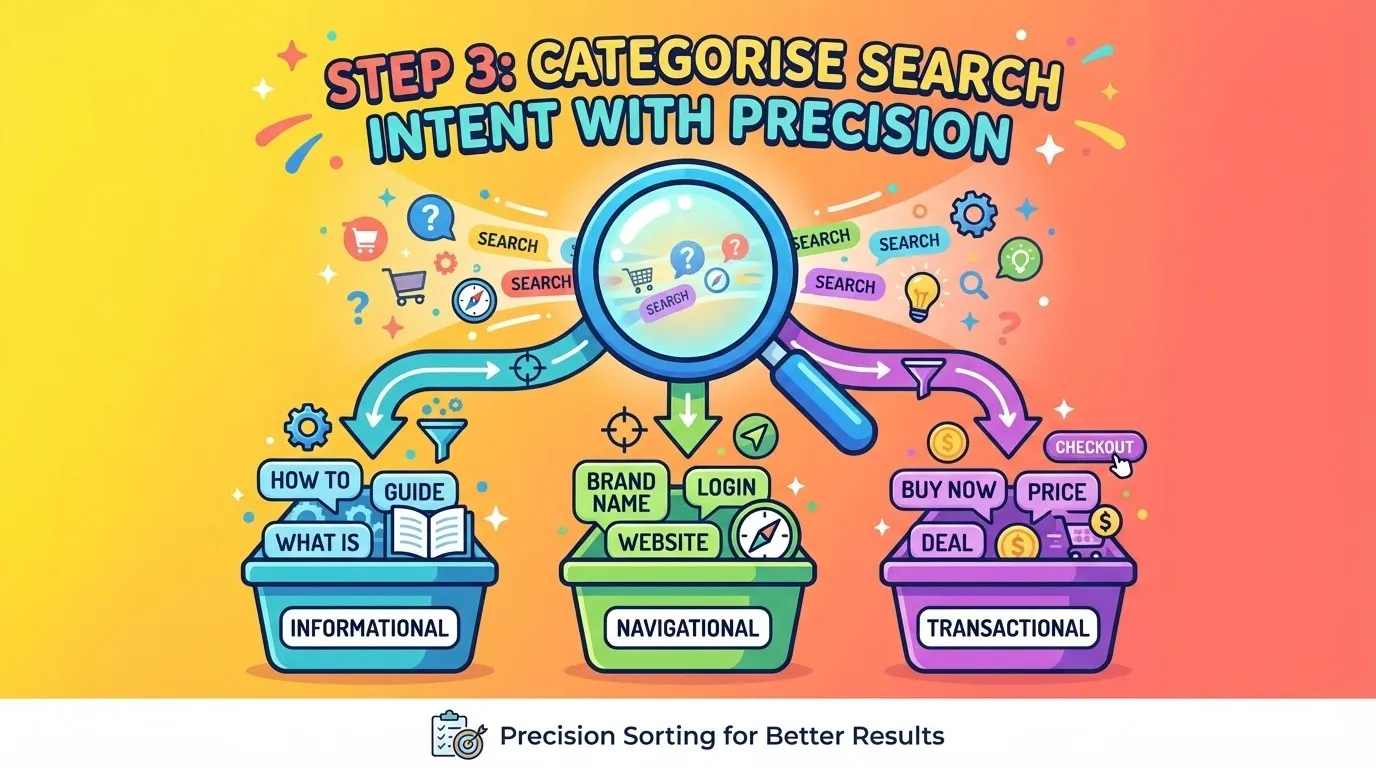
Before changing content, categorise each top query by intent. Use this framework:

- Informational
- Navigational
- Commercial investigation
- Transactional
Create a simple working table:
| Query | Intent | Current Page Type | Alignment |
| “SEO agency Singapore pricing” | Commercial | Generic service page | Partial |
| “What is local SEO” | Informational | Service page | Poor |
When you see poor alignment, thatis when bounce rate SEO becomes meaningful. It confirms that the page type does not match user expectations.
Intent categorisation forces discipline. It prevents you from rewriting pages blindly.
Step 4: Adjust Keyword Mapping or Page Type
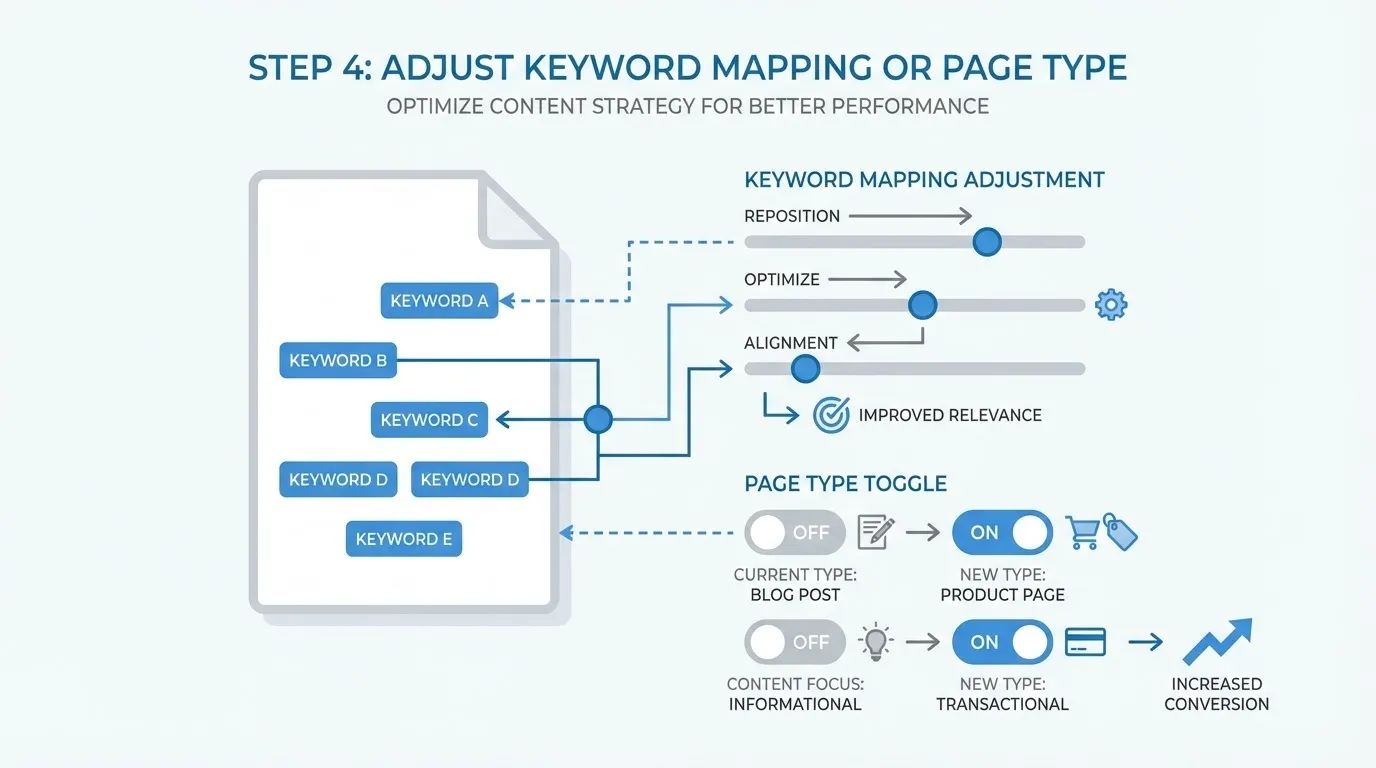
Now you make strategic decisions. There are only three logical responses to misalignment:
- Re-map the keyword to a more suitable existing page.
- Restructure the page to better match intent.
- Create a new page built specifically for that intent.
For example:
- If a blog post ranks for a transactional keyword, consider adding structured pricing tables, service breakdowns, and clear CTAs.
- If a service page ranks for informational queries, consider separating educational content into a supporting guide and linking internally.
Do not dilute a page by trying to satisfy every intent at once. That usually increases bounce further.
Keyword targeting should be intentional. Each page should serve one primary intent clearly and thoroughly.
Step 5: Improve UX and Internal Linking Strategically
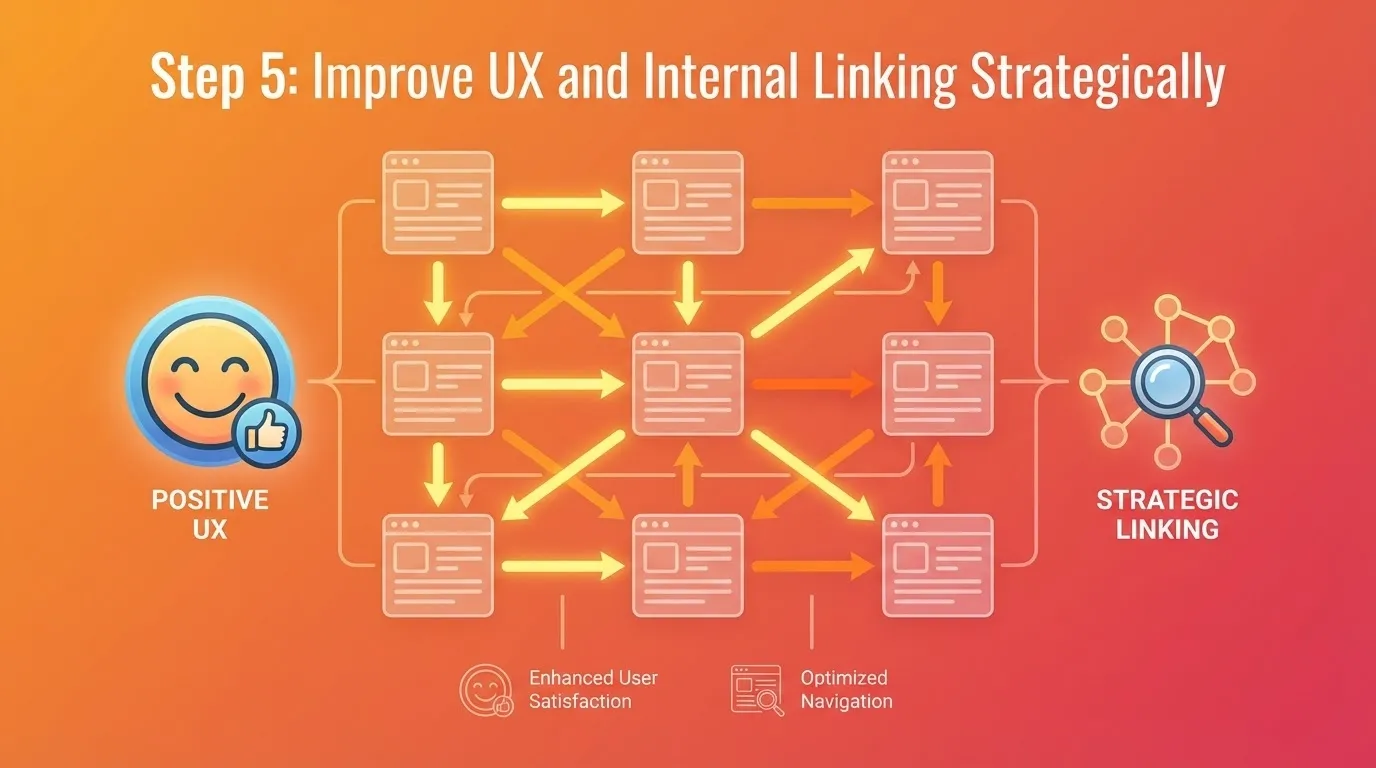
Once intent is aligned, evaluate the user experience.
Ask yourself:
- Is the value proposition visible within the first screen?
- Is the content structured logically with scannable headers?
- Are there contextual internal links guiding next steps?
- Does the CTA match the intent of the query?
If someone searches for “compare payroll providers Singapore” and lands on your page, the first screen should confirm they are in the right place. Not force them to scroll through generic introductions.
Internal linking is especially powerful here. Guide users naturally:
- From comparison pages to detailed reviews
- From informational guides to consultation pages
- From blog content to relevant case studies
Bounce rate SEO improves when the journey feels obvious and helpful.
Step 6: Monitor Trends Over 30 to 90 Days
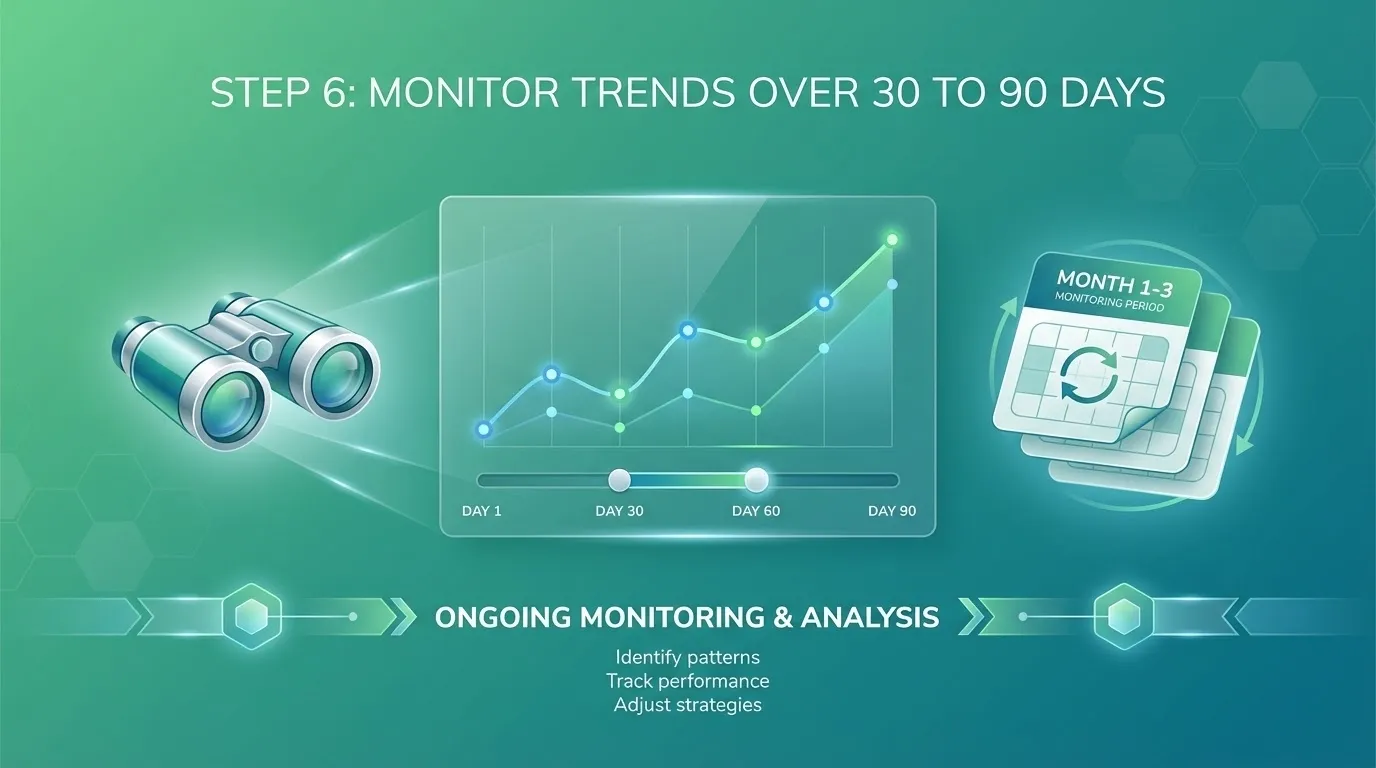
This is where most teams fail. They change the content and check the results a week later. SEO does not respond to impatience. After implementing updates:
- Track bounce rate and engagement rate weekly.
- Monitor ranking stability in Search Console.
- Observe conversion rates from the updated pages.
You are looking for directional change, not an overnight transformation.
If bounce rate decreases and engagement time increases while rankings remain stable or improve, your intent alignment is working. If bounce decreases but rankings drop sharply, review whether keyword relevance was weakened.
Data should guide iteration, not ego.
Suggested Implementation Timeline
A disciplined rollout protects performance and preserves clarity. Here’s a timeline you can follow:
Week 1 to 2: Data Audit
- Export landing pages
- Cross-reference queries
- Categorise intent
- Prioritise high-impact pages
This stage is analytical. Do not change the content yet.
Week 3 to 4: Content Restructuring
- Adjust keyword mapping
- Improve page structure
- Add or remove sections based on intent
- Strengthen internal linking
Limit changes to a controlled batch of pages. Avoid site-wide overhauls.
Month 2: Monitor Behavioural Shifts
- Compare bounce rate SEO trends pre- and post-update
- Analyse engagement time and scroll depth
- Watch for CTR changes in Search Console
You are validating assumptions.
Month 3: Evaluate Ranking and Conversion Impact
By this stage, you should see patterns. Review:
- Position changes for priority keywords
- Conversion improvements
- Assisted conversions from improved internal navigation
If metrics trend positively, expand the process to the next group of pages.
Optimising bounce rate SEO is not about lowering a percentage. It is about aligning expectations with delivery.
When you follow this structured framework, you move from reactive editing to strategic refinement. That shift alone separates average SEO execution from results that justify investment.
Consistency wins. Reaction does not. Keep this in mind.
Your Next Move: Turn Bounce Rate SEO Into Competitive Advantage
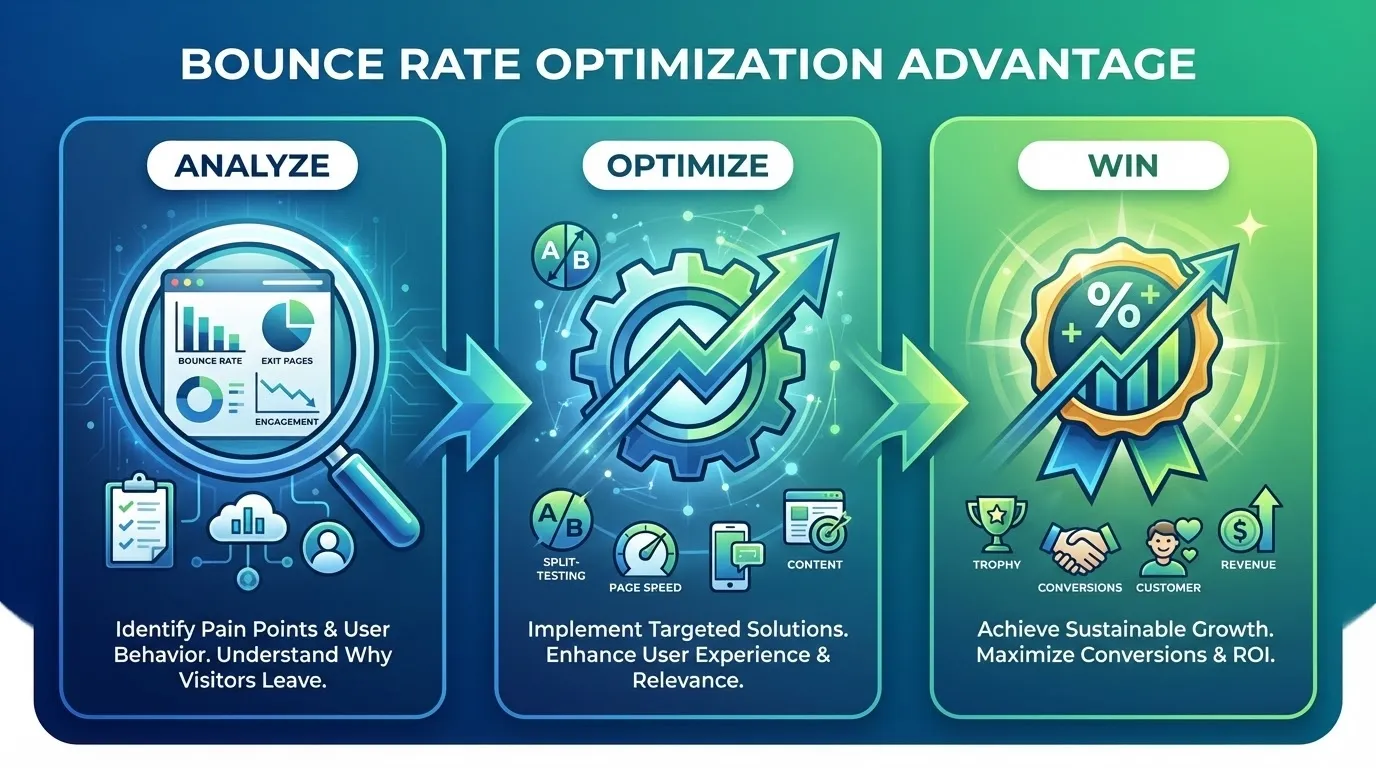
You now understand what most businesses overlook. Bounce rate is not a surface metric. It is behavioural intelligence. It tells you whether your keyword targeting aligns with what your audience actually wants, or whether you are simply attracting clicks that never convert.
The companies that win in competitive markets like Singapore do not chase traffic for its own sake. They refine targeting, sharpen intent alignment, and build connected digital ecosystems where SEO, content, and social channels reinforce one another. When bounce patterns improve, engagement improves. When engagement improves, authority compounds. And when authority compounds, revenue follows.
But insight without execution changes nothing.
If you want to turn your data into a coordinated strategy across search and social, you need structured implementation, not scattered fixes. MediaOne works with brands that are ready to translate behavioural insights into measurable growth, integrating search intelligence with professional social media management to strengthen reach, trust, and conversion.
If you are serious about using bounce rate SEO as a strategic advantage rather than a passive metric, call us today to discuss how your current targeting, engagement, and content ecosystem can be aligned for stronger performance.
Frequently Asked Questions
How does bounce rate differ from dwell time in SEO analysis?
Bounce rate measures the percentage of visitors who view a single page and leave without further interaction. Dwell time refers to how long a visitor stays on a page before returning to the search results. While bounce rate focuses on the breadth of engagement, dwell time adds depth of context. A high bounce rate with long dwell time can still be a positive signal if the content satisfies user needs.
Can improving my website’s bounce rate increase conversion rates?
Improving bounce rate SEO typically involves aligning keyword intent with page content and enhancing user experience. When visitors find content that matches their expectations and provides clear next steps, they are more likely to engage and convert.
In structured experiments, pages with better intent alignment often show lower bounce rates and higher conversion rates. The effect depends on the quality of post-click experience rather than bounce rate alone.
Is bounce rate the same across different digital channels?
Bounce rate differs by traffic source. For example, organic search visitors may engage differently from paid social traffic because intent varies by channel. Mobile traffic often has different patterns compared to desktop traffic due to browsing behaviour. Analysing bounce rate by channel and device provides richer insights than treating it as a single site-wide figure.
Does bounce rate affect how search engines rank my pages?
Google has not confirmed that bounce rate directly influences search rankings. Many SEO professionals agree that Google’s algorithm does not use bounce rate from analytics tools as a ranking signal.
Instead, search engines rely on a broader set of interaction signals and measures of intent satisfaction. Bounce rate still helps you understand user behaviour and refine optimisation strategies, even if it is not a direct ranking factor.
How should I interpret a high bounce rate on a blog post?
A high bounce rate on a blog post can indicate that visitors found what they needed quickly and left, or that the content did not compel further engagement. Evaluating other metrics such as dwell time, scroll depth, or session duration helps clarify whether the page serves its purpose. For informational content, a higher bounce rate may not be a problem if engagement quality is strong