

If your law firm isn’t appearing when locals search for a lawyer online, you could be missing out on clients just when they need legal help the most. In fact, 78% of local mobile searches for legal services result in a contact or consultation within 24 hours.
Local SEO is a vital way to connect with people searching for legal services in your area. As competition among law firms grows, appearing in local search results, map listings and trusted directories can mean the difference between a client choosing your firm or a competitor.
This guide will walk you through how an SEO agency implements local SEO for your law firm to improve visibility, build credibility and attract more clients in your area.
Key Takeaways
- Most potential clients search online for legal services in their area. Being visible locally can significantly increase enquiries and cases.
- A fully optimised profile with accurate NAP, business hours, categories, images and reviews boosts your visibility in local searches and Google Maps.
- Use location-specific and practice-specific search terms to ensure your website and content reach potential clients in your area.
What is Law Firm Local SEO?

Law firm local SEO is the process of optimising your law firm’s online presence so that potential clients in your local area can easily find you when searching for legal services. Unlike general SEO, which focuses on ranking in search results nationwide or globally, local SEO is about showing up in searches for your city, town, or region.
For example, if someone searches for “family lawyer in Singapore” or “personal injury solicitor near me,” a well-optimised local SEO strategy ensures your law firm appears near the top of the results, often in Google Maps and local listings. This makes it much easier for people in your area to discover your firm, visit your website, or contact you directly.
In short, law firm local SEO is about connecting with potential clients exactly when they need your services—and making sure your firm is the one they choose.
How Does Local SEO Help Law Firms Get Noticed?

Local SEO helps law firms get noticed by making your practice more visible to the people who matter most: potential clients in your area. Most legal searches start online and are often location-specific. Without local SEO, your website could be lost among countless other law firms on Google.
By optimising your online presence, local SEO ensures your firm appears in:
- Google Maps listings: the small map and list that often appear at the top of search results.
- Local search results: the results showing businesses closest to the searcher.
- Directory listings: trusted legal directories like Avvo, Justia, or local business listings.
Local SEO also improves your credibility. When your firm appears consistently across Google, directories and review platforms, potential clients are more likely to trust you. This combination of visibility and trust leads to more phone calls, website visits and ultimately, more clients.
Key Components of Local SEO for Law Firms
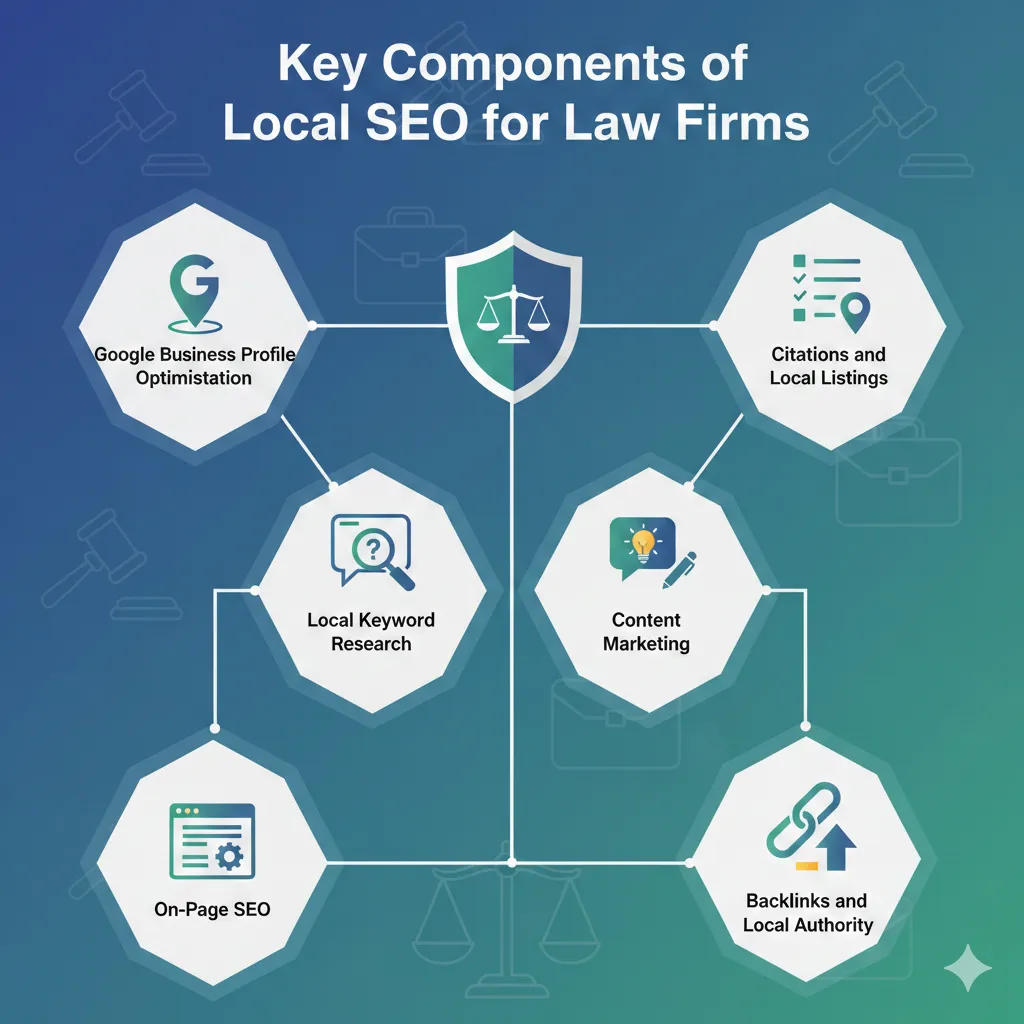
Image Credit: Generated by Gemini
Local SEO is a combination of strategies that work together to make your law firm visible online. The key components include:
- Google Business Profile Optimisation: Your Google Business Profile (GBP) is the first thing people see when they search for local services. Ensure your firm’s name, address and phone number (NAP) are accurate, add your business hours, practice areas and high-quality images and encourage client reviews.
- Local Keyword Research: Use keywords that match what potential clients search for in your area, such as “divorce lawyer in Malaysia” or “employment solicitor near me.” This ensures your content aligns with the terms people are actually typing into Google.
- On-Page SEO: Optimise your website by including location-specific keywords on service pages, attorney profiles and meta descriptions. Adding local schema markup helps search engines understand your firm’s location and services.
- Citations and Local Listings: List your firm consistently across legal directories and local business platforms. Accurate citations help Google trust your information and improve your ranking in local searches.
- Content Marketing: Create helpful, locally focused content, such as blog posts that answer common legal questions or case studies that highlight your work in the community. This improves engagement and positions your firm as an authority in your area.
- Backlinks and Local Authority: Earn links from reputable local organisations, charities, or publications. Backlinks signal to search engines that your law firm is trustworthy and relevant in your location.
When these components work together, your law firm becomes more visible, more credible and more likely to attract clients in your local area.
8 Steps to Effectively Implement Law Firm Local SEO
Implementing local SEO can feel overwhelming, but breaking it into clear steps makes it manageable. These eight steps will guide your law firm to improve online visibility, attract more local clients and stay ahead of competitors in your area.
Step 1: Optimise Your Google Business Profile (GBP)

Your Google Business Profile is your digital storefront. It appears in Google Maps and at the top of local search results, often before your website. Optimising it properly ensures potential clients can find, contact and trust your firm.
Actionable tips:
- Verify your business: Claim your profile and confirm your law firm’s details are correct. Verification increases trust and improves visibility.
- Accurate NAP: Name, address and phone number must match across all platforms. For example, if your website says “123 High Street” but your GBP says “123 High St.,” Google may consider this inconsistent.
- Business hours: Include opening hours, holiday schedules and special consultation hours. People searching for urgent legal help rely on accurate timing.
- Categories: Choose a primary category that reflects your leading service, e.g., “Divorce Lawyer,” and secondary categories like “Family Law” or “Personal Injury Solicitor.”
- Photos and videos: Upload professional pictures of your office, team and events. Video introductions or short tours can make your firm more approachable.
- Client reviews: Encourage clients to leave honest reviews and always respond politely. Engaging with reviews builds credibility and can influence local search rankings.
A well-optimised GBP is a powerful tool for attracting clients and establishing authority in your field.
Step 2: Conduct Local Keyword Research

Keyword research helps you understand what potential clients type into search engines. Without targeting the right keywords, even the best website may go unnoticed.
Actionable tips:
- Location-specific keywords: Include your city, town, or region in your keywords, e.g., “employment solicitor in Leeds” or “personal injury lawyer near me.”
- Practice-specific keywords: Target keywords relevant to your legal services, such as “family law advice” or “contract dispute lawyer.”
- Use research tools such as Google Keyword Planner, Ahrefs, or SEMrush to identify high-volume, low-competition keywords in your area.
- Map keywords to content: Assign keywords to specific service pages, blog posts and attorney bios. For example, a blog on “What to Do After a Car Accident in London” can naturally target a local keyword.
- Include long-tail keywords: Phrases like “how to contest a will in Birmingham” capture precise searches, which often convert better than generic terms.
Local keyword research ensures your content reaches people actively looking for your services nearby.
Step 3: Optimise Your Website for Local SEO

Image Credit: Sprintzeal
Your website is your firm’s digital office. Optimising it for local SEO ensures search engines and clients understand your location, services and expertise.
Actionable tips:
- Page titles and meta descriptions: Include your city or town in titles, e.g., “Manchester Divorce Lawyer | Smith & Partners.”
- Local schema markup: Structured data tells Google your firm’s name, address, phone and practice areas. This increases the chances of appearing in rich results.
- Service and attorney pages: Optimise every page with relevant keywords and explicit, client-focused content. Include location mentions naturally.
- Mobile optimisation: Most clients search on their phones. Ensure your website is responsive, easy to navigate and fast-loading.
- Internal linking: Link relevant pages together to improve site structure and user navigation, e.g., linking your “Personal Injury” page to blog posts on local case studies.
A properly optimised website enhances visibility, credibility and user experience.
Step 4: Build Local Citations and Listings

Citations are mentions of your law firm’s NAP on other websites. Consistent citations signal to Google that your business is legitimate and trustworthy.
Actionable tips:
- Legal directories: List your firm on platforms such as Avvo, Justia, FindLaw, or Law Society directories.
- Local directories: Register with your local chamber of commerce, city directories, or community websites.
- Consistency is key: Ensure your NAP information is identical across all listings.
- Avoid duplicates: Multiple listings for the same firm can confuse Google and lower your ranking.
Building citations boosts your online presence and local search rankings.
Step 5: Generate Reviews and Manage Your Reputation

Image Credit: Reputation X
Reviews influence search rankings and client trust. They act as social proof, reassuring potential clients about the quality and reliability of your services.
Actionable tips:
- Ask for reviews: Politely request reviews after a case or consultation. Make it easy by sending links directly to your Google Business Profile.
- Respond to reviews: Thank clients for positive reviews and address negative reviews professionally, offering solutions if appropriate.
- Showcase testimonials: Add positive reviews to your website or marketing materials to reinforce credibility.
- Monitor online reputation: Use tools like Google Alerts or review platforms to track what people are saying about your firm.
A strong review profile increases trust, improves rankings and attracts more clients.
Step 6: Create Localised Content

Image Credit: Perfect Doc Studio
Content marketing establishes your law firm as an expert in your area and provides value to clients.
Actionable tips:
- Answer local legal questions: Blog about topics people search for in your area, e.g., “Steps to Contest a Will in Birmingham.”
- Highlight local case studies: Share anonymised stories of cases you’ve successfully handled to demonstrate expertise.
- Local news and updates: Write posts about changes in local laws or regulations relevant to your clients.
- FAQs: Address common questions with location-specific answers. For example, “How long does a divorce take in Manchester courts?”
Localised content improves engagement, builds authority and signals to Google that your firm is relevant locally.
Step 7: Build Local Backlinks
Backlinks from reputable websites act as endorsements for your law firm. More quality local links help your site rank higher in search results.
Actionable tips:
- Partner with local organisations: Sponsor events, charities, or community groups and get links from their websites.
- Guest blogging: Write informative articles for local blogs, newspapers, or legal publications.
- Press mentions: Issue press releases or get featured in local news stories about your firm or community involvement.
- Collaborate with complementary businesses: For example, estate planners or accountants may link to your services when relevant.
Backlinks build credibility and authority in your local area, helping Google see your firm as trustworthy.
Step 8: Track and Measure Success
You can’t improve what you don’t measure. Tracking results shows whether your local SEO efforts are working and highlights areas for improvement.
Actionable tips:
- Monitor Google rankings: Track your position for key local search terms.
- Website analytics: Use Google Analytics to see how much traffic comes from local searches and which pages convert best.
- Track calls and enquiries: Monitor the number of calls, form submissions and bookings generated by local search.
- Review performance regularly: Use insights to refine strategies, update content, or adjust keywords for better results.
Tracking progress helps you make data-driven decisions and continuously improve your law firm’s local SEO strategy.
Local SEO Services for Law Firms

Image Credit: Generated by Gemini
Local SEO services are specialised strategies to help law firms increase visibility to clients in their area. While some firms handle local SEO in-house, working with experts can save time, avoid mistakes and deliver measurable results.
Key services typically offered include:
- SEO Audits: An SEO audit is the starting point for any local SEO strategy. Specialists analyse your website, Google Business Profile and online listings to identify technical issues, content gaps and areas for improvement. This provides a clear roadmap for increasing your online visibility.
- Google Business Profile (GBP) Management: Experts optimise your Google Business Profile to ensure it is complete, accurate and attractive to potential clients. Services include verifying your business, updating contact details, selecting appropriate categories, adding images and responding to reviews. A strong GBP improves your chances of appearing in Google Maps and local search results.
- Citation Building and Management: Listing your law firm on trusted legal directories, local business platforms and review sites. Maintaining consistent Name, Address and Phone (NAP) details across all citations is crucial, as inconsistency can harm your local search rankings.
- Content Creation: High-quality, locally relevant content is essential for establishing authority. Services may include writing blog posts, FAQs, guides, or case studies tailored to your local audience. For example, creating a blog titled “Steps to Contest a Will in Birmingham” targets location-specific searches and attracts potential clients.
- Local Link Building: Local backlinks signal to search engines that your firm is credible and relevant. Services may involve acquiring links from local newspapers, community organisations, legal associations, or partner businesses. Strong backlinks improve your website’s authority and search ranking.
- Reputation and Review Management: Managing your online reputation ensures potential clients see your firm in the best light. Services include monitoring reviews, responding professionally, encouraging positive feedback and mitigating negative reviews. A strong online reputation builds trust and improves local SEO performance.
- Performance Tracking and Reporting: Local SEO services often include regular reporting on website traffic, keyword rankings, lead generation and other key metrics. This allows you to measure ROI, adjust strategies and continuously improve your online presence.
By leveraging these services, law firms can ensure they are visible to the right audience at the right time. Local SEO services not only increase the number of potential clients finding your firm but also improve credibility, authority and competitive advantage within your area.
Common Local SEO Mistakes Law Firms Make
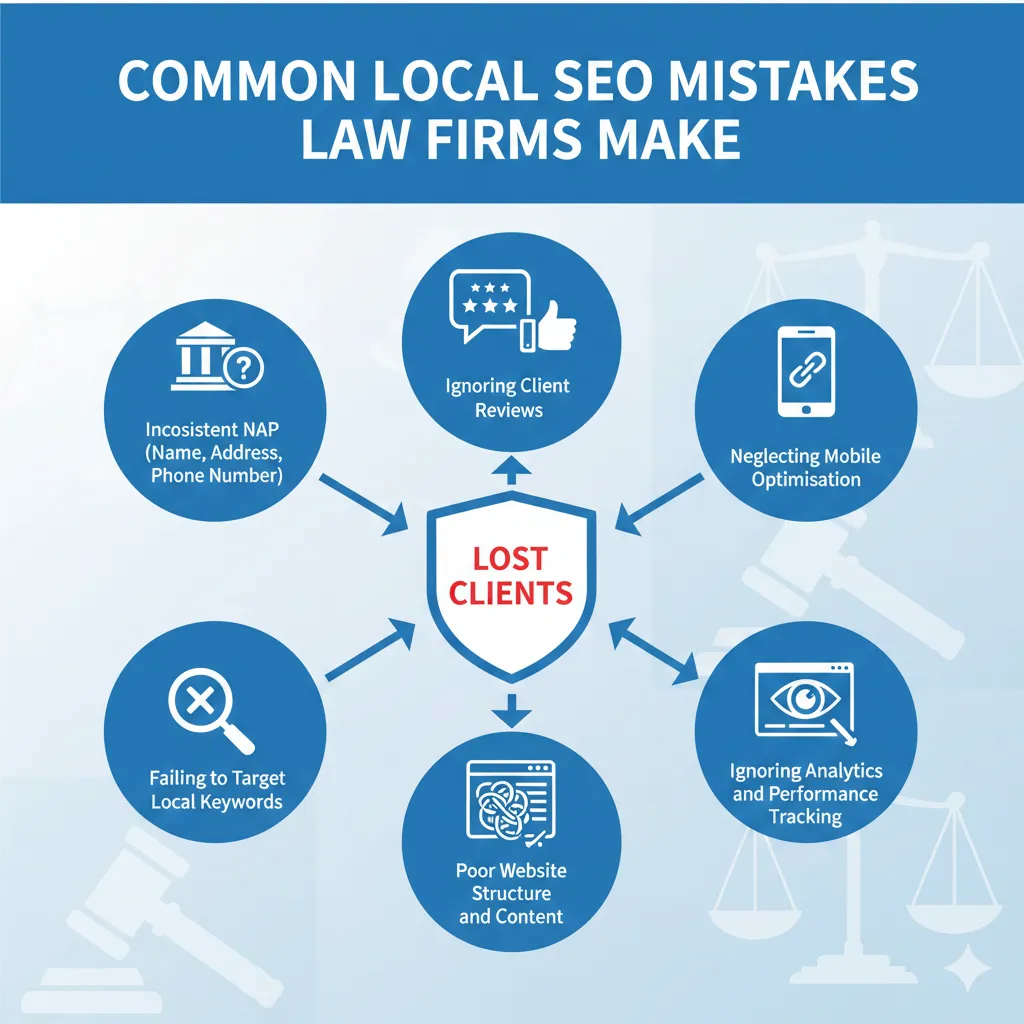
Image Credit: Generated by Gemini
Many law firms make mistakes that prevent their local SEO efforts from delivering results. Being aware of these pitfalls can help your firm rank higher, attract more clients and maintain a strong online reputation.
- Inconsistent NAP (Name, Address, Phone Number): One of the most common mistakes is having different contact details across your website, Google Business Profile and directories. For example, if your website lists your office as “123 High Street” but Google shows “123 High St.,” search engines may see these as conflicting entries. Inconsistent NAP can lower your local search rankings and confuse potential clients.
- Ignoring Client Reviews: Reviews play a crucial role in local SEO and client trust. Failing to collect or respond to reviews can hurt your credibility. Positive reviews encourage new clients, while a professional response to negative reviews shows accountability and reliability.
- Neglecting Mobile Optimisation: Most clients search for legal services on their smartphones. A website that is slow, difficult to navigate, or not mobile-friendly can drive potential clients away before they even contact your firm. Mobile optimisation is essential for a smooth user experience and higher search rankings.
- Failing to Target Local Keywords: Using generic keywords like “lawyer” or “solicitor” without including location-specific terms makes it difficult for local clients to find you. Targeting keywords like “family lawyer in Manchester” or “personal injury solicitor near me” ensures your content reaches people actively searching in your area.
- Poor Website Structure and Content: A website with poorly organised pages or unclear content can make it difficult for search engines and users to understand your services. Neglecting localised content, such as city-specific blog posts or FAQs, can also limit your visibility in local search results.
- Ignoring Analytics and Performance Tracking: Without tracking results, it’s hard to know which SEO efforts are working. Many firms fail to monitor website traffic, keyword rankings, or client enquiries, missing opportunities to improve or adjust their strategy.
Avoiding these mistakes is key to building a strong local SEO presence. Consistency, responsiveness and a focus on local relevance help your law firm attract clients effectively, improve credibility and maintain a competitive advantage in your area.
Securing Clients with Law Firm Local SEO
Most potential clients start their search online. If your firm isn’t visible in these local searches, you risk losing clients to competitors who are easier to find.
Local SEO also reinforces your credibility. Clients often judge law firms by the professionalism and activity of their online presence. A firm that appears at the top of local search results, with positive reviews and valuable content, is more likely to be seen as reliable, approachable and experienced.
The key is consistency. Search engines and clients both reward law firms that maintain up-to-date information, respond to reviews and stay engaged with their local community online.
Take action today! Partner with MediaOne to optimise your law firm’s local SEO agency, improve your online visibility and attract more clients in your area. Contact us now!
Frequently Asked Questions
How long does it take for local SEO to show results for a law firm?
Local SEO is not instant. Most law firms start seeing noticeable improvements in search rankings and client enquiries within 3–6 months, depending on competition, website quality and the consistency of optimisation efforts.
Can social media activity impact local SEO for law firms?
Yes. While social media doesn’t directly affect rankings, active profiles on platforms like LinkedIn, Facebook, or Instagram can drive traffic to your website, improve brand awareness and generate shares or backlinks that indirectly support local SEO.
Do all law firms need the same local SEO strategy?
No. Different practice areas and locations require tailored strategies. For example, a criminal defence firm in a large city may focus on “near me” searches and local directories. In contrast, a niche estate planning firm in a smaller town may prioritise highly targeted local content.
How important are local legal directories for law firm SEO?
Local legal directories like Avvo, Justia and FindLaw are crucial. They provide authoritative citations, improve trust with search engines and increase the chances of being found by clients specifically searching for legal services in your area.
Can law firms handle local SEO themselves, or should they hire experts?
While some basic steps can be handled in-house, law firms often benefit from hiring SEO specialists who understand Google algorithms, local search behaviour and legal industry nuances. Expert guidance ensures faster results, fewer mistakes and a more comprehensive strategy.