| AI Summary
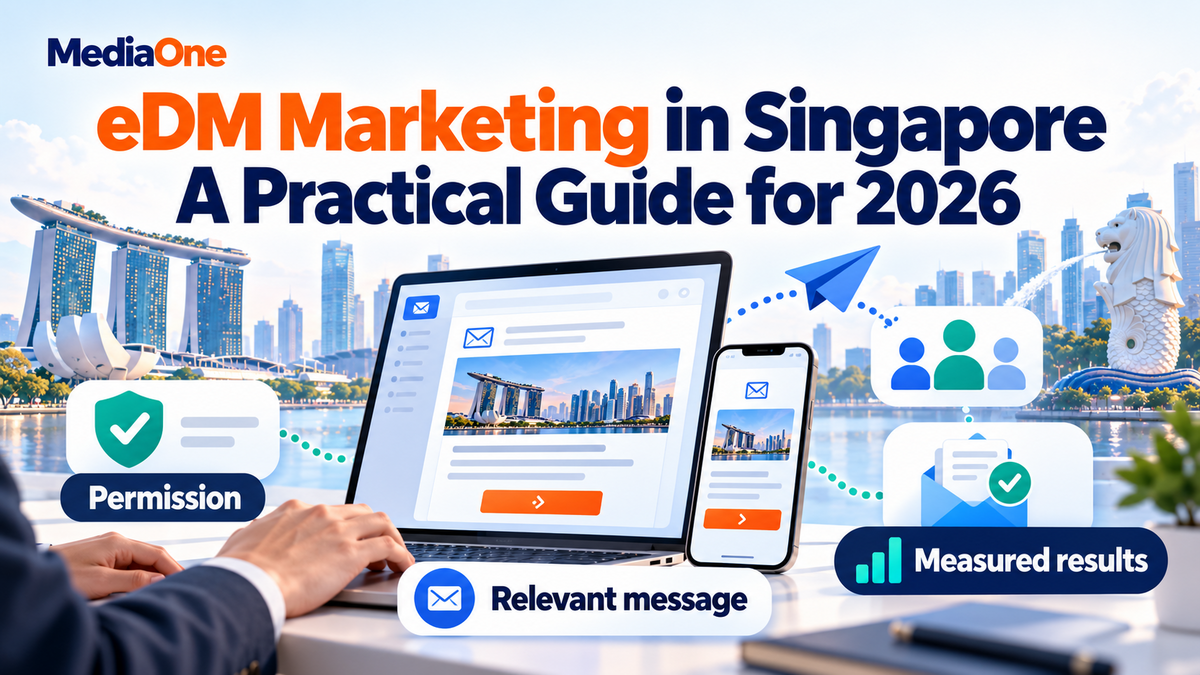
eDM marketing helps Singapore businesses send targeted promotional emails, newsletters and event invitations to subscribers. Campaign results depend on permission, relevant content, reliable delivery and what happens after the click. This guide explains how to build a subscriber list, plan messages, meet Singapore’s email marketing requirements and measure sales or enquiries. A five-check review helps teams catch problems before sending. |
eDM marketing, short for electronic direct mail marketing, uses targeted emails to promote products, share updates or encourage actions such as purchases and registrations. A campaign combines a relevant audience, a specific message, a call to action and tracking. Singapore businesses must also consider personal data and spam rules.
Key Takeaways
- A subscriber’s interests should shape the offer, examples and sending frequency.
- Marketing permission and an email address are separate things; records should show how contacts joined.
- Email costs include staff time, design, software and follow-up.
- Sender authentication and unsubscribe tools belong in the setup.
- Clicks need context: completed purchases and qualified enquiries show more about business results.
- Small tests need enough responses before a team can trust the result.
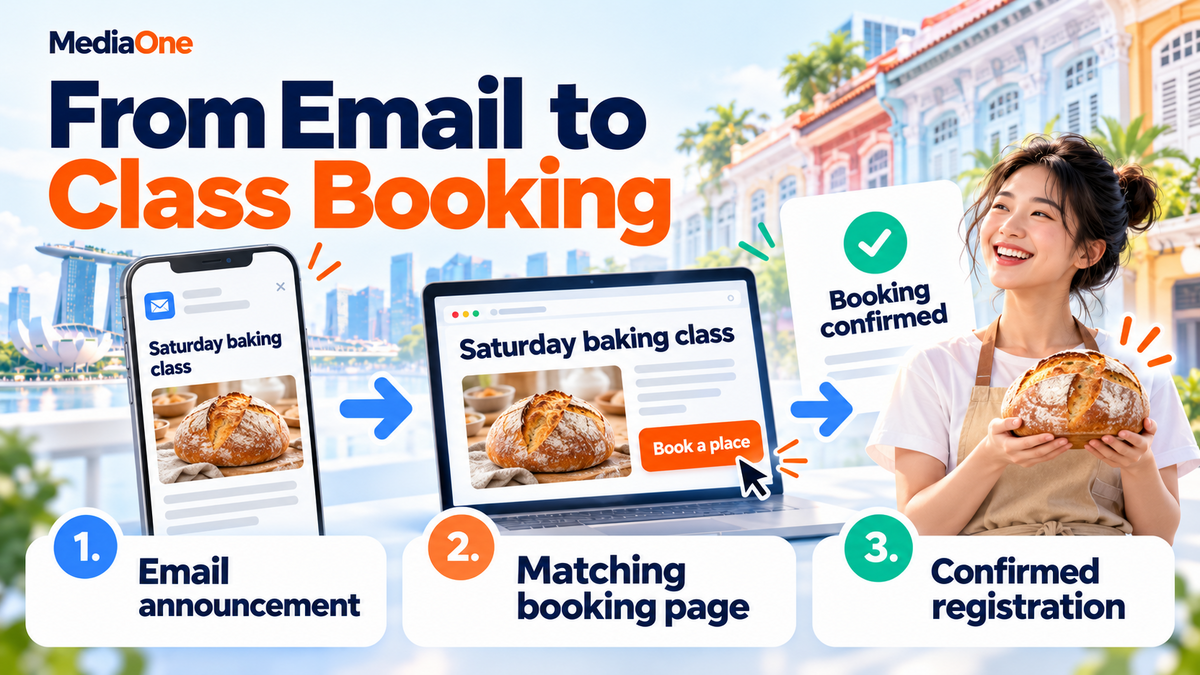
An email announcing a class means little to someone who already booked it. The same message could arrive at just the right moment for a subscriber who requested the next available date.
That is the everyday work behind eDM marketing. A business connects a reader’s interest with a reason to respond. This guide follows the campaign from sign-up to results, with examples a small Singapore team can adapt without building a complicated system.
What Is eDM Marketing?
eDM stands for electronic direct mail. Businesses use it to send marketing messages to selected contacts, including product announcements, newsletters and invitations.
SMU Academy describes electronic direct mail marketing as targeted promotional email that can connect with follow-up messages and other channels. A retailer, for example, might announce a launch by email while displaying the same offer on its website.
How does eDM differ from email marketing?
The terms overlap, and businesses do not use them consistently. Some use “eDM” for a designed promotional email. Others use it for an integrated campaign involving email, social media and advertising. Email marketing describes the wider practice of communicating and promoting through email.
A practical comparison helps when briefing a team:
| Email type | Example | Main purpose |
| Promotional eDM | A new collection announcement | Generate purchases |
| Newsletter | Monthly advice and business updates | Maintain interest |
| Automated marketing email | A welcome message after sign-up | Introduce the business |
| Transactional email | An order confirmation | Complete a requested service |
A marketing campaign can include several of these messages, but each serves a different purpose. An order confirmation does not, by itself, establish permission for unrelated promotions.
When Does eDM Marketing Help a Business?
eDM supports repeat contact with people who already know the business. It gives a team control over its message and sending schedule, although inbox providers still decide how to handle delivery.
Common campaign goals include:
- Repeat purchases: A pet shop announces a restock to subscribers interested in that product.
- Event registrations: A training provider shares a workshop date with relevant subscribers.
- Sales enquiries: A business software company explains a problem its product solves.
- Customer education: A furniture retailer shares care tips with customers who requested updates.
A discount is optional. A relevant answer, reminder or product demonstration can give someone a reason to respond.
Where does email need support?
A mailing list does not create demand by itself. New businesses still need ways to attract visitors and earn sign-ups. Search, social media, events and customer referrals can introduce people to the business.
Email then supports the relationship. An email marketing lifecycle connects messages with stages such as a first enquiry or a repeat purchase. This article focuses on planning individual campaigns within that wider programme.

How to Build an Email List and Respect Singapore’s Rules
A permission-based list gives subscribers a reason to recognise the sender. It also makes campaign decisions easier because the team knows what people requested.
Sign-up forms should explain the offer
A form should state what the person will receive. “Monthly baking tips and class announcements” says more than “Join our database”.
Practical sign-up options include:
- A website form beside content related to the subscription.
- An optional marketing choice during checkout.
- A QR code at an event that opens a subscription form.
- A resource download with a separate explanation of future marketing.
A resource request and a newsletter subscription can involve different purposes. Form wording should explain both when both apply. A privacy notice should be available when personal data is collected.
PDPA requirements concern the use of personal data
Singapore’s PDPA governs how organisations collect, use and disclose personal data. Consent generally applies unless an exception under the law permits the activity. The PDPC’s notification and consent requirements explain why people should know the purposes before their data is used.
For a subscription programme, practical records include the sign-up date, source, wording shown and subscription preferences. A checkbox alone does not demonstrate that every data protection obligation has been met.
Double opt-in adds a confirmation email before someone joins the list. It can help verify addresses and record subscription intent, but it is not a universal PDPA requirement.
Spam rules and DNC rules cover different activities
The Spam Control Act requirements address unsolicited commercial electronic messages sent in bulk. Applicable requirements include accurate sender information, advertisement labelling and an unsubscribe facility. The regime requires covered unsubscribe requests to take effect within 10 business days.
That deadline is not a reason to delay an opt-out. A marketing platform should stop promotional sends promptly after someone unsubscribes.
The Do Not Call provisions cover specified marketing messages to Singapore telephone numbers, including calls, texts and faxes. They do not provide an email permission check. A campaign combining email and SMS must account for the rules applying to each channel.
Subscriber records need ongoing care
A bought list may contain addresses without permission covering your intended marketing. A seller’s assurance does not establish what each recipient agreed to.
A list review should remove invalid addresses, resolve duplicates and preserve unsubscribe exclusions. These exclusions prevent a later import from adding an opted-out person back to a campaign. Access to subscriber exports should remain limited to people who need it.
How to Plan an eDM Campaign Around One Goal
A campaign brief can be short. Its job is to connect the audience, message and result before anyone starts designing.
Five decisions belong in the brief:
| Decision | Question to answer | Example |
| Permission | Why can this group receive the message? | Subscribers requested class announcements |
| Audience | Who needs this information now? | People interested in beginner baking |
| Relevance | What gives them a reason to respond? | A newly available weekend class |
| Subject | What promise will appear in the inbox? | “Saturday sourdough class: bookings open” |
| Measurement | What will count as success? | Completed paid bookings |
This five-check review is a working checklist, not a performance score. A missing answer gives the team a specific issue to resolve.
Audience segments should change the message
Segmentation means dividing contacts into groups with shared needs or behaviour. An audience segmentation strategy helps a team decide which differences warrant separate messages.
A small business can begin with a few groups:
- New subscribers: An introduction and the information they requested.
- Recent buyers: Relevant product care or complementary items, where marketing permission applies.
- Interested prospects: Answers connected with their stated needs.
- Previous customers: A relevant reason to return, where permission remains valid.
A person who bought a beginner camera may appreciate a lens compatibility explanation. A professional photographer may need different details. Adding their first name will not solve a mismatch in content.
Timing should follow the offer and audience
A class announcement needs enough time for someone to check their calendar. A stock update matters while the product remains available. These practical limits matter more than a universal “best” sending hour.
The sending schedule should also reflect what subscribers expected when joining. A monthly subscription should not quietly become a daily promotion.
For Singapore audiences, the campaign calendar should state Singapore time. Overseas segments may need separate schedules. One person should review all planned emails so automated messages and campaign broadcasts do not overwhelm the same contacts.
How to Write and Design an eDM People Can Follow
A reader should understand the message without decoding marketing language. The subject, email body and destination page should describe the same offer.
Subject lines and preview text should work together
The subject introduces the message. Preview text, sometimes called a preheader, adds detail beside it in many inboxes.
| Less specific | More specific |
| “Exciting news inside!” | “Weekend baking classes are open for booking” |
| “Our latest update” | “Your requested desk chair is back in stock” |
| “Don’t miss this opportunity” | “Webinar: preparing your first export order” |
These are writing examples, not claims of higher performance. The strongest wording depends on what the audience recognises and wants.
Preview text can supply a date, location or detail that the subject leaves out. Repeating the subject wastes that space. Important words belong early because inboxes display different amounts of text.
The body should answer the reader’s next questions
An email promoting a workshop needs to explain who it is for, what participants will learn, when it happens and how to book. A product announcement needs enough information to help someone decide whether to continue.
A simple structure contains:
- An opening benefit: The problem or interest the message addresses.
- Essential details: What the reader needs before responding.
- Relevant evidence: A real demonstration, product detail or substantiated customer example.
- A primary action: The booking, purchase or enquiry.
- A footer: Recognisable business details, contact information and unsubscribe access.
Every statement should match what the business can deliver. A deadline needs a real closing date. Limited availability needs actual stock or capacity limits.
What does a short eDM look like?
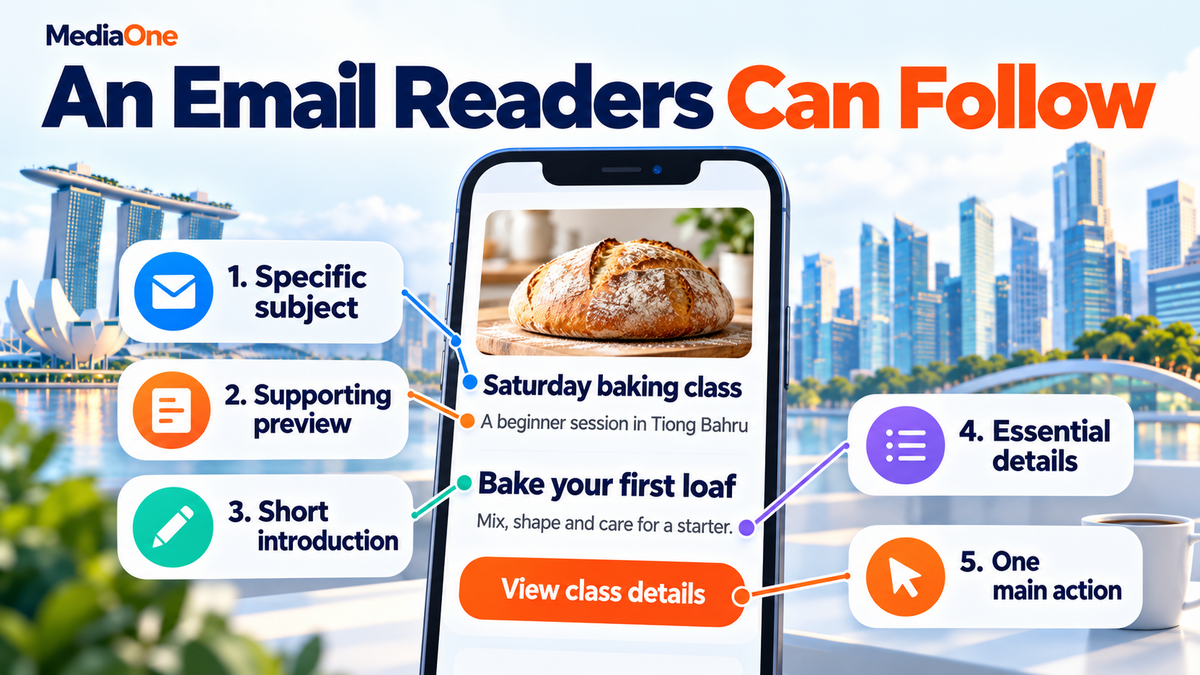
A fictional baking school could send this message to subscribers who requested beginner class announcements:
Subject: Saturday sourdough class: bookings open
Preview: A beginner session at our Tiong Bahru studio.
Heading: Your first sourdough loaf starts here
Body: This class covers mixing, shaping and caring for a starter. The session runs from 10 am to 1 pm on the date shown on the booking page. Ingredients and equipment are included. The page lists the fee, remaining places and cancellation terms.
Button: View class details and book
A live campaign would include the actual date and verified details before sending. The example shows how a short email can answer basic concerns while leaving full booking information on the website.
A business-to-business version would change the offer. An accounting software provider might invite subscribers to a demonstration covering invoice creation and payment tracking. The email could state the session length, intended audience and whether attendees need an existing account. A product feature list becomes easier to understand when readers can picture the task it helps them complete.
Calls to action should describe what happens next
A call to action, or CTA, names the next step. “Book a class” and “View chair sizes” tell the reader more than “Click here”.
The same principle underpins effective call to action strategies: wording should match the action and the reader’s readiness. A person comparing services may want pricing information before a sales call.
One primary action keeps a single-goal campaign focused. A longer email can repeat that action where it helps. Required links and secondary information can remain available without competing visually with the main button.
Mobile layout and accessible content matter
A single-column template provides a practical starting point. Text should remain readable without zooming, and buttons should have enough space around them for tapping.
Key checks include:
- The offer remains understandable when images do not load.
- Prices, dates and conditions appear as text.
- Links have descriptive wording.
- Text has sufficient contrast against its background.
- Personalisation still reads naturally when a name is missing.
The W3C’s text alternatives for images explain how descriptions should convey meaning or function. Decorative images can have empty alternative text.
A landing page should continue the email’s promise. An email about one class should open that class’s booking page. Consistent website and landing page copywriting helps readers find the details they expected after clicking.
How to Choose an eDM Platform and Prepare Delivery
A sending platform should support the work your team can maintain. A long feature list has little value if nobody can manage the contact records or interpret the reports.
A platform comparison should cover:
| Area | What to check |
| Contacts | Segments, consent fields, duplicate handling and exclusions |
| Sending | Scheduling, test emails and domain authentication |
| Editing | Mobile templates and accessible text options |
| Unsubscribes | Automatic exclusions and preference management |
| Reporting | Clicks, bounces, complaints and conversion connections |
| Costs | Contact limits, send allowances, upgrades and support |
| Data handling | Access controls, exports and deletion processes |
A trial should include importing sample contacts, sending a test and checking an unsubscribe. A business should also confirm that it can export its records if it changes provider.
How much should a business budget for eDM marketing?
There is no fixed Singapore price for an eDM campaign. A quote should state the number of contacts, planned sends, templates, copy revisions and any setup work. Recurring management and one-off production should appear separately.

A comparison should also identify who supplies the copy, designs the destination page, connects sales tracking and answers replies. A lower monthly fee may cover fewer tasks. The total budget should match the work needed to deliver and measure the campaign.
Authentication helps receivers verify the sender
SPF identifies authorised sending systems. DKIM adds a digital signature. DMARC checks alignment with the visible sender domain and tells receiving systems how to handle authentication failures.
Google’s email sender requirements require SPF or DKIM for all senders to personal Gmail accounts. Bulk senders must meet additional requirements, including SPF, DKIM and DMARC, plus one-click unsubscribe for marketing and subscribed messages.
A visible unsubscribe link and the technical one-click unsubscribe mechanism are separate features. The platform should support both where required.
Authentication does not guarantee inbox placement. Recipient complaints, sending behaviour and other checks still matter. The sender name should remain recognisable, and replies should reach a monitored address.
How to Measure eDM Results and Calculate ROI
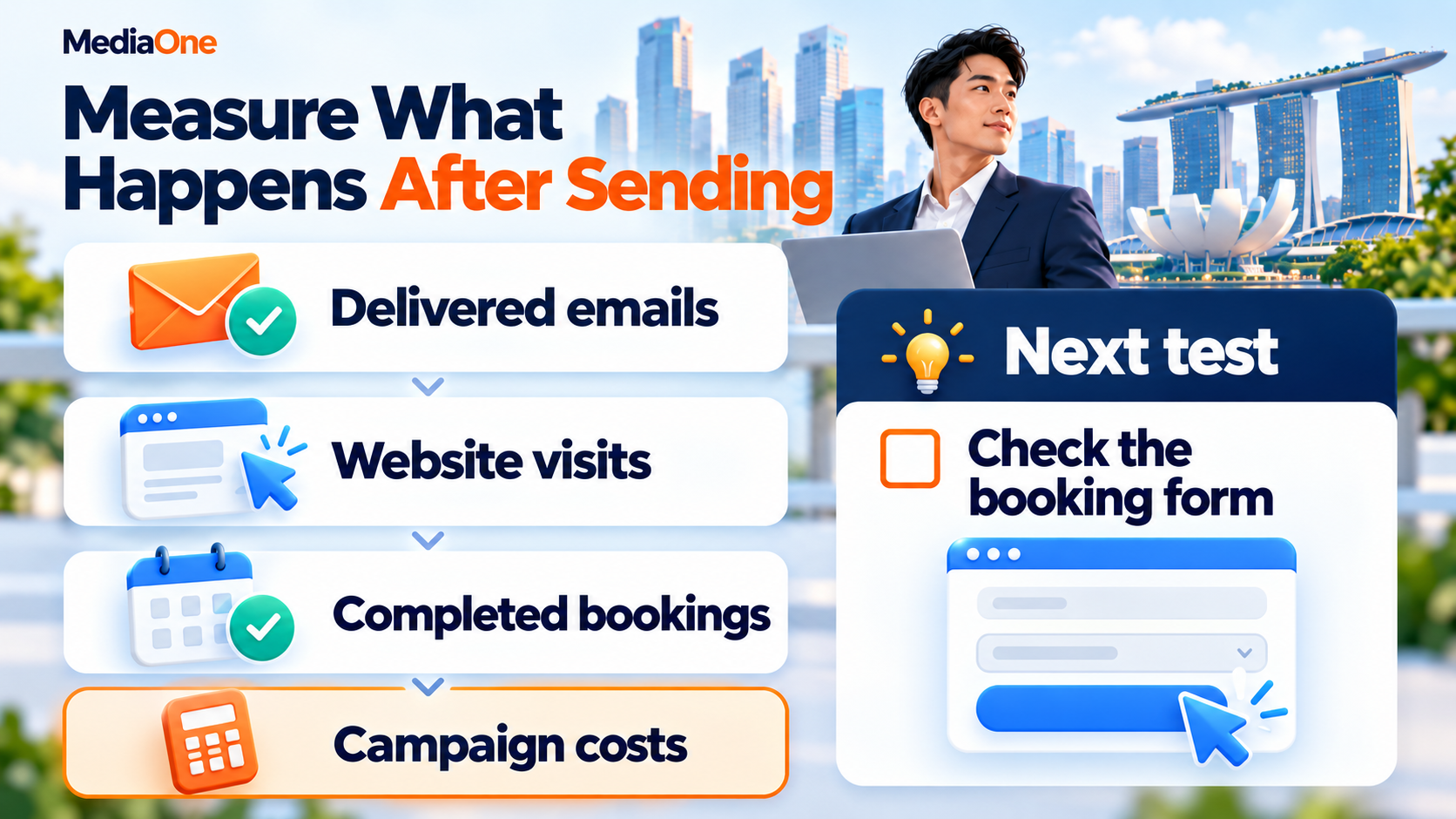
A report should connect what happened in the inbox with what happened afterwards. An email platform and website analytics may count activity differently, so the team should document its definitions.
Campaign metrics should have stated formulas
| Metric | Calculation | What it helps assess |
| Unique click-through rate | Unique recipients who clicked ÷ delivered emails × 100 | Response to the message |
| Conversion rate per delivered email | Recipients completing the chosen action ÷ delivered emails × 100 | Campaign outcomes |
| Unsubscribe rate | Unsubscribes ÷ delivered emails × 100 | Loss of subscribers |
| Bounce rate | Undelivered emails ÷ attempted sends × 100 | Delivery problems |
| Cost per qualified enquiry | Campaign cost ÷ qualified enquiries | Acquisition cost |
A website conversion rate may divide conversions by visitors or sessions. That differs from the email conversion rate above. Reports should label both so teams do not compare unlike figures.
Open rates need caution
Apple’s Mail Privacy Protection settings can download remote content in the background when a message arrives. An open-tracking image can therefore load without proving someone read the email.
An email open rate can still provide context, but it should not decide success alone. Security software can also open links during scanning, so a recorded click does not always prove reader interest. A completed booking, purchase or verified enquiry gives stronger evidence of an outcome.
Tracking should connect emails with website activity
Google Analytics campaign URL parameters identify traffic from campaign links. A consistent naming system can use:
- Source: newsletter.
- Medium: email.
- Campaign: weekend_baking.
- Content: booking_button.
These labels describe the campaign; personal details do not belong in them. Google Analytics channel reporting can then help compare email traffic with other sources.
Attribution means assigning credit for an outcome. A customer may click an email and return through search later. Reports should state the attribution method and reporting period, without assuming every credited sale happened only because of the email.
ROI should account for profit and campaign costs
An illustrative campaign produces S$6,000 in tracked sales. Product and fulfilment costs total S$3,600, leaving S$2,400 before marketing costs. Email software, production and staff time cost S$800.
The calculation is:

Campaign ROI = (S$2,400 – S$800) ÷ S$800 × 100 = 200%.
These figures illustrate the method. They are not a Singapore benchmark or a promised return. Refunds, discounts and other relevant costs also belong in the calculation.
A service business can track qualified enquiries and later sales using customer records. Consistent lead generation and follow-up make it easier to see which enquiries become customers.
What to Check Before and After Sending
A final review should test the real email, including its links and destination pages. A preview inside the editor cannot confirm that the whole booking or checkout process works.
The final send check
- Audience: The selected group matches the campaign brief.
- Exclusions: Unsubscribed, invalid and ineligible contacts stay out.
- Content: Names, dates, prices and offer conditions are accurate.
- Display: Test messages work on representative phones and email apps.
- Links: Buttons open the correct pages and retain tracking.
- Forms: A test submission reaches the person responsible for follow-up.
- Exit: Unsubscribe works without unnecessary steps.
- Ownership: Someone can answer replies and monitor problems.
Results should lead to a specific next test
| Problem | First checks |
| Few clicks | Audience relevance, offer and button wording |
| Clicks without bookings | Page details, availability and form errors |
| More unsubscribes | Subscription expectations and message frequency |
| More bounces | Address quality and delivery error reports |
| Unusual click spikes | Automated activity and tracking behaviour |
An A/B test compares two versions while keeping other important factors stable. A team might test two subject lines or two button labels, with the result chosen in advance.
A small list may not produce enough responses to identify a reliable winner. One extra purchase should not establish a permanent rule. Repeated results across comparable campaigns provide more confidence.
A test record should include the versions, audience rules, sending date and chosen outcome. That record gives the next campaign owner evidence to work with when deciding whether to repeat the change.
eDM Marketing Starts With a Better Campaign Brief
A short brief gives the next campaign a practical starting point: who it serves, what it offers and which result matters. The team can then check permission, prepare the email and test the response process.
MediaOne combines content, landing pages and lead generation support for businesses reviewing their campaigns. A digital marketing consultation can focus on the part that needs attention, whether that is the message, the booking page or the follow-up after an enquiry.
Frequently Asked Questions
Who should own the mailing list when an agency manages campaigns?
The business should retain control of its subscriber records and account access. A written agreement should identify who can download contacts, approve sends and change account settings. The agreement should also explain how records, templates and reports will be returned when the engagement ends. An agency’s involvement should not leave the business dependent on one person’s login.
Should an eDM include a PDF attachment?
A web link is often easier to maintain for marketing brochures or catalogues. Attachments add download steps and can create problems with file limits or security checks. A linked page also allows the business to update information without leaving subscribers with an outdated file. Essential details should still appear in the email.
Can a business use AI to draft marketing emails?
AI can help produce subject alternatives, shorten text and organise a draft. A human should verify product details, claims, dates and tone before sending. Customer records and confidential information should stay out of tools that the business has not approved for that data. The business remains responsible for the finished message.
Should a Singapore eDM use English or more than one language?
Language should follow the audience’s preferences and the information being offered. A business can ask subscribers which language they prefer, then prepare separate versions when practical. Each version should carry the same offer terms and dates. A bilingual email also needs a mobile check so duplicated text does not bury the main action.
What should a business do after sending the wrong email?
The response depends on the error. A small typo may need no follow-up. A wrong price, broken booking link or message sent to the wrong audience needs prompt assessment. Any correction should explain the error and provide accurate information. A suspected personal data exposure belongs in the organisation’s incident response process.