| AI Summary
Customer engagement online covers the relationships businesses build through websites, email, social media, messaging and apps. Better engagement depends on relevant content, reliable answers and staff who can follow a conversation across channels. This guide explains how Singapore businesses can improve those interactions, choose tools, handle customer data and measure progress through service quality, repeat purchases and customer retention. |
Customer engagement online is the ongoing interaction between a business and its customers through digital channels. Examples include email replies, website visits, social conversations and live chat. Businesses improve engagement by answering questions, sharing relevant information and helping customers complete tasks, then measuring satisfaction, purchases and return visits.
Key Takeaways
- One person should own each customer enquiry, including any handover between teams.
- Shared prices, policies and order details help prevent conflicting answers.
- Channel choices should reflect customer needs and the team’s capacity.
- Personalisation can begin with stated preferences and purchase history.
- Engagement reports need business outcomes alongside clicks and comments.
- Small trials help teams assess changes before committing to more software.
A customer orders through your website, then sends a message about delivery. The employee answering cannot find the order. The customer explains everything again.
That exchange shows why customer engagement online involves more than publishing content. Marketing may start the conversation, but service, sales and operations help determine whether it continues.
For a Singapore retailer, tuition centre or business supplier, the challenge is practical: customers need accurate answers without extra effort. The sections below explain how to organise that work and assess whether it improves the relationship.
What Does Customer Engagement Online Include?
Customer engagement online includes the attention, participation and conversations that develop between customers and a business through digital channels.
A person might save a product video, reply to an email, attend a webinar or ask about an order. Each action reveals something different. A saved video may signal interest; a delivery question may signal concern.
The business response helps shape what happens next.
Engagement, service and customer experience
These terms overlap, but they describe different things:
| Term | What it describes | Example |
| Customer engagement | Ongoing participation and interaction | A customer joins a product demonstration |
| Customer service | Help with a question or problem | An employee arranges a replacement |
| Customer experience | The customer’s overall impression | The customer finds ordering and support easy |
Service forms part of engagement. A refund conversation can strengthen trust when the business handles it well.
However, customers also engage without needing help. A homeware buyer might enjoy a short video showing how to care for a wooden table. The content supports the relationship after the sale.
What counts as meaningful engagement?
Meaningful engagement depends on the customer’s task and the business goal.
For example:
- A tuition centre receives questions about class availability.
- A café receives repeat orders through its website.
- A software company sees customers complete their account setup.
- A supplier receives requests for technical specifications.
A high comment count alone says little about these outcomes. A small number of relevant conversations may be more valuable than hundreds of unrelated reactions.
How Online Engagement Supports Revenue and Customer Loyalty
Customer engagement can support revenue by helping people complete purchases, understand products and return when they need something else. The financial effect depends on the business, its costs and the changes it makes.
A universal profit percentage cannot describe that relationship accurately.
Fewer unanswered questions before a purchase
Customers often need one detail before buying: the delivery date, available size, cancellation terms or service coverage. A product page that answers those questions can reduce hesitation. A trained employee can handle questions that need more context.
For example, a furniture buyer may need to know whether a table can pass through a lift door. Dimensions and assembly details help the buyer decide without several messages.
Better support after the sale
The relationship continues once payment arrives. Setup instructions, booking reminders and delivery updates help customers use what they bought.
For a coffee subscription, a brewing guide may support the first order. A reminder about changing delivery dates may support the next one.
These interactions give customers reasons to remain involved beyond a discount.
A business case based on actual costs
The financial case should include:
- Revenue from additional completed orders.
- Direct costs of supplying those orders.
- Staff time spent answering enquiries.
- Software and message charges.
- Refunds, cancellations and discounts.
An illustrative trial might generate S$3,000 in additional sales. Direct fulfilment costs of S$1,800 leave S$1,200 before the trial’s staff and software costs.
That calculation is more informative than reporting sales alone. A rise in revenue does not automatically mean the activity earned a profit.
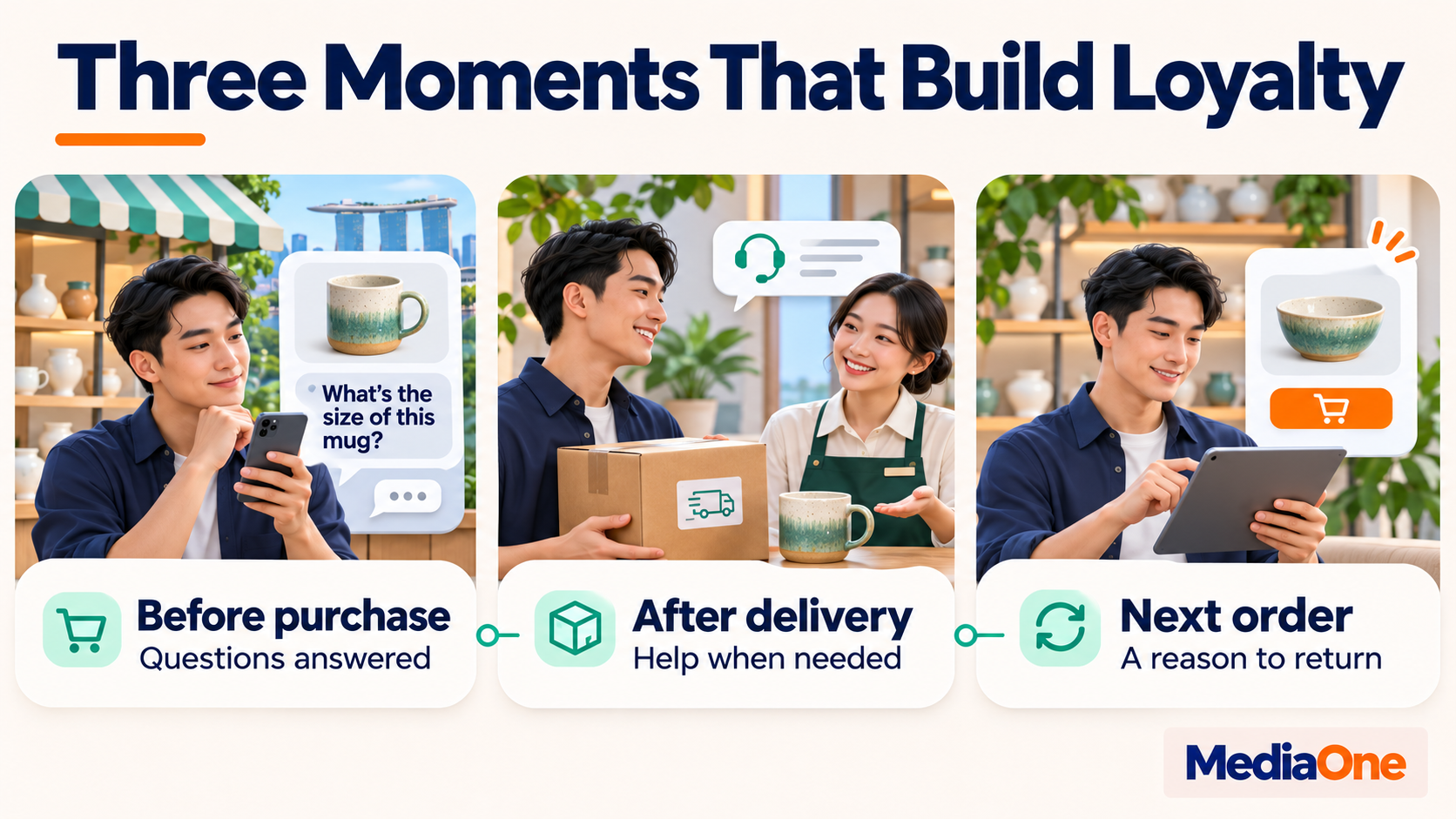
Which Channels Should a Business Prioritise?
The best channel mix lets customers complete common tasks while giving staff a manageable workload. A business does not need an account on every platform. Each additional channel creates another inbox, set of settings and place where information can become outdated.
The role of each internet marketing channel should follow what customers need at that point in the relationship.
| Channel | Main engagement role | Practical example | Staffing consideration |
| Website | Answers and transactions | Delivery details beside a product | Someone maintains the information |
| Detailed follow-up | Setup instructions after purchase | Replies reach a monitored inbox | |
| Social media | Discussion and discovery | A demonstration followed by questions | Comments and messages need attention |
| Messaging | Direct conversations | Appointment changes | Staff need access during stated hours |
| Live chat | Help during a website visit | Product suitability questions | Availability must match staffing |
| App | Frequent customer tasks | Reordering or checking membership benefits | Ongoing maintenance is necessary |
Website information comes first
The website should answer questions customers repeatedly ask elsewhere. Contact options should sit near the pages where help is likely to be needed.
A delivery question belongs beside delivery details. A booking question belongs near the booking form.
For businesses serving local customers, accurate Google Business Profile information also helps people find opening hours and contact details before visiting the website.
Social channels need a response process
Social engagement includes what happens after publication. Questions about price, availability or delivery need an owner.
A simple social media management process connects the publishing calendar with message checks and complaint handling. An unanswered question beneath an active campaign can undermine the effort spent attracting attention.
Mobile convenience depends on the whole task
A customer may open a message on a phone and then encounter a difficult form. The message worked, but the task failed.
Effective mobile marketing connects the message, destination page and next action. Buttons, forms and confirmation messages all need to work on a small screen.
A new app deserves particular scrutiny. Occasional customers may prefer a website that works well on their phones.
How Can Teams Keep Answers Consistent Across Channels?
Consistency means customers receive accurate information wherever they contact the business. It also means staff can continue an authorised conversation without asking for every detail again.
An omnichannel approach connects relevant information across channels. A smaller business can begin with shared records and agreed procedures.
One maintained source for common answers
Prices, promotions, delivery terms and return policies should come from an agreed source.
A maintained reference should include:
- Current prices and promotion dates.
- Product or service availability.
- Delivery and collection arrangements.
- Cancellation and return terms.
- Escalation contacts.
- The date and owner of each update.
Staff need to know where this information lives and who can change it. Old screenshots and copied documents can keep expired offers circulating.
A named owner for each conversation
A handover should explain what the customer needs, what staff have checked and what happens next.
For example: “The customer received the wrong item. The order number and photograph are attached. The warehouse team needs to confirm replacement stock.”
That note gives the next employee enough context to act.
The customer should also know who will respond and when. A handover that moves an enquiry between inboxes without ownership leaves the problem unresolved.
A realistic test before buying software
A customer relationship management system, or CRM, stores information about customers and their interactions. A shared inbox manages incoming conversations. Some products combine these functions.
A trial should follow an actual customer task:
- A test customer asks a question through one channel.
- An employee records the relevant details.
- The conversation moves to another employee or channel.
- The next employee checks the history.
- The team completes the task and records the outcome.
The buying decision should consider permissions, staff effort, data export, integration costs and training. A feature list cannot show whether the team can handle that task reliably.
What Makes Online Content Easier to Engage With?
Content earns attention when it answers a question or helps someone do something. Repeating promotional messages gives customers fewer reasons to participate.
The right content format for the reader’s intent depends on what needs explaining. A comparison table may explain service differences faster than a long article. A demonstration may show a product feature better than text.
Answers that help customers decide
Customer questions provide a starting point:
- “What is included in the price?”
- “Can the product work in this space?”
- “How long does installation take?”
- “What happens after I book?”
- “Which information does the team need?”
A service page can answer the first question. A short video can address installation. A confirmation email can explain what happens after booking.
The same answer does not need to appear in full everywhere. Each channel should provide enough information for the task at hand.
Forms that people can complete
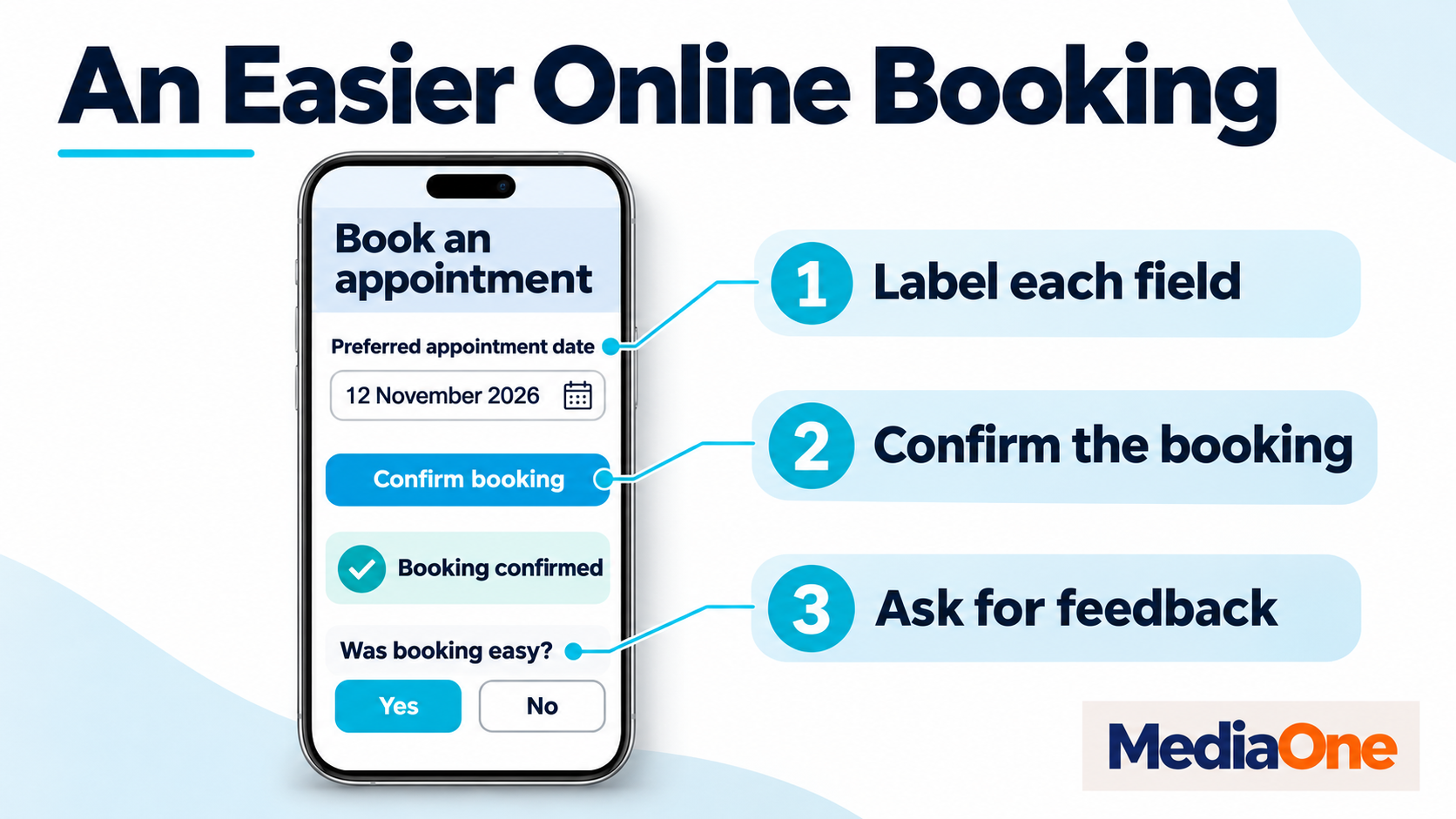
A form should request information the team needs to handle the enquiry. Every extra field adds work for the customer.
W3C’s form labelling principles explain how labels identify fields and support assistive technology. A label such as “Preferred appointment date” tells the customer what belongs in the box.
W3C also describes how form instructions can explain required fields and expected formats. A date example beside a field can prevent avoidable errors.
Feedback that leads to a response
A short question after a completed task can reveal a specific problem: “Was anything difficult about changing your booking?”
The team should record recurring answers and explain relevant changes. Customers who report a broken booking link need the link repaired.
For public reviews, Google’s review content policy prohibits incentives for reviews and selectively requesting positive reviews. A neutral request for honest feedback supports a more trustworthy conversation.
Personalisation, Privacy and AI in Customer Engagement
Personalisation means adapting an interaction to relevant information about the customer. It can begin with a preference the customer selected or an item they bought.
A complicated prediction system is unnecessary for many everyday tasks.
Relevant messages with a reason
A customer who bought a printer may appreciate setup instructions. A customer who selected vegetarian meal preferences may appreciate relevant menu updates.
Personalisation becomes less helpful when it relies on uncertain assumptions or ignores recent events. A promotional message sent during an unresolved complaint may feel careless.
A practical message check asks:
- Does the information relate to the customer’s current need?
- Is the underlying customer record accurate?
- Has the customer already completed the action?
- Is another team handling an unresolved problem?
- Can the customer change their preferences?
Customer data needs limits
Singapore’s PDPC sets out data protection obligations covering areas including consent, notification, purpose limitation, protection and retention.
For engagement programmes, practical controls include collecting information for stated purposes, restricting employee access and retaining records only as needed. A purchase does not give a business unlimited permission to use personal data.
Marketing to Singapore telephone numbers also requires attention to the Do Not Call provisions. Requirements depend on the message and applicable consent or exceptions.
AI needs a defined job and human oversight
AI can draft replies, group enquiries or retrieve information from approved material. Customer-facing answers still need checks for accuracy and appropriate handling.
IMDA’s Model AI Governance Framework for Agentic AI emphasises meaningful human control and oversight when AI systems take actions.
A business can begin with a limited task, such as suggesting replies about opening hours. Refund decisions, disputed charges and unusual complaints need a defined escalation process.
Customers should have an obvious way to reach a person. Automation should preserve the details already provided during that transfer.
Which Metrics Show Whether Engagement Is Working?
Engagement measurement needs three views: customer activity, service quality and business results.
Each view answers a different question. Together, they help explain whether more interaction is helping customers and the business.
| Metric | What it shows | What to check alongside it |
| Website engagement rate | Visits meeting defined engagement conditions | Purchases or completed enquiries |
| Email click rate | Recipients following message links | Orders, bookings and unsubscribes |
| First response time | Time before an initial reply | Whether that reply addresses the question |
| Resolution time | Time taken to finish an issue | Reopened cases and customer feedback |
| Repeat purchase rate | Customers buying again within a period | Normal buying frequency |
| Customer retention | Customers remaining over a defined period | Customer group and business model |
Website engagement has a specific definition
Google Analytics 4 defines an engaged session as one lasting longer than 10 seconds, containing a key event, or containing at least two page or screen views. Its engagement rate is the percentage of sessions meeting those conditions.
A reader can meet that definition without buying. The metric helps describe website activity; it does not establish customer loyalty.
The report should therefore include the action the page supports, such as a completed booking or purchase.
Business outcomes need an appropriate time period
A bakery and an air-conditioning installer have different purchase cycles. Weekly repeat purchases may suit the bakery’s reporting. The installer may need a longer period to assess repeat work.
A subscription business might calculate customer retention as:
Customer retention rate = ((Customers at period end − New customers acquired during the period) ÷ Customers at period start) × 100
The calculation needs consistent rules for active customers, cancellations and the reporting period.
For businesses using online lead generation, a completed enquiry is an intermediate result. Sales records show whether that enquiry became a paying customer.
Comparisons should account for other changes
A higher repeat purchase rate after a new email programme does not prove the emails caused the increase. Discounts, seasonal demand and product changes may also influence results.
A small trial with comparable customer groups can provide better evidence. The report should record other changes and explain what remains uncertain.
A Practical Customer Engagement Audit
An engagement audit should identify a specific failure, the customers affected and the employee responsible for fixing it.
The review can begin with recent conversations across busy and quiet periods. A small sample reveals examples to investigate, although it cannot represent every customer.
Five checks for the team
| Area | Evidence to examine | Problem to look for |
| Channel access | Website links and inbox activity | Customers cannot reach a monitored channel |
| Response quality | Messages and case notes | Replies miss the actual question |
| Information accuracy | Prices, policies and promotions | Different channels provide conflicting answers |
| Handover quality | Transferred enquiries | Customers repeat details already supplied |
| Follow-up relevance | Automated messages and preferences | Messages arrive after the need has ended |
An invented total score can hide an urgent problem. A broken contact form may deserve attention before a minor personalisation issue, regardless of how other areas perform.
A priority based on customer impact
Each finding should record:
- The customer task affected.
- How often the failure appeared.
- Its effect on customers or orders.
- The effort required to correct it.
- The employee responsible.
- The measure used to assess the change.
For example, repeated delivery enquiries may point to missing dispatch information. The first correction could be a better order update and an accurate delivery page.
That finding does not automatically justify a new messaging platform.
An email delivery check
A message cannot support engagement if it never reaches the inbox. Google’s email sender requirements cover authentication and other delivery practices. Bulk senders face additional requirements, including one-click unsubscribe for marketing and subscribed messages.
An audit should include delivery failures and unsubscribe handling alongside the message content.
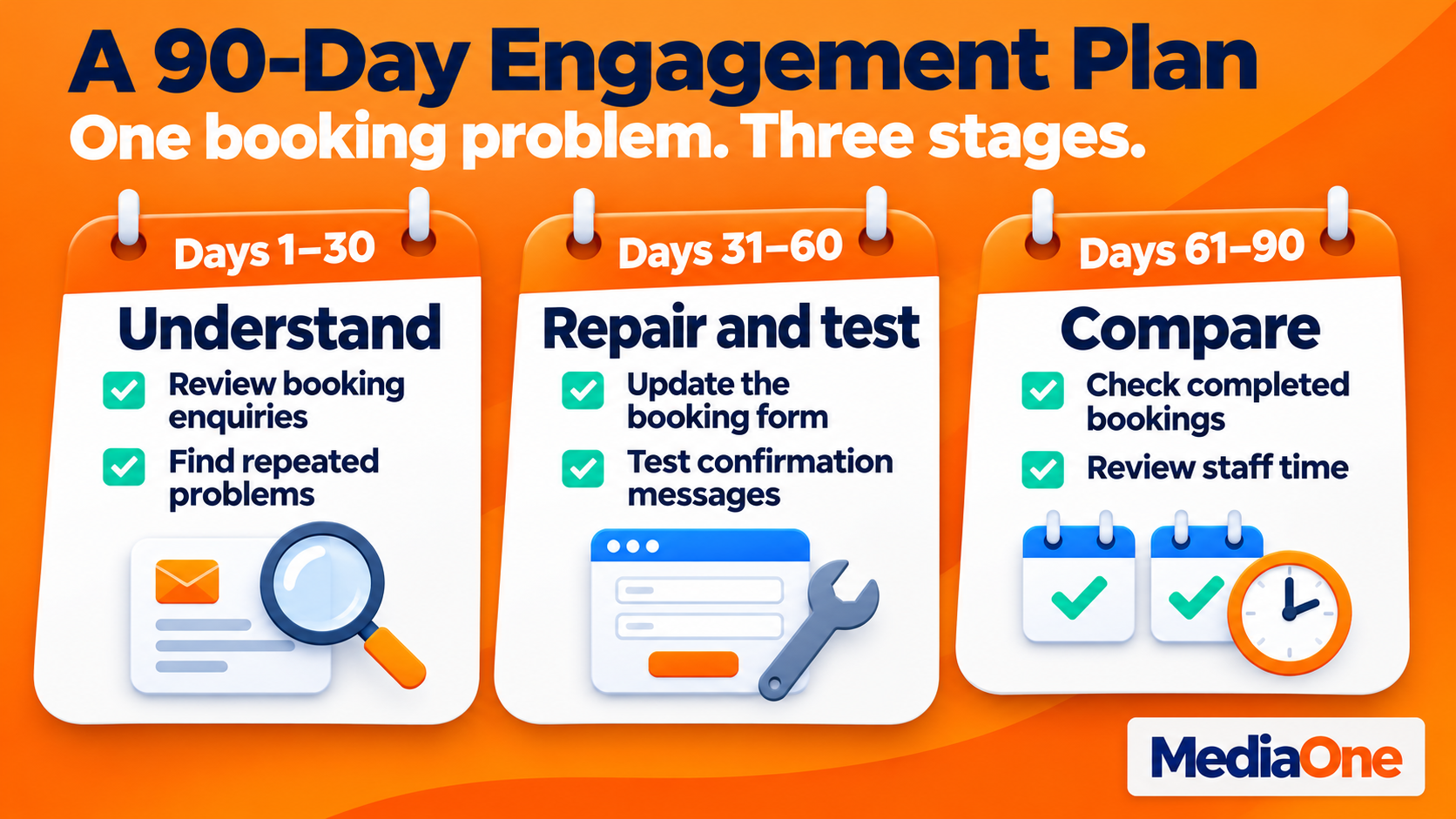
A 90-Day Plan for Improving Customer Engagement Online
A 90-day plan gives the team a manageable period for observation, correction and testing. It is a planning example, not a promise that retention will improve within three months.
The programme should address one customer problem before expanding.
Days 1 to 30: Understand the failure
The first month establishes what happens now.
- Recent enquiries reveal common questions and complaints.
- Staff interviews identify missing information and repeated manual work.
- Website checks identify broken links and difficult forms.
- Existing reports establish response times and completed transactions.
- One selected customer task becomes the focus of the trial.
For example, an appointment business may choose booking changes because customers frequently contact several employees about the same request.
Days 31 to 60: Repair and test
The second month focuses on the selected task. The team updates the information, assigns ownership and tests the process with realistic examples.
For booking changes, the work might include one maintained availability record, an updated form and a confirmation message. Staff practise handling a change that needs approval.
The trial should also test failure cases: missing details, an unavailable appointment and an enquiry received outside staffed hours.
Days 61 to 90: Compare and decide
The final month compares results with the starting position.
The review should examine:
- Completed tasks.
- Staff time per enquiry.
- Repeat contacts about the same issue.
- Customer feedback.
- Software and message costs.
- Any new problems introduced.
A small sample or long buying cycle may require more observation. The team can still identify whether the process works as intended.
A wider digital marketing campaign plan can then include the improved process, its owner and its reporting schedule.
Turn Customer Conversations Into Better Service
Customer engagement online improves when teams address the problems customers encounter during real tasks. Accurate information, relevant follow-up and accountable staff make those interactions easier. Measurement then shows which changes deserve continued investment.
A focused review can identify the first problem to address. MediaOne’s digital marketing consultation gives businesses a place to discuss their website, content and campaign needs alongside their customer engagement goals.
FAQs About Customer Engagement Online
Can a business with infrequent purchases build online engagement?
A business can maintain a relationship between purchases through care advice, maintenance reminders and relevant product updates. A furniture company, for example, might share cleaning instructions after delivery. The timing should reflect customer needs; frequent promotional messages may add little value when another purchase is unlikely.
How should a business handle engagement in several languages?
A business should prioritise the languages its customers use and that its team can support accurately. Common answers need a maintained version in each supported language. Automated translation may help staff understand a message, but checks are important for prices, conditions and complaint responses.
Should customers have to create an account before asking a question?
General enquiries rarely need a full account. An account requirement can add effort before the customer knows whether the business can help. Order-specific requests may require identity checks, but the information requested should relate to the task. Account creation should have an explained purpose.
What happens when an engagement platform fails?
A business needs a fallback contact method and a record of enquiries awaiting action. Staff should know how to report an outage, update customers and resume work afterwards. A recovery check helps identify missing messages or duplicate replies once the platform becomes available.
Can too much engagement reduce customer interest?
Frequent messages can become tiring when they repeat information or arrive without a relevant reason. Preferences, unsubscribe requests and declining responses can reveal that problem. A business can reduce message frequency, separate service updates from promotions and let customers choose the topics they receive.