Choosing an e-commerce platform is a strategic growth decision for many businesses. As customer acquisition costs rise, SEO competition intensifies, and international expansion becomes more common, the platform powering your store directly impacts profitability, scalability, and long-term brand control.

Many SMEs begin with Shopline services because they offer simplicity, bundled infrastructure, and quick time-to-launch. For early-stage stores, this convenience is attractive.
However, when businesses reach six- or seven-figure monthly revenue, new priorities emerge. The focus shifts: technical SEO depth, marketing automation control, and structural scalability become critical areas for consideration.
To help brands navigate this transition, this guide examines Shopline services in detail, explores where they may limit scale, and highlights strategic alternatives for more serious e-commerce growth.
Key Takeaways
- Shopline services are great for early-stage simplicity, but may not scale long-term. As growth brings higher revenue, traffic, and complexity, deeper SEO, performance, and automation control become crucial.
- Technical flexibility directly impacts organic growth potential. Advanced capabilities such as structured data customisation, URL control, and indexation management are critical for sustained search visibility.
- Conversion architecture and checkout optimisation drive profitability at scale. Platforms that limit experimentation can restrict improvements in return on ad spend and customer acquisition efficiency.
What Are Shopline Services?
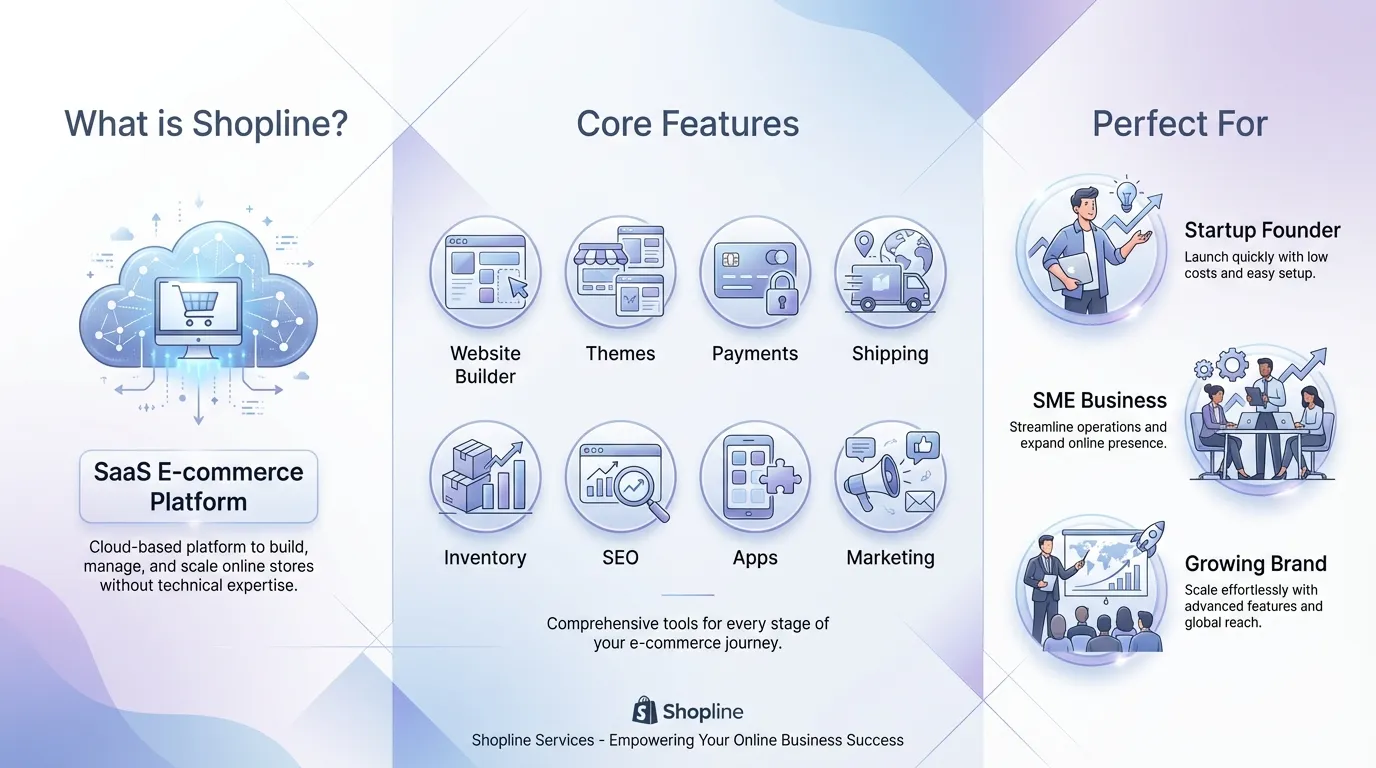
Shopline services refer to tools bundled with the Shopline SaaS ecommerce platform. SaaS, meaning “Software as a Service,” allows businesses to pay monthly for pre-built features, including hosting, templates, payment integration, and store management tools.
Over the past decade, SaaS platforms have transformed online retail. Instead of managing servers, developers, and complex backend infrastructure, entrepreneurs can now launch stores within days.
This model works by abstracting technical complexity. Hosting, security, and software updates are handled by the provider. Users focus on products and marketing rather than code.
Shopline services fit squarely into this ecosystem.
Core Capabilities Typically Included
Most Shopline services include:
- Drag-and-drop website builder
- Pre-designed themes
- Integrated payment gateways
- Shipping integrations
- Inventory management
- Basic SEO settings (meta titles, descriptions, URL editing)
- App marketplace extensions
- Marketing tools such as email campaigns
For a new entrepreneur, this all-in-one setup reduces friction and lowers technical barriers.
Who Shopline Services Are Designed For
Shopline services are particularly suitable for:
- First-time e-commerce founders
- SMEs launching quickly with limited technical resources
- Businesses with small to mid-sized product catalogues
- Brands operating within a single market
At this stage, speed and simplicity matter more than deep structural control.
As requirements shift with expansion, it’s important to outline where Shopline services may fall short for scaling businesses.
Where Shopline Services May Fall Short
No platform is inherently “bad.” The issue is alignment. As revenue scales and marketing sophistication increase, the structural constraints of certain hosted platforms can become more visible.
1. Technical SEO Depth
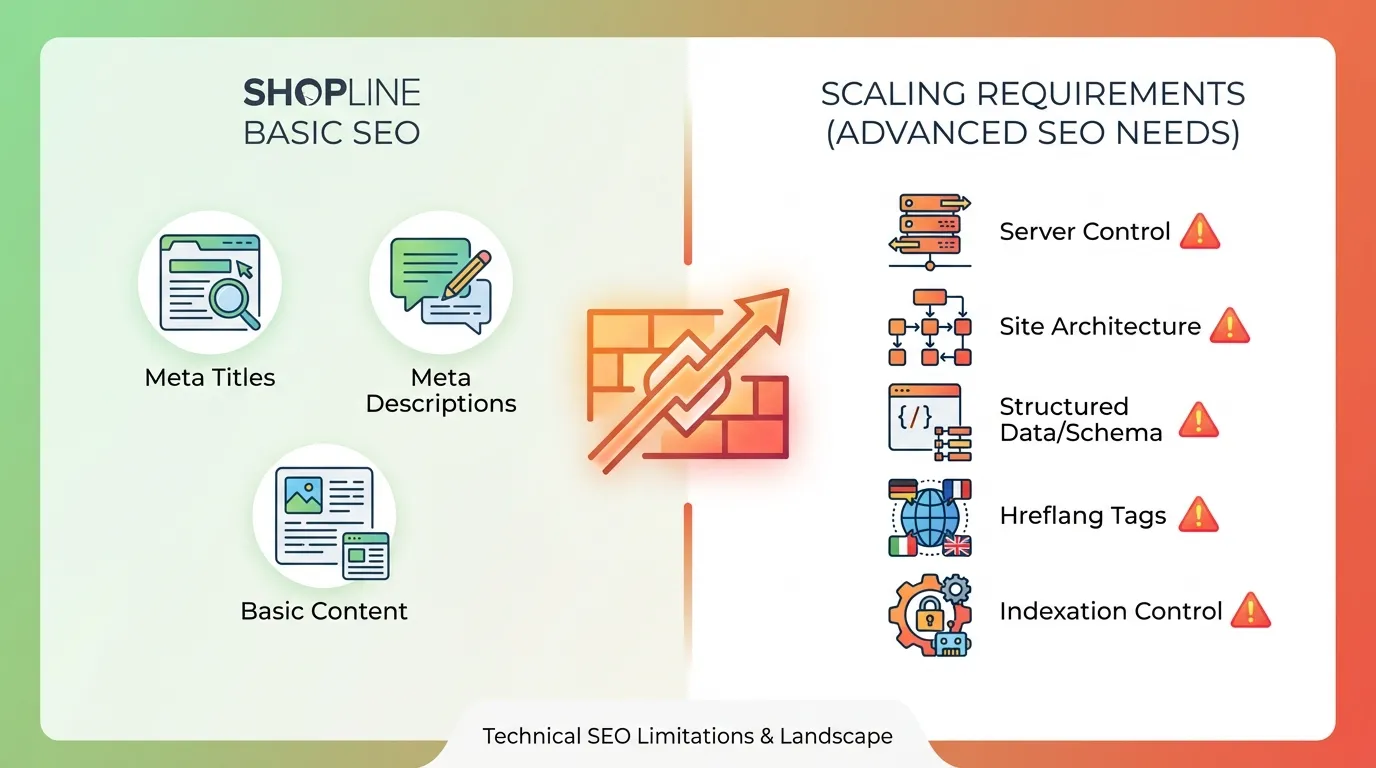
For brands relying on organic search as a major acquisition channel, technical SEO flexibility becomes increasingly important. Early-stage optimisation focuses on meta titles, descriptions, and content refinement, but long-term ranking strength depends on deeper backend control. As competition intensifies, SEO advantage often lies in architectural precision rather than surface-level optimisation.
While Shopline services provide foundational SEO tools, advanced capabilities may be constrained:
- Limited server-level control
- Restricted access to deeper site architecture configuration
- Structured data implementation limitations
- Dependency on theme-based performance optimisation
- Reduced control over advanced schema customisation
Scaling brands often requires more sophisticated implementation, such as:
- Custom FAQ schema
- Product schema enhancements
- Advanced breadcrumb structures
- International hreflang implementation
- Controlled indexation for faceted navigation
In certain SaaS environments, these enhancements may require workarounds, layered scripts, or app dependencies rather than direct backend control.
2. Core Web Vitals & Performance Optimisation
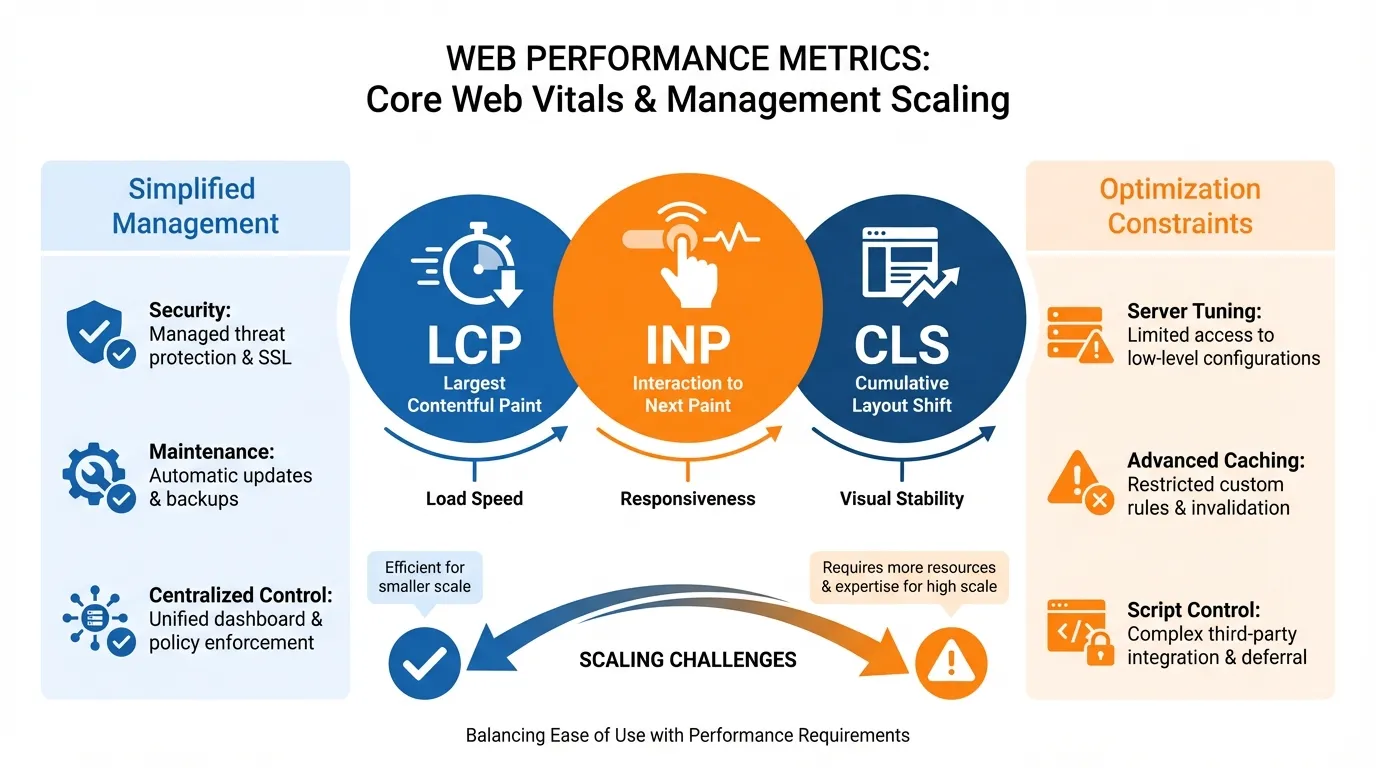
Search engines increasingly factor user experience signals into their ranking algorithms. Metrics such as Largest Contentful Paint, Interaction to Next Paint, and Cumulative Layout Shift are now measurable components of SEO performance. As traffic increases and advertising budgets scale, even minor performance inefficiencies can materially impact both rankings and conversion rates.
Google’s page experience signals include:
- Largest Contentful Paint
- Interaction with Next Paint
- Cumulative Layout Shift
Hosted platforms centralise performance management, which simplifies security and maintenance.
However, this abstraction can also limit deep performance engineering, particularly when businesses require server-level optimisation, advanced caching controls, or refined script management. Brands running aggressive paid campaigns or scaling SEO aggressively often need tuning beyond default configurations.
3. Marketing Automation & Data Control

As an e-commerce business matures, marketing is guided by data. This includes behavioural segmentation (grouping customers by actions), attribution modelling (tracking marketing impact), and CRM-driven lifecycle campaigns (using Customer Relationship Management systems for targeted campaigns).
Scaling businesses typically require:
- Advanced CRM integration
- Multi-touch attribution tracking
- Behaviour-based automation flows
- Funnel segmentation
- Custom reporting dashboards
While Shopline services support integrations, increased complexity can limit flexibility or require reliance on multiple third-party extensions. Over time, fragmented data flows can reduce clarity in decision-making.
4. International Expansion
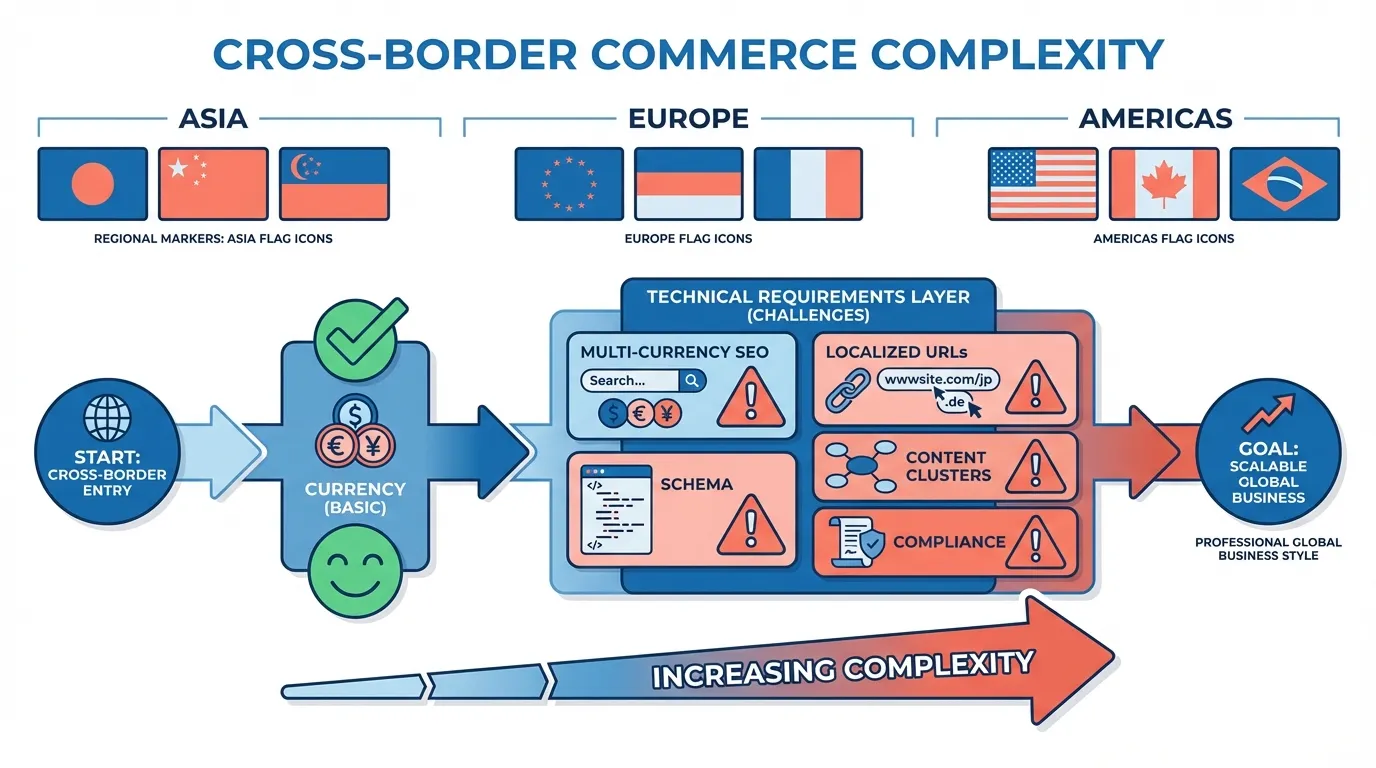
Cross-border commerce adds complexity beyond simple currency conversion. International scaling requires careful planning of SEO (search engine optimisation) for different countries, content localisation (adaptation of content to local languages and preferences), and technical changes to support these requirements.
Global scaling often involves:
- Multi-currency SEO handling
- Localised URL structures
- International schema implementation
- Region-specific content clusters
Scaling into Southeast Asia, Europe, or global markets often demands advanced planning for indexation, localisation, and compliance. If international configuration options are limited, the expansion strategy may require structural compromises.
5. Custom Checkout & Conversion Architecture

At scale, revenue growth is increasingly driven by incremental improvements in conversion rate. As customer acquisition costs rise, optimising the checkout experience becomes one of the highest-leverage opportunities. Deep experimentation requires flexibility in backend logic and testing infrastructure.
Advanced checkout optimisation includes custom checkout testing, upsell logic (offering more products during checkout), behavioural triggers (responding to user actions), and A/B testing infrastructure (comparing versions of checkout pages to improve results).
Hosted systems may restrict deep checkout modifications based on plan tier or backend access. When experimentation flexibility is limited, the potential for conversion optimisation can be constrained.
Best Shopline Alternatives for Serious E-commerce Growth
Serious e-commerce growth demands more than storefront functionality. It requires a robust SEO architecture, flexible conversion optimisation, seamless marketing stack integration, and performance resilience under increasing traffic volumes. The right alternative should not only replicate existing capabilities but unlock new efficiencies and strategic advantages.
Below are the most established and scalable alternatives to Shopline services, each suited for different stages of business maturity and technical ambition.
Shopify
Shopify is a fully hosted, all-in-one e-commerce platform that lets businesses create, manage, and scale online stores without worrying about technical infrastructure. Its tools cover everything from storefront setup to payment processing, order management, marketing automation, analytics, and more.
Best For:
- Small to medium e-commerce brands seeking a fast setup with minimal technical overhead
- Stores prioritising multi-channel selling (online, social, in-person)
- Businesses that want a large app ecosystem for extensions and automation
Company Profile & NAP:
- Name: Shopify, Inc.
- Headquarters: 150 Elgin Street, 8th Floor, Ottawa, ON K2P 1L4, Canada
- Website: https://www.shopify.com
- Contact Info: Local and enterprise contact pages available via Shopify regional sites (no single global phone number published)
Why Shopify Is a Strong Alternative:
Because Shopify is a managed SaaS solution, you don’t need dedicated hosting or server maintenance; all security, updates, CDN delivery, and performance optimisation are part of the package. This allows businesses to focus on marketing and sales without technical distraction.
It also offers international sales tools, point-of-sale (POS) systems, B2B wholesale channels, and partner networks, all of which are useful as brands scale.
WooCommerce

WooCommerce is an open-source e-commerce plugin for WordPress that turns a WordPress website into a fully functional online store. Because it’s built on the most popular CMS in the world, WooCommerce is highly flexible and extremely customisable.
Best For:
- Brands that need full control over SEO and site architecture
- Websites with heavy content strategies as part of their growth plan
- Businesses with technical teams or development support
Company Profile & NAP:
- Name: Automattic (developer of WooCommerce)
- Headquarters: 132 Hawthorne St, San Francisco, CA 94107, USA
- Website: https://woocommerce.com
- Contact Info: Support and sales channels are available via the website
Why WooCommerce Is a Strong Alternative:
Because it is open source and extensible, you have nearly unlimited control over every part of your store: from URL structure and metadata to custom plugin development and host selection. WooCommerce also integrates seamlessly with WordPress content, making it a strong choice for retailers that rely heavily on content marketing for SEO.
However, this flexibility comes with responsibility: hosting, security, and performance must be managed independently.
Magento (Adobe Commerce)

Magento is an open-source e-commerce platform acquired by Adobe and rebranded as Adobe Commerce for enterprise deployments. It’s designed for flexibility, power, and scalability at enterprise levels.
Best For:
- Large e-commerce brands with complex product catalogues
- Businesses requiring advanced customisation at scale
- Enterprises that need multi-store and international expansion capabilities
Company Profile & NAP:
- Name: Adobe Inc. (Magento/Adobe Commerce)
- Headquarters: 345 Park Avenue, San Jose, CA 95110-2704, USA
- Website: https://magento-opensource.com
- Contact Info: Support and enterprise sales via Adobe Commerce channels
Why Magento Is a Strong Alternative:
Magento’s open-source nature means that developers can tailor virtually every aspect of storefront functionality, backend processes, and integrations. Its enterprise edition (Adobe Commerce) includes support, cloud hosting, and advanced features for global businesses.
Unlike SaaS platforms, Magento requires managed hosting and specialised technical expertise, but it delivers unmatched control for businesses ready to invest in custom capabilities.
BigCommerce (Optional Plus Alternative)
BigCommerce is a cloud-hosted e-commerce platform positioned similarly to Shopify, with strong built-in features and a focus on rapid scalability.
Best For:
- Fast-growing stores that want built-in capabilities without heavy custom development
- Multi-channel sellers (marketplace, social, POS)
- Retailers that want more features out of the box than some SaaS platforms
Company Profile & NAP:
- Name: BigCommerce Pty. Ltd.
- Headquarters: Level 6, 25 Clarence St, Sydney, NSW 2000, Australia
- Website: https://www.bigcommerce.com
- Contact Info: Global sales/support channels via the website
Why BigCommerce Is Worth Considering:
It sits between Shopify’s ease of use and WooCommerce’s flexibility, offering robust features without extensive custom development. For merchants who want Sequoia-worthy performance without custom hosting, it’s a strong alternative.
Structured Comparison: How These Platforms Stack Up
Below is a high-level comparison showing why each alternative differs functionally from Shopline services and where they excel.
| Platform | Hosting | SEO Flexibility | Customisation | Scalability | Best When… |
| Shopline Services | Fully hosted | Moderate | Platform limited | Moderate | Quick launch, simple stores |
| Shopify | Hosted | Good | App-based | Strong | Rapid scaling with low technical effort |
| WooCommerce | Self-hosted | Excellent | Full control | Strong (depends on host) | Content-driven stores with an SEO focus |
| Magento/Adobe Commerce | Self-hosted / Managed | Excellent | Complete control | Enterprise-level | Complex, global, large inventories |
| BigCommerce | Hosted | Good | Moderate | Strong | Feature-rich hosted store |
This table shows how Shopline services are best suited for early-stage simplicity, whereas alternatives trade technical complexity for growth enablement.
When Should You Move Beyond Shopline Services?
Outgrowing a platform rarely happens overnight. It usually shows up as small friction points that compound over time, slower growth despite higher spend, technical constraints during optimisation, or increasing operational complexity as your catalogue expands.
Moving beyond Shopline services should not be an emotional decision based on frustration. It should be a structured evaluation based on business maturity, revenue trajectory, and growth strategy.
Below are the clearest indicators that your infrastructure may no longer be aligned with your ambition.
1. When Organic Traffic Plateaus Despite Ongoing SEO Effort
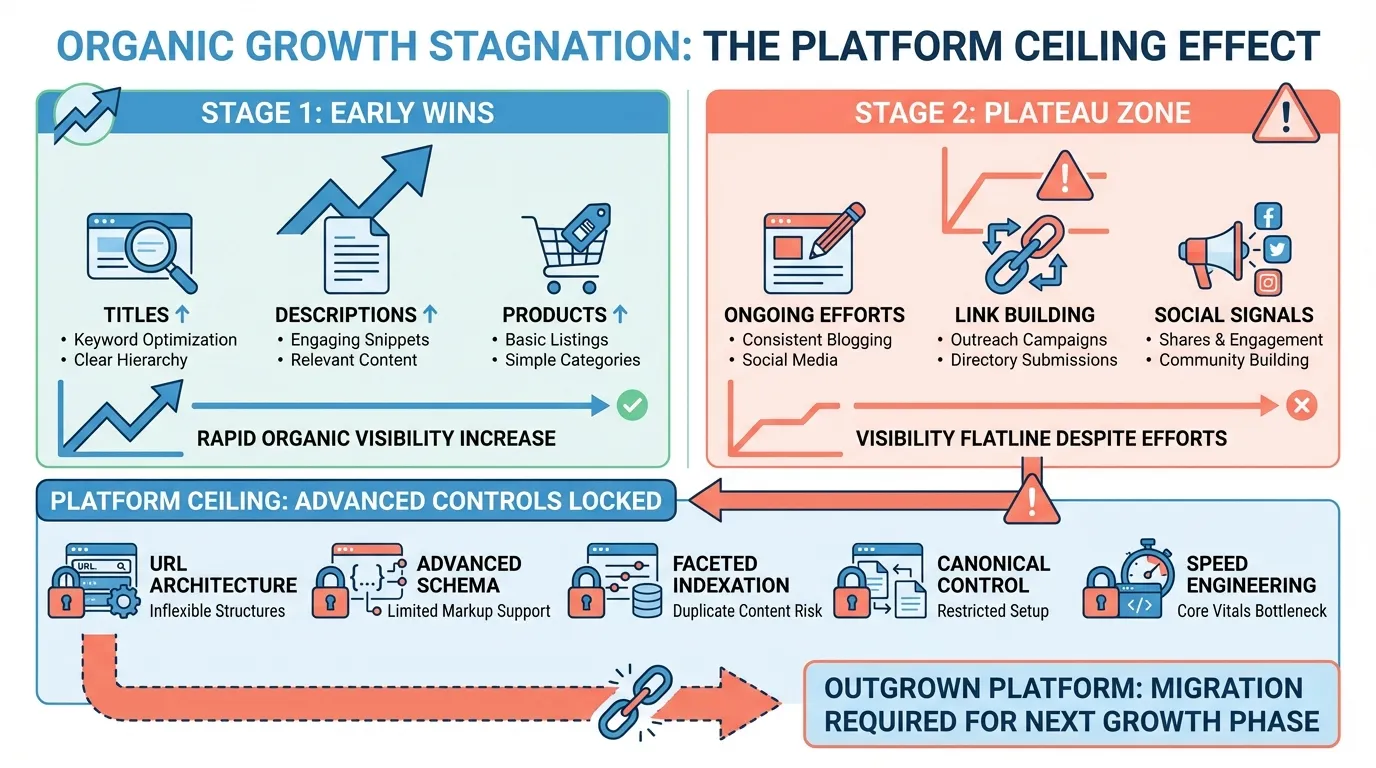
In the early stages, basic SEO controls may be sufficient. You can optimise titles, descriptions, and product pages, and still see steady improvement. However, as competition intensifies, incremental gains require deeper technical control.
If you are consistently publishing content, optimising product listings, and acquiring backlinks, yet rankings stagnate, the issue may not be strategy. It may be a structural limitation.
At this stage, growth often requires:
- Greater control over URL architecture
- Advanced schema implementation
- Faceted navigation index management
- Canonical control across duplicate pages
- Page speed engineering beyond template optimisation
When SEO becomes constrained by platform flexibility, it is often a sign that you have outgrown standard Shopline services.
2. When Paid Media Costs Rise Without Proportional Conversion Gains
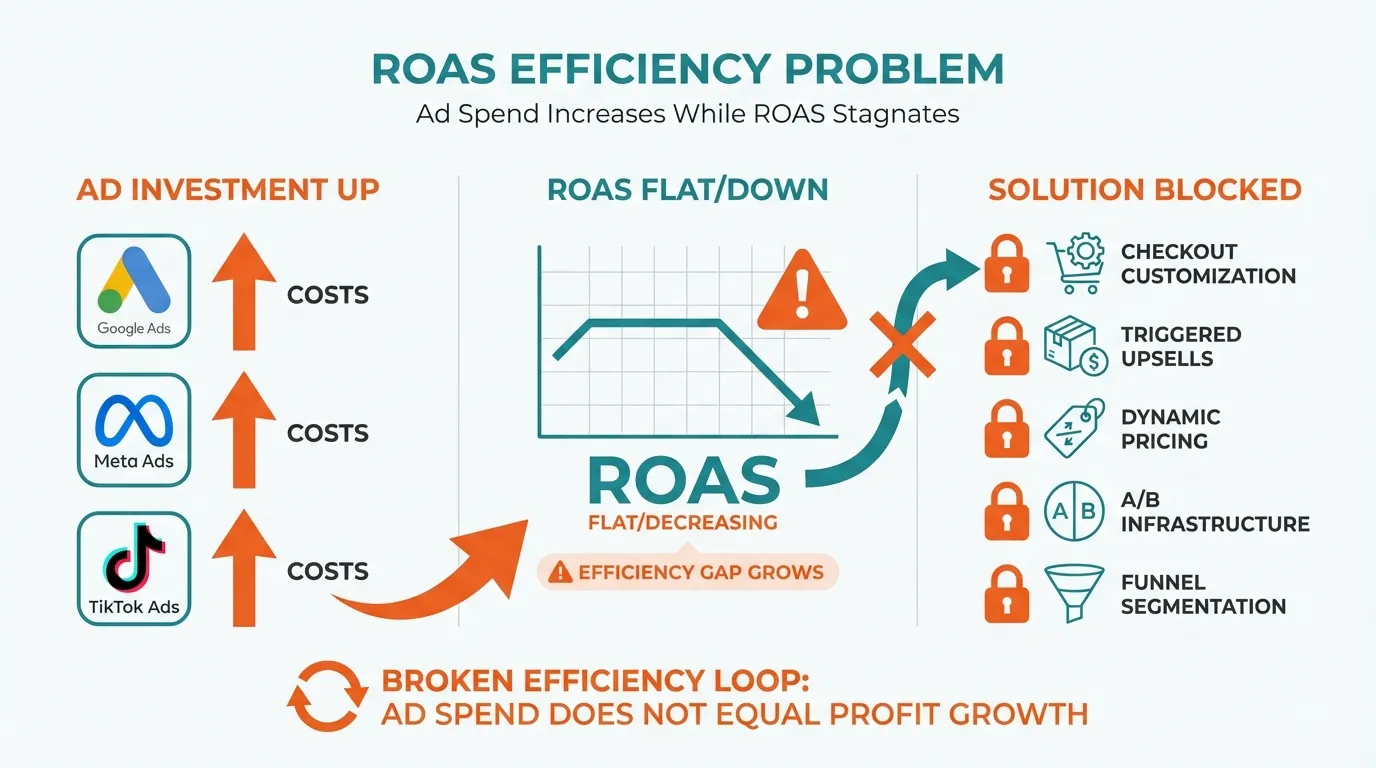
As brands scale, paid acquisition becomes more competitive. Cost per click increases. Customer acquisition cost (CAC) rises. To maintain profitability, conversion rate optimisation becomes critical.
If you are investing more in Google Ads, Meta Ads, or TikTok Ads but not seeing proportional improvements in return on ad spend, the problem may lie in conversion architecture.
Scaling brands often requires:
- Advanced checkout customisation
- Behaviour-triggered upsells
- Dynamic pricing logic
- Deep A/B testing infrastructure
- Funnel segmentation tracking
If your platform limits experimentation or checkout optimisation, growth efficiency suffers.
3. When You Plan to Expand Internationally
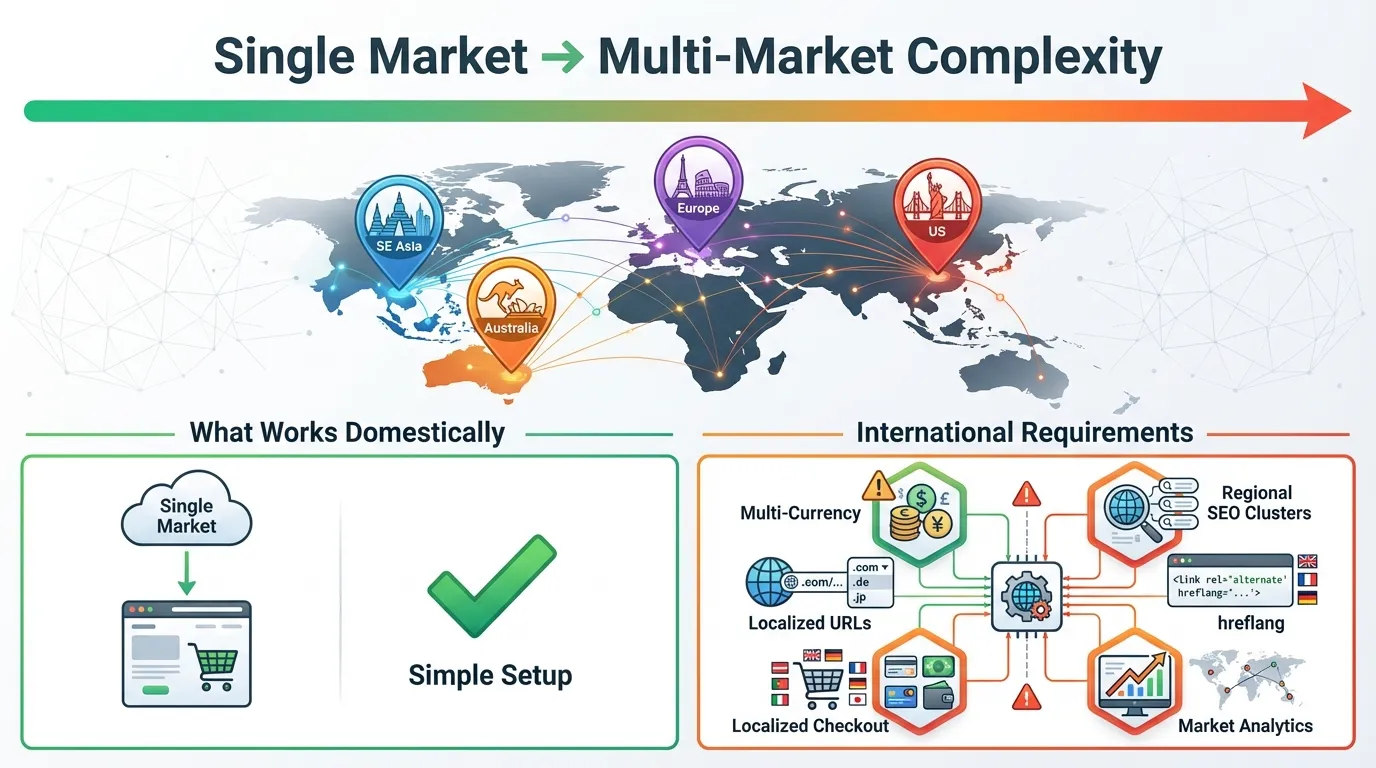
Cross-border commerce introduces structural complexity. What works for a single domestic market often becomes insufficient when entering multiple regions.
International scaling typically requires:
- Multi-currency management
- Localised URL structures
- Region-specific SEO clusters
- Hreflang implementation
- Localised checkout logic
- Market-specific analytics segmentation
If your long-term strategy includes regional expansion into Southeast Asia, Australia, Europe, or the US, you must assess whether Shopline services provide adequate flexibility for multi-market SEO and operational complexity.
4. When Your Product Catalogue Becomes Complex
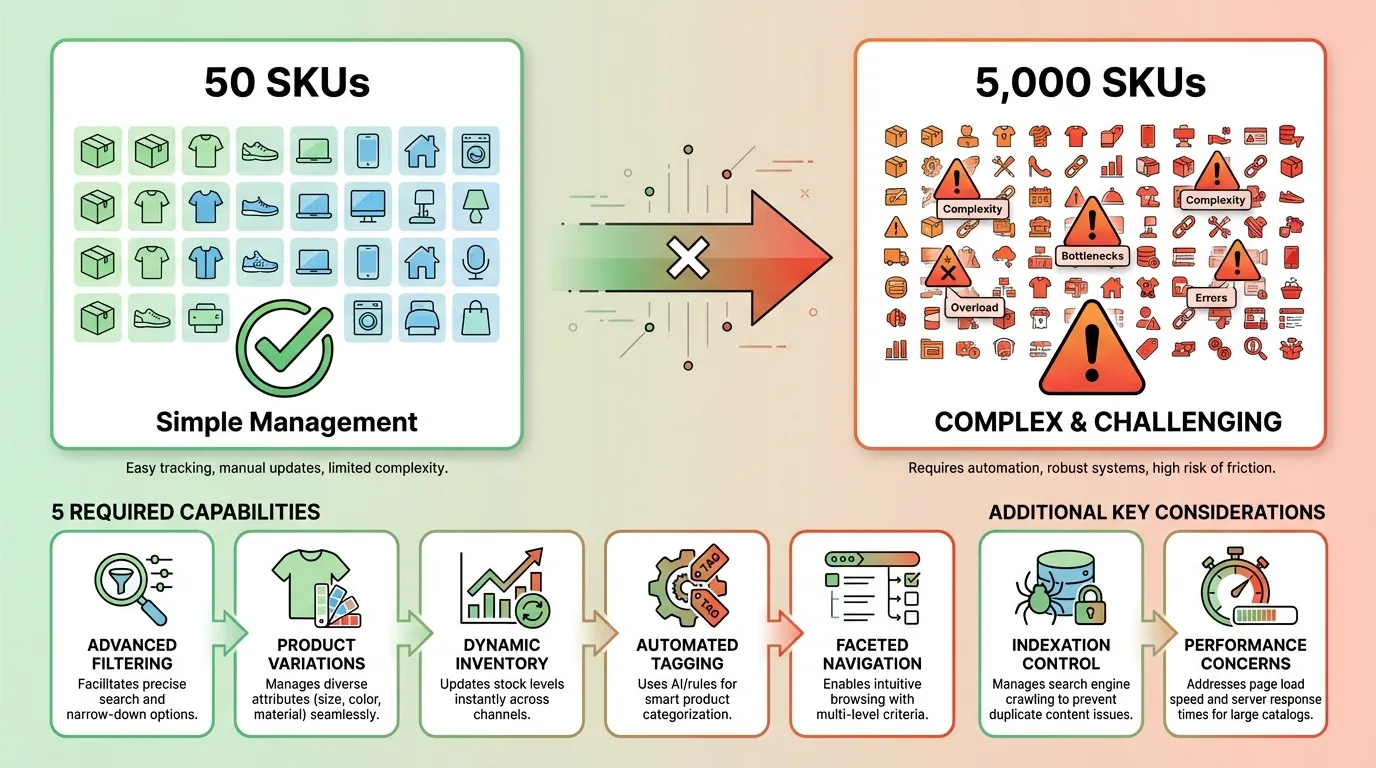
A small store with 50 products operates very differently from one with 5,000 SKUs.
As catalogues expand, you may need:
- Advanced filtering logic
- Configurable product variations
- Dynamic inventory management
- Automated tagging and categorisation
- Scalable faceted navigation
Large inventories also require precise indexation control to prevent crawl waste and duplicate content issues.
If structural limitations begin affecting performance or user experience, it may signal that the platform architecture is becoming restrictive.
5. When Data Ownership and Attribution Become Strategic Priorities
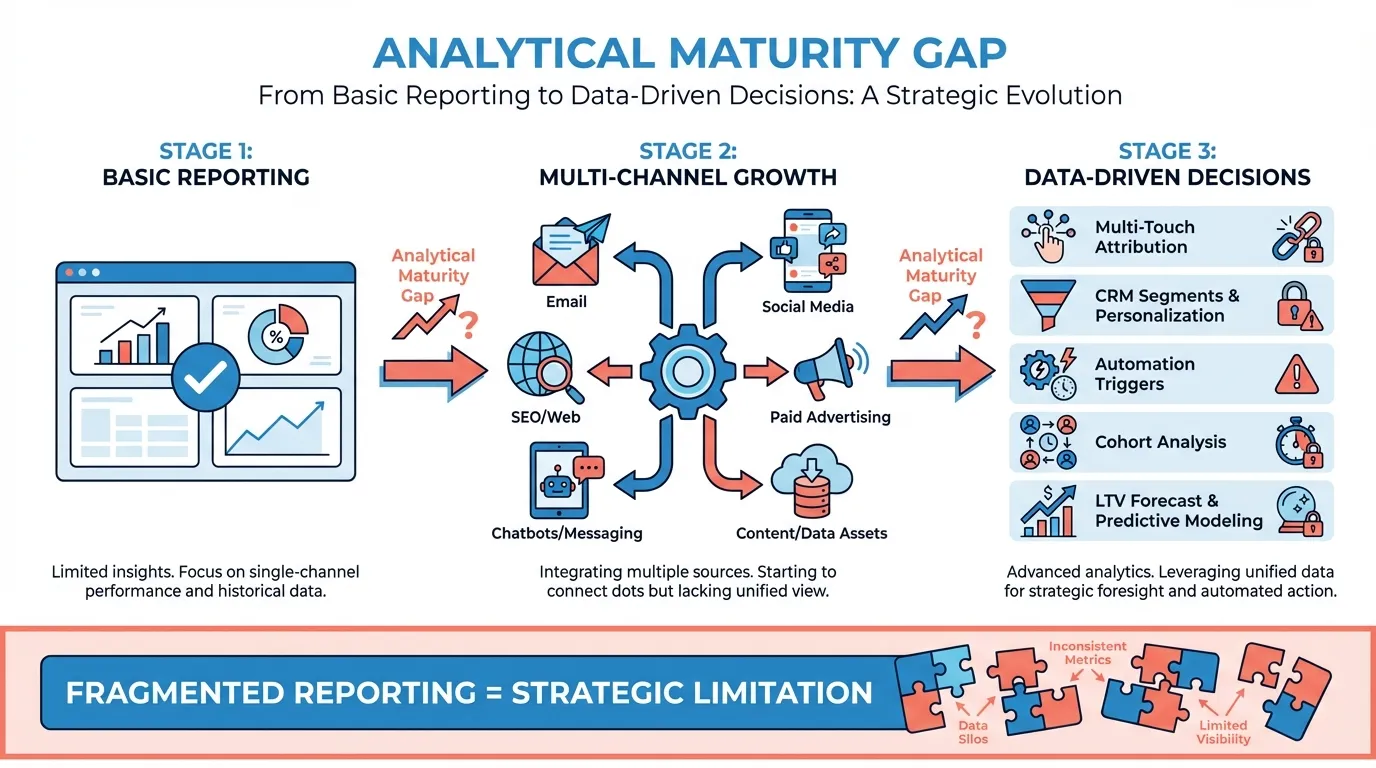
At early stages, simple dashboard reporting may suffice. However, as marketing channels multiply, organic search, paid search, social ads, email, affiliate, and marketplaces, attribution becomes more complex.
Growth-stage brands typically require:
- Multi-touch attribution modelling
- CRM-level segmentation
- Behavioural automation triggers
- Cohort analysis
- Lifetime value (LTV) forecasting
If your business decisions are increasingly data-driven, your platform must integrate seamlessly with your marketing stack.
When reporting feels fragmented or overly dependent on third-party workarounds, it is worth reassessing whether Shopline services still support your analytical maturity.
How to Evaluate an E-commerce Platform Strategically
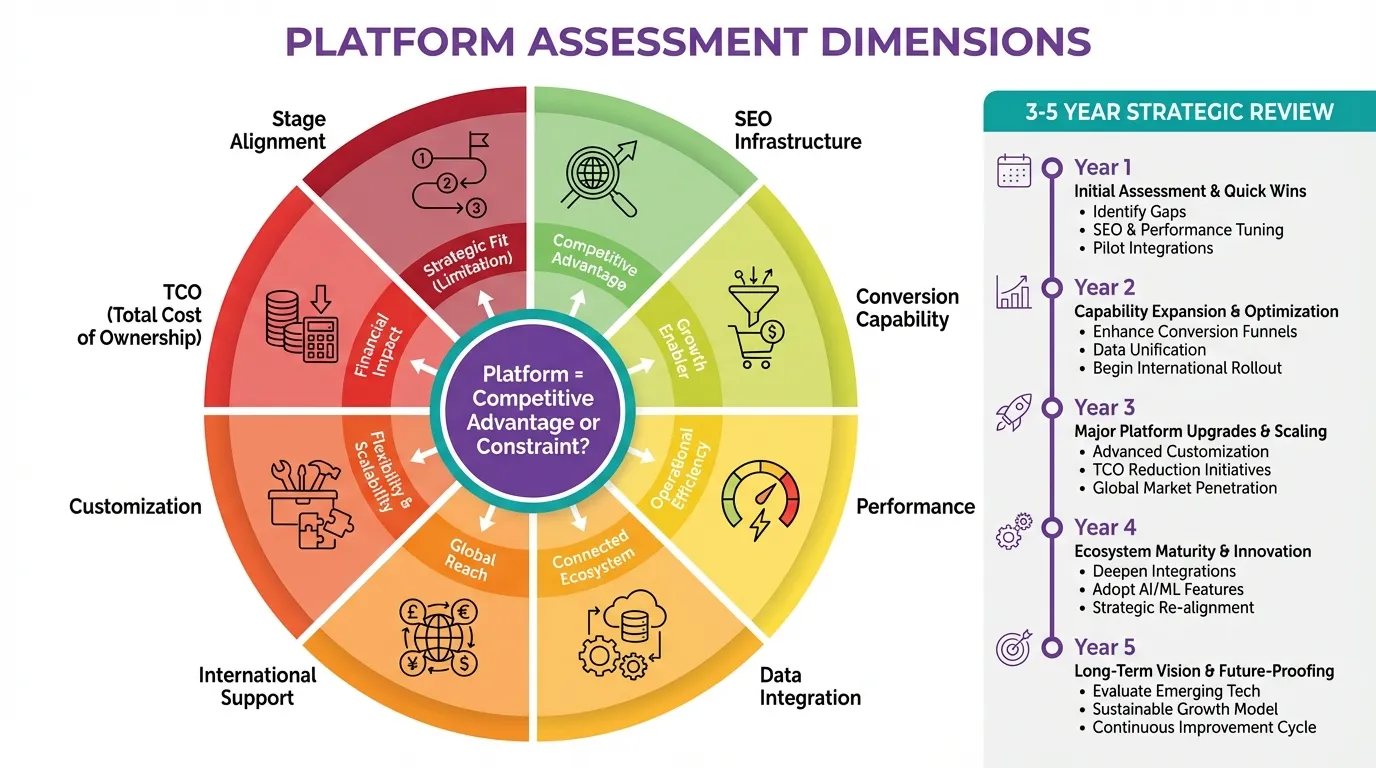
Your platform influences search visibility, conversion performance, marketing integration, and scalability. When assessing whether Shopline services remain suitable, evaluate infrastructure against long-term business ambition rather than short-term convenience.
- Technical SEO Infrastructure: A scalable platform must provide granular control over URL structures, canonical tags, sitemaps, structured data, and crawl management to support long-term organic growth. As competition increases, deeper capabilities such as faceted navigation control, hreflang implementation, and schema customisation become critical to ranking sustainability. If the platform restricts backend SEO configuration or advanced technical implementation, organic search growth may eventually plateau.
- Conversion Architecture Capability: Your platform shapes the entire customer journey, from landing page interaction to checkout completion, which directly affects revenue efficiency. Advanced optimisation requires flexibility for custom checkout logic, A/B testing, behavioural triggers, dynamic bundling, and personalised upsells. If experimentation is limited or checkout customisation is restricted, your ability to improve return on ad spend and customer acquisition efficiency will be constrained.
- Performance & Infrastructure Scalability: Site speed and infrastructure resilience affect both search rankings and conversion rates, especially under traffic surges. A strategically sound platform should support CDN integration, caching control, server response optimisation, and mobile performance refinement. If performance optimisation relies solely on default platform settings without deeper tuning capability, scalability may be limited during aggressive growth phases.
- Data Ownership & Marketing Stack Integration: Modern e-commerce growth depends on clean data flow between the store, CRM, analytics tools, paid media platforms, and automation systems. A strong platform should support advanced tracking, multi-touch attribution, event customisation, and seamless integration with external business intelligence tools. If reporting feels fragmented or heavily dependent on third-party patches, long-term data-driven decision-making may suffer.
- International Expansion Readiness: Expanding beyond a single market introduces structural complexity in currency management, localisation, SEO targeting, and compliance. A scalable platform should support flexible URL structures, hreflang implementation, localised product catalogues, and market-specific analytics segmentation. If cross-border architecture requires heavy workarounds or limited SEO control, international scaling may become operationally inefficient.
- Customisation & Development Flexibility: As brands differentiate through proprietary workflows, subscription models, or advanced user experiences, backend flexibility becomes increasingly important. A growth-aligned platform should provide robust APIs, development documentation, and the ability to customise beyond template limitations. If innovation depends on restrictive app marketplaces or limited code access, competitive differentiation may be constrained.
- Total Cost of Ownership: Platform pricing must be evaluated beyond monthly subscription fees and should include transaction costs, extension fees, development resources, and migration investments. Some platforms appear affordable initially but become costly as operational complexity increases. Strategic evaluation requires assessing the financial impact over three to five years rather than short-term pricing attractiveness.
- Alignment With Business Stage: Different business stages require different infrastructure priorities, from launch simplicity to automation depth and enterprise-level scalability. A platform that served well in the early stage may not support optimisation or scale-up. If your current ambition exceeds Shopline services’ structural capabilities, reassessment becomes a strategic necessity rather than a reactive decision.
The most successful e-commerce brands treat platform evaluation as an ongoing strategic review, not a one-time setup decision. Growth occurs when technology, marketing, and business strategy align. When that alignment exists, your platform becomes a competitive advantage rather than a constraint.
Future-Proofing Your Store Beyond Standard Shopline Services
While shopline services provide a practical foundation for early-stage businesses, scaling brands must evaluate whether their platform supports advanced SEO controls, performance engineering, sophisticated automation, and international expansion. Future-proofing means ensuring your technology stack evolves alongside your revenue ambition rather than limiting it.
As competition intensifies and customer acquisition costs rise, structural flexibility becomes a strategic advantage. The ability to optimise technical SEO at scale, refine checkout architecture, integrate marketing data seamlessly, and expand into new markets efficiently can determine whether growth remains incremental or becomes exponential.
Platform decisions made today shape operational agility, profitability, and long-term competitive positioning. If you are evaluating whether Shopline services still align with your growth trajectory, a structured technical and strategic assessment is the next logical step.
At MediaOne, we specialise in helping e-commerce brands design scalable infrastructure that integrates SEO, paid media, automation, and performance optimisation into one cohesive growth engine. Speak to MediaOne today to assess whether your current platform supports your next stage of growth. Contact us today!
Frequently Asked Questions
Are Shopline services suitable for B2B e-commerce models?
Shopline services are primarily structured for B2C retail operations with standard checkout flows and product catalogues. While certain B2B features may be available through extensions, complex wholesale pricing tiers, approval workflows, and account-based purchasing may require more advanced platform flexibility.
Businesses with dedicated B2B sales processes should evaluate whether the platform can efficiently support custom pricing logic and bulk order functionality.
Can Shopline services support headless commerce architecture?
Headless commerce separates the frontend presentation layer from the backend commerce engine, enabling greater design and performance flexibility. Most standard SaaS platforms, including Shopline services, are not inherently built for full headless deployments without API limitations.
If your growth strategy involves progressive web apps, custom frontend frameworks, or omnichannel experience control, confirm whether the APIs support such architecture.
How secure are Shopline services compared to self-hosted platforms?
Hosted platforms like Shopline services manage security updates, server patches, and infrastructure protection centrally, reducing merchants’ operational burden. Self-hosted platforms offer more control but require active security management, including hardening the hosting environment and monitoring plugins.
The trade-off is convenience versus control, and the right choice depends on your technical resources and risk tolerance.
Do Shopline services limit third-party integrations?
Shopline services support integrations through their marketplace and APIs, but availability and depth vary by extension and plan tier.
Highly specialised tools or custom-built integrations may face limitations compared to open-source platforms. Businesses relying heavily on proprietary software ecosystems should verify the API documentation and the flexibility of integrations before committing to the long term.

What happens to customer data if you migrate from Shopline services?
Customer data, order history, and product information can typically be exported during migration, but format compatibility depends on the receiving platform.
A structured migration process should include database mapping, customer account preservation, and integration with the email marketing system to avoid disruption. Data portability planning is essential to ensure continuity in CRM, automation, and customer lifetime value tracking.