
In 2026, lead generation is more critical than ever, and the landscape is changing fast. The global lead-capture software market is projected to reach US $2.56 billion by 2026, driven by AI, chatbots, and automation that make capturing and converting leads smarter and faster.
For businesses of all sizes, from UK SMEs to growing firms in the Philippines, the key to growth is choosing the right tools. With so many options available, it is easy to feel overwhelmed. That is where a specialized lead generation agency like MediaOne comes in. They not only know which tools deliver results, but also how to integrate them into a seamless strategy that turns prospects into customers.
To help you navigate this evolving market, we have compiled the top 10 lead generation tools for 2026. These include five premium platforms renowned for their robust features, and five powerful free AI tools that any business can deploy immediately to capture and nurture leads effectively.
Key Takeaways
- Use paid mainstream tools for scalability and advanced features and free AI tools to optimise budget and experiment with automation and personalisation.
- Focus on high-value leads using AI-driven scoring, predictive insights and behavioural tracking rather than chasing sheer lead volume.
- Capture, nurture, score and convert leads efficiently by ensuring your tools work together seamlessly across marketing and sales systems.
5 Best Lead Generation Tools (Paid/Mainstream)
Below are five of the best mainstream lead generation tools that continue to set the standard for performance, integration and ROI.
1. Ahrefs

Ahrefs is one of the leading SEO and lead-generation tools, widely used to discover opportunities, monitor competition, and drive organic traffic. Unlike agencies, Ahrefs provides self-service software that combines keyword research, backlink analysis, and site auditing in one platform.
Website: https://ahrefs.com
Key Features:
- Comprehensive keyword research and difficulty scoring
- Backlink analysis to monitor competitor link-building strategies
- Site audit to identify technical SEO issues
- Content Explorer for discovering high-performing content in your niche
- Multi-channel insights: SEO, content strategy, and competitor research
Strengths:
- All-in-one platform for organic lead generation
- Excellent for tracking competitors and uncovering keyword gaps
- Scalable for both SMEs and enterprise-level businesses
Limitations:
- Paid subscription (starting around $99/month)
- Requires some learning curve to fully utilise advanced features
2. Unbounce

Unbounce specialises in landing pages, pop‑ups and conversion‑optimised pages for campaigns. For businesses in 2026 with high traffic or running regular offers/promos, Unbounce is a strong lead‑capture tool.
Website: https://unbounce.com/
Key Features:
- Drag‑and‑drop landing page builder (no coding required).
- Pop‑ups, sticky bars, one‑click forms and exit‑intent overlays to capture leads.
- A/B testing and variant testing baked in to optimise conversion.
- Dynamic text replacement and integration with CRM/email tools for smoother capture to nurture hand‑off.
Strengths:
- Especially good when you’re running campaigns (e.g., webinar signups, white‑paper downloads, special offers) and want to maximise conversion of traffic.
- Easier for marketing teams to iterate: new offers, new landing pages, quick tests.
Limitations:
- Unbounce handles capture very well, but it doesn’t by itself manage the full nurture cycle, scoring or pipeline conversion. You’ll still need a CRM/automation tool.
- If your traffic is limited, the incremental benefit may be smaller unless you run paid/additional ad spend.
3. Zoho CRM

Zoho CRM is a strong, cost‑effective CRM/lead‑generation stack that’s especially well suited for small to medium enterprises (SMEs) who want core lead capture + pipeline management without enterprise‑scale pricing.
Website: https://www.zoho.com/crm/
Key Features:
- Web forms, email campaigns and social capture of leads.
- Lead scoring/assignment workflows, pipeline stages and task reminders.
- Analytics dashboards showing lead performance, pipeline health.
- Integration with the Zoho ecosystem (Campaigns, Desk) and external apps.
Strengths:
- Very good value for money for smaller businesses that already have a sales process and just need to streamline capture to pipeline.
- Flexible customisation means you can tailor capture, scoring and workflows to your business model rather than force your process into a rigid template.
Limitations:
- Compared to full‑scale marketing automation tools (like HubSpot), the feature set for advanced nurture, AI‑driven scoring, predictive analytics might be more limited.
- If you grow into enterprise size, you may need add‑ons or extra modules (which could raise cost or complexity).
4. OptinMonster

OptinMonster is focused on‑site conversion: turning website visitors into leads via targeted forms, behavioural triggers and overlays. In 2026, as traffic cost rises and attention becomes harder to win, a strong capture layer matters.
Website: https://optinmonster.com/
Key Features:
- Behaviour‑based triggers: exit‑intent, scroll depth, time on page to display forms/pop‑ups.
- Multiple formats: pop‑ups, slide‑ins, floating bars, fullscreen mats.
- Integrations with major email/CRM tools so captured leads are fed into your nurture sequences.
- A/B testing and behavioural analytics built in.
Strengths:
- Particularly effective for converting existing website traffic into leads. You’re maximising return on your site traffic rather than only focusing on generating new traffic.
- Behavioural triggers mean you can catch visitors who might otherwise leave without engaging.
Limitations:
- Requires reasonable volume of web traffic to see strong returns; if traffic is low, optimisation gains are smaller.
- Does not replace a nurture/CRM system; capture only is not enough for full funnel conversion.
5. LinkedIn Sales Navigator
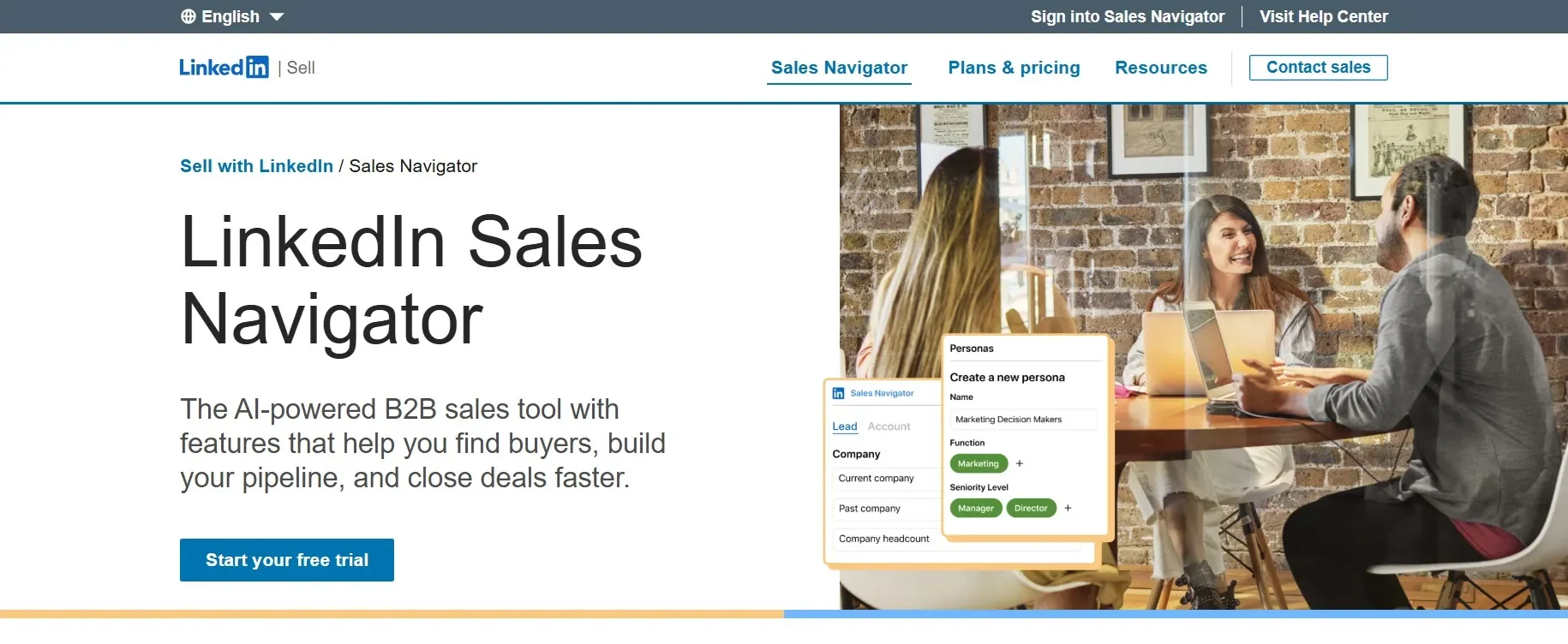
LinkedIn Sales Navigator is a specialist tool for B2B prospecting, targeting decision‑makers and account‑based sales. In 2026, with more emphasis on high‑quality leads and less on sheer volume, tools like this become very strategic.
Website: https://www.linkedin.com/products/linkedin-sales-navigator/
Key Features:
- Advanced search filters (industry, company size, role, geography) to build targeted prospect lists.
- Lead and account alerts when prospects change jobs, update profiles or engage, allowing timely follow‑up.
- CRM integration so leads discovered are tracked and followed.
- InMail or messaging capabilities to engage directly with potential prospects.
Strengths:
- Very effective when you’re targeting high‑value accounts (rather than broad inbound lead volumes).
- Enables precise targeting of decision‑makers, which is crucial for enterprise‑sales or high‑ticket offers.
Limitations:
- Less useful for broad inbound capture or volume‑based lead generation. It’s more about quality, not quantity.
- Requires active outreach and follow‑up; simply generating lists won’t convert leads absent a process.
5 Free AI Lead Generation Tools
Not every business needs to start with a hefty software budget. Below are five of the best free AI lead generation tools that can streamline your outreach, all at zero cost.
1. HubSpot CRM (Free Edition)

HubSpot’s free CRM edition includes lead‑capture mechanisms (forms, chat widgets), contact tracking, basic automation and AI‑powered features like lead‑scoring or conversation summarisation.
Website: http://www.hubspot.com
How to use it:
- Set up your website forms to feed into HubSpot.
- Use the chat‑widget to engage visitors.
- Use built‑in dashboards to monitor new leads, their engagement and route them to follow‑up workflows.
Strengths:
- Truly free to start, with solid basic features.
- Good integration across marketing‑sales funnel in one place.
- AI‑powered insights help you prioritise leads.
Limitations:
- Free tier has caps on contacts, workflows and advanced features.
- As your business grows you’ll likely need to upgrade to get full marketing automation, advanced scoring and customisation.
Fit for you: If you’re a small team (e.g., in the Philippines or UK) and want a single unified tool to start capturing and tracking leads, this is a strong choice.
2. Mailchimp (Free Plan + AI Features)

Primarily known as an email‑marketing tool, Mailchimp’s free plan includes AI‑driven features (e.g., send time optimisation, subject‑line suggestions, audience segmentation) which help with lead generation via email and list‑building.
Website: https://mailchimp.com/
How to use it:
- Create a lead‑magnet (e.g., free guide, checklist) and capture email addresses.
- Use Mailchimp’s AI suggestions when crafting email campaigns. The goal is to nurture these into leads.
- Monitor which segments respond better and refine your approach.
Strengths:
- Easy to get started; good for email‑centric lead generation.
- AI features help improve open‑rates and engagement.
Limitations:
- The free plan has contact‑limits, fewer automation rules and may include Mailchimp branding.
- Doesn’t by itself capture leads from other channels (unless you integrate with forms/landing‑pages).
Fit for you: Great if email is a core channel for you / you already have a list‑building traffic and want to maximise leads via email.
3. Tidio (Free AI Chatbot + Live Chat)

Tidio offers live chat plus an AI chatbot that can capture and qualify leads in real‑time when visitors are on your website. It’s listed in free‑tool roundups as a good “AI for lead‑gen” option.
Website: https://www.tidio.com/
How to use it:
- Embed the Tidio chat widget onto your website.
- Create chatbot flows that ask qualifying questions (e.g., “What brings you here today?”, “Would you like a free consultation?”).
- Use the captured data (name, email, query) to feed into your CRM or email nurture system.
Strengths:
- Real‑time engagement helps capture leads before they bounce away.
- The free plan allows you to start without cost.
Limitations:
- The free version may limit the number of chats, features or integrations.
- Chatbot capture is only the first step. You still need to nurture & convert leads.
Fit for you: If your website gets decent traffic and you want to turn more visitors into leads, a chatbot like Tidio is very useful.
4. Seamless.AI (Free Tier / Freemium)

Seamless.AI is an AI‑powered prospecting tool that helps you build B2B lead lists, find verified contact details and enrich data. The free plan includes basic credits to test out lead discovery.
Website: https://seamless.ai/
How to use it:
- Use the browser extension or platform to search for prospects by industry, job title, region.
- Export found contacts to your CRM or outreach tool.
- Use the free‑credit allowance to test lead quality and response rates before scaling.
Strengths:
- Good for outbound lead generation / building targeted lists (especially B2B).
- AI helps ensure contacts are verified which helps with deliverability and quality.
Limitations:
- The free plan is limited in credits/features; you’ll likely need to upgrade for heavy‑use.
- Works best for list‑building and outreach; you still need nurture and conversion workflows.
Fit for you: Ideal if your business is B2B, you’re doing outbound prospecting and you want to build lists of decision‑makers without large spend upfront.
5. SmartWriter AI (Free/Trial Version)

SmartWriter AI uses AI to automatically generate personalised outreach messages, email intros and LinkedIn messages based on prospect data. Not always entirely free, but many sources cite “free trial” or limited free usage as part of their offering.
Website: https://www.smartwriter.ai/
How to use it:
- Upload or input a small list of prospects.
- Let SmartWriter generate personalised messages (mentioning name, company, pain point).
- Use them in outreach campaigns (email/LinkedIn).
- Track responses and refine messages over time.
Strengths:
- Saves time by automating message creation while retaining personalisation.
- Particularly useful for smaller teams or solo practitioners who cannot craft hundreds of custom messages manually.
Limitations:
- Free usage is quite limited; you may face caps or need payment for full features.
- Quality of outreach still depends on the underlying targeting. Good messages to poor target ≠ results.
Fit for you: If you are doing personalised outbound outreach (cold email or LinkedIn) and want a “boost” rather than writing everything manually, this is a very helpful tool.
Comparison Table of Lead Generations Tools
Here’s a comprehensive comparison table for all 10 lead generation tools (5 paid/mainstream + 5 free AI) updated for 2026. It’s structured to help businesses quickly see which tool fits their needs based on functionality, ideal use, cost and limitations.
| Tool | Type | Key Features | Ideal Use Case | Cost (2026) |
| Ahrefs | Paid | Comprehensive keyword research, backlink analysis, site audit, content explorer, competitor insights | Organic lead generation, SEO strategy, content marketing for SMEs and enterprises | USD $99–$399/month |
| Unbounce | Paid | Landing pages, pop-ups, A/B testing, dynamic text replacement | Campaign-specific landing pages, webinars, downloads | £90/month (Standard) |
| Zoho CRM | Paid | Lead capture, scoring, automation, pipeline dashboards, multi-channel integration | Cost-effective CRM + lead management for SMEs | £18/month (Standard) |
| OptinMonster | Paid | Behaviour-based pop-ups, slide-ins, exit-intent offers, A/B testing | On-site lead capture for websites, blogs, e-commerce | £14/month (Basic) |
| LinkedIn Sales Navigator | Paid | Advanced prospect search, alerts, CRM integration, InMail | B2B targeting decision-makers, account-based sales | £75/month (Professional) |
| HubSpot CRM (Free) | Free AI | Lead forms, chat widgets, basic automation, AI insights | Small businesses starting CRM & lead capture | Free |
| Mailchimp (Free Plan + AI) | Free AI | Email campaigns, AI subject-line suggestions, segmentation | Email list-building & nurturing for small teams | Free (limits apply) |
| Tidio | Free AI | AI chatbot, live chat, lead capture flows | Real-time visitor engagement & lead capture | Free (limits apply) |
| Seamless.AI | Free AI | AI-powered B2B lead lists, contact verification | Outbound prospecting for B2B | Free tier with credits |
| SmartWriter AI | Free AI | Personalised outreach messages, email & LinkedIn templates | Automated personalised outbound campaigns | Free trial / limited free usage |
In 2026, the most effective lead generation tools combine capture, nurture, scoring and analytics in a single system. Tools with AI capabilities help prioritise and personalise leads, saving time while improving conversion rates and ROI.
What to Look for in a Lead Generation Tool
Choosing the right lead generation tool is crucial for turning prospects into customers. In 2026, businesses are focusing on quality leads, AI-driven insights and seamless automation. Here’s what to consider when evaluating a tool:
- Efficient Lead Capture: The foundation of any lead generation system is its ability to capture leads effectively. Look for tools that offer forms, landing pages, pop-ups, chatbots and social media integrations. Multi-channel capture ensures you can reach prospects wherever they interact with your brand.
- Automation and Nurturing: Capturing leads is only the first step. The best tools can automate follow-ups, email sequences and workflow triggers to nurture leads. In 2026, AI-driven suggestions for timing, messaging, or next best actions are increasingly important to personalise outreach and increase conversion rates.
- Lead Scoring and Qualification: Not every lead has the same value. Look for features that allow lead scoring based on engagement, behaviour, or demographics. AI-powered scoring can prioritise sales-ready leads, helping your team focus efforts where they are most likely to convert.
- Integration and Analytics:: A lead generation tool is most effective when it integrates with CRMs, email platforms and analytics systems. Access to conversion tracking, funnel analytics and predictive insights allows your team to measure ROI and continuously optimise campaigns.
- Usability and Scalability: Even the most advanced tool is useless if your team cannot use it efficiently. Ensure it has an intuitive interface, training resources and support. Scalability is key. The tool should grow with your lead volume, team size and business complexity while remaining cost-effective.
- Security and Compliance: With stricter data privacy laws worldwide, your tool must comply with GDPR, PDPA and other local regulations, safeguard customer data and provide easy management of consent and opt-ins.
Maximise Your Lead Generation Strategy in 2026
Selecting the right combination of lead generation tools is only the first step. The real impact comes from strategically integrating these tools into your marketing and sales processes.
In 2026, businesses can use AI for personalisation, predictive scoring and workflow automation to focus on high-quality leads. Selecting scalable, compliant tools that fit your business size, goals and budget lays the foundation for a lead generation strategy that grows with you.
Want to elevate your lead generation strategy and harness the full potential of AI-powered tools? MediaOne can help you identify, implement and optimise the right combination of lead generation platforms for your business.
Contact MediaOne today to start growing your business efficiently and effectively.
Frequently Asked Questions
How often should I update my lead generation tools?
Ideally, review and update your tools annually or whenever your lead volume, business size, or marketing strategy changes. Staying current ensures you leverage new AI features, integrations and compliance updates.
How can small businesses compete with larger companies in lead generation?
Small businesses can compete by leveraging AI-powered free tools, focusing on high-quality, targeted leads and personalising outreach. Agile campaigns, quick follow-ups and creative content often outperform larger competitors who rely on volume alone.
Can free AI lead generation tools replace paid tools entirely?
Free AI tools are great for startups or small campaigns, but they often have limits on contacts, features, or automation. Paid tools offer scalability, advanced analytics and full automation, making them essential as your business grows.
How do I measure the ROI of lead generation tools?
Track metrics such as cost per lead, lead-to-sale conversion rate and campaign ROI. Tools with built-in analytics or CRM integration make it easier to measure performance and optimise your strategy over time.
Are AI-generated leads more reliable than traditional methods?
AI can improve lead quality by predicting engagement, scoring prospects and personalising outreach. However, lead reliability still depends on targeting, data accuracy and effective nurturing. AI complements but does not replace human oversight.