| AI Summary
Singapore YouTubers cover local comedy, lifestyle, food, travel, music and stories about everyday life. Viewers can start with Wah!Banana for skits, Eatbook for dining ideas or Ghib Ojisan for a look at Singapore through a resident’s eyes. Businesses can compare channels using the Creator Fit Matrix, then plan a trial with one goal, an early sponsorship disclosure and a way to track results. |
Singapore YouTubers to know include Wah!Banana and JianHao Tan for comedy, TiffwithMi for lifestyle, Eatbook and Zermatt Neo for food, Ghib Ojisan for life in Singapore, and Dharni for beatboxing. The right creator for a brand depends on the video topic, audience location, viewer response and the creator’s style.
Key Takeaways
- A school skit, a hawker guide and a food challenge give viewers different reasons to watch. Each format gives a brand a different role in the video.
- Recent videos in the same format give a better starting point for comparison. Shorts and longer uploads belong in separate groups.
- A Creator Fit Matrix score of 9 out of 12 earns a closer look. A weak score for audience location can still rule out a local campaign.
- A campaign brief should name the viewer action, the sponsorship wording, the reporting date and any rights to reuse the video.
Singapore YouTubers can help viewers find a lunch spot, follow a running joke or see a side of the city they rarely visit. For a business, the choice starts with the kind of attention it needs. A café opening in Bedok and an online shop delivering across the region can both work with Singapore creators, but they need to reach different people.
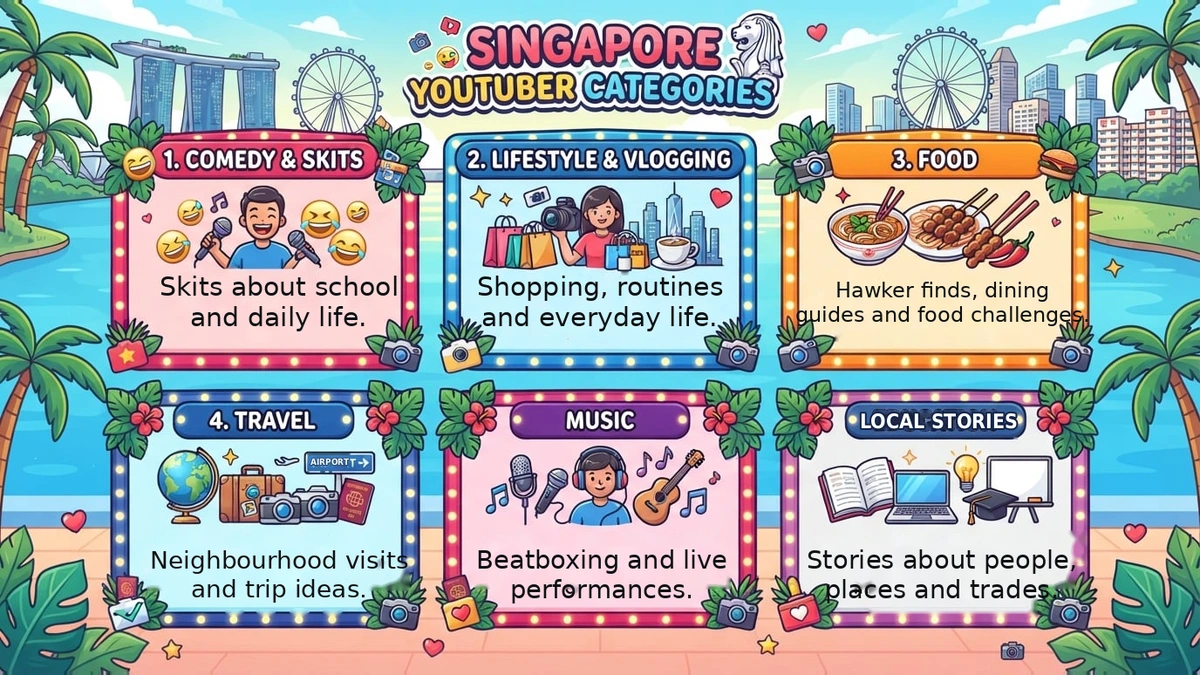
Singapore YouTubers to Know by Category
The channels below give viewers a starting point by interest. They also show how a creator’s usual format can shape a brand idea. A product might become part of a joke, help solve a problem on camera or give a viewer a reason to plan a visit.
Comedy and skits
Wah!Banana makes comedy about situations viewers recognise from everyday life. The team behind Wah!Banana also produces drama and reality formats. A viewer who likes local jokes can start with the channel’s skits. A brand could consider a short scene about a familiar problem, such as colleagues trying to agree on lunch before their break ends. The joke gives the product a reason to appear.
JianHao Tan is known for scripted comedy, including school skits. CNA’s reporting on Singapore’s YouTube scene covers his work and the teams behind local sketches and vlogs. Recurring characters give regular viewers a reason to come back. A brand considering this format can watch a few full episodes to see where a product could appear without interrupting the story.
Lifestyle and vlogs
TiffwithMi features Singaporean sisters Tiffanie and Michy Lim. Their Mandarin lifestyle videos have included beauty, shopping and everyday life. A viewer can start with a topic they already enjoy, such as a shopping haul. A retailer could explore a similar format for a product viewers benefit from seeing in use. The language a creator speaks on camera and the countries their viewers live in are two separate things to check.
Vlogs can give a product more time on screen through everyday use. A bag brand, for example, could show what the creator packs before a full day out. The audience gets to see what goes into the bag, how the pockets work and how it looks when worn. That gives the creator a scene to film and the viewer something they can judge for themselves.
Music and stories about Singapore
Dharni is a Singaporean beatboxer whose competition record covers his work on the international beatbox circuit. Beatboxing gives brands a way to make sound part of the video. An audio brand could build an idea around a performance, while an event organiser could show viewers the kind of act they can expect to see live.
Our Grandfather Story is a digital publisher that tells stories from Singapore and Southeast Asia. Its work offers a starting point for viewers who like personal stories and local culture. The format suits subjects that need time and context, such as how a trade is passed down or why a place holds meaning for the people who live nearby.
A channel run by a team may have a different production process from a channel run by one creator. A scripted shoot can involve cast, location and editing costs. A vlog can involve fewer people while still needing travel, filming time and more than one edit. The proposed video gives a business a better basis for comparing quotes than the channel name alone.
Food and Travel YouTubers in Singapore
Food and travel videos can help viewers make a decision they already have in mind. Someone may be choosing a lunch spot near work or planning a stop during a trip. A video that answers practical questions gives that viewer a reason to save it, share it or use it when making plans.
Local dining, hawker food and eating challenges
Eatbook covers places to eat in Singapore, including cafés, restaurants and budget food. The Eatbook YouTube channel is a starting point for viewers choosing where to go. A dining feature can answer questions such as what to order on a first visit, what a meal costs and how to find the outlet.
Zermatt Neo makes competitive eating and food challenge videos. The challenge itself gives the viewer a reason to watch. That can suit a restaurant that wants to introduce a signature dish or a challenge menu. A neighbourhood café focused on weekday lunch visits may get more value from a guide that shows viewers where to go and what they can order.
A food business can judge a video idea by the details it leaves viewers with. A new stall might need the hawker centre name, stall number and opening days. A café taking reservations might need the booking link and the times the offer applies. Details that may change belong on the business’s own page as well, so someone who finds the video later can check before leaving home.
Travel, neighbourhoods and daily life
Ghib Ojisan covers Singapore through food, neighbourhood visits and everyday experiences. His Singapore food and travel site also introduces readers to local places and his YouTube work. A viewer can start with a neighbourhood they want to explore. An attraction or tour operator can use a similar video to show how a stop fits into a day, including what visitors can do nearby and how much time they may want to set aside.
An offer should match the viewer’s plans. A local lunch deal may need Singapore viewers who can visit on weekdays. A tour that visitors book before arrival may benefit from viewers overseas. The business’s choice of social media platforms can also support that plan. YouTube can show the experience in detail, while the brand’s own channels can carry dates, reminders or last-minute changes.
How to Choose Singapore YouTubers for a Campaign
A shortlist starts with one result the business wants. A launch might need people to see a new product. A demo might need viewers to understand how it works. A local offer might need bookings or visits. These are different jobs, so each calls for a different video and a different way to judge it.
| Campaign goal | Video to consider | First result to check |
| Introduce a product | A skit that uses it in the story | Views on the sponsored video |
| Show how something works | A demo or a vlog that shows it in use | Viewing time around the demo |
| Bring people to an outlet | A dining guide or neighbourhood visit | Code uses or bookings tied to the video |
| Help people plan a visit | A video showing the experience and what to expect | Visits to the booking page |
How to check reach and viewer response
A creator’s last five to ten comparable uploads give a starting point for judging typical views. A set of recent vlogs can be compared with other vlogs of a similar age. A holiday special, a viral hit and a short clip may each draw views for different reasons. The middle view count in a set can help keep one unusually popular upload from driving the whole decision.
Public comments can show what viewers noticed. Questions about a stall’s location, the cost of a meal or the size of a product show what people wanted to know next. Comments are only one clue. For a local campaign, the creator can share a dated geography breakdown from YouTube Studio’s Advanced mode, where the data is available. The report can show country-level reach. A brand that needs evidence for a specific outlet can also ask for past booking or code results tied to that location.
The same time period and video format make creator reports easier to compare. A channel-wide report may include Shorts with viewers around the world, even when the proposed video is a local food guide. Past sponsored work can also show how a creator moves from the story to the offer. The public upload lets the brand hear how the creator explains the product and see where the sponsorship appears.
How to use the Creator Fit Matrix
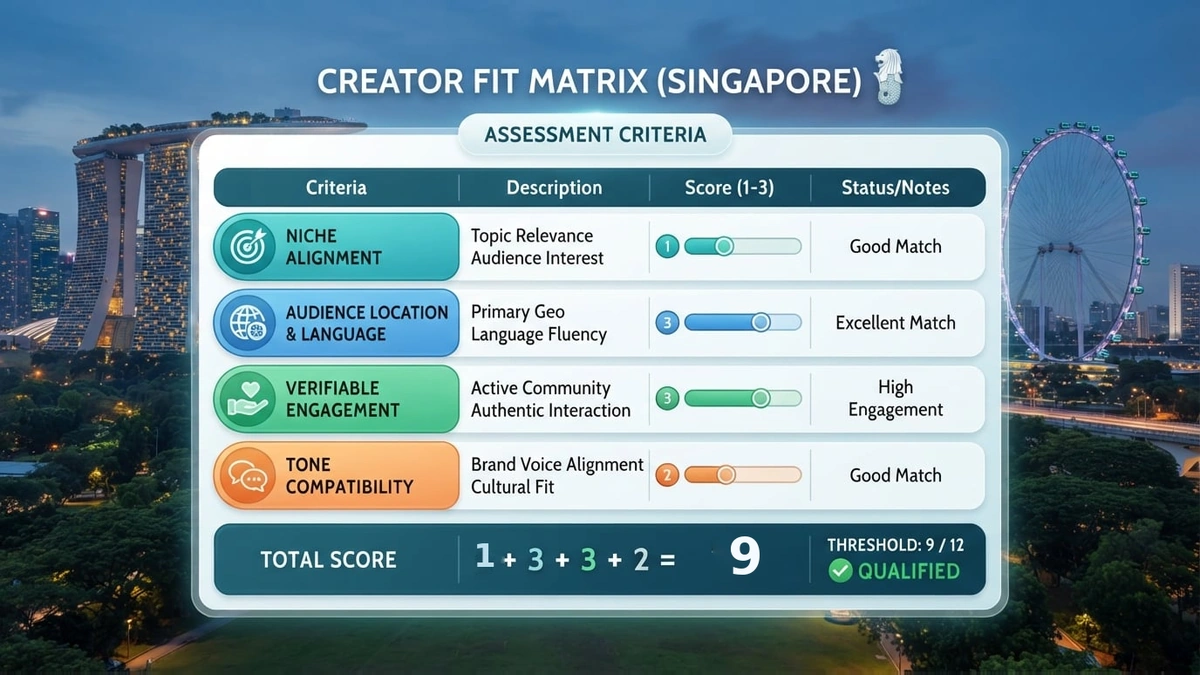
The Creator Fit Matrix scores four things from 1 to 3. A 1 means the evidence is weak or missing. A 2 means there is some evidence. A 3 means the evidence supports the campaign. A score of 9 out of 12 is a suggested point for a closer look. For a campaign that depends on local visits, a 1 for audience location and language still calls for more evidence before booking.
| Criterion | Evidence to review |
| Niche alignment | Recent videos about the topic or a related customer need |
| Audience location and language | Where viewers live and whether they can follow the offer |
| Verifiable engagement | Typical views and comments that respond to the video |
| Tone compatibility | How the creator speaks, tells jokes and presents past sponsors |
A hawker chain, for example, might score a food creator 3 + 3 + 3 + 2 = 11. The channel covers local dining, shares relevant audience data and draws questions about where to eat. The creator’s usual tone needs a small adjustment for the offer. A comedy channel might score 2 + 1 + 3 + 2 = 8 if the views are strong but the audience data shows limited Singapore reach. For an outlet opening, the first creator has stronger evidence for a trial.
A brand can also use the scores to guide its next conversation. If two creators both score 10, one may need to show more examples of sponsored work and the other may need to confirm who watched recent videos. That gives the brand a specific request for each creator before it compares quotes.
What to Agree on Before a YouTube Partnership
A first message can name the product or event, the kind of video the business has in mind and the action viewers should take. A creator can then suggest how to work the idea into a format their audience knows. A budget for the influencer campaign can account for the shoot, edits and any extra use of the footage before the brand compares offers.
What the written brief should cover
The written brief gives the creator room to work while setting out the details the business needs. A restaurant, for example, can confirm the price, outlet, offer dates and booking link. The creator can decide how to film the visit and explain the meal in their own voice.
- Video and timing. The brief names the format, upload date, review dates and any clips due alongside the main video.
- Facts and offer. It lists product details, prices, terms and the action viewers should take.
- Review and changes. It names who checks facts, how many edits are included and what happens if an offer changes before upload.
- Reuse and payment. It records the fee, payment dates and where, how and for how long the brand may use the video.
- Reporting. It specifies the figures each side will share, when the report is due and whether paid results will appear separately.
A team that wants to run part of the video as an ad can agree to that use before filming. The terms can cover whether the brand may shorten the clip, add captions or use the creator’s face and voice in paid placements. That makes it easier to budget for YouTube advertising alongside the creator’s own upload.
How paid content should be labelled
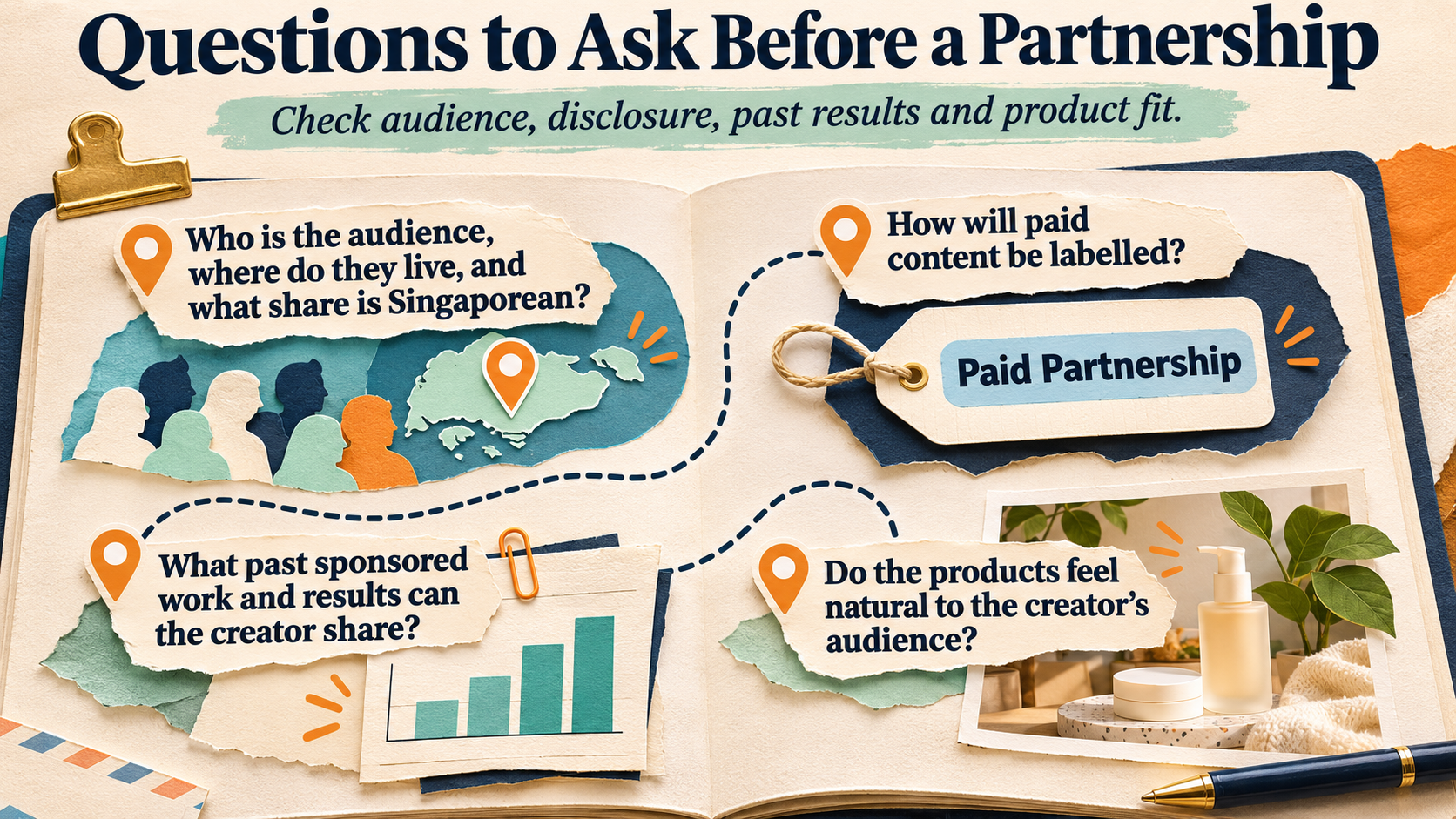
The Advertising Standards Authority of Singapore’s social media guidelines call for a sponsorship disclosure that is easy to notice and appears early. YouTube also requires creators to declare paid promotion in the video settings when the video contains a paid promotion or other covered commercial relationship. A simple line such as “This video is sponsored by [Brand]” gives viewers the information in the video itself. The brief can specify when the line appears and who checks it before upload.
The brand should also agree on how to share results. With YouTube brand partner access, a creator can share certain video performance data with the brand. A separate business report can still cover bookings, enquiries or sales that the creator cannot see. Both sides should use the same dates when they review the campaign.
How to Measure a YouTube Creator Campaign
The measurement should follow the action the viewer can take. A trial for an outlet opening might track bookings or orders with a creator code. A product demo might track visits to a product page. A campaign for a brand launch might focus on video views and viewing time. The brand and creator can agree on the main measure before the video goes live.
How to track clicks, bookings and visits
A tagged link can identify traffic from a creator’s video in Google Analytics. Google Analytics’ campaign URL documentation explains how campaign tags pass source details into reports. Consistent names also make it easier to compare traffic in GA4 channel reports. A café can pair the link with a creator code that staff can record when a customer orders at the outlet.
The link placement depends on the video format. YouTube’s link rules say URLs in Shorts descriptions and comments are non-clickable. Long-form descriptions can support clickable external links when the channel has the required feature access. A Short can show a simple offer code on screen. A longer video can pair the spoken offer with a tested link in the description.
A short test before launch can catch problems. The business can open the link on a phone, check that the correct outlet appears and complete a test booking. Outlet staff can confirm that the code works and know where to record it. If the offer ends on a set date, the booking page can carry that date so viewers who find the video later know what to expect.
What a small trial can tell a business
Suppose a café pays S$600 for a video and records 30 orders with the creator’s code. The fee comes to S$20 per recorded order before any discount or extra costs. The café can compare that figure with what it earns on an order after food and service costs. Some customers may have seen the video and ordered without a code. Others may have received the code from a friend. The number shows what the café recorded through the offer.
The report can also show where the campaign needs work. If viewers ask where to book but few reach the booking page, the brand can review how the video presents the next step. If people visit the page but few book, the team can check whether dates, price or booking steps are hard to find. A campaign can have more than one weak spot, so each change works best when the team records what it changed and when.
Conclusion: Choose a Singapore YouTuber for a Trial Campaign
A trial gives a Singapore business a way to test a creator’s video format, audience and offer before booking a series. A café might start with one outlet and a code staff can record. A retailer might start with one product demo and a tagged product link. The result can help the team decide whether to repeat the video format, change the offer or work with a different creator.
Businesses planning a campaign can use MediaOne’s influencer marketing services to shortlist creators and plan what to measure. A consultation with MediaOne can start with the audience, the offer and the result the business wants from its first video.
FAQs About Singapore YouTubers
How can a brand find a creator’s business email?
A creator may list a business email in their YouTube channel details, on their own website or on a public management page. A short email can include the company name, the proposed project and the date range. The address should match the creator’s own public contact details or their listed representative before the business shares files or pays a deposit.
Can a business sponsor a video that is already live?
A creator may agree to add a link or update a description on an existing upload. The brand should ask what can change and how the creator will disclose the new paid relationship. An old video may still get views, so recent traffic to that upload gives the brand a better basis for deciding whether to pay for the placement.
Can a creator promote two competing brands?
The answer depends on the terms each brand and creator agreed to. An exclusivity clause can name the product category, the channels it covers and how long the restriction lasts. A coffee maker brand, for example, may ask for a pause on other coffee maker promotions while allowing the creator to work with a coffee bean company.
What happens if a creator deletes a sponsored video?
The agreement can set a minimum time for the video to stay public and say what happens if it comes down early. The creator and business can agree in advance on a replacement upload, a revised fee or another remedy. A copy of the final approved video and the last performance report can help both sides resolve the issue.
Can customers use a creator’s promo code after the campaign ends?
The business sets the code’s expiry and should show it wherever viewers see the offer. A video can keep drawing views after the code closes. The linked page can state that the offer has ended and show the current menu, price or booking details so people who arrive later can still plan a visit.