| AI Summary
Social media marketing platforms help businesses target specific audiences, manage paid campaigns and measure results across channels such as Meta, LinkedIn, TikTok, YouTube and Pinterest. The right platform mix depends on your business goals, audience, creative formats, budget and measurement capabilities. A practical strategy is to allocate 80% of your budget to proven performers, reserve 20% for testing, adapt creative for each platform and use conversion tracking to guide future spending. |
Social media advertising has shifted from a “nice to have” to an essential channel for business growth. Yet most organisations still treat each platform in isolation, wasting budget and diluting their message in the process.

This guide takes a portfolio approach. Rather than asking “Should we use Facebook or TikTok?”, you’ll learn to answer the harder question: “Which platforms should we use together, how much should we spend on each, and how do we know if it’s working?” You’ll discover the diagnostic framework and real platform features (as of Q1 2025) that let you make that decision in hours, not weeks. Whether you’re a small business testing paid social for the first time or a mid-market team optimising across five channels, the strategies and mistakes covered here will save you money and accelerate results.
Key Takeaways
- Social media marketing platforms are paid advertising networks that let you target, serve ads to, and measure responses from specific audiences. They differ fundamentally from organic social media management because they operate on a cost-per-action model and guarantee delivery within your budget.
- Seven platforms dominate in 2024–2025: Meta Business Suite (Facebook and Instagram), LinkedIn Campaign Manager, TikTok Ads Manager, X Ads Platform, Pinterest Ads Manager, YouTube Ads Manager, and emerging options like Bluesky and Threads advertising.
- Platform selection depends on your goal. LinkedIn and X excel at B2B lead generation. Meta, Pinterest and TikTok drive e-commerce sales. YouTube and TikTok build brand awareness at scale.
- A weighted-matrix budget approach (80% to proven performers, 20% to testing) reduces waste and accelerates learning faster than splitting spend equally across platforms.
- Identical creative fails across platforms. Each network rewards different formats, aspect ratios, and messaging styles. Platform-native analytics also differ widely: YouTube measures view-through rate; TikTok emphasises engagement rate.
- Compliance matters. GDPR (EU), PDPA (Singapore), and regional privacy laws shape how you can collect, store and target customer data. Staying current with platform policy updates is non-negotiable.
What Are Social Media Marketing Platforms?
Definition and Core Functions
Social media marketing platforms are software tools that let businesses create, manage, publish and measure paid advertising campaigns across social networks. They sit between your business and networks like Facebook, Instagram, TikTok, LinkedIn and YouTube, giving you control over who sees your ads, when they see them, and how much you spend.
The core functions are:
Audience Targeting. You define who sees your ads by age, location, interests, job title, behaviour and custom audiences you upload. Meta’s targeting can reach users by their activity on Facebook and Instagram; LinkedIn targets by job role and company; TikTok targets by watch history and engagement patterns.
Ad Creation and Management. Platforms provide templates, design tools and asset libraries. You upload images, video, copy and headlines. The platform optimises placement across its owned inventory (e.g., Facebook feed, Instagram Stories, Messenger, Audience Network for Meta).
Budget and Bid Control. You set daily or lifetime spend caps. You choose a bidding strategy: cost-per-click (CPC), cost-per-impression (CPM), cost-per-action (CPA) or automated bidding where the platform bids on your behalf to hit a target cost-per-result.
Performance Tracking. Each platform’s dashboard shows impressions, clicks, conversions, cost-per-result and return on ad spend (ROAS). Data feeds into your account in real time so you can pause underperforming ads and scale winners.
Compliance and Policy Enforcement. The platform checks your ads against community standards, applies labelling (e.g., “Paid partnership” on Instagram), and manages GDPR and PDPA consent flows where required.
These functions work together to move users from awareness to conversion while controlling spend and risk.
How They Differ from Organic Social Media Management
Organic social media management is posting free content to your own business page: updates, stories, reels and community interaction. A social media manager or content calendar tool handles scheduling and community moderation. No money goes to the platform; reach depends on your follower count and the algorithm’s ranking of your content quality.
Paid social media platforms flip this model. You spend money to reach people who do not follow you, are not searching for you, and have not visited your site. The platform guarantees delivery (within your budget) because it has a financial incentive to show your ad.

Key differences:
| Factor | Organic | Paid Platform |
|---|---|---|
| Reach | Limited to followers + algorithmic distribution | Guaranteed reach beyond followers |
| Targeting | Broad (followers only) | Precise (interests, behaviours, demographics) |
| Speed of Results | Weeks to months for traction | Hours to days for measurable conversions |
| Cost | Time and tools (e.g., Buffer, Later) | Direct ad spend per impression or click |
| Control | Algorithm decides; limited A/B testing | Full control over who, when, where, how much |
| Compliance | Community guidelines only | Ad policies + privacy laws (GDPR, PDPA) |
| Analytics Depth | Basic engagement metrics | Granular conversion tracking, multi-touch attribution |
A social media manager might post a product photo organically and reach 200 people. A marketing platform lets you target 50,000 people aged 25–44 interested in that product category in your region, measure how many clicked through to your site, and pay only for those clicks.
Both have a place. Organic builds community and trust at low cost. Paid platforms accelerate lead generation, sales and brand awareness when you have a budget and a clear conversion goal. Most businesses use both, often managing organic content through a social media management tool (e.g., Hootsuite) and running paid campaigns through the platforms themselves.
The Seven Most Widely Used Social Media Marketing Platforms (2024–2025)
Understanding the landscape of active platforms is essential before committing budget or creative resources. These seven platforms account for the vast majority of paid social spend globally, and each serves distinct audiences, formats and campaign objectives.
Meta Business Suite (Facebook and Instagram)
Meta Business Suite remains the largest consolidated social advertising ecosystem, handling approximately 50% of global social ad spend as of Q4 2024. The platform unifies campaign creation, asset management and reporting across Facebook, Instagram, Messenger and Audience Network from a single dashboard.
Core strengths for advertisers:
- Precision targeting: Demographic, behavioural, interest-based and lookalike audience segmentation remains granular. You can layer income, job title, purchase history and life events into a single audience definition.
- Ad format flexibility: Static images, video, carousel ads, collection ads, Reels, Stories and lead forms all run through the same campaign structure.
- Pixel-based conversion tracking: The Meta Conversions API allows real-time server-side tracking of purchases, sign-ups and custom events, which is particularly valuable post-iOS privacy changes.
- Budget allocation: Automatic bidding adjusts spend across platforms and placements to hit your CPC or ROAS target.
Typical cost range: CPC ranges from £0.30 to £2.50 depending on audience competitiveness and geography. CPM typically runs £3 to £12 in Western markets.
Learning curve: Medium. The interface is navigable for beginners, but optimising campaigns for conversion (rather than just clicks) requires understanding the pixel setup, conversion windows and budget thresholds that trigger the platform’s learning phase (typically 50 conversions in the first week).
Meta’s official Business Resources centre contains detailed guides on campaign structuring and pixel implementation.
LinkedIn Campaign Manager
LinkedIn Ads serves B2B advertising, professional services and recruitment with a more limited but highly intentional audience than Meta. Roughly 900 million professionals globally use LinkedIn, and the platform’s targeting is built on job title, industry, seniority and company size rather than consumer interests.
Core strengths:
- Job title and company targeting: Filter audiences by exact job function, industry, company name and employee count. This precision is unmatched for reaching decision-makers.
- Account-based marketing (ABM) support: Target specific company lists directly, or create lookalike audiences based on existing customer databases.
- Lead form integration: LinkedIn Lead Gen Forms pre-populate with user profile data, reducing friction for B2B lead capture.
- Content-driven formats: Sponsored content (organic-style posts), text ads, InMail and document ads (gated whitepapers, case studies).
Typical cost range: CPC averages £1.50 to £4.00 for competitive B2B verticals; CPM typically £8 to £15. B2B audiences are smaller and more expensive than consumer platforms because job-level targeting naturally reduces available inventory.
Learning curve: Medium to high. LinkedIn’s dashboard is intuitive, but ABM setup and conversion tracking require strategic planning of audience lists and UTM parameters. Campaign optimisation is slower (fewer impressions than Meta) so testing windows extend to 2–3 weeks minimum.
See LinkedIn Campaign Manager documentation for account setup and targeting best practices.
TikTok Ads Manager
TikTok Ads has accelerated adoption among brands targeting Gen Z and younger millennials. The platform processed over £4 billion in ad spend globally in 2024, and its algorithm-driven feed makes it effective for brand awareness and viral content campaigns.
Core strengths:
- Algorithm-driven placement: TikTok’s feed algorithm places ads contextually based on user behaviour, not just demographics, meaning well-produced ads can reach far beyond your targeting specifications through algorithmic feed distribution.
- Creator-style ad formats: Video ads perform best when they blend with organic TikTok content (vertical, short-form, authentic). The platform rewards ads that feel native.
- Broad demographic reach despite Gen Z bias: While 60% of TikTok users are under 30, substantial user bases exist in 30–50 age brackets, especially in North America and Asia-Pacific.
- Traffic, conversions and catalogue ads: Drive website clicks, in-app installs, e-commerce product catalogue sales and lead generation from a single interface.
Typical cost range: CPC ranges from £0.10 to £0.80; CPM often £2 to £8. TikTok’s costs are typically lower than Meta and LinkedIn per impression, though competition is rising in popular verticals (beauty, fashion, e-commerce).
Learning curve: Medium. The TikTok Ads Manager interface is simpler than Meta’s, but success depends heavily on creative quality. Poorly produced ads will stall early. Allocate budget for testing multiple ad creative variants (three to five per audience).
TikTok’s Advertiser Guide covers campaign objectives, audience segmentation and creative best practices.

X (formerly Twitter) Ads Platform
X Ads reaches professionals, media consumers and news-focused audiences in real-time. The platform declined from peak usage around 2019 but retains importance for brand visibility, PR amplification and lead generation in specific verticals (finance, tech, media).
Core strengths:
- Real-time audience: Ideal for news-driven campaigns, product launches and timely messaging.
- Interest and keyword targeting: Reach users based on interests (technology, sports, finance) and keywords they have recently engaged with.
- Conversation targeting: Target users based on topics they are discussing in real-time.
- Follower lookalike audiences: Create lookalike audiences based on your existing followers.
Typical cost range: CPC typically £0.50 to £2.00; CPM £5 to £12. Volume is lower than Meta or TikTok, so scaling campaigns beyond modest spend is challenging.
Learning curve: Low. The interface is straightforward, and campaign setup requires minimal configuration. However, audience size is smaller, so testing periods must extend longer to gather meaningful conversion data.
Visit X’s Ads platform guide for current features and campaign types.
Pinterest Ads Manager
Pinterest reaches 480+ million monthly active users with a strong skew toward visual discovery and e-commerce intent. The platform is particularly effective for lifestyle, home, fashion and DIY verticals.
Core strengths:
- High commercial intent: Users on Pinterest are actively planning purchases. Engagement rates and conversion rates often exceed Facebook and Instagram in e-commerce categories.
- Long content lifespan: Pinterest pins remain discoverable for months or years, unlike stories or feed posts. A single ad can drive traffic for six months after launch.
- Audience lookalikes: Create audiences based on website visitors, customer lists and Pin engagers.
- Idea Ads and video pins: Interactive and video-based formats drive higher engagement than static pins.
Typical cost range: CPC ranges from £0.20 to £0.80; CPM typically £2 to £6. Pinterest’s costs are among the lowest of major platforms, partly due to lower overall ad competition.
Learning curve: Low to medium. Campaign setup is simple. Success depends on visual quality and alignment with Pinterest’s aesthetic conventions (aspirational, lifestyle-focused imagery).
See Pinterest Ads Help Centre for setup and best-practice guidance.
YouTube Ads Manager
YouTube Ads reaches 2.7 billion logged-in users monthly across search results, video feeds, in-stream (within videos) and discovery placements. The platform dominates video advertising and is essential for any campaign with a video component.
Core strengths:
- Massive reach and intent: Users search YouTube for solutions, how-to content and entertainment. Placement on relevant videos aligns ads with high-intent audiences.
- Video format dominance: In-stream skippable and non-skippable ads, bumper ads (6 seconds, non-skippable), and outstream video reach users across the web.
- Channel and keyword targeting: Target videos, channels, and search keywords directly, or use demographic and interest-based audiences.
- Conversion tracking: YouTube integrates tightly with Google Analytics 4, providing attribution data across the Google ecosystem.
Typical cost range: CPV (cost per view) ranges from £0.10 to £0.50; CPM typically £4 to £12. Non-skippable ads charge per view (minimum 30 seconds watched); skippable ads charge when viewers watch at least 30 seconds or interact.
Learning curve: Medium. YouTube Ads Manager (within Google Ads) is feature-rich. Campaign optimisation requires understanding audience match, keyword relevance and video metrics like view-through rate (proportion of impressions that result in at least 30 seconds watched).
Consult Google’s YouTube Advertising resources for detailed campaign setup.
Emerging Alternatives: Bluesky and Threads Advertising
Bluesky and Threads (Meta’s Twitter alternative) have grown user bases but have not yet launched mature advertising platforms as of Q1 2025. Both warrant monitoring for future campaigns.
Bluesky currently has 8+ million users with no native ads platform yet. Early adopters are building audiences for future monetisation when ads launch (expected mid-2025).
Threads, Meta’s decentralised Twitter alternative, sits at 100+ million monthly active users as of early 2025. Meta has indicated advertising will launch on Threads, likely using the same Meta Business Suite infrastructure as Instagram. This is strategically significant because Threads users skew older and more news-focused than TikTok, filling a gap between Meta’s core products and news-adjacent platforms.
Strategic implication: If you are planning a multi-platform campaign now, do not prioritise budget to Bluesky or Threads until their ads platforms mature and offer detailed audience insights. Monitor their advertiser resources quarterly for launch announcements.
For current advertising availability, check Bluesky’s business announcements and Meta’s official Threads newsroom.
Key Features to Compare When Choosing a Platform
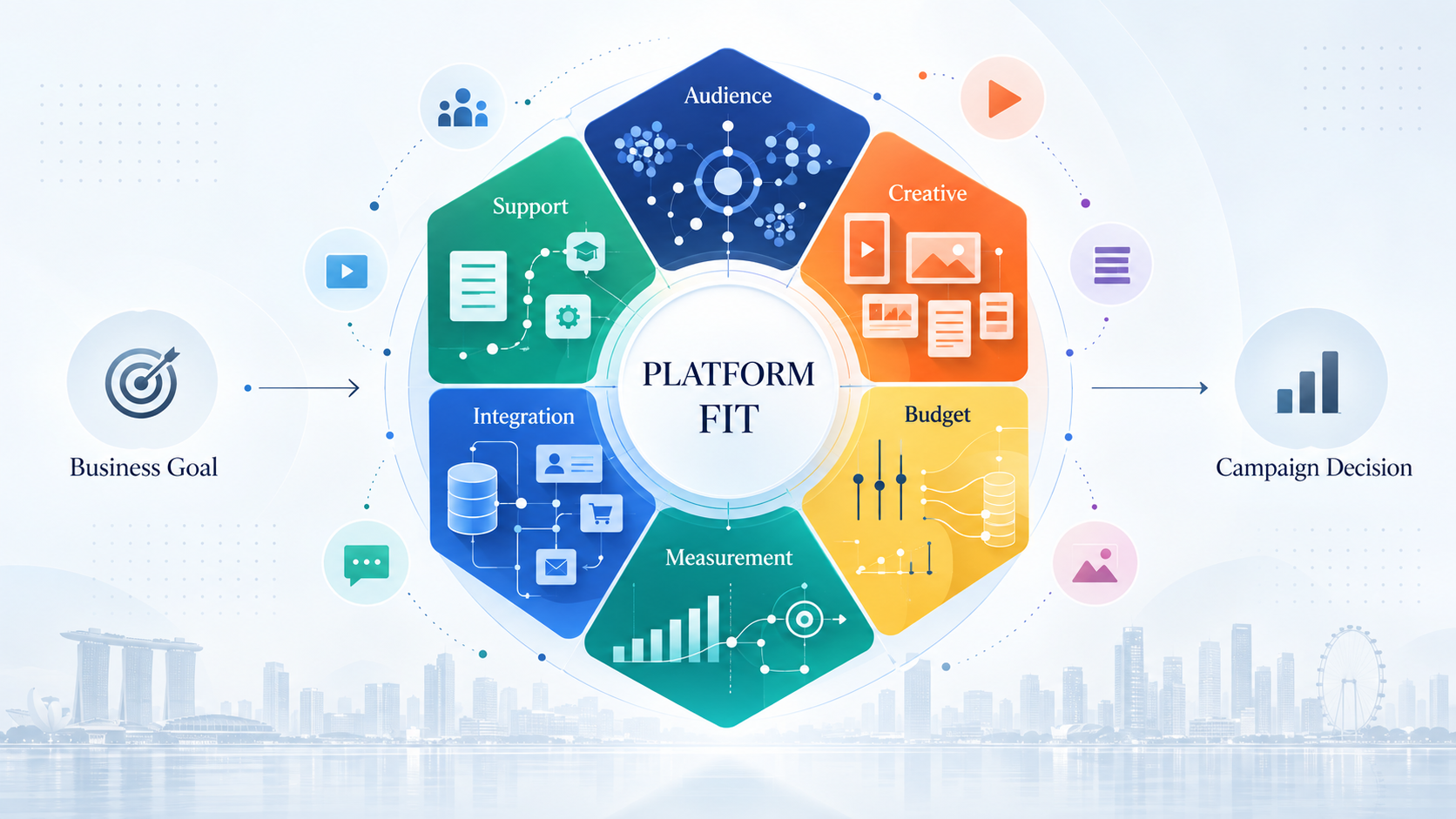
Before committing budget to any social media marketing platform, you need to evaluate how well it aligns with your specific business model and campaign goals. Six core capabilities separate platforms that will work for you from those that will waste your money. Each feature carries a different weight depending on your industry vertical and target audience.
Audience Targeting Capabilities and Accuracy
Targeting precision determines whether your ad spend reaches people likely to convert or disappears into the void. All major platforms offer demographic, behavioural and interest-based targeting, but the depth and accuracy vary significantly.
- Meta Business Suite leads on scale and transparency. You can target by age, gender, location, interests, purchase behaviour, job title and custom audiences built from your own customer lists. The platform’s 10+ years of first-party data collection on billions of users means targeting is granular. However, iOS privacy changes from 2021 onwards have reduced Meta’s ability to track individual behaviour across the web, which affects conversion accuracy for some industries.
- LinkedIn Campaign Manager offers the most reliable B2B targeting globally. You can filter by job title, industry, company size, seniority and skills. If your product sells to procurement managers in the pharmaceutical industry across EMEA, LinkedIn will find them with high confidence. This precision commands higher CPCs, but lower wasted impressions for B2B campaigns.
- TikTok Ads Manager relies less on explicit demographic data and more on user behaviour, watch history and content interaction. This behavioural model works exceptionally well for reaching younger audiences (Gen Z and younger millennials), but targeting older cohorts or niche professional segments is less reliable than LinkedIn.
- Pinterest Ads Manager excels at intent-based targeting. Users on Pinterest are actively searching for inspiration to buy: home decor, fashion, wedding ideas, recipes. Targeting people mid-purchase journey yields higher conversion rates than cold awareness campaigns on other platforms.
- YouTube Ads Manager layers intent, in-market audiences (Google’s data on people actively searching for products) and custom intent audiences. This breadth makes YouTube competitive for both awareness and performance-driven campaigns.
The practical implication: if your customer avatar is defined by job role or company attributes, LinkedIn’s accuracy justifies higher costs. If you’re selling consumer goods, Meta’s scale and behavioural data are stronger. If your product appeals to people actively seeking solutions (e.g., software, financial services, home renovation), YouTube’s in-market audiences outperform interest-based targeting.
Ad Format Options (Video, Carousel, Stories, Reels)
Different ad formats perform dramatically differently across platforms, and not all formats are available everywhere. Native formats (ads that match the platform’s natural content style) get 30–50% better engagement than obviously promotional formats.
- Meta Business Suite supports the broadest range: single image, video, carousel (multi-image or video swipeable ads), collection (thumbnail grid), instant experience (full-screen mobile), story format and reels ads. Reels ads (vertical video, 15–90 seconds) now drive the lowest CPC and highest ROAS for most consumer verticals because they match how people consume content naturally.
- TikTok Ads Manager is video-only in a practical sense. You can upload static images, but TikTok’s algorithm heavily favours short-form video (15–60 seconds). If your brand doesn’t have native short-form video creative, you’ll pay a quality penalty in the form of higher CPCs and lower engagement.
- LinkedIn Campaign Manager supports static image, carousel, video and document ads. For B2B, the format matters far less than message fit; a well-written single image ad targeting CFOs can outperform a video ad with poor messaging.
- YouTube Ads Manager requires video: skippable in-stream (5+ seconds to skip), non-skippable in-stream (15–20 seconds max), bumper ads (6 seconds, non-skippable) and discovery ads (thumbnail-based, appearing in search results). If you have a budget under £500/month, skippable in-stream ads are the only efficient format; bumper ads and discovery perform well at scale (£3,000+/month).
Pinterest Ads Manager supports static image, video, carousel, idea pins (multi-page vertical format) and shopping pins (product-focused). Video performs 10–15% better than static images, but the platform is not video-native like TikTok, so a well-shot static image can still generate strong ROAS.
The practical implication: audit your existing creative inventory. If you have only static images and product photography, Meta and Pinterest are safer choices than TikTok or YouTube. If you can produce short-form video, TikTok offers the lowest CPCs (video-focused platform with less competition from static-image campaigns). For B2B, format matters less than message, so LinkedIn’s simpler format set is adequate.
Budget Control and Bid Strategies
How you control spending and optimise bids directly impacts how efficiently you convert budget into conversions. Platforms offer different levels of control, and rigid systems can waste 20–40% of your budget during learning phases.
- Meta Business Suite offers campaign budget optimisation (CBO: the platform distributes your daily budget across ad sets it deems highest-performing) and ad-set-level budgeting. CBO is simpler but risks overspending on high-volume, low-intent placements early on. Ad-set budgeting gives you manual control but requires more hands-on management. Bidding options include lowest cost (platform optimises for volume at your target CPA), target cost (aims for a specific cost per action) and cost cap (spend won’t exceed this per conversion). For campaigns under £1,000/month, lowest-cost bidding is often most efficient. Above £3,000/month, target-cost bidding reduces wasted spend.
- LinkedIn Campaign Manager uses daily or total budget at the campaign level, with bidding options of maximum delivery (spend your entire budget as quickly as possible), target cost (bid for a target cost per click or conversion) and maximum cost (absolute ceiling per action). LinkedIn’s learning phase is longer (50–100 conversions needed) than Meta, so locked budgets and tighter cost caps can starve campaigns of data. Start with maximum delivery or slightly loose cost caps, then tighten after week 2–3 once conversion data stabilises.
- TikTok Ads Manager supports daily or lifetime budgets with minimum spend requirements (£5/day in the UK). Bidding is automatic (TikTok’s algorithm sets bids to hit your target ROAS or CPA). You have less manual control than Meta, but this also reduces the risk of over-optimisation during learning phases. For small budgets (under £200/day), TikTok’s automated bidding is more efficient than manual control.
- YouTube Ads Manager offers daily budget caps with bidding by target CPM (cost per mille, or 1,000 impressions), target CPC (cost per click) or target ROAS. Discovery ads and in-stream ads behave differently: discovery is cheaper but lower intent, in-stream is more expensive but higher engagement. Set separate budgets if using both formats.
- Pinterest Ads Manager uses lifetime or daily budgets with automatic bidding. Minimum spend is £0.50/day. Bidding is simpler than Meta: you set a daily budget and cost-per-outcome target, and the platform allocates spend to achieve it. Less control, but fewer levers to adjust incorrectly.
The practical implication: if you’re new to paid social, use platform-default bidding (CBO on Meta, automatic on TikTok) until you have 30+ conversions. Then tighten cost caps. If budget is under £500/month, avoid manual bidding; let the algorithm work with loose constraints. If you have £3,000+/month, manual bidding at the ad-set or campaign level pays off.
Analytics and Measurement Tools
You cannot optimise what you cannot measure. Platforms vary in what metrics they report natively, how granular those metrics are and whether they integrate with external analytics.
- Meta Business Suite reports impressions, clicks, cost-per-click, conversion value, and return on ad spend (ROAS) at the ad-set level. The Conversion API (pixel setup on your website) passes back events (add-to-cart, purchase, form submission) to Meta, allowing more accurate ROAS reporting. Without the Conversion API, iOS users’ actions are not tracked to ads, understating true ROAS by 15–30%. Attribution lookback is 7 days for clicks and 1 day for views by default, but can be adjusted.
- TikTok Ads Manager reports reach, impressions, clicks, cost-per-click and conversions, but historical data only goes back 30 days (Meta and LinkedIn go back 3+ years). The TikTok pixel (web event tracking) allows ROAS reporting, but TikTok’s data processing is slower than Meta’s, so final conversion numbers can take 72 hours to stabilise. This delays real-time optimisation.
- LinkedIn Campaign Manager reports impressions, clicks, cost-per-click, conversions (if pixel installed) and cost-per-conversion. Conversion tracking requires LinkedIn Insight Tag setup on your website. The attribution window is 90 days (the longest of major platforms), which is valuable for B2B where purchase cycles are long.
- YouTube Ads Manager integrates tightly with Google Analytics 4 (GA4). You can see video views, clicks, conversion completions and revenue attribution within GA4, with a 30+ day lookback by default. Cross-device tracking (desktop to mobile) is strong on YouTube because of YouTube/Google sign-in data.
- Pinterest Ads Manager reports impressions, clicks, and outbound clicks (traffic to your website). Conversion tracking relies on the Pinterest Tag (pixel) on your site. The attribution window is 30 days for clicks. ROAS reporting is less granular than Meta or TikTok.
The practical implication: ensure the Conversion API (Meta), pixel (TikTok, Pinterest) or Insight Tag (LinkedIn) is installed and firing correctly before running paid campaigns. Without conversion tracking, you’re flying blind; you’ll see spend but not true conversion value. Start with platform-native analytics (the dashboards within each ad manager), then layer in GA4 or your CRM for multi-touch attribution after month 2.
Integration with CRM and Marketing Automation Systems
Siloed social media campaigns cannot drive reliable ROI because you lose the ability to track leads through the entire funnel. Platforms that integrate with your CRM or marketing automation system let you close the loop: see which ads generate leads, which leads convert to customers, and which customer segments have the highest lifetime value.
- Meta Business Suite integrates with HubSpot, Salesforce, Pipedrive and Zapier (which connects to 1,000+ downstream tools). You can upload customer lists (email, phone) to Meta as custom audiences, and Meta will match them to its user base. This enables remarketing to past website visitors or customer lists with high precision.
- LinkedIn Campaign Manager integrates with Salesforce, HubSpot, Marketo and Act-On. LinkedIn also offers Lead Gen Forms (forms native to LinkedIn that don’t require users to leave the platform), which can auto-populate CRM fields.
- TikTok Ads Manager integrates with HubSpot and Zapier. Native CRM integrations are fewer than Meta or LinkedIn, so you’ll often need Zapier as a middle layer. This adds latency: data flows through Zapier, not directly from TikTok to your CRM.
- YouTube Ads Manager integrates deeply with Google Analytics 4 and Salesforce via Google Marketing Platform. If you use GA4 (increasingly mandatory for Google Ads anyway), conversion data is available in near-real time.
- Pinterest Ads Manager integrates with Shopify natively (if you run an e-commerce store on Shopify, conversions sync automatically). Third-party CRM integrations exist via Zapier.
The practical implication: before choosing a platform, confirm it integrates with your current CRM or email marketing tool. If it doesn’t, you’ll spend 10–15 hours per month manually exporting data and uploading it to your CRM, which introduces error and delays optimisation. For B2B (where CRM integration is critical), LinkedIn is the safest choice. For e-commerce with Shopify, Pinterest integration saves weeks of setup work.
Learning Curve and Customer Support Quality
The easier a platform is to navigate, and the faster you can get help when stuck, the sooner you’ll generate positive ROI.
- Meta Business Suite has a moderate learning curve. The Ads Manager interface is powerful but dense. Meta offers free learning via the Meta Blueprint certification (video modules covering basic and advanced topics). Support is primarily self-service (help centre articles); paid support options exist only for large spenders (£5,000+/month budget). Most users rely on community forums, YouTube tutorials and third-party training.
- TikTok Ads Manager is simple to navigate, but the platform’s behaviour is opaque. Why did the algorithm lower your ad’s reach midweek? Why did CPA spike on Thursday? TikTok’s documentation is sparse, and customer support is chatbot-only for most users. The learning curve is low, but once you hit a problem, you’ll struggle to find answers. This makes TikTok better for straightforward, high-volume campaigns (e.g., app installs) and riskier for complex conversion funnels.
- LinkedIn Campaign Manager has a high learning curve. The interface is not intuitive, and best practices are non-obvious (e.g., LinkedIn requires 50+ conversions before optimisation is reliable, much longer than Meta). However, LinkedIn offers premium support (directly available for most business accounts), and the platform’s help centre is comprehensive. Account managers are available for large spenders.
- YouTube Ads Manager has a moderate learning curve. It sits within Google Ads (a broader platform), which can overwhelm new users, but YouTube-specific workflows are clearer now. Google Ads support is robust: free phone support is available in many regions (including the UK), live chat is available 24/7, and documentation is extensive.
- Pinterest Ads Manager is easy to navigate. The interface mirrors the user-facing platform, so anyone familiar with Pinterest will feel at home. Support is self-service, but Pinterest’s help centre is thorough.
- The practical implication: if you’re new to paid social and budget-constrained, start with Pinterest (easiest interface, lowest stakes). If you’re committed to paid social and have a budget of £3,000+/month, LinkedIn or YouTube (better support and richer data) justify the steeper learning curve. If you’re scaling performance campaigns (app installs, lead form signups), TikTok’s simplicity and low CPC often offset opaque support.
Comparison table: Feature strength by platform
| Feature | Meta | TikTok | YouTube | ||
|---|---|---|---|---|---|
| Audience targeting depth | Excellent | Excellent (B2B) | Good (behavioural) | Very good (in-market) | Good (intent) |
| Ad format variety | Excellent | Good | Limited (video) | Good | Good |
| Budget control | Excellent | Good | Limited (automated) | Good | Limited (automated) |
| Conversion tracking | Excellent | Good | Good | Excellent | Good |
| CRM integration | Excellent | Very good | Fair | Good | Fair |
| Learning curve | Moderate | High | Low | Moderate | Low |
| Support quality | Fair (self-service) | Very good | Poor | Very good | Fair |
Selecting the Right Platform Based on Your Business Goals
The platforms that succeed for one business often fail for another. Your choice depends on where your audience spends time, what action you need them to take, and how your product or service aligns with each platform’s native format and user intent.
This section maps five core business goals to the platforms where you’ll see the strongest return. Use this as a diagnostic tool: if your goal is not listed, it likely sits at the intersection of two categories below.
Lead Generation: LinkedIn, TikTok, and Meta
- LinkedIn remains the dominant platform for B2B and professional services lead generation. Its audience actively signals buying intent through job titles, company size, and industry. You can target decision-makers directly using LinkedIn Campaign Manager’s account-based marketing (ABM) filters: search by job title, company, seniority, and skills. Cost per lead typically runs higher than other platforms (£15–50 per qualified lead in competitive verticals), but lead quality is substantially higher for enterprise software, consulting, recruitment, and financial services.
- TikTok has emerged as an unexpected lead-generation powerhouse, particularly for B2C services and younger professional audiences. Its For You Page algorithm delivers viral reach at a fraction of Meta’s cost. Forms and lead magnets embedded directly in TikTok ads reduce friction compared to landing page redirects. Expect cost per lead to range from £2–8, though conversion rates vary wildly by niche. TikTok performs best for educational services, fitness, beauty, and digital products.
- Meta (Facebook and Instagram) offers the broadest audience reach and the most mature lead-generation infrastructure. Lead form ads bypass the landing page entirely, letting users submit their email directly within the platform. Retargeting is native and reliable. Cost per lead sits between TikTok and LinkedIn (£5–20). Meta excels for local services, e-commerce, SaaS onboarding, and any niche with a large, established audience.
- Unique angle: LinkedIn is a broadcast platform (you interrupt people’s professional feed); TikTok and Meta are discovery platforms (your ad can win share of attention against organic content). If you have a small, highly qualified audience, LinkedIn’s targeting efficiency beats reach. If you need volume, Meta’s scale and TikTok’s algorithmic discovery will outperform.
Brand Awareness: YouTube, Pinterest, and TikTok
- YouTube is the platform for long-form brand storytelling. Its audience is in a receptive, lean-back mindset: they’re watching tutorials, reviews, and entertainment. In-stream ads (skippable or non-skippable) and bumper ads (6 seconds, non-skippable) reach cold audiences at scale. YouTube’s strength is reach and frequency: you can build brand recall cheaply at volume if your creative is strong. Expect cost per thousand impressions (CPM) to range from £3–15, depending on industry and audience targeting.
- Pinterest dominates for visual, lifestyle, and commerce-related brand discovery. Its users plan purchases weeks or months ahead, saving pins to boards. If your product is aspirational, home-related, fashion-forward, or wedding-adjacent, Pinterest reaches intent-rich audiences. Cost per thousand impressions sits lower than YouTube (£1–5), making it ideal for budget-conscious brand campaigns. Unlike TikTok, Pinterest attracts an older demographic (25–54) with higher purchasing power.
- TikTok excels at reaching younger audiences with creative that feels native to the feed. Its algorithm can push a strong video well beyond your targeting, so awareness campaigns often earn cheaper reach here than on YouTube or Meta. CPMs of £2-8 make it a good fit for launches, product reveals and brands that can produce authentic, short-form video. The trade-off is recall: TikTok viewers scroll fast, so you need a hook in the first two seconds and a repeatable visual identity.
- Unique angle: YouTube builds depth (people remember the story), Pinterest builds intent (people save the idea for later), and TikTok builds velocity (people see you everywhere quickly). Pairing TikTok for reach with YouTube for retargeting is a common way to turn attention into recall.
E-commerce Sales: Meta, Pinterest, and TikTok
- Meta remains the workhorse for online sales. Catalogue ads, dynamic product retargeting and Advantage+ shopping campaigns let you show the right product to the right shopper with minimal manual setup. Reels placements typically deliver the strongest ROAS for consumer verticals. Pair them with the Conversions API so you capture purchases that browser-based tracking misses.
- Pinterest reaches shoppers mid-planning, which is why it performs so well for home, fashion, beauty and wedding categories. Shopping pins and catalogue syncs (including the native Shopify integration) make setup quick, and pins keep working long after the campaign ends.
- TikTok suits impulse-friendly and trend-driven products. Catalogue ads and Shop integrations shorten the path from video to purchase, though success depends on creator-style creative rather than polished studio footage.
- Practical implication: if your average order value is low and your product is visual, start with Meta plus Pinterest. Add TikTok once you have at least three to five video variants ready to test.
Website Traffic and Retargeting: Meta, YouTube, and LinkedIn
When the goal is qualified visits rather than immediate sales, Meta and YouTube offer the cheapest scalable clicks. Retargeting is where they earn their keep: show a second ad to people who watched 50% of your video, visited a pricing page or abandoned a cart. Retargeting audiences are small but typically convert at several times the rate of cold audiences.
LinkedIn works for B2B retargeting, particularly when your sales cycle is long. Its 90-day attribution window captures the research-heavy buying journey that other platforms cut short.
Practical implication: reserve 15-25% of your total paid social budget for retargeting once your site has enough traffic (a few thousand visitors per month) to build usable audiences.
App Installs: TikTok, Meta, and Pinterest
TikTok and Meta both support app-install objectives with automated bidding, which suits this goal because the platforms optimise toward installs and in-app events at scale. TikTok tends to deliver the lowest cost per install for entertainment, gaming and lifestyle apps. Meta delivers broader reach across age groups and stronger post-install event optimisation. Pinterest can work for apps tied to planning or shopping behaviour.
Practical implication: optimise for a post-install action (registration, first purchase) rather than the install itself. Cheap installs that never open the app waste budget.
How to Split Your Budget Across Platforms
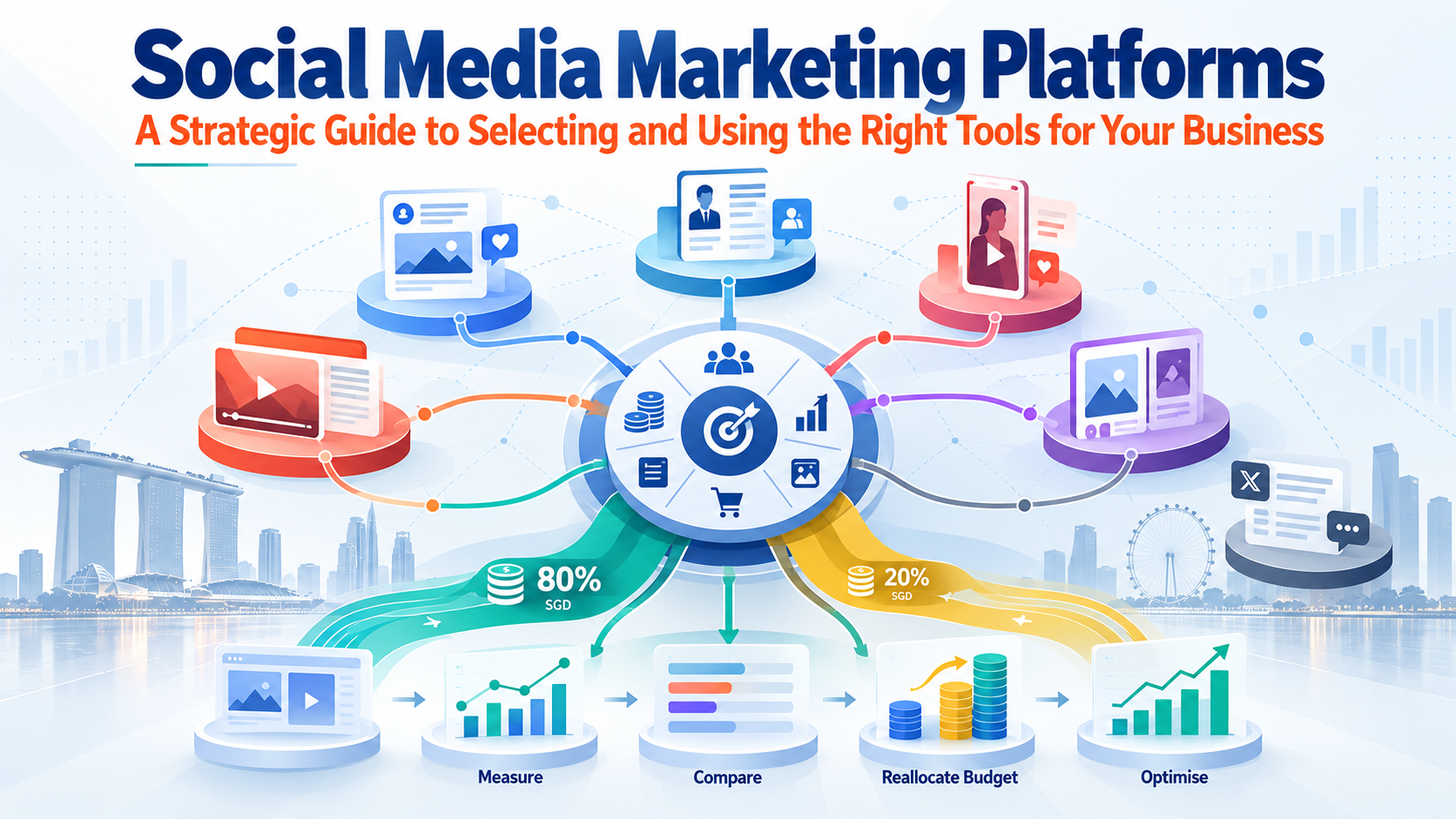
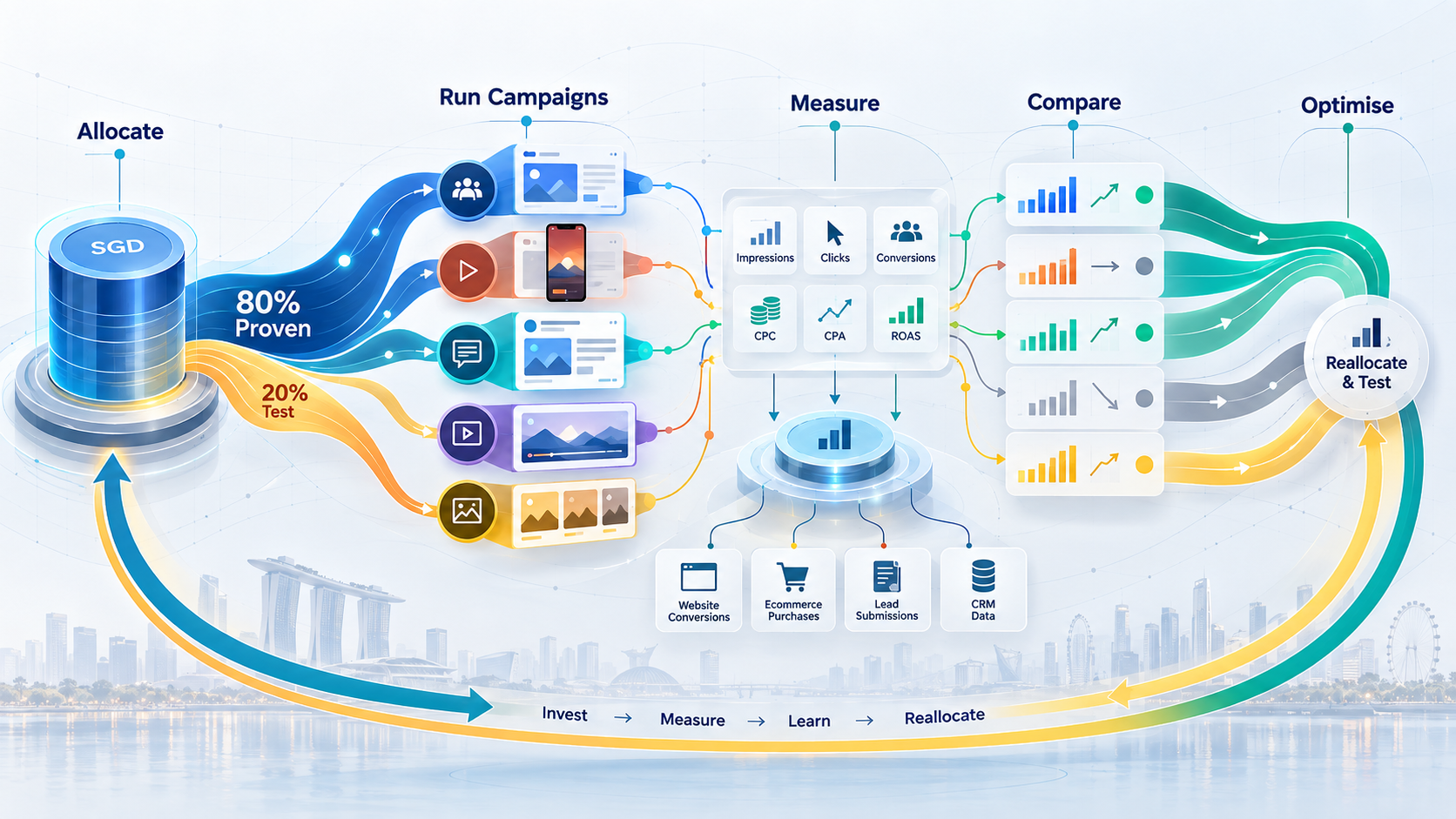
Treating each platform separately is the most common way to waste budget. A weighted-matrix approach works better:
- Pick one primary platform based on your main goal from the sections above.
- Allocate 80% of spend to proven performers. These are the platforms and campaigns already hitting your target CPA or ROAS.
- Allocate 20% to testing. Use it for new platforms, formats or audiences. Treat this as the cost of learning, not a performance bucket.
- Review every two to four weeks. Promote testers that beat your benchmark into the 80%, and cut those that don’t after they’ve had enough conversions to judge fairly.
An illustrative split for a £3,000 monthly budget, e-commerce brand:
| Platform | Role | Share | Monthly spend |
|---|---|---|---|
| Meta | Primary (sales + retargeting) | 55% | £1,650 |
| Secondary (discovery) | 25% | £750 | |
| TikTok | Test | 20% | £600 |
Don’t spread a small budget across five platforms. Below roughly £1,500 per month, two platforms at most will give each enough data to leave the learning phase.
Adapting Creative for Each Platform
Identical creative fails across platforms because each network rewards different formats, pacing and tone. Build one core message, then adapt:
- Meta: vertical video (9:16) for Reels and Stories, square or 4:5 for feed. Lead with the benefit.
- TikTok: vertical, raw and fast. Hook in two seconds, use native sound and on-screen text, and avoid obvious “ad” polish.
- LinkedIn: clear value proposition, a data point or insight, and a professional tone. Single image or document ads often beat video.
- YouTube: front-load the message in the first five seconds, before the skip button appears.
- Pinterest: high-quality vertical imagery (2:3), clean text overlay and an aspirational feel.
A practical workflow is to shoot one longer video, then cut it into 6-second, 15-second and 30-second versions, each with platform-appropriate framing and captions.
Measuring Performance Across Platforms
Each platform reports its own results, and they will not add up. Meta, TikTok and Google all claim credit for the same conversion if the customer touched all three. To avoid over-counting:
- Standardise your core metrics: cost per acquisition, ROAS and blended customer acquisition cost.
- Use UTM parameters on every ad so GA4 shows the real source of traffic and conversions.
- Compare platform-reported numbers against your CRM or sales data monthly. A gap of 15-30% is normal; a gap of 50% suggests a tracking problem.
- Judge platforms on their role. YouTube and TikTok awareness campaigns should be evaluated on reach, view-through rate and branded search lift, not last-click sales.
- Give campaigns enough time. Most need two to four weeks and 30-50 conversions before results are reliable, and LinkedIn often needs longer.
Compliance, Privacy and Platform Policies
Paid social relies on personal data, so privacy law shapes what you can do. GDPR applies if you target or collect data from people in the EU or UK, and Singapore’s PDPA governs how organisations collect, use and disclose personal data of individuals in Singapore. In practice:
- Obtain and record consent before uploading customer lists for custom audiences.
- Make sure your website’s cookie banner and privacy policy accurately describe the pixels and tags you use.
- Don’t collect more data than you need through lead forms.
- Respect restrictions on sensitive categories (health, finance, age-restricted products) in each platform’s ad policies.
Platform policies change often, so assign someone to review each network’s advertising policy updates at least quarterly. Ad account bans are far more expensive than the time spent checking.
Common Mistakes to Avoid
- Running identical creative everywhere. It underperforms on nearly every platform.
- Launching without conversion tracking. You will see spend but not results.
- Judging too early. Cutting a campaign in the learning phase wastes the data it was collecting.
- Spreading a small budget too thin. Fewer platforms with deeper spend beat five platforms starved of data.
- Chasing every new platform. Test emerging networks with the 20% budget, not the 80%.
- Ignoring organic. Paid social works best when your profile, content and community give new visitors a reason to trust you.
Build a Portfolio, Not a Platform List
The best social media marketing platform is the combination that fits your goal, audience, creative capability and budget. Start with the diagnostic in this guide: identify your primary objective, pick one or two platforms that match it, install conversion tracking before spending a pound, and adopt the 80/20 budget rule so you keep learning without gambling your whole budget.
Then treat paid social as an ongoing process. Review results every two to four weeks, adapt creative for each network, and move budget toward what the data supports. Businesses that do this consistently pull ahead of those that pick a platform once and hope for the best. If you’re starting from scratch, choose one platform, run a small test for four weeks, and let your own results guide the next decision.
Frequently Asked Questions
Meta (Facebook and Instagram) is the safest starting point for most small businesses because of its audience size, flexible budgets and mature tools. LinkedIn is better if you sell to other businesses, and Pinterest is a low-stakes option for visual, e-commerce products.

Many small businesses start with £500-1,500 per month on one or two platforms, then scale once they see a profitable cost per acquisition. Keep roughly 20% for testing new audiences, formats and platforms.
Should I use more than one platform?
Yes, once your first platform is performing consistently. Different platforms play different roles: one for reach, one for conversion and one for retargeting. Starting with several at once usually dilutes budget and data.
Initial data appears within days, but most campaigns need two to four weeks to exit the learning phase and produce reliable results. Awareness campaigns can take longer to show impact on sales or branded searches.
Organic social means posting free content to followers, which builds community and trust. Paid social means paying to show ads to targeted audiences beyond your followers, with precise targeting and measurable conversions. Most businesses benefit from using both.
Can I use the same ad creative on every platform?
You can reuse the core message, but not the exact asset. Each platform favours different formats, lengths and tones, so adapt aspect ratio, pacing and copy to match how people use each network.
Do I need conversion tracking before I start advertising?
Yes. Install the Meta Conversions API, TikTok pixel, LinkedIn Insight Tag or Pinterest Tag before launching. Without it, you can’t tell which ads generate leads or sales, and the platforms can’t optimise effectively.
They govern how you collect, store and use customer data, including uploading email lists for custom audiences. You need valid consent, clear privacy notices and accurate cookie disclosures. Check each platform’s data policies as well, since they add their own requirements.
Are Bluesky and Threads worth advertising on?
Check their current ad offerings before deciding. Treat them as test channels with a small share of the 20% experimental budget rather than core platforms until their targeting and measurement mature.