| AI Summary
Referral marketing helps businesses turn customer recommendations into tracked introductions and sales. A working programme needs a reason to share, an offer customers understand, reliable records and a process for issuing rewards. Profit depends on the full cost of acquiring each customer, including discounts, software and staff time. A small trial helps businesses test demand before committing more money. |
Referral marketing encourages customers or partners to recommend a business to people they know. Businesses track introductions through links, codes or recorded referrals. Rewards may follow a purchase or another qualifying action. The programme pays off when the profit from additional customers exceeds its rewards and running costs.
Key Takeaways
- Reward spending alone does not show the full cost of acquiring referred customers.
- Discounts need consistent treatment in calculations so the same cost is not counted twice.
- Reward approval should follow a defined action, with rules for cancellations and refunds.
- Analytics traffic labelled “Referral” does not automatically represent customer recommendations.
- Repeat purchases and retained customers reveal more than invitation or sign-up totals.
- Published brand examples explain programme design but do not prove that another business will achieve similar results.
Referral marketing starts with something familiar: a customer tells someone about a business they like. A formal programme gives that recommendation a process the business can recognise and measure.
A friend might recommend a meal subscription, a colleague might introduce an accountant, or a customer might share a shop’s discount code. Each introduction creates an opportunity. None guarantees a sale.
The task is to make sharing easy while protecting the customer relationship and the business’s margin. That means deciding who qualifies, what earns a reward and how the team will know whether the programme brings additional business.
What Is Referral Marketing?
Referral marketing is a planned way to encourage and track recommendations. Existing customers often make those recommendations, although partners and other contacts can also introduce buyers.
A referral programme usually includes:
- An invitation: a message asking someone to recommend the business.
- A sharing method: a link, code, form or recorded introduction.
- A qualifying action: the event that earns recognition or a reward.
- A record: the connection between the introduction and its result.
Rewards are common, but a cash payment is not essential. Customers may recommend a business because they value its service, want to help a friend or receive a product benefit.
Referral marketing, advertising and affiliate marketing compared
These channels can support the same business, but their roles differ.
| Channel | Who introduces the business? | How spending works | Main consideration |
| Customer referral | Existing customers and their contacts | Rewards plus programme costs | Whether customers want to recommend |
| Paid advertising | The business through advertising platforms | Payment can depend on clicks, views or other buying arrangements | Whether targeting and sales results justify spending |
| Affiliate marketing | Publishers, creators or other approved promoters | Often commission on a tracked action | Partner quality, disclosure and attribution |
| Unpaid word of mouth | Anyone who recommends the business | No promised referral payment | Whether the source can be recorded |
A customer sharing with a friend differs from a publisher promoting an offer to an audience. Some arrangements overlap, so the eligibility rules should define which programme receives credit.
How Does a Referral Programme Work?
A referral connects three participants: the business, the person recommending it and the person receiving the recommendation. “Referrer” means the person making the introduction. “Referred customer” means the new buyer.
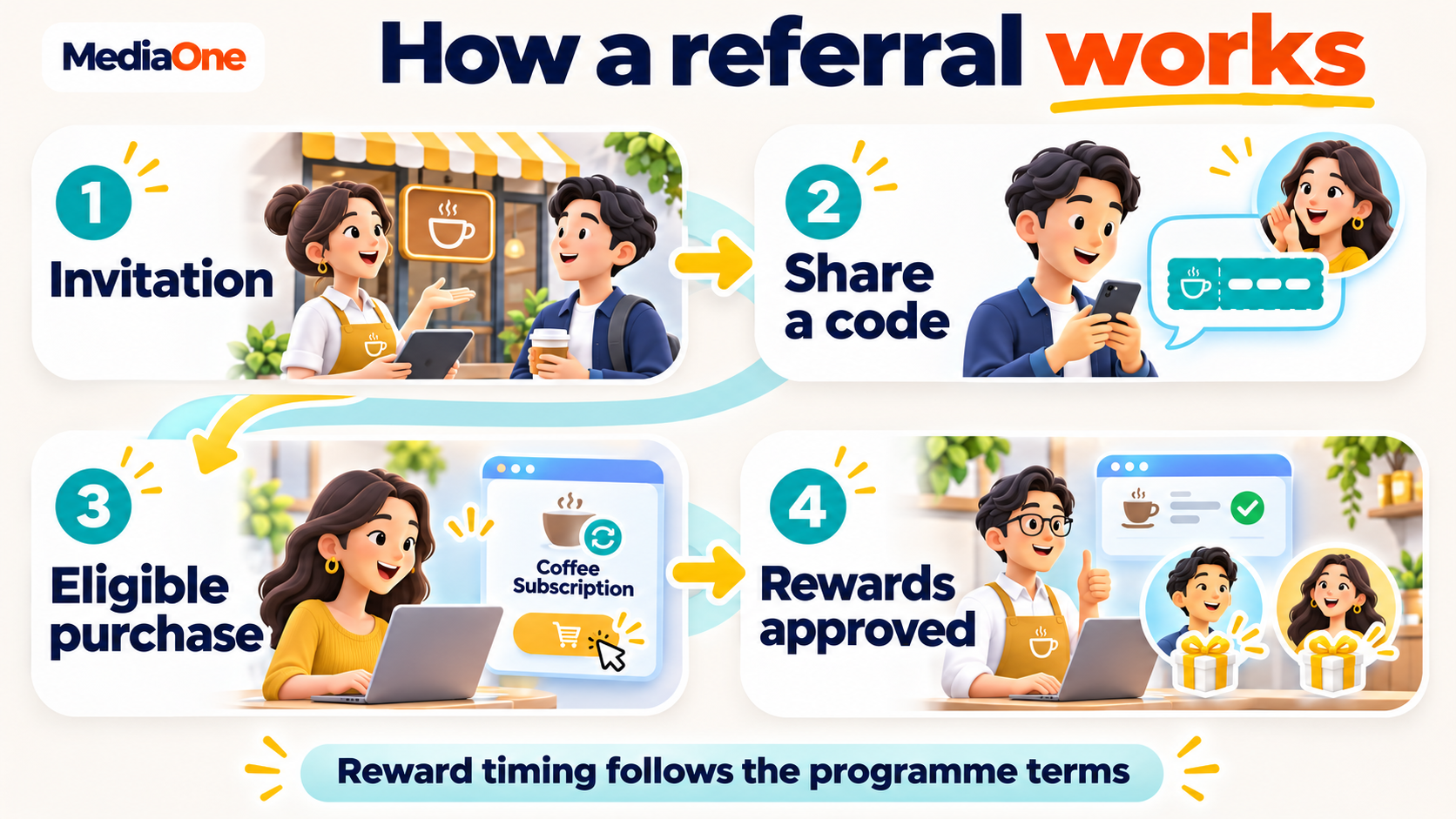
A typical purchase-based programme follows four stages:
- Invitation: an existing customer receives an offer after experiencing the product or service.
- Introduction: the customer shares a personal link or code.
- Qualification: the friend completes an eligible purchase.
- Reward: the business checks the order and issues the promised benefit.
For example, a fictional coffee subscription offers an existing customer S$10 credit when a friend completes an eligible first order. The friend also receives S$10 off that order.
The customer should know when the credit will arrive. A reward described as immediate creates frustration if the business actually waits until the return period ends.
What Can Referral Marketing Achieve?
Referral marketing can create another source of customers, but its benefits need evidence from the business’s own results. A familiar name may help start a conversation; the product, price and service still need to earn the purchase.
| Potential benefit | Evidence to collect |
| Less spending per new customer | Full referral acquisition cost compared with other channels |
| More suitable enquiries | Share of referred leads meeting the business’s buying requirements |
| Shorter buying time | Days between introduction and purchase |
| More repeat business | Repeat purchase or renewal rates over comparable periods |
A service firm might receive fewer referred enquiries than advertising enquiries, yet win a larger share of them. A retailer might see strong first orders followed by few repeat purchases. These outcomes call for different decisions.
Referral marketing also depends on customer retention. A growing pool of satisfied buyers gives the programme more potential advocates. Unresolved complaints reduce the reason to recommend.
How Much Does Referral Marketing Cost?
Referral marketing has no single standard price. A business can record a few introductions manually, while a larger programme may need automated rewards, integrations and regular support.
The budget should include every cost needed to run the programme.
| Cost | What it includes |
| Customer rewards | Cash, redeemed credits, discounts or product benefits |
| Software | Subscription charges, usage fees and integrations |
| Setup | Referral page, messages, checkout changes and testing |
| Staff time | Approvals, customer support, reporting and partner contact |
| Losses | Fraud, unrecoverable rewards and related disputes |
A low software bill does not make a programme inexpensive if staff spend hours correcting records. Likewise, a discount can reduce the profit on an order even when no cash reward leaves the bank account.
A worked referral cost example
The following figures are illustrative. They describe one fictional trial, not market prices or expected results.
| Trial input | Amount |
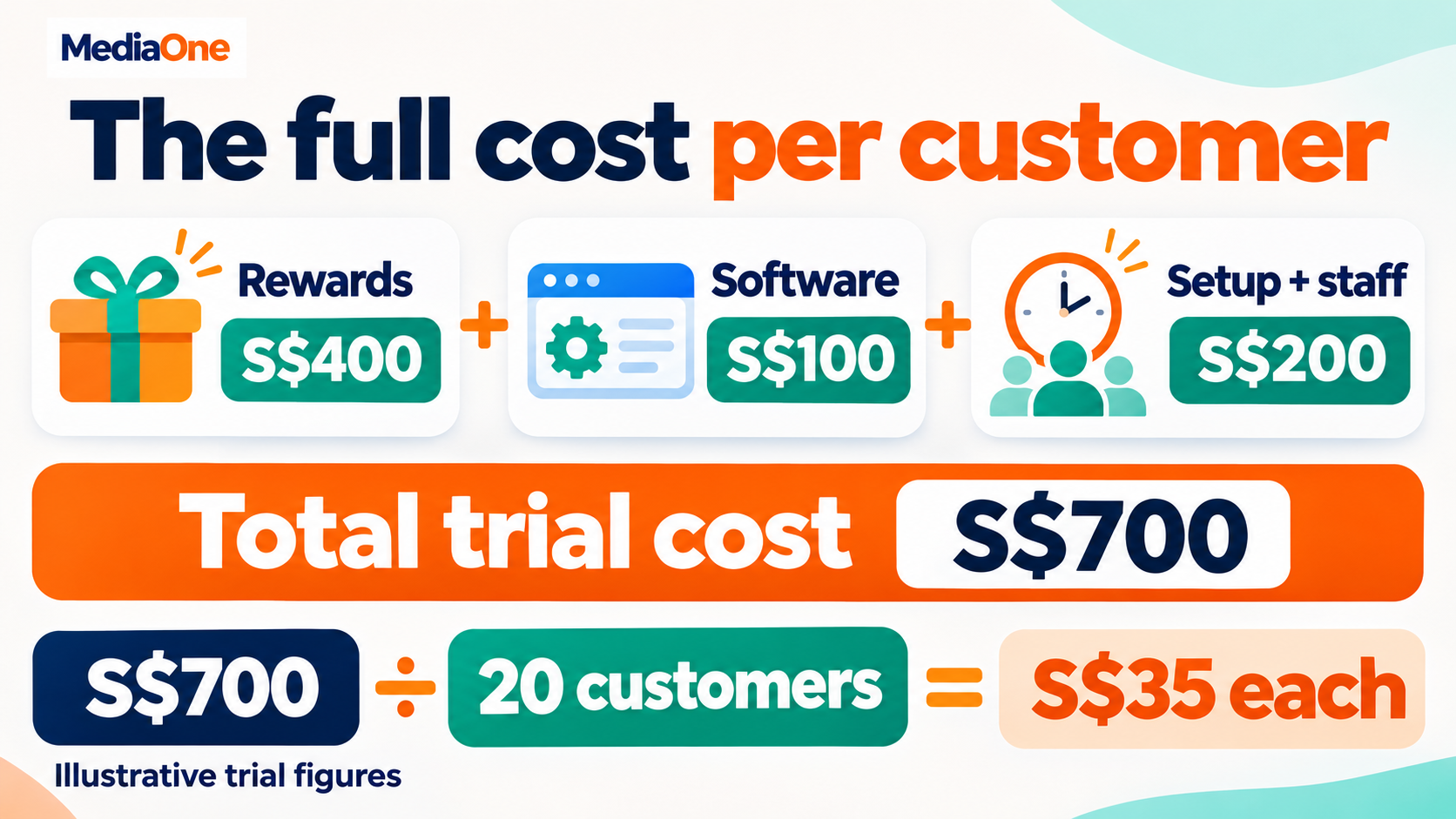
| New paying customers credited to referrals | 20 |
| Combined reward cost per acquired customer | S$20 |
| Total reward cost | S$400 |
| Software allocated to the trial | S$100 |
| Setup and staff time | S$200 |
| Total acquisition spending | S$700 |
| Acquisition spending per referred customer | S$35 |
The calculation is S$700 ÷ 20 = S$35 per customer.
That full customer acquisition cost gives the team a better comparison with other channels than the S$20 reward alone.
Does the first order cover the cost?
Suppose each new customer places an S$80 order. Direct product and delivery costs total S$40, leaving S$40 before referral acquisition spending.
After allocating S$35 in acquisition costs, S$5 remains per customer before other business overheads. The first order covers the costs included in this example, but leaves little room for unexpected expenses.
Discount accounting needs care:
- A friend’s discount can appear as reduced sales revenue.
- The same discount should not also appear as a separate expense in that calculation.
- Both rewards still need recognition when comparing the offer’s total cost.
- Actual credit redemption and outstanding promises should remain visible in the budget.
Longer-term customer lifetime value can support a different spending limit. That estimate should use observed repeat purchases and margins, with caution where the programme has little history.
Which Referral Rewards Should a Business Offer?
A reward needs to appeal to customers and remain affordable. A large headline amount cannot repair poor service or an offer that takes too much effort to explain.
Single-sided or double-sided rewards?
A single-sided offer rewards one participant. A double-sided offer rewards both the referrer and the friend.
| Structure | Example | Decision to consider |
| Referrer reward | Existing customer receives credit after a friend buys | Whether the friend already has enough reason to act |
| Friend reward | New customer receives a first-order benefit | Whether existing customers will share without personal payment |
| Double-sided reward | Both receive credit after qualification | Whether the combined cost is affordable |
A double-sided offer gives customers something to offer their friend. Its extra cost still needs testing. Equal rewards are optional; the two participants may value different benefits.
Cash, credit, products and access
Different reward types create different obligations.
- Cash: customers can understand its value, while the business needs payment and fraud controls.
- Account credit: customers can spend it with the business, provided the terms and eligible purchases are explained.
- Products: a sample or extra item can introduce another product, with stock and delivery costs included.
- Access: an additional feature, session or trial period can work when customers value the benefit.
- Donation: a contribution to a named cause may suit customers who prefer an alternative to personal rewards.
Credit does not automatically protect profit. Customers might redeem it on an order they already planned to make. Access rewards also have costs when they consume staff time or limited capacity.
Customer feedback can narrow the options before a trial. A short choice between two realistic rewards provides more direction than asking whether customers would enjoy a larger discount.
How To Build a Referral Marketing Strategy
A referral strategy connects the offer to a business goal. The initial version should be simple enough for staff to explain and customers to understand without contacting support.
1. Set one measurable goal
A goal might be “20 new paying customers within the trial period at an acquisition cost below S$40 each.” The figures should come from the business’s budget and sales history.
The planning record should identify:
- The customer group receiving invitations.
- The action that qualifies for a reward.
- The maximum spending available.
- The period allowed to recover acquisition costs.
- The person responsible for decisions and customer queries.
A monthly subscription and an annual service contract need different review periods. The reward approval date and the date when the business recovers its costs are separate decisions.
2. Choose when to ask
An invitation works best when it relates to an experience the customer has actually had. Possible moments include a completed service, a repeat order or confirmation that a problem was resolved.
A delivery notification alone does not prove satisfaction. The timing should reflect when customers can judge the purchase.
An email marketing campaign can deliver an invitation after that point. Receipt messages, account pages and staff conversations provide other options. Repeated requests should stop when customers decline or unsubscribe where applicable.
3. Explain the offer in everyday language
The main message should answer what the friend receives, what the customer receives and what must happen first.
A fictional example could read:
Your friend receives S$10 off an eligible first order of S$60 or more. Your account receives S$10 credit after that order passes the return period.
The nearby terms should cover expiry, excluded products and reward limits. A short message should never hide conditions that change the value of the offer.
A copyable link, editable message and readable mobile page reduce the work involved. The friend should land on a page explaining the same offer they received.
4. Agree the rules before launch
Written rules help staff handle the same situation consistently.
| Rule | Question it should answer |
| Eligibility | Who can refer, and who counts as a new customer? |
| Qualification | Does a purchase, activation or completed service earn the reward? |
| Minimum spend | Which amount qualifies, and how are refunds treated? |
| Attribution | Which introduction receives credit when several people refer someone? |
| Reward timing | When does approval happen? |
| Limits | How many rewards can one participant receive? |
| Changes | How will existing participants hear about revised terms? |
Customers should have access to the terms before joining. Support staff also need examples of common disputes, including missed codes and cancelled orders.
5. Run a controlled trial
A trial can begin with one customer group and one offer. A modest group keeps support manageable, although very few purchases will limit what the results can show.
The launch checks should cover a complete journey:
- A customer receives and shares the invitation.
- A friend opens it on a phone.
- The code records correctly at purchase.
- A refunded order follows the stated rule.
- Both participants receive accurate status messages.
- The report matches the order and reward records.
The trial needs enough time for purchases, returns and any repeat buying being assessed. An invitation campaign can end before its final results become available.
How Should Referral Tracking and Fraud Checks Work?
Referral tracking should connect an introduction to a real customer record. A link click alone cannot show whether someone bought, cancelled or received a reward.
A small business may begin with a protected spreadsheet and unique codes. Larger volumes can justify software when manual approvals become slow or records become difficult to reconcile.
The records a programme needs
Each referral record should capture only the information needed for its purpose:
- Referrer identifier.
- Referral code or introduction reference.
- Date of introduction.
- New customer or account identifier.
- Qualifying order or action.
- Reward status and approval date.
- Cancellation, refund or dispute status.
A reference code can preserve the connection when the friend changes devices. Checkout and intake processes should provide a way to record it.
The attribution window defines how long an introduction remains eligible for credit. Its length should reflect the sales cycle and appear in the terms. A later purchase does not automatically become untraceable when a window ends; the outcome depends on the systems and records used.
Analytics referral traffic is a different measure
Google Analytics uses channel definitions to classify website traffic. Its “Referral” channel concerns arrivals through links from other sites or apps. That label does not establish that a customer recommended the business or earned a reward.
The programme therefore needs its own identifiers and order records. Analytics can help explain visits, while the referral record determines eligibility and payment.
A shared link also needs a test for broken pages, lost codes and unexpected checkout behaviour. A programme can appear quiet because tracking failed.
Fraud signals need human review
Common warning signs include repeated payment details, unusual account creation patterns and orders followed by rapid refunds. One shared address or internet connection does not prove abuse.
Reasonable controls include:
- A rule against self-referrals.
- Reward approval after payment and applicable checks.
- Limits on repeated rewards.
- Review of unusual activity.
- A process for correcting mistaken rejections.
Fraud checks should remain proportionate. Collecting extra personal data solely because software permits it creates additional responsibility without necessarily improving decisions.
How Referral Marketing Differs Across Businesses
The basic process remains similar, but the buying situation changes the invitation, reward and follow-up.
Ecommerce and consumer subscriptions
Retailers can connect referral codes to checkout and compare first orders with later purchases. Minimum order values, delivery charges and product exclusions should appear before payment.
A skincare customer might recommend a product after finishing a first bottle. A subscription customer may need several deliveries before judging reliability.
Social media marketing can make the programme visible, while customers choose how to share their own invitations. Public promotion and personal recommendations should use consistent terms.
Service firms and small businesses
A service business may benefit more from a named introduction than a discount code. An intake form can record who introduced the prospect, with the contact’s knowledge.
For example, a fictional maintenance company might offer account credit after a referred customer completes an eligible paid job. The team should check the cost of fulfilling that credit, including staff time.
Referral enquiries belong within the wider lead generation process. Someone still needs to respond, confirm the customer’s needs and explain the service.
B2B and partner referrals
Business purchases can involve several decision-makers and a longer approval process. A recorded introduction may therefore be more valuable than a tracked click.
Partner rules should explain:
- What makes an introduction eligible.
- How existing sales opportunities are handled.
- Which event earns payment.
- Who can receive the benefit.
- How competing claims are resolved.
A buyer’s employer may restrict personal gifts or commissions. Programme terms should accommodate organisational policies and avoid putting the contact in an uncomfortable position.
Referral Marketing Examples and Their Lessons
Published examples show how companies connect rewards to behaviour. They do not reveal every cost or prove that the same offer will work elsewhere.
Dropbox’s customer referral programme offers additional storage for eligible referrals. The friend also receives extra storage, subject to the programme’s requirements.
The design connects the benefit to something users already understand. The transferable lesson is product relevance. A physical retailer still needs to account for the manufacturing and delivery costs of any extra item.
DocSend: activity before reward approval
The DocSend referral process requires more than creating an account. Its published requirements include uploading a document, creating a link and receiving a visit before referral credit qualifies.
That example shows how a qualifying event can represent product use. A different business should choose an event connected to its own customer value.
PayPal: referrals through professional relationships
PayPal’s developer referral programme rewards eligible introductions of qualified merchants. Its published process includes programme approval and assessment of merchant transaction activity.
The example illustrates partner referral marketing. Professional contacts introduce businesses they serve, with qualification and payment rules separate from an ordinary consumer promotion.
How To Measure Results and Protect Customer Trust
Referral reporting should show what happened after sharing. A dashboard full of invitations can hide weak sales, delayed rewards or buyers who would have purchased anyway.
The measures worth reviewing
A small set of digital marketing KPIs keeps the review tied to decisions.
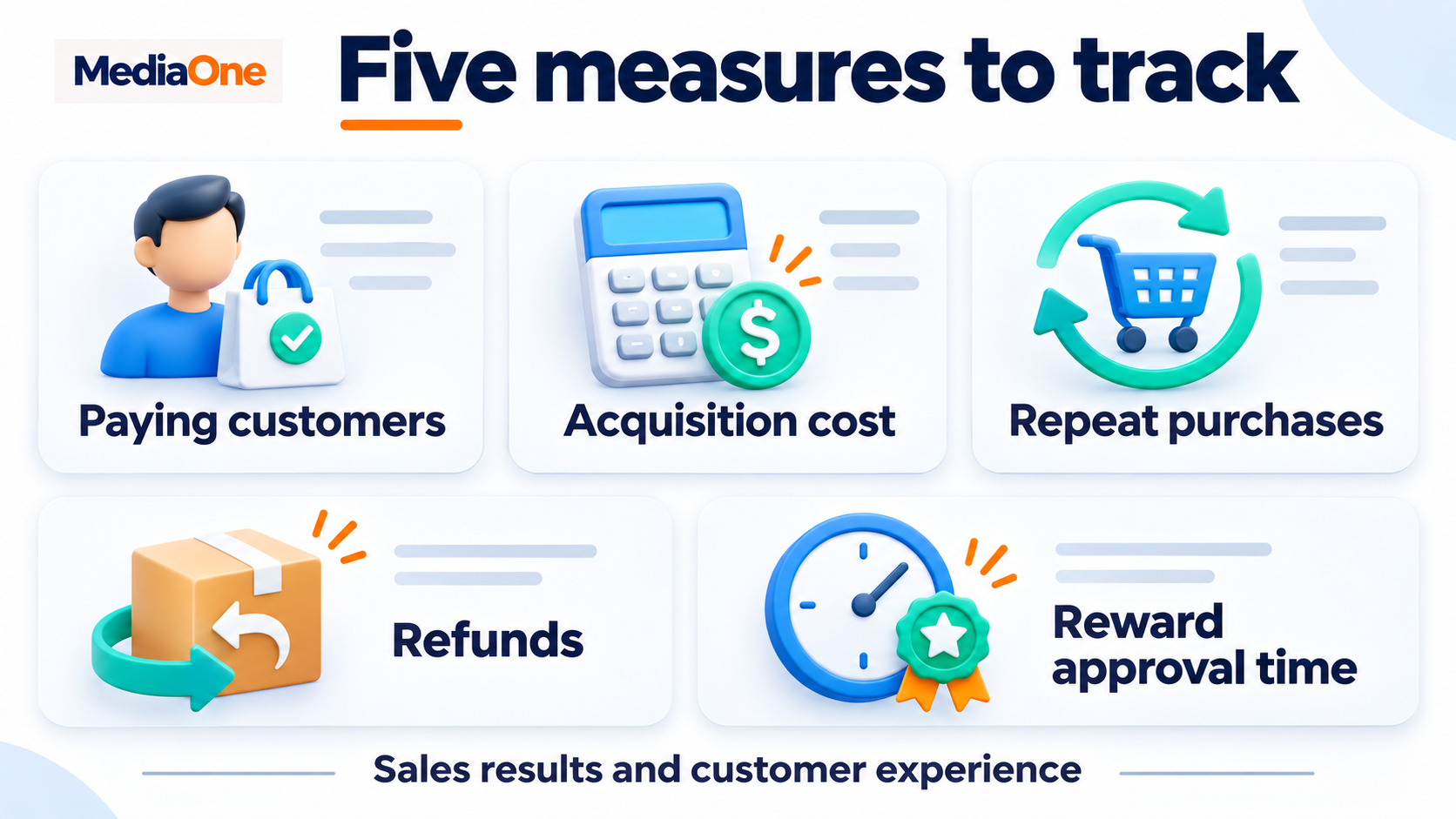
| Measure | Calculation or record |
| Participation rate | Invited customers who share ÷ customers invited |
| Referral conversion rate | Referred prospects who buy ÷ referred prospects recorded |
| Referral acquisition cost | Total programme acquisition costs ÷ new paying customers credited |
| Reward approval time | Time between qualification and reward issue |
| Repeat purchase rate | Referred buyers who purchase again within a defined period |
| Refund rate | Refunded referred orders ÷ referred orders |
The denominator needs a consistent definition. Link visitors and named introductions are different groups and should not be mixed.
A cohort means customers grouped by a shared starting point, such as acquisition month. Comparing referred and other customers over the same follow-up period avoids giving older customers more time to buy again.
Where practical, a comparable group without an invitation can help assess additional sales. Crediting a purchase to a code does not prove the reward caused it.
Disclosure and customer information
Rewarded recommendations should make the benefit apparent. Singapore’s ASAS social media standards address commercial relationships in social marketing. The Government’s explanation of sponsored-content disclosure also states that sponsorship disclosures should be prominent.
A suggested sharing message can state, “Your eligible purchase also earns me account credit.” The disclosure belongs beside the recommendation.
For campaigns reaching US consumers, the FTC’s endorsement explanations describe when connections involving payment or other benefits need disclosure.
Customer-controlled sharing also reduces unnecessary handling of friends’ details. A shareable link lets the interested person approach the business themselves.
Build a Referral Programme Customers Understand
A referral programme asks customers to put their reputation behind a recommendation. Reliable service, understandable terms and rewards delivered as promised give them a reason to participate.
The next step is a bounded trial with a named owner, an affordable budget and complete order records. Expansion should follow evidence that the programme brings additional customers at a cost the business can sustain.
FAQs About Referral Marketing
Can a new business run a referral programme?
A new business can test referrals once customers have enough experience to recommend it honestly. A small customer base limits reach, so referral activity should sit alongside other acquisition channels. Early feedback may reveal service problems that deserve attention before more invitations go out.
Is a loyalty programme the same as a referral programme?
A loyalty programme rewards a customer’s own repeat activity, such as purchases or visits. A referral programme recognises introductions that lead to an eligible action by someone else. Both can use the same points balance, provided their earning rules remain understandable.
Can customers refer someone in person?
An in-person introduction can qualify when the business has a recording method. A staff member can enter a referral code or record the introduction during booking. Both participants should receive confirmation so they can correct a missing or mistaken entry.
Should referral rewards expire?
An expiry date can limit how long rewards remain available, but customers need reasonable notice and accessible terms. The message should state when the reward expires and any purchase conditions. Sudden expiry changes can damage trust, especially when customers have already earned a benefit.
Can a charity donation replace a personal reward?
A donation can be an option when customers value the cause. The business should identify the recipient organisation, the donation amount, any campaign cap and the qualifying action. Donation records should support the promise made to participants.
Does referral marketing improve SEO directly?
A customer referral does not automatically improve search rankings. Referrals can bring visitors and introduce people to a brand, but a shared promotional link is not proof of an SEO benefit. Referral performance should be assessed through customer and business outcomes.