| AI Summary
Customer acquisition cost (CAC) shows what a business spends to win a paying customer. Singapore businesses can use it to compare paid search, paid social, referrals and sales channels that close through WhatsApp or by phone. A good CAC depends on how much each customer contributes after direct costs and how quickly the business earns back what it spent. This guide includes a worked example in Singapore dollars, a way to set a CAC limit and a monthly review for deciding which channels to keep, fix or cut. |
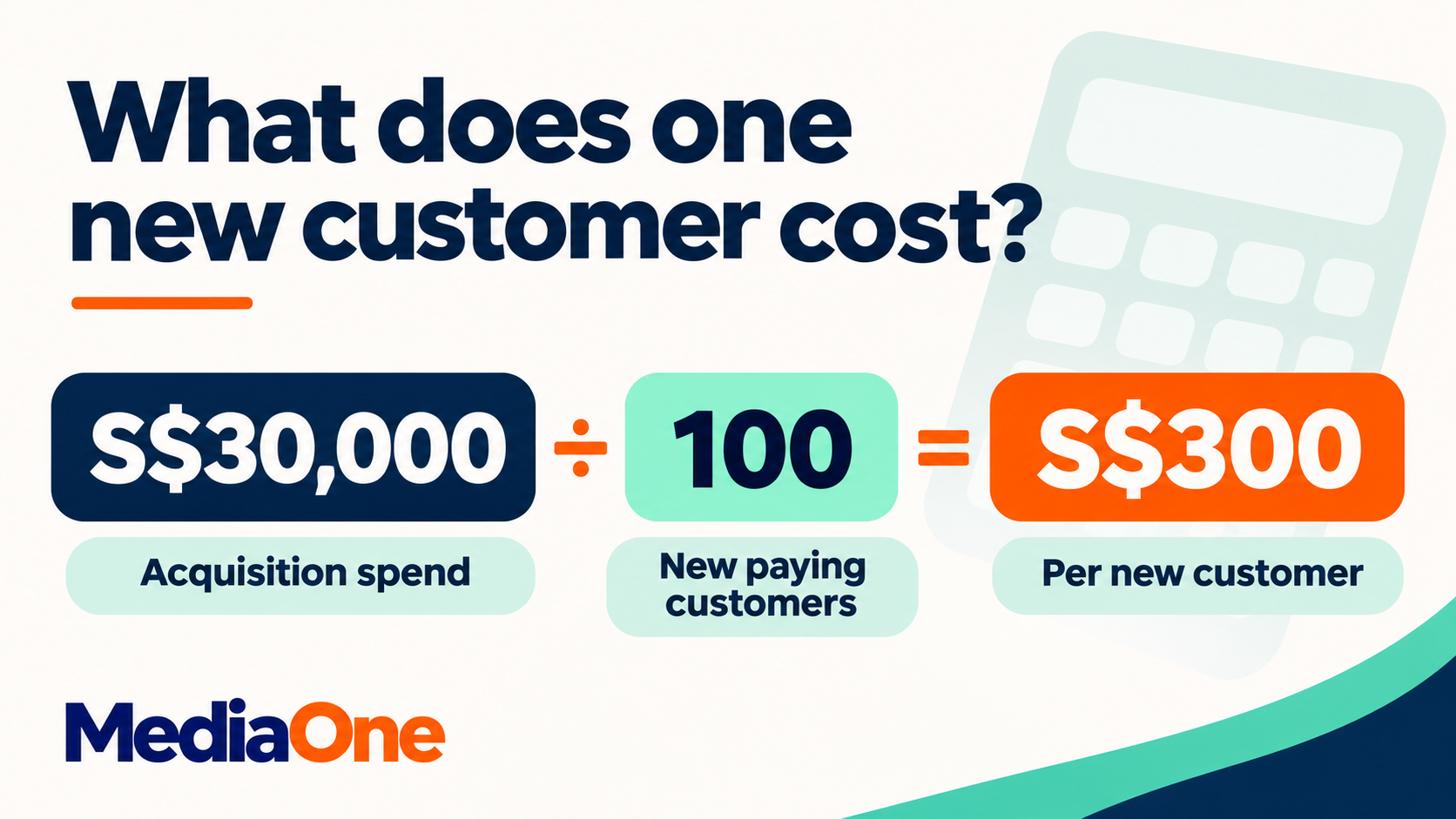
Customer acquisition cost (CAC) is the average sales and marketing cost of winning a new paying customer. The formula is total acquisition costs ÷ number of new paying customers acquired. If a business spends S$30,000 and wins 100 new paying customers, its CAC is S$300.
Key Takeaways
- Cheap enquiries can lead to expensive sales. A channel with a low cost per lead can have a high CAC if few enquiries turn into purchases.
- WhatsApp may be where the sale closes. A customer who finds you through paid search and buys through WhatsApp can still count as a paid-search customer.
- A CAC limit starts with your own margins. A first-order business and a subscription business can afford different amounts, even if they sell at the same price.
- An average can hide a channel that needs work. A rise in low-cost referrals can offset rising paid-social costs in the overall figure.
- A budget review works best when it ends with a decision. Each channel needs a next step, an owner and a date for checking the result.
Your ads brought in more enquiries this month. The sales team spent more time answering them. Yet the number of new customers barely moved. Where did the money go?
Customer acquisition cost gives marketing, sales and finance a way to answer that question together. It connects what you spent to the people or businesses that bought, even when the sale began with an ad and ended with a bank transfer.
What Does Customer Acquisition Cost Tell You?
Customer acquisition cost shows how much of your sales and marketing budget went towards winning each new paying customer. It helps a business owner decide whether the next dollar should go into ads, sales follow-up or a change to the offer.
The number sits at the end of your lead generation process. A click shows interest. An enquiry gives the sales team someone to speak with. CAC brings the calculation to the point where someone buys.
| Metric | What it measures | Example |
| Cost per click | Ad spend for each click | S$600 for 300 clicks is S$2 per click. |
| Cost per lead | Spending for each enquiry | S$600 for 30 enquiries is S$20 per lead. |
| Cost per acquisition or action in an ad report | Ad spend for each action the campaign tracks | S$600 for 10 booked calls is S$60 per booking. |
| Customer acquisition cost | Sales and marketing spending for each new paying customer | S$900 in acquisition costs for 5 new buyers is S$180 per customer. |
The action in a campaign report depends on what your team sets up. Google Ads, for example, can identify new customers in conversion tracking when the required information is available. A platform report can still use a narrower set of costs than your business uses for CAC. The S$900 in the example includes S$300 of work beyond the ad spend.
How to Calculate Customer Acquisition Cost
CAC = total acquisition costs ÷ number of new paying customers acquired
Shopify’s customer acquisition breakdown uses the same basic calculation. Your result depends on two decisions your team makes before opening a spreadsheet. The first is which costs to include. The second is how to count buyers and match them to the spending that helped win them.
Which costs belong in CAC?
Acquisition costs include the work your team pays for to win new customers. Some costs appear on an ad invoice. Others sit in payroll, software bills or a sales team’s calendar.
| Cost | How to treat it |
| Advertising | Count media spend used to reach or convert potential new customers. |
| Staff time | Include the share of marketing and sales pay tied to acquisition, plus commissions for new business. |
| Agency and production fees | Include work such as ad management, campaign design, copy and landing page production. |
| Sales and marketing tools | Assign the share of CRM, call tracking or software costs that supports new business. |
| Events and referrals | Include event costs, staff time and rewards paid to bring in new customers. |
| First-order discounts | Record the discount once. If it already reduces the sales value used to calculate customer contribution, leave it out of CAC. |
| Delivery and ongoing service | Track these when calculating customer contribution. If staff also spend time winning new customers, assign that portion to acquisition. |
A shared cost needs a rule the team can use again. For example, a designer spends half of their campaign hours on paid search and half on paid social. The business can split that design cost in two. A salesperson who spends three days a week winning new accounts and two days handling renewals needs a different split. A time estimate based on the work is enough to start. The team can update it when responsibilities change.
A channel also needs its share of common costs to make comparisons fair. If paid search includes its landing page costs and referrals leave out the hours spent running the programme, the gap between them will look bigger than it is. Any acquisition expense the team cannot assign can sit in a shared-cost row. It still belongs in the blended total.
Who counts as a new customer?
A new customer makes their first qualifying purchase from your business. A shop can count a shopper’s first paid order. A service company can count the first paid invoice or deposit if that is the point it uses to record a new client. A company with several contacts buying under one contract may count the account once.
Repeat orders, free trials and unsigned proposals stay out of the new-customer count. A buyer who uses two email addresses can also show up twice. A customer ID or account record helps the team catch those duplicates. If cancelled first orders are common, the team can document when it removes them and apply that rule each month.
What if sales take several months to close?
A same-month calculation is a starting point when spending and sales move at a steady pace. It can mislead when a campaign launches near the end of the month or when sales take weeks to close. A trade show in May may lead to contracts in July. A May report could show high spending and few customers, while July looks unusually cheap.
One way to check is to group leads by when they arrived and follow each group until deals have had time to close. That group is called a cohort. For example, the team can report how many customers came from May’s trade show after 90 days, along with the event cost and the follow-up work tied to those leads. A monthly report can still show what happened in May, with the event’s sales results marked as pending.
Blended CAC vs Channel CAC: A Worked Example
Blended CAC is the average across all acquisition spending and new customers. Channel CAC looks at the cost and customer count for one source, such as paid search or referrals. The blended number helps finance see what the business spent overall. The channel numbers help marketing decide where to look next.
Suppose a Singapore business spends S$30,000 in a quarter and wins 100 customers. It assigns each customer to one source and includes the sales and marketing costs tied to that source. The figures below are illustrative.
| Acquisition source | Total cost | New customers | CAC |
| Paid search | S$12,000 | 40 | S$300 |
| Paid social | S$8,000 | 20 | S$400 |
| Referrals | S$2,000 | 20 | S$100 |
| Organic content | S$4,000 | 15 | About S$267 |
| Trade show | S$4,000 | 5 | S$800 |
| Blended total | S$30,000 | 100 | S$300 |
The blended CAC comes from dividing S$30,000 by 100. Averaging the five channel figures would give each channel the same weight even though some brought in far more customers. The trade show’s five customers, for instance, should carry less weight in the overall average than paid search’s 40.
The S$800 event CAC raises a question about the deals. If those five customers buy larger contracts, their contribution may cover the cost sooner than expected. If the event is recent, open deals may still change the figure. The S$100 referral CAC raises a different question. The business may want more referrals, but its existing customer base may only send a few each month.
A customer who saw a search ad and later bought through WhatsApp belongs in one source row for this report. WhatsApp can sit in a separate column for where the sale closed. This keeps the channel totals from counting the same buyer twice.
What Is a Good Customer Acquisition Cost?
A good CAC leaves the business enough money after direct costs and gives it time to recover the amount spent. A S$200 CAC can work for a service company that earns S$600 in contribution from a new customer. The same S$200 can be too high for a shop that earns S$40 per customer and sees few repeat orders.
How to compare CAC with customer lifetime value
Customer lifetime value (CLV), also called LTV, estimates what a customer is worth over the time they buy from your business. For a CAC decision, use a value based on what remains after direct costs such as the product, delivery or work needed to serve the customer. A revenue figure alone can make the business look able to spend more than it can afford.
Suppose customers from one channel are expected to contribute S$900 each after direct costs. If CAC is S$300, the LTV-to-CAC ratio is 3:1. A 3:1 ratio appears in SaaS planning, where repeat subscription payments can help cover the upfront cost of winning a customer. A shop with few repeat orders or a service business that pays staff before collecting an invoice may need a different target.
How to set a CAC limit using payback
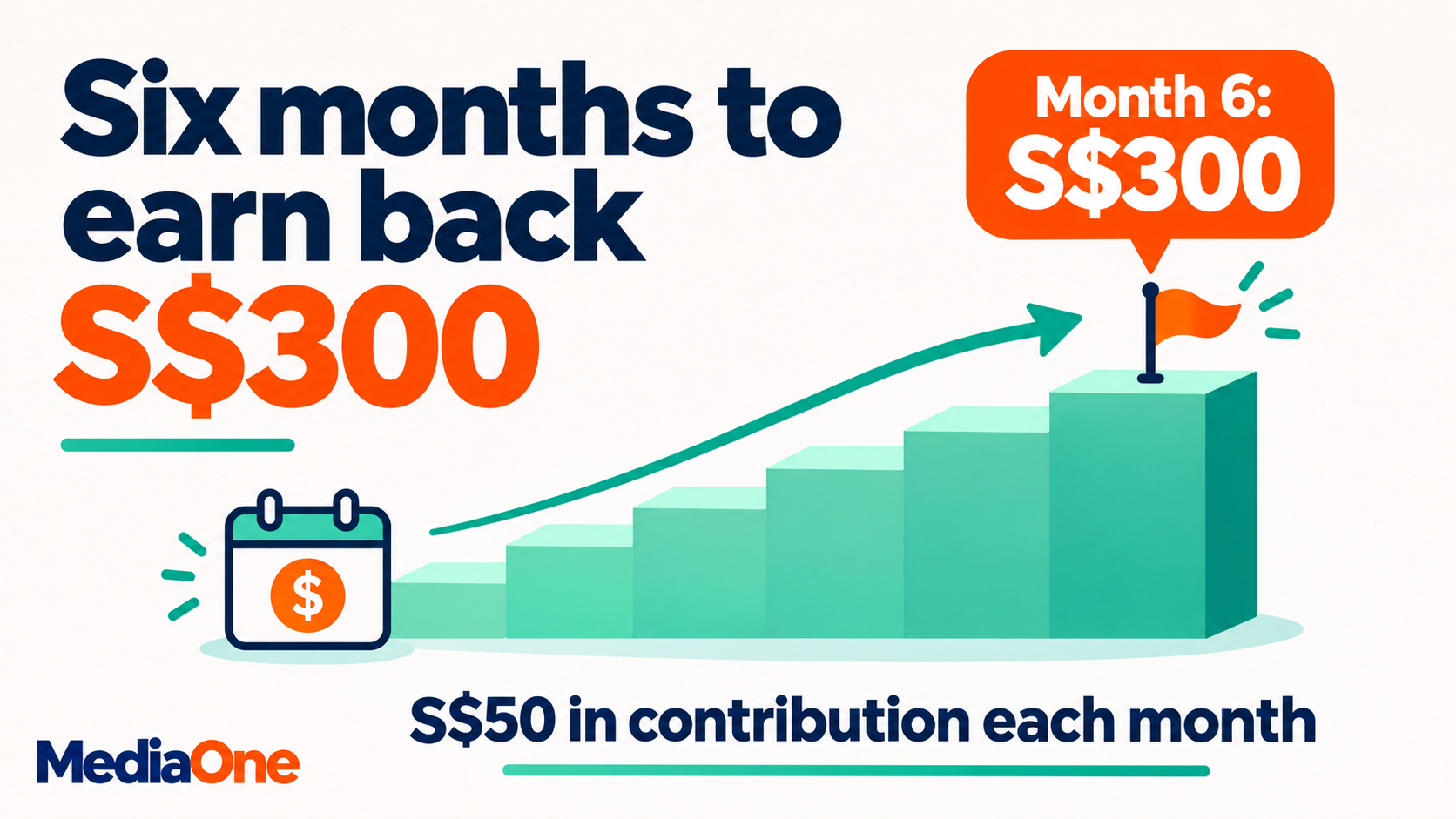
CAC payback period is the time it takes to earn back your acquisition spend. If CAC is S$300 and a subscription customer contributes S$50 each month, payback takes six months at that rate. If customers pay late or cancel early, the cash may come in later or fall short of the original estimate.
A business can work backwards from the amount it expects to recover within a set time. If it wants six-month payback and expects S$50 per month in contribution, S$300 is the payback-based ceiling. A lower limit can leave room for overhead, slow payments or changes in what customers buy.
| Business model | What to check first | Illustrative CAC decision |
| Shop with mostly one-off orders | First-order contribution after direct costs | A S$45 contribution and S$15 left for overhead and profit give a S$30 CAC limit. |
| Shop with repeat purchases | Contribution from actual repeat orders within the payback window | An extra S$20 in expected contribution only helps if enough customers return on time. |
| Subscription business | Monthly contribution, cancellations and time to collect payment | S$50 monthly contribution and a six-month window give a S$300 ceiling before any buffer. |
| Business-to-business service | Sales effort, contract contribution and invoice timing | A large contract may support higher CAC, while a late first payment can still strain cash. |
For a store, e-commerce CAC payback is easier to judge when the team can separate the first order from later purchases. An order of S$100 can look healthy until the business deducts S$65 for the product, packaging and delivery. With S$35 left from the order, a S$40 CAC needs at least S$5 more in contribution before acquisition spending is recovered.
Which benchmarks are worth comparing?
Your own past results give you a starting point. A fair comparison uses the same cost rules, customer definition, offer and sales window. A quarter with a large sale or a new product launch deserves its own label. Without that note, a normal month can look weak next to an unusually strong one.
An outside benchmark can help when the source states who took part, which market it covers and how it counts costs. A Singapore ad report that divides media spend by orders answers a different question from a company report that includes staff and tools. Your paid-search budget can use account data for clicks and conversions, then use CAC to check whether the resulting sales meet your cost limit.
Why Is Customer Acquisition Cost Rising?
A rising CAC can mean you paid more to reach the same buyers, fewer prospects bought or the sales mix changed. It can also come from a reporting change, such as adding payroll to the calculation for the first time. The fastest check is to look at what changed between the first click or enquiry and the paid sale.
| What changed? | Possible cause | What to check first |
| Clicks cost more and the sales rate holds | More competition for the same search terms | Compare costs for the same terms and locations. |
| Clicks hold steady and enquiries fall | A page problem, an offer change or a broken form | Test the page and submit the form on a phone. |
| Enquiries rise and sales fall | Poor lead quality, slow replies or a change in price | Review lost deals and check how long prospects waited for a reply. |
| Sales records hold steady and reported customers fall | A broken tag or missing records | Compare the report with actual payments. |
| Blended CAC rises while channel CAC stays steady | More customers came from a higher-cost channel | Compare each channel’s share of new customers. |
A change in traffic can look like a page problem. Suppose an air-conditioning company adds a broad set of search terms. Calls rise, but many people ask about jobs or DIY repairs. The sales page may still work for buyers who need a technician. A review of search terms and call notes gives the team a better place to start than a full redesign.
The same logic applies when enquiries double and the share that buy halves. The business wins the same number of customers. CAC rises only if acquisition spending rises. Checking both the cost and customer count avoids blaming the wrong part of the campaign.
How to Reduce Customer Acquisition Costs
Improve the step where buyers stop
A campaign with plenty of clicks and few enquiries may need a better mobile page. A campaign with plenty of enquiries and few sales may need faster follow-up, better screening or a more specific offer. Each change should address the point where people stop moving towards a purchase.
A mobile page for a local service can show the area it covers, what the first visit includes and how to request a quote. A sales team that answers through WhatsApp can use a short first reply to collect the details it needs. In both cases, the lead generation campaign can track what happened after the enquiry so the team sees whether more people paid.
Compare channels by what customers bring in
A low CAC can still produce a poor return if customers buy low-margin items or cancel early. A higher CAC can work if customers generate more contribution or pay sooner. Each channel needs a check against the value and payback of the customers it brings in.
- Paid search can reach people already looking for a service. Search terms and sales notes show whether the traffic came from potential buyers.
- Paid social can introduce a product to people who have never searched for it. Creative costs belong in the comparison alongside media spend.
- Referrals can bring in customers who already trust the business. Rewards and the time spent running the programme belong in its costs.
- Organic content can keep bringing in visitors after publication. Writing, updates and the time needed for content to produce sales belong in the review.
An online shop may use several of these e-commerce marketing channels for the same sale. A shopper could see an ad, find a product through search and return to buy. A channel report gives the business one way to assign credit. A controlled test, such as Google Ads Conversion Lift, can help eligible accounts estimate how many extra conversions ads caused.
Use retention to take pressure off acquisition
Better customer retention can reduce the number of new buyers the business needs to replace lost revenue. It can also improve the amount an acquired customer contributes over time. The original acquisition cost stays the same.
A pet supplies shop, for example, may learn that buyers reorder every six weeks. A reminder around that time could help more buyers return. The shop can check whether those later orders add enough contribution after fulfilment and any offer costs. A repeat purchase also helps the team see whether a first-order discount brought in customers who buy again at the regular price.
How to Track CAC and Review It Each Month
One sales record for each new customer
A small team can start with a spreadsheet or a customer relationship management system, often called a CRM. The record needs the source, the date of the first enquiry, the date of the first qualifying payment and an ID that links the sale to the customer. A separate field can show whether the sale closed online, by phone or through WhatsApp.
Google Analytics traffic-source reports distinguish the source that first brought in a user from the source of a later session. Shopify marketing reports also show how different rules can assign credit to different channels. Your CAC report can use one rule across the business, then keep a separate view of other channels that helped.
Phone and WhatsApp enquiries sometimes arrive without a known source. A short question about where the customer first heard of the business can fill in some gaps. An unknown category is still worth keeping. It shows how many sales lack a source and keeps the team from crediting a channel without evidence.
A monthly review that ends with a decision
The same review can serve marketing, sales and finance if it shows costs, buyers, payback and the next action in one place.
- Finance checks the costs. The team matches spending to invoices, payroll and its rules for splitting shared costs.
- Sales checks the customer count. Paid records show which leads turned into first-time buyers and which deals are still open.
- Marketing checks what changed. The team compares lead quality, buying rates and spending against a comparable period.
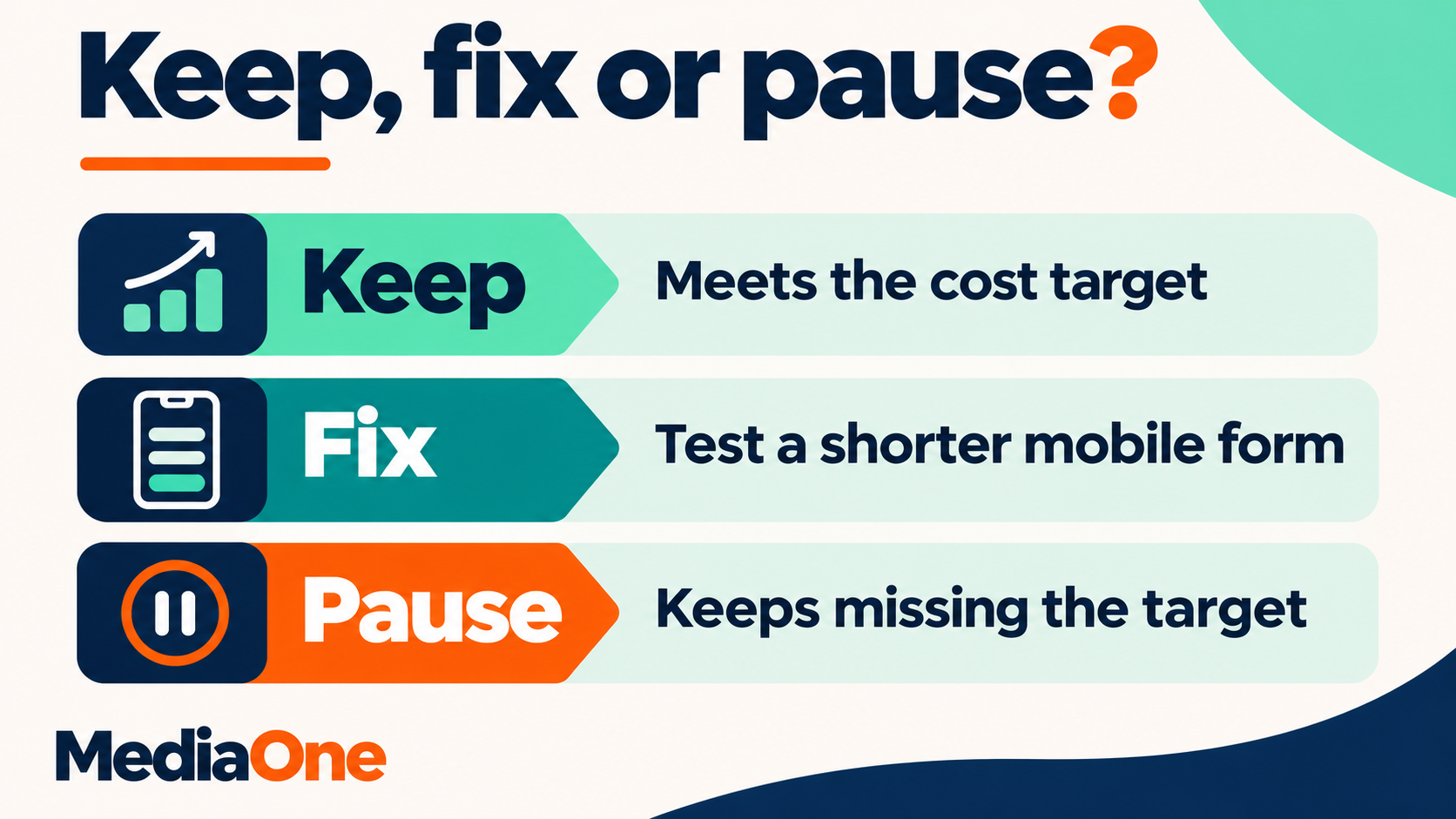
- Each channel gets a decision. A channel that meets the target can stay funded. One with a specific problem gets a test. A channel that keeps missing the limit after its sales cycle can be reduced or paused.
- The team writes down the next check. The record names the owner, the result the team expects and the date enough sales should have closed to judge it.
A channel that spends S$1,000 and wins no new customers has no calculable CAC for that period. Its dashboard should show S$1,000 spent, zero new customers. The cost still belongs in the business-wide total.
Where Should Your Next Marketing Dollar Go?
Your next budget decision starts with the channel that raised the biggest question. If paid search costs more but still brings in the same share of buyers, look at what changed in the auction. If leads are coming in and deals are falling through, sales records can show whether the offer or follow-up needs work.
Our team at MediaOne can help connect campaign spending with paid sales and find the point where acquisition costs began to rise. A recent spend report and a count of new paying customers are enough to start.
FAQs About Customer Acquisition Cost (CAC)
Can customer acquisition cost be negative?
Under the standard formula, CAC cannot be negative when total acquisition spending is zero or more and the business wins at least one customer. A negative result can come from offsetting costs with revenue or posting a rebate or accounting correction in the wrong period. The finance team can reconcile that entry before using the result to compare channels.
How should a founder account for unpaid sales time?
A founder can keep a cash CAC based on what the company paid and a separate planning figure that adds a value for their time. For instance, ten hours at S$50 an hour adds S$500 to the planning figure. The second view shows how much the same sales work might cost if someone else takes it on.
Should a marketplace calculate CAC for buyers and sellers separately?
Yes, if the business spends money to bring both groups onto the platform. A buyer campaign and a seller recruitment programme have different costs and outcomes. The marketplace can define a qualifying event for each group, such as a first completed purchase for buyers and a first completed sale for sellers. Shared spending needs an allocation rule that avoids counting it twice.
How should a business handle CAC when it sells in several currencies?
A business can convert spending to one reporting currency using the exchange-rate method its finance team applies to the period. A Singapore business might record all CAC in Singapore dollars and keep a separate view by market. That makes it easier to see whether the cost of winning customers changed or whether the reported amount moved because of exchange rates.
What is marginal CAC?
Marginal CAC is the cost of winning additional customers after a change in spending. If S$2,000 in extra spending brings in an estimated 10 extra customers, the marginal CAC is S$200. A business can use it to judge a budget increase even when its historical average CAC looks lower. The estimate is stronger when a test can separate the effect of the extra spending from other changes.