
You’ve seen the numbers. Video content converts. Podcasts build trust.
Key Takeaways:
- YouTube podcasts in Singapore are rising fast, offering a high-trust, high-visibility format for brands targeting a digitally engaged audience.
- Starting strong means picking a niche, investing in quality gear, and producing consistent, SEO-optimised content that speaks directly to local viewers.
- Effective promotion relies on short-form video clips, strategic collaborations, and support from local podcast marketing agencies to scale reach.
- Monetisation opportunities include YouTube ads, local sponsorships, branded merchandise, and community-based memberships like Patreon.
YouTube Podcasts in Singapore
YouTube podcasts in Singapore are experiencing a surge in popularity, driven by the city-state’s highly connected population and digital-first media consumption habits.
Popular YouTube podcasts in Singapore, such as The Daily Ketchup and WomenTalkTV, reflect a diverse content appetite, ranging from current affairs to inspirational interviews.
These shows blend production quality with authenticity, giving them strong cultural relevance.
| Platform | Local Usage Insight |
| YouTube | ~29 hours monthly watch time (Global average) |
| Podcast Listenership | 1M+ weekly listeners |
| Preferred Content | 28% educational content |
Singapore’s creators are turning to YouTube podcasts not only for storytelling but also for brand building, lead generation, and community engagement.
In fact, many local businesses now see podcasting as a powerful content marketing tool that builds thought leadership whilst subtly promoting products or services.
Podcasts such as OKLETSGO and Yah Lah BUT have cultivated strong followings by tapping into the unique cultural mix of Singapore.
The use of Singlish, local slang, and hot-button issues creates relatability, which has proven to be a major driver of sustained engagement.
How to Start a YouTube Podcast in 2025
Starting a YouTube podcast involves a structured process—from concept and equipment to editing and publishing. Let’s break it down:
Step 1: Develop Your Podcast Strategy
- Identify your niche: Consider targeting local pain points or underserved communities—e.g., Singaporean millennials seeking financial advice, or Gen Z exploring career tips.
- Create a publishing schedule: Bi-weekly uploads are sustainable and consistent enough to build anticipation.
- Plan episodes in arcs: Series-based storytelling encourages binge-watching. Think 3-part series on “Navigating HDB Loans” or “Starting a Business in Singapore.”
- Define your call to action: Always lead with what your audience should do next—subscribe, comment, or visit your landing page.
Step 2: Get the Best YouTube Podcast Equipment in Singapore

Image Credit: Detail
Investing in the best YouTube podcast equipment in Singapore is crucial to achieving studio-level quality. Poor audio or video can cause early drop-offs—even if your content is strong.
Recommended gear:
- Microphone: Shure MV7 (mid-range), Rode NT1 (pro-tier)
- Camera: Logitech C920 (affordable) or Sony ZV-1 (high-end)
- Lighting: Neewer softboxes, Elgato Key Light
- Interface: Focusrite Scarlett Solo or Rodecaster Pro II
Looking for a plug-and-play option? Consider a YouTube podcasting equipment bundle Singapore—these bundles often include a condenser mic, boom arm, shock mount, and pop filter, tailored for creators recording from HDB flats or home studios.
Bonus Tip: Ensure all equipment integrates with free or low-cost tools like OBS Studio for streaming and Audacity for audio editing.
Step 3: Record Your Episode
- Set up your space: Avoid echo by using foam panels or blankets. Choose neutral, clutter-free backgrounds.
- Use dual recording: Record audio separately for quality control, using a DAW alongside video recording.
- Record in 1080p or higher: YouTube compresses video; starting with HD ensures playback clarity.
Step 4: Hire a YouTube Podcast Editor in Singapore
Polished editing differentiates amateur creators from credible professionals. Hire a YouTube podcast editor in Singapore with skills in colour grading, audio mixing, and sound balancing.
- Use hooks and highlights: Add compelling intros, branded transitions, and end-screen templates that encourage next clicks.
- Create teaser reels: Use short edits for social platforms. This boosts traffic and improves subscriber conversion.
Step 5: Publish Your Episode
- Optimise your title with intent-driven keywords (e.g., “How to Start a YouTube Podcast in Singapore That Gets Sponsors”).
- Write detailed descriptions (150+ words) with timestamps, affiliate links, and local references.
- Use eye-catching thumbnails with bold text.
- Consistency builds brand recognition.
- Don’t forget playlists: Group episodes by series (e.g., Season 1, Guest Interviews, Local Business Tips). This improves dwell time and watch-through rates.

Image Credit: Headliner
Promoting Your YouTube Podcast
Promoting a YouTube podcast is just as important as creating it. Here’s how to market your show effectively, incorporating digital marketing strategies that work for content creators:
1. Partner with a YouTube Podcast Marketing Agency in Singapore
A YouTube podcast marketing agency in Singapore can provide:
- Paid ad targeting across YouTube, Instagram, and TikTok
- Local SEO optimisation for podcast landing pages
- Influencer co-promotion strategies
- Email automation funnels to increase episode retention
2. Leverage Social Media
- Repurpose each episode into 3–5 short clips.
- Post behind-the-scenes stories on Instagram.
- Share graphics and quotables on LinkedIn.
- Schedule weekly reels to align with podcast drops.
3. Collaborate with Local Guests
Partner with guests who have niche audiences (e.g., local chefs, fintech founders, startup mentors). Offer collaboration kits that include audiograms, short videos, and pull quotes for social sharing.
4. Build Audience Engagement
Run giveaways linked to episode questions. Feature user comments in the next episode. Host live Q&A or “Ask Me Anything” sessions monthly.
5. Repurpose Content Across Channels
Embed episodes on your blog with show notes and CTAs. Use transcription tools to convert episodes into searchable long-form content. Send monthly newsletters featuring episode recaps and upcoming guests.
Promotion is not a one-off task—it’s a continuous process that fuels growth and builds lasting connections.
By combining targeted social media strategies, meaningful collaborations, and consistent audience engagement, your YouTube podcast will gain the traction it deserves.
Monetising Your YouTube Podcast

Image Credit: YouTube
There are multiple revenue streams for monetising a YouTube podcast:
YouTube Ad Revenue
- Meet YouTube Partner Programme eligibility to activate monetisation.
- Include mid-roll ads at logical breaks in content; ideally after a cliffhanger moment.
Sponsorships
- Begin with in-episode shoutouts for local businesses.
- Develop pricing tiers: mention-only, segment-sponsor, episode-takeover.
- Track ROI with affiliate links and coupon codes.
Merchandising
- Use Shopify or Printful to create branded tote bags, coffee mugs, and planner inserts.
- Launch merchandise tied to podcast themes—e.g., minimalist productivity journals for a wellness podcast.
Crowdfunding & Memberships
- Offer YouTube Channel Memberships or Patreon benefits: live group chats, early access, bloopers, and behind-the-scenes footage.
- Mention member names during episodes to strengthen loyalty.
Paid Offers
- Bundle past episodes as e-courses or webinars.
- Create lead magnets from your podcast content (checklists, cheat sheets).
- Upsell listeners into high-ticket offers (consulting, workshops, speaking engagements).
Monetising your YouTube podcast is about diversifying income streams whilst maintaining authentic connections with your audience.
By combining ad revenue, sponsorships, merchandise, and membership models, you create sustainable revenue that supports ongoing growth.
Legal and Ethical Considerations
Navigating the legal and ethical landscape of YouTube podcasting in Singapore is essential to protect your brand and maintain credibility.
Understanding copyright rules, content guidelines, and disclosure requirements ensures your podcast stays compliant while building trust with your audience.
YouTube Podcast Copyright
- Use licensed music or royalty-free platforms like Soundstripe, Artlist, and Storyblocks.
- Provide attribution in descriptions and on-screen, as required.
YouTube Podcast Content Guidelines
- Follow Singapore Infocomm Media Development Authority (IMDA) guidelines for ethical broadcasting.
- Avoid unverified health claims, controversial religious or political opinions, and sensitive race-based content.
Disclosure Requirements
- Be transparent about any form of compensation, free product, or paid guest appearances.
- Include disclosure verbally at the beginning and within your description box.
Adhering to legal and ethical standards is not just about avoiding penalties—it’s about demonstrating professionalism and respect for your listeners.
By staying informed and transparent, you safeguard your podcast’s reputation and create a solid foundation for long-term success in Singapore’s digital space.
Case Studies of Successful YouTube Podcasts in Singapore
Examining successful YouTube podcasts in Singapore reveals what works in this unique market.
These case studies highlight strategies that combine strong local relevance, professional production, and savvy promotion, offering practical lessons you can apply to your own podcast journey.
The Daily Ketchup

A fast-paced podcast covering Singapore’s latest news, trends, and cultural debates. Known for its conversational style and sharp insights, it attracts a wide local audience hungry for timely, relatable content.
- Stats: Over 3M views/year, 31K subscribers
- Topics: News commentary, cultural debates, interviews
- Strategies: Conversational tone, SEO titles, humorous thumbnails, consistent publishing
WomenTalkTV

Hosted by former NMP Eunice Olsen, this award-winning podcast champions women’s empowerment through inspiring interviews and powerful storytelling. It combines high production values with meaningful social impact.
- Stats: Emmy-nominated; thousands of views per video
- Topics: Women’s leadership, empowerment
- Strategies: High-quality cinematography, emotion-driven storytelling, powerful CTAs for social good
Real Blue Zone

Focused on mental wellness and psychology, this podcast features expert guests and deep-dive discussions tailored for Singaporeans. It’s clear that relatable content fosters a supportive community around health and well-being.
- Topics: Mental wellness, psychology, relationships
- Strengths: Audience trust, consistent formatting, expert interviews, community engagement on socials
Yah Lah BUT
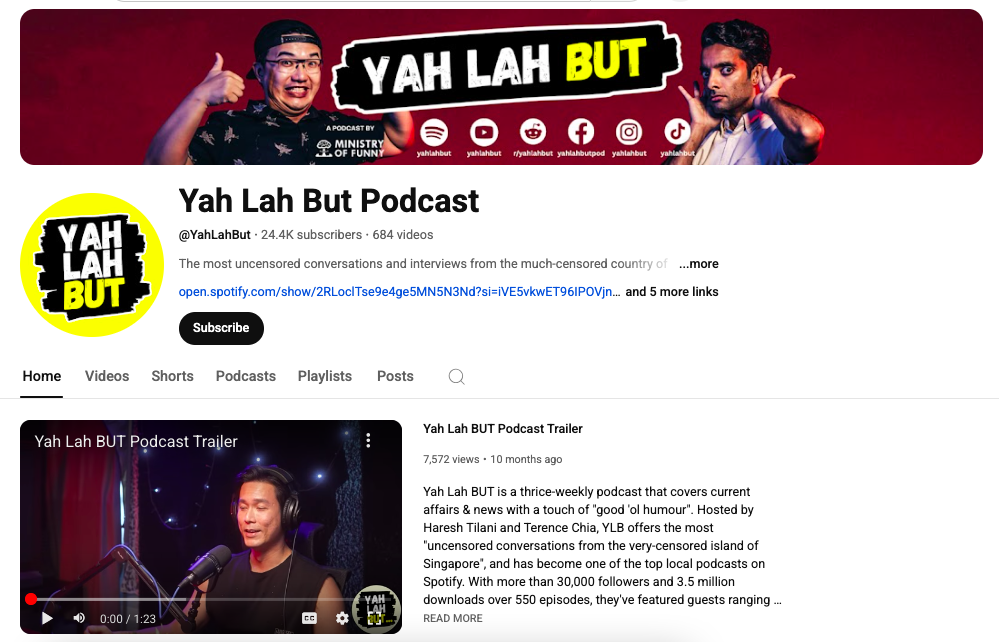
A humour-driven show mixing local politics and social commentary with Singaporean slang and memes. It appeals to younger audiences with its bold style and grassroots approach to current affairs.
- Topics: Humour, politics, social trends
- Strengths: Singaporean vernacular, Gen Z appeal, audio-visual memes, Patreon-backed growth
These examples prove that success is achievable with the right mix of consistency, niche focus, and audience engagement.
By learning from proven local podcasts, you can tailor your approach to stand out and build a loyal following in Singapore’s growing podcast scene.
Future of YouTube Podcasts in Singapore
Expect innovation and hyper-localisation to define the future of YouTube podcasts in Singapore, aligning with emerging digital marketing trends:
- AI-Powered Editing: Use tools like Descript for faster audio editing and captioning.
- Interactive Content: Livestreams and YouTube Premieres will become the norm for launches.
- Short-Form Video: YouTube Shorts will act as discovery drivers.
- Multilingual Formats: Podcasts in Mandarin, Malay, and Tamil will open up new audience segments.
- Niche Series: Expect verticals like “Bukit Batok Entrepreneurs” or “SG Tech Founders”.
- Voice SEO: Optimise for voice search, especially as smart speakers enter more homes in Singapore.
Setting the Stage For Your YouTube Podcast

YouTube podcasting in Singapore is more than a trend—it’s a channel for trust-building, lead generation, and long-term branding.
By investing in the best YouTube podcast equipment Singapore, learning to edit or hiring a YouTube podcast editor Singapore, and working with a YouTube podcast marketing agency Singapore, you set the stage for high visibility and ROI.
Need expert help? MediaOne provides strategic podcast consulting, bundled production equipment, editing support, and SEO distribution; all localised for your target market in Singapore.
Frequently Asked Questions
What equipment do beginners need to start a podcast?
Beginners should start with a quality microphone, headphones, and recording software. Basic setups can be affordable and still produce clear audio, which is essential to keep listeners engaged.
How can I increase listener engagement for my podcast?
Increasing engagement involves interacting with your audience through social media, responding to comments, and encouraging feedback. Hosting live Q&A sessions or including listener stories can also deepen connections.
What is the best length for a podcast episode?
The ideal podcast length varies by audience, but most successful episodes fall between 20 to 45 minutes. This duration balances depth with listener attention spans, especially during commutes or breaks.
How often should I publish new podcast episodes?
Consistency matters more than frequency, but a weekly or bi-weekly schedule is common amongst growing podcasts. Regular releases help build listener habits and maintain interest.
Can podcasts be monetised without a large audience?
Yes, podcasts with smaller, niche audiences can monetise through sponsorships from local businesses, crowdfunding, or offering premium content. Focused content often attracts dedicated listeners valuable to advertisers.