| AI Summary
Successful B2B marketing campaigns combine precise targeting, relevant messaging and measurable sales outcomes. This guide examines five real campaigns from Rohde & Schwarz, SoSafe, HubSpot, Results Driven Marketing and LSEG. Discover practical lessons for Singapore marketers, including a five-point campaign scorecard, a four-week pilot plan, data compliance considerations and strategies for generating qualified leads. |
Successful B2B marketing campaigns connect a genuine business problem with the right decision-makers and a clear next step. The strongest examples also show how marketing activity contributes to qualified leads, sales conversations and revenue.
For Singapore businesses, that means choosing channels around how customers research and approve purchases. We examine five published campaigns, explain what their results actually show, and provide a five-point scorecard to assess your own campaign before launch.
Key Takeaways
- Start with buyer relevance. Define the target company, decision-maker and commercial problem before choosing channels or creative assets.
- Learn from published results. Published campaigns illustrate useful methods, but their figures are not universal performance benchmarks.
- Connect marketing and sales. Use relevant content, planned follow-ups and a clear conversion action to move buyers towards a conversation.
- Score the campaign before launch. Evaluate audience precision, message relevance, channel sequence, conversion tracking and data hygiene.
- Measure quality, not just volume. Track sales-accepted leads, opportunities and pipeline alongside clicks and enquiries.
What Makes Successful B2B Marketing Campaigns Different?
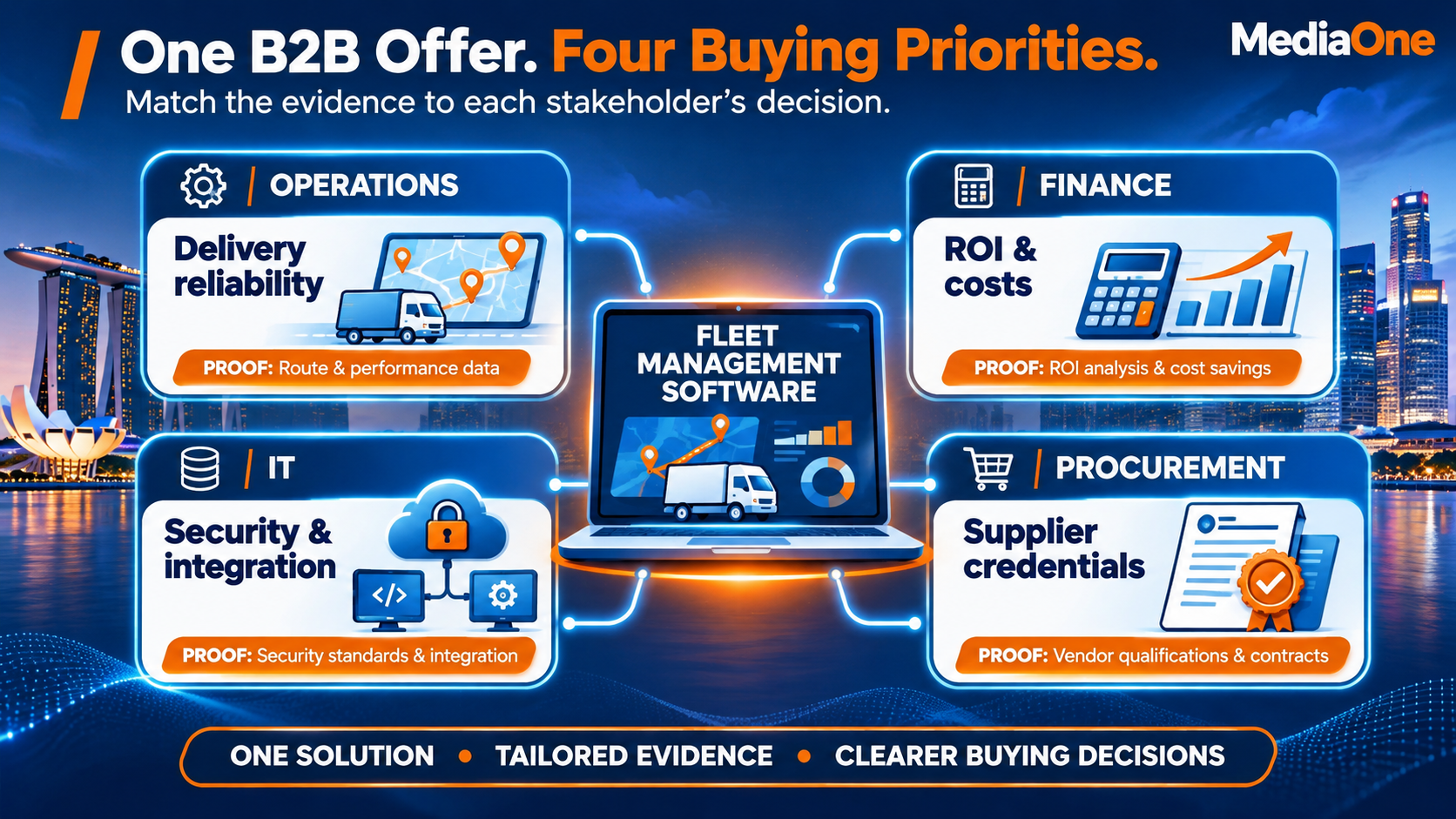
Business-to-business (B2B) purchases often involve multiple stakeholders. A finance manager may care about costs, while an operations leader wants reliability. Procurement may request evidence that the supplier can meet contractual requirements.
We recommend defining an ideal customer profile (ICP) around the companies most likely to benefit from the offer. Then identify the people who influence approval and tailor messages to their responsibilities.
Strong campaigns also distinguish awareness from conversion. A technical article might introduce an unfamiliar supplier. A webinar can help a buyer evaluate its expertise. A product demonstration may turn that interest into a qualified opportunity. Each stage needs a relevant message and a sensible next action.
Case-study results require context. Website visits do not equal revenue, and cheap leads may never become customers.
Consider a company selling fleet management software. Its operational buyer may want fewer delivery delays, its finance director may require a defensible return on investment, and its IT team may question integration and security. One generic advert cannot answer every concern. A coherent campaign uses a central promise, then offers supporting evidence for each stakeholder. We would map these questions before producing a webinar, landing page or sales presentation.
5 B2B Marketing Campaign Examples Worth Studying
The following examples come from published company accounts or platform case studies. They offer practical lessons, although reported results may be selective and do not establish that the same approach will work in every market.
1. Rohde & Schwarz: Reaching Technical Buyers Across Asia Pacific
The campaign: Rohde & Schwarz, a technology group with its Asia Pacific headquarters in Singapore, wanted to reach engineers and build a stronger prospect database across a diverse region. Trade shows missed important prospects.
Its regional team developed an integrated organic and paid LinkedIn approach. Sponsored Content introduced specialist information to relevant professionals. Sponsored Messaging helped maintain contact, while Lead Gen Forms reduced friction when prospects expressed interest.
The reported result: LinkedIn’s Rohde & Schwarz customer case study reports a cost per lead up to 80% below the industry benchmarks used in that study. That does not establish a universal LinkedIn benchmark.
What Singapore marketers can apply: Start with where specialist buyers already seek information. Technical material can establish credibility before a sales approach. Give each format a distinct buying-stage objective.
For a Singapore industrial supplier, we would test application notes or short engineering explainers before a direct demonstration request. A manufacturing engineer might download a specifications guide, while a procurement lead could need delivery information and supplier credentials. The campaign should record which interest prompted the enquiry so the sales response remains relevant.
2. SoSafe: Connecting Awareness Campaigns to Sales Acceptance
The campaign: Cybersecurity training provider SoSafe needed to build awareness while demonstrating that LinkedIn marketing could generate leads worth pursuing. It connected LinkedIn Campaign Manager with marketing automation and its customer relationship management (CRM) system.
Awareness content educated potential buyers. More detailed resources, including cybersecurity audits, encouraged interested prospects to submit enquiries. Lead scoring helped sales identify prospects ready for discussion.
The reported result: According to the SoSafe case study published by LinkedIn, lead volume increased by 79% over nine months while cost per lead remained steady. The share of sales-accepted leads generated through LinkedIn increased by 213%.
What Singapore marketers can apply: Connect advertising data with CRM outcomes. We would prioritise a campaign producing fewer, better-qualified enquiries over one delivering cheap leads that never progress. Agree with sales on qualification criteria before switching on paid acquisition.
SoSafe also illustrates a reporting distinction that smaller teams often miss. A submitted form shows interest; acceptance by sales suggests the lead meets an agreed standard. Neither guarantees a purchase. Define what sales must check, including company fit, decision-making involvement and the reason for enquiry. Review rejected leads to improve targeting instead of treating every submission as success.
3. HubSpot: Turning Evergreen Content into Continuing Demand
The campaign: HubSpot invested in educational blog content that answered recurring marketing questions. Its team later reviewed older articles and improved them instead of treating publication day as the end of a content campaign.
The reported result: In a historical HubSpot analysis, the company found that posts published before the current month accounted for 76% of monthly blog views and 92% of monthly blog leads. Those figures describe HubSpot’s performance at the time; they are not current industry averages.
What Singapore marketers can apply: Build content around durable commercial questions. A software provider might publish implementation checklists, comparison guides and answers to pricing concerns. Update obsolete advice and improve calls to action on pages attracting qualified visitors.
Search traffic alone should not decide the editorial calendar. We would also measure whether each article attracts relevant businesses and assists enquiries. For more detail, see our guide to B2B marketing strategy and measurement in Singapore.
The limitation is equally important. HubSpot already had a substantial content library and established search visibility when it recorded these results. A young Singapore consultancy should not expect a similar distribution of traffic immediately. Instead, choose a small set of high-intent questions, publish useful answers and review enquiries by topic. Over time, refresh articles that demonstrate commercial potential.
4. Results Driven Marketing: Combining Email and Phone Follow-Ups
The campaign: UK data provider Results Driven Marketing describes a targeted outreach sequence aimed at relevant business decision-makers. Prospects received an introductory email, followed by a telephone call two to three days later. The call referenced the earlier email.
The reported result: Its published campaign example claims a 38% email open rate, 22% call connection rate and 14 meetings from 150 contacts. These figures are self-reported and lack independent verification. They do not describe the separate direct-mail example.
What Singapore marketers can apply: Give the next contact a reason to recognise the previous one. A useful follow-up might share a relevant case study, answer a common objection or offer a short diagnostic discussion. Avoid repeating an identical request across several channels.
Open rates are an imperfect measure because privacy features can affect email tracking. Prioritise replies, qualified conversations and progressing meetings.
5. LSEG: Moving from Thought Leadership to Lead Generation
The campaign: London Stock Exchange Group (LSEG) used LinkedIn video and carousel advertising to share financial-market expertise with relevant audiences. The team tested creative, retargeted engaged prospects and captured enquiries through Lead Gen Forms.
The reported result: LinkedIn’s account of the campaign cites 96% lower cost per lead when using Lead Gen Forms and a 64.6% increase in conversion rate with that format. These format-specific outcomes are not universal benchmarks.
What Singapore marketers can apply: Educational content and conversion assets should work together. Publish a useful insight first, then offer a more detailed resource to people who have shown relevant interest. We would test the landing-page and native-form experience separately before committing additional budget.
The Five Principles Behind Effective Campaigns
Across these examples, the most transferable lesson is campaign design. The companies differed in sector, scale and budget, yet their activities connected audience selection with content and a next step.
First, relevance begins at the account level. A logistics software supplier should distinguish freight operators from retail distributors because their operational pressures differ. Second, messages should address a recognised concern rather than claim that the product is innovative.
Third, channels must have defined roles. Search engine optimisation (SEO) can capture existing demand. LinkedIn can introduce expertise to selected professional audiences. Email can continue an established conversation. Calls are suitable when a prospect has a credible reason to engage.
Fourth, conversion should feel proportionate to the buyer’s readiness. A research-stage visitor may prefer an ungated checklist. Someone comparing vendors may welcome a tailored consultation. Finally, campaign reporting must connect marketing engagement to sales outcomes.
How to Build a B2B Marketing Campaign in Singapore
Step 1: Set one commercial objective
Choose the outcome before selecting tactics. It might be qualified discovery calls, demonstrations with target accounts or sales opportunities for a new service. Define the timeframe and what qualifies as a valid result.
For example, a cybersecurity company could aim to arrange meetings with information technology managers at Singapore firms employing 100 to 500 people. That is easier to evaluate than a vague goal to increase awareness.
Step 2: Research the buying committee
Review CRM records, sales-call notes and recent customer objections. Identify the economic buyer, operational user and other stakeholders likely to influence approval. Then examine the questions each person asks during evaluation.
We recommend building only two or three initial segments. Excessive segmentation creates content demands that a smaller team may struggle to maintain.
Focus on accounts with clear commercial fit, then expand after testing. For regional campaigns, validate country-specific objections, procurement requirements and terminology before reusing creative across different markets.
Step 3: Develop an offer with immediate value
The campaign needs a reason for the prospect to respond. A diagnostic checklist, industry-specific briefing or practical audit can work when it addresses a real concern. Avoid promising a free consultation without explaining what the prospect will receive.
A reconciliation checklist could help finance teams identify delayed invoice approvals. A 20-minute workflow review could then connect the problem to the software.
Step 4: Choose a manageable channel sequence
A small campaign does not require every available platform. Select channels according to buyer behaviour and the team’s capacity to follow up properly. Three meaningful touchpoints across two channels is a useful pilot design, not a proven universal minimum.
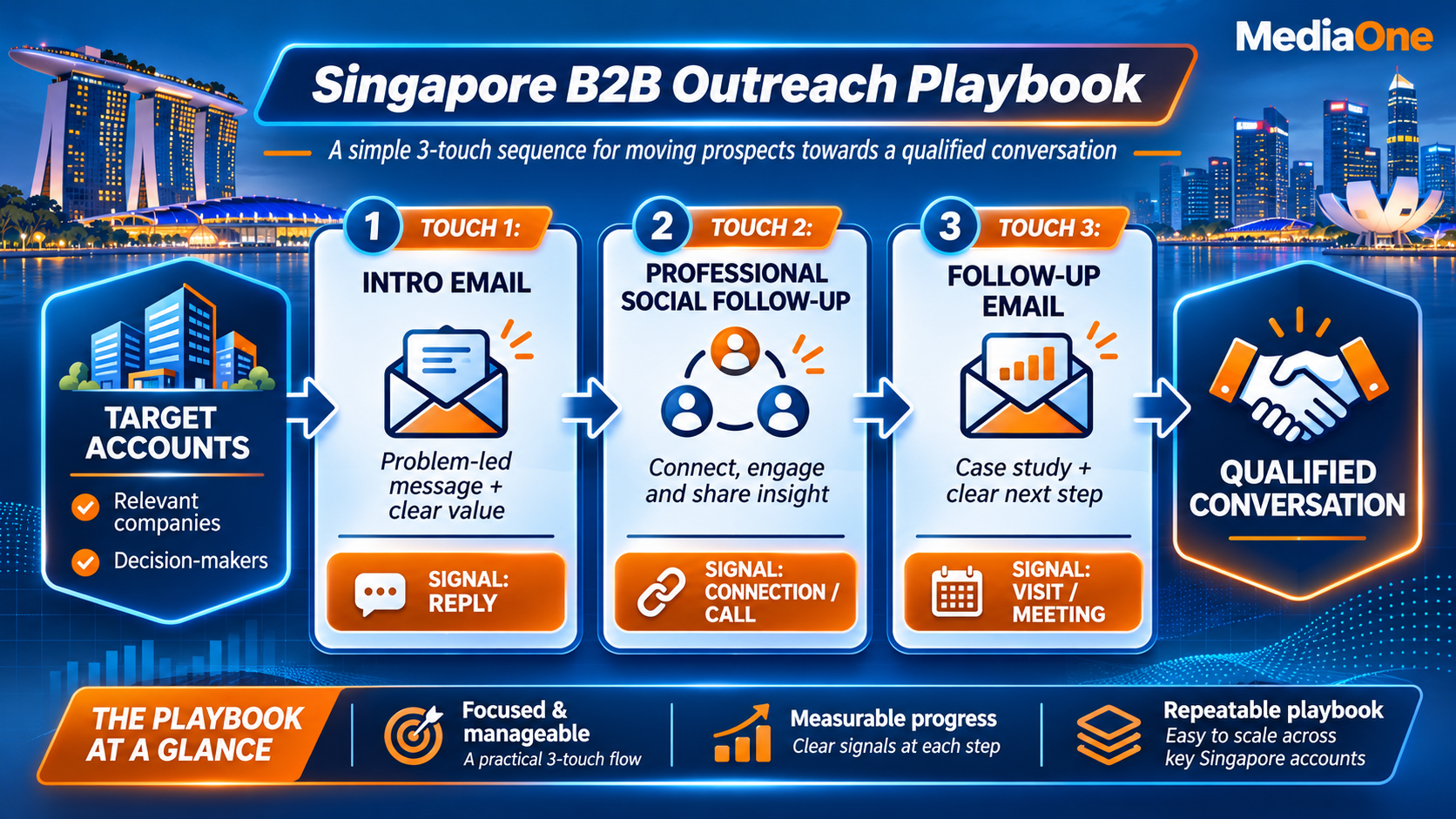
| Stage | Illustrative touchpoint | Intended action |
|---|---|---|
| Awareness | Targeted LinkedIn post or useful search article | Read relevant advice |
| Consideration | Email sharing a case study or checklist | Engage or reply |
| Conversion | Personal follow-up offering a short review | Book a qualified discussion |
Make each step useful on its own. Suppress further automated outreach when someone replies, declines or requests no further contact.
Step 5: Assign ownership before launch
Marketing should own audience definitions, campaign assets and channel reporting. Sales should agree on follow-up responsibilities and the definition of a qualified opportunity.
Set a service-level expectation for responding to genuine enquiries. Without clear ownership, enquiries can disappear between form submissions and sales calls.
A practical four-week pilot plan
Week one: Validate the audience. Review target accounts and interview sales colleagues about recent wins or losses. Confirm the offer, campaign objective and reporting definitions. Check the contact data and applicable outreach rules.
Week two: Build the assets. Prepare one landing page or lead form, a primary educational asset and short channel-specific messages. Test form submissions, lead routing and CRM fields with internal records before any paid promotion begins.
Week three: Launch a controlled test. Start with a limited audience and budget. Monitor delivery problems, genuine responses and whether sales can manage the resulting enquiries. Change one material variable at a time so results remain interpretable.
Week four: Review and decide. Compare target-account engagement, accepted leads and meeting quality. Continue the strongest message, revise weak conversion steps and stop activity that produces irrelevant enquiries. A four-week pilot may show early signals, but do not treat it as a complete test of long enterprise sales cycles.
Data Quality and Singapore Marketing Compliance
Accurate contact data improves campaign targeting and response rates. Before launch, remove duplicates, verify job roles and contact sources, and maintain an up-to-date suppression list. Review records based on how frequently the information changes.
Under Singapore’s Personal Data Protection Act (PDPA), qualifying business contact information is generally exempt from the Data Protection Provisions, according to the Personal Data Protection Commission’s guidance. However, other personal data may remain protected.
Singapore’s Do Not Call provisions distinguish B2B messages from consumer marketing, while the Spam Control Act regulates unsolicited bulk commercial electronic messages. Check applicable requirements, identify senders clearly and honour opt-out requests.
The Five-Point B2B Campaign Scorecard
Use this scorecard before approving budget or launching automation. Award one point for each criterion your campaign genuinely satisfies. This is our planning framework, not an externally validated performance model.
| Check | What earns one point |
|---|---|
| Audience precision | The target industries, account criteria and decision-maker roles are documented and verified. |
| Message relevance | The offer addresses a specific, evidenced problem for that audience. |
| Channel sequence | Each planned touchpoint has a distinct purpose and a sensible follow-up path. |
| Conversion tracking | The campaign defines a measurable next action and connects responses to CRM records. |
| Data hygiene | Contacts have been checked, sources documented and applicable privacy requirements reviewed. |
Interpret the score: Five points indicates a well-prepared pilot, not guaranteed success. Four points may justify a limited test if the remaining weakness is low-risk. At three or below, revise the campaign before launch. A compliance failure should always be corrected, regardless of total score.
Worked Singapore example: A hypothetical software supplier targets finance managers at logistics companies. It validates 60 business contacts, builds a reconciliation checklist, plans LinkedIn and email follow-ups, records meetings in its CRM and checks relevant contact rules. The design earns five points.
Measure Results Across the Whole Sales Funnel
We recommend a reporting view that follows each lead from first contact to commercial outcome. Platform dashboards are useful, but they rarely tell the complete story without sales data.
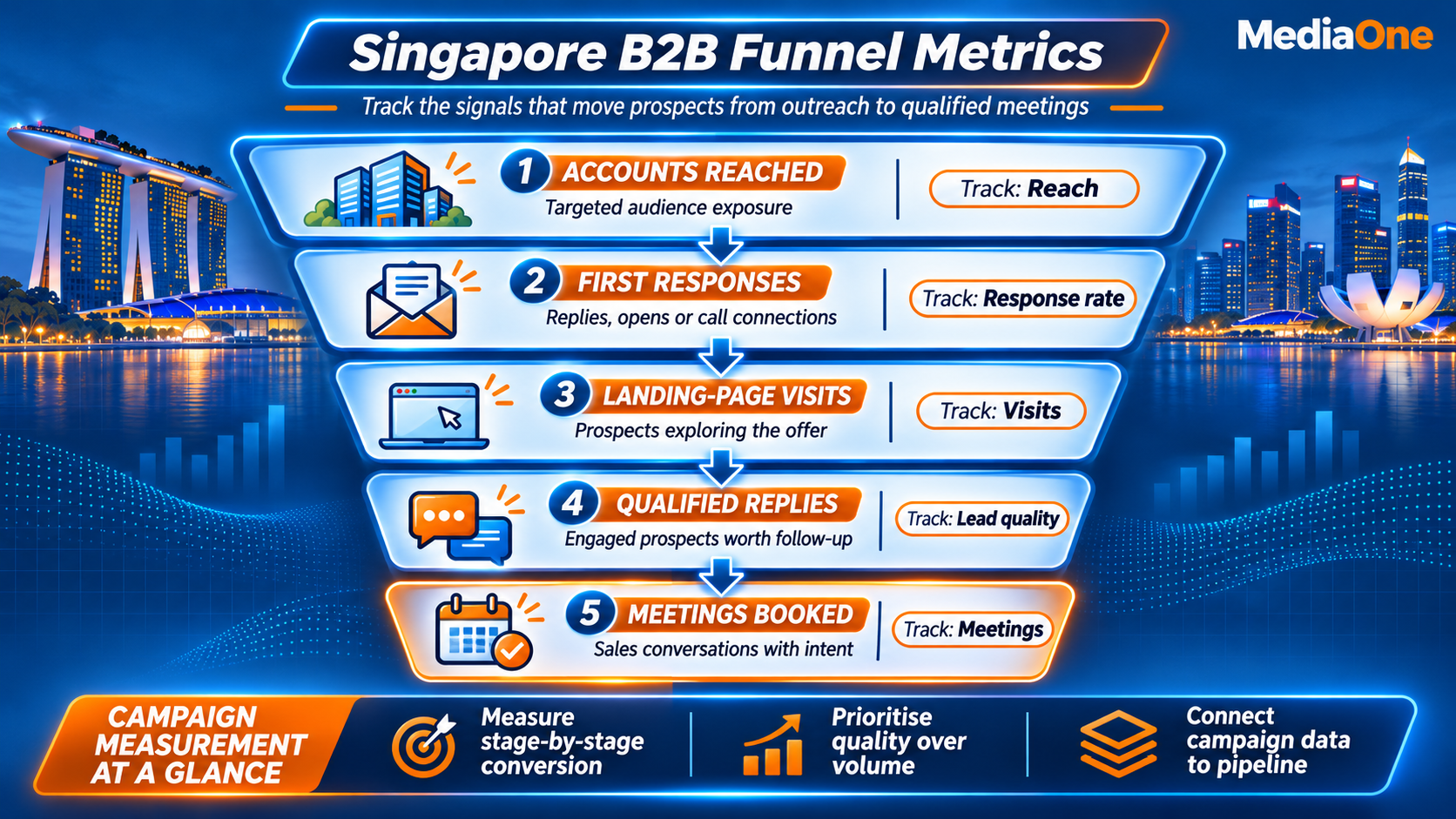
- Engagement: Relevant visits, content interactions and genuine replies indicate whether the message attracts attention.
- Lead quality: Marketing-qualified leads (MQLs) meet agreed screening criteria. Sales-accepted leads (SALs) have been reviewed and accepted for follow-up.
- Pipeline: Track meetings held, opportunities created, estimated value and whether deals progress.
- Efficiency: Calculate cost per qualified lead and cost per opportunity, not only cost per click.
Consider a hypothetical pilot costing S$3,000 that produces 30 enquiries, 12 qualified leads and three sales opportunities. Cost per enquiry is S$100, cost per qualified lead is S$250 and cost per opportunity is S$1,000.
These calculations are examples, not Singapore market benchmarks. If one opportunity later closes, assess revenue and gross margin against the campaign’s full cost.
Do not overlook the difference between influenced and sourced opportunities. A prospect may discover your brand through organic search and later respond to a LinkedIn advert. Giving both channels full credit exaggerates results. We recommend documenting a consistent attribution rule and reviewing the customer’s actual journey with sales when the deal value justifies it.
Optimise the weakest stage first. Strong traffic with few enquiries suggests a mismatch between content and offer. Plenty of leads with few accepted by sales points towards targeting or qualification. Meetings without opportunities may reveal a product-fit or sales-process problem.
Frequently Asked Questions
What makes B2B marketing campaigns successful?
Successful campaigns reach a clearly defined business audience with an offer that solves a relevant problem. We judge success through qualified conversations, opportunities and commercial outcomes rather than engagement alone.
Which B2B marketing channels work best in Singapore?
The answer depends on buyer intent and the product. SEO and search advertising can capture active demand, while LinkedIn, email and events can support education and relationship-building. Test channels against lead quality before scaling.
How long should a B2B campaign run before evaluation?
Allow enough time for meaningful responses and sales follow-up. A short outreach pilot can reveal message problems within weeks, while enterprise pipeline and content-led campaigns may need several months to assess fairly.
Should smaller businesses use account-based marketing?
Yes, when potential account value justifies personalised effort. Start with a manageable group of target companies and tailor the message to their needs. Our Singapore account-based marketing guide explains how to structure the approach.
Do Singapore B2B marketers always need explicit consent?
No. Qualifying business contact information has a specific exclusion under the PDPA, but other personal data and marketing activities may be regulated. Review the contact source, campaign purpose and applicable rules before outreach.
Turn B2B Campaign Lessons into Qualified Pipeline
The best B2B marketing campaigns offer a practical pattern: identify the right businesses, demonstrate relevance and make the next step easy. Rohde & Schwarz illustrates specialist targeting. SoSafe shows the value of linking campaigns to sales acceptance. HubSpot demonstrates the long-term potential of useful content.
Before committing significant spend, build a small pilot and apply the five-point scorecard. Check contact quality and compliance, agree on sales ownership and measure opportunities as well as responses.
Expand only when the evidence supports the decision. At MediaOne, we recommend connecting strategy, content and channel measurement around a common pipeline goal. Explore our lead generation services to turn that strategy into qualified sales opportunities.