
Social media has become a central pillar of this marketing industry, making insights derived from these platforms more valuable than ever. According to the latest reports, there are now over 5.41 billion active social media users globally, representing roughly 65.7% of the world’s population engaging with at least one social platform.
This means that social media is no longer just a channel for broadcasting content, but a goldmine of valuable data. Brands and marketers today need to tap into social media insights to understand who their audience is, what they care about and how to deliver content that truly resonates.
In this article, we’ll look into what social media insights are, the key metrics you should track, plus the tools that make gathering insights straightforward.
Key Takeaways
- Analysing content performance by format and topic helps optimise future posts and ensures resources are focused on what works.
- Regularly reviewing insights, segmenting data, benchmarking performance and investigating patterns enables smarter, data-driven decisions.
- Aligning social media insights with business goals ensures your campaigns contribute to measurable growth and long-term success.
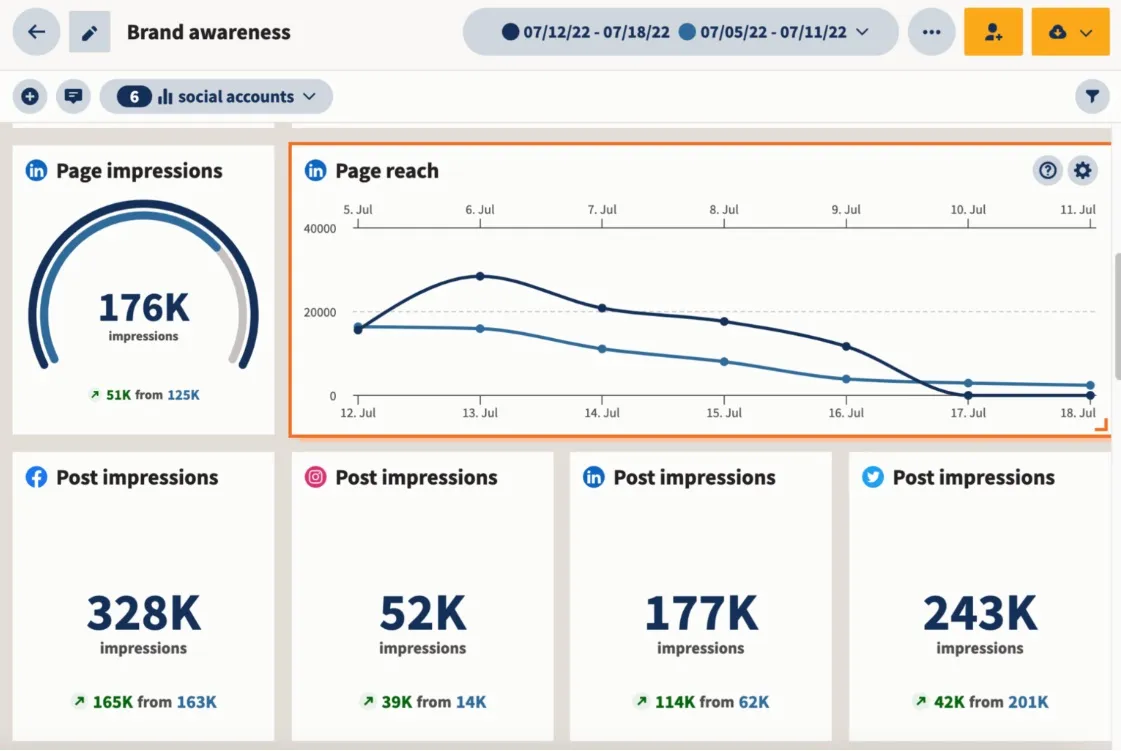
Image Credit: Aim Technologies
Social media insights are the meaningful interpretations that marketers extract from social data. While metrics provide numbers such as likes, comments, reach, or clicks, insights go a layer deeper. They explain what those numbers mean, why they matter and how they can guide more strategic decisions.
For example, a post may receive high engagement, but the real insight lies in understanding why it performed well. Was it the topic, the timing, the format, or the emotional tone? Insights turn raw statistics into actionable knowledge.
Social media insights can be divided into several categories:
- Audience insights reveal who your followers are, including their demographics, behaviours, interests, online activity patterns and preferences. These insights help you tailor your messaging to the right people.
- Content performance insights explain how individual posts perform. This includes engagement, reach, watch time, saves, shares and click-through patterns. These insights show which content formats resonate most strongly with your audience.
- Engagement insights explore how users interact with your brand. Whether they are passive observers or active participants, these insights uncover how well your content builds community and conversation.
- Conversion insights show how effectively your content drives actions such as website visits, sign-ups, or purchases. They help identify the link between social engagement and tangible business outcomes.
- Sentiment insights measure how audiences feel about your brand. This includes positive, negative, or neutral reactions, helping you assess your brand’s perception and reputation.
In short, social media insights paint a complete picture of how your audience behaves, what motivates them and how well your strategy aligns with their expectations.
While there are countless metrics available, not all of them hold equal weight. To build a strong and effective social media strategy, focus on the following key insights:
1. Audience Demographics and Behaviour

Image Credit: Happy Or Not
Demographic insights, such as age, gender, location and language, help identify who your content is reaching. Behavioural insights go deeper, revealing when your audience is most active, the type of content they engage with and their recurring interests.
For example, if analytics show that a large share of your Instagram followers are 25–34-year-olds who are active in the evenings, scheduling posts during peak evening hours will increase visibility. Similarly, if your audience frequently engages with short educational videos, you can prioritise this format in your content calendar.
Combining demographic and behavioural insights allows marketers to create highly targeted content and personalise messaging. It also improves engagement while making advertising budgets more efficient.
2. Engagement Quality

Image Credit: Exemplary
Engagement is about meaningful interactions, not just vanity metrics like likes or reactions. High-quality engagement can include:
- Comments that demonstrate interest or discussion: For example, questions about product features or requests for tips indicate active audience involvement.
- Shares that amplify reach organically: When followers share content, it exposes your brand to their network, expanding reach without additional cost.
- Saves or bookmarks that signal ongoing value: A saved post, such as a “how-to” guide or infographic, indicates your content has long-term relevance.
- Direct messages that show intent or curiosity: Users reaching out via private messages often signal potential leads, collaborations, or customer service needs.
Analysing these behaviours helps you understand the depth of your audience’s relationship with you. For instance, a post with fewer likes but many meaningful comments or DMs may be more valuable than one with a high number of passive interactions. This insight helps refine content strategy to focus on building relationships rather than chasing superficial metrics.
3. Content Format Performance

Image Credit: Zero Bounce
Different platforms favour different content formats and audience preferences vary by format. Tracking content format performance reveals which post types generate the most engagement and conversions.
- Short-form videos and reels: Highly effective on Instagram, TikTok and Facebook, often driving higher reach due to algorithmic prioritisation.
- Photo carousels and infographics: Effective for visually summarising information; useful for educational content or step-by-step guides.
- Long-form articles or documents: LinkedIn audiences often respond better to professional, in-depth posts such as reports, whitepapers, or slide decks.
Marketers can analyse which content formats resonate most, create more of what works, focus their resources on high-performing types and plan future campaigns with confidence.
For example, if Instagram Reels consistently outperform static images in terms of reach and engagement, prioritising video content may significantly boost overall metrics.
4. Topic and Theme Insights

Image Credit: Pediaa
The topics and themes your brand covers strongly influence audience engagement. Topic insights show which subjects, categories, or messaging angles perform best. For instance:
- Educational or “how-to” posts may drive more saves and shares.
- Humour-based content may generate higher engagement through comments and shares.
- Behind-the-scenes content can humanise your brand and strengthen loyalty.
- Thought-leadership posts may create credibility and professional recognition, especially on LinkedIn.
Brands can align their content strategy with audience interests to ensure posts consistently provide value while reinforcing brand identity. For example, a fitness brand may discover that nutrition-focused posts drive more engagement than workout tips, allowing them to refine their editorial calendar accordingly.
5. Click-Through and Conversion Insights

Image Credit: SEMrush
Engagement is essential, but it does not automatically translate into business results. To measure the real impact of social media, marketers should focus on conversion-driven insights such as:
- Click-through rates (CTR) indicate how many users click your links.
- Landing page visits from social media help track traffic driven from each platform.
- Lead generation form submissions measure interest in offers, subscriptions, or product demos.
- E-commerce purchases from social media quantify direct revenue generated by posts or campaigns.
Analysing this data allows brands to optimise content for both engagement and revenue, ensuring social media efforts support overall business objectives.
6. Sentiment and Brand Perception

Image Credit: LinkedIn
Sentiment insights reveal how audiences feel about your brand. Analysing comments, reactions, mentions and direct messages can reveal whether conversations are predominantly positive, neutral, or negative.
- Positive sentiment: Indicates content resonates well and supports brand loyalty.
- Neutral or mixed sentiment: Offers an opportunity to improve messaging or provide clarification.
- Negative sentiment: Flags potential issues, customer complaints, or misunderstandings that require attention.
For example, if a campaign generates high engagement but many users comment on unclear instructions or dissatisfaction with the product, sentiment analysis can identify the problem early.
This allows brands to respond proactively, protect their reputations and adjust strategies before issues escalate. Over time, tracking sentiment trends helps maintain a strong, trustworthy brand image and informs more effective campaign planning.
The right tools make it easier to collect meaningful, accurate and actionable insights. Below is a simple comparison table of popular platforms used by marketers.
| Tool | Best For | Key Features | Ideal Users |
| Meta Business Suite | Facebook & Instagram insights | Content performance, engagement data, audience insights, scheduling | Small to large businesses |
| TikTok Analytics | TikTok performance tracking | Video insights, follower activity, trending content data | Influencers, brands targeting Gen Z |
| LinkedIn Analytics | B2B audience insights | Post impressions, follower demographics, company page metrics | B2B marketers & professionals |
| YouTube Studio | Video content insights | Watch time, retention rate, traffic sources | Video-first creators & brands |
| Hootsuite | Multi-platform reporting | Unified dashboard, scheduling, social listening | Agencies & large teams |
| Sprout Social | Advanced analytics & reporting | Competitive insights, audience segmentation, sentiment analysis | Enterprises & data-heavy marketers |
| Buffer | Simplified analytics & scheduling | Engagement metrics, content performance breakdown | Small businesses & freelancers |
| Brandwatch | Deep social listening | Sentiment analysis, trend tracking, consumer research | Larger companies & brands needing detailed behavioural insights |
These tools help marketers gather data efficiently, identify patterns and build evidence-based strategies that lead to stronger results.
Tracking social media insights is only useful if you know how to act on them. These quick tips will help you make sense of the data and turn it into strategies that provide real results.
- Track Competitor Activity: Keep an eye on what works for similar brands. Spot trends, content gaps, or engagement strategies you can adapt.
- Set Benchmarks: Compare your performance to past campaigns or industry averages to measure true progress, not just raw numbers.
- Look Beyond Vanity Metrics: Focus on meaningful actions like comments, shares, saves, and clicks rather than likes alone.
- Identify Micro-Influencers in Your Audience: See which followers consistently engage and collaborate with them to amplify your reach.
- Repurpose High-Performing Content: Use insights to find content that resonates and adapt it for other formats or platforms.
These tips give you extra ways to leverage your insights. It can allow you to create smarter, more efficient campaigns that reach the right people and drive tangible results.
Social media insights are roadmaps for creating smarter, more effective marketing strategies. Know your audience and track how they engage with your content. Keep an eye on what works best and how people feel about your brand so you can make smarter decisions that actually get results.
Analysing patterns, segmenting data, benchmarking against industry standards and always asking “why” ensures your strategy stays precise and impactful. Harness your social media insights today and turn your data into measurable business impact.
Partner with MediaOne and let our experts help you harness social media insights to build strategies that engage, convert and scale your brand. Contact us now!
Frequently Asked Questions
How often should I review social media insights?
It’s best to review insights regularly but strategically. Weekly for engagement and content performance, monthly for audience growth and trends and quarterly for long-term strategy evaluation. Regular monitoring ensures timely adjustments while avoiding data overload.
Can small businesses benefit from social media insights as much as large companies?
Absolutely. Small businesses can leverage insights to identify their most engaged audience, optimise limited resources and focus on high-performing content, often gaining a competitive edge without a large marketing budget.
Are social media insights the same across all platforms?
No. Each platform provides different metrics and analytics. Instagram zeroes in on impressions and saves. LinkedIn values professional engagement and shares. TikTok puts the spotlight on completion rates and trends. Understanding platform-specific insights is key to effective analysis.
How can social media insights improve paid advertising campaigns?
Insights help you identify your most responsive audience segments, optimise ad creatives and schedule campaigns at peak engagement times. When you target audiences based on real behaviour and preferences, you boost ROI and minimise wasted ad spend.
Can I rely solely on social media insights to make marketing decisions?
While social media insights are extremely valuable, they should be combined with other data sources, such as website analytics, email marketing metrics and market research, to get a complete picture of audience behaviour and campaign performance.