
Local search has never been more competitive in Singapore. AI powered SERPs are transforming how customers discover businesses across areas like Orchard, Tampines, and Woodlands.
If you want to dominate those micro moments where buyers choose one provider over another, you cannot rely on outdated assumptions about local visibility. The first 100 words matter, so let us be clear. The businesses that understand 2026’s new local SEO ranking factors will outmanoeuvre their competitors, capture demand earlier, and convert faster.
You are no longer competing just on keywords. You are competing on trust, relevance, and real world proof of experience. Google is analysing behaviour patterns, visual content quality, user intent clarity, and thousands of contextual signals that go far beyond traditional on page SEO.
Pre 2024 tactics like directory blasts and keyword stuffed profile names no longer do the heavy lifting. What works in 2026 is precision, authenticity, and human centric engagement supported by the right search architecture.
This article will give you the exact blueprint. You will understand the shifts driven by AI Overviews, the signals Google now prioritises, and the strategic moves you must make if you want to secure top visibility in Singapore’s local markets.
By the end, you will know how to outperform competitors who still treat local SEO as a checklist. If you want clarity that turns into revenue, this is where you start. And if you want execution without guesswork, you will want a local SEO agency that understands every shift happening right now.
Key Takeaways
- Local visibility in 2026 depends on how well you demonstrate real world credibility through verifiable signals such as high quality visuals, authentic reviews, and consistent Google Business Profile activity.
- AI driven SERPs prioritise businesses that show strong behavioural engagement, hyper local content relevance, and clear alignment with a searcher’s intent rather than those relying on outdated optimisation tactics.
- A future proof local SEO strategy requires a combination of technical performance, structured data, and human centric content that proves your expertise and presence across Singapore’s neighbourhoods.
Local Search Engine Optimisation in 2026: What’s Changed?
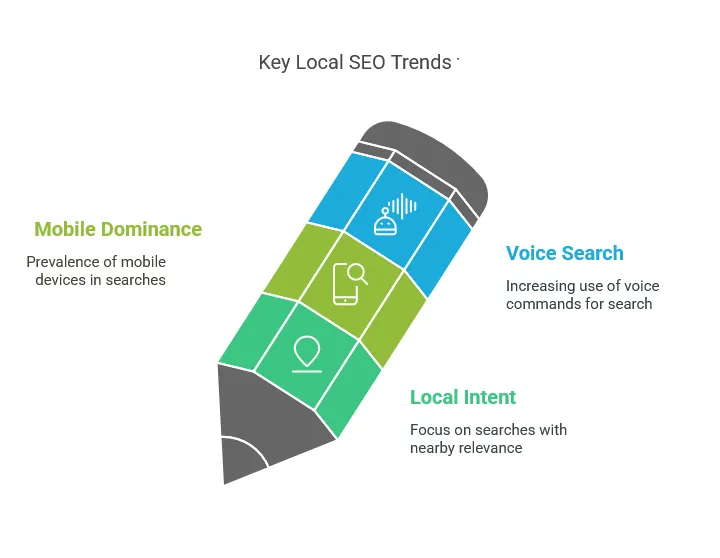
Image Credit: Profile Tree
You are operating in a different ecosystem. AI Overviews now sit above traditional organic listings, and they pull responses from entities that Google trusts most.
AI Overviews surface information from sources that demonstrate strong trust signals—such as accuracy, expertise, transparency, and consistency (per Search Engine Land)—rather than simply prioritising websites with high domain authority.
Hyper-personalisation has also deepened. Your search results can look different from your neighbour’s, even if both of you are in Bishan searching for the same service.
Google’s Multitask Unified Model (MUM) enables Search to better understand the context behind complex queries by interpreting language and information across different formats. Meanwhile, traditional ranking signals — such as location and search history — continue to shape which results you see.
In 2026, real world verifiability matters more than ever. Google prioritises entities that can be validated through consistent check-ins, geotagged visuals, and signals that confirm offline activity. Behavioural signals also carry increased weight. Independent research by Backlinko found that engagement metrics like dwell time and click through rate correlate strongly with top rankings.
The local pack has evolved into a hybrid entity: a map result supported by contextual AI summaries, rich media, trust indicators, and behavioural predictions. You are no longer trying to rank in a three pack. You are trying to become the business Google confidently recommends.
Top Local SEO Ranking Factors In 2026
To effectively boost your local SEO, it’s important to first understand the key ranking factors that will shape search results in 2026. Here are the insights you need to stay ahead.
1. Google Business Profile Optimisation Remains Foundational
Your Google Business Profile is no longer just a business listing—it is a dynamic trust signal. Google uses it to verify legitimacy, relevance, and activity before deciding whether to elevate you in local results.
Complete and Accurate Profile Data
If your Google Business Profile is not complete, you are already losing. Google’s own guidance states that businesses with complete profiles are more likely to be considered reputable and receive more engagement.
In 2026, consistency across your NAP details, primary and secondary categories, business attributes, operating hours, and service regions is non-negotiable. Google has also expanded vertical specific attributes like sustainability indicators, accessibility options, and service area details. These impact local SERP visibility because they supply more entity understanding.
Structured accuracy is no longer optional. It is a ranking asset.
High Quality Images, Videos, and Virtual Tours
Visual relevance has become a decisive ranking signal. Google’s AI evaluates image quality and context to determine whether a business is credible and active.
High resolution photos, short form videos, and 360 degree virtual tours are not just user engagement enhancers. They influence visibility because Google measures visual interaction rates. A BrightLocal study found that businesses with 100 or more high quality GBP images received 520% more calls than those with fewer than 10.
Posting Frequency and Content Relevance
Freshness matters. Google prioritises businesses that show signs of ongoing activity. Regular Google Posts that feature promotions, events, tips, or service updates can increase engagement and local pack stability. Businesses that post weekly tend to see measurable improvements in visibility compared to those that posted sporadically.
If you want Google to trust your profile, you must make it look alive.
2. Local Citations and Authority Signals
Citations carry less raw ranking power than they did in 2019, but they remain critical for entity authority. Consistency across reputable directories validates your business data, which supports Google’s confidence in your location, operations, and legitimacy.
In 2026, the priority is quality. Vertical specific directories like HealthHub for clinics or SeedlyReviews for home services play a stronger role because they provide sector verified trust. Government verified listings also influence confidence because they reduce ambiguity in entity data.
Structured data is a non-negotiable layer. Schema markup, particularly LocalBusiness, Service, and Review schema, helps Google interpret your business in a machine readable format. Google has repeatedly confirmed that structured data improves the way content is understood and presented.
3. First Party Reviews and Sentiment Signals
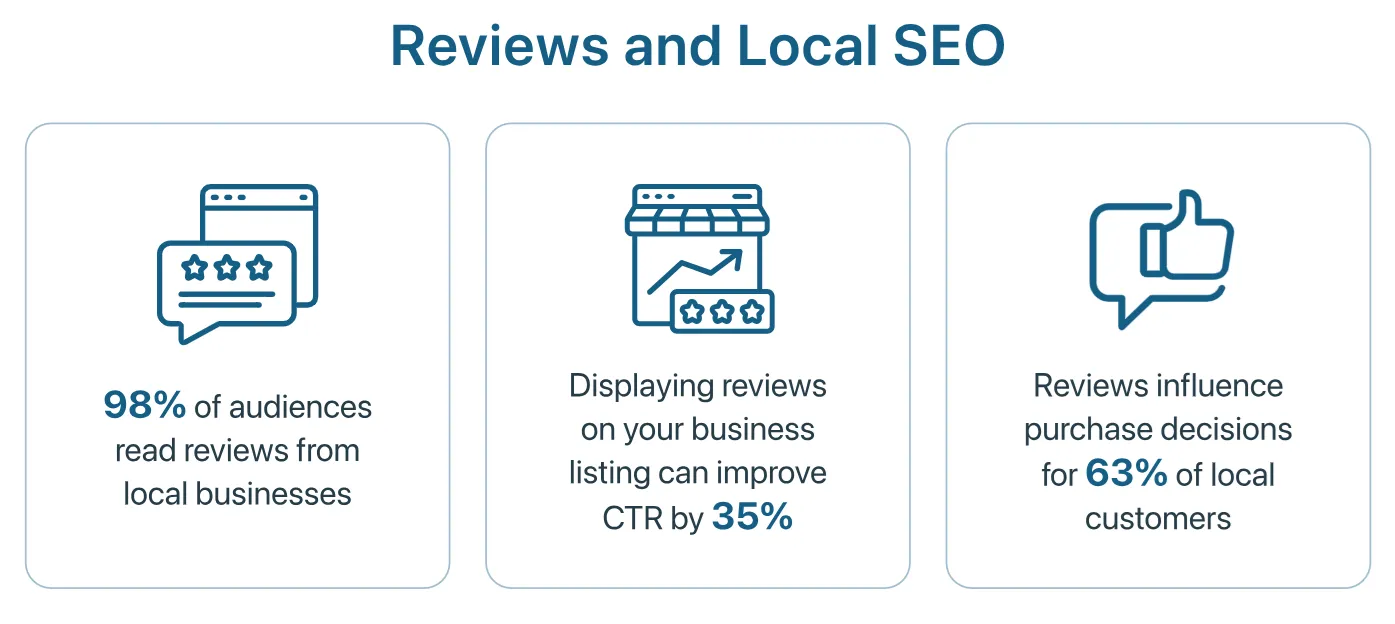
Image Credit: Fit Small Business
Google now treats customer feedback as an active indicator of business credibility, measuring not just what customers say, but how consistently and meaningfully you engage with them.
- Quantity, Velocity, and Consistency of Reviews: Your review velocity reveals more than your average score. Google’s documentation confirms that review quality and recency influence ranking because they help users decide whether to engage. A business that receives 20 reviews spread across 12 months sends a different trust signal from one that receives 20 reviews in 30 days. Google can detect unnatural patterns, so consistency matters.
- Review Sentiment and Topic Modelling: Google uses machine learning to analyse sentiment and extract topics from reviews. Natural language processing is used to detect patterns, themes, and contextual relevance. If customers repeatedly highlight punctuality, cleanliness, or professionalism, these become weighted attributes. Topic clusters influence ranking because they paint a clearer picture of service reliability.
- Owner Responses and Public Engagement: Your responses are signals. Semrush reported that when businesses respond to reviews, they increase review volume and improve overall ratings. Google interprets timely, helpful responses as proof of customer centric behaviour, which strengthens trust scoring.
- Third Party Review Platforms: Non Google platforms like Facebook, TripAdvisor, Carousell, and Yelp still feed entity understanding. Search algorithms look for cross platform consistency in sentiment. If external platforms reinforce your reputation, your overall authority score rises.
4. Local Content and AI Contextual Relevance
Google now evaluates whether your content reflects real local understanding. AI systems prioritise brands that show lived experience, not broad statements that could apply anywhere.
- Hyper Local Content Depth: Generic content has no chance in 2026. Google’s Helpful Content updates repeatedly emphasised people first, accurate local content. If you want to rank for searches around Punggol, Bedok, or Clementi, you need depth. That means neighbourhood specific FAQs, service pages that reference local needs, and contextual relevance that AI can verify.
- Local Experience Signals: Google wants proof that you operate where you say you operate. Real photos of completed projects, customer stories from specific areas, and FAQs customised for local behaviour patterns signal authenticity. These signals help your business stand out in an ecosystem saturated with AI generated content.
- Content Formats Favoured in 2026
- Short form videos
- EEAT rich guides
- Location targeted service pages
- Schema structured content optimised for AI Overviews
- These formats align with Google’s preference for content that is high value, verifiable, and easy for machine systems to process in context.
5. Behavioural Metrics and User Interaction Signals
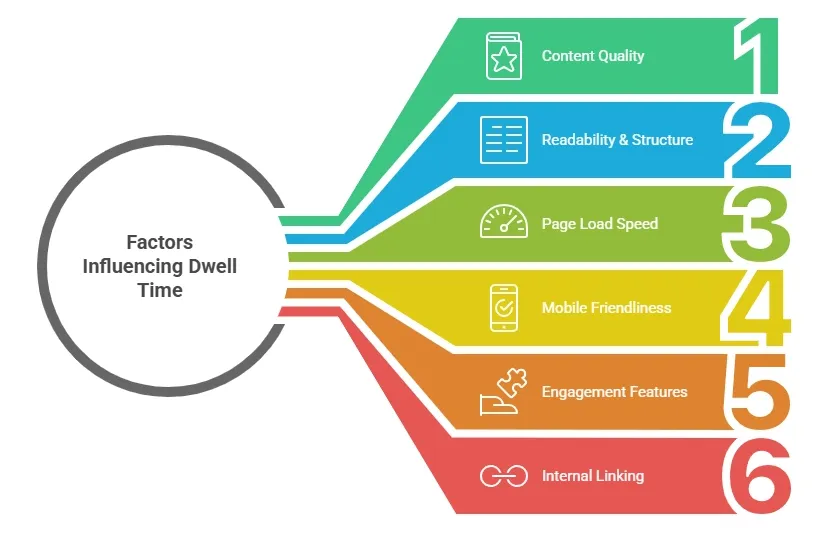
Image Credit: SEO Discovery
Google’s local ranking systems are influenced not just by your business information, but by how real users interact with your listings and website. In 2026, behavioural indicators act as proxies for trust and relevance. If people engage deeply with your presence, Google takes that as evidence that your business reliably meets user needs.
Click-Through Rate and Initial Engagement
The journey begins with the search results page. When a user chooses your business over others in the Local Pack or organic listings, that click contributes to an engagement signal.
If your listing features compelling visuals, accurate details, strong sentiment cues, and a clear value proposition, your click-through rate (CTR) improves. Higher CTR suggests your profile is more relevant than competitors targeting the same keywords or local queries.
However, CTR alone is insufficient. Google looks at what users do next.
Dwell Time, Navigation Patterns, and Task Completion
Once users click into your website or Google Business Profile, Google measures how effectively your content satisfies their intent. Longer dwell time—combined with actions such as clicking through photo galleries, viewing menus or pricing pages, requesting directions, or sending messages—indicates your content is genuinely useful.
Task completion matters. If users frequently call, book appointments, request quotes, or navigate to your store location, these are strong positive signals. Conversely, fast bounces and short dwell times signal a mismatch in expectations, which can suppress visibility.
Return Visits and Loyalty Indicators
Repeat visitation is one of the strongest credibility markers. When users return to your site directly or seek your business again in Search, Google interprets this as brand preference. Brand preference is a powerful differentiator in saturated local markets because it suggests trust has already been established.
Local Intent Match Score in 2026
Google now evaluates a local intent match score, which reflects how closely your business aligns with the searcher’s intended action. Your ranking stabilises when your content, visuals, messaging, and service offerings match what users expect to find.
This is why UX and on-page clarity remain foundational. Google’s mission is unchanged: help users complete tasks faster. Businesses that reduce friction win visibility.
6. Proximity, Relevance, and Real World Presence
Proximity still matters but it is no longer the strongest signal. Google’s AI now factors contextual relevance, behavioural patterns, and entity strength. A business slightly outside a neighbourhood can outrank a competitor inside it if its trust and relevance are higher.
Real world presence signals are rising. Google looks for check ins, geotagged visuals, and offline activity that confirms genuine operations. Geo entity verification is also gaining weight because it helps Google combat fake listings, which remain a known issue.
7. Technical SEO Still Matters: Mobile, Speed, and Core Web Vitals
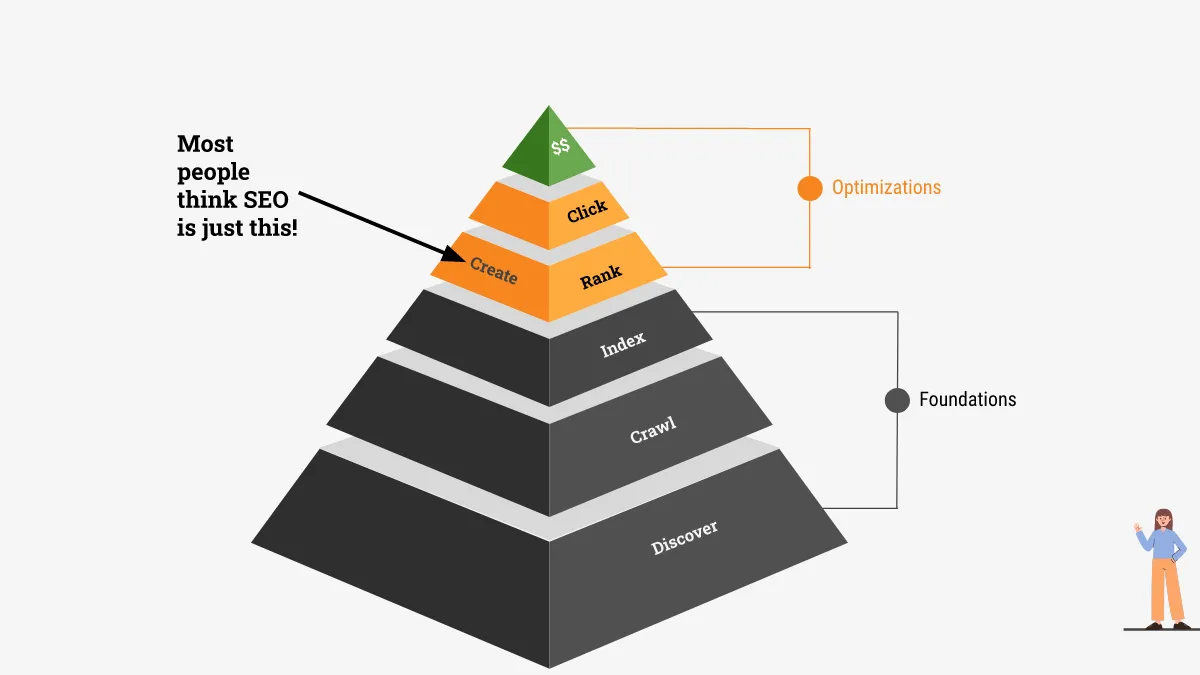
Image Credit: Momentic
While Local SEO increasingly revolves around trust signals, intent, and entity understanding, the technical foundation of your website remains non-negotiable. Google still prioritises businesses that deliver a fast, smooth, and accessible browsing experience—especially on mobile.
Page Speed and Core Web Vitals
Google’s Core Web Vitals update continues to shape how websites are evaluated for performance and usability. Metrics such as Largest Contentful Paint (LCP), Interaction to Next Paint (INP), and Cumulative Layout Shift (CLS) all influence how users perceive your site.
Slow load times and unstable layout elements create friction, which leads to lower engagement and higher bounce rates. When engagement drops, local ranking stability suffers. Improving speed is not just a technical exercise—it directly impacts conversion and revenue.
Mobile Experience as the Default Standard
Local searches are overwhelmingly mobile-driven. Google has repeatedly highlighted that more than half of global search volume now comes from mobile devices. For local businesses, this number is often higher.
If your site is difficult to navigate on a phone—small buttons, cluttered layouts, unreadable copywriting—users will exit quickly. This behaviour signals to Google that your website is not meeting intent, which negatively affects local visibility.
Crawlability, Schema, and Structured Data
Technical clarity enhances machine understanding. When your site architecture is clean, URLs are logical, and internal links are coherent, Google can crawl and interpret your content efficiently. Adding schema and structured data, especially for local business details, FAQs, services, and reviews, allows Google to contextualise your entity faster.
If Google cannot accurately interpret your content, your local rankings will not reach their full potential—regardless of how strong your branding or engagement signals are.
8. GBP Messaging, Q&A, and Consumer Engagement Signals
Google increasingly prioritises businesses that show real, ongoing responsiveness to users. Engagement signals—especially messaging behaviour and Q&A interactions—help Google understand whether your business is active, attentive, and trustworthy. In 2026, these human-centred signals can meaningfully influence local ranking stability and conversion outcomes.
- Messaging as a Conversion and Trust Indicator: When GBP messaging is enabled, customers can contact your business directly from search results. These users are often high-intent prospects who are close to taking action. Quick replies demonstrate reliability and customer care. Businesses that consistently respond within minutes generally see stronger conversion performance because users can clarify questions and make decisions faster. Slow or inconsistent replies, on the other hand, signal low responsiveness. Google wants to recommend businesses that help users complete tasks quickly—so response speed is indirectly tied to visibility.
- Q&A as a Public Knowledge Asset: The Q&A section of your profile is not just a support feature; it functions as a structured content library. When you proactively answer common questions with clear, accurate, and helpful responses, you reduce friction and set correct expectations. Google’s AI systems are able to analyse this content to understand service relevance, scope, and quality.
- Leaving Q&A unanswered or letting users answer incorrectly can create confusion, weaken credibility, and harm engagement.
- Responsiveness as a Ranking Signal: Across messaging and Q&A, the principle is the same: responsiveness communicates trust. Profiles that look active, managed, and helpful align with Google’s goal of connecting users to businesses that provide timely, reliable support. In local search, helpfulness is now a measurable advantage.
9. Social Proof and Local Brand Visibility
Local SEO in 2026 extends beyond your website and Google Business Profile. Google evaluates whether your brand is present, discussed, and validated across the platforms where your audience spends time. Social visibility, community presence, and user-generated content (UGC) now act as credibility markers that influence how confidently Google can recommend your business.
Cross-Channel Presence as a Trust Signal
Google increasingly checks for brand footprint across major platforms—Instagram, TikTok Local, YouTube, Facebook Groups, and neighbourhood or community forums. A business that appears active in multiple places suggests authenticity and real-world presence. This matters in local search, where proximity is paired with proof of activity.
For example, a restaurant consistently reviewed and tagged on TikTok Local sends stronger trust signals than one that relies solely on its website. Google’s ranking systems use these distributed footprints to verify that your business is known and engaged within its community.
The Influence of User-Generated Content
UGC has become one of the most persuasive validators of local experience. HubSpot reported that nearly 80% of consumers say UGC influences purchasing decisions, because it reflects first-hand credibility rather than brand messaging.
When customers post real photos, walkthroughs, testimonials, or short reviews—even unpolished ones—Google reads these as proof of legitimacy. Unlike stock imagery or generic content marketing language, UGC signals lived experience.
Local Visibility as Evidence of Trust
Every tag, mention, location-pinned video, and local event coverage adds to your brand’s trust profile. In 2026, social proof is not just about reputation—it is a structural component of local ranking. The more your brand is seen in the real world, the more confidently Google will surface you in local results.
What No Longer Works in 2026
Local SEO strategies have evolved significantly, and certain tactics that once offered quick wins are now ineffective — or even harmful. Google’s ranking systems have become more context-aware, behaviour-driven, and quality-focused. Businesses that continue to rely on outdated shortcuts risk losing visibility and credibility in local search results.
Citation and Directory Spam Has Lost Its Impact
In previous years, simply adding your business to hundreds of directories (citations) could strengthen local rankings. That is no longer the case. Google is now able to distinguish between quality citations (relevant, authoritative listings) and citation spam (bulk, low-trust directories that add no value).
Similarly, keyword-stuffed business names — for example, adding phrases like “Best Dentist Singapore Cheap Invisalign” — no longer work. In fact, Google’s spam policy updates explicitly penalise this behaviour. Businesses with misleading or manipulated profile names risk suspension or ranking suppression.
Low-Quality Backlinks and AI-Generated Content Are Easily Detected
The era of mass-produced backlinks and templated content has also ended. Google’s machine learning systems can now detect patterns associated with link farms, article spinners, and AI-generated text published without editing or expertise.
Content that lacks depth, originality, or genuine local relevance simply does not perform. It may get indexed, but it will not rank meaningfully.
Quality, Expertise, and Authenticity Are the Real Advantage
The takeaway is clear: shortcut-driven SEO strategies do not work in 2026. Sustainable local visibility comes from real expertise, real customer engagement, and real relevance to your community.
Building a Future Proof Local SEO Strategy
To win in 2026, you need a holistic approach that focuses on entity authority, real world verifiability, and user centric engagement. For Singapore businesses, the priority is to build a brand that users trust and Google can verify.
Your roadmap is clear.
- Strengthen your Google Business Profile
- Build hyper local content that reflects real expertise
- Improve engagement metrics
- Focus on authentic reviews and consistent customer experience
- Implement technical SEO foundations
- Create visual content that reinforces your physical presence
When you combine these with a disciplined engagement and content strategy, you create a competitive moat that is hard to copy. The businesses that invest now will gain disproportionate visibility over the next three years. If you want long term stability, this is the direction you commit to.
Act on Local SEO Ranking Factors Before Your Competitors Do
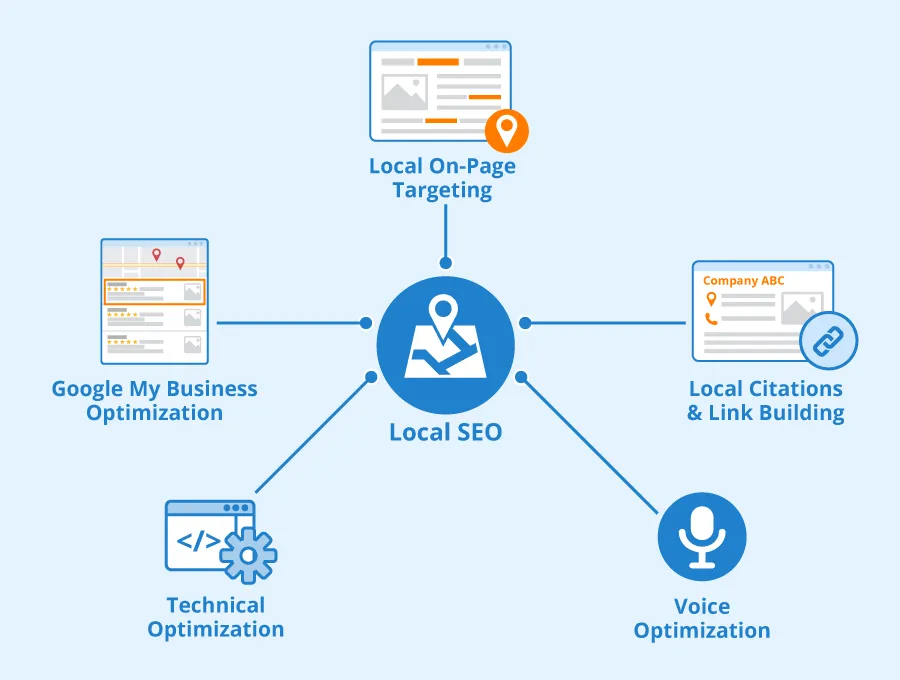
Image Credit: Seobility
Local search is changing quickly. If you do not adapt to AI driven rankings, you will lose ground to competitors who understand how local SEO ranking factors influence trust and visibility. The businesses that win in 2026 are the ones willing to prioritise authenticity, experience, and verifiable value.
You have everything you need to elevate your presence in Singapore’s competitive local landscape. If you want support from specialists who understand these shifts deeply, partner with MediaOne, an innovative SEO agency in Singapore. Contact us today and let’s work together to turn local visibility into predictable revenue.
Frequently Asked Questions
What are emerging AI signals that influence local rankings in 2026?
Google increasingly evaluates AI driven entity understanding signals such as contextual accuracy, topic consistency across platforms, and verifiable real world activity. These signals help Google confirm that your business is legitimate, locally relevant, and aligned with real user intent.
How does user generated content impact local SEO ranking factors in 2026?
User generated content helps Google verify that real customers engage with your business in actual locations. When users post geotagged photos, videos, or reviews, it strengthens your entity authority and boosts trust signals that support higher local rankings.
Does local link building still matter for ranking in 2026?
Local backlinks still matter, but only when they come from reputable and contextually relevant sites. High quality links from local associations, community organisations, and neighbourhood directories help reinforce your local presence and improve Google’s confidence in your business.
How important are behavioural signals compared with traditional SEO elements?
Behavioural signals have become critical because they reveal whether users find your listing helpful. High click through rates, longer dwell time, and repeat interactions give Google evidence that your business satisfies intent better than competitors.
Can service area businesses rank well without a physical storefront?
Service area businesses can still rank strongly if they provide consistent, verifiable signals of active operations within their targeted zones. Accurate service area mapping, strong reviews tied to specific neighbourhoods, and robust local content help offset the absence of a storefront.