| AI Summary
Eight top branding agencies in Singapore to compare are DIA Brand Consultants, Tangible, Creativeans, Foreign Policy, Sedgwick Richardson, EQ Brand, STUDIO DAM and Firefish. Their published work spans corporate rebrands, B2B research, packaging, hospitality, regional positioning and naming. A shortlist works best when each agency has handled a problem like yours and can explain how its team would take the work from research to launch. |
To compare branding agencies in Singapore, shortlist three with relevant case studies and send them the same brief. Compare the team assigned to your project, the research included, what you’ll receive, who owns the files and what it will cost to launch. A recent client reference can show how the agency handles feedback, deadlines and extra requests.
Key Takeaways
- A case study is most helpful when it shows what the agency was hired to do, which decisions it made and what the client received.
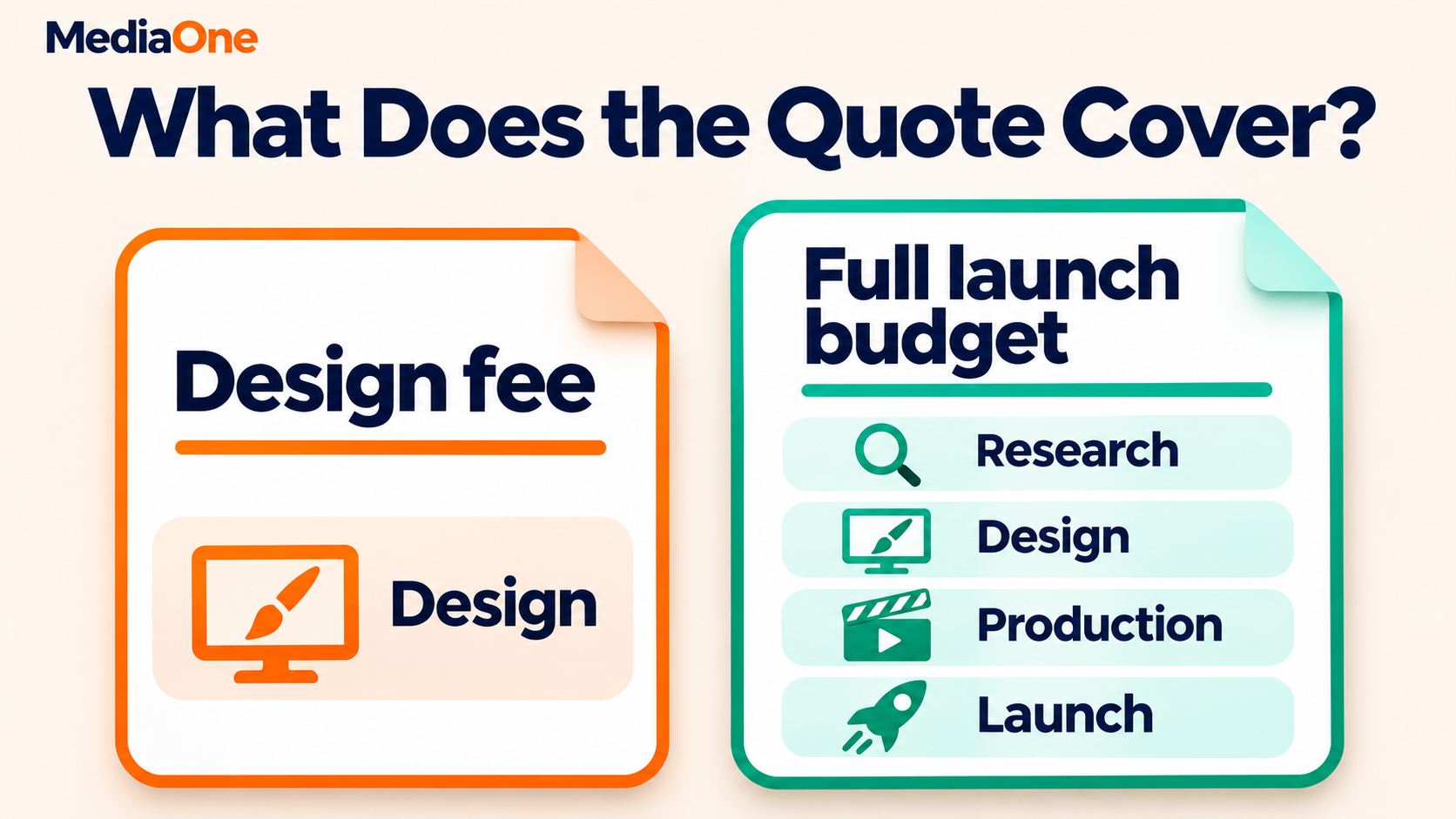
- A quote for a new identity can leave out website updates, signs, printing and staff training. The full launch budget puts different proposals on equal terms.
- The people on the pitch call may differ from the people doing the work. Your proposal should name who leads the project and who handles the day-to-day work.
- A scorecard helps your team compare proposals before one impressive presentation takes over the decision.
You can usually tell when a business has outgrown its branding. The sales team explains the company differently from the website. A product looks like everything else on the shelf. Or customers still think of the business as the small firm it used to be.
A branding agency can help decide what people should know about your business and carry that idea across your words, design and customer experience. A restaurant opening its second outlet and an engineering group bringing three companies under one name both need branding. They need different kinds of help.
Research checked on 3 November 2026. The shortlist is in editorial order.
Singapore branding agencies at a glance
| Agency | Consider it for | Evidence to request |
| DIA Brand Consultants | A corporate rebrand that affects several groups | A project that shows how research shaped the new name, identity or brand structure |
| Tangible | B2B positioning and agreement across teams | A sample research plan and an example of a decision it changed |
| Creativeans | Strategy that carries through to packaging, products and digital design | A project that shows the work across more than one customer touchpoint |
| Foreign Policy | Hospitality and consumer brands with physical spaces | An identity in use across everyday materials and a real space |
| Sedgwick Richardson | Corporate positioning across markets | A project that shows how a common brand idea works for different audiences |
| EQ Brand | Identity across websites, products and physical spaces | A project showing how one design system works across formats |
| STUDIO DAM | Consumer and lifestyle branding, including packaging | A project that connects the brand story to the product and online experience |
| Firefish | Naming, repositioning and staff adoption | A naming project that shows how employees learned to use the new brand |
How this shortlist was put together
The comparison draws on publicly described services, portfolios and case studies relevant to Singapore buyers. The suggested uses are editorial assessments. A project name tells you which assignment to ask about. The scope of that assignment tells you how closely it matches yours.
MediaOne publishes this guide and offers branding services. The same comparison criteria apply to any agency you consider, including MediaOne. A recent client reference and a written proposal can answer questions that public portfolios leave open.
Eight branding agencies to consider in Singapore
1. DIA Brand Consultants
Consider for corporate rebrands where customers, employees and business partners all need to understand what has changed.
The City Energy project shows the type of work to discuss with DIA. Singapore’s Powering Lives profile of City Energy documents the move from City Gas to City Energy and describes the wider business, which includes electric vehicle charging and home energy solutions. DIA’s published account describes customer and business research alongside the name and identity work.
Question for the first meeting: What would you keep from our existing brand, and how would you find out what customers already recognise or trust?
2. Tangible
Consider for B2B and corporate projects that need customer research before the design team starts.
Tangible’s published client work includes Pacific International Lines and JEL. These examples give logistics, engineering and industrial businesses a starting point for discussing how different buyers see the company.
Question for the first meeting: Which people would you interview outside our leadership team, and how would their feedback affect your recommendations?
3. Creativeans
Consider for businesses that need a brand to work across packaging, products and digital screens.
Creativeans’ published work includes MEIKO TAILOR, tesa and Ritter Sport. The portfolio gives buyers a way to see how the team works across different assignments. A business commissioning a product launch can ask to see how a promise on the packaging carries through to the product page and how the design holds up once production limits come into play.
Question for the first meeting: Which parts of the project would your assigned team handle, and which would involve a developer, manufacturer or another specialist?
4. Foreign Policy
Consider for hospitality and consumer brands whose identity needs to come to life in a physical space.
Dumpling Darlings is the portfolio example to ask about. Its illustrated characters and lettering give the restaurant a visual identity that can carry through to the dining space. For a business with several outlets, the buying question is how easily staff and suppliers can use the same design on menus, signs and social posts after the launch team leaves.
Question for the first meeting: What would our staff be able to update on their own, and which changes would need a designer?
5. Sedgwick Richardson
Consider for regional organisations that need one brand story to make sense to employees, business partners or investors in several markets.
The published Be One Solutions project covers positioning and identity for a technology company with a broader offer than customers might have associated with its original specialism. A regional business can use that example to discuss how an agency handles different audiences and what happens when a message that works in one country needs more explanation in another.
Question for the first meeting: How would you test the same brand promise in our priority markets, and who would check the evidence for claims we plan to make?
6. EQ Brand
Consider for projects where the identity has to work across many formats and teams.
The published Manta Air project spans customer-facing materials such as a website, app, uniforms and inflight items. EQ Brand’s portfolio includes work credited to Equus Design Consultants, so the proposal should identify the company taking on the work and the people assigned to it. ACRA’s Bizfile entity search instructions explain how buyers can check a company’s registered details.
Question for the first meeting: Who would lead our project, and which examples show work by the team we would hire?
7. STUDIO DAM
Consider for consumer and lifestyle businesses that need packaging and online presentation to tell the same story.
The published YeoMama Batik project is a starting point for businesses working with craft or heritage. The assignment gives buyers a reason to ask how a studio decides which parts of the existing story to preserve and how it carries those choices through to words and design. For a product line with several sizes or styles, a proposal can also show whether the system works across the range.
Question for the first meeting: How would you check whether a first-time buyer understands what makes our product worth choosing?
8. Firefish
Consider for established businesses revisiting their name, position in the market or the way staff explain what they sell.
Firefish’s published Mistgold project describes a new brand direction for a jewellery business that wanted to reach younger buyers. The work included naming and staff training. For businesses that depend on in-person service, that training is worth asking about. A customer may first meet the new brand through a salesperson who needs to explain a change in plain language.
Question for the first meeting: What would our staff receive after launch, and who would check the proposed names before we commit to one?
Which branding agency should you shortlist?
The best starting point is the problem customers already notice. A company with several services might hear buyers say, “We thought you only did installations.” A snack maker might hear shoppers say, “I couldn’t tell those two flavours apart.” Those comments give an agency something concrete to work on.
A brand strategy and positioning framework can help a company name its audience and the reason that audience should choose it. Positioning is the place you want your business to hold in a buyer’s mind. For example, a facilities company might want to be known for keeping buildings open while it carries out repairs. That gives the agency a more specific job than making the brand look modern.
| What customers or staff are telling you | What to include in the brief |
| “I’m still unsure which service I need.” | Research, service names and a simple way to explain how the services work together |
| “I keep mixing up the products on the shelf.” | Packaging design across the range, with a sample that shows how shoppers can tell the products apart |
| “Every branch describes us differently.” | Brand messaging with examples that staff can use in common situations |
| “We look like three businesses, even after the merger.” | A plan for which names to keep, combine or retire, plus a way to introduce the changes |
| “People recognise us in stores but don’t recognise us online.” | A shared design system and a brand marketing plan that connects the customer experience across channels |
A team comparing creative agencies in Singapore may also need a campaign, photography or production. Your brief can separate those jobs from the decisions about the brand. That way, agencies can price each part and explain who handles it.
What do case studies and client references tell you?
A case study shows what the agency delivered
A project page is strongest when you can identify the starting problem, the agency’s role and the work it handed over. A photo of new packaging tells you what the pack looked like. A description of how the team made it easier to tell five similar products apart shows the decision behind the design.
The Design Council’s Double Diamond describes a design process that explores a problem before settling on it and develops ideas before delivery. In a portfolio meeting, that distinction helps you ask which ideas the agency tested and what it learned before choosing one. A short answer tied to a real project often tells you more than a diagram of the agency’s process.
A reference shows how the team worked
A client reference can explain what happened when the first concept missed the brief, when an owner joined late or when production costs came in above budget. A reference from a project with similar deadlines, audiences or suppliers is easier to apply to your own decision.
- About feedback: How did the team respond when you disagreed with a recommendation?
- About timing: Which part took longer than expected, and what did the agency do about it?
- About changes: Did the agency explain extra charges before it began additional work?
- About handover: Could your staff use the templates and find the files they needed?
Business results need context
A new logo, a set of templates and a redesigned website are things an agency can show. Better recognition or more sales are outcomes. If a case study claims an outcome, a buyer can ask what the client measured, over what period and what else changed at the same time.
For example, a café might see more orders after changing its brand, joining a delivery platform and opening an outlet near an MRT station. Sales tell the owner how the business did after those changes. A separate survey asking whether customers recognise the brand or understand its offer can help answer a narrower question about the rebrand.
What should a branding proposal include?
Three agencies can quote for “brand strategy and identity” and mean three different things. One may plan five customer interviews. Another may include a leadership workshop only. A third may build a website prototype and leave development to another supplier. The same brief gives each team a chance to explain what its price covers.
A practical brief sets out the problem, priority audiences and markets, launch date, budget and person who signs off. A list of assets due to change helps agencies see the work beyond the logo. The table below shows what to look for when the quotes come back.
| Part of the proposal | What the agency should spell out |
| Research | Who it plans to speak to, who recruits them, which markets it covers and what findings you receive |
| Positioning and messages | The decisions it will help make, the messages it will write and where it will show how to use them |
| Naming | How many names or directions it presents, which languages it checks and who handles further searches |
| Visual identity | How many concepts and revision rounds it includes, and which items it will design |
| Website and packaging | Whether the price covers design, development, production-ready files, proofs or supplier support |
| Files and rights | Which editable files you receive and which items have separate licence terms |
| Launch and handover | Who updates each item, who trains staff and how long the agency stays available after launch |
A naming brief can include a first search in the IPOS trade mark database. Regional projects can also include a search of WIPO’s Global Brand Database. The proposal should say who performs these checks, which names and markets they cover, and who decides when a name can move into design.
How much should you budget for a branding project?
A branding budget has two parts. The first pays for decisions and design. The second pays to put that work in front of customers. A proposal may cover a new packaging design while your printer quotes separately for proofs and production. A quote for website design and development should explain who builds and tests the pages after the brand designs are approved.
A sample budget shows where costs can sit
| Item | Illustrative cost |
| Agency research, strategy and design | S$12,000 |
| Printing and signage | S$2,000 |
| Website implementation | S$3,000 |
| Subtotal | S$17,000 |
The figures are made up to show how the costs add up. The subtotal is before applicable tax and any reserve for extra costs. A S$12,000 agency fee covers only the first line. If the business adds staff photography or buys a font licence, those items get separate lines too.
A phased launch can make the spend easier to plan
A business can group the work by what customers will see first. A new name might need to appear on the website, proposals and signs together so customers know they are dealing with the same company. A change to colours or typography may give the business more time to use existing printed stock.
The launch plan should show who orders and checks production, who makes digital changes and when old materials come out of use. Supplier lead times belong on the same schedule as design approvals. A design delivered on time can still miss launch day if nobody booked the sign installation.
How can you compare agencies fairly before signing?
A scorecard gives each decision-maker the same points to judge. The weights below are an example. A consumer business with a packaging deadline might give production planning more weight. A group trying to bring several brands together might put more weight on research and how the agency handles disagreement.
| What you’re comparing | Example weight | What earns a high score |
| Relevant work | 25% | A project with a similar audience, problem or rollout |
| Research and reasoning | 25% | A plan that explains what the team will learn and how the findings inform decisions |
| Assigned team | 20% | Named people with relevant experience and defined responsibilities |
| Scope and launch plan | 20% | Costs, deliverables and handover duties that your team can compare |
| References | 10% | Recent clients who can speak about the work you plan to buy |
Each reviewer can score a row from one to five. A score of four on a row worth 25% gives the agency 20 points out of 25. Your team can add the points and discuss the biggest differences before choosing. One person might see a strong portfolio while another spots a missing developer or an approval deadline your team cannot meet.
Some decisions need a direct answer even when the agency scores well. The final proposal should name the contracting company, show who approves changes and explain what happens if either side needs to pause. If a launch depends on the business receiving editable templates, that requirement belongs in writing before the work begins.
How will you know whether the rebrand worked?
A rebrand is easier to judge when the business records what customers understand today. A logistics group trying to sell more than freight services might ask a sample of target buyers which services they think it offers. After launch, it can ask a similar group the same question and compare the responses. Its wider marketing strategy can then track what happens to enquiries and sales over time.
The best measure depends on the original problem:
- People confuse two products. A packaging test can check whether shoppers can tell them apart and choose the one they want.
- Customers know the old company name. A survey can check whether they recognise the new name and understand that the business is still serving them.
- Sales teams explain the offer in different ways. A review of sales decks and calls can show which messages staff actually use.
- Buyers miss a key service. A short interview can test whether they understand the wider offer after seeing the new website or materials.
If the rebrand changes web addresses, Google’s site-move documentation explains how to map old pages to new ones, set up redirects and track the move. That work belongs on the launch schedule so customers who saved an old link can still reach the right page.
Choose a branding partner who can explain the decisions
The agencies worth a second meeting are the ones that can show how they handled a problem like yours. Your team should leave that meeting knowing who will do the work, what they need to learn and how their decisions will carry through to the things customers see.
If you’d like to discuss the business problem behind your project, MediaOne’s branding team can talk through where the work could start and what a first brief could cover.
FAQs About top branding agencies in Singapore
Can a Singapore business get grant support for branding?
Eligibility depends on the applicant, the activity and when the work starts. Enterprise Singapore lists current funding activities and application rules under the EDGE Grant. A business can check whether its proposed scope is listed before signing a contract or paying a deposit.
Can we keep our company name and change the customer-facing brand?
A business can use a customer-facing brand that differs from the name on its corporate records. The team should map where each name needs to appear, including on invoices, contracts, signs and packaging. That map also helps customer service staff explain why a customer may see two names.
Can we keep a rebrand private until launch?
An agency and client can agree who may see the work before launch and when each side can share it. The agreement can also cover whether the agency can show the project in its portfolio, which images it can use and whether it needs written approval first.
Should we ask agencies to create a free logo before hiring one?
A logo drawn for a pitch gives you a sample of the designer’s first response to a brief. A paid discovery project can give you a better look at how an agency asks questions, uses evidence and explains decisions. The agreement can specify what you receive and whether you can take those findings into a later project.
Can a branding agency work with our in-house designer?
Yes. An in-house designer can contribute knowledge of existing materials, production limits and what staff need each week. The agency can handle research or create the design system while your designer helps test it on real work. A pilot item such as a sales deck gives both teams a shared example before they divide up the remaining work.