| AI Summary
SEO content types are website formats designed to match search intent and attract relevant traffic. They include service pages, product pages, how-to guides, comparison articles, pillar pages, FAQs, and case studies. Singapore businesses should select formats based on customer demand, existing content gaps, competition, and commercial value. Technical, on-page, and local SEO support these formats but serve different purposes. At MediaOne, we recommend auditing existing content, fixing critical technical issues, and prioritising high-value formats through a focused 90-day plan. Measure results through organic visibility, qualified enquiries, and conversions rather than rankings alone. |
SEO content types are the formats businesses use to answer search queries, attract relevant visitors and encourage enquiries or sales. They include service pages, buying guides, tutorials, comparison articles and product pages. The right choice depends on what your Singapore customers want to accomplish, not which format is currently popular.

We recommend starting with pages that address clear customer needs and support a measurable business goal. A renovation contractor may need strong service and location pages. An online retailer may gain greater value from category pages and product comparisons.
Key Takeaways
- Match SEO content types to search intent before choosing a word count or layout.
- Treat technical, on-page and local SEO as disciplines, not article formats.
- Prioritise commercial pages when buyers already search for your services or products.
- Use demand, existing coverage and competitive pressure to shortlist content opportunities.
- Fix serious indexing problems before scaling publication, then assess performance using enquiries and sales.
What Are SEO Content Types?
SEO content types are distinct ways of presenting website information for people arriving through search engines. A how-to article provides instructions. A comparison page evaluates alternatives. A service page explains an offering and gives prospective customers a way to enquire.
These formats serve different purposes along the customer journey. Someone searching “how to prevent bathroom leaks” needs practical advice. Someone searching “bathroom waterproofing contractor Singapore” is closer to choosing a provider.

SEO content types versus SEO disciplines
SEO disciplines describe the work required to make content discoverable and useful. Technical SEO addresses crawlability and indexing. On-page SEO improves titles, page organisation and internal links. Off-page SEO includes earning relevant editorial links and mentions. Local SEO helps eligible businesses connect with geographically relevant searches. Content formats are the actual pages or assets produced through that work.
We separate the two during planning. First, confirm that Google can access important pages. Then decide whether the missing asset is a service page, guide or comparison. Google’s SEO Starter Guide supports this focus on useful content, clear organisation and discoverable links.
Let search intent determine the format
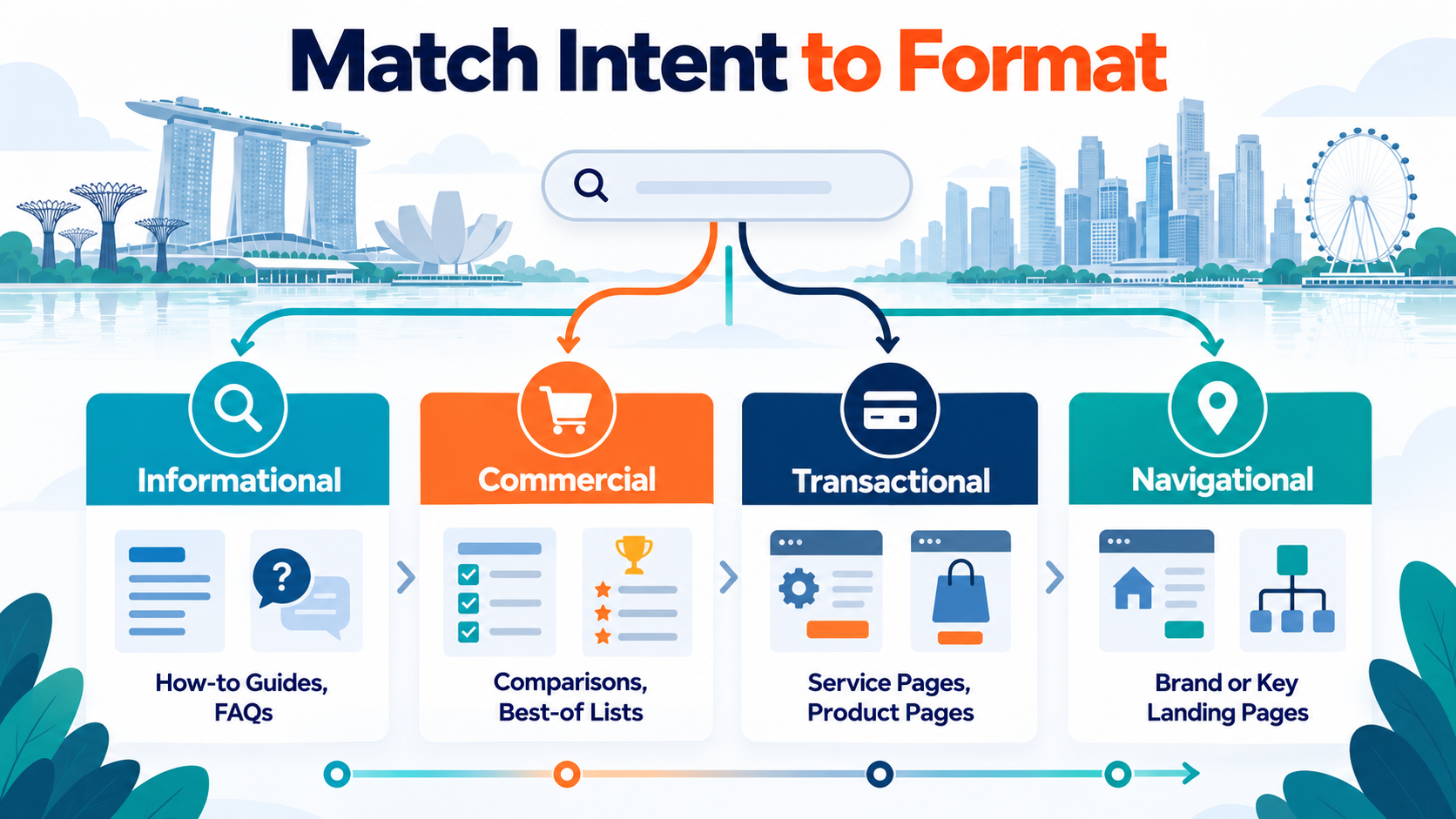
Search intent describes what someone hopes to achieve with a query. Informational searches call for explanations or instructions. Commercial investigation searches often need comparisons. Transactional searches tend to favour product, category or booking pages. Navigational searches usually seek a specific brand or website.
Review the results for your target query in Singapore before drafting. Identify what users still need: transparent pricing, local requirements, clearer examples or a simpler next step.
10 SEO Content Types Worth Considering
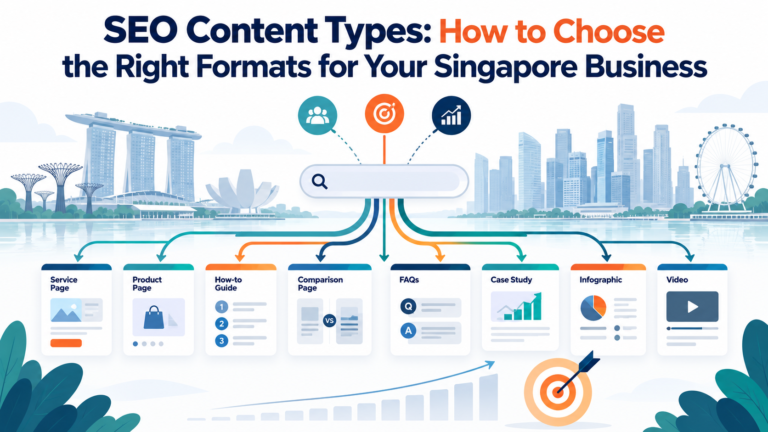
Not every business needs every format. We suggest selecting the smallest set that covers your highest-value questions and buying decisions, then expanding when the first pages demonstrate value.
1. Service pages for high-intent enquiries
Service pages explain what you provide, who it helps and how customers can proceed. They are essential for consultancies, clinics, contractors and business-to-business (B2B) providers. A page targeting “corporate tax filing services Singapore” should address scope, eligibility, process and relevant qualifications.
Use one substantial page per distinct service, not separate near-duplicate pages for every keyword variation. Include useful proof, relevant frequently asked questions and a visible enquiry option. Measure qualified leads rather than visits alone.
2. Product and category pages for ecommerce
Category pages help shoppers browse a meaningful product group. Product pages answer questions about an individual item, including specifications, availability, delivery and returns.
Prioritise original descriptions and useful filters over copied supplier text. Where appropriate, accurate product structured data may make pages eligible for enhanced search appearances, although Google does not guarantee them.
3. How-to guides and tutorials
How-to content suits searches where users need a process they can follow. A payroll provider could publish “how to prepare Central Provident Fund (CPF) contributions for employees” with clear steps and links to current official requirements. This builds relevance around problems its prospective clients regularly face.
Lead with the answer, explain prerequisites and show each action in sequence. Review regulatory instructions promptly whenever authoritative guidance changes.
4. Comparison and alternative pages
Comparison pages serve readers who are narrowing their choices. They can evaluate products, software, service arrangements or competing approaches. For example, “outsourced accounting versus in-house bookkeeping” should explain cost drivers, responsibilities and situations where each option fits.
We recommend specifying comparison criteria before giving a verdict. Discuss genuine disadvantages, not just strengths.
5. Best-of lists and curated recommendations
Listicles fit searches containing terms such as “best”, “top” or “recommended”. A “best payroll software for Singapore SMEs” article should compare actual software, supported functions and suitable business sizes.
Avoid inventing ratings, testing results or prices. State how products were selected, verify changing details against providers and update rankings when evidence changes.
6. Pillar pages and topic clusters
A pillar page introduces a broad subject, while linked supporting articles explore narrower questions. Build a cluster only when each page answers a distinct query. Link related pages naturally so readers can explore the subject. Google’s link best practices recommend descriptive, crawlable links; they do not prescribe a fixed number of internal links per article.
7. FAQ pages and concise answer sections
Frequently asked questions (FAQs) resolve common objections and practical uncertainties. They are useful within service and product pages when readers need reassurance before contacting you. Standalone FAQ pages can work when a collection of closely related questions deserves its own resource.
Write direct answers using genuine customer language. Avoid publishing multiple thin pages for slightly different phrasings. FAQ structured data should not be treated as a universal route to prominent search features.
8. Case studies and original research
Case studies demonstrate a problem, the approach taken and a measured outcome. Original research can offer survey findings or data that competitors cannot simply reproduce.
Explain the starting conditions and measurement period. Obtain permission before disclosing client information, and never present hypothetical improvements as recorded results. These formats often support service pages through contextual internal links.
9. Infographics and visual explainers
Infographics help explain processes, comparisons and relationships that become difficult to scan in prose. Images still need surrounding text that explains the key information. Google’s image SEO guidance recommends descriptive filenames and appropriate alternative text. Avoid embedding essential instructions solely inside a graphic.
10. Videos and interactive resources
Video demonstrations suit tasks where seeing the process improves understanding. Calculators, selectors and checklists can also be effective when people need a personalised answer.

These assets require upkeep and technical planning. Give videos descriptive supporting text and accessible captions where appropriate. Google’s video SEO guidance explains the discovery and indexing requirements for video-focused pages.
How Local, Mobile and AI Search Affect Your Content Choices
Some SEO approaches change the targeting or presentation of content rather than create a new format. Understanding these distinctions prevents businesses from commissioning pages that do not address their actual visibility problems.
Local SEO and Singapore-specific pages
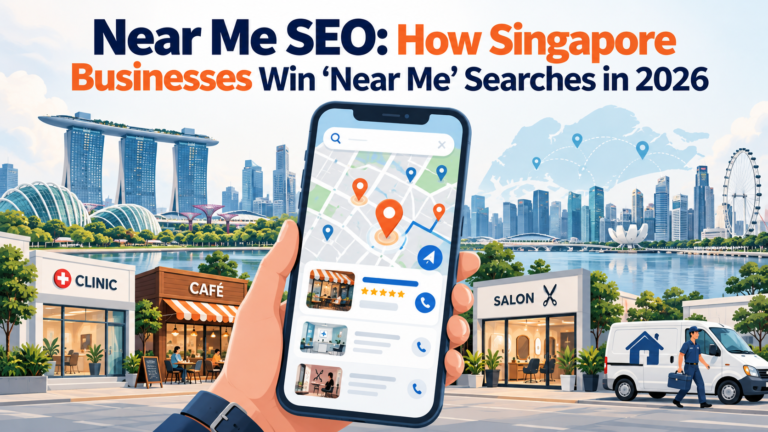
Local SEO matters for businesses that serve customers at physical premises or through qualifying in-person service visits. Useful formats include location pages, local service pages and area-specific case studies. Each page should provide genuine local information rather than swap place names into identical templates.
A Google Business Profile can support eligible businesses, but operating an online shop does not automatically establish eligibility. Follow Google’s Business Profile eligibility guidelines before creating or changing a listing. A purely online retailer should prioritise relevant ecommerce content instead of assuming it needs map visibility.
Mobile experience and technical readiness
Mobile optimisation affects how comfortably people use every content format. Before publishing extensively, check whether priority pages load reliably, display key information clearly and allow customers to complete forms or purchases.
Investigate indexing exclusions and important rendering errors first. However, avoid treating crawl budget as a routine crisis for small websites. Google’s crawl budget guidance is primarily intended for very large or frequently changing sites.
GEO and AI-generated search answers
Generative engine optimisation considers how useful content may be discovered or cited in AI-assisted answers. We would not create repetitive “AI versions” of existing articles purely to chase citations.
Google states that its AI search features do not require special markup or a separate optimisation technique. Existing SEO fundamentals remain important, and inclusion is never guaranteed. Treat AI visibility as an additional observation, not a substitute for leads and revenue.
How to Prioritise SEO Content Types for Your Business
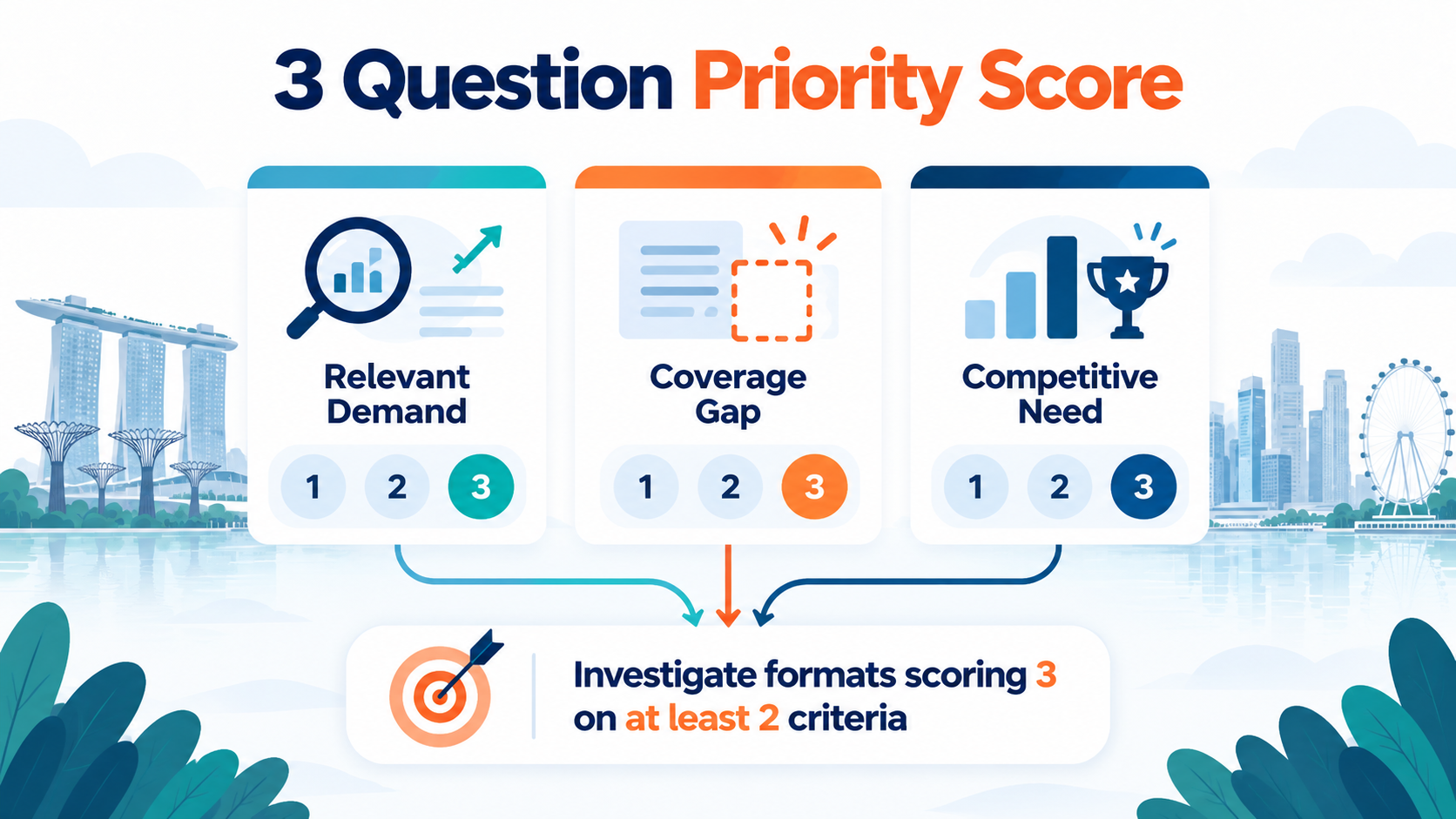
We use a simple three-question score to structure decisions, rather than declaring one format universally superior. Score each proposed format from 1 to 3 based on evidence from your market and website.
| Question | Score 1 | Score 2 | Score 3 |
| Relevant demand | Little evidence of suitable queries | Some recurring demand | Clear demand across valuable queries |
| Coverage gap | Existing pages meet intent well | Coverage needs improvement | No suitable page or a major mismatch |
| Competitive need | Few rivals serve this intent | Several rivals compete | Strong rivals consistently serve it well |
As a starting rule, formats scoring 3 on at least two criteria deserve investigation. They should not automatically receive funding. Check whether the likely visitor is a plausible customer, whether the page can offer distinctive value and whether production costs are reasonable.
Use keyword tools and manual search-result reviews to estimate demand. Google Search Console performance reports show queries, impressions, clicks and other metrics for your own website; they do not reveal all searches across Singapore. Filter by country where useful, and recognise that low impressions may reflect poor visibility rather than low market demand.

Three illustrative Singapore business decisions
The following examples are hypothetical. They illustrate possible priorities rather than measured search volumes, rankings or results. Verify the evidence for your own business before assigning scores.
Renovation contractor: Service pages and genuine project case studies may score highly when customers search for specific work. A local area page is worthwhile only when it adds useful information about that service area.
Online skincare retailer: Product categories and comparison pages may take priority because they support selection and purchase. A Google Business Profile should not be assumed necessary for an online-only operation.
Accounting firm: Service pages targeting defined needs may offer clearer commercial value than dozens of introductory articles. Guides to local compliance can support them, provided regulatory details come from current official sources.
A Practical SEO Content Audit Checklist
Before commissioning more content, review what already exists. Include pages with low traffic because they may reveal missed demand, weak targeting or indexing problems.
- Inventory important URLs. Export your service pages, categories, products, articles and resources. Record their purpose, intended audience and current status.
- Check discoverability. Use Search Console’s indexing reports and URL Inspection tool to investigate important pages that Google cannot access or index. Resolve genuine blockers before expanding that section.
- Assign search intent. Identify the primary query group for each page. Note whether visitors want instructions, a shortlist, a provider or a purchase.
- Evaluate useful coverage. Compare each page with current Singapore search results. Identify missing decision criteria, outdated facts or weak local relevance.
- Assess performance. Review organic impressions and clicks alongside engagement, leads and ecommerce conversions where tracking is available. Do not assume a low click-through rate has one universal cause.
- Select formats. Apply the scoring framework, then choose opportunities with realistic commercial value. Consider improving an existing page before creating another URL.
- Plan connections. Link supporting guides to relevant commercial pages and related resources. Use anchor text that describes the destination naturally.
- Set review ownership. Assign someone to check changing prices, regulations, product details and service information. Document the next review trigger rather than choosing an arbitrary publication cycle.
Build a Focused 90-Day Content Plan
A 90-day plan creates a manageable execution window, not a promise of first-page rankings. Allocate sufficient time for research, specialist review and technical fixes.
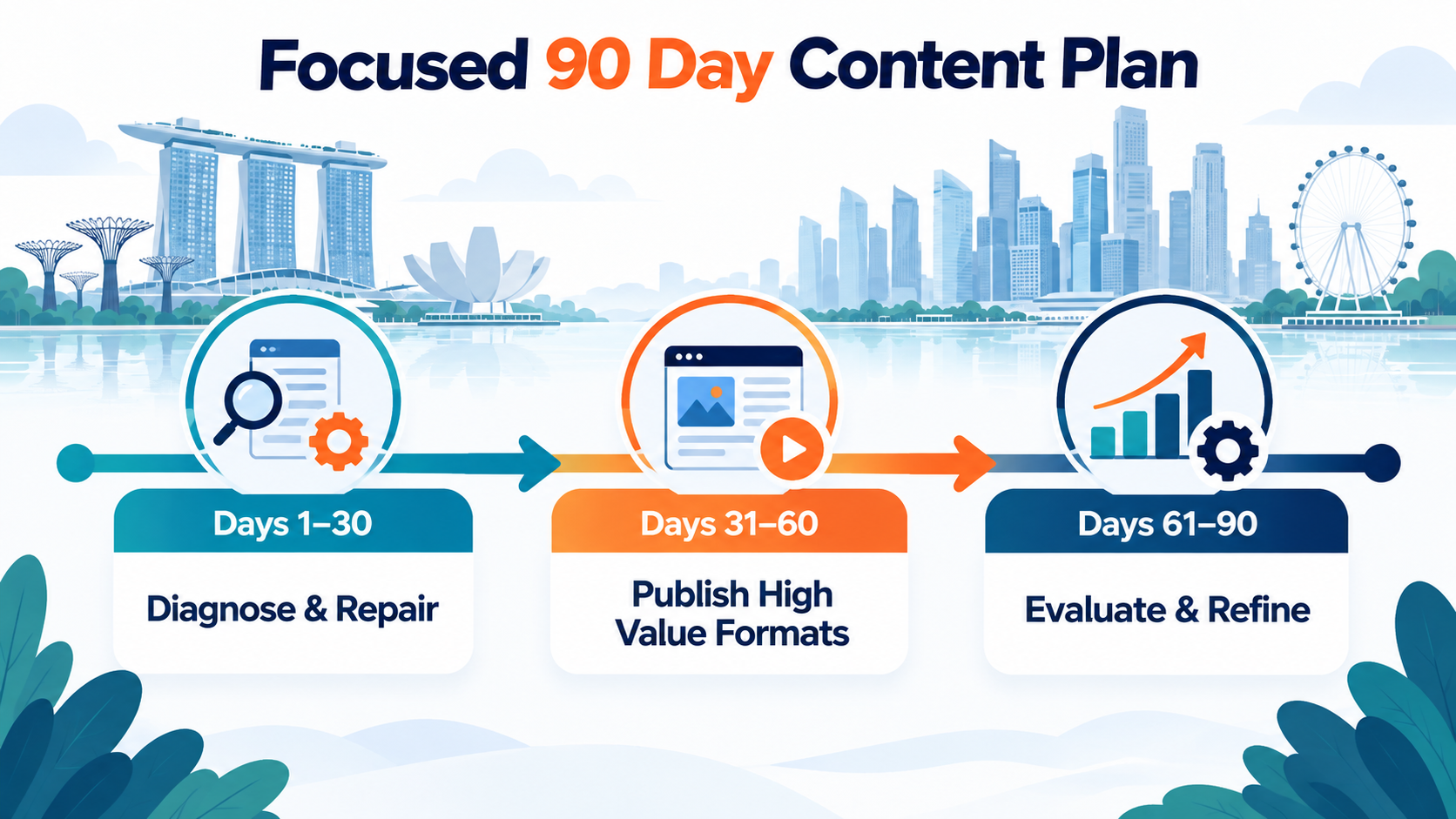

Days 1–30: Diagnose and repair. Audit important pages, check search intent and correct priority indexing or conversion problems. Identify which commercial pages deserve rewriting and which content gaps are genuinely new.
Days 31–60: Publish the highest-value formats. Improve service or category pages first when they match active buying searches. Add selected guides or comparisons that answer unresolved questions and link them to appropriate next steps.
Days 61–90: Evaluate and refine. Review early indexing, query coverage, visitor behaviour and lead quality. Update pages that show a mismatch between user expectations and the content delivered. Keep investing in formats with plausible commercial value while allowing enough time for search performance to develop.
We generally prefer a modest, maintainable content mix over a crowded publishing calendar. If a format requires original data, specialist review or regular updates, budget for that work before committing to it.
Measure Results by Content Type, Not Just Rankings
Different formats contribute at different stages, so one metric cannot judge them all. Guides may introduce customers to your business, while service pages capture enquiries. Comparisons may assist decisions without always receiving the final conversion.
Track search visibility and relevant organic visits for each format. Then connect those visits with meaningful actions such as qualified forms, calls, bookings or purchases. Use your analytics configuration consistently and review attribution limitations before claiming that an article generated a sale.
Google’s people-first content guidance emphasises original value and satisfying user needs. We use that principle when deciding whether to improve, combine, retain or retire content. A page should earn its place by helping customers, not merely by increasing your article count.
Frequently Asked Questions
Which SEO content type is best for a small business?
Start with the page format that serves your most valuable existing customer searches. For many service businesses, this means clear service pages supported by a few useful guides or case studies.
Are blog posts better than landing pages for SEO?
Neither format is inherently better. Blog posts often explain problems, while landing pages can support service enquiries or specific offers. Choose according to search intent.
How many pillar pages should a business publish?
There is no universal target. Start with a pillar only when the topic supports several useful, distinct articles and your team can maintain the whole cluster.
Should every Singapore business invest in local SEO?
No. Local SEO is relevant when customers search for a business with a genuine local presence or in-person service area. Online-only sellers may benefit more from category, product and buying-guide content.
Does GEO require a separate content format?
No. GEO is an optimisation approach rather than a fixed page type. Focus on accurate, accessible content and sound SEO foundations without assuming AI citations are guaranteed.
How often should SEO content be updated?
Review pages when information changes, performance weakens or customer questions evolve. Prices and regulatory guidance may require prompt updates, while evergreen explanations can remain accurate for much longer.
Choose SEO Content Types That Lead to Better Business Decisions
The strongest content plan starts with a specific customer question and ends with a useful answer or next step. Choose commercial pages where buying intent is clear. Use tutorials, comparisons and supporting resources to close genuine information gaps. Fix critical technical problems so those pages remain accessible.
At MediaOne, we recommend judging every proposed format by search intent, evidence of demand and its likely contribution to qualified enquiries or sales. Our content marketing services can help turn those priorities into a focused publication plan. Build what your customers need, measure what happens next and expand only when the evidence supports it.