| AI Summary
Mobile advertising helps Singapore businesses reach customers through paid search, social feeds, websites and apps on smartphones and tablets. Campaign planning starts with the action the business wants, followed by the placement, message and budget. This guide explains ad formats, mobile landing pages, location targeting, privacy limits and measurement, with examples for shops, online retailers and service businesses. |
Mobile advertising is paid promotion shown on smartphones and tablets through search results, social feeds, mobile websites and apps. Businesses use it to attract enquiries, sell products, encourage store visits or promote app downloads. Results depend on the audience, offer, ad placement and experience after the tap.
Key Takeaways
- In-app advertising describes where an ad appears. App-install advertising describes what the campaign asks people to do.
- A low click price can hide poor sales performance. Qualified enquiries and completed orders provide stronger evidence.
- Advertising budgets need room for production, landing-page work and measurement alongside media spending.
- Location targeting uses estimated signals. A radius on a map does not prove that someone visited a shop.
- Platform reports can credit the same purchase. Sales records help prevent double-counting.
- A business can advertise on phones without building its own app.
Mobile advertising often reaches someone between other tasks: checking a train arrival, comparing lunch options or looking for a repair service. The message has little time to earn attention.
A Singapore café needs a different approach from a furniture showroom. One may sell lunch nearby today. The other may need several visits before a customer books a viewing.
The sections below connect those buying situations to ad choices, costs and results. The focus is paid advertising, with customer messaging covered only where it supports the campaign.
What Does Mobile Advertising Include?
Mobile advertising covers paid placements delivered on mobile devices. A search ad for “aircon servicing Tampines,” a sponsored Instagram video and a banner inside a game can all belong to this group.
Mobile advertising sits within the wider field of mobile marketing, which also includes email, customer messages and app notifications. An unpaid social post is mobile marketing when viewed on a phone, but it is not a paid ad.
The distinction helps with budgeting. Advertising buys exposure through a platform or publisher. Customer messaging usually reaches an existing contact list, with separate permission and sending requirements.
The customer’s task comes first
A phone screen does not reveal buying intent by itself. Someone watching a cooking video may enjoy a kitchenware demonstration without planning to buy. Someone searching for a replacement blender may already need one.
Three details help shape the campaign:
- The situation: Where might the customer encounter the ad?
- The need: What problem or interest connects them to the offer?
- The next action: What should happen after they notice it?
A campaign brief becomes easier to write when those answers are specific. “Parents comparing weekend swimming lessons” gives the team more direction than “adults aged 25 to 45.”
Which Mobile Ad Formats Should Businesses Consider?
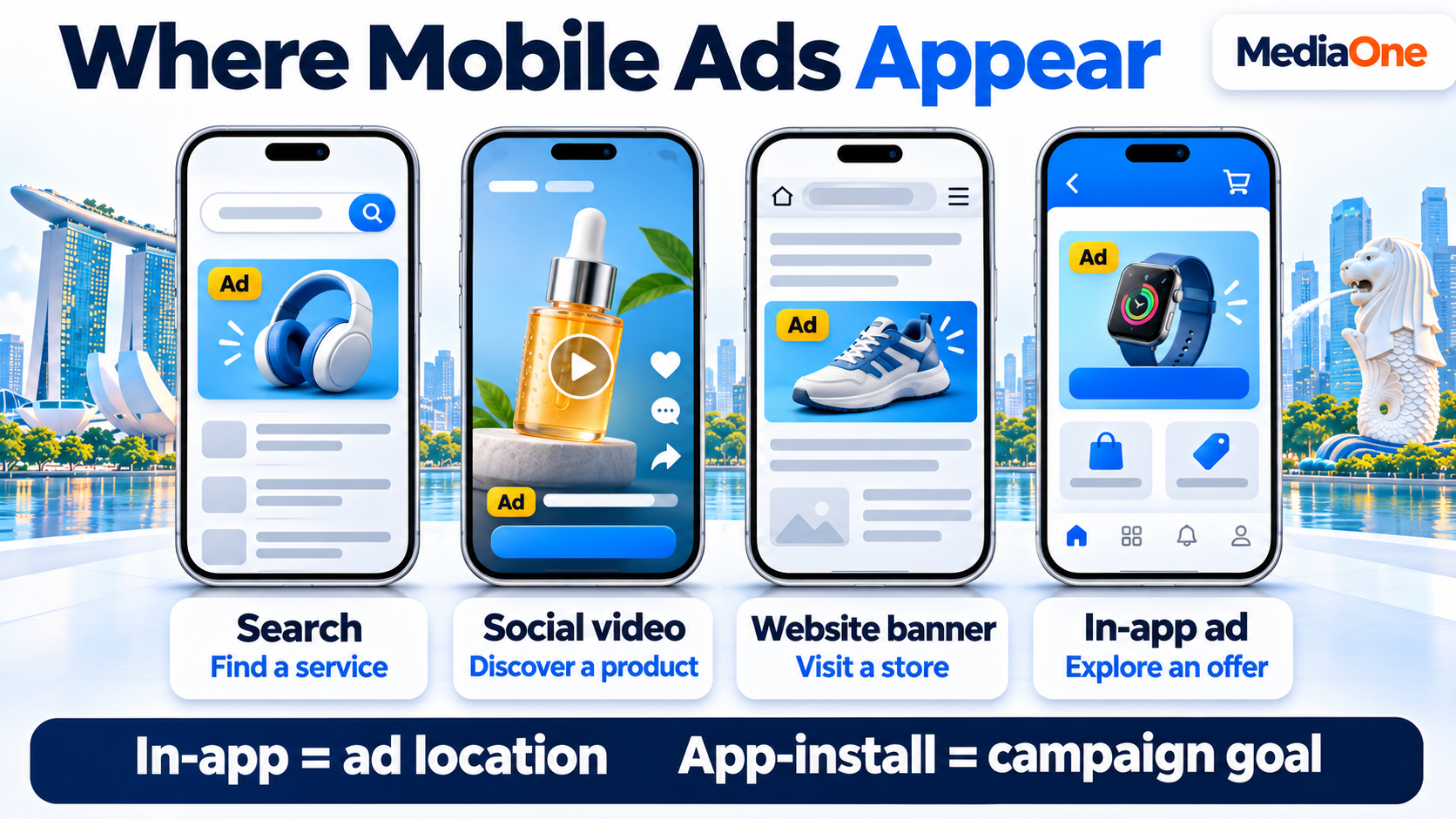
Mobile ads differ in where they appear and how people respond. Search captures an expressed need. Social and display placements can introduce an offer before someone searches for it.
The table separates common placements from their likely campaign roles.
| Placement | Where it appears | Possible role | Main check |
| Search ads | Search results on a phone | Enquiries and purchases | Whether searches match the offer |
| Social feed ads | Sponsored posts, carousels and videos | Discovery and product interest | Whether the message earns attention |
| Display ads | Mobile websites and participating apps | Awareness and return visits | Placement quality |
| Video ads | Video platforms, feeds and apps | Demonstrations and explanations | Viewing quality and later actions |
| In-app ads | Inside another company’s app | Reach, engagement or purchases | App audience and ad position |
| App-install ads | Supported search, social and app placements | Downloads of the advertiser’s app | Activity after installation |
Search ads for an existing need
Search ads can reach people who describe what they want. A plumber might target searches about a leaking pipe in an area the business serves.
The ad should lead to the relevant service page. A visitor looking for emergency help should quickly find availability, contact details and the booking action.
Campaign scope also affects control. The choice between Performance Max and Search ads changes where Google can deliver advertising. A business should understand that scope before comparing results.
Social and video ads for discovery
Social ads give products and services a visual introduction. A clothing retailer can show how a garment moves. A training provider can demonstrate part of a lesson.
A social media advertising strategy connects those creative choices to the campaign objective. A video designed to introduce a brand needs a different evaluation from an ad asking for a purchase.
The opening should establish the subject quickly. Viewers should understand the product or service without waiting through a long logo animation.
Display and in-app ads for selected audiences
Display ads appear on websites and inside participating apps. Formats include banners, native ads that resemble surrounding content, and full-screen ads shown between activities.
In-app advertising does not require the advertiser to own an app. A retailer can place an ad inside another app and send the visitor to its website.
App-install advertising has a separate purpose: persuading someone to download an app. Install counts alone say little about whether users return, order or subscribe.
How Can Businesses Match Ads to Customer Attention?
A format can support several goals. A short video might introduce a service or persuade a returning visitor to book. The surrounding situation changes what the viewer needs.
An attention-and-action table can help organise the choices below. It is a planning aid, not a scoring system that predicts performance.
| Customer situation | Advertising job | Possible approach | Result to examine |
| Browsing without an immediate need | Introduce the business | Short video or simple image | Relevant reach and viewing |
| Researching a problem | Explain an option | Demonstration or comparison | Visits to relevant details |
| Searching for a provider | Encourage contact | Search ad and service page | Qualified enquiries |
| Comparing products | Support a purchase | Product ad and product page | Completed orders |
| Considering a return purchase | Present a timely offer | Eligible remarketing placement | Repeat orders |
One example across three situations
A furniture retailer might advertise the same sofa in three ways:
- A social video shows its size in a small living room.
- A search ad answers a query about compact sofas in Singapore.
- A remarketing ad brings an eligible previous visitor back to the product page.
Each ad has a different job. The discovery video should help viewers recognise the product’s value. The search ad should answer an existing need. The return-visit ad should provide a reason to reconsider.
The campaign should also account for the purchase itself. A sofa may need measurements, delivery details and a showroom visit. A low-cost lunch offer may need only a price, collection location and order button.
How Much Does Mobile Advertising Cost in Singapore?
Mobile advertising has no single local price. Costs depend on the platform, audience, competition, placement and result being pursued.
A campaign budget therefore needs two views: how the platform charges and how much the business can afford to acquire a customer. Those figures serve different purposes.
The main cost measures
| Measure | Meaning | What it helps assess |
| CPM | Cost per 1,000 ad impressions | Price of exposure |
| CPC | Cost per click | Price of traffic |
| CPL | Cost per lead | Price of an enquiry |
| CPA | Cost per selected action | Price of a purchase, booking or other result |
| CPI | Cost per app install | Price of a download |
| ROAS | Revenue divided by ad spend | Revenue returned for media spending |
A low CPC does not guarantee an affordable customer. Cheap traffic can produce few purchases, while a more expensive click can lead to a valuable order.
The business definition also needs care. A “lead” could mean any submitted form or an enquiry that meets agreed requirements. Reports should state which definition they use.
A worked budget example
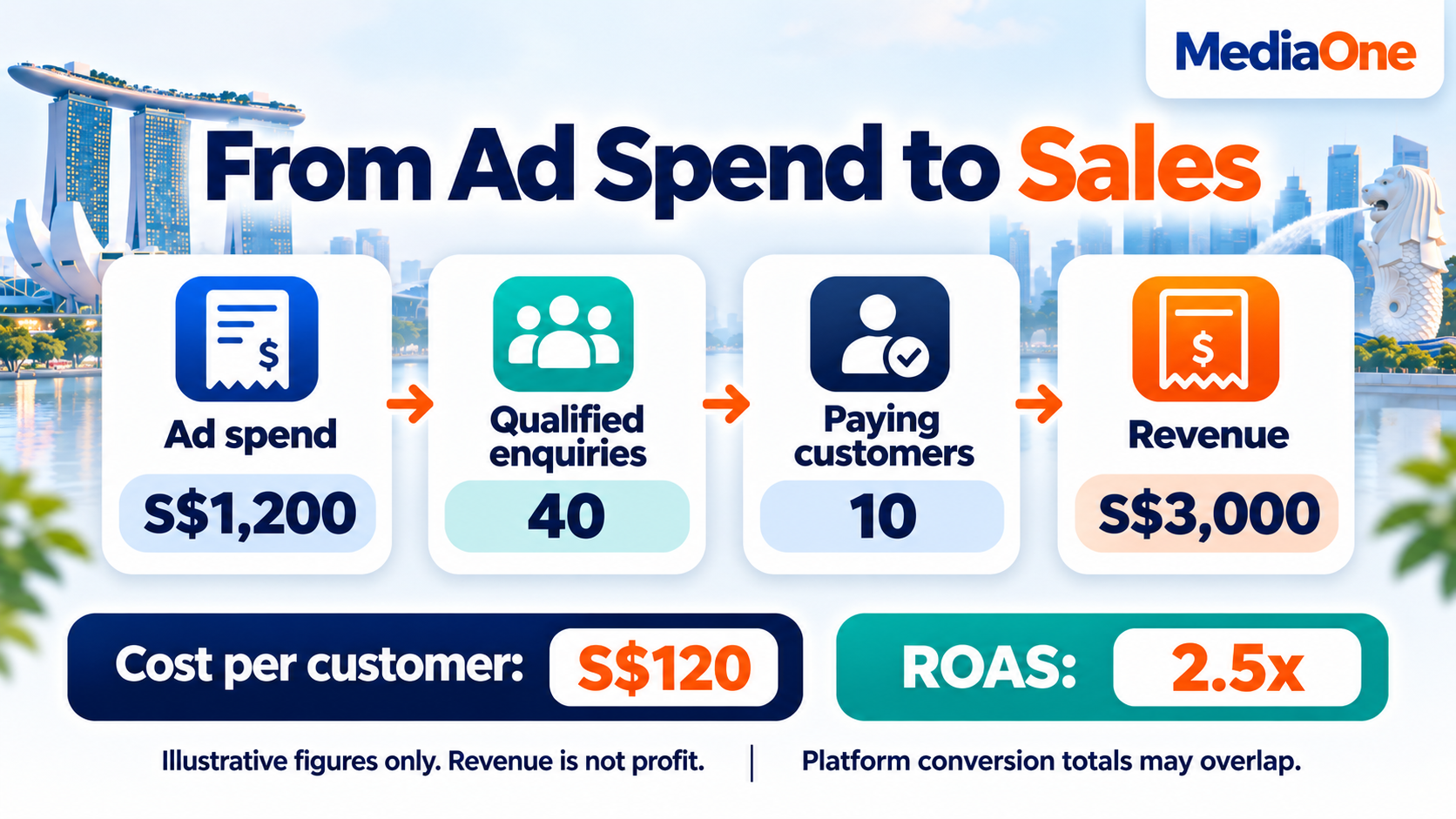
A retailer plans an illustrative media test of S$1,200. Its target advertising cost is S$30 per order.
At that target, the spending would need to generate:
S$1,200 ÷ S$30 = 40 orders
That is a planning calculation, not a forecast. The campaign may produce fewer orders, and the target may prove unrealistic.
The retailer also needs to account for:
- Photography, design or video production.
- Landing-page changes.
- Tracking setup and reporting.
- Campaign management.
- Discounts, delivery subsidies and returns.
A return on ad spend calculation measures revenue against advertising spend. Profit requires a wider calculation that includes product and operating costs.
A limit for learning
An early campaign should have a spending limit and a decision date. The business should know what it wants to learn before paying for traffic.
One test might compare two product messages on one platform. Another might check whether a service page generates qualified enquiries from relevant searches.
A budget spread across many channels can leave each test with too little activity to explain the result.
How Should a Mobile Advertising Campaign Be Planned?
A campaign brief should connect the commercial goal to delivery. The team needs to know what counts as success, who will respond and whether the business can fulfil the offer.
Practical PPC campaign planning also connects the ad promise to the landing page and the conversion being measured.
1. A measurable objective
A goal such as “more bookings” needs a definition. A completed booking, a booking request and a tap on a booking button are different events.
A service business could define its primary result as a new enquiry from someone within its service area who requests an available service. Secondary measures can explain performance, but the campaign needs one main outcome for budget decisions.
2. An audience the business can serve
Audience planning should reflect actual delivery limits.
- A local repair company needs customers within its service area.
- An online retailer needs buyers in places it can deliver to.
- A course provider needs applicants who meet entry requirements.
- A restaurant needs orders it can prepare within the advertised period.
Exclusions can be as valuable as audience choices. Advertising an unavailable service creates avoidable enquiries and disappointed customers.
3. An offer with enough detail
An ad should state the main reason to respond. A discount is one option, but price alone cannot explain every service.
An appointment ad might highlight the service offered, branch location and available booking times. A product ad might focus on size, delivery or a feature shown in use.
The landing page should display any conditions that affect the decision, including expiry dates, minimum spending or limited availability.
4. A launch and response plan
The campaign also needs operational preparation:
- The advertised product is in stock.
- Booking slots match the promotion.
- Forms reach the correct team.
- Call and message responses have an owner.
- Confirmation messages explain what happens next.
An ad can generate an enquiry successfully while the business loses the sale afterwards. That gap belongs in the campaign review.
How Can Mobile Ads Be Easier to Understand?
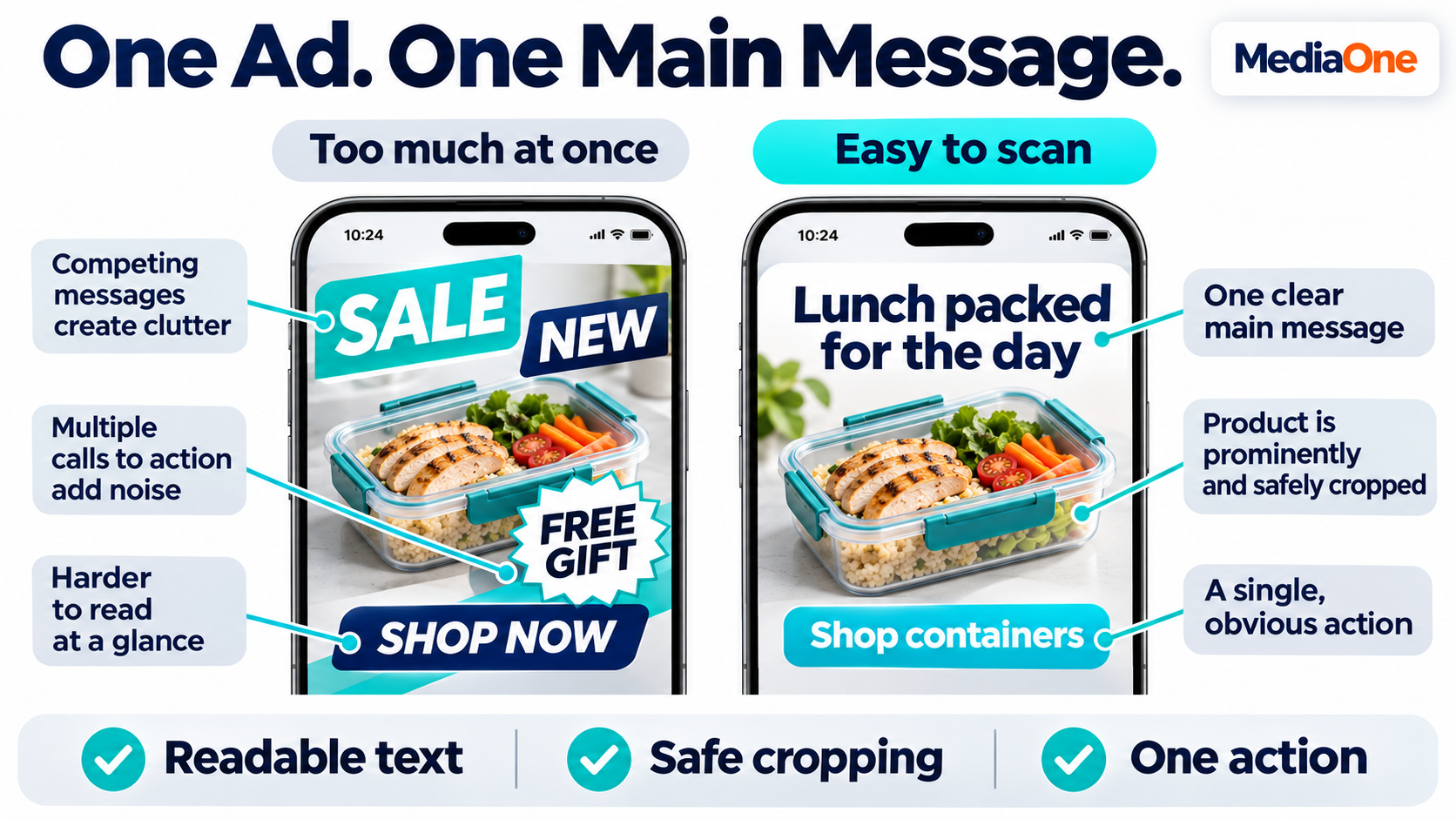
Mobile creative needs a message people can recognise on a small screen. Several competing offers, tiny text and decorative effects can bury the action.
A useful working brief contains one audience, one main benefit and one next step. The wording should sound like the business and describe what the customer receives.
A message people can picture
Specific details help readers understand an offer.
“Professional home solutions” leaves much unexplained. “Aircon servicing for a three-room flat” gives the reader a service and a situation.
Examples should also match the product. A reusable lunch container ad could show its size beside a meal, how the lid closes and how it goes into a bag. Those details answer practical buying concerns.
Images and video for the actual placement
One file will not suit every advertising space. Feed images, vertical videos and display assets can crop differently.
Google publishes separate responsive display ad specifications, including image ratios and text limits. Social placements have their own requirements, so production should follow the selected placement.
A pre-launch creative check should cover:
- Readable text at normal phone size.
- A visible product or service.
- Captions where speech carries the message.
- Important details away from interface overlays.
- A button or invitation that matches the destination.
- Correct prices, dates and offer conditions.
Tests that answer one question
A comparison becomes easier to interpret when the main difference is deliberate.
One version might show a product in use while another shows a close-up. Both can keep the audience, offer and destination consistent.
Automated delivery may distribute impressions unevenly, so ordinary ad comparisons have limits. A platform’s experiment tool can provide a more controlled comparison where available.
What Should Happen After Someone Taps?
The landing page continues the promise made in the ad. A visitor should immediately recognise the product, service or offer that brought them there.
A generic homepage can add unnecessary searching. A campaign for one workshop should lead to that workshop’s details, price and booking options.
The first screen should answer the basics
A mobile landing page should help visitors understand:
- What the business offers.
- Who the offer is for.
- What it costs, or how pricing works.
- What the next step involves.
- Where the service is available.
Relevant proof can follow, such as product images, stated qualifications or verified customer feedback. Claims need evidence, and important conditions should remain easy to find.
The page needs a phone test
Mobile website design includes readable content, usable forms and a layout that responds to the screen.
Google’s Core Web Vitals assess loading, responsiveness and visual stability. They help identify technical problems, although good scores do not guarantee sales.
A real-device check should include:
- Buttons that respond to taps.
- Forms that show errors beside the relevant field.
- Keyboards suited to email and telephone fields.
- Prices and delivery details visible before payment.
- Confirmation after a successful submission.
A completed test enquiry or purchase can reveal problems that a screenshot misses.
How Does Location-Based Mobile Advertising Work?
Location targeting helps focus advertising on selected areas. A cafe, salon or tuition centre may need customers near a branch, while a destination showroom may draw people from further away. The selected area should reflect how customers travel and where the business can serve them.
Location is an estimate
Google’s geographic targeting system uses signals such as device information, IP addresses and location interests. Google states that location targeting cannot guarantee complete accuracy.
A radius campaign therefore does not mean every person entering a circle receives an ad. Delivery also depends on platform rules, audience eligibility and the advertising auction.
Location settings deserve attention because physical presence and interest in a place are different. Someone researching Singapore from overseas may be relevant to a hotel but less relevant to a neighbourhood lunch promotion.
Store activity needs separate evidence
A map view or directions tap indicates interest. It does not confirm arrival or purchase.
Store campaigns can add evidence through:
- An offer code recorded at checkout.
- Booking records linked to a branch.
- Campaign-specific reservation options.
- Eligible platform store-visit reporting.
- Comparisons with similar periods or locations.
Other events can affect footfall, including weather, holidays and nearby promotions. A before-and-after comparison should acknowledge those influences.
What Privacy and Messaging Rules Affect Campaigns?
Mobile campaigns can involve platform audiences, website tracking and customer contact details. Each activity needs appropriate handling.
The business should explain why it collects information, limit access and record the permissions relevant to its marketing activity. A completed purchase should not automatically become permission for every future promotion.
Apple’s tracking permission
Apple’s App Tracking Transparency framework requires permission for specified tracking across other companies’ apps and websites. This limits some of the data available for advertising measurement.
A lower reported conversion count does not establish the cause by itself. The team should examine tracking changes, website performance and actual sales together.
Customer data collected directly by a business also remains subject to applicable privacy and platform requirements. A server-side connection does not remove those obligations.
SMS follow-up in Singapore
SMS promotions sit alongside paid placements and need their own checks. Singapore’s Do Not Call provisions address marketing messages to Singapore telephone numbers, including checking duties and consent requirements.
Organisations sending messages with alphanumeric sender IDs must also address Singapore SMS Sender ID registration. Registration does not replace the requirements governing the message or customer data.
A practical record should show the source of the number, the relevant permission and any withdrawal request. Order updates and promotional offers should remain distinguishable in the sending process.
How Can Businesses Measure Mobile Advertising Results?
Measurement starts with a defined event. A purchase, qualified enquiry or completed booking gives the campaign a result the business can compare with spending.
Google Ads supports conversion measurement for activities including website purchases, app actions and calls. The selected event should represent the intended business outcome.
A small reporting table
A focused set of digital marketing KPIs can explain both performance and the next decision.
| Campaign goal | Main result | Supporting measure | Business check |
| Enquiries | Qualified leads | Cost per qualified lead | Sales from those enquiries |
| Online sales | Completed orders | Cost per order | Margin, refunds and returns |
| App growth | Users completing a valuable action | Acquisition cost | Continued app activity |
| Store promotion | Recorded bookings or redemptions | Cost per recorded result | Extra sales after offer costs |
A service business may need to follow enquiries through several stages. Form submissions, qualified leads, quotations and paying customers should remain separate.
Reports need reconciliation
Advertising platforms and analytics tools may assign credit differently. Google Analytics describes attribution as assigning credit to interactions that precede an important action. Different models can produce different results.
Two platforms may both claim the same order. Their totals should not simply be added together.
A reporting process should compare platform figures with completed sales, use consistent date ranges and identify refunds or cancelled bookings. The business can then distinguish a reporting difference from a genuine fall in demand.
What Should Change When Results Fall Short?
A weak result needs a diagnosis before another budget increase. The point where people stop often indicates what to inspect next.
| Pattern | First checks |
| Impressions with little response | Message, audience and placement |
| Clicks with few landing-page visits | Loading problems or broken destinations |
| Visits with few enquiries | Offer details, form problems or missing information |
| Many enquiries with few sales | Lead quality, response time and expectations |
| Sales with little profit | Margins, discounts, returns and acquisition cost |
A change log helps the team connect edits with results. Each entry can record the date, change, reason and expected effect.
A single good day should not decide the next month’s spending. Purchase delays, small samples and seasonal demand can distort short comparisons. The review period needs enough completed activity to support a decision.
Turn Mobile Advertising into Measurable Business Results
Mobile advertising works through a connected experience: the customer notices an offer, reaches the right destination and completes an action the business can fulfil.
A mobile advertising consultation with MediaOne can start with the offer, current landing page and intended result. Those details give the discussion a practical starting point for planning the next paid campaign.
FAQs About Mobile Advertising
Can business-to-business companies use mobile advertising?
B2B companies can reach professionals researching services or reviewing supplier content on phones. A mobile ad can introduce software, training or a commercial service even when the final purchase happens later. The destination should support that research with relevant details and a suitable enquiry option.
Should mobile ads run only during business hours?
Campaign hours depend on customer behaviour and the response process. An online shop can accept orders outside office hours. A campaign asking people to call needs to account for staffed hours. After-hours enquiry forms should explain when the customer can expect a reply.
Can a mobile campaign promote several branches?
A multi-branch campaign can promote several locations, provided visitors can identify the correct outlet. Branch-specific destinations help when hours, stock or offers differ. Reporting by branch also helps the business see where enquiries and sales originate.
Can a business advertise without an online checkout?
A service business can advertise appointments, calls or quotation requests without taking payment online. The result should reflect the sales process. A consultation request, for example, needs follow-up reporting so the business can see how many requests become customers.
What happens when an advertised product sells out?
The campaign needs an update when the promoted product becomes unavailable. The business can pause the affected ad or replace the offer and destination together. A visitor should not discover the stock problem only after spending time completing an order.
Can mobile ads reach tourists in Singapore?
Tourism businesses can plan campaigns around visitors researching or spending time in Singapore. Audience and location settings need to reflect the intended group. A visitor planning a trip from overseas has different information needs from someone looking for an activity nearby today.